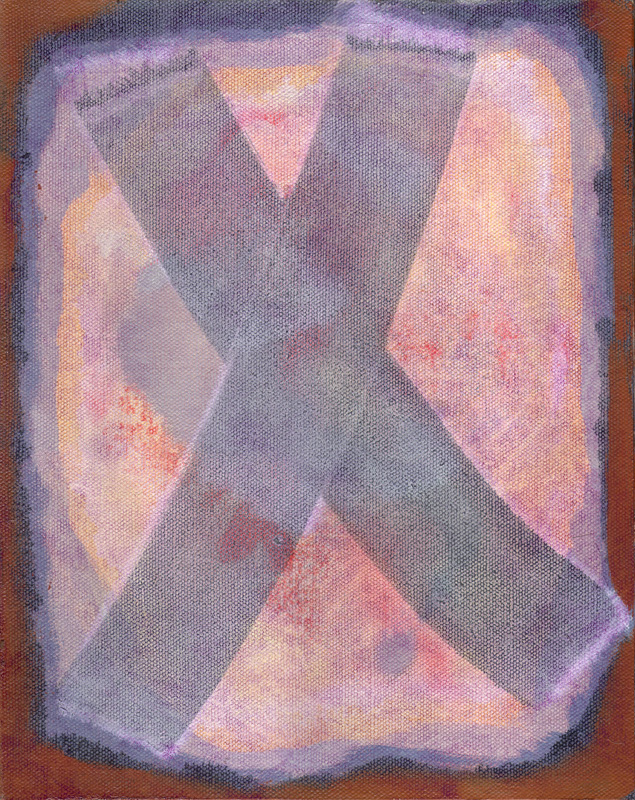
The Spectacle of Commemoration
Oil on linen mounted on wood
12″ × 15″x 1/2″
2012
Pip: When a nation turns two hundred and fifty, the question isn’t whether to celebrate — it’s whether the celebration is doing something else entirely.
Mara: Ricardo F. Morín’s recent work on Observations On Perception takes that question seriously, moving through commemoration, spectacle, and what happens when the form of public memory starts shaping the memory itself. Let’s start with the spectacle of the semiquincentennial.
The Spectacle of Commemoration: https://observationsonthenatureofperception.com/2026/06/20/the-spectacle-of-commemoration/
Pip: The setup here is specific: a high-speed race, a wrestling exhibition, a triumphal arch, and corporate sponsors whose logos become part of the event. The question the post is asking is what it means when a nation chooses these forms to remember itself.
Mara: The post frames it directly: “When remembrance is organized around competition, exhibition, and the public demonstration of force, the form of commemoration begins to influence how the memory of the nation is understood.”
Pip: So the medium isn’t neutral. A wrestling exhibition and a monument aren’t just entertainment and architecture — they’re arguments about what the nation values, made in a register that bypasses debate entirely.
Mara: That’s the through line the post develops carefully. Speed, staged confrontation, monumental construction — each one places strength before an audience and lets visibility do the work that argument would otherwise have to do. The post calls this “performance itself to establish recognition without argument.”
Pip: Which is a polite way of saying the arch doesn’t ask for your vote.
Mara: The post goes further than the event schedule. It traces how exceptionalism shifts — from confidence in democratic possibility toward the claim that one identity alone represents the nation’s character. When that happens, disagreement stops being negotiation among citizens and becomes a contest over who speaks for the country at all.
Mara: The post connects this to immigration framing, where legal processes, undocumented status, and criminal accusation get merged into a single narrative. Distinctions that once guided policy give way to simplified frames built around exclusion.
Pip: And economic pressure feeds the same dynamic — unionized workers facing cheaper labor competition, real concerns that then get converted, through uneven enforcement and political framing, into cultural confrontation rather than policy debate.
Mara: The post then extends the logic outward: election administration, trade policy, alliance relations. Each arena shows the same pattern — authority concentrating, distributed structures weakening, speed outrunning legislative review. The post is precise about this: “Governance may continue in form, yet the structure that once restrained power may no longer operate in the same way.”
Pip: Gradual, ordinary-looking, and visible only in retrospect — which is exactly what makes the commemorative framing so pointed. The celebration and the institutional shift unfold together and both appear unremarkable to the people inside them.
Mara: The painting that anchors the series, “The Spectacle of Commemoration,” dates to 2012 — which means the observation predates the specific occasion by over a decade. The concern isn’t new; the occasion just made it legible.
Pip: That’s the part worth sitting with as the anniversary approaches.
Mara: The post leaves the question open: when the form of commemoration shapes the memory, what kind of memory are we building?
Pip: Something to keep watching — both the arch going up and what it’s quietly arguing while it stands there.


PLease leave a Reply