Resilience is often introduced as a descriptive term. It names a capacity observed under pressure, a tendency to endure when conditions cannot immediately be altered. In this sense, resilience appears neutral, even commendable. It signals survival where collapse was possible, continuity where interruption was expected.
Over time, however, resilience ceases to be merely observed and begins to be praised. What was once noted becomes celebrated. Endurance is elevated into virtue, and the ability to persist under strain is held up as evidence of strength. In this shift, attention subtly moves away from the conditions that necessitated endurance in the first place.
Once resilience is praised, it becomes expectable. The language of admiration gives way to the language of obligation. What some managed to do under duress is gradually treated as what all should do. Endurance stops being exceptional and becomes normative. The capacity to withstand replaces the question of why endurance is required.
At this point, resilience performs a quiet inversion. Conditions remain intact, while responsibility migrates toward those exposed to them. Structures are left unexamined as individuals are encouraged to adapt. Adjustment is relocated from systems to subjects. What cannot be repaired is to be endured.
This inversion carries a temporal dimension. Resilience is framed as forward-looking strength, a promise that persistence will eventually be rewarded. Harm is deferred rather than addressed. Recovery is invoked in place of repair, and time is asked to absorb what policy or structure does not resolve.
The ethical weight of this shift is unevenly distributed. Those with the least capacity to alter their circumstances are most frequently called upon to be resilient. Those with the greatest power to change conditions are least exposed to the demands of adaptation. Resilience, though praised as universal, is imposed asymmetrically.
As resilience becomes an expectation, dissent softens rather than disappears. Complaint is not forbidden, but it is recoded. Questioning conditions is treated as impatience. Refusal to endure is framed as deficiency. Endurance itself becomes a measure of maturity, and silence is mistaken for consent.
What resilience is, then, is a capacity to endure conditions not of one’s making. It is a descriptive fact of human behavior under pressure. It names survival where alternatives are limited.
What resilience is not is an ethic. It is not a justification for harm, nor evidence that conditions are acceptable. The ability to endure does not confer legitimacy on what is endured.
Ricardo Morín Bulwark Formerly titled Buffalo Series, Nº 3 Oil on linen, 60 × 88 in. 1980 Exhibited: Hallwalls Contemporary Arts Center, Buffalo, New York, May 1980 Destroyed while in third-party custody; extant as digital archival record only.
*
Ricardo F. Morin
December 23, 2025
Kissimmee, Fl
*
I did not encounter the boundaries that would later govern my writing either through instruction or doctrine, but through a remark made in passing by my father when I was still a child. He stated, without hesitation or elaboration, that he could not imagine existing under a political system that threatened individual liberty and private autonomy, and that life under such conditions would no longer be a life he could inhabit. The formulation was extreme, yet even then it was clear that it was not intended as a proposal, a threat, or a performance. It functioned instead as a boundary: an indication of where survival, once stripped of dignity, would no longer merit the name of living.
The force of that remark did not reside in its literal content, but in the clarity with which it established a limit. Extreme statements often draw attention by excess, but this one operated differently. It did not seek reaction or allegiance. It closed a door. What it marked was the point at which judgment ceased to be negotiable—not because compromise becomes difficult, but because continuation itself loses coherence. What it marked was not expression but diagnosis. It identified a threshold beyond which endurance would amount to acquiescence in one’s own negation.
That distinction—between living and merely persisting—would take years to acquire its full weight. One can remain alive and yet no longer inhabit the conditions under which action, responsibility, and choice remain intelligible. The body endures; the terms of authorship do not. What is surrendered in such cases is not comfort or advantage, but authorship over one’s own conduct: the capacity to remain the source and bearer of one’s actions.
Only later did historical irony give that childhood memory a broader frame. My father died one year before Venezuela entered a prolonged political order that normalized civic humiliation and displaced individual responsibility.This coincidence does not confer foresight or vindication.It merely underscores the nature of the limit he articulated.He did not claim to predict outcomes or to possess superior insight. He identified a condition he would not inhabit, regardless of how common, administratively justified, or socially enforced it might become.
What was transmitted through that remark was not an ideology, nor even a political position, but a refusal. It was a refusal to treat dignity as contingent, and a refusal to accept adaptation as inherently neutral. Such refusals are not dramatic. They do not announce themselves as virtues. They operate quietly, shaping what one will not do, what one will not say, and what one will not permit to pass through one’s actions in exchange for continuity, safety, or approval.
Writing, I have come to understand, is not exempt from the constraints that govern action. Symbolic form does nor suspend responsibility. Language acts. It frames possibilities, distributes responsibility, and licenses certain responses while it forecloses others. To write without regard for what one’s words enable is to treat expression and conduct as if they belonged to different orders. They do not. The same boundary that governs action governs language: one must not inhabit forms that require the habitual abandonment of autonomy.
Authorial responsability does not entail moral exhibition or the performance of virtue. Responsibility in writing does not consist in adopting the correct posture or aligning with approved conclusions. It consists in refusing methods that rely on coercion, humiliation, or rhetorical pressure in place of clarity. It requires attention not only to what is asserted, but to what is permitted to continue through tone, implication, and omission. Precision here is not a stylistic preference; it is a moral discipline.
Restraint, in this sense, is not passivity but a method of authorship. It is a form of interruption in the circulation of what one does not consent to carry forward. To decline to amplify what one does not consent to carry is an act of selection, and an exercise of agency. In an environment where excess, outrage, and reactive urgency are often mistaken for seriousness, restraint becomes a way of maintaining authorship over one’s participation. Restraint limits reach, but it preserves coherence between what is said and what is lived.
Such restrain inevitably carries a cost. Urgency is more than speed; it is the condition under which reflection itself begins to appear as a liability. Reflection serves as a procedural safeguard of agency and authorship—and, with them, of ethical responsibility—even when circumstances cannot be governed and one is compelled to choose within constraint. Restraint resists urgency, narrows reach, and foregoes certain forms of recognition. These losses are not incidental; they are constitutive. To accept all available registers or platforms in the name of relevance is to treat survival as the highest good. The boundary articulated long ago indicates otherwise: that there are conditions under which continuation exacts a price too high to pay.
Authorial responsibility, then, is not a matter of expression but of alignment between language and action. It asks whether one’s language inhabits the same ethical terrain as one’s conduct. It asks whether the forms one adopts require compromises one would refuse in action. The obligation is not to persuade or to prevail, but to remain answerable to the limits one has acknowledged.
What remains is not a doctrine but a stance: a stance standing without dramatization, without escape, and without concession to forms that promise endurance at the expense of dignity. Such a posture does not announce itself as resistance, nor does it seek exemption from consequence. It holds its ground without appeal. In doing so, it affirms that authorship—like autonomy—begins where certain lines are no longer crossed.
*
What remains unaddressed is the more fragile condition beneath authorship itself: the way thinking precedes command, and at times repositions the author before any stance can be assumed.
The memory of my father appears as a moving target—not an idea slipping out of control, but it is a standard shifting under my feet while I was still advancing. I did not invite it in the sense of intention or plan. Nor did I resist it. I noticed it moving before I could decide what it demanded.
That experience is unsettling because it violates a comforting assumption: that thought is something we deploy, rather than something that displaces us.
The uncertainty about whether I had invited it is itself a sign that I was not instrumentalizing my thinking. When thought is summoned as a tool, it remains fixed. When it emerges in response to something that matters, it moves, because it is adjusting to reality rather than arranging it. That movement feels like a loss of control only if authorship is understood as command.
I allowed the discomfort of not knowing whether I had summoned what was now demanding attention only if authorship is understood as control. This was resistance under motion, not paralysis of judgment. The question arises only when thinking is still alive enough to be displaced.
The target moved because it was attached to the terrain of perception, not to the self doing the perceiving.
Ricardo F. Morín Irrationality, Propaganda, and Tribalism CGI 2026
Ricardo F. Morín
January21, 2026
Oakland Park, Fl.
1. A political claim ordinarily enters public life through institutions. A law is debated, enacted, interpreted, contested. A speech is delivered from a known office, before a defined audience, subject to reply and record. Authority, in these cases, arises from responsibility and constraint.
2. The text examined here satisfies none of these conditions.
3. The text attributes to an unnamed broadcast the power to alter legal status. The text presents a speaker not as a citizen who speaks, but as a conscience that pronounces. The text declares effects that no statute, no executive order, and no court possesses the authority to produce. The text announces national assent in the absence of any forum capable of granting assent.
4. No enactment appears. No interpretation occurs. No review is possible.
5. Nothing in this sequence is argued. Nothing in this sequence is demonstrated. Nothing in this sequence is capable of verification.
6. Authority is not derived from office, law, or responsibility. Authority is assigned by narrative arrangement.
7. The speaker is granted moral standing by recognition alone. The law is displaced by spectacle. The audience is positioned as witness to a verdict that precedes deliberation. Silence is treated as confirmation. Stillness is treated as consent.
8. What appears as denunciation functions as substitution.
9. The place of institutions is occupied by a voice. The place of argument is occupied by proclamation. The place of judgment is occupied by reaction.
10. The result is not persuasion. The result is conversion.
11. Citizens are not addressed as agents capable of contesting claims. Citizens are addressed as spectators invited to receive a moral scene whose meaning has been fixed in advance.
12. When invented testimony is received as political record, the boundary between event and wish disappears. When spectacle is treated as verdict, correction loses authority. When conscience is produced as performance, no institution remains capable of constraining conscience.
13. This is not misinformation in the ordinary sense.
14. This phenomenon is the replacement of judgment by fabricated authority.
15. Authority ordinarily attaches to an office before authority attaches to a voice, because office supplies the limits under which speech can claim consequence. A court exists, so a judge speaks. A chamber exists, so a legislator speaks. An administration exists, so an executive speaks. In each case standing precedes utterance, and the public can locate responsibility by locating the forum in which the claim is made.
16. The text examined here reverses that order. The text presents a voice whose standing is not grounded in any office that can be named, any jurisdiction that can be defined, or any forum that can be recognized. No delegation is stated. No mandate is visible. No responsibility is assumed. Yet the voice speaks as if entitled to pronounce on matters whose force depends, in ordinary civic life, on enactment, interpretation, and review.
17. This reversal matters because office establishes the scope under which a claim may operate, jurisdiction fixes the reach of effects, and procedure subjects both scope and reach to contest and record. A claim that arises through these constraints can be challenged because standing can be challenged. The claim here does not arise through constraint; the claim arises through reception. Standing depends on recognition rather than jurisdiction, and recognition is not a civic category that admits examination.
18. One can dispute a mandate. One can deny a court’s jurisdiction. One can invoke procedure and require reply. Recognition offers no equivalent instrument. Recognition confers authority without specifying scope, and recognition allows a voice to present itself as conscience without accepting the obligations that make conscience accountable in public life.
19. The effect is not merely that a voice speaks outside office. The effect is that the role of office is replaced. In a system where standing precedes speech, speech can be limited because the forum can be limited. In a system where standing follows speech, speech expands until something external imposes a boundary.
20. The text relies on no such boundary. The text presents moral standing as complete at the moment of utterance, and the text treats reception as confirmation. The audience is positioned less as a public capable of contest than as a witness to a pronouncement whose authority is presumed rather than earned.
21. In that arrangement the claim to speak carries consequence without jurisdiction, and authority appears where no institution can be identified as a source of authority.
22. Authority that does not arise from office cannot rely on procedure. Procedure requires forum. Forum requires jurisdiction. Jurisdiction requires mandate. None is present here.
23. The claim therefore does not proceed by sequence. The claim proceeds without premises, without grounds, and without anticipation of reply. The statement does not argue. The statement announces.
24. What would ordinarily require enactment is declared complete. What would ordinarily require interpretation is pronounced settled. What would ordinarily require review is presented as final. Verdict precedes forum.
25. This reversal alters the function of speech itself. Speech no longer seeks assent through reasoning. Speech produces assent by declaration. Judgment no longer follows deliberation. Judgment is installed before deliberation can occur.
26. Once proclamation is received as verdict, proof becomes irrelevant.
27. Once argument is removed from the sequence, assent no longer arises from judgment. Assent arises from recognition. The claim does not ask to be examined. The claim asks to be received. The force of the claim depends less on what the claim establishes than on whom the claim addresses.
28. The audience is not invited to consider whether the verdict follows from law, or whether the authority invoked possesses standing to pronounce. The audience is invited to recognize the audience in the verdict.
29. This shift alters the function of agreement. In deliberative settings, assent follows contest. One accepts a conclusion because one has weighed a claim against alternatives. Here, assent precedes any such weighing. The verdict arrives already formed, and reception supplies confirmation.
30. Agreement no longer signals conviction, but affiliation, a posture defined less by conviction than by position.
31. Recognition, in this arrangement, performs the work that argument once performed. To accept the claim is to affirm membership in a moral position already defined. The verdict does not bind because the verdict is correct. The verdict binds because the verdict identifies.
32. Those who receive the verdict do not do so as judges of coherence, but as participants in the posture the verdict confers. The claim succeeds not by persuading opponents, but by consolidating those already disposed to accept the claim.
33. This function explains the absence of procedure. Deliberation would introduce fracture. Contest would introduce differentiation. Review would expose divergence. None serves the purpose at hand.
34. The claim therefore bypasses every stage at which disagreement could appear. The claim offers instead a completed judgment whose primary effect is to sort recognition from refusal.
35. The result is not belief in the ordinary sense, but affiliation, a posture defined less by conviction than by position. To assent is to take position within a moral alignment whose boundaries are drawn by reception itself. Those who accept are confirmed. Those who hesitate are marked.
36. Authority, in this form, does not govern through law. Authority governs through identification.
37. Once standing is conferred by reception, the remaining limits cannot hold.
38. Once authority is produced in this manner, substitution becomes unavoidable. In this arrangement office yields to presence, jurisdiction yields to recognition, procedure yields to proclamation, and judgment yields to reaction, until no limit remains capable of arresting the expansion that follows.
39. Each replacement removes a limit. Each replacement widens scope. Each replacement dissolves responsibility.
40. What remains is a form of authority that cannot be contested because no forum remains in which contest can occur.
41. The consequence for citizenship follows directly. A citizen ordinarily participates in judgment by weighing claims, contesting standing, and invoking procedure. Here, that role disappears. The citizen is no longer positioned as a participant in deliberation. The citizen is positioned as a recipient of verdict.
42. Agency yields to reception, judgment yields to alignment, and responsibility yields to loyalty, until disagreement itself can no longer appear as a civic act.
43. In this posture disagreement ceases to be a civic act. Disagreement becomes a breach of affiliation. Hesitation becomes disloyalty. Correction becomes defection.
44. Once judgment is displaced in this way, repair becomes impossible. Correction presupposes a forum. Review presupposes jurisdiction. Reply presupposes standing. None remains available.
45. A verdict that arrives without forum cannot be recalled to contest. An authority that arises without office cannot be subjected to review. A claim that governs through recognition alone cannot be corrected without threatening membership itself.
46. The persistence of fabrication follows not from confusion, but from function. Fabrication endures because fabrication stabilizes alignment. Fabrication circulates because fabrication confirms position. Fabrication resists correction because correction would dissolve the posture fabrication sustains.
47. Authority, once detached from office and constraint, does not disappear. Authority reappears in altered form. Verdict is separated from forum. Conscience is separated from responsibility. Assent is separated from deliberation.
48. What remains is a claim to govern without jurisdiction.
49. This is not the corruption of judgment. This is displacement.
50. Judgment is no longer exercised. Judgment is produced.
Reflections from previous chapters eventually lead to a more historical inquiry, in which the following archive, Chronicles of Hugo Chávez, becomes another lens through which I approach the Venezuelan experience.
Chapter VI
*
Chronicles of Hugo Chávez
~
1
Hugo Chávez, who spearheaded the Bolivarian Revolution, was born on July 28, 1954, in Sabaneta, Venezuela. He died on March 5, 2013, at 4:25 p.m. VET (8:55 p.m. UTC) in Caracas, at the age of 58. As the leader of the revolution, Chávez left a discernible imprint on Venezuela’s political history. To reconstruct this history is to revisit a landscape whose consequences continue to shape Venezuelan life.
At the core of Chavismo lies a deliberate fusion of nationalism, centralized power, and military involvement in politics. This fusion shaped his vision for a new Venezuela, one that would be fiercely independent and proudly socialist.
~
Hugo Chávez at age 11, sixth grade, 1965 (Photo: Reuters).
2
Hugo Chávez’s childhood was spent in a small town in Los Llanos, in the northwestern state of Barinas. This region has a history of indigenous chiefdoms (i.e., “leaderships,” “dominions,” or “rules”) dating back to pre-Columbian times. [1] Chávez was the second of six brothers, and his parents struggled to provide for the large family. As a result, he and his older brother Adán were sent to live with their paternal grandmother, Rosa Inés, in the city of Barinas. After her death, Chávez honored his grandmother’s memory with a poem; it concludes with a stanza that reveals the depth of their bond:
Entonces, / abrirías tus brazos/ y me abrazarías/ cual tiempo de infante/ y me arrullarías/ con tu tierno canto/ y me llevarías/ por otros lugares/ a lanzar un grito/ que nunca se apague.[2]
[Author’s translation: Then, /you would open your arms /and draw me in /as if returned to childhood /and you would steady me /with your tender voice /and you would carry me /to other places /to release a cry /that would not be extinguished].
3
In his second year of high school, Chávez encountered two influential teachers, José Esteban Ruiz Guevara and Douglas Ignacio Bravo Mora, both of whom provided guidance outside the regular curriculum. [3][4] They introduced Chávez to Marxism-Leninism as a theoretical framework, sparking his fascination with the Cuban Revolution and its principles—a turning point more visible in retrospect than it could have been in the moment.
4
At 17, Chávez enrolled in the Academia Militar de Venezuela at Fuerte Tiuna in Caracas, where he hoped to balance military training with his passion for baseball. He dreamed of becoming a left-handed pitcher, but his abilities did not match his ambition. Despite his initial lack of interest in military life, Chávez persisted in his training, graduating from the academy in 1975 near the bottom of his class.
5
Chávez’s military career began as a second lieutenant; he was tasked with capturing leftist guerrillas. As he pursued them, he found himself identifying with their cause and believed they fought for a better life. But by 1977, Chávez was prepared to abandon his military career and join the guerrillas. Seeking guidance, he turned to his brother Adán, who persuaded him to remain in the military by insisting, “We need you there.” [5] Chávez now felt a sense of purpose and understood his mission as a calling. In 1982, he and his closest military associates formed the Bolivarian Revolutionary Movement-200: they aimed to spread their interpretation of Marxism within the armed forces and ultimately hoped to stage a coup d’état. [6]
6
On February 4, 1992, Lieutenant Chávez and his military allies launched a revolt against the government of President Carlos Andrés Pérez. Their rebellion, however, was swiftly quashed. Surrounded and outnumbered, Chávez surrendered at the Cuartel de la Montaña, the military history museum in Caracas, near the presidential palace, on the condition that he be allowed to address his companions via television. He urged them to lay down their arms and to avoid further bloodshed. He proclaimed, « Compañeros, lamentablemente por ahora los objetivos que nos planteamos no fueron logrados . . . » [Author’s translation:“Comrades, unfortunately, our objectives have not been achieved… yet,”].[7] The broadcast marked the beginning of his political ascent.His words resonated across the nation and sowed the seeds of his political future.
~
Chávez announces his arrest on national television and urges insurgent troops to surrender.
7
In 1994, newly elected President Rafael Caldera Rodríguez pardoned him. [8] With this second chance, Chávez founded the Movimiento V República (MVR) in 1997 and rallied like-minded socialists to his cause. [9] Through a campaign centered on populist appeals, he secured an electoral victory at age 44.
8
In his first year as President, Chávez enjoyed an 80% approval rating. His policies sought to eradicate corruption in the government, to expand social programs for the poor, and to redistribute national wealth. Jorge Olavarría de Tezanos Pinto, initially a supporter, emerged by the end of the elections as a prominent voice of the opposition. Olavarría accused Chávez of undermining Venezuela’s democracy through his appointment of military officers to governmental positions. [10] At the same time, Chávez was drafting a new constitution, which allowed him to place military officers in all branches of government. The new constitution, ratified on December 15, 1999, paved the way for the “mega elections” of 2000, in which Chávez secured a term of six years. Although his party failed to gain full control of the Asamblea Nacional (National Assembly), it passed laws by decree through the mechanism of the Leyes Habilitantes (Enabling Laws). [11][12] Meanwhile, Chávez initiated reforms to reorganize the State‘sinstitutional structure, but the constitution’s requirements were not met. The appointment of judges to the new Corte Suprema de Justicia [CSJ]was carried out without rigor and raised concerns about its legitimacy and competence. Cecilia Sosa Gómez, the outgoing Corte Suprema de Justicia president, declared the rule of law “buried” and the court “self-dissolved.” [13][14]
9
Although some Venezuelans saw Chávez as a refreshing alternative to the country’s unstable democratic system, which had been dominated by three parties since 1958, many others expressed concern as the Partido Socialista Unido de Venezuela (PSUV) consolidated power and became the sole governing party. [15] Legislative and executive powers were increasingly centralized, and the narrowing of judicial guarantees limited citizens’ participation in the democratic process. Chávez’s close ties with Fidel Castro and his desire to model Venezuela after Cuba’s system—dubbed VeneCuba—raised alarm. [16] He silenced independent radio broadcasters, and he antagonized the United States and other Western nations. Instead, he strengthened ties with Iraq, Iran, and Libya. Meanwhile, domestically, his approval rating had plummeted to 30%, and anti-Chávez demonstrations became a regular occurrence.
10
On April 11, 2002, a massive demonstration of more than a million people converged on the presidential palace to demand President Chávez’s resignation. The protest turned violent when agents of the National Guard and masked paramilitaries opened fire on the demonstrators. [17] The tragic event—the Puente Llaguno massacre—sparked a military uprising that led to Chávez’s arrest and to the installation of a transitional government under Pedro Francisco Carmona Estanga. [18] Carmona’s leadership, however, was short-lived; he swiftly suspended the Constitution, dissolved the Asamblea Nacional and the Corte Suprema, and dismissed various officials. Within forty-eight hours, the army withdrew its support for Carmona. The vice president, Diosdado Cabello Rondón, was reinstated as president and promptly restored Chávez to power. [19]
11
The failed coup d’état enabled Chávez to purge his inner circle and to intensify his conflict with the opposition. In December 2002, Venezuela’s opposition retaliated with a nationwide strike aimed at forcing Chávez’s resignation. The strike targeted the state oil company Petróleos de Venezuela, S.A. (PDVSA), which generated roughly 80% of the country’s export revenues. [20] Chávez responded by dismissing its 38,000 employees and replacing them with loyalists. By February 2003, the strike had dissipated, and Chávez had once again secured control over the country’s oil revenues.
12
From 2003 to 2004, the opposition launched a referendum to oust Chávez as president, but soaring oil revenues, which financed social programs, bolstered Chávez’s support among lower-income sectors. [21] By the end of 2004, his popularity had rebounded, and the referendum was soundly defeated. In December 2005, the opposition boycotted the elections to the National Assembly and protested against the Consejo Nacional Electoral (National Electoral Council) (CNE). [22] As anticipated in view of the opposition boycott, Chávez’s coalition capitalized on the absence of an effective opposition and strengthened its grip on the Assembly. [23] By that point, legislative control rested almost entirely with Chávez’s coalition.What followed was not a departure from this trajectory, but its extension through formal policy.
13
In December 2006, Chávez secured a third presidential term, a victory that expanded the scope of executive initiative. He nationalized key industries—gold, electricity, telecommunications, gas, steel, mining, agriculture, and banking—along with numerous smaller entities.[24][25][26][27][28][29] Chávez also introduced a package of constitutional amendments designed to expand the powers of the executive and to extend its control over the Banco Central de Venezuela (BCV). In a controversial move, he unilaterally altered property rights and allowed the state to seize private real estate without judicial oversight. Furthermore, he proposed becoming president for life. In December 2007, however, the National Assembly narrowly rejected the package of sweeping reforms.
14
In February 2009, Chávez reintroduced his controversial proposals and succeeded in advancing them. Following strategic counsel from Cuba, he escalated the crackdown on dissent.[30] He ordered the arrest of elected opponents and shut down all private television stations.
15
In June 2011, Chávez announced that he would undergo surgery in Cuba to remove a tumor, a development that sparked confusion and concern throughout the country.[31] As his health came under increasing scrutiny, more voters began to question his fitness for office. Yet, in 2012, despite his fragile health, Chávez campaigned against Henrique Capriles and secured a surprise presidential victory.[32]
~
Chávez during the electoral campaign in February 2012.
16
In December 2012, Chávez underwent his fourth surgery in Cuba. Before departing Venezuela, he announced his plan for transition and designated Vice President Nicolás Maduro as his successor, alongside a powerful troika that included Diosdado Cabello [military chief] and Rafael Darío Ramírez Carreño [administrator of PDVSA].[33][34][35] Following the surgery, Chávez was transferred on December 11 to the Hospital Militar Universitario Dr. Carlos Arvelo (attached to the Universidad Militar Bolivariana de Venezuela, or UMBV) in Caracas, where he remained incommunicado, further fueling speculation and rumors. Some government officials dismissed reports of assassination, while others, including former Attorney General Luisa Ortega Díaz, claimed he had already died on December 28.[36] Maduro’s cabinet vehemently refuted these allegations and insisted that no crime had been committed. Amidst the uncertainty, Maduro asked the National Assembly to postpone the inaugurationindefinitely. This further intensified political tensions.
17
The National Assembly acquiesced to Maduro and voted to postpone the inauguration. Chávez succumbed to his illness on March 5. His body was embalmed in three separate stages without benefit of autopsy, which further fueled suspicions and conspiracy theories. Thirty days later, Maduro entered office amid sustained political uncertainty.[37] The implications of this transition extend beyond chronology; they shape the conditions examined in the chapters that follow in this series, which comprises 19 chapters, miscellaneous rubrics, and an appendix.
~
Endnotes:
§ 2
[1] Charles S. Spencer and Elsa M. Redmond, Prehispanic Causeways and Regional Politics in the Llanos of Barinas, Venezuela (Cambridge: Cambridge University Press, 2017). Abstract: “…relacionados con la dinámica política de la organización cacical durante la fase Gaván Tardía.” Published in Latin American Antiquity, vol. 9, no. 2 (June 1998): 95-110. https://doi.org/10.2307/971989
[4] L’Atelier des Archive, “Interview du révolutionnaire: Douglas Bravo au Venezuela [circa 1960]” (Transcript: “… conceptos injuriosos en contra de la revolución cubana …” [timestamp 1;11-14]), YouTube, October 14, 2016. https://www.youtube.com/watch?v=1cx2D5VM8VM
§ 5
[5] “Hugo Chavez Interview,”YouTube, transcript excerpt and time stamp unavailable: Original quote in Spanish (translated by the author): “. . . , if not, maybe I’ll leave the Army, no, you can’t leave, Adam told me so, no, we need you there, but who needs me?” Retrieved October 12, 2023.
[9] Gustavo Coronel, “Corruption, Mismanagement, and Abuse of Power in Hugo Chávez’s Venezuela,” Center for Global Liberty & Prosperity: Development Policy Analysis, no. 2 (CATO Institute, November 27, 2006). https://www.issuelab.org/resources/2539/2539.pdf.
[11] Mario J. García-Serra, “The ‘Enabling Law’: The Demise of the Separation of Powers in Hugo Chavez’s Venezuela,” University of Miami Inter-American Law Review, vol.32, no. 2, (Spring – Summer, 2001): 265-293. https://www.jstor.org/stable/40176554
[37] “Cuerpo de Chávez fue tratado tres veces para ser conservado: … intervenido con inyecciones de formol para que pudiera ser velado,” El Nacional De Venezuela – Gda, Enero 27, 2024, 05:50, actualizado Marzo 22, 2013, 20:51. https://www.eltiempo.com/amp/archivo/documento/CMS-12708339
This essay examines trickle‑down not as an economic theory but as an axiom. It asks when a contested hypothesis ceases to require demonstration and begins to operate as a standing justification. At that point, it no longer explains outcomes. It authorizes them.
Trickle‑down is commonly presented as a mechanism through which accumulation generates general benefit. Concentration is framed as provisional, inequality as temporary, and reward as ultimately shared.
These claims shift attention away from verification and toward expectation. Promise substitutes for proof. What is described as distribution depends on prior withholding. Benefit is said to flow only after it has been secured elsewhere.
A mechanism that requires inequality in order to justify equality nullifies its own claim. The logic depends on deferral. Those positioned to wait are not those positioned to decide. The contradiction becomes operative when patience is assigned unevenly. Those asked to trust the longest are those least able to absorb delay. Those who benefit earliest are not exposed to failure in the same measure. Risk is not shared. Time is not reciprocal.
Trickle‑down does not compel through force. It governs through assurance. It asks that inequality be endured in the present in exchange for a benefit that cannot be demanded.
What trickle‑down is, then, is a narrative that stabilizes concentration by postponing accountability. What it is not is a distributive mechanism or a mutual ethic.
When promise replaces demonstration, trickle‑down ceases to be examined and begins to function as an axiom.
A diagnostic study of how public life continues to function when judgment is limited and conditions remain unsettled
*
Mantra: Domains of Action 21” x 28.5” Watercolor, graphite, wax crayons, ink and gesso on paper 2003
Note:
Nothing I say belongs to the painting.
The painting does not need words.
It already speaks in its own medium, to which language has no equivalent.
By Ricardo F. Morín
December 18, 2025
Oakland Park, Fl
Preface
This work was not written to advance a position or to resolve a debate. It emerged from sustained attention to conditions that could not be ignored without distortion. Writing, in this sense, is not an expression of purpose, but a consequence of awareness.
The pages that follow do not claim authority through expertise or urgency. They proceed from the recognition that judgment must often act under incomplete conditions, and that clarity, when it appears, does so gradually and without assurance. What is offered here is not a conclusion, but a continuation: an effort to remain faithful to what can be observed when attention is sustained.
This study does not proceed from constitutional expertise, institutional authority, or professional proximity to governance. It proceeds from observation. Its claims arise from sustained attention to how public life continues to function under conditions in which judgment is constrained, information remains incomplete, and decisions must nonetheless be made.
In fields where credentialed knowledge often determines legitimacy, writing from outside formal authority can invite dismissal before engagement. That risk is real. Yet the conditions examined here are not confined to technical domains. They are encountered daily by citizens, officials, institutions, and systems alike. Judgment under uncertainty is not a specialized activity; it is a shared condition.
The absence of formal expertise does not exempt this work from rigor. It requires a different discipline: restraint in assertion, precision in description, and fidelity to what can be observed without presuming mastery. The analysis does not claim to resolve constitutional questions or prescribe institutional remedies. It examines how governance persists when clarity is partial, when authority operates through multiple domains, and when continuity depends less on certainty than on adjustment.
If this work holds value, it will not be because it speaks from authority, but because it attends carefully to how authority functions when no position—expert or otherwise—can claim full command of the conditions it confronts.
Author’s Note
This work clarifies a confusion that appears across many political cultures: the tendency to treat “republic” and “democracy” as interchangeable ideals rather than as distinct components of governance. The chapters observe how political arrangements continue to operate when inherited categories no longer clarify what is taking place.
The method is observational. Political life is described as it is experienced: decisions made without full knowledge, terms used out of habit, and institutions that adjust internally while keeping the same outward form. The analysis begins from the limits of judgment as a daily condition: people must act before they fully understand the circumstances in which they act.
What follows does not argue for a model or defend a tradition. It traces how language, institutions, and expectations diverge across different domains of action, and how public life continues to operate under conditions that do not permit full clarity.
Chapter I
The Limits of Judgment in Public Life
*
1
Public life depends on forms of judgment that are uneven and often shaped by the pressures people face. Individuals arrive at political questions with different experiences, different levels of knowledge, and different conditions under which they weigh what is put before them. These differences do not prevent collective decisions, but they shape how clearly political terms and arrangements are perceived. Everything that follows—how authority is organized, how participation is structured, and how each is described—develops within this clarity, which is limited and variable.
2
Political terms remain stable even when they are understood to different degrees. Words such as republic and democracy have distinct meanings—one referring to an arrangement of authority, the other to a method of participation—yet are often used interchangeably. The terms carry familiarity, even when the clarity required to keep them separate varies by circumstance. As a result, public discussion may rely on established language without consistently matching it to the arrangements actually in effect.
3
A republic identifies an arrangement in which authority is held by public offices and exercised through institutions rather than personal rule. A democracy identifies the method through which people participate in public decisions, whether directly or through representation. A republic describes how authority is contained; a democracy describes how participation is organized. Because these terms refer to different dimensions of political life—one structural, the other procedural—a single system may combine both. The United States exemplifies this combination: authority is institutional and public, while participation is organized through elections and collective choice.
4
Public discussion often relies on familiar terms to describe political arrangements without tracing how authority and participation are actually organized. Broad references substitute for institutional operation, allowing language to remain continuous even as circumstances shift. The terms persist not because they precisely describe current arrangements, but because they provide a stable vocabulary through which public life can continue to be discussed as it adapts.
5
Patterns of this kind appear across many societies. When circumstances are unstable, authority tends to concentrate; when conditions are steadier, participation often widens. The direction is not uniform across countries or periods, but the pattern is recognizable: authority gathers or disperses in response to conditions rather than to the language used to describe political life. What varies is how clearly a society distinguishes between the structure that contains authority and the method through which participation occurs.
6
This movement between concentrated and dispersed authority appears differently across national contexts. In Venezuela, references to the republic have often accompanied periods of strong executive direction, while appeals to democracy have not consistently been supported by durable procedures of participation.
In the United States, the emphasis sometimes reverses. Democratic language is used to affirm broad popular involvement at the point of election, while republican structure is invoked to justify subsequent limits on participation through institutional filtering—nominee selection, confirmation timing, strategic vacancies, and procedural sequencing. Presidential nominations move from popular mandate into Senate committee review, confirmation votes, and ultimately lifetime tenure, where decision-making authority is consolidated beyond direct public reach.
The terms differ, but the underlying pattern converges: participation expands symbolically at the moment of selection and contracts structurally in the domains where authority is exercised over time.
7
Public life is easier to follow when the distinction between structure and participation remains visible. A republic identifies how authority is arranged through offices and institutions; a democracy identifies how participation is organized through collective procedures. When these terms are used without that distinction, attention shifts from institutional operation to nomenclature. Debate turns toward language rather than process, and the movement of authority becomes harder to trace.
8
No single combination of structure and participation satisfies all the demands placed on public life. Concentrated authority allows for speed but limits inclusion; broad participation expands inclusion but slows coordination. Most governments combine these elements in varying proportions, and those proportions change as conditions change. The relation between authority and participation becomes clearer in some periods and more opaque in others.
9
When this relation is unclear, people orient themselves by what is most visible. Some look to executive action; others to representative bodies; many respond primarily to immediate outcomes. These points of reference shape how the system is experienced even when its formal structure remains unchanged.
10
Public life continues not because its conditions are settled, but because decisions cannot wait for full certainty. Authority acts while circumstances remain incomplete, and participation proceeds without full anticipation of its effects. The system endures through this necessity: decisions are made under partial visibility, terms persist beyond their precision, and institutions adjust internally without losing their outward form. What holds public life together is not clarity, but the need to proceed in its absence.
Chapter II
Executive Action Under Uncertainty
1
Executive action is the domain in which decisions are least postponable. Unlike deliberative bodies, the executive is structured to act before conditions stabilize. Time pressure, incomplete information, and competing signals define its operating environment. This does not make executive judgment exceptional; it renders its limits more visible.
2
Because executive decisions are publicly observable, they often become the primary reference point through which political life is interpreted. Orders, statements, appointments, and enforcement actions are easier to see than the processes that precede or follow them. Visibility creates the impression of control even when outcomes remain uncertain.
3
The authority of the executive is often described as personal, yet it is exercised through institutional mechanisms. Decisions attributed to an individual are carried out through agencies, procedures, and delegated discretion. This layered execution allows action to proceed while responsibility is distributed across structures that remain largely out of view.
4
Periods of uncertainty tend to compress authority toward the executive. When coordination slows elsewhere, executive action fills the gap. This concentration does not require a change in constitutional structure; it occurs within existing forms as responsibilities narrow and timelines shorten.
5
Public judgment frequently focuses on decisiveness rather than conditions. Speed is mistaken for clarity; repetition for resolve. The question of whether a decision could have been otherwise is displaced by whether it was made visibly and without hesitation.
6
This focus alters how accountability is perceived. Because executive action is immediate, it absorbs praise and blame even when outcomes depend on factors beyond executive control. The executive domain becomes symbolically overloaded, functioning as a proxy for the system as a whole.
7
Over time, this dynamic reshapes expectations. Executives are asked to resolve conditions that no single office can manage. When results fall short, dissatisfaction is personalized rather than structural. Judgment narrows toward figures instead of processes.
8
The persistence of executive action under uncertainty does not indicate failure elsewhere. It reflects the necessity of action where delay carries its own costs. The executive does not eliminate uncertainty; it operates within it.
9
As established in Chapter I—The Limits of Judgment in Public Life—the distinction between structure and method remains intact. Executive authority is one structural component of the republic. Its prominence under uncertainty does not convert the system into personal rule, nor does it dissolve other forms of participation. It alters their relative visibility.
10
Executive action continues because decisions cannot wait for conditions to stabilize. What the public observes is not mastery, but motion. The domain appears decisive not because it resolves uncertainty, but because it must act while relevant information remains in flux.
Chapter III
Administrative Displacement and Procedural Substitution
1
Administrative action operates at a distance from public attention, not because it is concealed, but because it unfolds through structures designed for continuity rather than visibility. Rules are applied, procedures adjusted, and priorities reordered within agencies whose work sustains governance without occupying the foreground of political life. These actions rarely present themselves as discrete decisions, yet they shape outcomes as directly as legislative acts or executive orders.
2
Although the executive branch bears the most visible weight of action, it does not act alone. Authority moves through a dense internal structure—departments, offices, and administrative hierarchies—that translates executive direction into practice. Within this structure, different temporal orientations coexist. Some units respond to the immediacy of political mandates; others operate within constitutional and statutory frameworks intended to secure duration, stability, and institutional memory.
3
What appears publicly as a unitary executive act is, in practice, the visible edge of a distributed process. Administrative authorities do not replace the legislative function, nor do they interpret law in the judicial sense. They apply existing statutes, regulations, and precedents to concrete circumstances, exercising discretion only within bounds already defined. Governance continues through this application not because interpretation expands, but because execution must proceed even when direct legislative action is absent or delayed.
4
Procedural substitution occurs when formal decision-making cannot advance at the same pace as events. When legislation stalls, or when executive authority reaches its constitutional limits, administrative processes absorb responsibility by adjusting how existing rules are applied. Guidance is refined, enforcement priorities are reordered, and procedural pathways are recalibrated so that action can continue without altering the legal framework itself.
5
The effect of this adjustment is cumulative rather than declarative. Procedures acquire force through sustained use across cases, offices, and time. What matters is not the announcement of a decision, but the establishment of a practice that becomes operative through repetition. Authority is exercised through continuity of application, not through proclamation or display.
6
Because responsibility is distributed across agencies and routines, public judgment often struggles to locate where change occurs. Outcomes appear without a single moment of decision to which they can be traced. This dispersal does not eliminate accountability, but it complicates it. Effects are experienced before their procedural origins are understood, if they are understood at all.
7
Over time, this mode of governance reshapes public expectations. Citizens may sense that conditions have shifted while remaining uncertain about who acted or how. Dissatisfaction attaches to the system as a whole rather than to identifiable actors, not because authority is absent, but because it operates through channels that do not align with public narratives of decision and responsibility.
8
Administrative displacement does not signal institutional breakdown. It reflects the necessity of maintaining governance under constraint. When formal decisions cannot be taken at the speed required, procedures adapt so that authority continues to function without exceeding its legal bounds. The system does not suspend itself; it adjusts its pathways.
9
This domain illustrates the separation between form and operation established in the opening chapter. The constitutional structure of authority remains intact, while its execution shifts in emphasis and sequence. What changes is not who holds power, but how that power is carried forward under conditions that do not permit explicit resolution.
10
Governance persists through these substitutions because action cannot stop. Authority moves not by abandoning its limits, but by working within them. The continuity of public life depends less on visible decisions than on the capacity of institutions to apply existing frameworks to changing circumstances—imperfectly, and without claiming finality.
Chapter IV
Electoral Ritual and the Persistence of Form
1
Elections are the most recognizable feature of democratic participation. They provide a recurring structure through which public involvement is organized and displayed. Their regularity creates a sense of continuity even as surrounding conditions change.
2
As ritual, elections affirm participation through repetition. Procedures remain familiar—campaigns, voting, certification, transition—and establish a shared sequence that signals order and legitimacy. These outward forms sustain confidence in the process, even when outcomes remain uncertain.
3
Elections endure not because they resolve conflict, but because they organize trust at the point of selection. They do not settle disagreement; they make continued coordination possible by establishing a recognized moment of authorization.
4
Once trust is organized at the point of selection, public attention shifts from the mechanics of participation to the visibility of results. Winning and losing replace examination of how participation translates into policy, administration, or enforcement. The ritual satisfies the expectation of involvement, while attention moves away from the pathways through which authority is exercised after selection.
5
This emphasis on outcome reinforces symbolic stability. As long as elections occur on schedule and results are recognized, the system appears intact. Questions about how decisions are made afterward—how authority is carried forward, distributed, and constrained—receive less sustained attention.
6
Discrepancies between electoral choice and lived experience are often attributed to individuals rather than to institutional pathways. Dissatisfaction becomes personalized, while the structural distance between participation and governance remains largely unexamined.
7
Electoral rituals persist because they serve a stabilizing function. They mark transitions, renew legitimacy, and provide a shared reference point for public life. Their endurance does not depend on their capacity to resolve underlying pressures, but on their ability to preserve coordination in the presence of disagreement.
8
As conditions change, participation may become more expressive than effective. Voting signals presence and alignment, even when it does not materially alter administrative or executive trajectories. Expression remains visible; influence becomes less certain.
9
Democracy, understood as method, remains visible and active. What fluctuates is the degree to which participation reaches into the domains where decisions are continuously adjusted, and where authority continues to operate after the moment of voting.
10
Public life continues through this arrangement because action cannot pause at the point of selection. Decisions proceed while conditions evolve, information accumulates unevenly, and responsibility shifts across domains. What endures is not resolution, but continuity: governance advances through adjustment rather than completion, sustained by institutions that act without claiming finality.
Ricardo F. Morin Eschatology Watercolor, gouache, oil sticks, white correction fluid, and black ink on paper 14″ x 20″ 2004
Ricardo F. Morín
January 11, 2026
Oakland Park, Fl
1. Civilizations periodically describe their present as uniquely perilous. Such claims are rarely grounded in historical comparison or institutional analysis. They arise instead from a failure of scale: the inability to distinguish disruption from collapse, uncertainty from termination, and incoherence from apocalypse.
2. Moments of genuine civilizational danger are not hypothetical. The Black Death removed a third of Europe’s population. The Thirty Years’ War devastated entire regions. The twentieth century combined industrialized warfare, genocide, and the advent of nuclear annihilation. These events did not require prophetic language to be understood as catastrophic. Their magnitude was measurable. Their effects were material. Their causes were traceable.
3. Apocalyptic rhetoric appears not when danger is greatest, but when comprehension falters. It converts uncertainty into moral drama. When political processes appear opaque, when outcomes resist prediction, and when authority behaves without an intelligible pattern, explanation withdraws. In its place enters eschatology: a narrative that simplifies complexity, assigns absolute blame, and promises closure.
4. The figure of the Antichrist belongs to this register. It is not an analytical category. It is a symbolic condensation of fear. By locating total danger in a single person, eschatological thinking relieves societies of the obligation to examine institutions, incentives, and limits. It replaces causal inquiry with revelation.
5. Such framing also distorts responsibility. Civilizations do not disintegrate because of individuals alone. They deteriorate through cumulative failures of governance, adaptation, and legitimacy. These processes unfold unevenly, often reversibly, and without finality. They do not announce themselves with signs. They do not culminate on schedule.
6. Eschatology thrives where explanation retreats. It offers emotional certainty where analysis requires patience. It persuades by promising an end to ambiguity, not by clarifying causes. By transforming political disorder into cosmic struggle, it diverts attention away from conditions that can be examined and toward myths that cannot be corrected.
7. The danger of apocalyptic thinking is not that it exaggerates risk, but that it misdirects attention. It trains citizens to search for omens rather than causes, villains rather than conditions, destiny rather than decisions. In doing so, it deepens the very helplessness it claims to describe.
8. What the present requires is not prophecy, but proportion. Not moral theater, but discernment. Not the language of revelation, but the discipline of understanding how power operates, where it fails, and how it can be constrained.
9. Where explanation returns, superstition recedes. Where clarity is restored, apocalypse loses its hold.
Ricardo F. Morín Viability Watercolor frottage and white corrector on drafting vellum 20″x30″ 2005
1. The question is often posed as to why certain corrupt regimes become objects of political action while others, no less compromised, do not. At first glance, this appears to demand a comparative moral explanation. In fact, it does not. The difficulty lies not in the absence of information, but in the assumption that such actions are guided by a coherent and generalizable system of principles.
2. What can be observed is not the application of a principle across cases, but decisions taken one case at a time. Political action does not follow a rule that can be applied in advance to different regimes. For that reason, comparisons between Venezuela, Saudi Arabia, Russia, or Argentina obscure more than they clarify. They assume a standard of decision-making that is not, in practice, a guiding action.
3. The actions examined here are those taken by Donald Trump in his capacity as a political actor. His name is introduced not to explain behavior through personality or intention, but to locate responsibility. The analysis proceeds from observable decisions and the circumstances in which those decisions were taken, rather than from suppositions about character, motive, or disposition.
4. The more relevant question is therefore not why some regimes are confronted and others ignored, but under what circumstances a country presents few obstacles to action, and which immediate interests align to make that action feasible. This reframing shifts the analysis away from moral judgment and toward observable circumstances.
5. Understood in these terms, the issue admits a response—not as a rule, but as an account of how decisions are made in specific cases. There is no way to infer, from the level of corruption alone, whether action will occur. There is, however, a way to explain why, in particular circumstances, action proceeds.
6. In the Venezuelan case, several conditions converge.
7. First, immediate external resistance is limited. Venezuela lacks allies willing to impose material, military, or economic consequences in response to pressure or limited intervention.
8. Second, state institutions do not act in a coordinated manner. Administrative agencies, security forces, and political authorities do not reliably operate under a single command, reducing the ability to mount a unified response and making external action easier to pursue.
9. Third, Venezuela can be publicly described as an exceptional case—marked by collapse, criminal conduct, and administrative failure—which allows actions to be presented to domestic audiences without invoking a general principle that would need to apply elsewhere.
10. Fourth, economic interests operate through short-term negotiation rather than long-term alignment. Venezuelan oil, under sanctions and administrative disorder, can be folded into ad hoc bargaining without requiring stable commitments or enduring partnerships.
11. Finally, pressure on Venezuela does not trigger immediate disruption to major markets or strategic balances. Unlike cases involving Saudi Arabia or Russia, action does not risk cascading economic or military responses.
12. None of these factors amounts to a moral explanation or a guiding doctrine. Taken together, they describe when an administration acts through foreign policy: not because corruption is greater, but because resistance is limited, interests converge quickly, and a domestic account of the action can be sustained—conditions absent in many cases of equally severe corruption.
13. This does not explain the world. It explains a decision.
This essay treats inflation not as a technical variable but as an axiom. It asks when inflation ceases to appear as a policy outcome and begins to function as a background assumption. At that point, it no longer argues its case. It is endured.
Inflation is commonly described as neutral. It is said to affect all equally, to arise impersonally, and to correct excesses over time. These descriptions grant it the status of a natural condition rather than a decision mediated by institutions. In doing so, they suspend ethical inquiry.
What presents itself as general is, in practice, asymmetrical. Inflation redistributes value across time. Those who can defer consumption, hold assets, or hedge exposure are not affected in the same manner as those whose lives are indexed to wages, rent, or fixed obligations. A condition that produces predictable inequality while presenting itself as neutral contradicts its own description.
The contradiction deepens when inflation is framed as inevitable. Inevitability removes agency from decision while preserving its effects. Responsibility dissolves into explanation. Adjustment is demanded without consent, and patience is prescribed as virtue. The ethical tension does not lie in sacrifice itself, but in the absence of reciprocity. Those who decide are not exposed in the same temporal frame as those who absorb the cost.
Inflation operates quietly. It does not compel through force but through normalization. It is accepted because it is explained, and it persists because it is treated as unavoidable. What inflation is, then, is a distributive mechanism embedded in time. What it is not is neutral, impersonal, or shared equally.
The moment this distinction is obscured, inflation ceases to be examined and begins to rule as an axiom.
Ricardo F. Morín Erasures Watercolor rub-offs on Japanese tissue paper 14″x20″ 2005
Ricardo F. Morín
January 10, 2026
Oakland Park, Fl
*
1.
Public discussion often treats corruption as a series of discrete scandals attached to identifiable individuals. That framing is misleading. Investigative reporting and judicial records increasingly show that, particularly in the Venezuelan case, responsibility is displaced through repeatable actions that allow illicit benefit while obscuring accountability.
2.
The PBS Frontline documentary examining the rise and role of Alex Saab provides a clear point of entry. Saab did not function as a policymaker or symbolic representative. According to United States indictments and sustained investigative reporting, he acted as a testaferro—a fraudulent front man—through whom contracts, assets, and payments were routed to conceal the true beneficiaries.
3.
The diagnostic importance of Saab lies not in his personal profile but in the action he performed. A testaferro is not a neutral intermediary. He lends his name so that authority may receive benefit while denying responsibility for the consequences of its decisions. The contractual signatory does not indicate decision-making authority.
4.
This action appears repeatedly in Venezuela across multiple domains: oil sales conducted through intermediaries, food import programs delivering overpriced or tainted goods, housing projects funded and left incomplete, and financial transfers designed to evade sanctions and scrutiny. Each domain differs in form, but the same action recurs: authorization is granted, benefit accrues, and responsibility is displaced.
5.
The same displacement of responsibility appears in the use of irregular armed groups that exercise coercion without formal attribution. Their actions do not require demonstrable command. The absence of a traceable chain of authority is not incidental but integral: force is applied while authorship remains deniable.
6.
At this stage, individual corruption gives way to criminal conduct sustained over time. United States prosecutors have alleged that these financial and logistical actions coincide with narcotics trafficking and money laundering attributed to senior civilian and military officials, including Nicolás Maduro. These allegations rest on claims of coordination, protection, and benefit.
7.
What U.S. indictments and investigative journalism describe as the Cartel de los Soles does not depend on the existence of a unified chain of command. The term refers to a condition in which drug trafficking depends on permission, tolerance, or protection by state authorities rather than independent criminal initiative.
8.
Under this account, Saab is neither anomaly nor mastermind. He is a replaceable participant whose removal does not interrupt the conduct described. The persistence of the activity depends on substitution, not on loyalty or hierarchy.
9.
This clarification resolves a recurrent confusion in public debate. Describing these actions does not constitute moral judgment or ideological hostility. It identifies delegated fraud through which authority preserves outward legitimacy while transferring legal exposure to intermediaries.
10.
When these actions extend across ministries, borders, and markets and are sustained by coercive power, they exceed ordinary corruption. They constitute organized criminal conduct exercised with the capacity of the State, regardless of whether a classic cartel form is present.
11.
The significance of the Frontline investigation is not that it adds another episode to a familiar narrative. It shows how the use of front men allows this conduct to persist over time. What follows from this recognition is not vindication but clarity about why accountability cannot be achieved by removing individuals alone.
Ricardo F. Morín An Agreement to Disagree Watercolor, gouache, whiteout and black ink on paper 14″x20″ 2005
Ricardo F. Morín
January 9, 2026
Oakland Park, Fl
Some antagonisms call not for vindication, but for clarity
*
Our exchange revealed not a disagreement to be resolved, but a misalignment that could not be repaired through further argument. What initially appeared as an analytical difference gradually disclosed a deeper divergence in how understanding itself was approached. At that point, explanation no longer clarified and began to obscure.
There are moments in life when antagonistic relationships must be confronted not to prevail, but to discern limits. Not every challenge is an invitation to engage, and not every assertion of authority merits reply. When discourse shifts from inquiry to self-assertion, the task is no longer persuasion, but recognition—of what can be shared, what cannot, and when distance becomes a form of integrity rather than withdrawal.
Disengagement, understood in these terms, is not an abdication of reason, nor a retreat from rigor. It is an acknowledgment that intellectual authority does not arise from moral superiority, from the accumulation of sources, or from the insistence on being recognized as correct. Authority that cannot tolerate limits undermines itself by the very posture it adopts.
Disengagement, then, is neither silence nor concession. It is a turning away that carries weight: liberating and disappointing, real and poignant. It offers no solace, yet affirms life itself by refusing to persist in distortion. What remains is not victory, but truth preserved through restraint.
Authority intolerant of limits succumbs to hubris for its own sake.
Ricardo F. Morín Portrait of a President III Watercolor, gouache, black ink, and white corrector on paper 14″x20″ 2003
Ricardo F. Morín
January 7, 2026
Oakland Park, Fl
1.
The present moment does not register as a crisis of ideology, but as a crisis of sequence. What is being tested is not the content of declared principles, but the order in which authority, review, and justification are made to occur. Decisions are advanced before the conditions that would ordinarily authorize them have been articulated, and coherence is asked to follow action rather than govern it. This inversion does not abolish law, institutions, or legitimacy. It displaces them. What once determined whether action should proceed now intervenes after action has already been declared.
2.
In Venezuela, this inversion becomes visible through the widening separation between legitimacy and enforceable authority. Electoral victory, moral credibility, and international recognition continue to exist, but they no longer determine who is treated as operable. Engagement instead centers on those capable of compelling compliance in the present tense. Authority is identified not through mandate, but through continuity with the administrative, financial, and coercive mechanisms that currently exert control. The effect is not confusion but selection. Those able to deliver immediate outcomes are elevated as interlocutors regardless of ethical record, while those whose legitimacy lacks immediate enforcement capacity are bypassed.
3.
This preference has been articulated through assessment rather than implication. Reporting on a classified briefing presented to Donald Trump indicates that U.S. intelligence concluded that figures drawn from within the existing Maduro apparatus were best positioned to assume control if Maduro were removed. Vice President Delcy Rodríguez was identified not because of democratic standing or public credibility, but because of her continuity with the administrative, financial, and extractive mechanisms that continue to function within Venezuela. Her experience overseeing the oil sector and engaging directly with commercial actors was treated as evidence of reliability in practice rather than legitimacy in principle. What was evaluated was not character, but enforceability. Criminal implication did not disqualify; it indicated command of the systems through which compliance could be compelled. Opposition figures whose authority derived from electoral legitimacy but lacked immediate control over those mechanisms were treated as non-operable. The selection privileged negotiability under pressure.
4.
This mode of selection is not confined to a single theater or moment. It recurs wherever authority is exercised ahead of coordination. Operability outweighs normative qualification. Authority is derived from the capacity to transact, enforce, and stabilize outcomes in compressed timeframes. Legitimacy is acknowledged but does not determine engagement. What governs is the ability to act now and to absorb consequence later.
5.
The same inversion appears in Ukraine under different conditions. Public declarations affecting military assistance, diplomatic posture, and negotiation have been issued without prior coordination with allies or institutions tasked with planning and review. These statements do not clarify direction in advance; they compel response after the fact. Allies recalibrate commitments once consequences are already in motion. Planning follows assertion. Coordination adjusts to announcement. The question is not whether support exists, but whether its terms are introduced before or after the processes that would ordinarily govern them.
6.
This ordering is also visible within the American system itself. On multiple occasions over several years, Donald Trump has acted on the basis of assurances issued by Vladimir Putin despite the existence of contrary assessments produced by U.S. intelligence agencies. Those institutions were not dismantled or silenced. Briefings continued. Analysis persisted. What changed was their position in time. Intelligence no longer governed whether action proceeded; it reconciled itself to commitments already made. Verification trailed assertion. Agencies designed to anticipate risk were required to manage consequences they had not authorized.
7.
Once this ordering becomes perceptible, it does not remain confined to decision-makers. Institutions, allies, and adversaries adjust their behavior accordingly. Diplomatic actors treat public declarations as operative even when their durability is uncertain. Agencies tasked with planning model scenarios around positions that may shift without notice. Allies hesitate between waiting for clarification and acting to protect their own exposure. Adversaries are instructed not by declared policy, but by the demonstrated sequence: that commitments may precede review, that reversals may follow assertion, and that coherence cannot be assumed in advance.
8.
What emerges is not paralysis, but recalibration. Systems continue to function by absorbing volatility as a standing condition. Stability is no longer produced by predictability, but by the capacity to adjust rapidly to decisions introduced before their governing terms have been settled. This adaptation does not resolve the inversion; it normalizes it. Governance continues, but its coordinating force weakens. Motion persists without measure.
9.
The consequence of this pattern bears directly on how authority and legitimacy relate to one another. Legitimacy continues to be articulated through elections, alliances, and formal acknowledgment. Authority, however, is exercised through immediacy—through the ability to set terms in motion that others must then accommodate. This does not negate legitimacy; it sidelines it. Authority no longer requires justification in order to operate. Legitimacy survives as language, while authority consolidates through sequence.
10.
When authority is exercised independently of legitimacy, governance may still function, but it ceases to persuade. Decisions are carried forward not because they are accepted, but because they are already underway. Review becomes accommodation. Law becomes explanation after action rather than guidance before it. The danger here is not lawlessness, but displacement. Constraint remains formally intact while losing its capacity to govern timing.
11.
This condition does not resolve into immediate collapse. It endures. Constitutional systems assume cooperation without being able to compel it in advance. They rely on restraint exercised voluntarily, sequentially, and often against immediate interest. When that restraint falters, institutions remain standing but lose coordinating force. Authority fills the gap left by cooperation, often in the name of continuity. What persists is governance without convergence, power without persuasion, and action without settled measure.
“Geometric Allegory,” digital painting 2023 by Ricardo Morin (American visual artist born in Venezuela–1954)
*
To my parents
*
Acknowledgements
~
I wish to acknowledge Billy Bussell Thompson for his meticulous editorial guidance. His feedback sharpened the structure, precision, and internal discipline of this work.
Preface
“Unmasking Disappointment” follows a line of inquiry present throughout my work: the examination of identity, memory, and the relations that emerge when life unfolds across cultural boundaries. Although I have lived outside Venezuela for more than five decades and became a naturalized citizen of the United States twenty-four years ago, my relationship to the country of my birth remains a persistent point of reference. The distance between these conditions—belonging and removal—forms the backdrop against which this narrative takes shape.
This work belongs to a broader autobiographical project that gathers experiences, observations, and questions accumulated over time. While personal in origin, it does not proceed as confession or memoir. Its method is sequential rather than expressive: individual exposure is situated within historical forces and political structures that have shaped Venezuelan life across generations. The intention is not to reconcile these tensions, but to render them visible through recurrence, record, and consequence.
“Series I” introduces the first thematic clusters of this inquiry. The episodes assembled here do not advance a single thesis, nor do they aim at resolution. They trace points of friction where private experience intersects with public power, and where political narratives exert pressure on ordinary life. Across these encounters, patterns emerge—not as abstractions, but as conditions that alter how authority is exercised, how responsibility is displaced, and how agency is constrained.
The chapters that follow examine the pressures produced by systemic inequality and trace contemporary Venezuelan conditions back to their historical formation. Autocratic rule and popular consent appear not as opposing forces, but as elements that increasingly entangle and weaken one another. Within this entanglement, truth does not disappear; it becomes less evenly accessible and more readily displaced by narrative.
When public discourse is shaped by propaganda and misinformation, authoritarian structures gain resilience. Recovering truth under such conditions does not resolve political conflict, but it clarifies the limits within which political life operates. Agency emerges not as an ideal, but as a condition sustained—or undermined—through practice and consequence.
This work does not propose deterministic explanations or simple remedies. It proceeds by accumulation, drawing attention to patterns that persist despite changing circumstances. What it asks of the reader is not agreement, but attention: to evidence, to sequence, and to the conditions under which political freedom may be meaningfully exercised.
Writing from Bala Cynwyd, Pennsylvania, and Fort Lauderdale, Florida, I remain aware of the distance between the environments in which this work is composed and the conditions it examines. That distance does not confer authority; it imposes responsibility.
Ricardo Federico Morín Bala Cynwyd, Pennsylvania, January 21, 2025
*
Table of Contents
*
Chapter I – A Written Language.
Chapter II – Our Recklessness.
Chapter III – Point of View.
Chapter IV – A Dialogue.
Chapter V – Abstract.
Chapter VI – Chronicles of Hugo Chávez (§§ I-XVII).
Chapter VII – The Allegorical Mode.
Chapter VIII – The Ideal Government and the Power of Virtue.
Chapter IX – The First Sign: On Political and Social Resentment.
Chapter X – The Second Sign: The Solid Pillar of Power: The Military Forces.
Chapter XI – The Third Sign: The Asymmetry of Political Parties.
Chapter XII – The Fourth Sign: Autocracy (§§ 1-9):Venezuela (§§ 10-23), The Asymmetry of Sanctions (§§ 24-32).
Chapter XIII – The Fifth Sign: The Pawned Republic.
Chapter XIV – The First Issue: Partisanship, Non-partisanship, and Antipartisanship.
Chapter XV – The Second Issue: On Partial Truths and Repressive Anarchy.
Chapter XVI – The Third Issue: The Clarion of Democracy.
Chapter XVII – The Fourth Issue: On Human Rights.
Chapter XVIII – The Fifth Issue: On the Nature of Violence.
Chapter XIX – The Ultimate Issue: About the Deliverance of Injustice.
Acknowledgments.
Epilogue.
PostScript.
Appendix: Author’s Note, Prefatory Note. A). Venezuelan Constitutions [1811-1999], Branches, and Departments of Government. B) Evolution of Political Parties: 1840-2024. C) Laws Enacted by the Asamblea Nacional. D) Clarificatory Note on Domestic Coercion, Foreign Presence, and Intervention.
Bibliography.
~
*
Chapter I
*
A Written Language
~
Stability is often sought where it cannot be secured. Experience has shown this repeatedly. Even careful intentions tend to draw one into uncertain terrain, where understanding lags behind consequence. At the desk, as late-afternoon light reaches the page, writing assumes a practical function: it becomes a means of ordering what would otherwise remain unsettled. The act does not resolve vulnerability, but it records it. Whether time alters such conditions remains uncertain; what can be done is to give them form.
What follows moves from the conditions of writing to the conditions it must confront.
*
Chapter II
*
Our Recklessness
~
“Our painful struggle to deal with the politics of climate change is surely also a product of the strange standoff between science and political thinking.” — Hannah Arendt: The Human Condition: Being and Time [1958], Kindle Book, 159.
*
1
The COVID pandemic and the 2023 Canadian wildfires, among other recent events, have made visible conditions that were already in place. These events did not introduce new vulnerabilities as much as they revealed the extent to which existing systems depend on economic incentives and political habits that privilege extraction over preservation. During the period when smoke from the fires reached the northeastern United States, daylight in parts of Pennsylvania was visibly altered and registered the reach of events unfolding at a considerable distance. Such occurrences do not stand apart from prevailing economic arrangements; they coincide with a model that treats natural conditions as commodities and absorbs their degradation as an external cost.
2
The fires in California in 2025, like those that spread across Canada in 2023, do not present themselves as isolated occurrences. They form part of a sequence shaped by environmental neglect, political inertia, and sustained industrial expansion. Conditions such as desertification, resource scarcity, and population displacement no longer appear solely as projected outcomes; they are increasingly registered as present circumstances. Scientific assessments indicate that these patterns are likely to intensify in the absence of structural change. [1][2][3] What is brought into view, over time, is not a singular failure but a system that continues to operate according to priorities that favor immediate yield over long-term continuity.
3
The question of balance does not arise solely as a technical problem. It emerges within a moral and political field shaped by prevailing economic assumptions. The treatment of nature—and more recently of artificial intelligence—as a commodity reflects a trajectory in which matters of shared survival are increasingly translated into market terms. Under such conditions, considerations that once belonged to collective responsibility are recast as variables within systems of calculation.
4
Such patterns place increasing strain on conditions necessary for collective survival. Responses to these conditions vary and range from indifference to urgency, though urgency does not invariably produce clarity. What becomes apparent, across repeated instances, is a tendency for crisis to recur without sustained adjustment. This recurrence parallels the political histories examined in the chapters that follow, where warning and consequence frequently fail to align.
Conversations with my editor, Billy Bussell Thompson, have accompanied the development of this work over time. His attention to research method and to the structure of argument has contributed to the clarification of its scope and direction. These exchanges, often conducted at a distance and without ceremony, formed part of the process through which the present narrative took shape. After an extended period of uncertainty regarding how to approach the subject of Hugo Chávez, the contours of Unmasking Disappointment gradually emerged.
2
Hugo Chávez entered national political life as a leader whose authority was exercised in opposition to political liberalism.[1] While his public discourse emphasized alignment with the poor, the material benefits of power accumulated within a narrow circle. [2] Over the course of his tenure, democratic institutions in Venezuela experienced progressive weakening, and governance assumed increasingly authoritarian forms. These developments become more legible when situated within the historical record and examined through documented practice rather than rhetorical claim.
3
The events that followed Chávez’s rule are marked by disorder and unresolved consequence. Their persistence draws attention to questions of historical accountability and collective responsibility that remain unsettled. Examining the record of autocratic leadership—its ambitions as well as its failures—provides a means of approaching the problem of justice in Venezuela without presuming resolution. Through this examination, enduring tensions come into view as conditions to be understood rather than conclusions to be reached.
~
Endnotes—Chapter III
[1]The term caudillo originates in Spanish and has historically been used to describe a leader who exercises concentrated political and military authority. In the Venezuelan context, the term carries particular resonance and refers to figures associated with the post-independence period of the nineteenth century. Such leaders tended to consolidate power through a combination of personal authority, allegiance from armed factions, and the promise—whether substantive or rhetorical—of maintaining order under conditions of instability. While some were regarded as defenders of local or national causes, others became associated with practices that facilitated authoritarian governance and weakened institutional structures. The concept of the caudillo continues to function within Venezuelan political culture as a descriptive category applied to leadership forms that combine popular support with concentrated power.
A series of conversations between BBT and the author accompanied the examination of Venezuelan politics and history developed in this section. These exchanges formed a transitional space in which reflection gave way to historical inquiry, allowing questions of interpretation, responsibility, and record to be addressed through dialogue rather than exposition.
1
—RFM: “My writing has been concerned with the evolution of Venezuela’s political landscape, with particular attention to the emergence of authoritarian forms of rule. The focus has been less on abstract doctrine than on how specific policies translated into everyday conditions for ordinary Venezuelans.”
2
—BBT: “Examining how authoritarian leadership shapes political conditions is necessary, though the term itself is often contested and applied unevenly. In Chávez’s case, the use of propaganda was not exceptional in form, but it was consistently employed as an instrument of governance. How did official narratives during his tenure circulate, and what effects did they have on public perception over time?”
3
—RFM: “Propaganda is not unique to Chávez; it functions as a recurring instrument across political systems. In Venezuela, official media regularly attributed economic hardship to external interference rather than to domestic policy decisions. At the same time, material conditions deteriorated, with shortages emerging from economic mismanagement and later compounded by external restrictions. Opposition groups also circulated counter-narratives, which in turn elicited responses from the State. These exchanges unfolded within a historical context shaped by civil conflict and Cold War alignments, and produced a fragmented informational environment. Within that environment, responsibility for economic decline was frequently displaced, while public perception was managed through repetition rather than resolution. The social and economic reforms invoked in justification did not, over time, yield the reductions in poverty and inequality that had been promised.”
4
—BBT: “To render Venezuela’s political conditions with some accuracy, attention must be given to how ordinary citizens encountered these dynamics in daily life. How were such conditions navigated in practice, particularly where political discourse intersected with immediate economic necessity?”
5
—RFM: “The economic collapse that followed the decline of the oil-based model intensified poverty and placed sustained pressure on public services. Examined in sequence, this period shows how colonial legacies and authoritarian practices converged in the formation of Chavismo. Episodes such as the 1989 riots known as El Caracazo registered widespread disaffection with established parties and democratic institutions. Under such conditions, the demands of securing basic necessities frequently outweighed engagement with abstract political principles.”
6
—BBT: “Clarity in narrative depends in part on recognizing the assumptions that guide interpretation. When these assumptions are made explicit and examined, the account becomes less directive and more accessible, allowing readers to follow the record without being steered toward a predetermined position.”
7
—RFM: “No narrative proceeds without interpretation, including this one. Writing provides a means of approaching Venezuela’s history—its colonial formation, episodes of authoritarian rule, and periods of political disruption—without foreclosing alternative readings. A coherent account need not be exhaustive; it remains open insofar as it attends to implication and consequence rather than resolution.”
8
—BBT: “The exchange itself underscores the importance of careful narration when approaching Venezuela’s political and social record. Attending to multiple viewpoints does not resolve complexity, but it allows a more coherent account to emerge without reducing that history to a single explanatory frame.”
The exchange marked a transition from reflective inquiry to historical record.
~
*
Chapter V
*
Abstract
*
1
This section examines the sequence through which the political project articulated under Hugo Chávez assumed autocratic form. Rather than attributing this outcome to a single cause, the inquiry proceeds by tracing how leadership decisions unfolded within a convergence of historical conditions, institutional arrangements, economic pressures, and geopolitical alignments. The account does not begin from conclusion, but from record.
2 Attention remains on how authority was exercised and how its effects registered within Venezuelan society. Historical circumstance, institutional design, and external influence are examined not to simplify the record, but to make visible the interdependencies through which power consolidated over time. What emerges is not an explanatory thesis, but a configuration whose coherence can be assessed only through sustained attention to sequence and consequence.
The Monroe Doctrine is often treated as a historical policy. Increasingly, however, it operates as something more elemental: an axiom. In this form, it no longer argues its case. It establishes the conditions under which argument is permitted. An axiom does not persuade. It assumes.
When the Monroe Doctrine functions axiomatically, it ceases to appear as a contingent claim about hemispheric order and becomes an unspoken premise about who may decide, when intervention is justified, and what forms of consent are considered sufficient. What requires examination is not the doctrine as written, but the axiom as it now circulates.
The Monroe Axiom asserts unilateral authority while presenting itself as regional responsibility. It presumes that stability in the Western Hemisphere is inseparable from U.S. primacy, and that this primacy does not require reciprocal authorization. Consent is not sought; necessity is interpreted. Decision precedes deliberation.
Attempts to rehabilitate the Monroe Doctrine by assigning it a benevolent purpose do not alter its structure.Such revisions change tone rather than authorization. A claim of unilateral authority does not become mutual through intention. Benevolence operates as an assurance offered after power has been exercised, not as a limit that operates before it. Political fatigue may explain acquiescence, but it does not supply authorization. What is endured is not thereby endorsed.
In its contemporary articulation, the axiom rarely declares dominance openly. Instead, it presents itself as reluctant, unavoidable, or benevolent. Intervention is framed not as choice, but as consequence. Exhaustion replaces consent. Democracy is invoked not as a process to be preserved, but as an outcome promised in advance. Once inevitability replaces argument, the axiom becomes self-sealing. Opposition is no longer disagreement; it is reclassified as denial of reality.
The Monroe Axiom fails the test of reciprocity. A principle that justifies intervention outward but rejects it when reversed is not a principle. It is asymmetry protected by habit. When unilateral authority no longer feels obliged to justify itself, normative language ceases to clarify and begins to anesthetize.
Hegemony does not normally operate through open domination. It operates through consent. Power becomes durable not because it is feared, but because it is accepted as legitimate. The central mechanism is not repression, but agreement: the willingness of ordinary people to recognize an authority as natural, necessary, or unavoidable.
In this condition, governance no longer depends primarily on force. It depends on institutions, economic structures, technical systems, and narratives that shape what appears normal and reasonable. Over time, these arrangements narrow the range of what can be questioned. Authority no longer needs to justify itself repeatedly. It comes to define the terms under which justification is allowed.
What emerges is a form of rule in which the system’s primary objective is no longer the public good, but its own continuity. Stability becomes the overriding value. Order is treated as a substitute for accountability. The preservation of existing arrangements takes precedence over the purposes those arrangements were meant to serve.
Such systems do not usually collapse through confrontation. They weaken when consent begins to withdraw. The decisive change occurs when people no longer believe the narratives that sustain authority, no longer accept the inevitability of existing structures, and no longer participate willingly in their maintenance. At that point, power is forced to justify itself again. And once justification becomes necessary, hegemony has already begun to fail.
*
On Self-Authorizing Executive Judgment
*
As hegemonic justification weakens, authority relocates from consensual legitimacy to executive judgment. What an axiom enables at the level of doctrine, executive practice completes at the level of justification. Authority no longer presents itself as procedurally derived. It presents itself as self-authorizing. Decisions are framed as judgments rather than as actions subject to institutional review. The language of prudence—stability, timing, coordination—functions not as an articulated framework, but as a justificatory surface applied after the fact.
In this mode, power does not describe a process by which decisions were tested, constrained, or evaluated. It describes an internal certainty. Judgment is treated as sufficient warrant. Review is recast as delay. Constraint is reframed as irresponsibility. The executive becomes both actor and auditor, collapsing the distinction between discretion exercised within a republic and sovereignty asserted by an individual. What persists is not the absence of the law, but a reordering of when the law is permitted to speak.
This transformation does not reject democratic language. It inhabits it. At that point, justification itself is treated as unnecessary. Authority no longer explains itself to institutions. It explains itself only to itself.
This displacement does not stop at intervention. It extends into how moral authority itself is articulated in relation to executive power.
What once appeared as rhetorical excess has now been confirmed as formal executive communication. In a documented text exchange with Norway’s prime minister, later shared by the Norwegian government, Donald Trump explicitly linked his failure to receive the Nobel Peace Prize to a withdrawal of moral restraint and a reassertion of territorial entitlement. He stated that because Norway had “decided not to give me the Nobel Peace Prize for having stopped 8 wars,” he no longer felt obliged “to think purely of peace,” and could now focus on what was “good and proper for the United States of America.” From that premise, he dismissed Denmark’s sovereignty over Greenland as historically arbitrary, asserted U.S. equivalence of claim, and concluded that “the world is not secure unless we have complete and total control of Greenland.”
This is not a metaphorical slippage of tone; it is an axiomatic substitution enacted in plain language. Moral recognition is converted into a precondition for continued restraint. Legal sovereignty is reframed as folklore. Collective security obligations under NATO are inverted into a debt relationship owed to U.S. executive initiative. The structure of justification no longer proceeds from treaty, law, or institutional reciprocity, but from unilateral narrative authority. The episode does not illustrate a policy position; it reveals a mode of reasoning in which executive power ceases to argue its case and instead declares the conditions under which argument itself will be recognized.
*
On Recognition Substitution and Jurisdictional Drift
A recent procedural illustration of this logic can be observed in the treatment of Venezuela’s 2024 electoral outcome. That election produced a determinate locus of constitutional legitimacy grounded in publicly documented tallies, corroborated by international observation, and reinforced by prior external recognition of the opposition coalition represented by María Corina Machado’s party. These elements together constituted a juridical fact: an authority derived from electoral procedure rather than from bilateral negotiation or executive preference.
Subsequent engagement by the United States executive branch with Delcy Rodríguez as Venezuela’s acting executive did not contest that electoral outcome. It displaced it operationally. This displacement did not arise from a competing evidentiary claim about the vote count or from a legally articulated challenge to the election’s validity. It arose from an external strategic preference for transactional stability over constitutional continuity. Recognition was thereby detached from electoral legitimacy and reassigned on the basis of expedient functionality.
This maneuver reflects a category error with institutional consequences. Diplomatic leverage authorizes negotiation, pressure, and conditional engagement. Policy discretion authorizes the selection of strategies aligned with national interests. Neither authorizes the redefinition of the internal locus of sovereignty within another State. By treating these domains as interchangeable, executive U.S. policy practice converted foreign-policy discretion into a surrogate sovereignty-assigning authority. What was presented as pragmatic statecraft functioned procedurally as jurisdictional substitution.
The displacement cannot be stabilized by invoking realism. Realism explains why States behave instrumentally. It does not supply a legal warrant for nullifying electoral outcomes. The American executive branch did not demonstrate that the 2024 Venezuelan election failed to generate a legitimate authority. It demonstrated only that the authority produced by that election was operationally inconvenient for the strategy being pursued by the American administration. In institutional terms, this constitutes not correction but procedural override of another country’s sovereignty.
The structural consequence extends beyond Venezuelan governance. When electoral legitimacy can be superseded by bilateral endorsement, elections cease to function as determinative acts and become advisory signals contingent on foreign approval. Sovereignty is no longer derived from domestic mandate but from external recognition calibrated to strategic utility. Authority migrates from constitutional process to diplomatic transaction.
This transformation does not announce domination. It normalizes it. Recognition becomes an instrument for reallocating jurisdiction. Intervention becomes a method for reassigning legitimacy.
In this register, moral authority no longer functions as an external constraint on power. Distinction ceases to operate as a limit placed upon authority and is converted into an accessory of it. When moral standing is derived from proximity to executive certainty, independence dissolves without coercion. What appears as endorsement is, structurally, a transfer of judgment from the moral sphere into the political one.
The failure of the Monroe Axiom is not confined to its original doctrinal form. It persists because the axiom no longer needs to appear as doctrine at all. Its logic now circulates in a different register—one that does not argue for unilateral authority, but presupposes it by altering the terms under which legitimacy is evaluated.
In this register, political conflict is no longer treated as a relation among agents operating under shared constraints. It is reclassified as a condition to be managed rather than a position to be answered. Once this shift occurs, reciprocity no longer functions as a test of legitimacy. Action is justified not by reversibility, but by asserted necessity.
Within this framework, intervention is no longer judged against reversible standards. It is judged against urgency. Delay becomes negligence. Restraint becomes complicity. The language of limits gives way to the language of care, and coercive force is presented not as domination, but as treatment. The axiom is not rejected. It is rendered unnecessary.
This shift produces a decisive asymmetry. Where reciprocity once constrained legitimacy, diagnosis now authorizes action. The governing question is no longer whether an act could be defended, word for word, if positions were reversed, but whether the condition has been declared terminal. Once that declaration is made, consent becomes secondary, proportionality becomes implicit, and accountability is deferred to an undefined recovery phase.
This transformation has a structural consequence. When political communities are redescribed as incapacitated, authority no longer justifies itself in relation to equals, but in relation to asserted necessity. Measures that would otherwise require justification are absorbed into ordinary administration.
Under this logic, action is no longer constrained by standards that must remain reversible. Authority proceeds by classification rather than justification. Once legitimacy is grounded in declared condition, the criteria for ending intervention no longer operate in advance.
It is under this displaced logic that material claims can be advanced without appearing as seizures, and control can be asserted without being named as such. What follows is not an exception to the axiom, but one of its most concrete expressions.
Under this displaced logic, ownership itself becomes conditional. Infrastructure developed in Venezuela by foreign companies is treated not as investment made under Venezuelan law, but as continuing possession by the United States. What was built within Venezuelan territory, regulated by Venezuelan authority, and later nationalized through Venezuelan law is recast as something that never fully belonged to Venezuela.
Under this logic, nationalization is no longer interpreted as a sovereign act. What had been established within Venezuelan territory, regulated by Venezuelan authority, and later incorporated into Venezuelan law is reclassified as an asset whose ownership is said to precede that authority. Past participation is invoked not as historical involvement, but as proof of continuing entitlement. Time is not treated as a boundary, but as confirmation.
Once this redefinition is accepted, the decline of Venezuela’s oil industry is no longer understood as a domestic failure affecting Venezuelans. It is described as damage done to U.S. interests. Mismanagement inside Venezuela is translated into harm inflicted on the United States. Venezuela’s inability to maintain its own industry becomes evidence that it should no longer control it.
From there, the reasoning shifts again. The claim is then restated in corrective terms. Control is framed as the reestablishment of a prior condition rather than the initiation of a new one. What is transferred is described as something that never fully ceased to belong elsewhere. Performance replaces consent as the measure of legitimacy. Ownership becomes conditional, evaluated against outcomes rather than jurisdiction.
The argument then adopts the language of vulnerability. Disruption within Venezuela is described as exposure elsewhere. Energy production is treated as a condition of stability rather than as an object of agreement. What had been governed through jurisdiction is presented as a requirement of continuity. Under this framing, intervention is aligned with prevention. Choice becomes indistinguishable from obligation.
In this sequence, ownership is no longer treated as a settled legal condition. Jurisdiction is referenced, but only insofar as outcomes meet external expectations. Control persists while its legal basis becomes contingent.
Claims initially framed as interests are restated as standing expectations. Those expectations are then treated as conditions that must be met in advance of consent.
Venezuela’s transition and Ukraine’s survival now constitute a single test: whether power can be constrained without illusion, and whether the United States can act coherently even when its president cannot perceive coherence himself.
This text does not argue for a policy or predict an outcome. It marks the threshold at which coherence ceases to be discretionary and becomes a condition of survival.
The United States cannot act in one theater in a way that invalidates the principles it claims to defend in another. If sovereignty, territorial integrity, institutional continuity, and legal accountability are treated as binding in Ukraine, they cannot become flexible, provisional, or strategically inconvenient in Venezuela. And the reverse must also hold: if those principles are treated as binding in Venezuela, they cannot be relaxed, reinterpreted, or selectively applied in Ukraine. Once that line is crossed in either direction, coherence collapses—not only rhetorically, but structurally. Power ceases to stabilize outcomes and instead begins to manage decay.
This is not a moral claim; it is a functional one. Modern power does not fail because it lacks force, but because it loses internal consistency. When the same instruments—sanctions, indictments, military pressure, diplomatic recognition—are applied according to circumstance rather than principle, they no longer constrain adversaries. They instruct them. Russia and China do not need to prevail militarily if they can demonstrate that legality itself is selective, contingent, and subject to reinterpretation by whoever holds advantage in the moment.
For this reason, no transition can rest on personalization. Trust between leaders is not a substitute for verification, nor can rapport replace institutions. This vulnerability is well known in personality-driven diplomacy and has been particularly visible under Donald Trump in his repeated misreading of Vladimir Putin. Yet the deeper danger is not psychological; it is procedural. Policy that depends on who speaks to whom cannot survive stress. Only policy that remains legible when personalities are removed can endure.
Nor can outcomes be declared before institutions exist to carry them. Territorial control without civilian authority is not stability. Elections conducted without enforceable security guarantees are not legitimacy. Resource access without escrow, audit, and legal review is not recovery, but extraction under a different name. When the United States accepts results without structures, it postpones collapse rather than preventing it.
Equally corrosive is legal improvisation. Law applied after action—indictments justified retroactively, sanctions reshaped to accommodate faits accomplis—does not constrain power; it performs it. Once legality becomes explanatory rather than directive, it loses its disciplining force. Adversaries learn that rules are narrative instruments, not boundaries.
Finally, there can be no tolerance for proxy preservation. A transition that leaves intact militias, shadow financiers, or coercive intermediaries is not a transition at all. It is a redistribution of risk that guarantees future rupture. External backers may be delayed, constrained, or audited, but they cannot be placated through ambiguity without undermining the entire process.
The test is stark and unforgiving. If an action taken in either Venezuela or Ukraine could not be defended, word for word, if taken in the other—or if a compromise tolerated in one would be condemned if replicated in the other—then the axiom has already been broken.
What must therefore remain true, in both places at once, is this: power must submit to the same standard it invokes—without exception, without personalization, and without retreat into expediency disguised as realism.
*
Authority Where Legitimacy Has Not Yet Converged
*
This section does not assess democratic legitimacy or political merit. It observes how authority is presently constituted and enforced when coherence is under stress.
A question posed during a press conference—regarding the opposition coalition led by María Corina Machado and the electoral victory of Edmundo González Urrutia—elicited a dismissive response from President Donald Trump. Asked why a transitional leadership would not center on that coalition, he replied that there was “no respect for her,” implying an absence of authority within the country.
Taken at face value, the remark appears personal. Read diagnostically, it exposes a more consequential distinction: legitimacy does not presently translate into authority inside Venezuela. The same distinction—between legitimacy and enforceable authority—has shaped Ukraine’s resistance to Russian invasion, where legitimacy was established internally but had to be defended materially against external aggression.
Electoral victory, international recognition, and moral credibility confer legitimacy. They do not, by themselves, confer enforceable power. Authority, as it exists on the ground, flows from the capacity to compel compliance—whether through control of coercive institutions, resource chokepoints, or the operational machinery of the state. In Ukraine, that authority is exercised defensively to preserve an already legitimate sovereign order against external aggression. In Venezuela, it persists independently of electoral outcome, sustained by institutions and mechanisms detached from legitimacy.
In this sense, the question raised by Trump’s remark is not whether Machado’s coalition is legitimate, but what presently lends authority within the country—and who is capable of enforcing decisions, preventing fragmentation, or compelling compliance. The answer is neither rhetorical nor normative. It is about how authority is currently constituted and exercised under present conditions.
Recent commentary surrounding U.S. engagement with Venezuelan actors has made this distinction operational rather than abstract. The marginalization of María Corina Machado has not turned on questions of democratic legitimacy, electoral mandate, or international recognition. It has turned on her unwillingness to participate in transactional arrangements with the existing technocratic and financial strata that currently exercise control within the State. In contrast, figures such as the Vice President Delcy Rodríguez are treated as viable interlocutors precisely because they command enforceable authority through continuity with those mechanisms—coercive, financial, and administrative—that persist independent of legitimacy. Criminality, in this logic, is not disqualifying. It is evidence of control. What is being selected for is not moral credibility, but negotiability under pressure.
This distinction matters because transitions that confuse legitimacy with authority tend to collapse into disorder or entrenchment. Authority negotiated without legitimacy produces repression. Legitimacy asserted without authority produces paralysis. Durable transition requires that the two converge—but they do not begin from the same place, nor do they converge through the same means.
In Ukraine, legitimacy and authority are aligned but strained by external aggression; in Venezuela, authority persists in the absence of legitimacy. Treating these conditions as morally or procedurally equivalent obscures the obligations they impose. When support is conditioned more heavily where legitimacy is intact than where it is absent, coherence gives way to ethical imbalance.
Trump’s comment does not clarify U.S. strategy. It does, however, expose the fault line along which policy now risks fracturing: whether authority is assessed and transformed in relation to legitimacy, or accommodated independently of it in the name of order. The choice is not neutral. It determines whether power reinforces or undermines the principles it invokes.
The distinction between legitimacy and authority does not negate the requirement of coherence. It sharpens it. When coherence is abandoned selectively, collapse is no longer an accident of transition but a consequence of duplicity.
Ricardo Morín Portrait of a President 14 x 20 inches Watercolor, sumi ink, crayon on paper 2003
Ricardo F. Morín
November 2025
Oakland Park, Florida
*
Author’s Note
This essay continues an inquiry begun in “Portrait of a President: A Diagnostic Essay on Power, Posture, and Historical Pattern,” where patterns of executive behavior were examined through observable action rather than declared intent. The present text shifts that inquiry from description to procedure and takes a recent executive order on artificial intelligence as a case through which decisions are advanced, reviewed, and sustained.
It follows The Arithmetic of Progress, which considers how contemporary narratives of advancement often detach calculation from consequence. Read in sequence, that essay establishes the broader conditions under which claims of inevitability and efficiency gain force; the present text examines how such claims operate within the executive process itself.
The essay also builds upon Governing by Exception: The American Executive, published earlier this year, which examined how exceptional measures become normalized within the modern presidency. Where that essay focused on the expansion of executive discretion, the present text examines the procedural consequences that follow when exception becomes routine.
This essay further stands in relation to Convergence by Design or Consequence? On Trump, Putin, and the Veiled Axis from Kyiv to Caracas, which addressed alignment among contemporary autocracies at the geopolitical level. Here, the focus moves inward, toward domestic executive procedure, to consider how similar methods of authority can emerge without explicit coordination or ideological declaration.
Each essay approaches the same problem from a different register—exception, calculation, procedure, and alignment—without requiring continuity of title or theme.
This essay occupies the center of that sequence of essays. Throughout the analysis, action designates executive action as it bears upon the other branches of the American government. It begins from an observation about executive ordering under conditions of urgency and traces how constitutional constraint may be displaced in practice without being formally abolished.
*
Procedural Dislocation and the Rhetoric of Dominance
I
The recent executive order framing artificial intelligence as a matter of “global dominance” offers a useful example on procedural dislocation and the rhetoric of dominance. Agreement with its stated aims is not required for the executive order to warrant examination. Its relevance does not lie in what it promises to achieve, but in the manner in which it propels decisions forward before the terms under which they should be evaluated have been configured.
Artificial intelligence enters this discussion not as a technical subject, but as a context in which executive action is presented as urgent. The order proceeds on the assumption that speed and centralized direction are necessary for success. As a result, decisions advance before existing forms of review, coordination, and regulatory formation have had an opportunity to shape their terms.
This ordering is significant. When presidential authority is asserted first, deliberation is relegated to constrained conditions. Institutional review—understood here as the pre-action criteria, thresholds, and sequencing through which decisions are ordinarily authorized—ceases to determine whether executive action should proceed and instead adjusts to action already underway. Once this sequence is fixed, subsequent forms of participation—whether arising from agencies, advisory bodies, or constitutional institutioins—may temper implementation without necessarily altering the direction of presidential decrees.
This essay treats the order as an instance of that ordering. It examines what follows when urgency governs the timing of decisions and broad assertions of purpose begin to do work normally performed by review, coordination, and rulemaking.
II
Executive decisions determine direction within the executive domain; executive action commits that determination to institutional consequence.
When decisions are taken prior to sustained review, the order of evaluation is reversed. Procedural review (as a condition of pre-authorization) no longer governs whether executive action is authorized, but instead becomes a step anticipated after executive action has already been set in motion. This inversion of review and authorization alters how responsibility is distributed within the executive process.
In this sequence, articulated criteria are deferred rather than established. Judicial review exists, but typically occurs after implementation, once policies have already taken effect. Congressional checks exist, but depend on coordination, timing, and political alignment that narratives of urgency actively compress, displace, and bypass. Constitutional remedies exist, but operate on temporal horizons incompatible with accelerated executive action. Standards by which a decision might be assessed—scope, limits, benchmarks, or conditions for revision—remain undefined at the moment of execution. The absence of articulated criteria is presented as provisional, even as executive action proceeds as though those criteria were already settled.
This analysis does not proceed from the assumption that constitutional checks are absent.Without articulated criteria, no stable reference exists against which a decision can be evaluated, adjusted, or halted. Review becomes reactive, tasked with accommodating decisions rather than testing their premises.
This sequence also alters the role of institutional participation. Agencies and advisory bodies are positioned to respond within post-implementation review rather than to contribute to the formation of the decision itself. Their involvement shifts from deliberation to implementation, narrowing the space for substantive input.
What emerges is not the elimination of review. Constraints remain formally intact, but no longer determine whether executive action proceeds; they intervene only after its action has already begun.
The result is not the elimination of constraint, but its displacement: mechanisms—designed to govern whether executive action should proceed—are repositioned to manage action already set in motion. Constitutional checks remain operative only after executive action has been set in motion, rather than governing whether that action may proceed.
III
Federal preemption is asserted before a substitute structure exists. In this case, state-level regulatory activity is set aside even though no comprehensive federal framework has yet been established to take its place. Rule by decree is asserted in advance of the mechanisms that would ordinarily support, coordinate, or limit executive action.
This is not a question of constitutional supremacy. The constitutional framework governing federal preemption state law is well established even as its application remains contested. The issue is one of sequence. Preemption typically displaces existing regulation by replacing it with a defined alternative through which responsibility, oversight, and accountability are reassigned. When that replacement is absent, displacement produces a gap rather than a transition.
This sequence reorders the role of the states. Rather than serving as sites of coordination, experimentation, or interim governance, they are treated primarily as sources of friction. Their regulatory efforts are characterized as interference even though no structure has been offered to absorb the regulatory functions being displaced.
The result of this ordeering is a form of authority exercised in advance of the institutional support required to sustain it. Preemption operates as assertion rather than as arrangement. The question that follows is not whether authority exists, but how the executive authority is expected to function once exercised without the structures that normally sustain it.
IV
The executive order invokes a global race of dominance as a justification for urgency. This reference is introduced without specification of its participants, scope, or criteria and is presented as a condition rather than as a claim requiring articulation or examination.
Because the race is not defined, it cannot be procedurally evaluated. No benchmarks are offered by which advancement or delay might be measured, and no temporal horizon is established against which executive actions might be paced. Yet the invocation is treated as decisive.
Once invoked, this global framing reshapes the timing and sequence of domestic review and coordination. Internal processes of review, coordination, and federal balance are measured against an externally asserted tempo. Procedural safeguards begin to appear as liabilities, not because they have failed, but because they operate at a pace deemed incompatible with the asserted race.
In this way, the invocation of a global race does not specify what is at stake; instead, the invocation of global competition relocates the timing of decision-making to an externally asserted pace. The absence of specification enables acceleration.
The significance of this procedural reordering lies not in whether global competition exists, but in how its invocation alters internal sequence within the American executive. An external reference is imported as a procedural rationale and allows executive decisions to advance ahead of sustained review and articulated structure.
V
Alongside external competitive framing, internal pressure also alters when and how executive decisions move forward. This pressure arises from private actors with concentrated financial exposure to the development and deployment of artificial intelligence technologies. Their investments depend on acceleration, scale, and limited regulatory constraint.
These actors do not require coordination to exert influence. Their interests converge structurally. Delays associated with sustained review, layered oversight, or decentralized regulation introduce uncertainty into investment horizons. Acceleration, by contrast, stabilizes expectations and preserves potential revenue.
Such pressure operates prior to public deliberation. It is expressed through advisory roles, policy consultations, and formal lobbying mechanisms that exist outside the sequence of open review. The influence is not illicit; it is institutionalized. What distinguishes this influence is its timing and asymmetry.
Because these interests are not fully disclosed within the formal record of decision-making and review, their effects appear indirect. Yet they shape the conditions under which urgency is framed as necessity and executive preemption as inevitability. The absence of articulated criteria does not impede this process; it facilitates it by keeping outcomes flexible while direction remains fixed.
External competition supplies a rationale for acceleration, while the pressure of internal investment sustains it. In this way, procedural dislocation is reinforced from within the executive sequence itself. Together, they create an executive environment in which acceleration is continuously justified even as institutional review and the structures of substitution remain deferred.
VI
What follows marks a shift not in policy substance, but in how executive action is oriented once procedural guidance no longer governs its timing.
When decisions continue to advance without articulated criteria or substitution structures, language begins to assume functions ordinarily carried by procedural guidance. By procedural guidance, this analysis refers to the articulated criteria, review thresholds, institutional sequencing, and substitution structures through which decisions are ordinarily evaluated, revised, or withheld before executive action proceeds. Instead, executive orders are used to frame executive action and to supply orientation where procedural guidance is missing.
In this context, words such as “dominance,” “necessity,” or “leadership” do not operate primarily as descriptions. Such terms establish direction without specification. The function of such terms is to move decisions forward while leaving objectives, limits, and measures unresolved.
This enlargement of language alters how executive action is understood. Rather than clarifying what is being done and under what conditions, language organizes attention around procedural momentum. Movement itself becomes the priority, even as the grounds for evaluation remain unsettled.
The effect is cumulative over time. As reliance on rhetorical framing increases, fewer procedural markers remain available to slow, revise, or redirect executive action. Language begins to carry responsibilities normally handled by review and specification.
At this stage, language has not displaced explanation entirely, but it has begun to exceed it. This language continues to refer to policy, yet it now performs additional work by sustaining executive action in the absence of settled procedural support.
VII
Requests for specification no longer lead to articulated criteria or review mechanisms, but to restatement of the original framing. Explanation gives way to emphasis, and emphasis to repetition, without resolving the underlying procedural gaps.
As language begins to carry responsibilities normally handled by review and specification, its relationship to explanation changes. Statements initially intended to orient understanding become reference points that are repeated rather than examined.
Over time, this pattern reduces the capacity to pause, reconsider, or revise decisions already underway. When language is relied upon to sustain action, revisiting its premises becomes more difficult. Adjustment appears as retreat, and reconsideration as delay, even though no settled standards have been articulated.
The effect of this rhetorical substitution is not overt resistance to review, but a narrowing of the scope of review. Review persists formally, yet review is increasingly tasked with accommodating decisions already advanced. The space for questioning sequence, authority, or criteria contracts without being explicitly closed.
At this point, language no longer merely advances executive action; it begins to shield it. Decisions remain explainable in broad terms, but they become less accessible to sustained examination. What has changed is not transparency, but the conditions under which clarification can still occur.
VIII
This section traces the consequences of earlier procedural substitutions by showing how evaluative reference points disappear even as executive action continues.
Outcomes are projected but not specified. Means are deployed but not measured against stable standards. A shared point of reference by which both means and outcomes might be assessed is absent. When decisions are taken prior to sustained review and sustained by rhetorical framing rather than articulated criteria, the available bases for judging decisions narrow.
In such conditions, projected outcomes can no longer function as checks on present executive action. Projected benefits remain abstract, deferred, or contingent on future clarification. Without defined benchmarks or review mechanisms, outcomes function more as justification than as objects of evaluation.
This places increased weight on the process. When ends remain indeterminate, procedural sequence becomes the only available measure of legitimacy. If that sequence is dislocated, no basis remains for distinguishing provisional executive action from settled direction.
Appeals to necessity gain prominence under these conditions. These appeals bridge the gap between uncertain means and unspecified ends by asserting inevitability. Yet inevitability does not supply measure; it advances executive action while deferring assessment.
What results is the suspension of evaluation, as judgment is deferred to outcomes that have not yet been defined. Executive means proceed without reference to ends that can be examined and leave evaluation suspended rather than resolved.
IX
The significance of what follows lies not in escalation or collapse, but in the capacity of this governing pattern to persist without triggering a formal breakdown.
Viewed through the preceding sequence, the executive order appears less as a response to a technological challenge than as an expression of how presidential authority now operates. In this sequence, constitutional constraint persists formally while losing its capacity to govern presidential timing. What defines this mode of operation is not declared ambition, but the exercise of executive authority in advance of settled structure, review, and measure.
Despite the suspension of procedural evaluation, executive action continues to advance and stabilize as a governing pattern. Executive action advances without stable criteria, and evaluation follows rather than guides it. Rhetorical framing sustains continuity once authorization, specification, and review no longer govern the initiation of action, and inevitability substitutes for articulation.
Under these conditions, governance retains motion but loses procedural reference. Decisions remain intelligible in broad terms, yet increasingly difficult to assess, revise, or halt.
Rather than resolving into crisis, the condition persists through executive assertion rather than procedural sequence. Executive authority continues to function, but it does so with fewer internal points of correction.
The significance of this condition lies not in its novelty, but in its durability. When procedural dislocation becomes a stable feature of executive action, it reshapes how legitimacy is understood and how accountability can be exercised. What is produced is not exception, but a normalized way of proceeding.
X
A constitutional order presumes cooperation without being able to compel it in advance. Law establishes procedures, thresholds, and divisions of authority, but it cannot secure the disposition of the actors who must inhabit those roles. The responsibility for cooperation is therefore placed precisely at the point where predictability can no longer be secured—human judgment, ambition, fear, calculation, fatigue, pride. This is not a failure of law as text; it is a condition of law as lived structure.
Seen this way, instability is not an aberration introduced by bad actors alone. It is an ever-present possibility generated by the fact that constitutional systems rely on restraint exercised voluntarily, sequentially, and often against immediate interest. Where cooperation falters, procedures remain formally intact yet lose operational force in practice. Law persists on paper while its coordinating capacity weakens over time.
This is why the problem traced throughout this essay is ultimately ethical rather than moralistic. It does not ask who is right or wrong, but what can reasonably be expected of human agents operating under pressure, asymmetry, and incomplete trust. Constitutional governance assumes a minimum ethic of reciprocity—an agreement to wait, to contest, to defer, to revise. When that ethic fails to be sustained, the system does not collapse at once; it persists in a condition where coordination no longer governs action. The authority of the Executive fills the gap left by cooperation, often in the name of continuity.
This explains why displacement proves durable, why restraint remains fragile, and why systems can continue to function even as their ethical foundations lose sustaining force. The irony sustained here is not pessimistic; it is lucid as an end to the inquiry.
Cooperative frameworks are always provisional. They exist in tension with mistrust, strategic defection, and shifting circumstance. They are never resolved, only renegotiated. The ethical fact is not that mistrust appears, but that governance must function despite it.
*
Pre-Procedural Conditions of Dislocation
*
Political responsibility begins before governance does. It precedes programs, slogans, and institutional choreography. Long before authority is exercised, it is entrusted, and in that act a judgment is already made—not about policy detail, but about temperament, restraint, and capacity for self-limitation.
The ethical center of leadership is not revealed through ambition or rhetorical promise, but through signs that are immediately legible: flexibility without opportunism, firmness without domination, caution without paralysis. These qualities are visible almost at once, often within moments of exposure. To miss them is not a failure of intelligence, but of attention.
This responsibility cannot be displaced onto institutions after the fact. Nor can it be excused by urgency, fatigue, or personal grievance. Once authority is conferred, law is required to manage what has already been authorized, even when correction becomes costly or delayed. No procedural safeguard can fully compensate for ethical indifference at the moment of selection.
Political systems do not deteriorate solely because of those who govern. They also reflect the standards—explicit or tacit—by which leaders are chosen. Collective well-being depends less on promised outcomes than on the character permitted to command. In this sense, leadership is not imposed upon a society. It is recognized, accepted, and sustained by it.
Ricardo Morín Still Six: The Arithmetic of Progress Oil On Linen 14 by 18 by 3/4 inches 2010
Ricardo F. Morín
November 2025
Oakland Park, Florida
Billy Bussell Thompson, Editor
Abstract
This essay examines the assumption that technological and scientific advances have produced a universal improvement in human life. While contemporary discourse often equates innovation with progress, the distribution of benefits remains deeply asymmetrical. Technological growth increases capacity but does not correct the structural inequities embedded in modern economic systems. What appears as collective advancement frequently reflects the consolidation of advantage among those already positioned to receive it. By distinguishing capability from justice, and aggregate trends from lived conditions, the essay argues that the notion of historical progress is less a measure of shared dignity than a narrative that obscures persistent hierarchies.
1
The modern argument for progress (understood as improvement) rests on a familiar premise: technological and scientific advances have made life better today than at any other point in human history. Thinkers such as Harvard’s Steven Pinker defend this view with empirical confidence—he points to increased life expectancy, reduced mortality, improved medical interventions, and the steady rise of global literacy. In this framing, innovation and macroeconomic expansion constitute not only evidence of historical progress but the very engines that produce it.
2
Yet the structure of this reasoning is fragile. It equates technical capacity with civic advancement and treats expanded tools as synonymous with expanded dignity. It assumes that the benefits of innovation distribute themselves naturally and uniformly across societies. It suggests that progress is a shared inheritance rather than a selective outcome. These assumptions flatten the complexities of economic life into a narrative that conceals the asymmetries on which contemporary systems depend.
3
The historical record offers a different picture. Technological growth has consistently increased the efficiency of extraction, the speed of accumulation, and the reach of centralized power. Growth has amplified productivity without altering the basic hierarchy of distribution. Knowledge expands, but the architecture of inequity persists. What appears as collective advancement is often a redistribution of advantage toward those already positioned to capture its rewards. This is not a failure of technology; it is the continuity of a primitive logic embedded within modern economic structures.
4
The Enlightenment promise—that reason and innovation would lift the condition of all—has, in practice, produced a dual economy. One part benefits from scientific capacity, medical improvement, and informational access. The other part experiences precarity, dispossession, and structural vulnerability despite living under the same technological horizon. Progress, in this sense, is not a universal fact but a statistical abstraction. It describes averages, not lived realities. It treats the mean as the measure of the moral.
5
Some defend the concentration of authority on the grounds that a virtuous ruler could achieve what plural institutions cannot. This argument, however substitutes character for structure. If justice depends on the accident of benevolence, it ceases to be a principle and becomes a contingency.
6
Macroeconomic narratives reinforce this illusion. Rising GDP is interpreted as evidence of collective ascent, even as wealth concentrates in increasingly narrow fractions of the population. Globalized production expands, but the gains consolidate among those with access to capital, infrastructure, and insulating privilege. The appearance of aggregate improvement obscures the internal asymmetry: growth for some, stagnation or decline for many. The arithmetic of progress becomes a rhetoric of reassurance rather than a diagnosis of social reality.
7
To question this framing is not to deny the achievements of science or the value of technological discovery. It is to refuse the conflation of capability with justice. It is to observe that our tools have advanced while our institutions have remained elementary—often primitive—in their allocation of power and opportunity. Inequity is no less entrenched today than in earlier eras; it has simply been rationalized under the banner of innovation.
8
If echoes of Thomas Paine emerge in this argument, they are not intentional. They arise from a shared intuition: that systems calling themselves enlightened can reproduce the conditions they claim to transcend. Paine confronted monarchy; we confront the monarchy of capital, which presents itself as progressive while it operates through concentration, asymmetry, and manufactured narratives of improvement.
9
The challenge is not to reject technological advancement but to assess its civic consequences without accepting its mythology. Progress exists, but its distribution is neither natural nor inevitable. Until the structures that allocate benefit are reexamined rather than presumed, the claim of historical improvement functions less as an account of justice than as a story societies tell themselves to avoid reckoning with its absence.
Ricardo Morin The Grammar of Punishment 10″x12″ Watercolor 2003
Ricardo F. Morín
November 2025
Bala Cynwyd, Pa
Billy Bussell Thompson, Editor
Author’s Note:
Societies respond to harm in two fundamentally distinct modes of action. One unfolds through the slow, cumulative patterns of behavior and belief that shape collective life; the other through the deliberate, codified interventions undertaken by institutions in the name of order. The Grammar of Conflict and The Grammar of Punishment are companion essays, each devoted to one of these modes of action.The Grammar of Conflict traces how hatred, victimhood, hypocrisy, tribalism, and violence intertwine into a self-perpetuating system—one that is sustained through repeated explanation at every turn and is endured not through necessity, but through the stories societies choose to tell. The Grammar of Punishment concerns the authority of the State, viz. a formal, structured exercise of power that imposes consequences within boundaries defined by lawful interpretation. The Grammar of Conflict traces how civic and political antagonism becomes habitual and self-justifying.The Grammar of Punishment addresses cases in which the State that exceeds its limits can turn injustice into a system of unreasoned laws. Taken together, the two essays offer complementary perspectives on the forces that perpetuate harm and on the deliberate choices that may interrupt its recurrence.
Abstract:
The Grammar of Punishment addresses the consequences a society imposes for wrongdoing and how the consequences shape the political order and the moral landscape. The essay treats punishment as a limited civic instrument and punishment as an entrenched practice. It describes conditions under which the same punitive act can either uphold shared rules or weaken these rules when the scope and purpose of the punishment exceed the original moral and civic justification for imposing them. The drift beyond that justification often occurs because punishment extends beyond accountability:when punishment becomes a vehicle for revenge, a demonstration of power, and a means of perpetuating the authority or moral narratives that allow it to continue long after the original violation has been addressed. This essay does not oppose punishment; it addresses conditions under which punishment displaces justice. At a time when punitive measures increasingly shape political discourse and public policy, understanding the internal logic of punishment is essential to preserving the boundary between justice and power.
The essay will trace how punishment evolves from a measured response to a specific wrongdoing into a self-perpetuating system of governing. It will show how institutions originally created to restore justice will come to assert authority, to sustain narratives of legitimacy, and to conceal the principles they were established to defend. The analysis will identify the conditions under which punishment remains credible (when the exercise of punitive authority is bounded by reason, procedure, scope, proportionality, time, and review) and the points at which punishment ceases to protect social order and begins instead to perpetuate harm. The essay, however, will neither dictate specific policies nor condemn the use of policies. Its purpose will be to clarify the roles attributed to punishment, the points at which those roles break down, and how continued reliance on punitive measures discloses deeper social choices about authority, responsibility, and the impulse to respond to injury—choices that reveal as much about a society’s values as about its fears.
1 Punishment is a public act that imposes a cost in response to a breach of law or shared norm. Punishment marks a boundary, declares a rule, and demonstrates its enforcement. This definition distinguishes punishment from prevention, restraint, accountability, and repair. Prevention concerns events that have not yet occurred. Restraint limits the capacity of an individual or group to cause harm. Accountability establishes facts and assigns responsibility. Repair addresses loss and attempts to restore what has been taken away. Punishment differs from these responses because punishment addresses a specific violation after the fact and imposes a consequence.
2 Any serious assessment of punishment must answer three questions:What is the purpose of punishment?To whom is punishment directed?And, what is the outcome of punishment? The first question concerns a reasoned intent as opposed to a vague one. The second question concerns the target and scope of the punitive act. The third question concerns its manifestation as opposed to the original intention of punishment. A punishment that claims deterrence yet produces recurrence, or resists compliance, errs not in degree but in comprehension of punishment as a tool. By ignoring cause, the application of punishment can mistake reaction for resolution and enact justice without insight—a cycle that corrects nothing because it understands nothing.
3 Four primary purposes of punishment are commonly recognized: boundary-setting, deterrence, incapacitation, and recognition. Boundary-setting defines the limits of acceptable behavior and affirms that rules retain meaning only when their violation entails consequence; those limits must be defined with clarity. Deterrence seeks to prevent future harm by making the cost of wrongdoing visible and measurable. Incapacitation protects society by restricting the offender’s ability to inflict further injury. Recognition satisfies the moral need to acknowledge that a wrong has occurred and that the community has responded to it. These aims are conceptually clear, yet their success depends on interpretation and application—each revealing whether the pursuit of order remains faithful to the idea of justice.
4
A penalty first intended to correct a specific wrongdoing can, over time, be turned by institutions into an instrument of government. This transformation begins when authorities broaden the reach of the penalty, apply it repeatedly as a mechanical demonstration, and treat its continuation as proof of the authority of the institutions and the legitimacy of the system. What begins as a targeted reaction applied to a specific violation is repeated, extended, and maintained beyond its original scope. Over time, the expectation of punitive action acquires a life of its own, and support for punishment becomes a marker of allegiance to the prevailing order. Actions that once aimed to correct behavior evolve into assertions of dominance, and dissent is recast as disloyalty. As this process deepens, penalties grow harsher, the circle of responsibility expands, and temporal limits dissolve. Punishment, once applied to resolve conflict, is continued under conditions that reproduce the same conflict. When a punitive measure must be repeated indefinitely merely to prove that a rule still holds, the measure is no longer reinforcing the rule; the measure itself becomes the rule. When punishment is applied habitually, its function changes—no longer of law but of power. Habit grants power a moral vocabulary that disguises its interest as principle. When law borrows the tone of justice itself, punishment is presented as restoration.
5
Once power begins to speak in the place of law, the line between what is and is not permitted may remain obscure, but the penalty for transgression is certain. Such obscurity transforms the law from a boundary of understanding into a field of intimidation. Power gains elasticity by refusing clarity; it rewards those who conform and isolates those who interpret too freely. In this inversion, the rule of law survives only in form but its grammar—definition, proportion, and foreseeability—has been erased.
6 Legitimacy is the foundation on which punishment stands. Without legitimacy, punishment no longer functions as justice and becomes an imposition of unchecked power—an exercise of power without lawful foundation. Legitimacy demands definition; tyranny thrives on ambiguity. For punishment to be legitimate, the rules it enforces must be established in advance, written in language that the public can understand, and open to examination and review through lawful procedures. To write rules in advance is to bind power to reason; it makes punishment a civic act—foreseeable, accountable, and shared—rather than the decision of whoever holds command. When these conditions are met, punishment serves a civic purpose, reinforces the rule of law, and secures its own legitimacy instead of weakening it.
7 Time limits are essential safeguards that prevent punishment from becoming a permanent condition. A consequence without a defined endpoint ceases to address a specific violation and becomes a permanent structure of power. When the duration of punishment is not limited by purpose, punishment no longer serves the law, but replaces it. This principle applies both within societies and among them: a sanction imposed on an individual, a community, or a State follows the same moral and structural logic. In foreign relations, punitive measures such as sanctions or embargoes function as instruments of discipline between States, and they risk the same transformation—from response to domination—when no path toward resolution is defined. The possibility of restoration—whether through legal standing, political recognition, or the end of hostilities—is not an act of leniency but a precondition for stability. Without a defined point of closure, the punished party has no reason to change course, and opposition becomes the only rational response. Durable orders, civic or international, therefore require an exit from punishment if they are to secure lasting peace.
8 Deterrence is often described as the most rational purpose of punishment, yet its logic frequently is invoked under conditions that include other motives. Under vague statutes, however, deterrence no longer warns; it confuses. Political authorities often invoke deterrence to justify harsher measures and claim that fear of consequence will prevent future harm. But fear imposes compliance without addressing underlying conditions that give rise to transgression. A punitive policy designed to frighten rather than to understand or correct those conditions becomes less an instrument of prevention and more a mechanism for asserting control. It teaches not respect for the rule of law but submission to power. When deterrence functions in this way, it ceases to serve justice and instead sustains the very instability it claims to prevent.
9
Uncertainty is an inherent condition of every system of punishment. Facts are often incomplete, motives are mixed, and consequences can rarely be predicted with precision. When the absence of reason is institutionalized under the pretext of uncertainty, the temptation arises to punish not for actions already committed but for those merely expected. Measures such as preventive detention or deportation are imposed not on verified conduct but on assumptions about future behavior. These actions, though defended as safeguards against possible harm, risk turning suspicion into verdict. This form of preemptive punishment blurs the distinction between justice and prevention, replacing evidence with prediction. As the reach of punishment extends beyond proven acts into the realm of conjecture, the obligation to justify its use must grow correspondingly heavier.
10 There are cases in which punishment is not only justified but necessary. Certain violations—treason, systemic corruption, sustained violence—break the foundation of shared order. Ignoring violations signals that common rules no longer carry consequence; this breakdown in enforcement creates the conditions for further harm. In such circumstances, punishment functions as an act of preservation: it re-establishes lawful boundaries and affirms that no person or group stands above the rules that govern collective life. Yet the legitimacy of this response depends on proportion and restraint. When punishment becomes the automatic answer to every offense, it ceases to serve justice and instead entrenches a culture of retribution. Punishment fulfills its purpose only when it is applied after reasoned explanation, fair procedure, and tangible repair have failed to resolve the violation; under those conditions, punishment restores the boundaries of order without extending harm beyond necessity.
11
Mercy functions as a limiting condition within systems of punishment rather than as a negation of justice. Where legal systems retain mechanisms for clemency, review, or proportional adjustment, punishment remains bounded by its original civic purpose. Systems that apply punishment without the possibility of mitigation or termination treat duration as authority and convert consequence into permanence. Under such conditions, punishment ceases to respond to a specific violation and instead establishes an enduring relation of domination.
The availability of mercy alters the operation of punishment by introducing temporal and proportional limits. These limits prevent punitive authority from extending beyond the circumstances that justified its initial application. When legal procedure excludes such limits, enforcement persists independently of the conduct that prompted it, and legality is reduced to repetition rather than judgment. Under such circumstance, punishment is administered as a continuous practice rather than as a reasoned response.
Systems that incorporate mercy preserve a distinction between law and command by allowing punishment to conclude once its stated purpose has been met. Where that distinction is maintained, punishment remains an instrument within the law rather than a substitute for it. Where it is not maintained, punishment operates without reference to restoration, and civic membership is replaced by continued exposure to sanction.
12
These principles are not abstractions but safeguards that keep the exercise of power subject to the law. When institutions apply punishment within those limits, the law retains its credibility because the consequences remain connected to reason. When institutions exceed those limits, punishment replaces the law as the source of authority, and conflict grows within the space that reason has abandoned. Under such circumstance, punishment no longer resolves the doing of wrong; it reproduces it. Justice survives only when the law speaks with a clarity that power cannot rewrite.
Ricardo Morín Triangulation 10: A Planetary Proposal 22″ x 30″ Watercolor and wax pencil on paper 2007
Ricardo F. Morín
November 2025
Oakland Park, Florida
Billy Bussell Thompson, Editor
PREFACE
This essay proceeds from a simple recognition: the political structures inherited by humanity no longer correspond to the forces that now shape its survival. Climate volatility, digital acceleration, economic interdependence, and cross-border vulnerability operate at a planetary scale. They pass through air, water, data, and supply chains without regard for territorial boundaries. Yet the world remains organized as a collection of discrete sovereignties, each responsible for risks it can neither contain nor resolve alone.
What follows does not issue from optimism, inevitability, or visions of harmony. It begins instead from insufficiency. The institutions that once stabilized political life were not designed for conditions in which disruption propagates globally and instantaneously. The proposal set out here—a layered system of planetary coordination, universal provisioning, and protections for cultural autonomy—does not attempt to predict what political forms will emerge. It offers, rather, a conceptual architecture for what has become thinkable if human continuity is to remain plausible under conditions of deep interdependence.
The essay unfolds in three movements. First, it outlines a framework proportionate to the scale of contemporary risk. Second, it confronts the strongest objections—psychological, cultural, geopolitical, economic, and historical—that constrain any such reorganization. The analysis turns to transitional forms through which local identity may persist and coordination may emerge under conditions where fragmentation has already introduced risk.The work does not prescribe a future; it remains within the horizon in which political imagination operates.
*
FRAMING WITHIN CONTEMPORARY POLITICAL THEORY
i
This essay draws on a growing body of political theory concerned with the widening gap between global pressures and the limited reach of the nation-State. Thinkers such as Ulrich Beck (World Risk Society, 1999), David Held (Democracy and the Global Order, 1995), Jürgen Habermas (The Postnational Constellation, 2001), and Saskia Sassen (Territory, Authority, Rights, 2006) have traced how climate change, digital systems, and economic interdependence now exceed the capacities of territorial governance. Beck identifies risk itself as global; Held and Habermas explore multilevel governance; Sassen traces how authority migrates across networks that bypass borders. This essay remains aligned with these insights and grounds its argument in material conditions already in force, rather than in the likelihood that existing States will unify.
ii
World-risk theorists—particularly Beck and Anthony Giddens (Runaway World, 1999)—describe a world bound by shared vulnerability: climate instability, pandemics, financial contagion, and digital exposure. No State can contain these alone. This essay takes that diagnosis as given by treating shared risk as the central justification for institutional redesign. Research on overlapping sovereignty, including the work of Anne-Marie Slaughter (A New World Order, 2004) and Neil Walker (Intimations of Global Law, 2015), demonstrates that authority is already dispersed across levels. What follows is an observation: dispersion without structure produces fragility; shared authority depends on deliberate design rather than on processes that accumulate without coordination.
iii
Philosophers of global justice such as Martha Nussbaum (Frontiers of Justice, 2006), Amartya Sen (Development as Freedom, 1999), and Thomas Pogge (World Poverty and Human Rights, 2002) argue that basic human capabilities can no longer be secured solely within national borders. Welfare and opportunity have become transnational facts. Environmental political theorists such as Bruno Latour (Facing Gaia, 2017) and Robyn Eckersley (The Green State, 2004) further show that ecological systems impose demands no single government can meet. This essay treats as consequential these claims by proposing institutions scaled to ecological and technological interdependence rather than inherited jurisdiction.
iv
Debates on digital power reinforce this necessity. Scholars such as Shoshana Zuboff (The Age of Surveillance Capitalism, 2019), Kate Crawford (Atlas of AI, 2021), and Helen Nissenbaum (Privacy in Context, 2010) document how artificial intelligence, data infrastructures, and algorithmic systems operate across borders while they evade national oversight. Technological power now moves independently of the frameworks intended to regulate it. The proposal places technological governance at the core of planetary coordination, not as an auxiliary concern.
v
Taken together, these strands suggest that neither nationalist retrenchment nor abstract universalism is adequate to present conditions. This essay proceeds from contemporary theory to articulate a political horizon grounded in necessity: viz. governance scaled to the forces that now shape human survival. It is not oriented toward abstraction, but toward a readable and coherent proposal calibrated to the realities already unfolding.
*
I. The Proposal: A New World for a Species in Convergence
1
Humanity now occupies a threshold at which inherited political forms can no longer absorb the pressures shaping collective life. Climate instability, digital acceleration, migratory displacement, and economic interdependence operate at planetary scale. They traverse borders with a velocity that state-based systems were never designed to manage. Under such conditions, the question of survival converges with the question of institutional redesign.
2
The proposal proceeds from the recognition that sovereign States fragment responsibility at the very moment when coherence becomes necessary. Risks propagate globally; accountability remains local. A planetary framework emerges not as aspiration, but as a proportionate response to vulnerabilities that exceed national capacity.
3
Such a framework is limited to exercising authority only where fragmentation produces systemic exposure: viz. public health, climate stabilization, migration, resource governance, and global technologies. Cultural, legal, and administrative autonomy would remain firmly vested in regional and local institutions.
4
Universal welfare forms the structural foundation of this arrangement. It functions not as charity, but as stabilization. In an interconnected world, deprivation in one region generates instability across many. Access to healthcare, essential resources, and meaningful education defines the minimum threshold for participation in collective life.
5
A reconfiguration of value follows. Markets continue to operate, but certain goods—health, education, environmental security, and digital access—are guaranteed as rights. Universal income gives way to universal provisioning: a commitment to the material and intellectual conditions required for dignity and resilience.
6
As these changes take shape, borders assume a different role. They persist as administrative markers, but their capacity to regulate risk diminishes. Climate systems ignore boundaries; pathogens cross unchecked; digital infrastructures dissolve territorial limits. A planetary architecture emerges not as an endpoint, but as an adjustment to conditions already in motion.
7
Articulating such a world is not an act of idealism, but of proportional reasoning. Contemporary pressures demand political imagination commensurate with their scale. This proposal does not predict the future; it remains within the horizon.
*
II. The Counterarguments:A Devil’s Advocate Examination
8
The first objection concerns identity. Sovereignty functions not only as law, but as a vessel of memory, history, and emotional continuity. A planetary framework introduces an additional layer of identification without historical precedent.
9
Geopolitical resistance follows. States—particularly powerful ones—have little incentive to dilute strategic advantage. Any global authority risks being perceived as erosion rather than coordination.
10
A third objection concerns scale. Institutions operating at planetary scope risk opacity, inertia, or capture. Coordination at such magnitude may introduce new forms of fragility.
Cultural arguments register homogenization. Even with formal protections, global systems may exert subtle pressures toward uniformity, diluting linguistic and cultural specificity.
13
Psychological objections emphasize limits of restraint. Planetary cooperation presumes capacities for empathy and self-limitation that may not persist without enforcement.
14
Historical memory sharpens skepticism. Integrative projects have often provoked fragmentation. A planetary framework could generate resistance precisely because of its scale.
15
Taken together, these objections outline a dense field of constraint—psychological, cultural, geopolitical, organizational, and historical—that complicates any transition toward planetary organization.
III. The Resolution: A Movement Toward Planetary Organization
16
A credible resolution requires incorporation of these objections rather than dismiss them. Planetary coherence must be built where resistance is strongest, not where agreement is easiest.
17
The first element takes the form of architecture. Governance must be layered, not monolithic. Global authority is limited to narrow domains of shared vulnerability; States retain internal autonomy. Legal boundaries, transparency, and distributed representation constrain concentration of power.
18
The second element concerns welfare. Universal provisioning establishes a structural baseline financed through global levies and coordinated national systems. Markets operate above this floor; essential goods are insulated from volatility.
19
The third element addresses identity. Planetary citizenship functions as a complementary affiliation rather than a replacement. Education and the media cultivate awareness of shared ecological and technological systems without erasing cultural distinction.
20
The fourth element concerns power. Institutions are distributed across functions, protected by rotating leadership, independent oversight, and digital transparency. Authority remains limited, visible, and divisible.
21
The fifth element concerns tempo. Transition unfolds through intermediary arrangements: enforceable climate compacts, standardized digital governance, pandemic protocols, and regional unions experimenting with cross-border welfare.
22
Across these arrangements sovereignty becomes layered, welfare foundational, identity dual, and governance proportionate to vulnerability.
23
What emerges is not a utopian design, but a navigable movement from fragmentation toward coherence—one by which organization becomes possible.
*
EPILOGUE
This essay was written from within a condition of recognition rather than from a position of outcome. It observed the emergence of planetary interdependence as a factual state—environmental, technological, and economic—without assuming that recognition itself would compel coordination, restraint, or shared action. The proposal rested on the visibility of scale, not on the expectation of response.
What has since become clearer is not that the planetary condition was misread, but that its implications were overestimated. Interdependence does not suspend political habit. Global exposure does not dissolve national calculation. The existence of shared risk does not neutralize mistrust, nor does it override the logic by which States preserve autonomy through delay, insulation, or selective engagement.
The absence that now stands out is not empirical but structural. A planetary condition can be acknowledged while responsibility remains local, fragmented, or deferred. Systems adapt to crisis without reorienting their priorities. Cooperation becomes conditional, provisional, or transactional, rather than binding. What persists is adjustment, not alignment.
This does not negate the planetary frame. It clarifies its limits. The world does not move toward coherence by recognition alone. It moves through negotiation, withdrawal, recalibration, and self-protection—often simultaneously. Balance, when it appears, is not designed; it is reached unevenly, through constraint rather than consensus.
Seen from this angle, A Planetary Proposal records a moment of clarity rather than a program. It marks the point at which global exposure became unmistakable, without presuming that such exposure would produce a corresponding form of action. What follows in later essays does not extend that proposal. It narrows the lens, attending instead to the conditions under which recognition stalls, agency fragments, and adjustment replaces resolution.
This text is not an argument for or against a political figure, nor an exercise in moral adjudication. It is a diagnostic portrait grounded in publicly documented actions, observable conduct, and historically verifiable record. Where legal distinctions matter, they are observed; where perception diverges from motive, that divergence is examined rather than dismissed.
The purpose of the portrait is not to negate the experiences of those who perceive sincerity or warmth in the subject, but to place such perceptions within a broader structure of behavior over time. Momentary affect (Affeck), private demeanor, and selective encounters are not treated here as evidence of character continuity, but as elements that coexist—sometimes uneasily—with patterns that have had public consequence.
This approach also governs how claims about exceptional capacity are handled. Assertions that substitute myth for evidence—such as declarations of near-superhuman intelligence—are not taken at face value. Whatever one makes of erratic reasoning, procedural confusion, or repeated misapprehension of legal and institutional constraints, such claims require the suspension of observable reality. In this sense, they function less as description than as compensation: they are attempts to reconcile dissonance with an image of mastery. When coherence falters, recourse shifts elsewhere. Validation through untruth does not illuminate capacity; it neutralizes contradiction.
No medical, psychological, or pathological claims are advanced. The analysis remains strictly within the realm of conduct, posture, and recurrence. Interpretation is offered where warranted; restraint is exercised where fact alone must suffice.
Readers inclined toward affirmation or rejection are invited to suspend both impulses. The text asks only that actions be considered in sequence, and that patterns be examined without haste. Agreement is not presumed; careful reading is.
Ricardo F. Morín
Oakland Park, F.
December 12, 2025
A Diagnostic Essay on Power, Posture, and Historical Pattern
What follows does not treat the body as evidence of interior disposition, but as a public surface upon which habits of power, repetition, and assertion have settled over time.
At the threshold of his ninth decade, the president’s physiognomy does not merely register the natural course of aging, but a progressive separation between impulse and restraint, between reflex and those mechanisms that once might have moderated it. What appears is not absence, but misalignment: capacities that persist without coordination, reactions that proceed without mediation.
The depletion of mental reserves is visible in the face as sustained tension. Within it coexist—without reconciliation—ambition and denial, assertion and fragility. The friction between lived reality and unyielding aspiration registers as hardened pride, resistant to revision.
This disjunction was already visible decades ago. In 1989, during the Central Park gang-rape case in New York City, he acted publicly with a full-page newspaper advertisement that asserted guilt and called for severe punishment of five young men who had not yet been tried. That impulsive certainty contributed to the hardening of public condemnation and accompanied years of wrongful incarceration before their eventual exoneration. That judgment was not revisited. The episode did not merely reveal error; it revealed an instinctive structure: certainty displacing deliberation, accusation preceding process.
The same insistence on continuity over correction appears elsewhere, not only in conduct but in presentation. The carefully maintained architecture of the public image—down to the elaborate construction of the hair, preserved with remarkable consistency across decades—signals a preference for stabilization without altering course. Change is absorbed at the surface; the form is retained.
It is worth noting, however, that many among his followers—and even some who do not align with him politically but refrain from opposing him for reasons of self-preservation—describe him not as sycophants, but out of a genuine belief that there exists a side of him that is sincere, even warm. This perception should not be dismissed outright. It reflects an experienced reality for those who encounter him in limited or controlled contexts. Yet it merits examination, precisely because such impressions can collapse momentary demeanor with durable motive. Warmth, when unmoored from consistency or restraint, does not necessarily temper impulse; it may instead coexist with it, selectively deployed, while underlying patterns remain unchanged.
That same reflex remains latent now, seemingly undiminished by time. It reappears not as argument, but as posture.
The mouth, shaped by a retracted upper lip, indicates containment rather than speech. Impulse appears held in suspension rather than moderated. The eyes, asymmetrical and vigilant, remain oriented outward rather than inward, and register the surrounding environment less as a field of exchange than as a space to be assessed. The raised brows no longer convey conviction; they recur as a habitual assertion, repeatedly reaffirmed. The skin, excessively oxygenated and cast in a plated golden hue, emphasizes surface continuity over variation; it renders vitality as appearance rather than integration.
Breathing registers as effortful rather than relaxed, marked by insistence rather than ease. The slight forward inclination of the head does not solicit response; it precedes it and positions the surrounding world as something to be met rather than encountered.
Across these gestures, continuity replaces adjustment. The body sustains assertion even as conditions shift and preserves posture where recalibration might otherwise occur.
Subsequent years reinforce the structure already visible in earlier conduct. Civil findings, publicly documented associations, and recurring allegations—distinct in legal status yet convergent in pattern—consistently exhibit the same sequence: impulse preceding judgment, dominance supplanting restraint, consequence treated as incidental rather than corrective.
Taken as a whole, the portrait does not depict the disappearance of better instincts, but their displacement. They persist as non-operative remnants—present, yet sidelined—while more primitive reflexes increasingly shape gesture and response. What once might have moderated action now stands apart, as the figure continues to operate through inertia rather than integration.
*
On “Derangement,” Power, and the Loss of Measure
The term “derangement” entered public discourse not as a diagnosis, but as an accusation. It was used to explain opposition, dissent, and even tragedy. When a murdered individual was described as a victim of so-called “Trump Derangement Syndrome,” the phrase did not seek to describe belief. It functioned as displacement. Attention shifted away from the violent act and toward loyalty. The action was not examined; the critic was pathologized.
That inversion raises a broader question: whether the conduct it shields has precedents in American presidential history.
The United States has had impulsive, vindictive, and reckless presidents. Andrew Jackson governed through personal animus and disregarded judicial authority. Richard Nixon cultivated enemies and acted in secrecy against constitutional limits. Woodrow Wilson suppressed dissent and imposed ideological conformity during wartime. Each violated the ethical expectations of his time. Each altered the standards of the office.
In every case, however, an external measure remained. Jackson knew which law he defied. Nixon concealed his actions because concealment still mattered. Wilson justified repression by appealing to national unity and moral necessity. Their excesses were legible because the norms they breached were still recognized.
What distinguishes the present case is not the presence of ethical failure, but the absence of ethical reference altogether.
Disagreement is no longer treated as opposition, but as pathology. Responsibility is not debated; it is transferred. Facts are not rebutted; they are dismissed as hostile fabrications. Tragedy is neither examined nor mourned; it is absorbed as grievance. The categories that once structured judgment—truth, responsibility, proportion—are not merely violated. They are stripped of standing.
This is not only authoritarian behavior. It is governance by assertion. Repetition replaces justification. Loyalty replaces evaluation. The self becomes the measure through which reality is ordered.
Historical comparisons are tempting. Caligula. Genghis Khan. Other names surface by instinct. Not because the scale is comparable, but because the logic feels familiar.
Even so, tyrants governed within recognizable frameworks: divine right, conquest, destiny, lineage. Their cruelty operated within an order that produced meaning, however brutal.
No such framework is invoked here. Authority rests neither on the law nor tradition. It appeals to neither theology nor ideology. It rests solely on personal identification. Those who align are affirmed. Those who dissent are declared defective.
The danger does not lie in the breaking of norms—American history offers many such examples—but in the removal of the criteria by which a norm is recognized. When opposition is defined as illness, there is nothing left to debate. When tragedy is explained by belief rather than by action, there is nothing left to examine. The public is not asked to judge. It is asked to align.
This condition requires no diagnosis to be understood. It requires attention.
What is observable is sufficient: the language used, the repeated reversals, the ease with which responsibility dissolves into accusation. The portrait that emerges is neither one of exceptional intelligence nor of singular malice. It is that of a presidency exercised without measure, where contradiction no longer registers as contradiction and power asserts itself without external reference.
Such a presidency tests more than institutions. It tests whether citizens can still distinguish between disagreement and deviance, between explanation and excuse, between loyalty and judgment.
The portrait does not need to close with a warning. Observation is enough. What remains is a scene in which authority is sustained not by what is done, but by who aligns—and in which the office, stripped of measure, comes to reflect only the person who occupies it.
Ricardo Morín Still Eight: The Space Thought Finds Oil on linen mounted on wood panel 12 by 15 by 3/4inches 2010
Ricardo F. Morín
Dec. 2025
Oakland Park, Fl
*
AUTHOR’S NOTE
This essay examines a phenomenon that emerges in societies where civic limits and intellectual appetite coexist. It does not describe a psychological condition or a sociological trend, nor does it judge any nation. Its purpose is simpler: to observe how thought adapts when the public space in which it moves is narrower than the private space in which it develops.
ABSTRACT
This essay investigates how intellectual life often persists—even thrives—in environments where civic participation is restricted. It describes the structural conditions that make this coexistence possible, the historical habits that render it familiar, and the tensions it produces. Rather than seeking causes or proposing remedies, the essay observes how thought finds room to act when civic space contracts, and how this adaptation shapes cultural life.
1
Every society creates conditions in which thought must find its footing. In some places, civic life offers wide avenues for debate, dissent, and organized participation. In others, the avenues narrow: institutions limit expression, political continuity restricts competition, or public life becomes regulated by boundaries that citizens did not choose. Yet even within these limits, thought does not disappear. It looks for other spaces—quieter, more internal, less visible—where reflection can continue.
2
This coexistence is not contradictory. A population may cultivate disciplined study, meticulous reading habits, and a strong appetite for ideas while navigating restrictions on political voice. Intellectual inquiry can flourish in classrooms, libraries, private circles, or artistic practice even when formal participation in public life is constrained. The two conditions do not cancel one another; they unfold in parallel.
3
Part of this coexistence is historical. Societies inherit habits shaped over decades or generations. When public limits remain stable, they become part of the environment rather than an interruption. People learn to navigate around those limits, allocating some questions to public conversation and others to private reflection. Over time, this arrangement no longer feels provisional; it becomes a familiar pattern of life.
4
Another part of the coexistence is structural. Not every form of thinking requires the same degree of civic freedom. Institutional critique demands a wide public space, but philosophical examination, ethical reflection, and conceptual inquiry can develop in quieter settings. These forms of thought do not depend on protest or political leverage. They depend on attention, which can remain active even when public expression is not.
5
Yet this adaptation introduces a tension. Thought that flourishes privately may find no path into shared life. Insight lives in the individual but cannot circulate through institutions. The result is not silence but separation: intellectual depth on one side, civic restriction on the other. Each remains intact, but the bridge between them is narrow.
6
This tension is not a paradox but a structure. Intellectual inquiry survives by adjusting its location. It moves inward, turning the private sphere into a workshop for ideas. It becomes a form of endurance rather than resistance. This endurance is neither passive nor resigned; it is a way of continuing to think when public avenues are limited.
7
The phenomenon is neither exclusive to one region nor confined to a single political model. It appears wherever civic limits coincide with cultural ambition—whether shaped by history, institutions, or circumstance. What differs from one society to another is not the existence of this tension but how it is lived: as normalcy, as compromise, or as a quiet imbalance accepted as part of daily life.
8
The deeper question is not why this coexistence happens, nor whether it should be otherwise. The question is what this coexistence reveals: that thought seeks space even when civic space contracts; that reflection persists even when public expression narrows; and that the need to understand does not vanish under limits. It simply relocates, finding equilibrium—uneasy, stable, and always in motion.
Ricardo Morín Teratological Topographies Series One: CIVIC AGENCY Oil On Linen Quadtych: Each panel: 14 by 18 by 3/4 inches 2009
Ricardo F. Morín
November, 2025
Oakland Park, Florida
Billy Bussell Thompson, Editor, NY, NY
AUTHOR’S NOTE
This essay examines conditions frequently distorted by ideology, moral inheritance, or historical narrative. Questions of sovereignty, occupation, revolution, exile, and national identity are often debated through claims that appeal to absolutes—religious entitlement, historical grievance, or revolutionary legitimacy. These claims differ in language but share the same structure: they place a single idea over civic realities of people whose lives are structured by such narratives.
To address what is obscured by these narratives, the essay turns to a structural factor that cuts across these differences: civic agency, understood as the capacity of people to shape the conditions of civic life through their participation, representation, and lawful processes. When civic agency is removed—whether through external control, internal authoritarianism, or deterrence directed at displaced populations; the form of the constraint may change, but the civic effect remains constant.
This essay does not compare political histories. It examines how State power, in its various configurations, regulates civic life. It considers how ideology obscures this regulation and how populations experience the consequences of decisions in which they have little or no role. The goal is not to reduce political conflict but to call attention to the structures that determine whether freedom is possible or remains beyond reach.
ABSTRACT
This essay will argue that the most reliable way to understand situations that appear politically incompatible—such as Palestinian statelessness and Cuban authoritarian sovereignty—is to examine the structural absence of the civic agency that defines both. Although the forms of constraint differ, the civic condition comes together: the State, whether external or internal, restricts the capacity of the population to shape its own civic life. By analyzing how State regulation limits participation, suppresses representation, or fragments jurisdiction, this essay will show how civic agency becomes the central measure of freedom. It will further examine how ideological narratives, policies of deterrence, and migratory pressures hide this structural reality. The aim is not to adjudicate political claims but to bring to light the conditions under which civic life can be formed, protected, or denied.
1
Every attempt to understand political life must begin with the recognition that populations do not experience freedom as an abstraction; they experience it through the structures regulating their civic existence. These structures determine how decisions are made, how authority is exercised, and whether or not people can participate in shaping the conditions for their own lives. Civic agency is therefore not an ideal but a condition that either exists or not. When it is absent, freedom appears as a formal claim rather than a lived condition.
2
Civic agency consists of three components: participation, representation, and lawful process. Participation allows individuals and communities to influence public decisions. Representation provides continuity between the governed and the governing body. Lawful processes ensure that authority is exercised within defined limits. When any of these components is removed, the people lose their capacity to shape the civic environment they inhabit. This loss may occur by external regulation, internal authoritarianism, or policies reducing civic life to a set of restrictions that diminishes a shared domain.
3
The absence of civic agency can take different forms. A population may be governed by institutions that do not recognize the communities’ sovereignty and thus leave civic agency subject to regulations that the people have no significant role in its shaping. Alternatively, a people may inhabit a sovereign State that suppresses political pluralism, restricts lawful dissent, and monopolizes institutional authority. In both cases, the civic condition is suppressed: the people are without the ability to influence the rules that govern them.
4
The Palestinian case illustrates the first form. Multiple authorities regulate movement, territory, and public life without providing unified jurisdiction or sovereign protection. Decisions made by external States define daily existence and leave the population without consistent civic rights or a stable institutional framework. The absence of sovereignty is not only territorial but civic; this absence takes away the mechanisms by which participation and representation are possible.
5
The situation with Cuba represents the second form. Although the State possesses sovereignty, it concentrates political authority within a single institutional apparatus and restricts lawful avenues for dissent, competition, or structural reform. Citizens live under a system that maintains political continuity by restricting avenues for participation. Sovereignty prevails; civic agency is limited.
6
Palestine and Cuba differ, of course, in history, structure, and origin; yet they align in one respect: the State, whether external or internal, restricts participation in ways that make civic agency unattainable. The absence of agency is the common element that marks the civic condition beneath political narratives. This absence also provides a framework through which populations that experience different forms of constraint are to be understood without conflation.
7
Ideological narratives frequently align with existing distributions of power. Religious entitlement asserts that land is secured by divine mandate rather than civic protection. Revolutionary rhetoric proclaims that political authority is justified by historical struggle rather than accountability. Both forms of narrative elevate an absolute over the civic realities of the population. They replace agency with allegiance, and they interpret restriction as necessity, and not as a failure of representation.
8
Migration provides a third lens through which the limits of civic agency become visible. People leave their countries when the structures regulating their lives collapse or become uninhabitable. They seek stability, protection, and the ability to rebuild civic participation in new surroundings. Yet policies of deterrence in host States often mirror the pressures that displaced them. The new States restrict the migrants’ movements, their access to social institutions, and narrow the possibilities of belonging to a civic order. These policies do not reproduce the original dilemma, but host States reintroduce the experience of living under rules that they cannot influence.
9
For many asylum seekers, these restrictive measures narrow the distance between the pressures that forced their departure and the pressures they encounter upon their arrival, a shift that makes stability hard to distinguish from exclusion. European examples such as Denmark and the United Kingdom reveal how deterrence is used to discourage asylum without acknowledging the civic vacancy it creates. The United States employs similar policies at its borders and presents deterrence as an instrument of order, which leaves migrants suspended between exclusion and unresolved civic status.
10
The structural argument is not that these situations are equivalent, but that the absence of civic agency creates a civic condition transcending political differences. Populations ruled without participation, governed without representation, or confined within systems that restrict lawful processes experience freedom as external to their civic environment. This condition cannot be explained by ideology because ideology addresses identity, justification, or legitimacy—not agency.
11
Understanding civic agency clarifies the difference between political claims and civic realities. Sovereignty does not guarantee freedom; revolution does not guarantee participation; religious entitlement does not guarantee protection. Civic agency exists only when people can shape the conditions that guide them. When this becomes impossible, the people do not inhabit a civic order but a regulated space.
12
When civic agency becomes the measure through which political life is understood, ideological narratives lose their authority, and the structure of constraint becomes visible. This visibility does not resolve conflict but reveals the conditions under which freedom can either emerge or remain unapproachable. Civic agency is where the possibility of civic life begins and where its absence becomes structurally apparent.
Ricardo Morin Landscape II: River Grass 18” x 24” Sepia on newsprint 2003
Ricardo F Morin
Dec. 6, 2025
Naples. Florida
*
Author’s Note
This diptych, “River Grass” and “Naples in the Morning,” brings together a reflection on continuity and a brief observation of everyday life. Two scenes—one sustained, the other fleeting—register how experience, silence, and attention shape presence. The first part, “River Grass,” does not present an argument, a confession, or a theory. It offers an observation shaped over time by proximity rather than distance. The focus is not on individual psychology or relational conflict, but on patterns that take form across generations and persist quietly within everyday life.
What follows avoids moral explanation and narrative resolution. It attends instead to continuity—how restraint, generosity, and presence may be transmitted not through instruction or memory, but through posture, habit, and orientation. The intention is to describe without adjudicating, and to clarify without assigning cause where cause cannot be cleanly isolated. What is traced here represents one possible orientation among many, shaped by inheritance but not exhaustive of its effects—an invitation not to mistake the channel for the ocean.
Orientation of “River Grass”
What follows attends to what persists when lives are shaped by continuity rather than interruption.
I. Inheritance
Not all inheritance arrives as memory. Some is conveyed without story, without date, without language. It enters through atmosphere rather than narrative—through cadence, restraint, posture, and a preference for continuity over display. In such cases, history is not recalled; it is carried.
This form of inheritance does not announce itself as trauma. It leaves no single scene to revisit, no episode that can be isolated and explained. Instead, it appears as a way of moving through the world: measured, attentive, resistant to excess. The past exerts influence not by instruction but by shaping what feels permissible, sustainable, or necessary.
Under these conditions, restraint is not experienced as loss. It functions as orientation. Accommodation does not signal submission but competence. Stability reflects not the absence of desire but the quiet placement of desire among other priorities. What is transmitted is not fear but caution—an ethic of endurance refined over time.
Because no event is foregrounded, little invites interpretation. The absence of visible distress encourages the assumption of ease. Life appears ordered, generous, and intact. Yet the inheritance remains active and structures conduct without requiring acknowledgment. It persists not as memory but as form.
Such inheritance often resists recognition precisely because it has succeeded. The past has not repeated itself. Continuity has been preserved. What remains is a posture oriented toward sustaining that continuity—a vigilance so normalized that it passes as temperament rather than history.
II. Restraint
Restraint, in this context, does not operate as inhibition or denial. It functions as a stabilizing orientation—an internal calibration shaped over time. Action is guided less by expression than by proportion and durability. What governs choice is not moral judgment but coherence.
Such restraint often coexists with clarity and decisiveness. Boundaries are maintained without conflict; decisions are made without excess emphasis. What is avoided is not agency but surplus. Expression is moderated not through fear of consequence, but through an internal sense of sufficiency.
Accommodation here is frequently misread. It does not arise from compliance or uncertainty, but from an assessment of impact. Space yielded to others reflects confidence in structure rather than retreat from position. Presence remains intact even when it is not foregrounded.
This orientation produces a stability that can appear effortless. Friction is minimized. Demands are rare. The absence of insistence is readily mistaken for ease or contentment. Yet the restraint at work is active, not passive—and continuously shapes what is articulated, deferred, or left unspoken.
Over time, restraint becomes difficult to distinguish from identity. It ceases to register as a choice among alternatives and hardens into posture. The question of expression recedes, replaced by an emphasis on responsibility, proportion, and non-disruption.
III. Generosity
Generosity shaped by inherited restraint rarely announces itself. It does not seek recognition or reciprocation, nor does it depend on visibility for validation. It appears instead as availability, as the quiet removal of obstacles, as the willingness to yield space without narrative or sacrifice.
In this form, giving is non-transactional. No balance is tracked; no return anticipated. What is offered is steadiness rather than favor. Support unfolds without appeal, often unnoticed, absorbed into ordinary conduct. The absence of demand is integral rather than incidental.
Because it imposes no weight, such generosity leaves little trace. Others encounter freedom without sensing its source. Autonomy is enabled without attribution. The one who gives remains present yet unmarked.
Over time, the habit of making room for others becomes more practiced than the habit of entering it. Attention turns outward and refines responsiveness while narrowing self-directed articulation. What persists is not loss, but redirection.
This configuration resists conventional readings of imbalance. No grievance emerges; no conflict announces asymmetry. Generosity remains intact, even exemplary. What shifts subtly is internal emphasis: presence exercised through allowance rather than assertion.
IV. Desire
Desire, within this orientation, is neither denied nor suppressed. It is repositioned. Its legitimacy is not questioned, but its urgency is diminished. What is set aside is not longing itself, but the expectation that longing must organize life.
Desire is acknowledged yet rarely centered. Expression is permitted elsewhere more readily than inwardly claimed. Attention gravitates toward what preserves stability rather than what intensifies experience. Satisfaction arises from coherence rather than culmination.
This produces no vacancy. Life remains engaged and responsive. What diminishes is insistence. Continuity comes to matter more than appetite; durability more than immediacy.
Because this arrangement is not framed as renunciation, it escapes notice. No moral language surrounds it. Nothing is named as sacrifice. Desire persists at a distance—observed, managed, deferred without struggle.
Over time, identity becomes shaped less by pursuit than by maintenance. Expression gives way to stewardship. Meaning accrues not through arrival, but through the avoidance of rupture.
V. Virtue
Patterns organized around restraint and continuity are often mistaken for moral attainment. Composure is read as wisdom; accommodation as maturity; silence as depth. Because no disturbance arises, the orientation escapes examination. What functions smoothly is presumed complete.
This misreading is reinforced by social frameworks that reward stability over inquiry. Absence of conflict is taken as evidence of balance. Generosity without demand is praised rather than interrogated. Its costs remain obscured precisely because they impose nothing on others.
Virtue, in this setting, becomes indistinguishable from habit. Adaptive orientation solidifies into character, and character into expectation. Reliability is affirmed repeatedly, deepening its hold.
The result is not deception but omission. The steadiness is genuine. What goes unrecognized is how fully such an arrangement organizes life around preservation rather than presence. The question of displacement remains unasked, not refused.
Misreading occurs through success. Relations endure. Structures hold. No obvious harm appears. And so the deeper configuration—quiet, durable, historically shaped—continues beneath the language of virtue.
VI. Continuity
At a certain threshold, continuity shifts from supporting means to governing end. Life becomes organized not around fulfillment, but around preservation. What matters most is that nothing essential is exposed to rupture, whether through excess demand or through untested assertion.
Fulfillment is not rejected, but subordinated. Satisfaction arises from duration rather than intensity. Time is oriented toward extension, not culmination. What is valued is the capacity to carry forward intact.
This proves effective. The past does not recur. Stability holds. Loss is contained rather than amplified. Inherited imperatives are honored not through recollection, but through conduct.
Yet when continuity occupies this position, the range of permissible movement narrows. Change must justify itself in advance. Desire must demonstrate durability before enactment. Expression yields to maintenance.
The future is approached as responsibility rather than as open terrain. Meaning accumulates through safeguarding what is essential rather than through the exploration of possibilities. Success becomes synonymous with the preservation of continuity.
VII. Presence
Presence, in its final form here, does not organize itself around position or priority. It functions laterally and sustains structure without becoming its focus. Life is held together through attentiveness rather than through claims to authority or justification. The course of life proceeds without pressure to arrive at an explanation that secures its coherence.
This mode of presence resists visibility. It does not seek recognition or assert precedence. Its efficacy lies in what remains intact rather than in what is achieved. Others move freely, often unaware of the support permitting such freedom.
To remain outside the center is not withdrawal. Engagement continues—measured, responsive, intact. What is avoided is domination, not participation. Influence is exercised through stability rather than direction.
The image implied by the title takes form. A river that advances without force, reshaping terrain through the sustained persistence of its course. Motion without spectacle. Endurance without inscription. The course is maintained by flowing around obstruction rather than confronting it.
What remains is continuity itself—quietly sustained, seldom noticed, and difficult to name.
*
“Naples in the Morning”
I sat across from my husband at a breakfast place in Naples, Florida. Diagonally behind him sat a young couple. The woman was small—almost childlike in scale—next to her husband, who stood well over six feet.
None of us had ordered yet. She carefully arranged her silverware and napkin, aligning them with deliberate precision, almost ritualistic. Her hair fell forward, parted to either side of her face like curtains drawn closed. When she lifted her chin, her facial features—Asian in appearance—came briefly into view. Despite her slightness, her posture suggested control rather than fragility.
When our glances crossed, she held my gaze longer than expected, nearly staring. She then lowered her head, hiding again behind her hair. Moments later, she lifted it once more and made the sign of the cross—forehead, chest, shoulder to shoulder—before turning fully back toward her husband. No words were exchanged.
When the food arrived, she resumed the same careful demeanor. She sliced her omelet into small, uniform squares, placed the knife down, and paused. Each piece was lifted individually, slowly, with unbroken repetition, as if rehearsed. The sequence carried the quality of performance. Though she remained oriented toward her husband, her torso shifted intermittently, angling slightly in my direction.
When they finished and moved toward the register, she rose first and walked ahead, chin lowered, hair once again masking her surroundings. He followed—tall, broad, moving through the room with visible ease. His stride was expansive, unguarded.
Ricardo Morín Still Thirty-seven: Geographies of Survival Oil on linen & board 15″ x 12″ x 1/2″ 2012
Ricardo F. Morín
November 2025
Oakland Park, Florida
Author’s Note
This essay examines how human groups respond to instability when the conditions that once sustained them begin to fail. Its focus is not on specific crises, events, or regions, but on the structural pressures that compel populations either to relocate or to defend their ground. I approach the subject without moral interpretation and without attributing virtue or fault to the choices communities make under duress. The aim is simply to describe the grammars of behavior that arise when survival becomes uncertain and to trace how identity, claims to legitimacy, and patterns of continuity reorganize themselves under those pressures. The essay does not propose solutions or anticipate outcomes; it observes the patterns that emerge when stability dissolves and the land itself ceases to offer guarantees.
Abstract
Geographies of Survival explores two fundamental responses to instability: migration and entrenchment. When climate disruption, scarcity, or civic breakdown exceed a community’s capacity to endure, populations seek stability either through movement or through defending their position. Migration reorganizes identity through adaptation to new conditions; entrenchment intensifies identity to preserve continuity in place. These responses arise from the same pressures and function as parallel strategies for survival rather than opposing moral positions. The essay examines how claims to legitimacy, patterns of identification, and the search for continuity are reshaped by these pressures, and how the friction between movement and resistance reflects structural forces rather than cultural incompatibility. Its purpose is to illuminate the conditions under which these survival grammars emerge and the ways they transform the meaning of land, stability, and collective life.
1
Migration is often described as the movement of people from one place to another, but this description obscures the deeper forces at work. Migration is not merely geography in motion; it is also the expression of a survival grammar that becomes visible whenever a community faces conditions it can no longer absorb. Climate shifts, failing economies, collapsing states, and persisting insecurities create pressures that exceed the capacity of existing structures. Under these pressures, a population confronts a choice so fundamental that it precedes ideology: to move or to entrench.
2
These are not parallel options. They are opposing responses built from the same materials—fear, instability, and the search for continuity. Migration seeks stability by relocating; entrenchment seeks stability by confronting the agents of instability directly. Neither response is superior. Neither is voluntary. Both emerge from conditions that compress judgment, narrow possibility, and force communities to defend themselves against forces too large to negotiate.
3
Migration begins when a group concludes that the geography that sustained it can no longer guarantee survival. The land fails, or institutions collapse, or the future narrows. Movement becomes the only remaining form of protection. Yet movement does not dissolve identity—it reorganizes it. A migrating population must redefine its internal coherence in relation to unfamiliar surroundings. Identity becomes adaptive not by preference but by necessity. Adaptation is not reinvention; it is survival.
4
Entrenchment moves in the opposite direction. When a group chooses to remain in place, it must defend what movement would surrender: territory, memory, continuity, and the stability that comes from rootedness. Entrenchment therefore intensifies identification rather than loosening it. Boundaries become rigid. Narratives harden. Conflict becomes a strategy rather than an interruption. A community that fights to remain where it is must believe that displacement would erase it. Confrontation becomes a method of preservation.
5
Cultural confrontation arises most sharply when a migrating population settles on land that another group interprets as an extension of its own continuity. To the migrant community, the land represents safety, possibility, or relief from pressures that made departure unavoidable. To the entrenched community, the same land represents memory, inheritance, and the boundary that protects its historical coherence. Each group sees the other as the agent of potential erasure: migrants perceive exclusion and hostility; entrenched populations perceive encroachment and loss. Conflict escalates not because either group seeks domination, but because each interprets survival through a different grammar—adaptation for one, preservation for the other.
6
Policies adopted in countries such as Denmark and the United Kingdom illustrate how entrenched societies respond when migration is perceived as a threat. For many asylum seekers, these deterrent measures narrow the distance between the pressures that forced them to leave and the pressures they encounter upon arrival, a condition that makes stability difficult to distinguish from exclusion.Governments frequently defend entrenched policies by arguing that the resources needed to support asylum seekers are limited, and that extending those resources further would risk weakening existing systems of welfare, housing, and public order.
7
These responses of movement and entrenchment seem incompatible, yet they describe a single reality: populations under pressure behave according to the survival strategies available to them, not according to idealized accounts of culture or volition. When migrants and entrenched populations come into contact, each sees the other through the lens of its own pressures. Migrants see protection; the entrenched see threat. Migrants carry adaptation; the entrenched carry defense. Each posture misreads the other because each is responding to different forms of danger.
8
Climate change intensifies these divergent responses, not by determining them but by tightening the conditions under which communities must choose. Climate does not produce conflict by itself; it alters the margins within which stability is possible. Regions once predictable become irregular; resources once continuous become intermittent. As these margins narrow, some populations interpret movement as the only viable safeguard, while others interpret remaining in place as the only defensible continuity. The same pressure exposes different vulnerabilities, and each community responds according to its own history, capacity, and thresholds of endurance—rather than to climate alone.
9
The friction between these grammars—movement and entrenchment—should not be mistaken for a clash of civilizations. It is a collision between two interpretations of threat. One group treats survival as relocation; the other treats survival as resistance. Both postures emerge from instability; both use identity as a tool shaped by circumstance rather than as a fixed inheritance. Identity becomes an instrument of continuity, shaped by conditions that leave little room for negotiation or reflection.
10
The world often interprets these collisions through moral, ideological, or geopolitical frames, but such interpretations obscure the deeper movement: instability reorganizes identity faster than identity reorganizes the world. When geography shifts, populations adapt. When populations adapt, meanings shift. Collective life becomes contested not because cultures are inherently antagonistic, but because survival pressures force groups into patterns they would not otherwise choose.
11
If there is a universal character to the present century, it is this: the pressures that produce migration are the same pressures that produce conflict among those who refuse to migrate. To understand one without the other is to misunderstand both. Movement and entrenchment are not opposites but consequences—expressions of the structural instability that now shapes every region, every culture, every claim to continuity.
12
The question that follows is neither predictive nor ideological. It is simply the next step in the logic of this analysis:What forms of stability become possible when migration and entrenchment are understood not as opposing moral positions but as parallel responses to the same changing world?The answer is not yet visible, but the conditions that will shape it already are.
Ricardo Morín Triangulation 6: Stirrings—Remociones 22″ x 30″ Watercolor and ink 2006
Ricardo Morin
November 2025
Oakland Park, Florida
Author’s Note
Stirrings is a four-part haiku cycle that traces the quiet movement from openness to pain, from endurance to renewal. Each poem enters the body—breath, joints, thought, sweetness—to reveal how life continues in fleeting moments of air, light, and vitality. The sequence is presented in parallel English and Castilian Spanish.
Ricardo Morín Silent Quadtych: The Masquerade of Small Government Each Panel: 22’ x 30” Watercolor, graphite, gesso, acrylic on paper 2010
Ricardo F. Morín
November, 2025
Oakland Park, Florida
Author’s Note
The idea of shrinking government in the United States has recurred across administrations, yet the national deficit persists and the central obligations of public life (Social Security, Medicare, rising healthcare costs, and the long-term fiscal imbalance) remain structurally unresolved. Initiatives framed as efficiency programs often divert attention from these enduring commitments. This essay examines the distance between the performance of reform and the realities that persist beneath that performance, and asks what remains concealed when a portrayal of reform is presented as transformation—particularly the corporate interests that benefit when regulatory and oversight functions are reduced.
1
The recent closure of the Department of Government Efficiency (DOGE) reveals more than an administrative shortfall. The initiative began with the extravagant promise of saving several trillion dollars, yet concluded with an unverifiable claim equivalent to roughly three percent of the federal budget. The disparity is not a technical miscalculation but a symbolic one. The disparity exposes a political pattern in which sweeping reform is announced, performance is staged, and the result is a gesture that bears little relation to the scale of the aspiration. What had appeared to be a disciplined restructuring of government became instead an example of how ambition can detach from feasibility.
2
The language of efficiency has long exerted a nearly irresistible appeal. That language suggests a vision of governance freed from excess, guided by prudence, and aligned with fiscal virtue. Yet efficiency functions as a metaphor rather than a principle. The metaphor conceals assumptions about what government should do, what citizens require, and what modern complexity demands. One assumption is that public obligations can be met with fewer instruments; another is that smaller institutions inherently serve the public better. Both assumptions overlook the fact that intricate societies require robust capacity, and that such capacity necessarily entails cost.
3
When such programs collide with the operational realities of administration, their limits become evident. Federal agencies exist because the responsibilities they discharge cannot be managed by private initiative alone. These agencies coordinate infrastructure, regulate markets, monitor systemic risks, and mediate conflicts among large and often competing interests. Attempts to severely curtail these functions rarely yield the projected savings, because the underlying needs do not disappear. Reformers confront a simple truth: indispensable functions cannot be eliminated without consequence.
4
What emerges instead is appearance without substance. The promise of cutting government satisfies a cultural demand for acts that signal restraint, even if the result satisfies little else. That promise affirms a narrative in which bureaucracy is imagined as the obstacle to national well-being and institutional reduction as the remedy. Yet an appearance of reform often substitutes for substantive reform. Procedural actions are elevated to the status of outcomes, and the declaration of change is treated as proof that change has occurred.
5
Behind this representation stands a deeper strategy. When government is weakened, the scope of public oversight contracts. Such contraction reallocates authority rather than removing it. In the absence of robust public institutions, nongovernmental power centers (corporations, high-wealth individuals, and other privately controlled entities operating without electoral accountability) assume a wider sphere of influence, operating with fewer obligations and almost no transparency. The rhetoric of shrinking the State therefore conceals a different movement entirely: the expansion of discretion outside the channels of democratic accountability.
6
This expansion is most visible in the consolidation of wealth. When regulatory and investigative capacities narrow, the constraints on large fortunes diminish. Concentrated capital extends its reach across industries, infrastructure, data, and information systems. Efforts to limit the scope of government therefore operate as a shield under which private power accumulates with minimal resistance. What is framed as the removal of constraints becomes, in practice, the removal of limits on private authority from public scrutiny.
7
Such conditions foster the autocratic temptation. When wealth operates beyond institutional counterweights, the boundary between influence and authority begins to fade. Private actors acquire the ability to shape policy, steer public discourse, and redefine norms without democratic mandate. The critique of ‘big government’ becomes a means of creating conditions in which private actors function as informal sovereigns—powerful, unelected, and increasingly indispensable to the ordinary functioning of civic life.
8
It is no coincidence that this rhetoric often appears in the language of populism. Appeals to public frustrations convert structural imbalances into cultural grievances. Bureaucracy is framed as the adversary, even when the real impediment to civic dignity lies in the widening distance between concentrated power and the public interest. What presents itself as a defense of the people frequently advances interests far removed from those it claims to champion.
9
These dynamics reflect a recurring pattern: the appeal of concentrated wealth, the weakening of public constraints, and the claim that progress can be invoked without being shared. The call to shrink government fits within this broader pattern. That call functions as a contemporary iteration of a familiar strategy in which reformist rhetoric obscures the concentration of advantage. The pattern endures because its surface language is persuasive while its underlying mechanisms remain concealed.
10
If an effective path forward exists, it does not lie in diminishing institutions but in strengthening the mechanisms through which they remain accountable to a diverse society. The measure of the State is not its size but its integrity—its ability to respond to complexity without ceding its responsibilities to private authority. What weakens when institutions are diminished is not efficiency but democracy itself. Defending the public sphere requires clarifying what is lost when reform devolves into appearance alone, when efficiency becomes a language intended to conceal power rather than distribute it.
Ricardo Morin Series ID: The Crossroad Oil On Linen 14 by 18 by 3/4 inches 2009
Preface
This reflection approaches a subject whose contours continue to shift. Its purpose is descriptive rather than conclusive: to observe the language, geography, and patterns of recognition that shape how this area of Western Asia is referenced today. The inquiry does not presume a fixed framework; it notes developments that may clarify, over time, how the region is understood.
1
The term “Middle East” emerged from Western strategic vocabulary and has been applied for more than a century to a portion of Western Asia that occupies a space between Europe, Africa, and the broader Asian continent. The designation did not originate from the internal characteristics of the area; it offered an external classification for a geography that did not align neatly with categories such as “Oriental,” “European,” or “African”. The reflection that follows describes current adjustments in how this geography is perceived and does not seek to assign cause, consequence, or judgment.
2
The physical terrain identified by that term predates the name by millennia. It consists of land and sea routes that link three continents and create points of passage between the Mediterranean basin, the Indian Ocean, and adjacent inland regions. Empires expanded across these routes at different periods. Commercial networks relied on them. Religious and linguistic traditions developed near them and spread outward from them. Over time, the area accumulated symbolic associations connected to its position rather than to any single narrative. These associations appear in historical records, scriptural references, diplomatic terminology, and administrative documents.
3
Political conditions in Western Asia have altered in the past decade. Syria, once described as a fragmented state, now functions with a measure of stability under authorities who previously operated outside established state structures. Their participation in regional discussions reflects an adjustment in diplomatic practice. Similar adjustments are visible elsewhere in the region, where governments coordinate on matters of trade, security, and infrastructure through channels that do not correspond to earlier Cold War arrangements. Oil-producing states in the Gulf have increased their global presence through investment and development initiatives that extend beyond their immediate surroundings.
4
These developments occur alongside demographic shifts, economic disparities, and regional security concerns that intersect at this geographic juncture. The area often registers these pressures because it remains a corridor through which goods, populations, and strategic interests move. Its visibility in global reporting reflects this position. Multiple explanatory frameworks—historical, religious, ideological, and strategic—are applied to the same geography by observers with distinct vantage points. These frameworks coexist with the operational considerations that shape policy decisions, including territory, transit routes, energy networks, and external dependencies.
5
References to religious identity, civilizational memory, or inherited political narratives appear in public discourse both within and outside the region. These references coexist with material concerns related to governance, trade, and stability. Their coexistence does not resolve the question of how the region should be described; it indicates that the geography accommodates multiple layers of meaning at once. The persistence of these layers demonstrates the extent to which external projections, internal dynamics, and physical location all contribute to the region’s ongoing visibility.
6
As the term “Middle East” is reconsidered, older geographic designations—such as Western Asia or Eastern Mediterranean—appear with greater frequency. Whether these terms will replace or simply accompany the older one remains uncertain. The geography itself remains constant, while the categories used to describe it continue to shift. This raises a straightforward question: when the projections applied to this ancient crossroad recede, which features of the region become most visible, and how do those features influence the language used to describe it?
Ricardo Morín Triangulation 4: The Ethics of Perception 22″ x 30″ Graphite on paper 2006
Ricardo F. Morín
October 2025
Oakland Park, Fl
Introduction
Perception often seems immediate and uncomplicated. We see, we hear, we react. Yet between that first contact with the world and the choices we make in response, something slower and more fragile takes place: the formation of meaning. In that interval—between what appears and what we assert—not only understanding is at stake, but ethics as well.
This essay begins with a simple question: what changes when understanding matters more than assertion? In a culture that prioritizes reaction, utility, and certainty, pausing to perceive can seem inefficient. Yet it is precisely this pause that allows experience to take shape without force and keeps the relationship between consciousness and the shared world in proportion.
The Ethics of Perception does not propose rules or moral systems. It examines how sustained attention—able to receive before imposing—can restore coherence between inner life and external reality. From this basic gesture, ethics ceases to operate as an external norm and becomes a way of being in relation.
Perception
Perception may be understood as the emergent outcome of mechanisms collectively designated as intelligence in the abstract. These mechanisms do not operate solely as interior cognitive functions, nor are they reducible to external systems, conventions, or instruments. Perception arises at the continuous interface between interior awareness and exterior structure, where sensory intake, pattern recognition, and interpretive ordering converge through sustained attunement.
Such a relation does not presume opposition between internal and external domains. Cognitive processes and environmental conditions function as co-present and mutually generative forces. Disruptions frequently described as pathological more accurately reflect misalignment within this reciprocal relation rather than intrinsic deficiency in any constituent mechanism. When normative frameworks privilege particular modes of perceptual attunement, divergence is reclassified as deviation and difference is rendered as dysfunction.
Models grounded in categorization or spectral positioning provide descriptive utility but often presuppose hierarchical centers. An account oriented toward attunement redirects emphasis away from comparative placement and toward relational orientation. Perceptual coherence depends less on position within a classificatory schema than on sensitivity to the ongoing exchange between interior processing and exterior configuration.
Claims of authority over perceptual normality weaken under recognition of ubiquity. If the interaction between cognitive mechanism and environmental structure constitutes a universal condition rather than an exceptional trait, no institution, metric, or discipline retains exclusive legitimacy to define deviation. Evaluation becomes contextual, norms provisional, and classification descriptive rather than prescriptive.
Within this framework, perception is not measured by conformity, efficiency, or accommodation to dominant systems. Perception denotes the sustained capacity to remain aligned with the dynamic interaction of interior awareness and exterior articulation without collapsing one domain into the other. Such an understanding accommodates analytical abstraction, scientific modeling, artistic discernment, contemplative depth, and systemic reasoning without elevating any singular mode of intelligence above others.
Considered in this light, perception resists enclosure within diagnostic, cultural, or hierarchical boundaries. What persists is not a ranked spectrum of cognitive worth but a field of relational variance governed by emergence, attunement, and reciprocal presence.
1
Understanding begins with seeing the world as it is, before any claim or assertion shapes its meaning. My disposition turns toward perceiving, attending, and responding rather than toward struggle or untested impulse. This orientation works as a discipline through which clarity and proportion take form. Thought, in this sense, does not impose significance; it receives it through the living exchange of experience. Perceiving gathers the immediate presence of the world, and understanding shapes that presence into sense. Both arise from the same motion of awareness, where observation ripens into comprehension. Philosophy then ceases to be an act of mastery and becomes a way of seeing that restores balance between mind and existence.
2
Philosophy has long been driven by the impulse to assert rather than to understand. From antiquity to modern times, thinkers built systems meant to secure certainty and protect thought from doubt. Nietzsche inherited that impulse and inverted it by turning volition into affirmation. His view freed reason from dogma yet confined it within self-assertion. Understanding, by contrast, grows from recognizing that meaning arises in relation. The act of grasping does not depend on force but on perception. When thought observes instead of imposing, the world reveals its own coherence. Ethics springs from that revelation, because to understand is already to enter into relation with what is seen. Comprehension is therefore not passive; it is active participation in the unfolding of reality.
3
Perception becomes ethical when it recognizes that every act of seeing carries responsibility. To perceive is to acknowledge what stands before us—not as an object to be mastered but as a presence that coexists with our own. Awareness is never neutral; it bears the weight of how we attend, interpret, and respond. When perception remains steady, recognition deepens into connection. A single moment makes this visible: watching an elderly person struggle with opening a door, the mind perceives first, then understands, and then responds—not out of impulse, but out of the recognition of a shared human condition. Art enacts this same movement. The painter, the writer, and the musician do not invent the world; they meet it through form. Each creative gesture records a dialogue between inner and outer experience, where understanding becomes recognition of relation. The moral value of art lies not in a message but in the quality of attention it sustains. To live perceptively is to practice restraint and openness together: restraint keeps volition from overpowering what is seen, and openness lets the world speak through its details. In that steady practice, ethics ceases to be rule and becomes a way of living attentively within relation.
4
Modern life tempts the mind to react before it perceives. The speed of information, the immediacy of communication, and the constant surge of stimuli fragment awareness. In that climate, unexamined volition regains its force; it asserts, selects, and consumes out of bias rather than understanding. What vanishes is the interval between experience and reflection—the pause in which perception matures into thought. Ethical life, understood as living with awareness of relation, re-emerges when that interval is restored. A culture that values perception above reaction can recover the sense of proportion that technology and ideology often distort. The task is not to reject innovation but to exercise discernment within it. Every act of attention becomes resistance to distraction, and every moment of silence reclaims the depth that noise obscures. When perception reaches the point of recognizing another consciousness as equal in its claim to reality, understanding acquires moral weight. Such recognition requires patience—the willingness to see without appropriation and to remain present without possession.
5
All philosophy begins as a gesture toward harmony. The mind seeks to know its bond with the world yet often confuses harmony with control. When understanding replaces conquest, thought rediscovers its natural proportion. The world is not a stage for self-assertion but a field of correspondence where awareness meets what it perceives. To think ethically is to think in relation. The act of grasping restores continuity between inner and outer life and shows that knowing itself is participation. Each meeting with reality—each moment of seeing, listening, or remembering—becomes an occasion to act with measure. The reflective mind neither retreats from the world nor dominates it. It stands within experience as both witness and participant, and lets perception reach its human fullness: the ability to recognize what lies beyond oneself and to respond without domination. When thought arises from attention instead of struggle, it reconciles intelligence with presence and restores the quiet balance that modern life has displaced. In that reconciliation, philosophy fulfills its oldest task—to bring awareness into harmony with existence.
Ricardo Morín Untitled #3: Governing by Exception 10″x12″ Watercolor 2003
By Ricardo F. Morín
October 10, 2025
Bala Cynwyd, Pa
Power unexamined becomes its own justification—Anonymous civic maxim.
Prologue
Governance is the moral discipline of order—the effort to keep authority aligned with conscience so that power remains a function of justice, not an instrument of self-interest. Government enacts that discipline: necessary, fallible, and ever in danger of mistaking permanence for legitimacy.
1
Political history rarely unfolds as a straight line. It accumulates as a palimpsest in which new regimes—imperial, republican, authoritarian, and democratic—write their doctrines over the residues of previous orders. Institutions and laws rarely vanish; they survive as layers of precedent and practice that later governments reinterpret to serve new purposes. The present political moment in the United States should be examined within that structure of accumulation. What appears to be a radical break with constitutional tradition is, in fact, the latest rewriting of an existing template. The mechanisms that once safeguarded the republic now expand the reach of executive power; these mechanisms reveal how continuity and rupture coexist in the same act.
2
During the first half year of the Trump administration’s return to office, the political system of the United States has entered a state of controlled dislocation. Executive directives have overridden congressional appropriations, suspended statutory programs, and reorganized entire departments under provisional authority. A government shutdown, declared an administrative necessity, has become a method for restructuring the State. Mass dismissals, selective funding freezes, and the redefinition of agency mandates have become coordinated tools for concentrating authority in the executive branch. These are not isolated disputes between branches of government. These actions reveal a coherent strategy of reconfiguration, executed through administrative acts that appear lawful but are designed to disfigure the balance of powers from within.
3
The guiding principle of this transformation is the normalization of exception. Powers that earlier generations considered temporary—emergency measures to be used only under extreme threat—have become ordinary instruments of governance. The invocation of the Insurrection Act, intended for rebellion or lawless obstruction, now functions as justification for domestic military deployment in states governed by political opposition. The use of this authority is framed as a response to rising crime, even when verified data show a national decline. In this inversion of logic, the declaration of emergency precedes its necessity. The government generates the crisis it claims to confront and allows coercive measures to appear both inevitable and legitimate. What dissolves in this process is not only institutional restraint but the moral discipline of order—the very principle that once bound authority to conscience: i.e. the active faculty of perception through which recognition becomes responsibility and seeing acquires ethical weight.
4
This redefinition of authority as authoritarianism is reinforced by judicial doctrine. The Supreme Court’s 2024 decision in Trump v. United States established that a president enjoys absolute immunity for “core official acts” and presumptive immunity for all other actions undertaken in an official capacity. This ruling altered the meaning of accountability. It placed the office of the president above ordinary legal scrutiny by presuming legality wherever official duty could be claimed. The decision inverted the constitutional order that once defined the presidency as a position constrained by law. Under this new interpretation, legality flows from function rather than from statute. The Court did not invent executive supremacy; it legalized its evolution. By insulating the executive office from the consequences of its acts, the judiciary, perhaps unintentionally, became an instrument of the very transformation it was designed to prevent.
5
Measured against the triad of government powers—legislative, executive, and judicial—the present equilibrium reveals a pronounced distortion. Each branch retains its formal outline, yet its interior authority has thinned.Congress’s control of the purse has been undermined by impoundment and selective disbursement. Administrative agencies have been hollowed out through abrupt firings and structural reorganizations. The judiciary, bound by its own doctrines of deference and immunity, finds itself unable to intervene effectively. What remains of institutional balance depends less on constitutional principle than on administrative inertia. The machinery of government continues to function, but its continuity now rests on habit rather than on law.
6
This condition does not yet constitute overt dictatorship. It represents a subtler phenomenon—a system that operates through legal forms but concentrates power in practice. Authority remains constitutional in appearance while using those same procedures to entrench unilateral control. The pattern can be recognized not through proclamations but through measurable actions: decrees replacing legislation, “temporary” orders renewed without expiration, funds withheld from political adversaries, and federal troops dispatched to jurisdictions where disorder has not been empirically established. Each measure, taken alone, seems limited and justified. Together they form an architecture of exception—an invisible framework that reorganizes power without declaring revolution. Beneath this architecture lies the decline of the moral discipline of order, where legality endures but conscience recedes.
7
A forensic approach must therefore focus not on accusation but on diagnosis. The purpose is to identify where practice diverges from principle, and where legal continuity conceals political mutation. The question is not whether democracy has vanished, but how far the republic has drifted from its own operational norms. This drift can be measured empirically through ordinary data: the number of appropriations ignored or delayed, the duration and scope of emergency declarations, the ratio of confirmed officials to acting appointees, and the frequency with which presidential immunity is invoked to block review. Each indicator marks a step away from the rule of shared power that defines constitutional democracy.
8
The concept of the republic, in its classical and Enlightenment sense, presupposed a balance between power and virtue: the rule of law safeguarded by citizens free from dependence. In contemporary practice, that idea has been reduced to a partisan label. The republicanism that once demanded civic responsibility now coexists with mechanisms—PAC financing (Political Action Committee: An organization that raises and spends money to elect political candidates), factional loyalty, corporate influence—that transform governance into an instrument of private interest. Thus the very word that once signified restraint now conceals its opposite: a system where representation serves its sponsors more faithfully than its citizens.
9
History suggests that constitutional systems rarely collapse through open defiance. They decline through adaptation. The Roman Republic did not abolish its institutions; it gradually converted them into imperial offices. Modern democracies follow similar paths when crisis is used to justify the consolidation of power. Executive authority expands, legislative restraint weakens, and judicial caution hardens into complicity. The American case fits this pattern. The existing framework of the Constitution remains in place, yet its meaning shifts incrementally through interpretation, precedent, and administrative habit. The transformation proceeds without formal amendment because each deviation is defended as continuity.
10
The metrics of decline are structural rather than moral.When legality depends on will—the self-legitimating impulse of power once detached from moral accountability—and will is shielded from scrutiny, the architecture of restraint loses coherence.Here the moral discipline of governance yields to the self-justifying logic of power.What follows is not anarchy but organized dislocation—a condition in which institutions operate as before yet serve opposite purposes; in truth it is anarchy disguised as its own absence.Procedures are observed; substance is inverted.The outward appearance of democracy persists, while its inner logic is replaced by a system that governs through perpetual exception.
11
The task for observers and citizens alike is not to forecast collapse but to recognize mutation. Political systems rarely announce their turning points; they disguise themselves as routine. The test of civic intelligence is the capacity to detect when law becomes vocabulary, when oversight becomes performance, and when the state of exception ceases to be temporary. The republic continues to function, but it functions under altered premises. The preservation of legality therefore depends not only on the design of institutions but also on the vigilance of those who interpret them. Justice endures only where institutions remember that they exist to limit power, defend the vulnerable, and preserve the moral foundation from which authority derives its right to act.
12
The endurance of the republic will therefore depend not on the spectacle of its elections but on the recovery of its first obligation: to keep authority answerable to the moral idea from which it draws its right to act. Justice endures only where institutions remember that they exist to limit power, defend the vulnerable, and preserve the moral discipline of order through which freedom remains lawful and law remains human. When that memory fades, what remains is administration without soul—a government still standing, but no longer governing.
On a bright sunny day with temperatures in the mid-seventies, we rambled along the trails surrounding the delta-like shape of Long Pond. From there we continued on to the much larger adjoining Mashpee and Wakeby Ponds—first in the morning sun, before lunch, and later in the cooler light of the afternoon after three. Along the shores, we saw men and women with their pets playing at the water’s edge.
The clearings, unforgettable amid the surrounding forest, were bathed in clean sunlight. Their green patterns seemed to rival the timid Gothic forms that human hands have built in an effort to imitate nature.
Roots covered in emerald moss rose in steps toward translucent tunnels, leading us through a chance arrangement of natural colonnades and buttresses beneath open canopies. The fresh, aromatic air revived the errant heart as we walked through gullies and groves, at ease with the rhythm of the soul beside me.



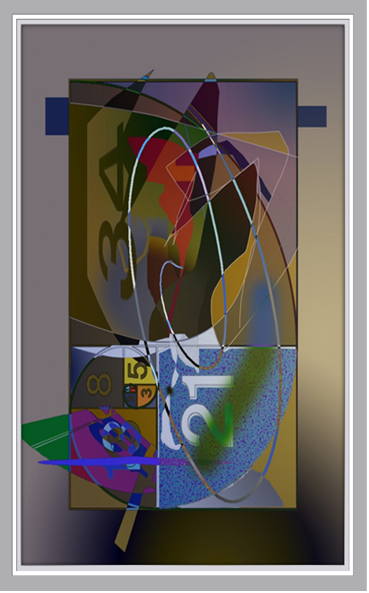



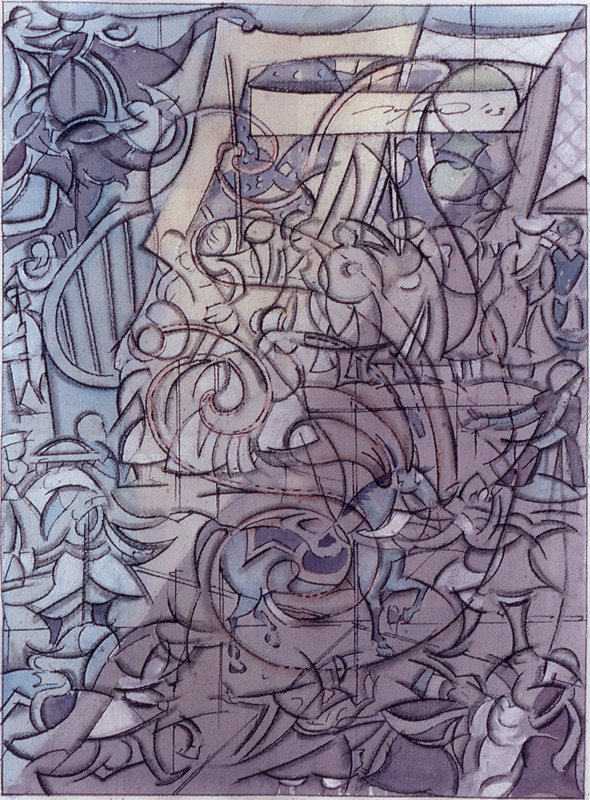
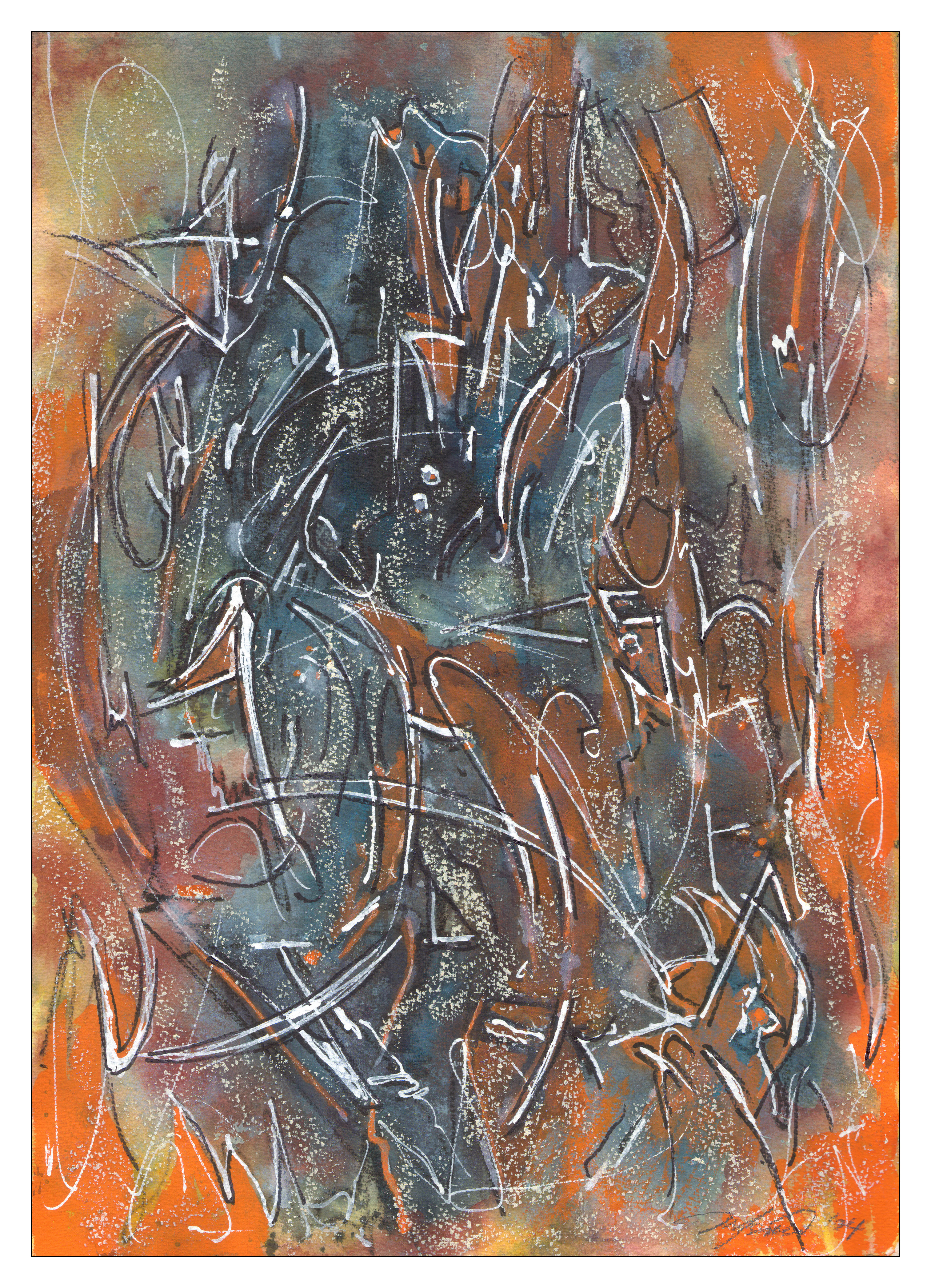


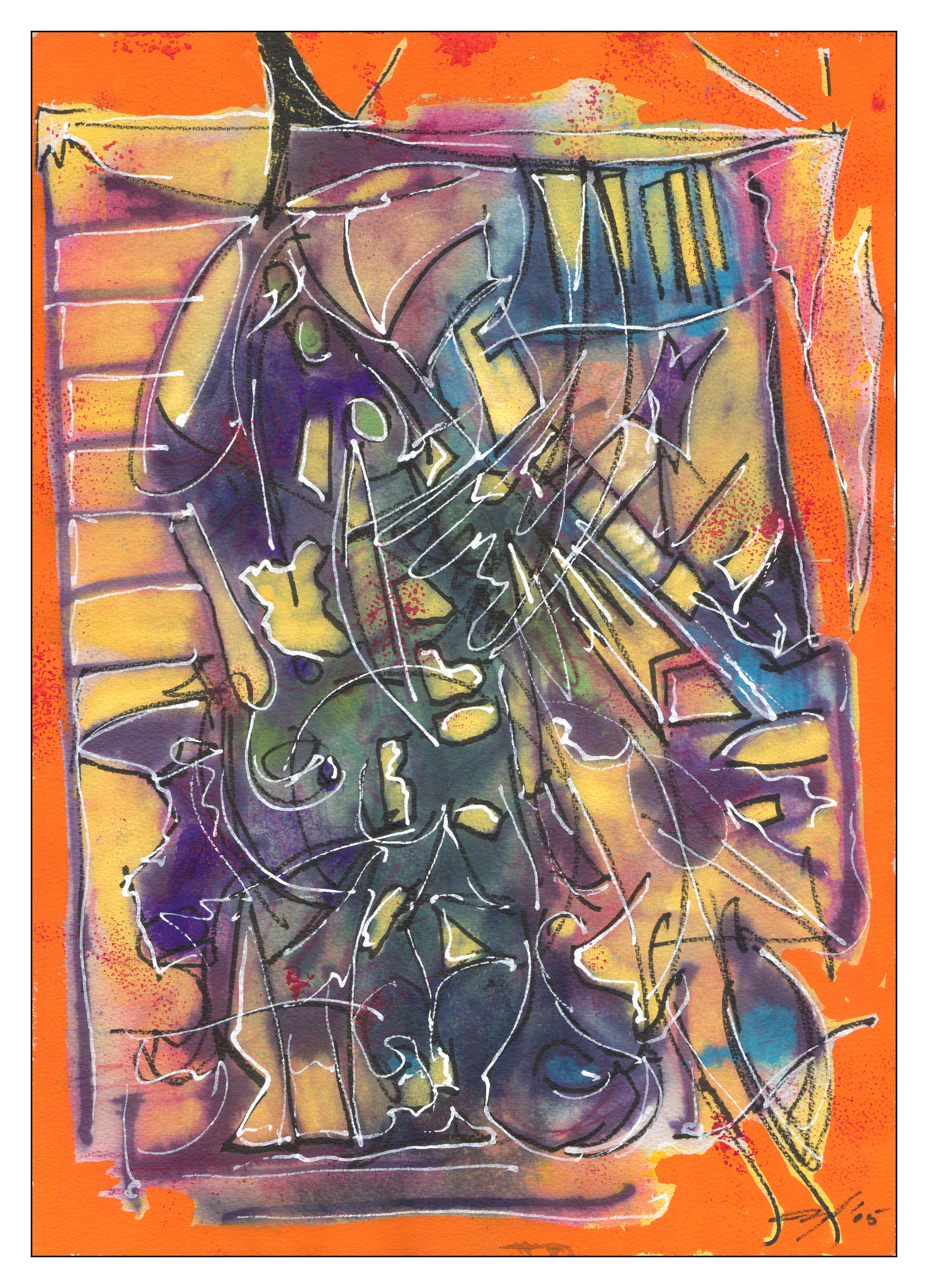

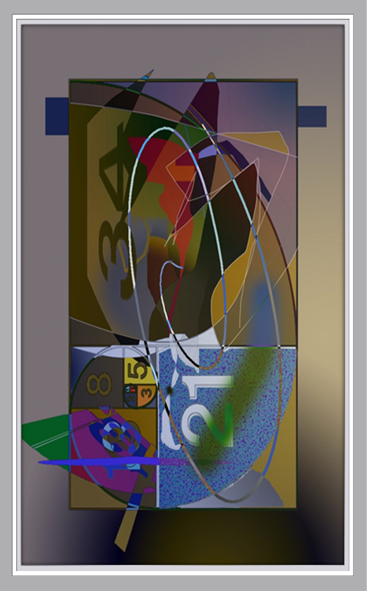

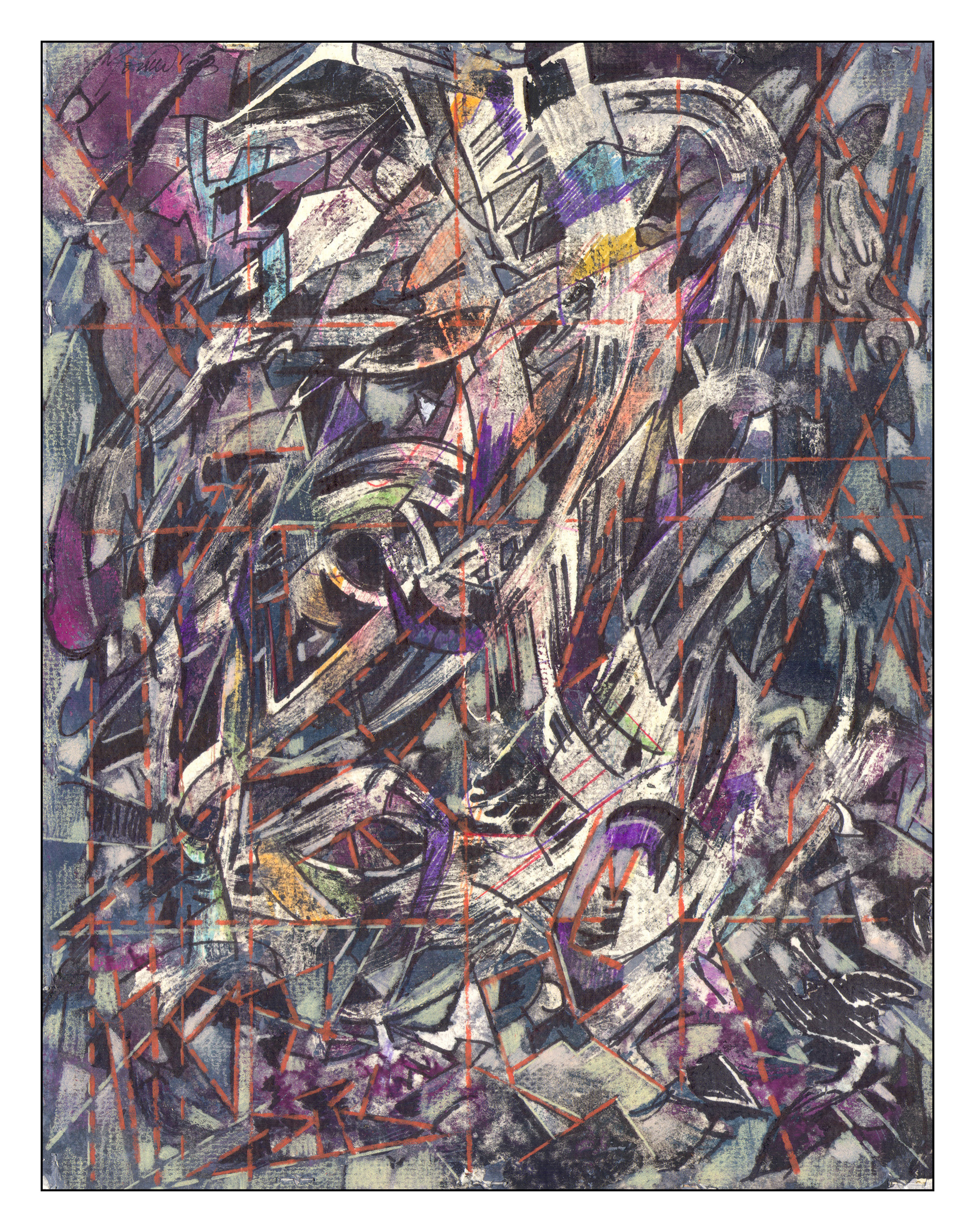
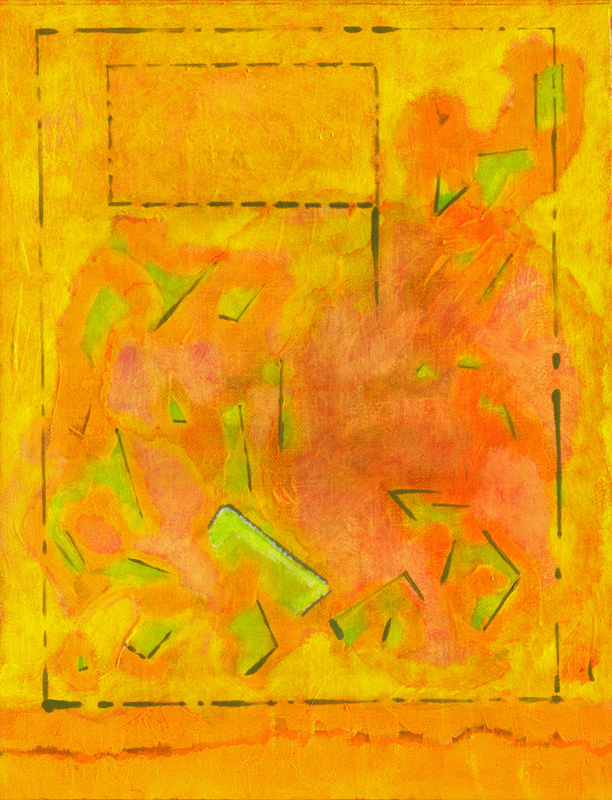
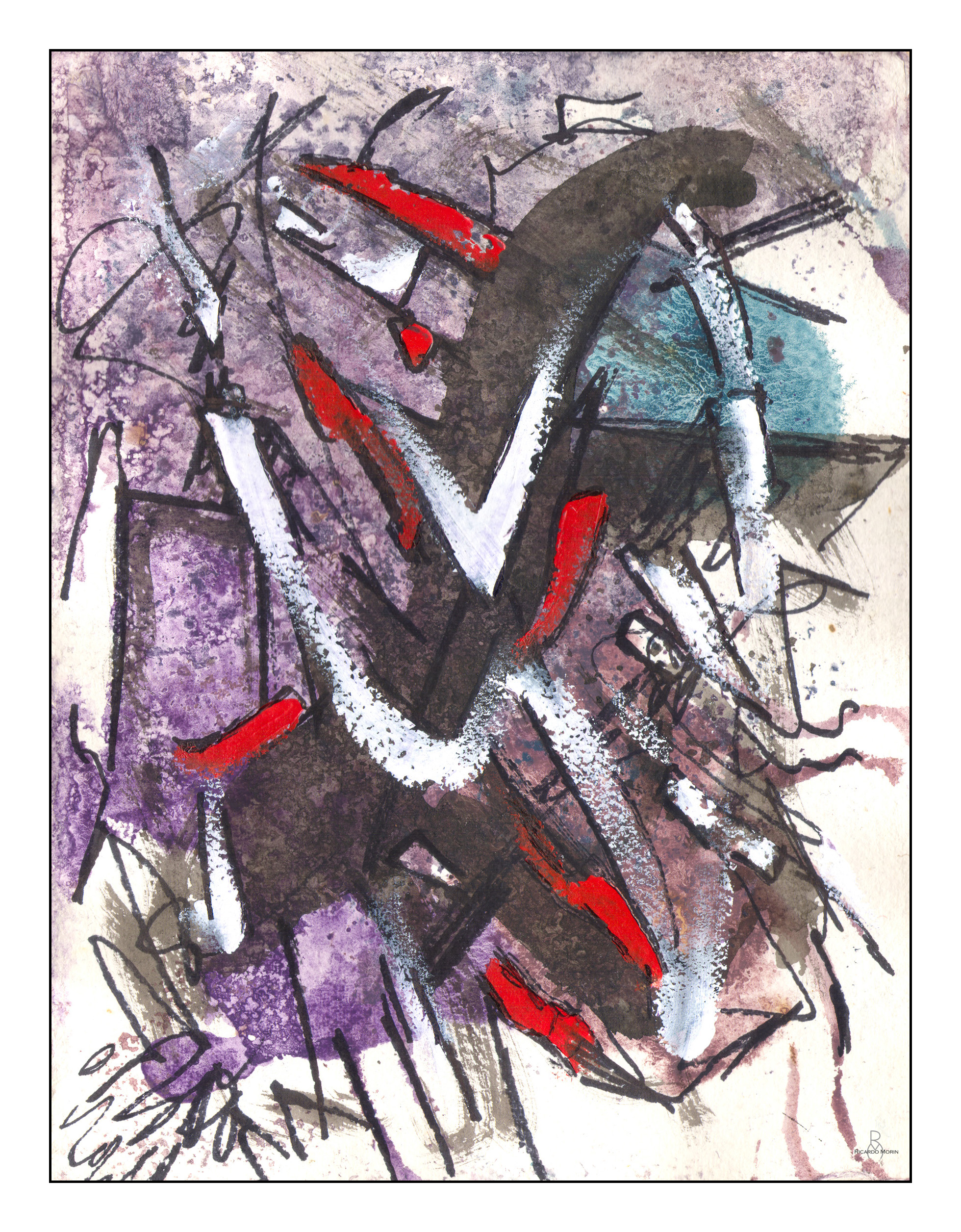
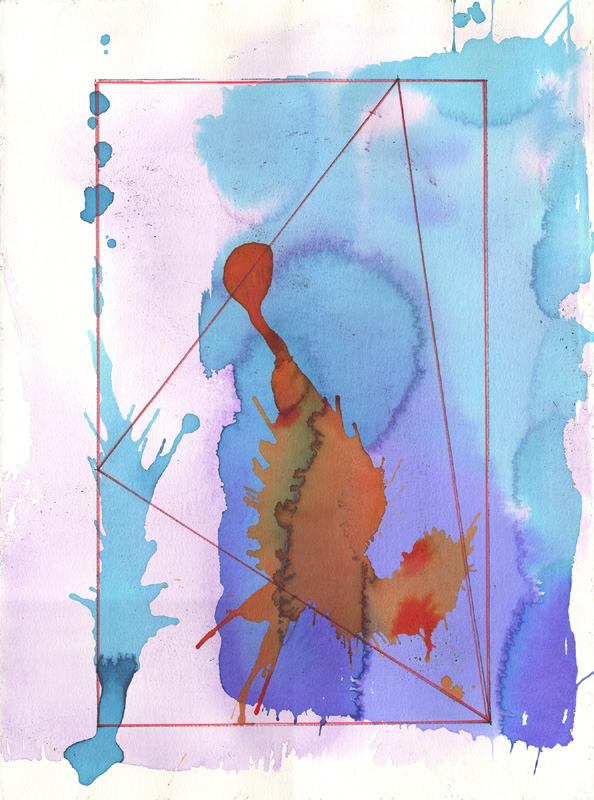


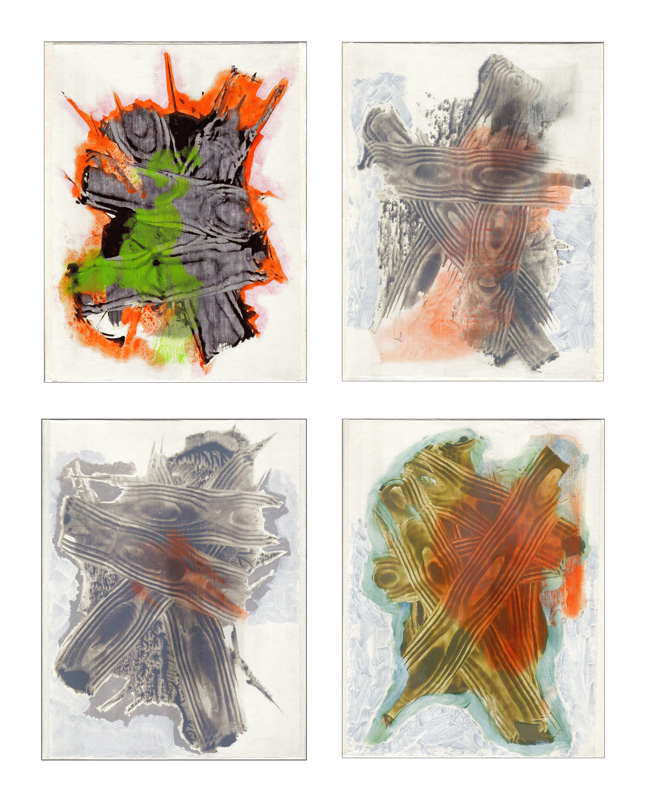




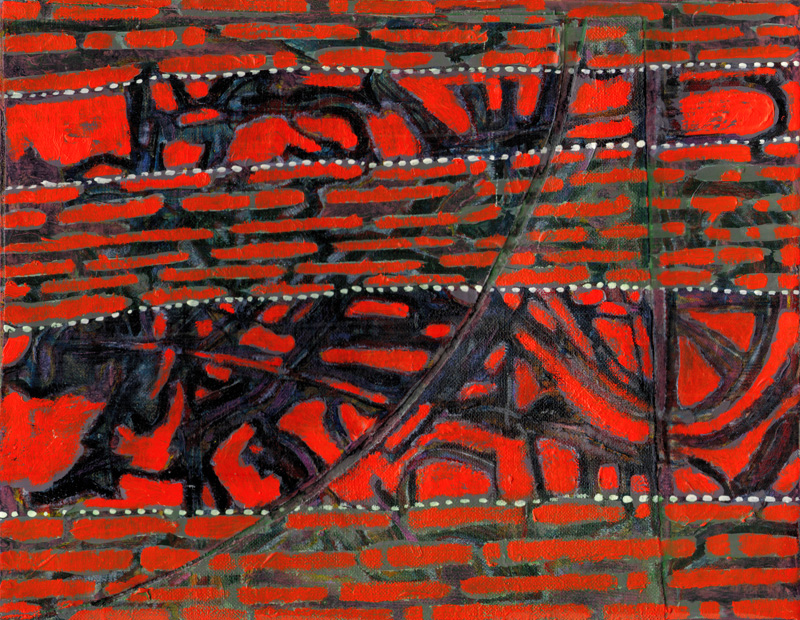
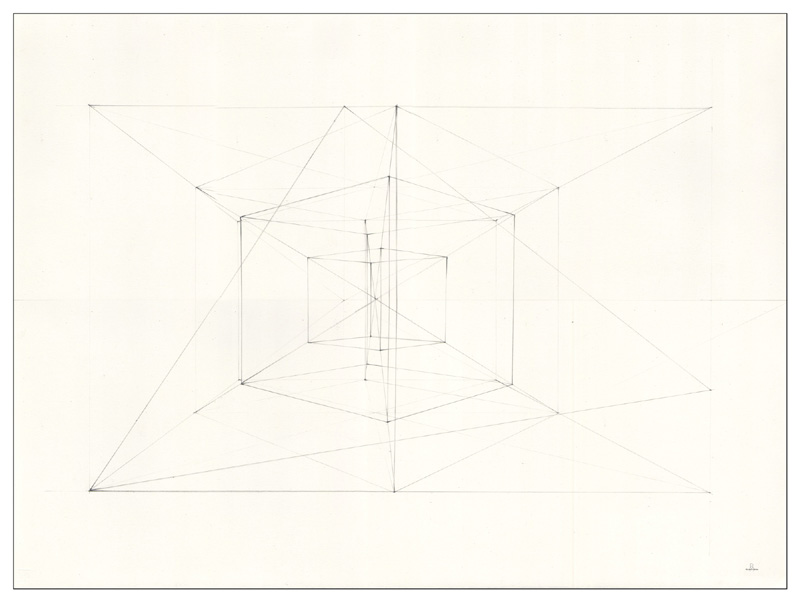
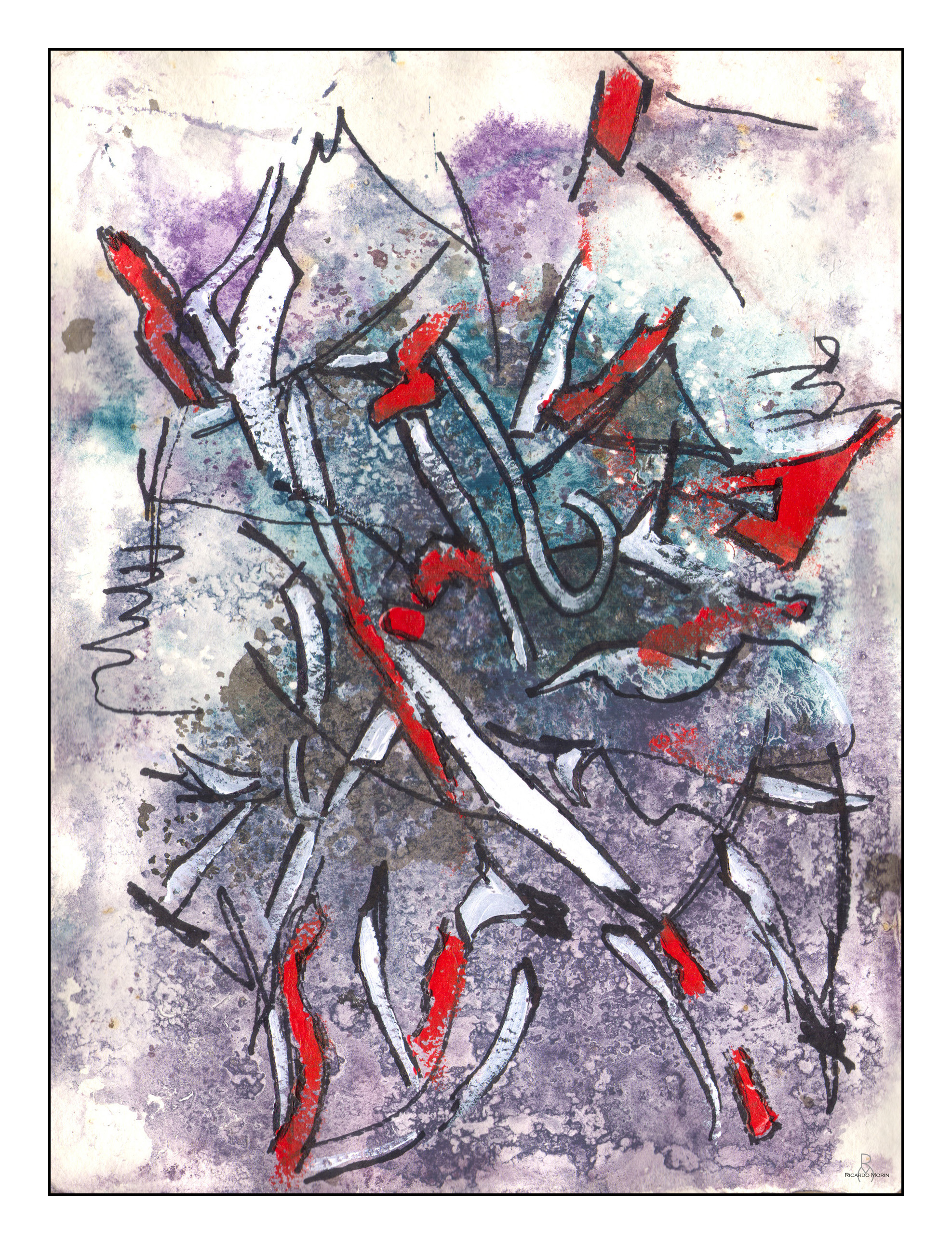


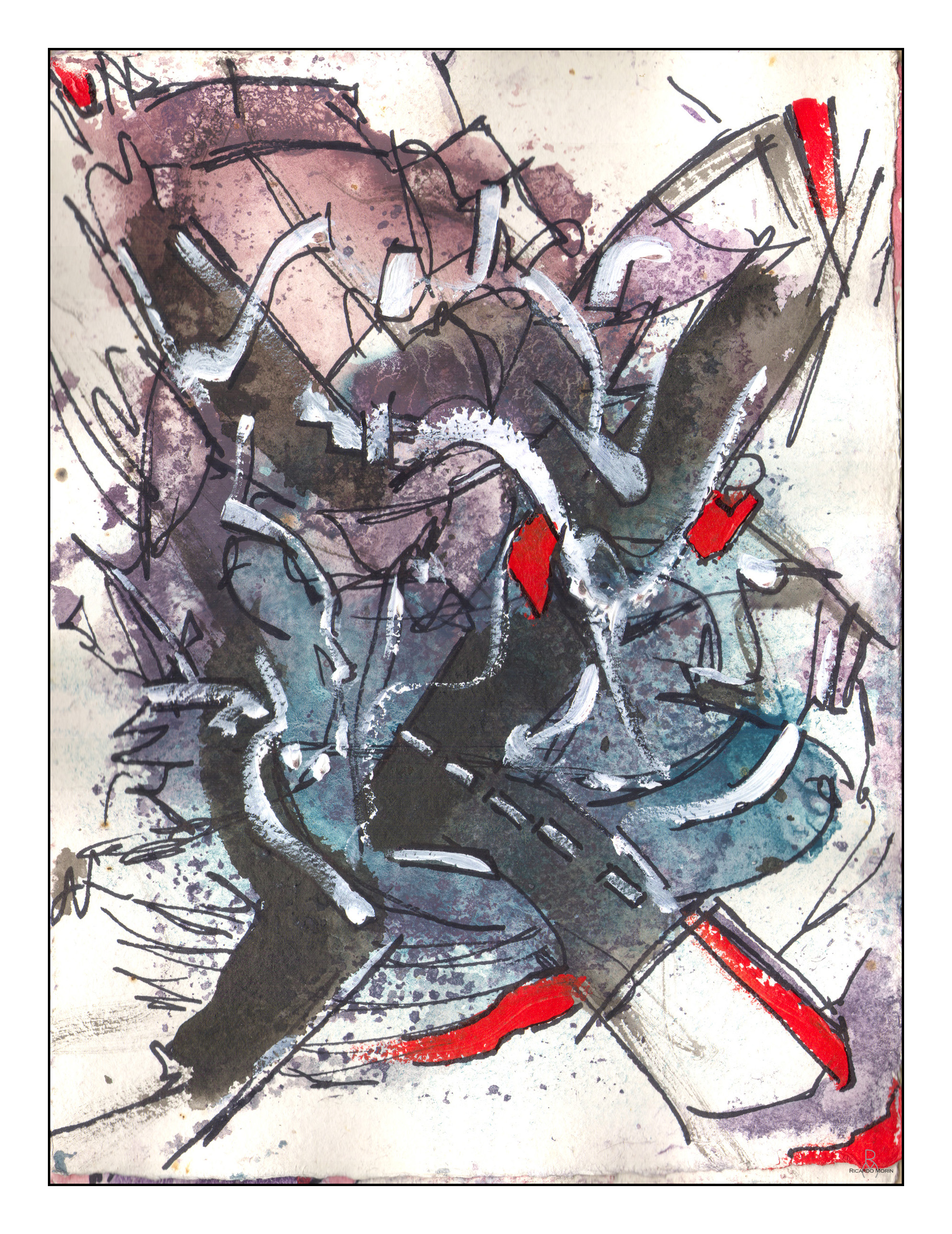

 Observations On Perception