*
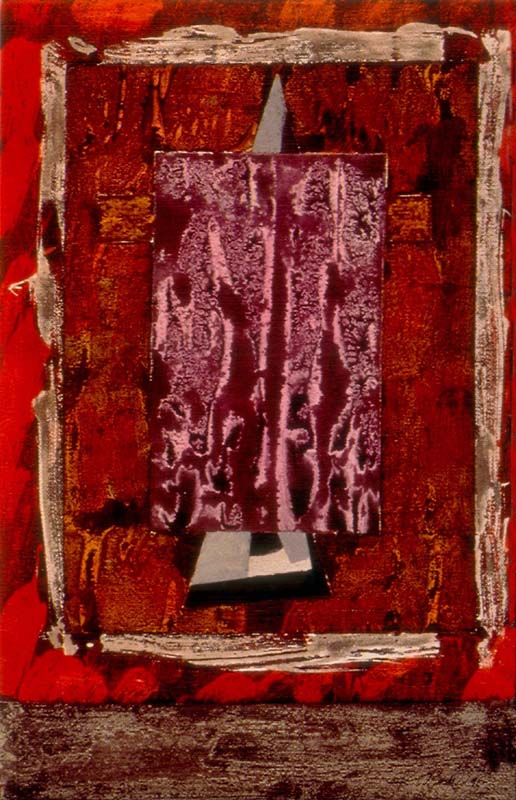
12″ x 18″
Oil on canvas
1992
American executive power has protected a petroleum intermediary from the practical reach of foreign criminal process, extinguished the domestic consequences of admitted offenses through clemency, negotiated control over Venezuelan petroleum, and placed Venezuelan revenue under American administration. The protection of Alejandro Betancourt López, the pardon of Julio Martín Herrera Velutini, the petroleum arrangement negotiated with the de facto administration of Delcy Rodríguez, and the custody of its proceeds constitute functions within one political economy. Betancourt’s freedom of movement preserved his utility to the petroleum negotiations. The Herrera pardon removed the consequences remaining after the principal corruption charges had been abandoned. The petroleum arrangement assigned commercial and governmental interests positions in fields belonging to a nation whose constitutional government had not been restored. Administrative custody deprived Venezuelans of control over the revenue generated from their own resources. Diplomatic intervention, clemency, investment, and financial custody converge upon the conversion of public power into private advantage. The operation begins when governmental authority removes an obstacle and concludes when official nomenclature converts the resulting advantage into public necessity. Extraction now proceeds through the administrative forms of politics.
The condition exists wherever public authority ceases to operate as a trust and becomes an asset subject to intermediation. Access, licensing, nonexecution of warrants, remission of penalties, management of revenue, and control of concessions then acquire exchange value. The exchange need not appear in a contract, and the consideration need not pass to the officer who confers the benefit. A campaign committee may receive money; a commercial intermediary may receive protection; a government may receive access to petroleum; an executive may receive a claim of geopolitical success. Each participant receives a different object, but the objects circulate through the same political economy. Impunity is no longer the residue left when institutions fail to impose accountability. It becomes a commodity produced and distributed through institutions whose offices were constituted to prevent it. The law supplies the instrument, the profession supplies the intermediary, secrecy obscures the consideration, and public necessity supplies the name under which the transaction enters ordinary government.
The political position occupied by this commerce precedes the officials who now administer it. Under the governments of Hugo Chávez and Nicolás Maduro, a commercial class accumulated contracts, exchange privileges, licenses, and access through proximity to the governing party. A revolution directed against oligarchy generated an oligarchy dependent upon the state it claimed to serve. Bilateral arrangements then admitted other forms of dependence. Cuba received petroleum and institutional access through service and security agreements. China extended credit repaid through petroleum deliveries. Russian entities acquired interests in extraction projects and claims attached to the Venezuelan state.[1] The forms differed, as did the consideration offered by each foreign power, but Venezuelan resources and governmental capacity remained the means of payment. The American administration now describes its intervention as a release from that subordination while placing Venezuelan production, revenue, and concessions within an American system of control. Chavismo, its foreign creditors, and the American administration present themselves as incompatible orders. Their incompatibility has not prevented each order from treating the state as the broker of assets that the nation cannot refuse to supply.
The continuity does not establish an equivalence among Cuba, China, Russia, and the United States. It establishes the persistence of a political relation. A nation deprived of constitutional agency cannot determine the terms upon which its resources sustain another state, repay a creditor, secure a governing faction, or enrich a concessionaire. The identity of the external beneficiary changes; the incapacity of the Venezuelan nation remains. Nor does the mortality of Donald Trump provide a limit to the relation. Trump did not create the American union of wealth, access, and public authority. He occupies it without the restraints by which prior administrations sought to preserve a distinction between governmental office and private acquisition. The beneficiaries, counsel, financiers, contractors, political committees, and institutional precedents can survive the officer through whom the present arrangement was made. The durable fact is not the life of its current administrator but the social allocation of power that rendered his conduct available. Money confers access without imposing a correlative measure of civic responsibility, and the institutions capable of contesting that allocation have permitted it to govern.
Delcy Rodríguez does not hold the constitutional presidency of Venezuela. She was appointed vice president by Nicolás Maduro, whose claim to the 2024 presidency rested upon a result that the National Electoral Council did not substantiate with polling-station tally sheets. The opposition coalition published more than eighty percent of those tally sheets, and the published returns indicated that Edmundo González Urrutia had won the election.[2] Maduro’s removal by foreign force ended his de facto command; it did not validate the office from which Rodríguez derived her appointment. The Constitutional Chamber that had sustained Maduro’s claim placed Rodríguez in executive control under a temporary designation intended to preserve administrative continuity. That designation maintained control of the executive apparatus; it did not comply with the constitutional sequence governing presidential absence or submit executive authority to an election. The initial ninety-day period expired in April without the legislative determination contemplated by Article 234, while the National Assembly capable of extending or terminating that period was itself formed through elections lacking democratic legitimacy. Had Maduro’s absence been declared absolute during the first four years of the asserted presidential term, Article 233 would have required a new election within thirty consecutive days.[3] Rodríguez therefore inherited the illegitimacy of Maduro’s order rather than curing it. She commands the executive apparatus as a matter of fact; she cannot express the constitutional consent of the Venezuelan nation. Recognition by the American executive establishes a diplomatic relation with the authority in control. It does not confer Venezuelan constitutional power upon that authority or enlarge its capacity to encumber the nation’s resources.
Alejandro Betancourt’s career gives the continuity a personal form. Derwick Associates, the company he co-founded, obtained no-bid contracts during Venezuela’s electricity emergency to construct generating facilities. The contracts were reported to have a value of approximately five billion dollars and were followed by allegations of overpricing and deficient performance. Betancourt has denied wrongdoing. He has not been criminally charged in the United States, Spain, Switzerland, or Venezuela. A United States money-laundering investigation concerning funds diverted from Petróleos de Venezuela produced charges and convictions against other persons, including a relative of Betancourt, but not against Betancourt. A Spanish inquiry was provisionally closed and reopened on appeal. A Swiss investigation remained pending after two arrests in Britain during 2025 pursuant to European requests. The absence of a criminal charge preserves Betancourt’s legal status as a person not adjudged guilty. It does not alter the institutional trajectory of his commercial position. A fortune formed through contracts issued by the Chavista state passed into participation in petroleum interests joined to Russian capital and then into control of North American Blue Energy Partners, known as NABEP, a private producer whose relation to the Rodríguez administration placed Betancourt between Venezuelan petroleum and American policy.[4]
That position acquired governmental value after the removal of Maduro. Betancourt maintained access to Rodríguez while becoming an intermediary for the Trump administration’s petroleum design. NABEP’s reported production rose from approximately eighteen thousand to almost two hundred thousand barrels per day within two years.[5] The arrangement announced in August 2026 contemplated development of seventeen fields holding an estimated sixty-five billion barrels and a production objective of 1.5 million barrels per day. Rodríguez described the bilateral project as extending twenty-five years, while an American official described the private company’s development rights as extending one hundred years.[6] Reports concerning the American participation described a proposed thirty-five percent passive interest in NABEP and preferential rights to acquire twenty percent of its production at cost. A Pentagon spokesperson then stated that the Office of Strategic Capital lacked statutory authority to take equity in a private company and could provide only loans, guarantees, or technical assistance.[7] No disclosed instrument has reconciled the two durations, the reported ownership structure, or the statutory objection. A resource commitment measured in decades and billions of barrels has entered public policy before publication of its legal vehicle, allocation of revenue, conditions of control, or termination provisions. Rodríguez’s lack of constitutional authority precedes every commercial term; no duration, investment, or foreign recognition can supply the absent consent of the Venezuelan nation.
The action taken on Betancourt’s behalf was not a pardon. The distinction is constitutional and jurisdictional. A pardon may apply to an offense against the United States before or after conviction, but the presidential power extends only to federal offenses.[8] The American executive possessed no authority to forgive conduct under investigation by Swiss or Spanish authorities. American officials instead employed diplomacy, prosecutorial communication, immigration authority, and control over arrest within the United States. In February 2026, Attorney General Pam Bondi spoke with the Swiss attorney general. Deputy Attorney General Todd Blanche participated in a subsequent call and conveyed the American preference for a resolution that would leave Betancourt free to travel and would not impose imprisonment or criminal penalties. Other officials joined communications with Swiss authorities and Betancourt’s counsel.[9] The intercession did not adjudicate the allegations. It attempted to alter the practical conditions under which another jurisdiction could pursue them.
The Swiss extradition request pending in Britain was withdrawn on May 13, 2026, and British travel restrictions were lifted. The Swiss investigation, however, did not terminate. Swiss authorities extended an international warrant and asked the United States Department of Justice to arrest Betancourt when he entered American territory. The Department of Justice did not execute the request. The Department of State facilitated a one-year, multiple-entry visa, after which Betancourt traveled to the United States and Venezuela while serving as an intermediary in the petroleum negotiations.[10] No court defeated the Swiss inquiry, and no American pardon could reach it. The sequence reduced the practical reach of a foreign criminal process while the subject of that process acquired utility in an American commercial and geopolitical project. Official protection and commercial utility arose together through acts performed by officials who knew both conditions. The causal terms of that concurrence remain undisclosed.
The Herrera proceeding presents a different legal instrument. A federal grand jury charged Julio Martín Herrera Velutini, former Puerto Rico governor Wanda Vázquez Garced, and former FBI agent Mark Rossini in 2022 with conspiracy, federal-program bribery, and honest-services wire fraud. The indictment alleged that Herrera financed political support for Vázquez in return for her replacement of the Puerto Rican financial regulator whose office was examining Herrera’s bank.[11] In August 2025, the three defendants pleaded guilty to misdemeanor campaign-finance offenses after the charges carrying the principal corruption allegations were abandoned. On January 16, 2026, Trump pardoned all three. Herrera’s daughter, Isabel Herrera, had contributed $2.5 million to MAGA Inc. in December 2024 and another $1 million in July 2025. Chris Kise, who had represented Trump, acted as Herrera’s counsel and advocated for the resolution. The White House stated that the contributions had no relation to the pardons.[12] The public chronology places political generosity, professional access, prosecutorial concession, and executive clemency within the same sequence of acts. The causal relation among those acts remains within an executive record that has not been disclosed.
The Betancourt and Herrera cases are not legal equivalents. In the first, American executive action diminished the reach of a foreign investigation that remained pending. In the second, the President exercised a constitutional power to remove the federal consequences of offenses admitted in an American court. One employed diplomatic and administrative intervention; the other employed clemency. The legal effects, jurisdictions, and procedural histories differ. The cases converge at the point where official protection accompanies a private relation to governmental utility, political finance, or privileged access. Betancourt’s petroleum function did not establish innocence or guilt, but it gave the American executive an interest in his freedom of movement. The Herrera family’s contributions did not establish the reason for clemency, but they made clemency inseparable from the question of patronage. In both proceedings, executive power relieved a private exposure while the public received no evidentiary account adequate to separate governmental purpose from private advantage.
Together the cases disclose a circuit. Access to public power produces fortune; fortune secures proximity; proximity obtains protection; protection restores the access from which the sequence began. The circuit renews itself because each stage finances or enables the next. Prosecution and extradition exist to impose accountability within and across jurisdictions. The pardon exists as an exception within the constitutional order, a power of mercy capable of correcting penalties that law alone cannot correct. The three instruments do not share one juridical purpose, but their administration can converge upon one political result. Foreign process is obstructed, domestic consequences are remitted, and the protected persons return to the networks that made protection valuable. Accountability is not avoided from outside the institution. The institution is used to convert exposure into security.
The conversion requires an apparatus of intermediation. Counsel move between personal representation and executive access. Lobbyists translate a beneficiary’s interest into a claim of national policy. Advisers convert proximity to foreign authority into commercial usefulness. Officials characterize intervention in a prosecution as the correction of injustice and characterize preferential access to petroleum as reconstruction. Financial entities receive funds; political committees receive contributions; companies receive concessions; the state receives a strategic claim. No participant needs to possess the whole exchange. Each participant administers one segment under a professional title, and the segmentation prevents any office from acknowledging the result produced by their combination. Law need not be violated at each stage. Procedure may be followed, discretion may be exercised, and authority may exist in formal terms. The corruption of public purpose occurs when those lawful capacities are coordinated around a private advantage that the public cannot examine or contest.
Congressional failure belongs to this apparatus even though members of Congress have objected to the intervention, introduced war-powers resolutions, and sought records concerning Venezuelan petroleum revenue. Those acts prevent the institutional record from being described as unanimous silence. They have not produced authorization for the military action, a governing statute for the petroleum arrangement, a public accounting of the revenue, or disclosure of the commitments negotiated with the Rodríguez administration. On January 8, five Republican senators joined the Democratic caucus to advance S.J. Res. 98 by a vote of fifty-two to forty-seven. On January 14, after two of those senators reversed their positions following pressure and assurances from the administration, the Senate divided fifty to fifty on a point of order concerning the privileged status of S.J. Res. 98; Vice President JD Vance supplied the fifty-first vote, sustaining the point of order and ending the resolution’s privileged consideration. [13] The institution reached the threshold of legislative restraint and then allowed executive pressure and an executive officer’s vote to prevent it. Committee inquiries have not compelled the executive departments to disclose the petroleum arrangement’s financial structure. Congress therefore remains present as an institution whose powers have not produced a corresponding restraint. Its failure is not the absence of every dissenting voice. It is the difference between objection and institutional action. When the legislature neither governs the disposition of the resources brought under American control nor enforces its demand for an accounting, executive possession acquires the duration of policy without the authority of law.
The promised reduction of oil prices supplies the arrangement with a distributive justification. The promise does not establish that the price will fall, and a fall in price would not establish the legitimacy of the means. A production objective is not production. The market price of petroleum depends upon global supply, demand, refining capacity, transport, inventories, coordinated production by other states, and conditions not controlled by a Venezuelan concession. The announced volume may affect those conditions if investment arrives, infrastructure functions, and the fields produce according to projection. None of those contingencies converts a forecast into a public benefit already delivered.[14] Nor can a benefit to the American consumer confer Venezuelan constitutional authority upon an agreement executed by an administration derived from Maduro’s usurpation rather than Venezuelan suffrage. A lower price, if obtained, would be a market consequence. It would not ratify the prior coercion, determine ownership of the revenue, or answer why selected intermediaries acquired positions in the transaction. Cheap petroleum is not a constitutional title.
The record remains under executive control. No operative instrument publishes the terms governing the American petroleum interest, preferential purchase rights, custody of revenue, corporate beneficiaries, or termination of the arrangement.[15] The internal basis for the intervention in the Swiss process has not been disclosed. The reasons for the Herrera pardons remain within executive discretion, accompanied by a denial that campaign contributions influenced the decision. Neither an express exchange of protection for petroleum services nor an exchange of clemency for contributions has been documented. The undisclosed terms do not sever the chronological and institutional relations among the acts. Secrecy leaves causation unresolved while removing the evidence by which causation could be disproved. Public officers cannot invoke the absence of proof as exoneration when their own control of the record produces the absence.
Secrecy does not, by itself, complete the conversion. What secrecy leaves undisclosed must also be supplied by those who prefer the promised result to the evidence contained in the present act. Self-deception commences when a projected destination is permitted to rename the means employed to attain it. Tutelage becomes scaffolding because its removal is presumed; investment becomes reconstruction because its fruits are presumed to accrue to the nation; continuity under an authority devoid of constitutional title becomes transition because a future democracy is presumed to validate the present displacement. None of those denominations proceeds from the condition to which it is applied. Each imports into the present act the future from which that act seeks absolution. The citizen may, therefore, acknowledge the absence of published contracts, independent audits, lawful authorization, and enforceable limits and nevertheless treat those absences as transitory imperfections of a process whose legitimacy has already been presupposed. Propaganda acquires its durable form at that point. It no longer needs to conceal the facts. It orders them so that the person subjected to dispossession may recognize each of them and nevertheless defend dispossession as the means of recovery.
The structural character of the commerce does not dissolve personal responsibility. A structure acts through decisions made by identified persons under powers entrusted for identified purposes. An executive chooses to intercede. A prosecutor chooses whether to act upon a foreign request. A consular authority chooses whether to facilitate entry. Counsel choose which access to sell and which relation to conceal behind privilege. Legislators choose whether objection will become inquiry, compulsion, appropriation, authorization, or prohibition. Corporate officers choose whether profit will depend upon a concession whose public terms and constitutional source remain unavailable. Citizens choose whether the prospect of cheaper fuel discharges the question of how the fuel was obtained. Institutional recurrence explains how the conduct persists; it does not make the conduct impersonal. The position may await an occupant, but occupation remains an act.
The same distinction limits any accusation directed at American society. The conduct cannot be attributed to every American as an equal participant, and national character cannot be reduced to the conduct of an executive or a class. Power in the United States is distributed without equality. A minority organized through concentrated wealth exercises influence through ownership, contributions, professional access, control of investment, and proximity to administration. This governing minority derives its political capacity from a culture that treats money as evidence of competence and permits wealth to command public attention without a corresponding civic obligation. The governing minority is not external to the society that produced it, but neither is American society identical to that minority. Responsibility falls upon the beneficiaries who transact, the officers who confer, the institutions that decline restraint, and the citizens who accept the transaction as the cost of material advantage. The allocation is narrower than collective guilt and broader than the personality of Trump.
Venezuelan responsibility is subject to the same measure. The external powers did not enter an institutional vacuum of their own creation. Venezuelan officials pledged resources, granted contracts, admitted foreign security influence, encumbered petroleum production, displaced electoral authority, and presented dependence as sovereignty. Domestic beneficiaries converted political allegiance into wealth while the population bore deterioration of currency, infrastructure, wages, and public services. The American intervention did not originate that dispossession. It inherited its channels, removed selected custodians, and installed another claim upon the same national substance. Liberation would have restored the Venezuelan nation’s capacity to authorize, reject, revise, and terminate the commitments made in its name. A transfer of command from one group of intermediaries to another preserves the dispossession while changing its beneficiaries.
The commerce of impunity does not require a document naming a price. It exists when public authority supplies private security at the points where money, utility, and access converge, while institutional secrecy prevents determination of the consideration. The absence of a written bargain does not prove a sale. Neither does it return the character of public trust to a sequence arranged around private advantage. A nation is dispossessed not only when its petroleum is removed but when its constitutional capacity is displaced by persons who exchange access to that petroleum for their own continuance. The corresponding injury to the United States is the conversion of constitutional office into an instrument by which that exchange is protected and monetized. The two injuries arise from the same commerce; they do not impose an equal burden.
The consequences of this practice may persist in both countries through governments and generations, and those who will measure their duration had no part in authorizing the acts that produced them. The institutions of the United States retain constitutional powers through which later Congresses, courts, administrations, and electorates may contest the practice, although that capacity neither determines when those consequences will end nor permits the annulment of benefits already conferred. Venezuela bears both the displacement of constitutional authority and the alienation of the patrimony over which that authority should operate. A subsequent government may contest the concession; it cannot return petroleum already extracted, recreate revenue already distributed, or restore the national choices foreclosed during its operation. The mortality of the officeholder is irrelevant to the duration of the encumbrance he creates. The burdens, however, are not commensurate. A hundred-year right converts the tenure of temporary officials into a claim upon generations of Venezuelans who neither authorized the agreement nor possessed the capacity to reject it. Impunity changes faces while its commitments fall forward upon the population whose patrimony supplied the transaction and upon Venezuelans not yet born who will inherit its restrictions.
Administrative names cannot alter the constituents of the transaction. Protection has a route, intermediation has a profession, concession has a beneficiary, and silence has an institutional source. The relation among them is the commerce. Its impunity consists not only in escape from judgment but in the use of public institutions to make judgment appear inapplicable. Termination would require Americans to recover public authority from purchase and Venezuelans to recover national authority from custody. Until those capacities are restored, the unresolved condition remains in the institutions and in the decisions through which each society permits itself to be governed.
Ricardo F. Morin
August 31, 2026
Bala Cynwyd, Pennsylvania
Footnotes
- [1] Congressional Research Service, “Venezuela: Background and U.S. Relations,” March 12, 2020: https://www.everycrsreport.com/files/20200312_R44841_d4977902d4fbedc88ea3d08af543fe5deb7d2ffb.pdf; U.S.-China Economic and Security Review Commission, “China-Venezuela Fact Sheet,” January 13, 2026: https://www.uscc.gov/research/china-venezuela-fact-sheet-short-primer-relationship
- [2] ConstitutionNet, “Venezuela: Is a democratic transition possible?” January 22, 2026: https://constitutionnet.org/news/voices/venezuela-is-democratic-transition-possible; Americas Quarterly, “Reaction: Trump Says U.S. Will ‘Run’ Venezuela After Maduro’s Capture,” January 3, 2026: https://www.americasquarterly.org/article/reaction-trump-says-u-s-will-run-venezuela-after-maduros-capture/; Latin America Reports, “Delcy Rodríguez’s term as acting president has expired. Why haven’t new elections been called in Venezuela?” April 24, 2026: https://www.latinamericareports.com/delcy-rodriguezs-term-as-acting-president-has-expired-why-havent-new-elections-been-called-in-venezuela/14304/
- [3] Constitute Project, “Venezuela (Bolivarian Republic of) 1999, revised 2009,” Articles 228, 233, and 234: https://www.constituteproject.org/constitution/Venezuela_2009; Latin America Reports, “Delcy Rodríguez’s term as acting president has expired. Why haven’t new elections been called in Venezuela?” April 24, 2026: https://www.latinamericareports.com/delcy-rodriguezs-term-as-acting-president-has-expired-why-havent-new-elections-been-called-in-venezuela/14304/
- [4] El País, “Alejandro Betancourt, the under-investigation billionaire linking Delcy Rodríguez to Trump,” August 17, 2026: https://english.elpais.com/international/2026-08-17/alejandro-betancourt-the-under-investigation-billionaire-linking-delcy-rodriguez-to-trump.html; Washington Post, “How the U.S. intervened in a criminal probe of a Venezuelan oilman,” August 27, 2026: https://www.washingtonpost.com/world/2026/08/27/us-intervened-criminal-probe-venezuelan-oilman-alejandro-betancourt/
- [5] Washington Post, “How the U.S. intervened in a criminal probe of a Venezuelan oilman,” August 27, 2026: https://www.washingtonpost.com/world/2026/08/27/us-intervened-criminal-probe-venezuelan-oilman-alejandro-betancourt/
- [6] Reuters, “Venezuela’s interim president says US energy deal will last 25 years,” August 30, 2026: https://www.reuters.com/business/energy/venezuelas-interim-president-says-us-energy-deal-will-last-25-years-2026-08-30/; Associated Press, “Trump says US has entered deal with Venezuela to take control of 65 billion barrels of oil reserves,” August 29, 2026: https://apnews.com/article/trump-venezuela-oil-reserves-eb0ed5a1e99602c21a7f690c3368020e
- [7] Reuters, “US to take 35% stake in Venezuelan mogul Betancourt’s oil venture, WSJ reports,” August 29, 2026: https://www.reuters.com/legal/legalindustry/us-take-35-stake-venezuelan-mogul-betancourts-oil-venture-wsj-reports-2026-08-30/
- [8] Library of Congress, Constitution Annotated, “Overview of Pardon Power,” Article II, Section 2, Clause 1: https://constitution.congress.gov/browse/essay/artII-S2-C1-3-1/ALDE_00013316/; Library of Congress, Constitution Annotated, “Pardons Generally”: https://constitution.congress.gov/browse/essay/artII-S2-C1-3-4-1/ALDE_00013319/
- [9] Washington Post, “How the U.S. intervened in a criminal probe of a Venezuelan oilman,” August 27, 2026: https://www.washingtonpost.com/world/2026/08/27/us-intervened-criminal-probe-venezuelan-oilman-alejandro-betancourt/
- [10] Washington Post, “How the U.S. intervened in a criminal probe of a Venezuelan oilman,” August 27, 2026: https://www.washingtonpost.com/world/2026/08/27/us-intervened-criminal-probe-venezuelan-oilman-alejandro-betancourt/
- [11] U.S. Department of Justice, “Former Governor of Puerto Rico Arrested in Bribery Scheme,” August 4, 2022: https://www.justice.gov/archives/opa/pr/former-governor-puerto-rico-arrested-bribery-scheme
- [12] Associated Press, “Former Puerto Rico governor pleads guilty in campaign finance case,” August 27, 2025: https://apnews.com/article/588ffd964bb4076a5b45219375d3fef5; CBS News, “Trump pardons former Puerto Rico governor and two co-defendants,” January 16, 2026: https://www.cbsnews.com/news/trump-pardoning-puerto-rico-former-governor-wanda-vazquez-officials-say/; Reuters, “Trump to pardon former Puerto Rico Governor Vázquez,” January 16, 2026: https://www.reuters.com/legal/government/trump-pardon-former-puerto-rico-governor-vazquez-2026-01-16/
- [13] United States Senate, “Roll Call Vote 119th Congress, 2nd Session, Vote No. 5, S.J. Res. 98,” January 8, 2026: https://www.senate.gov/legislative/LIS/roll_call_votes/vote1192/vote_119_2_00005.htm; United States Senate, “Roll Call Vote 119th Congress, 2nd Session, Vote No. 9, S.J. Res. 98,” January 14, 2026: https://www.senate.gov/legislative/LIS/roll_call_votes/vote1192/vote_119_2_00009.htm; Reuters, “U.S. Senate blocks effort to rein in Trump’s Venezuela war powers,” January 14, 2026: https://www.reuters.com/world/us/us-senate-blocks-effort-rein-trumps-venezuela-war-powers-2026-01-14/; House Committee on Oversight and Government Reform, minority staff, “Ranking Member Robert Garcia Escalates Investigation into Trump Administration Venezuelan Oil Management,” August 4, 2026: https://oversightdemocrats.house.gov/news/press-releases/ranking-member-robert-garcia-escalates-investigation-into-trump-administration-venezuelan-oil-management-as-revenue-exceeds-13b
- [14] Associated Press, “Trump says US has entered deal with Venezuela to take control of 65 billion barrels of oil reserves,” August 29, 2026: https://apnews.com/article/trump-venezuela-oil-reserves-eb0ed5a1e99602c21a7f690c3368020e
- [15] Associated Press, “Trump says US has entered deal with Venezuela to take control of 65 billion barrels of oil reserves,” August 29, 2026: https://apnews.com/article/trump-venezuela-oil-reserves-eb0ed5a1e99602c21a7f690c3368020e; Reuters, “US to take 35% stake in Venezuelan mogul Betancourt’s oil venture, WSJ reports,” August 29, 2026: https://www.reuters.com/legal/legalindustry/us-take-35-stake-venezuelan-mogul-betancourts-oil-venture-wsj-reports-2026-08-30/; House Committee on Oversight and Government Reform, minority staff, “Ranking Member Robert Garcia Escalates Investigation into Trump Administration Venezuelan Oil Management,” August 4, 2026: https://oversightdemocrats.house.gov/news/press-releases/ranking-member-robert-garcia-escalates-investigation-into-trump-administration-venezuelan-oil-management-as-revenue-exceeds-13b


PLease leave a Reply