*
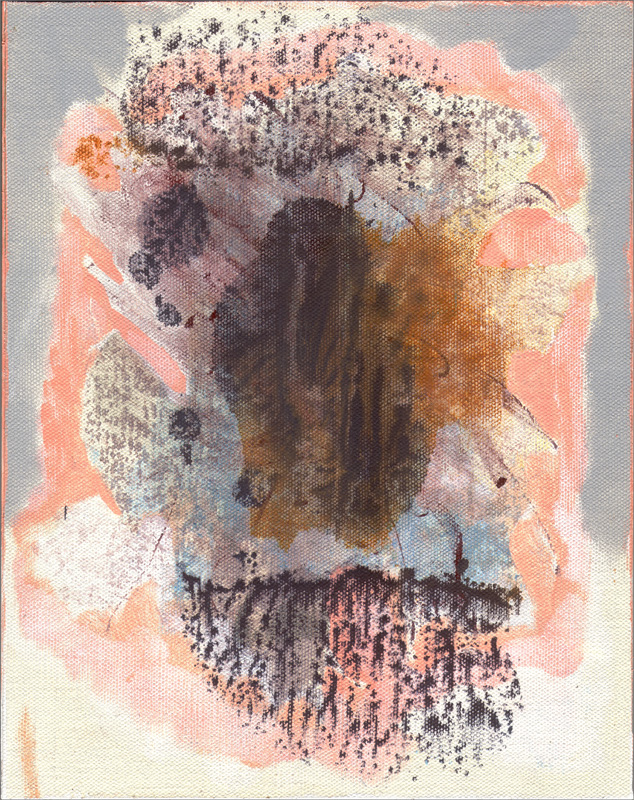
Still Eight: The Space Thought Finds
Oil on linen mounted on wood panel
12 by 15 by 3/4inches
2010
Ricardo F. Morín
Dec. 2025
Oakland Park, Fl
*
AUTHOR’S NOTE
This essay examines a phenomenon that emerges in societies where civic limits and intellectual appetite coexist. It does not describe a psychological condition or a sociological trend, nor does it judge any nation. Its purpose is simpler: to observe how thought adapts when the public space in which it moves is narrower than the private space in which it develops.
ABSTRACT
This essay investigates how intellectual life often persists—even thrives—in environments where civic participation is restricted. It describes the structural conditions that make this coexistence possible, the historical habits that render it familiar, and the tensions it produces. Rather than seeking causes or proposing remedies, the essay observes how thought finds room to act when civic space contracts, and how this adaptation shapes cultural life.
1
Every society creates conditions in which thought must find its footing. In some places, civic life offers wide avenues for debate, dissent, and organized participation. In others, the avenues narrow: institutions limit expression, political continuity restricts competition, or public life becomes regulated by boundaries that citizens did not choose. Yet even within these limits, thought does not disappear. It looks for other spaces—quieter, more internal, less visible—where reflection can continue.
2
This coexistence is not contradictory. A population may cultivate disciplined study, meticulous reading habits, and a strong appetite for ideas while navigating restrictions on political voice. Intellectual inquiry can flourish in classrooms, libraries, private circles, or artistic practice even when formal participation in public life is constrained. The two conditions do not cancel one another; they unfold in parallel.
3
Part of this coexistence is historical. Societies inherit habits shaped over decades or generations. When public limits remain stable, they become part of the environment rather than an interruption. People learn to navigate around those limits, allocating some questions to public conversation and others to private reflection. Over time, this arrangement no longer feels provisional; it becomes a familiar pattern of life.
4
Another part of the coexistence is structural. Not every form of thinking requires the same degree of civic freedom. Institutional critique demands a wide public space, but philosophical examination, ethical reflection, and conceptual inquiry can develop in quieter settings. These forms of thought do not depend on protest or political leverage. They depend on attention, which can remain active even when public expression is not.
5
Yet this adaptation introduces a tension. Thought that flourishes privately may find no path into shared life. Insight lives in the individual but cannot circulate through institutions. The result is not silence but separation: intellectual depth on one side, civic restriction on the other. Each remains intact, but the bridge between them is narrow.
6
This tension is not a paradox but a structure. Intellectual inquiry survives by adjusting its location. It moves inward, turning the private sphere into a workshop for ideas. It becomes a form of endurance rather than resistance. This endurance is neither passive nor resigned; it is a way of continuing to think when public avenues are limited.
7
The phenomenon is neither exclusive to one region nor confined to a single political model. It appears wherever civic limits coincide with cultural ambition—whether shaped by history, institutions, or circumstance. What differs from one society to another is not the existence of this tension but how it is lived: as normalcy, as compromise, or as a quiet imbalance accepted as part of daily life.
8
The deeper question is not why this coexistence happens, nor whether it should be otherwise. The question is what this coexistence reveals: that thought seeks space even when civic space contracts; that reflection persists even when public expression narrows; and that the need to understand does not vanish under limits. It simply relocates, finding equilibrium—uneasy, stable, and always in motion.
Tags: civic limits, civic structure, constraint, cultural adaptation, cultural analysis, historical conditioning, intellectual inquiry, Perception, private reflection, public space
 Observations On Perception
PLease leave a Reply