Ricardo F. Morín
What Is Good Sense?
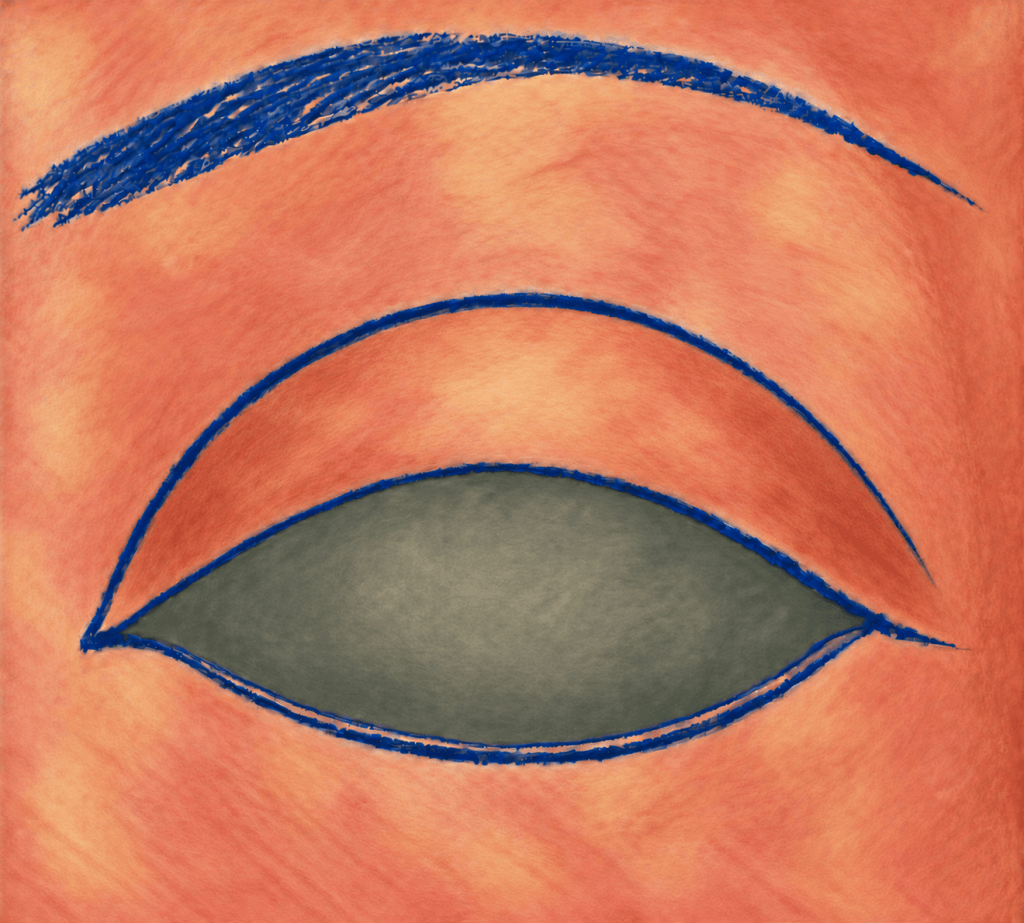
Computer-generated image (CGI)
2026
Common sense consists of conclusions reached well before the occasion that calls for them: held in reserve, transmitted without examination, and applied whenever a new occasion resembles one already known. Its convenience is not imaginary, since it spares the effort of looking. And so it is that men and women of every condition carry it nonchalantly, and with it views of a purely stereotypical nature, accepted as norms of conduct because no one recalls having examined them. Under its influence, people meet one another already sorted: each is received as an instance of a collective phenomenon, a mirrored image of others presumed alike, and each answers from within a place assigned in advance. What takes place between them is less an encounter than an exchange between categories, in which the category arrives before the person and occupies the place where the person would have appeared.
The comparison of civilizations offers its most familiar form. Between any Latin and any Anglo-Saxon culture, common sense draws a border and declares two isolated worlds: Italians are like that, the English otherwise. The human condition is thereby redistributed into collective classifications dependent upon physical aspect or historical attainment. Words such as Hellenized, Latinized, Anglicized, Africanized, or Indigenized describe the passage of language and custom across centuries. Applied to an individual, they may say something true of speech or formation, yet they claim nothing about who that individual is: the claim begins when a description of many is carried over to a single person and settles in advance what that person will be found to be. What results is a sectarianism, banal and insular, which mistakes the boundary for what it encloses.
What the category erases is the particular: this face, this voice, this circumstance, which resemble others in part and never in whole. It is there that good sense begins, as a form of perception before it is a form of judgment. A painter knows the difference between drawing what is seen and drawing what is known: the eye registers the actual geometry of a face, its asymmetries and its accidents, while the hand reaches for the generic face it has drawn a hundred times. Yet the eye that registers those accidents has itself been formed by the hundred faces before it: what it retains sharpens its seeing, provided that each new face is allowed to correct what was retained. The generic face belongs to common sense, whereas the actual face is available only to attention.
What is retained from one encounter may serve the next or may stand in its place. The difference lies in whether the earlier conclusion remains open to correction by the person now present, or is applied as though that person had already been seen. Whereas common sense is held as a possession, good sense is exercised as an act, performed on each occasion or not performed at all: no one has it as one has a temperament or an education, and its absence leaves no trace, since common sense supplies an answer in the place where looking would have been.
Consequently, the line between the two does not run between groups of people: it separates neither the learned from the unlettered nor the critic from the crowd, but crosses each person from one moment to the next. A woman at a market stall who lets the stranger’s fatigue, rather than his accent, govern how she answers him has looked. The same woman, describing his country to her neighbors an hour later, may draw on the reserve. Nor are those who denounce classification exempt, since the crowd they denounce is itself a category, drawn from the same reserve as the stereotypes they oppose.
Good sense does not exempt its own conclusions. A clear perception, once kept beyond the reach of examination, hardens into a rule, and the rule passes into the reserve from which the next stereotypes are drawn: what was seen yesterday is applied tomorrow to someone who was never seen at all.
Ricardo F. Morin, October 12, 2026. In Transit
Tags: attention, Categories, classification, Common Sense, Good Sense, judgment, Perception, Prejudice, Stereotypes


PLease leave a Reply