Posts Tagged ‘judgment’

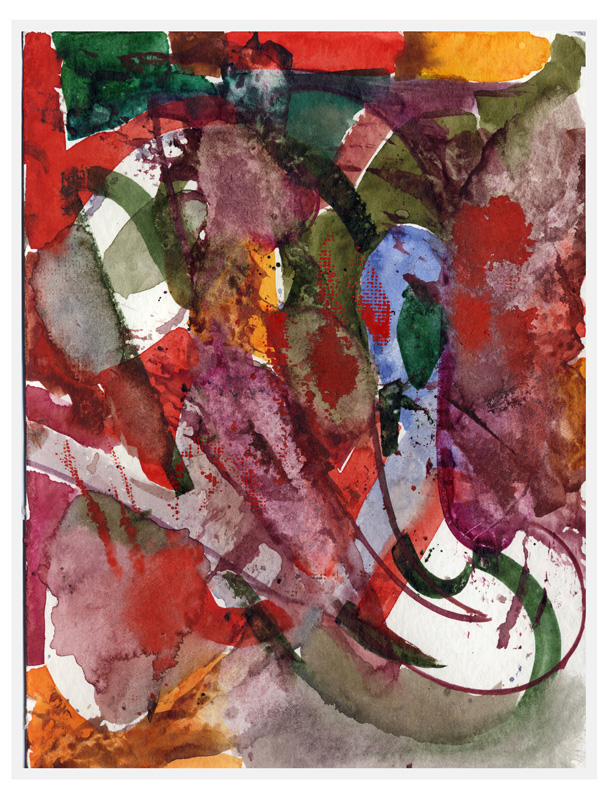
“Still Lawful”

September 30, 2026
Ricardo F. Morín
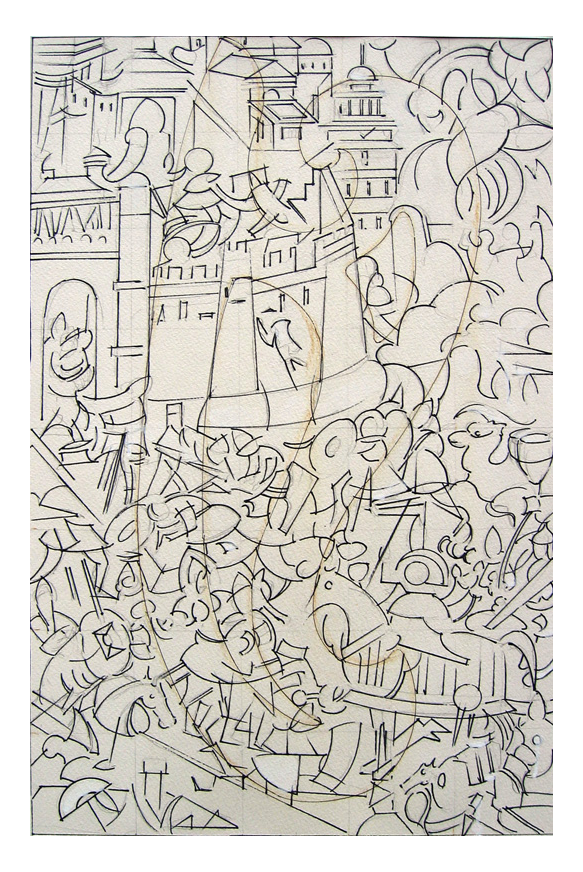
Persian Three
19” × 29”
Graphite, sanguine and Sumi ink on watercolor paper
2003

The present crisis does not begin with soldiers in the streets or laws being openly suspended.  It begins earlier, in our thoughts and conversations, as words change their meaning.  Before courts are bypassed or elections are challenged, the language used to describe legality begins to shift.  Words once tied to injury become tools of accusation.  Authority moves first by changing how things are said, long before procedures are changed.

The shift is often noticed first not in statutes, but in how accusations are repeated on television, in hearings, and in everyday conversation, long before any ruling is issued.

A person opens an official notice declaring that a “violation” has occurred, yet the document contains no description of the act, no evidence to examine, and no process by which the finding might be contested.  What is presented is not an allegation awaiting review, but a conclusion that now governs what actions are permitted next.

In earlier constitutional systems, a violation referred to a specific act.  Evidence had to be gathered.  Law had to be applied.  A process had to be followed.  Today, a violation is increasingly declared rather than demonstrated.  The word no longer signals a legal test.  It signals that judgment has already been made.  What once required adjudication can become an instrument of command.

A rule can then be enforced before the disputed premise on which it rests has been adjudicated.  The affected party may retain a right of review, but review occurs after the language of violation, necessity, security, or compliance has already supplied a reason for action.

Language and procedure meet at that point.  A disputed condition is named as though established; governmental action proceeds upon the name; review follows.

This logic became visible on January 6, 2021.  An election certified through legal procedures was declared illegitimate by assertion.  A lawful transfer of power was described as theft.  Defeat was renamed a violation.  What followed was not confusion.  It was narrative replacing legal process.

The legal aftermath did not produce a single institutional resolution.  The federal prosecution concerning efforts to overturn the 2020 election was dismissed in November 2024 after Donald Trump’s reelection, pursuant to the Department of Justice’s longstanding position concerning prosecution of a sitting President.  On January 20, 2025, presidential clemency commuted the sentences of fourteen people convicted of offenses related to January 6, granted full pardons to the other individuals convicted of such offenses, and directed the Attorney General to seek dismissal with prejudice of pending indictments arising from January 6.  The Georgia election-interference prosecution against Trump was dismissed in November 2025.

Different proceedings ended through different constitutional and procedural mechanisms.  None produced a final adjudication of the federal election-interference charges against the returning President.

The sequence also appears in administrative government.

In 2026, the Department of Homeland Security made full receipt of specified counterterrorism grants conditional upon changes to state and local election administration, with 20 percent of an award subject to withholding for noncompliance.  Six cities and counties challenged those conditions.  On September 28, a federal court held that the Federal Emergency Management Agency lacked congressional authority to impose them and vacated the election-related requirements.

The judgment demonstrates that constitutional restraint had not disappeared.  Judicial review remained capable of making restraint effective.  The disputed condition nevertheless existed as an administrative command before judicial review determined whether the agency possessed authority to impose it.

The constitutional difficulty lies in that interval.  Governmental action and its prospective consequences can precede the institutional judgment that determines the lawful limits of the authority asserted.

The same sequence appears in less formal civic encounters.  A courthouse remains open.  Hearings are scheduled.  Filings are accepted.  Yet a consequential determination may already govern the person who seeks review.  Procedure remains available, but it begins after the disputed condition has acquired practical effect.

Beyond the United States, a related distinction separates power from sovereign authority.  Military or diplomatic power may alter the circumstances in which another State decides.  It does not itself determine the sovereign competence by which that decision becomes lawful.

Earlier claims about acquiring Greenland treated territorial control as an object of strategic necessity.  On September 22, 2026, the United States, Denmark, and Greenland signed an agreement that instead proceeds through the existing defense relationship.  It would permit new American facilities at Narsarsuaq and Mestersvig, expansion of Pituffik Space Base, and broader American military access while leaving Greenland within the Danish realm and affirming its right to self-determination.  The agreement remains subject to parliamentary approval in Greenland and Denmark.

Pressure did not itself transfer sovereignty.  The arrangement that followed requires agreement and constitutional process.

On September 1, Venezuela’s National Assembly approved an oil agreement between Venezuela and the United States involving 17 fields and approximately one-fifth of the country’s oil reserves.  Some opposition legislators abstained because they had not been able to examine the written terms of the agreement.  The legislative act is part of the constitutional record; it cannot simply be disregarded.  It also does not answer a different question:  what constitutional competence the Venezuelan institutions presently exercising power possess to create rights intended to endure far beyond the present government.  American recognition can determine whom the United States treats as Venezuela’s government.  It cannot answer that Venezuelan constitutional question.

Across these cases, law has not disappeared.  Courts adjudicate.  Legislatures enact.  Agreements remain subject to constitutional process.  The difficulty appears in two related forms:  power may act before review determines its lawful limits, and power may alter the circumstances in which another sovereign must exercise its own authority.

Language gives the first condition institutional force and can accompany the second.  A disputed premise described as a violation, necessity, security requirement, or act of compliance can begin to govern conduct before the institutions charged with determining its legal consequences have completed that determination.

What emerges is power that remains procedurally recognizable as lawful while the limits of its authority remain subject to determination.  Procedure survives.  The sequence changes.

The danger lies in what language permits power to present as already decided.  When accusation becomes violation, necessity becomes authority, and compliance becomes evidence of legality, judgment begins after its vocabulary has been supplied by power.

The first freedom is judgment.

Freedom survives only where judgment remains possible.  Judgment survives only where language has not yet been taken over by power.

Ricardo F. Morín
September 30, 2026
Bala Cynwyd, Pennsylvania


“On Horizon, Constraint, and the Conditions of Intelligibility”

September 27, 2026
Ricardo F. Morín
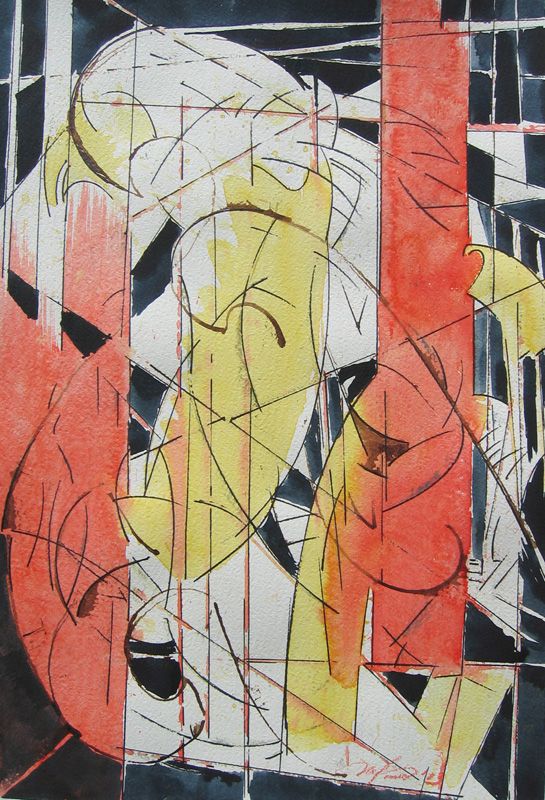
Golden Tent
40″h. x 26″w
Watercolor on paper
2005

People try to understand the world while living inside it.   They rely on rules that must hold and on words that must make sense.   Some things cannot contradict each other.   Some outcomes follow necessarily from given conditions.   At the same time, people need meaning to be communicated, shared, corrected, and lived with over time.   These two demands do not coincide.   Rules alone do not explain experience, and meaning alone cannot hold without limits.

Mathematics shows constraint in its clearest form.   When a relation is proven, it holds regardless of who considers it or when it is considered.   Time does not alter a proof.   Perspective does not change necessity.   Mathematics shows what must be true independent of circumstance.   Yet because of this independence, mathematics says little about what it is like to live under those constraints or to apply them within experience.

Language works differently.   Meaning arises through use rather than through necessity.   Words gain sense as people employ them across situations that change.   Language carries memory, absorbs disagreement, and adapts as conditions shift.   Its strength lies in allowing meaning to remain intelligible even when context cannot be removed.   But this same flexibility prevents language from settling meaning once and for all.   What is understood remains open to revision and dispute.

Rules by themselves do not produce understanding.   Constraint must be carried into language so that meaning can be tested, shared, and corrected.   Without language, rules remain abstract.   Without constraint, language loses coherence.

Human understanding takes shape in the tension between these two demands rather than in their resolution.   Logic without language remains detached from lived experience.   Language without constraint dissolves into arbitrariness.   Their refusal to collapse into one another is not a failure, but the condition under which understanding becomes possible.

This tension can be pictured through the idea of a horizon.   When people look across a landscape, the horizon is not a wall but a meeting point.   Different lines of sight converge there and make depth visible.   No single line explains the horizon.   The horizon explains how many perspectives can belong to the same space.

When perspective shifts, the horizon shifts with it.   In curved or multidimensional space, there is no single fixed vanishing point.   Structure remains, but position matters.   Understanding develops through movement and reorientation rather than through arrival at a final viewpoint.

The sequence of diagnostic axes examined elsewhere—memory, identity, testimony, judgment, responsibility, and authorship—does not resolve into a single conclusion.   Each axis shows how human capacities fail to remain fully governable over time.   Only after tracing these failures does the horizon become visible.   The horizon does not explain the axes or correct them.   It names the space in which their limits can be understood.

What appears here is not meaning itself, but the condition under which judgment can form without collapsing into rigid necessity or unchecked arbitrariness.   To recognize this horizon is not to remove uncertainty, but to locate it.   Rules continue to limit what can be true.   Language continues to shape what can be lived.   Their coexistence, marked by friction rather than harmony, reflects the conditions under which human understanding remains possible.

Ricardo F. Morín

January 31, 2026

Oakland Park, Fl


Axis VI: Authorship: Exposure to Interpretation

September 25, 2026
Ricardo F. Morín
Templates III
14” x 20”
Watercolor and ink on paper
2003

People often discover that what they say or do does not remain where they placed it.  A remark made in passing is repeated elsewhere.  A decision taken for one purpose is later cited for another.  Words meant to clarify are reused to justify actions the speaker never anticipated.  Once expressed, what has been authored moves beyond the situation in which it was produced and enters contexts the author does not control.

What is written, declared, or enacted does not retain its meaning by remaining tied to intention.  Readers, listeners, colleagues, and institutions receive what has been authored through their own expectations, needs, and circumstances.  As situations change, the same words or actions are taken up differently.  Meaning migrates not because authors relinquish care, but because interpretation unfolds wherever what has been authored circulates.

As interpretation accumulates, the link between origin and significance loosens.  What an author sought to express does not vanish, yet it no longer governs how the expression will be understood or used.  Each act of reception introduces new relations, drawing on conventions and pressures that exceed the author’s horizon.  Over time, layers of meaning form that cannot be reduced to a single originating moment without loss.

Under these conditions, authority persists without control.  Authored material continues to shape understanding and guide action even as the author’s capacity to direct its meaning diminishes.  Texts, decisions, and gestures acquire standing not because their origin remains present, but because their effects endure within systems that rely on them.  Authority attaches to circulation and use rather than to command.

When authorship is mistaken for sovereignty over meaning, confusion follows.  Attempts to fix interpretation by appealing to origin fail to account for the fact that meaning arises through use rather than preservation.  Efforts to reclaim control often generate conflict instead of clarity, as different contexts assert incompatible claims on what has been authored.  What collapses in such moments is not meaning itself, but the assumption that meaning can be governed from a single point.

Authorship therefore functions as an unavoidable condition rather than a position of mastery.  To author is to introduce words or actions into a field where interpretation proceeds independently of intent.  What remains with the author is not ownership of meaning, but exposure to its unfolding.  Authorship binds the author to consequences that continue to develop as what has been authored acquires significance beyond its initial articulation.

Authorship persists not as sovereignty over meaning, but as exposure to the ongoing movement of significance as what is authored circulates beyond its origin.

Ricardo F. Morín

January 31, 2026

Oakland Park, Fl


“Axis V: Responsibility as Retroactive Attribution”

September 13, 2026
Ricardo F. Morín
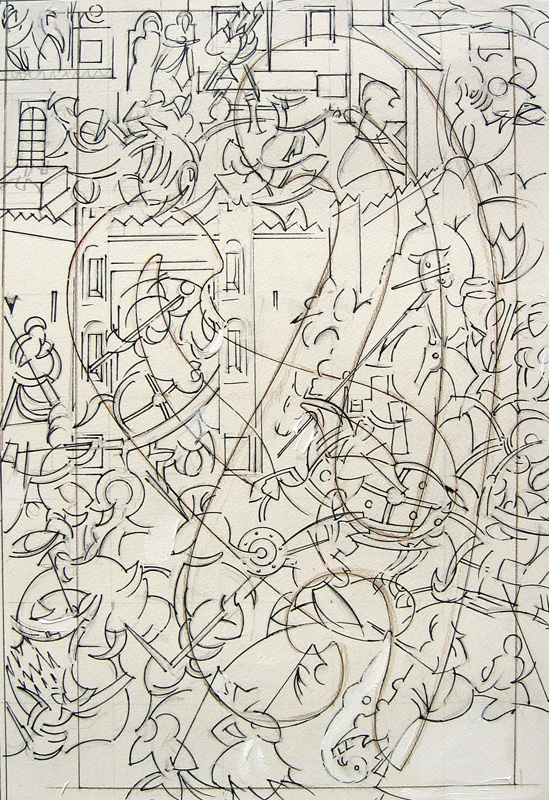
Persian One
19” x 28”
Graphite, sanguine and Sumi ink on watercolor paper
2003
Ricardo F. Morín
Persian One
19” x 28”
Graphite, sanguine and Sumi ink on watercolor paper
2003

People act before they fully know what their actions will bring about.  Decisions are made with limited information, divided attention, and signals whose importance cannot be fully assessed at the moment of choice.  A person commits to a course of action without being able to see all the conditions that action will set in motion.  Only later do the effects of that action make clear what mattered and what could have been altered.

Because action proceeds under uncertainty, error does not appear at the moment of decision.  At the time of choice, available information remains partial, situations remain ambiguous, and attention remains finite.  Action therefore binds the agent to consequences whose full implications cannot be known in advance.  What later appears obvious was not fully visible when the action began.

Responsibility begins to take shape as consequences disclose relations that action itself has revealed.  Effects expose dependencies, constraints, and vulnerabilities that were previously unnoticed or underestimated.  What emerges after the fact is not merely additional information, but a shift in relevance.  Elements that once seemed secondary acquire weight, while assumptions that once guided action lose authority.  Recognition follows commitment rather than preceding it.

As understanding develops after action, foresight is often overestimated in retrospect.  Later awareness projects coherence backward onto moments that were shaped by uncertainty.  Signs that appear decisive after consequences unfold are treated as though they had been unmistakable beforehand.  This compression creates the impression that error resulted from neglect, rather than from the limits of perception under action.

Practices that depend on anticipation—such as planning, prediction, precaution, and control—assume a level of foresight that action itself cannot provide.  These practices stabilize expectations, yet they remain vulnerable to the fact that relevance is often disclosed only through outcome.  When results diverge from intention, the gap reflects not a failure of responsibility, but the temporal structure within which responsibility operates.

Responsibility matures through recognition rather than certainty.  It develops as people acknowledge how their actions have bound conditions that now require response.  What responsibility sustains is not the illusion of complete control, but the capacity to remain answerable to consequences that exceed prior understanding.  Responsibility therefore does not end at the moment of decision; it continues as recognition adjusts agency to what action has revealed.

Responsibility does not arise from foresight that precedes action, but from recognition that follows commitment, as agency responds to consequences that could not be fully anticipated.

Ricardo F. Morín

31 de enero de 2026

Oakland Park, Fl


“Axis IV: History as Contingent Reconstruction”

September 11, 2026
Ricardo F. Morín
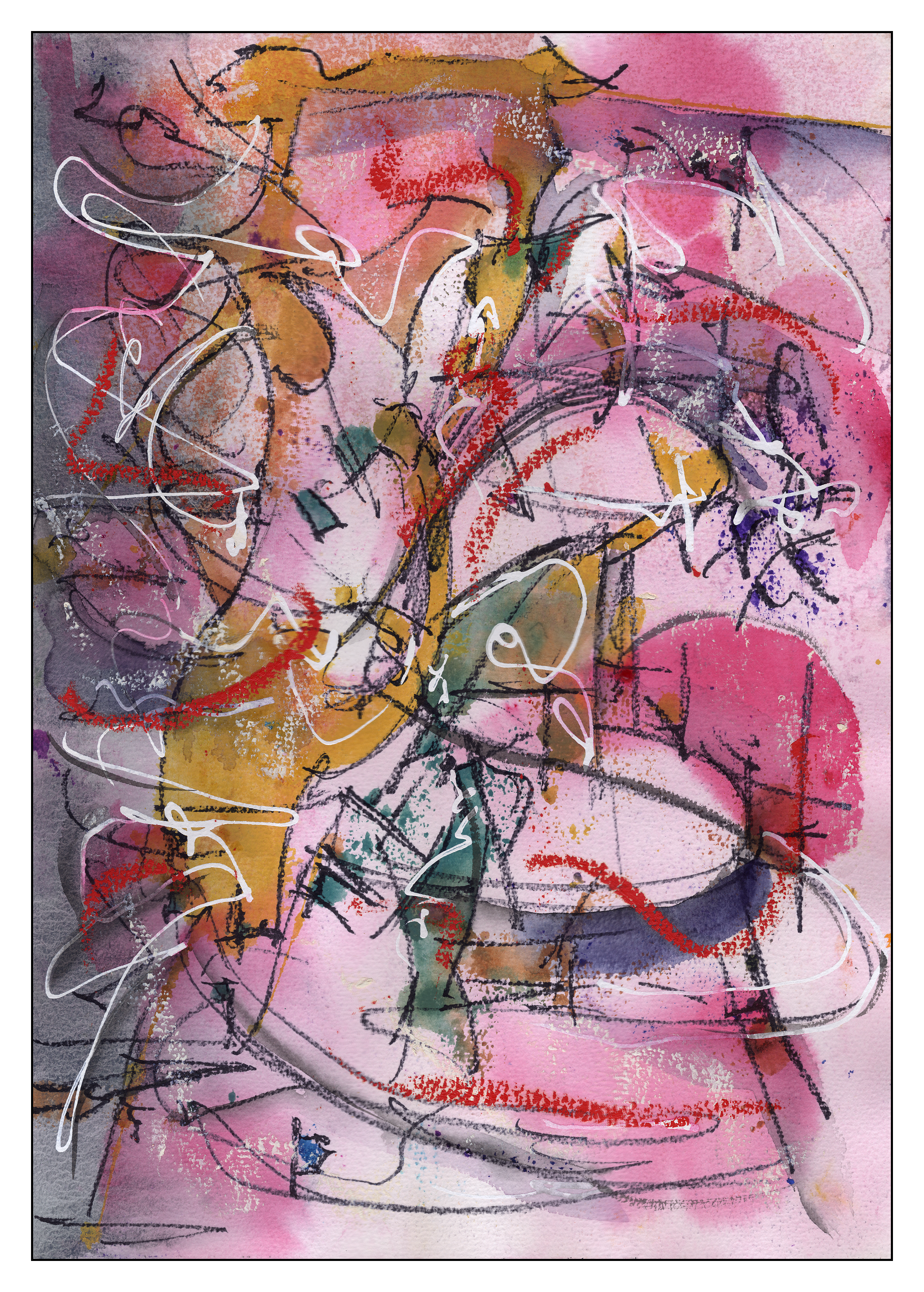
Infinity Strata
14″ x 20″
Watercolors, charcoal, dyes, oil and white-out on paper
2005

People learn about the past through what others tell them.  Parents recount earlier times, teachers explain events in sequence, officials issue statements, and communities preserve stories that explain what happened and why it mattered.  These accounts do not present the past in full.  They select certain events, connect them to one another, and give them weight, while leaving other events aside.  Over time, these explanations become familiar ways of understanding where things came from.

As circumstances change, people return to these same accounts to make sense of new situations.  Without discovering new facts, speakers may emphasize different events, draw new connections, or describe the same outcomes in a different light.  An episode once mentioned briefly may later be treated as decisive.  An outcome once described as accidental may later be explained as necessary.  What changes is not what occurred, but how people organize and invoke it.

The people who recount the past do so from their own positions.  Each account reflects what its speaker can see, remember, and explain.  No one holds the entire picture.  Authority does not arise because any single account is complete or neutral.  Authority arises when multiple accounts begin to overlap.  When different people, speaking from different positions, refer to the same events in similar ways, their accounts reinforce one another.  What gains standing is not a privileged viewpoint, but a pattern of references that becomes easier to repeat, teach, and rely upon.

Because of this, continuity is not discovered in the past; it is assembled after the fact.  People draw lines between events that were not experienced as connected at the time.  Periods receive names, turning points are identified, and beginnings are assigned only after later developments make such arrangements appear sensible.  The coherence that history presents reflects how events are organized in retrospect, not how they were lived as they unfolded.

Historical authority does not grow from adding more facts alone.  It grows from stabilizing a way of arranging those facts.  Once a particular ordering becomes familiar, it serves as a reference point.  Other explanations are not dismissed because they lack information, but because they do not fit the prevailing way of connecting events.  Authority attaches to the arrangement that holds together, not to the archive itself.

As the principles used to organize the past shift, authority shifts quietly with them.  The same dates, names, and events remain visible, yet their relationships and implications change.  Because the surface details persist, the deeper reorganization often goes unnoticed.  What changes is not the record, but the logic through which the record is made intelligible.

History therefore does not offer a fixed account of what occurred.  It offers a way of making sense of what occurred that holds long enough to guide understanding and action in the present.  That coherence remains contingent on the conditions that sustain it.  When those conditions change, historical accounts do not disappear; they reorganize.  Authority persists not because the past has been settled, but because a particular ordering continues to function.

History acquires authority not by fixing the past, but by stabilizing an arrangement of events that can endure long enough to orient judgment, even as the principles that produce that arrangement continue to change.

Ricardo F. Morín

January 31, 2026

Oakland Park, Fl


“Furrows That Do Not Hold”

September 9, 2026

Ricardo F. Morín
Furrows That Do Not Hold
14 x 20 inches
Water color, dyes, oil sticks, white-out pen, and charcoal pencil
2008

This essay appears in English under the title Furrows That Do Not Hold, which does not translate the original Spanish title but restates the condition it describes.   The choice is not stylistic.   It reflects the limits of how English prose carries figurative density without altering diagnostic function.

In English, a literal rendering of the image tends to register as proverb, allegory, or parable.   Such a register introduces interpretive expectations the essay does not intend to activate.   To preserve an observational and unsentimental tone, the English title names the condition in operational terms rather than reproducing the image.

In Spanish, the essay appears under the title Arar el mar sin cosecha alguna.   In that linguistic context, the image can sustain historical gravity—including biblical cadence—without becoming moral instruction or rhetorical emblem.   The phrase names a condition directly:   real labor, a medium that does not retain marks, and the structural absence of yield.

This asymmetry is not incidental.   It reflects the problem the essay examines:   the limits of transmission across contexts.   Meaning does not pass intact between generations any more than it does between languages.   What can be preserved is not form, but function, when conditions permit reception.

Ricardo F. Morín

Oakland Park, Fl

Dec. 19, 2025


I.

Work continues.  It is visible, organized, and often diligent.  Tasks are performed, systems maintained, language refined, and processes repeated.   The difficulty is not the absence of effort, nor even its misdirection, but the absence of accumulation—understood here as the condition that allows externally generated knowledge to be received, retained, and re-entered as orientation rather than reenacted as effort.    What is done does not remain available for re-entry; the work does not carry forward.

This condition is easily mistaken for exhaustion or indifference.  It is neither.  The signs of engagement are everywhere.  Activity increases.  Responsiveness improves.  Output multiplies.  What disappears is continuity.

In such environments, motion replaces inheritance.  The value of action lies in its execution rather than in what it leaves behind.  Work proceeds as if each instance were sufficient unto itself.  The past is not rejected; it is simply not retained in a form that can be re-entered.

II.

Experience is not a substance that can be passed intact from one holder to another.  It is formed under pressure: through duration, consequence, and constraint.  When detached from those conditions, it arrives flattened.  What once clarified limits now appears as commentary.  What once compelled adjustment now reads as preference.

Attempts to transmit experience as instruction often fail because they precede necessity.  The recipient encounters the lesson without the conditions that gave it force.  The knowledge arrives before the situation that would make it intelligible.  What is offered in advance of need appears optional, even when it is exact.

This failure is not cognitive.  It is temporal.  Experience cannot be received on demand because it does not function as information (it cannot be accumulated in advance of necessity).  It functions as orientation, and orientation requires circumstance.

III.

Autonomy is essential to judgment.  Without it, action collapses into obedience.  Yet autonomy becomes obstructive when it refuses inheritance.  Agency hardens into the assumption that value must be self-generated in order to be legitimate.  What comes from elsewhere is treated with suspicion, not because it lacks relevance, but because accepting it appears to compromise independence.

Under this posture, reception is mistaken for dependence—the refusal of accumulation as orientation from elsewhere.  Learning from prior experience feels like concession rather than orientation.  The capacity to receive is replaced by the obligation to originate.  Knowledge must appear new in order to count.

The result is not freedom, but isolation from accumulated sense.  Experience remains available, but unreadable.  It circulates as language without uptake, gesture without consequence.

IV.

Where transmission falters, novelty becomes proof of validity.  What appears new is granted authority by contrast alone.  The question of whether a condition has already been encountered is displaced by the pressure to demonstrate originality.

Reinvention follows not because prior solutions failed, but because their success left no visible trace (no accumulated precedent).  What worked quietly does not announce itself as precedent.  The wheel is reshaped to display initiative, not to improve function.

This is a categorical error.  Effort persists, but the tool is mismatched to the medium.  Methods designed for accumulation are applied where marks do not hold.  Raking the sea fails not because nothing is done, but because the medium erases furrows as soon as they are made.

V.

In such conditions, motion substitutes for progress.  Systems reward speed, output, and responsiveness.  Pause appears as inefficiency.  Return appears as delay.  Depth is displaced by throughput.

Iteration is mistaken for understanding.  Repetition becomes evidence of engagement.  The absence of yield is attributed to insufficient effort rather than misalignment.  The response is to intensify motion rather than to reconsider posture.

Progress is measured by displacement rather than retention (rather than accumulation).  What matters is that something happens, not that it remains available for use.  The future is constantly entered, but never furnished.

VI.

The sea persists.  It does not resist effort, nor does it respond to insistence.  It remains indifferent to force.  Furrows disappear not in defiance, but in indifference.  The labor is real; the absence of harvest is structural.

Exhaustion accumulates privately while systems remain unchanged.  Each attempt begins again.  What was learned is learned again.  The cost is borne individually; the benefit does not carry forward.

This condition is not decline, decay, or loss of intelligence.  It is not moral failure or generational fault.  It is the predictable result of environments that reward autonomy without reception, novelty without continuity, and motion without accumulation.

The furrows do not fail.  They simply do not hold.


“Axis I: Memory as Epistemic Condition”

August 26, 2026
Ricardo F. Morín
Templates
8” x 10”
Watercolors on paper
2003

Ricardo F. Morín

January 31, 2026

Oakland Park, Fl.

People rely on memory because past experience cannot be returned to directly.  What has already happened can only be approached again through recollection.  Over time, memories are revisited under conditions that differ from those in which the original experience occurred.  What once made sense in one moment must be made sense of again in another, and the standards used to judge it shift with present circumstances.  As this happens, uncertainty enters the effort to rely on memory, not because people are careless, but because time alters the conditions under which understanding takes place.

In this respect, memory does not function differently from truth.  Both remain exposed to time.  What once appeared settled must be reconsidered as circumstances change, and neither memory nor truth remains fully governable by intention.  What resists control is not honesty, but the displacement that time introduces between experience and its recall.

  • Memory as Justification

When direct access to experience is no longer possible, memory often takes its place as a source of explanation.  People account for their decisions by referring to what they remember rather than to what can still be examined.  Recollection is treated as evidence of continuity even when the conditions that produced it no longer exist.  In this way, memory is asked to stabilize choices whose original context cannot be recovered.

As experiences recede further into the past, they are often invoked with greater confidence.  This confidence does not arise because the memory has remained intact, but because distance shields it from challenge.  What memory provides in such cases is not access to what happened, but a narrative sufficient to support judgment in the present.

  • Memory and Certainty

As experience becomes less accessible, certainty often increases rather than declines.  Events that can no longer be tested against their original conditions become insulated from correction.  Recollection hardens into conviction because comparison is no longer possible.  Memory appears stable not because it is accurate, but because its sources cannot be revisited.

In this way, confidence attaches not to fidelity, but to distance.  The past feels settled because it cannot be reentered.  Certainty arises not from closeness to what occurred, but from the absence of any remaining means to contest what is remembered.

  • Memory and Repetition

As memories are repeated, they gain durability without preserving experience itself.  Retelling does not restore original conditions; it refines what can be easily conveyed.  Details that resist articulation fall away, while elements that can be narrated coherently are retained and reinforced.  Through repetition, memory becomes less a trace of what occurred and more a stable account of what can be said.

What endures is not the experience itself, but a version shaped by its ability to be repeated without friction.  After mediation is complete, the past yields no new facts, only new arrangements of what is already known.


“The Impossibility of Conviction”

May 14, 2026


Ricardo F. Morín
Buffalo Series, Nº 5
48″ x 56″
Oil on canvas
1979

*

Author’s Note

The conditions examined in this text continue those explored in “The Proportion of Boredom” and “The Impossibility of Recognition.”

+

Ricardo F. Morín
April 17 through May 14, 2026
In transit


1.  There are people who aspire to live as individuals of conviction because conviction appears inseparable from dignity, seriousness, or moral substance.  To remain faithful to certain principles despite uncertainty, pressure, or consequence may seem necessary for self-respect itself.  A person capable of conviction may appear less vulnerable to confusion, fear, or circumstance than someone who changes too easily with events or opinion.

2.  Under certain conditions, conviction permits endurance.  A person may continue acting despite danger, exhaustion, or sacrifice because something appears more important than comfort, approval, or self-preservation.  Communities may also remain bound together through convictions strong enough to survive hardship, loss, or instability.

3.  Yet convictions do not remain private for long.  They shape how people judge conduct, loyalty, responsibility, and trust.  What appears principled to one person may appear rigid, dangerous, or intolerant to another.  The same conviction capable of sustaining courage may also narrow the conditions under which people continue recognizing one another outside allegiance alone.

4.  At times, uncertainty becomes difficult to bear.  A person may seek convictions not only because they appear true, but because they provide continuity when circumstances no longer seem stable enough to endure without certainty.

5.  A conviction does not remain merely an opinion once a person begins to depend on it for self-respect.  It enters conduct.  It shapes what can be admitted without humiliation and what must be resisted so the person can remain coherent before himself.  At that point, disagreement no longer arrives only as difference.  It may also arrive as exposure.

6.  Under such conditions, a person may defend not only certain principles, but the self organized around them.  Contradiction becomes difficult to tolerate because uncertainty no longer threatens a single idea alone.  It threatens the sense that one’s life still holds together, belonging, judgment, and the sense that one’s conduct remains justified before others and before oneself.

7.  Yet convictions are not sustained only through conflict.  They also persist through familiarity.  Families, friendships, religious communities, political movements, and nations may remain bound together through convictions strong enough to survive sacrifice, hardship, or historical change.  A person may inherit convictions long before examining them fully, just as another person may remain unable to abandon certain convictions despite prolonged doubt or disappointment.

8.  Convictions cannot be understood through logic alone.  People may continue defending ideas that no longer correspond fully with circumstance because conviction does not depend only upon evidence.  It may also depend upon memory, loyalty, fear, gratitude, suffering, or the need to preserve continuity with those through whom life first acquired meaning.

9.  At times, conviction permits a person to resist conditions that would otherwise reduce conduct to convenience or fear.  Someone may continue defending another person despite public hostility, remain faithful to a responsibility despite exhaustion, or refuse participation in what appears degrading even when conformity would be safer.  Under such conditions, conviction may preserve dignity because it resists adaptation to circumstance alone.

10.  Yet the same conviction capable of sustaining courage may also narrow perception without announcing the change.  A person may begin judging conduct through allegiance before attending to the singularity of those involved.  What confirms conviction appears trustworthy more easily; what unsettles it begins requiring justification before it can even be considered fairly.

11.  This change does not always emerge through fanaticism.  It may appear through ordinary habits of interpretation.  Certain words begin carrying fixed meanings before conversations fully unfold.  Certain people appear predictable before they have spoken long enough to become recognizable outside inherited assumptions.  Conviction then ceases remaining only a way of judging what should be trusted, defended or refused.  It begins organizing perception itself.

12.  Under those conditions, plurality becomes difficult to sustain.  Not because difference disappears, but because difference no longer appears as something through which judgment may widen.  It begins appearing instead as instability, confusion, or moral weakness.

13.  A person may still believe himself fair under such conditions.  He may continue listening, speaking calmly, or permitting disagreement while the boundaries of what appears acceptable have already narrowed inwardly.  Conviction does not always announce the moment in which judgment begins organizing itself around allegiance.  The change may remain gradual enough to appear compatible with the image a person preserves of himself as reasonable, principled, or humane.

14.  At times, convictions survive less because they remain unquestioned than because abandoning them would require a person to reinterpret too much of his own life.  Friendships, sacrifices, loyalties, humiliations, and hopes may remain bound to convictions that helped organize the meaning of earlier experience.  Under such conditions, doubt no longer threatens a single conclusion alone.  It threatens continuity with the self that endured through those experiences.

15.  People may therefore defend convictions that no longer correspond fully with what they privately perceive.  Public allegiance and inward uncertainty may coexist for long periods without reconciling themselves.  A person may continue repeating certain beliefs because abandoning them appears more disorienting than preserving them despite contradiction.

16.  Yet uncertainty carries dangers of its own.  A person incapable of conviction may become vulnerable to every immediate pressure, every shifting opinion, or every promise of acceptance.  Conduct begins adapting too easily to circumstance because nothing remains stable enough to resist convenience, fear, or belonging.  Under such conditions, openness itself may lose coherence.

17.  Human beings therefore remain exposed to opposing dangers that do not resolve one another.  Conviction may preserve dignity while narrowing plurality; uncertainty may preserve openness while weakening conduct.  The difficulty does not disappear by choosing one condition entirely over the other, because both arise from needs inseparable from human life.

18.  This tension becomes visible during periods of instability.  Under fear, humiliation, rapid social change, or prolonged uncertainty, people often seek convictions capable of restoring continuity quickly.  A movement, a nation, a faith, an ideology, or a leader may then appear not merely persuasive, but necessary for preserving coherence against conditions that no longer seem bearable without certainty.

19.  Under such circumstances, plurality may begin appearing less as a condition of civic life than as an obstacle to stability itself.  Disagreement becomes associated with fragmentation; hesitation with weakness; ambiguity with danger.  What once appeared compatible with coexistence may begin appearing incompatible with order, belonging, or survival.

20.  Yet even under those conditions, convictions do not become complete.  Contradictions continue appearing within every system of certainty because human experience exceeds the structures through which people attempt to hold experience together.  A person may defend convictions publicly while remaining inwardly confronted by experiences that resist full reconciliation with them.

21.  Convictions can preserve and disrupt human relations at the same time.  They allow people to sacrifice, endure, remain faithful, and act decisively under uncertainty.  Yet they may also separate human beings before they have encountered one another outside inherited loyalties, beliefs, or fears.  The same convictions capable of sustaining responsibility may also prevent people from perceiving one another except through the boundaries conviction has already established.

22.  Convictions do not disappear because people cannot live long without believing that certain things must be defended, preserved, or remained faithful to despite uncertainty.  Under those conditions, conviction may permit courage, sacrifice, or endurance where fear alone would otherwise prevail.  Yet the same convictions may also separate human beings before they have fully encountered one another outside inherited loyalties, beliefs, or fears.


« Folie à Deux »

April 1, 2026

Ricardo F. Morín
Still Life
22″ x 30″
Mixed media on paper
2000

A relation between two individuals may appear stable even when it rests on a false premise.  A decision is put forward without support and accepted before it is tested.  One speaks; the other adjusts.  A claim is introduced and taken in without examination.  When contradiction appears, it is set aside.  The relation holds because one asserts and the other accepts.  An account of two individuals may appear exceptional, but the relation it reveals is not confined to them.


A wider relation between individuals, sustained by excluding contradiction, does not require agreement.  It requires direction and alignment.  A statement is repeated as if it were already settled and is carried forward as something to maintain.  A speaker states a position with certainty and without qualification, and others accept that certainty as evidence of its validity rather than examine the claim itself.  A shared account sets what may be said; questioning it is excluded.  A decision holds because it confirms what is already assumed.  The relation continues without being questioned.


At what point does such a relation stop interpreting reality and begin to act in its place?  Not when a false claim appears, but when the relation no longer allows it to be tested.  As long as claims are tested, disagreement examined, and adjustment follows evidence, the relation remains open.  The shift occurs when alignment replaces testing.  A claim is carried forward before it is checked and no longer stands as something to be tested.


Contradiction no longer interrupts the relation.  It is dismissed or set aside and does not enter the decision.  What does not fit is excluded from what follows.


A claim holds because it repeats what has already been said.  Affirmation arises within the relation itself.  Correction becomes unlikely.


A decision formed within the relation is carried out beyond it without being checked, and a person who did not take part in forming it is required to comply.  The effect on that person is not examined and is treated as secondary to keeping the claim in place.  Each participant encounters the effect on the person subject to the decision.   Each participant continues to act in accordance with the claim and sets that recognition aside in order to maintain alignment.  The action continues before either law or ethics can take hold.


Decisions are then measured against what has already been affirmed rather than against what is present.  Behavior proceeds without testing.  Judgments form within closed circles of affirmation.  In an investment partnership, a senior partner advances a thesis under time pressure and incomplete information, and others commit capital on the strength of that authority rather than on outside validation.  Elsewhere, under unresolved uncertainty, in a clinical setting, available tests do not resolve the diagnosis, and a physician advances a working assumption; care proceeds on that basis as it is repeated and affirmed, while conflicting signs are set aside.  What appears consistent within produces actions that do not fit the conditions they are meant to address.


A relation of this kind also defines responsibility in a limited way.  Each participant attends to the other within the relation, but not to those affected by it.  Agreement between participants does not extend to those who are subject to what the relation produces.  Within the relation, nothing presents itself as a breach: the claim is affirmed, the decision follows, and alignment is maintained, so no point of interruption arises from which it could be judged.  Responsibility would require that each participant consider how the claim and the decision affect those outside the relation and allow that effect to alter or halt what follows.  Where that does not occur, responsibility remains contained within the relation, and those outside it are acted upon without their situation entering into the decision.


The difference between shared belief and shared distortion lies in whether the relation allows correction.  Where contradiction can enter and be considered, the relation remains open.  Where it is excluded, the relation closes.


The problem does not begin when a claim is false.  It begins when the relation that sustains it no longer allows it to be tested.

*

Ricardo F. Morín, March 31, 2026, Oakland Park, Florida.


“REFUSAL”

February 4, 2026

Ricardo F. Morín
My Nest
24′”x30″
Oil on linen
1999

Help was not offered casually.  It was offered over time,   shaped by history,   familiarity,   and a belief that loyalty required staying present when circumstances were unsettled.  Unclear commitments were accepted with the expectation that steadiness might compensate for instability,   and that patience would allow clarity to arrive where it had not yet appeared.

As time passed,   those commitments became harder to anticipate.  Plans shifted after they were accepted.  Expectations changed without being stated.  What had been agreed to one week was revised the next.  Each adjustment was absorbed rather than challenged.  Meetings no longer produced decisions.  Agreements no longer survived the week.  The effort to remain fair became an effort to remain adaptable.  What was not confronted was carried.

There was hesitation in naming what was occurring.  Doing so felt severe.  It risked appearing uncharitable or impatient.  Silence often seemed preferable to objection,   not because nothing was seen,   but because what was seen resisted easy articulation.  Silence,   once a form of restraint,   had ceased to clarify anything.  Endurance appeared safer than judgment.

Gradually,   the effects of that endurance became visible.  Loyalty did not stabilize the situation.  It prolonged it.  The more uncertainty was accommodated,   the more it became the organizing condition.  Commitments lost their edges.  Responsibility dispersed.  Care,   extended without limit,   ceased to correct anything and instead made instability easier to sustain.

At one point,   a friend chose a different posture.  He remained attentive,   but at a distance.  He did not intervene repeatedly or attempt to steady what showed no sign of holding.  At the time,   that distance was easy to misread.  Commitment,   as it was then understood,   appeared to require proximity.  Restraint looked like withdrawal.

Only later did the significance of that posture become clear.  What had appeared passive was a form of orientation.  Limits had been recognized earlier,   and conduct adjusted accordingly.  Distance had not signaled indifference,   but an understanding that presence,   under unstable conditions,   does not always improve outcomes.  The difference lay not in intention,   but in timing.

This recognition unsettled earlier assumptions.  Proximity had been mistaken for responsibility.  Endurance had been treated as virtue without asking whether it was sustaining anything beyond the appearance of care.  What felt like loyalty had,   in part,   become permission.  The most difficult admission was not about the actions of others,   but about the role played in allowing those actions to continue without consequence.

Distance did not follow immediately.  It came after repeated attempts to restore proportion,   after explanations failed to hold,   and after silence ceased to clarify anything.  Withdrawing was not a rejection of concern.  It was the only remaining way to prevent concern from being consumed by unpredictability.  It was a way of preserving judgment, preventing concern from being consumed by unpredictability, and leaving open the possibility that conditions might yet change

Refusal,   understood in this way,   is not dramatic.  It does not accuse or announce itself.  It does not seek recognition.  It withdraws consent quietly and allows arrangements either to stabilize or to reveal their own limits.  What ends is not care,   but participation in conditions that require self-deception to endure.

This form of refusal is not moral superiority.  It is responsibility turned inward.  It begins when remaining present requires abandoning one’s own judgment,   and when loyalty,   left unchecked,   undermines what it was meant to protect.  Silence,   at that point,   does not evade obligation.  It restores coherence.

The act is restrained.  Its consequences are durable.  By stepping back,   one ceases to supply the energy on which instability depends.  What remains intact is judgment without foreclosing the possibility of renewal should proportion be restored.  What is relinquished is the belief that endurance is always ethical—and refusal becomes the means by which clarity, rather than rupture, is maintained.

*

Ricardo F. Morín, January 1, 2026, Oakland Park, Florida.