*
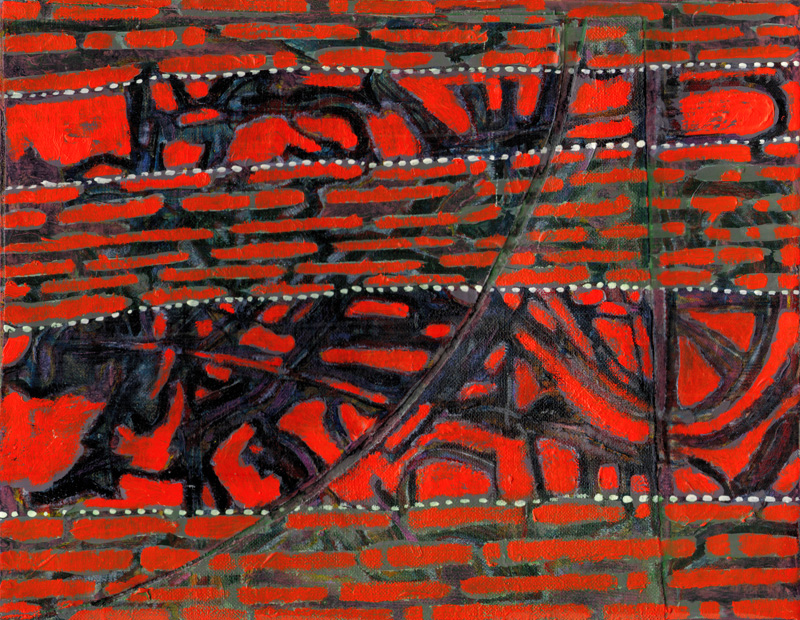
Series ID: The Crossroad
Oil On Linen
14 by 18 by 3/4 inches
2009
Preface
This reflection approaches a subject whose contours continue to shift. Its purpose is descriptive rather than conclusive: to observe the language, geography, and patterns of recognition that shape how this area of Western Asia is referenced today. The inquiry does not presume a fixed framework; it notes developments that may clarify, over time, how the region is understood.
The term “Middle East” emerged from Western strategic vocabulary and has been applied for more than a century to a portion of Western Asia that occupies a space between Europe, Africa, and the broader Asian continent. The designation did not originate from the internal characteristics of the area; it offered an external classification for a geography that did not align neatly with categories such as “Oriental,” “European,” or “African”. The reflection that follows describes current adjustments in how this geography is perceived and does not seek to assign cause, consequence, or judgment.
The physical terrain identified by that term predates the name by millennia. It consists of land and sea routes that link three continents and create points of passage between the Mediterranean basin, the Indian Ocean, and adjacent inland regions. Empires expanded across these routes at different periods. Commercial networks relied on them. Religious and linguistic traditions developed near them and spread outward from them. Over time, the area accumulated symbolic associations connected to its position rather than to any single narrative. These associations appear in historical records, scriptural references, diplomatic terminology, and administrative documents.
Political conditions in Western Asia have altered in the past decade. Syria, once described as a fragmented state, now functions with a measure of stability under authorities who previously operated outside established state structures. Their participation in regional discussions reflects an adjustment in diplomatic practice. Similar adjustments are visible elsewhere in the region, where governments coordinate on matters of trade, security, and infrastructure through channels that do not correspond to earlier Cold War arrangements. Oil-producing states in the Gulf have increased their global presence through investment and development initiatives that extend beyond their immediate surroundings.
These developments occur alongside demographic shifts, economic disparities, and regional security concerns that intersect at this geographic juncture. The area often registers these pressures because it remains a corridor through which goods, populations, and strategic interests move. Its visibility in global reporting reflects this position. Multiple explanatory frameworks—historical, religious, ideological, and strategic—are applied to the same geography by observers with distinct vantage points. These frameworks coexist with the operational considerations that shape policy decisions, including territory, transit routes, energy networks, and external dependencies.
References to religious identity, civilizational memory, or inherited political narratives appear in public discourse both within and outside the region. These references coexist with material concerns related to governance, trade, and stability. Their coexistence does not resolve the question of how the region should be described; it indicates that the geography accommodates multiple layers of meaning at once. The persistence of these layers demonstrates the extent to which external projections, internal dynamics, and physical location all contribute to the region’s ongoing visibility.
As the term “Middle East” is reconsidered, older geographic designations—such as Western Asia or Eastern Mediterranean—appear with greater frequency. Whether these terms will replace or simply accompany the older one remains uncertain. The geography itself remains constant, while the categories used to describe it continue to shift. This raises a straightforward question: when the projections applied to this ancient crossroad recede, which features of the region become most visible, and how do those features influence the language used to describe it?
 Observations On Perception