“Language, Judgment, and Freedom of Conscience: On the architecture of an intellectual position”
*
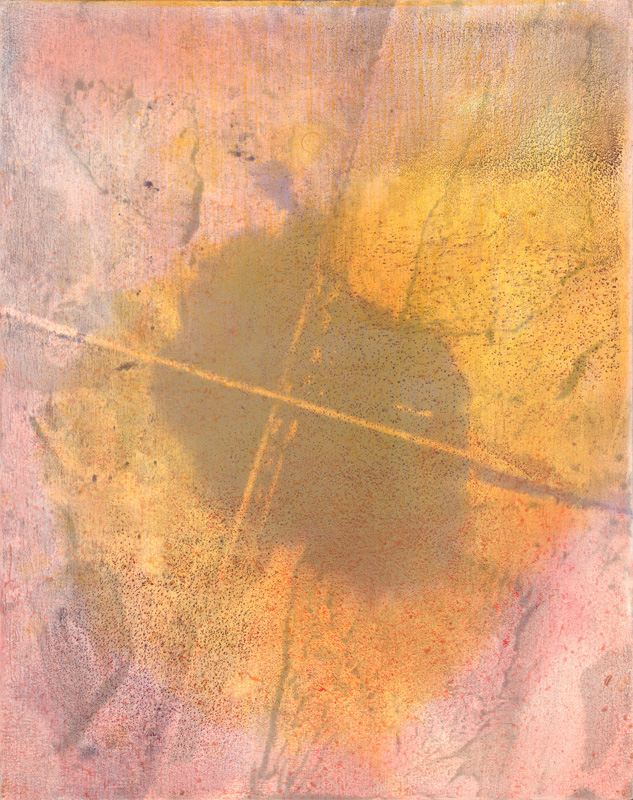
Still Thirty-six
Oil on linen & board
12″ x 15″ x 1/2″
2012
The freedom most easily lost is not political. It is cognitive.
Long before rights are suspended or institutions begin to deteriorate, a more fragile freedom starts to disappear: the capacity to organize experience through language and to sustain judgment without distortion. It is here, in the continuity between experience, language, and judgment, that freedom of conscience first takes shape. And it is here, more often than in law or violence, that it quietly dissolves.
Freedom does not begin with choice. It begins with perception. What a person is able to see, to name, and to distinguish determines in advance what he or she will later be capable of judging. Before any decision is reached, the world has already been organized by language: certain facts are brought into relief, others recede into obscurity; certain distinctions are sharpened, others gradually disappear. Where perception is deformed, judgment cannot remain intact. And where judgment is compromised, freedom can no longer be exercised under the governance of judgment itself. For that reason, no political liberty can long survive the degradation of cognitive liberty. The first captivity is not imposed by force. It is accepted through language. One begins to hear that ‘this is simply how things are.’ With that formula, what someone decides no longer presents itself as a decision.
Language is not a neutral instrument. It is the medium through which conscience acquires articulation and assumes coherence, distinction, and form. Through language, experience is ordered into relevance and irrelevance, into the central and the marginal, into the tolerable and the intolerable. Through language, responsibility is assigned or displaced, intention clarified or obscured, and accountability preserved or diluted. What cannot be named with precision cannot be judged with clarity. And what cannot be judged with clarity soon ceases to be judged at all. Thus the corruption of language precedes the corruption of institutions. Before an injustice is carried out, it has already been rendered thinkable. Before servitude is imposed, it has already been described as necessary. The decisive transformations of a society occur not first in law, but in its vocabulary.
Modern societies rarely suppress speech outright. They do something more efficient: they reorganize it. Language is compressed into formulas, slogans, classifications, and protocols that circulate more rapidly than reflection can follow, reducing complex experience to recognizable patterns. Judgment is replaced by adherence. Under such conditions, conscience is not silenced. It is standardized. Individuals continue to speak, to choose, and to express opinions, yet the space within which judgment might be formed independently narrows almost imperceptibly. What appears to be fluency becomes substitution. What appears to be coherence becomes conformity. Freedom remains visible. Autonomy does not. The more precise the description appears, the less clear it becomes who answers for what occurs.
The problem, therefore, is not an abundance of language. It is the rupture between language and judgment. One may speak without ceasing and yet cease to think. One may express conviction and yet cease to perceive. One may defend causes and yet cease to judge. Once that rupture becomes stable, conscience is no longer guided by experience but by narratives prepared elsewhere. A person no longer says, ‘I decided this,’ but, ‘That is the policy.’ When asked why, the answer is no longer, ‘I judged it necessary,’ but, ‘That is how it was processed.’ When harm occurs, no one names it as harm; it is called ‘a required step.’ Responsibility is not rejected; it is deferred: ’I am only following the procedure.’ Every step is documented, every action recorded, and yet no one speaks in the first person. When something goes wrong, it is called ‘a system error.’ At that point, servitude no longer requires coercion. It requires only maintenance. What emerges is not an order imposed by force but one sustained by the absence of judgment.
The preservation of freedom cannot be entrusted primarily to institutions, procedures, or rights. These remain necessary, but they are secondary. The continuity between perception, language, and judgment within the individual conscience constitutes the primary condition of freedom. It is this continuity that allows perception to remain honest, language to remain accountable, and action to remain proportionate. Where it endures, freedom remains possible even under constraint. Where it is broken, no formal liberty can prevent inward abdication.
Ethics, in this sense, does not begin with norms or prohibitions. Attention constitutes the point of departure of the moral life. Ethics begins with the discipline of observing without distortion. It begins with the refusal to select facts according to convenience. It begins with the patience required to resist premature coherence. Before an action becomes unjust, perception has already been simplified. Before judgment becomes cruel, relevance has already been manipulated. The moral life is sustained less by rules than by the integrity of the perceptual field within which rules are later applied. To corrupt perception is to corrupt ethics at its source.
From this there follows a demanding conception of intellectual responsibility. The task of thought does not consist primarily in persuading, mobilizing, or consoling. It consists in preserving the conditions under which judgment remains sovereign. This requires a particular discipline of language: precision without pedantry, clarity without simplification, sobriety without neutrality, and complexity without obscurity. Such language does not seek to dominate interpretation. It seeks to keep interpretation open. It does not impose conclusions. It preserves the space within which conclusions may still be formed responsibly.
The freedom sought here is neither expansive nor heroic. It does not aspire to mastery, originality, or influence. It is a freedom of coherence: the capacity to sustain judgment without deforming experience, to name without manipulating, to belong without delegating conscience, and to act without betraying perception. This freedom does not proclaim itself. It reveals itself negatively, in what it refuses: to simplify what remains complex, to excuse what must be judged, and to adopt languages that absolve responsibility. It produces no triumph. It produces something rarer: interior stability.
In times of symbolic degradation, the intellectual task assumes a custodial dimension. It is not a matter of founding systems or conquering discourses, but of preserving small zones in which clarity remains possible. Zones where language has not yet been separated from judgment, where experience has not yet been confiscated by narrative, and where responsibility has not yet been dissolved into anonymity. This task is modest in scale and immense in consequence. Civilizations do not first collapse through violence. They collapse when conscience loses the grammar by which it judges.
What ultimately remains is neither doctrine nor method, but posture. A sustained attentiveness to the point at which language organizes experience. A vigilance toward every substitution that precedes thought. A refusal to allow coherence to replace truth or fluency to replace judgment. If this posture is preserved, freedom endures even under adverse conditions. If it is lost, no abundance of rights can restore what has already been surrendered. The first liberty is not to choose, but to judge. And the final responsibility of thought is to ensure that this capacity does not disappear in silence.
Ricardo F. Morín
January21, 2026
Oakland Park, FL.

