Archive for the ‘Short Story’ Category

“Notes From Within” 

May 28, 2025
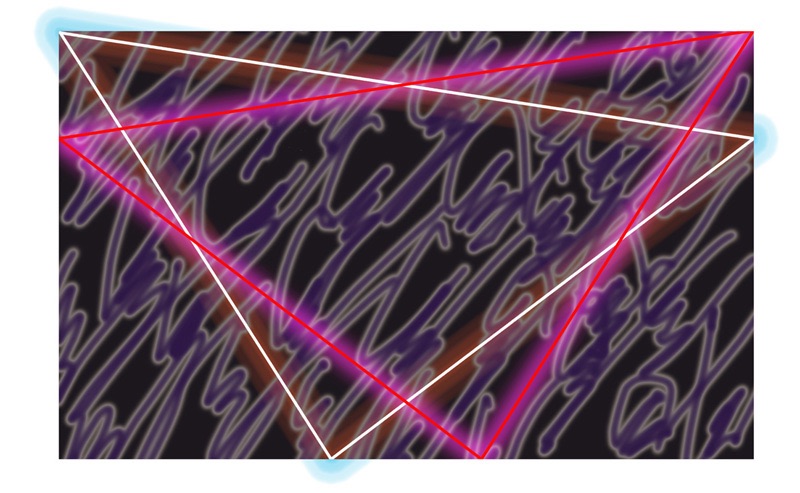
Triangulation Series M
C-Print
2007

“On Vulnerability”

*

Dedicated to my siblings

There’s a certain kind of person the world seems to admire—sharp-tongued, composed, deliberate.    He moves through life as if he’s never doubted the sound of his own voice.    His gestures are practiced, his opinions unshakable.    It’s a performance of authority, and to many, it’s compelling.

But I’ve never fit that mold.    I don’t hold myself like someone bracing for a fight with the world.    I don’t presume to master a room.    And more and more, I’ve come to believe that what makes a person is not how forcefully he presents himself, but how honestly he shows up.

Vulnerability has never been fashionable.    It doesn’t draw applause or dominate the stage. But it’s where I’ve found the most truth.    Not in being right, or revered, or untouchable—but in admitting how little I know, how often I’ve failed, and how much of life resists explanation.

We’re taught to act as if we’ve earned our place—through effort, through cleverness, through some innate worth.    But I’ve lived long enough to see how much is assumed, how much is favored, how many doors open not because of merit but because of circumstance, appearance, proximity to power.    The world flatters performance.    It often mistakes loudness for depth, certainty for wisdom.

But beneath all that, we’re fallible—achingly so.    We get things wrong.    We hurt people.    We retreat when we should have stayed, and speak when silence would have been kinder.    We tell ourselves stories to survive, not always to understand.

And yet, that fallibility isn’t shameful.    It’s not a flaw to be punished—it’s the most human part of us.    The mistake is not in being wrong; it’s in pretending we’re not.    Intimacy begins where performance ends—when we stop curating ourselves and let others see what is:    our confusion, our fear, our imperfect love.

I’ve stopped wanting to impress.    I want to be known.    I want to know others—not through their accomplishments or their poses, but through the quiet truths they carry.    I don’t need anyone to be flawless.    I need them to be present, to meet me somewhere beneath the surface.

That, to me, is strength.    Not the kind that commands a crowd, but the kind that sits across from others, unguarded, and says, “Me too. I don’t have it either.”

The world may never reward dishonesty with applause.    But it will reward it with connection—with moments that feel real, human, and lasting.    And in the end, I think that’s the only recognition that ever matters.    Not the illusion of certainty or the performance of strength, but the willingness to return, again and again, to the quiet inside us—the one where we are fallible, open, and fully alive.

*

Ricardo F Morin

Bala Cynwyd, Pa; May 28, 2025

Editor:    Billy Bussell Thompson

“The Intersection of Superstitious Beliefs in Venezuela”

February 8, 2025

*


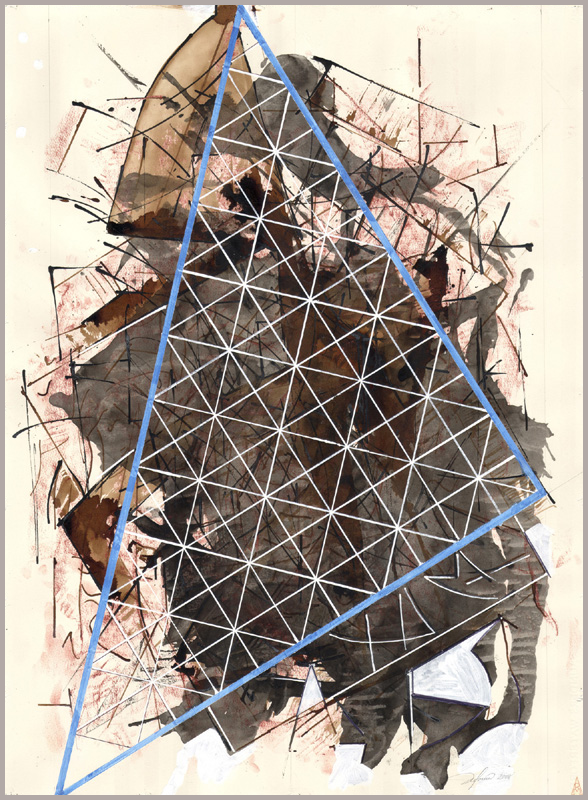
Triangulation 36
22″ x 30″
Body color, sanguine, sepia and Sumi ink on paper
2008

The Power of Myth and Storytelling

Storytelling has long served as a way to make sense of the unknown, an enduring thread that gathers aspiration, fear, and endurance into narrative form.   Myths such as those of Jupiter reflect a search for power, resilience, and the divine; they echo the struggles that shape human experience.   Whether in the trials of gods and heroes or in the ordeals of ordinary lives, these narratives offer a way to move through what cannot be readily understood.  

Mystery settles within the folds of nature and provokes the impulse to explain, to justify, to believe.   Superstition emerges where uncertainty prevails; it offers a sense of orientation, a way to interpret what resists control.   But where does it lead? Does it remain a private refuge, or does it extend into the decisions of those who govern? Even in societies where public life appears ordered, the attraction to the esoteric persists, visible in its expressions, yet often concealed in its influence.

As mythologies once shaped entire civilizations, superstition remains present within modern cultures.   It appears in rites and rituals, in discrete observances, in gestures that seek certainty where reason falters.   Yet for all its reassurance, does it guide or does it hinder? A society moving between superstition and rationality stands at a threshold, suspended between inherited forms and the demands of a changing world.  

Santería and Spiritism in Venezuela

Santería and Spiritism have taken root in Venezuela, their presence becoming more visible in times of crisis.   Santería, an Afro-Caribbean synthesis of Catholic, Indigenous, and African traditions, is expressed through rituals intended to commune with spirits and to bridge the worlds of the living and the dead.   Spiritism, in turn, centers on communication with unseen entities through mediums and prescribed practices.   The two often converge, forming part of a broader spiritual landscape that accompanies daily life.  

The Religious Sect of María Lionza

At the center of these traditions stands María Lionza, a figure situated at the intersection of Indigenous, African, and Catholic belief. She is invoked in ceremonies that call upon spirits of varied origin, among them the physician José Gregorio Hernández, pre-Columbian leaders, Simón Bolívar, and more recent political figures such as Hugo Chávez.

Among the sect’s recognized mediums is Edward Guidice, who is said to channel the spirit of Emeregildo, a figure associated with healing. As Venezuela’s healthcare system becomes strained, reliance on such practices increases. Where medical resources are limited, these rituals take on greater significance, and offer guidance, relief, or the possibility of intervention.

Superstition and Modernization

Superstition and modernity exist in close proximity, the former offering refuge from uncertainty, the latter pressing forward with its demands. In Venezuela, these beliefs extend beyond private life into health, governance, and social organization. Their presence can be sensed in decisions, in expectations, and in the ways individuals respond when formal systems fall short.

Alongside superstition, there are practices described as acts intended to influence outcomes through unseen forces. These are approached with both caution and reliance, spoken of quietly, yet sought in moments of need. Unlike passive belief, such practices imply intervention, an attempt to alter what might otherwise unfold.

As Venezuela confronts ongoing challenges, superstition remains near at hand. It explains, it reassures, it invites. Yet between its promise and its limits, a question persists, does it strengthen, or does it constrain? The answer remains unsettled, suspended between what is observed and what is believed.

Ricardo F Morin, February 8, 2025, Oakland Park, Fl.

“The Fetters of Power”

January 14, 2025

*

Introduction

Power, in its rawest form, bends and distorts.    It reflects the body depicted in Ascension as it strains against the scaffolding of controland embodies the turbulent forces we inhabit.[1]    These elements frame a reflection not only on Venezuela’s struggles but on the universal gravity of power that entraps us all.    I wonder if blaming these forces oversimplifies a system thriving on collective complicity.    Can self-compassion hold us accountable without succumbing to guilt—when despair paralyzes?

Positioned between The Stream of Emery, a fable of renewal, and Unmasking Disappointment, an upcoming essay on historical reckoning, this story continues a journey through entanglement, responsibility, and the enduring search for self-liberation.[2]

~

THE FETTERS OF POWER

I

While my husband drove from Fort Lauderdale to Orlando, I had a conversation with my friend BBT.    It was one of those unsettling conversations that reveals how vast forces can overwhelm us.    He spoke of power, not as a tool, nor even as a desire, but as the primal force that pushes humanity toward authoritarian oligarchies.    Greed, according to him, is secondary, a symptom of something deeper:    the irresistible gravity of power itself.

II

I thought of Michel Foucault and his theories on power, and for a moment, I felt a flash of clarity.     But the more I tried to articulate his ideas, the more inadequate they seemed.        The weight of reality crushes academic musings as the world descends into ruin.      We fail to recognize ourselves as creatures trapped by our own errors.

III

Then, I remembered my cousin Ivelisse’s voice, trembling while holding back tears, as she recounted Nicolás Maduro’s inauguration, January 10.     For her, it was not just a political event; it was a symbol of our fall, of our dissolution as a people.     Her despair was mine, and ours was Venezuela’sa nation habitually entrusting faith in saviors who never arrive.

IV

Across the world, power and greed—legitimized by crime or not—justify the rise of tyranny.   And we, in our confusion, have no answers in the face of these tides of unchecked ambition.

 V

BBT, ever pragmatic, said simply:   “Just enjoy yourself.”    His advice both stung and comforted me.   But how could I?    How could I enjoy anything when the world feels so fragile?   Every thought circles back to the same questions:   What can I do to counteract these forces?    How can I make sense of this struggle?

 VI

Still, I cling to one belief:  that one day, a collective awakening will emerge, a rising tide of awareness.   If there is to be a better world, it will not come from saviors or struggles for power, but from an alignment of minds and hearts.   My role, if I have one, is to contribute to that legacy—not for fame or ambition, but for peace.

 VII

Peace is what I seek, not only for myself but for others: a legacy that transcends my own life, one that serves as a quiet resistance to the forces of greed and power.    Only then, perhaps, will I find the simplicity BBT spoke of—not as surrender, but as understanding.

Postscript

It is easy to lose sight of the deeper currents that drive us, particularly when we are immersed in the tides of ambition, power, and cynicism.     In moments of crisis, these forces surge, often obscuring our judgment and steering us off course.     Yet, amidst their overwhelming presence, one truth remains:     surrendering to love sustains us.

Ultimately, what really matters is love.    It alone sustains us above all else.    It can anchor us against the forces that threaten to lead us astray.

Perhaps with that recognition is where peace begins—not in the world outside or its lack of validation, but in the quiet acceptance of what we can change, and what we cannot.

~

Endnotes:

[2]   Ricardo Morín, “The Stream of Emery,” WordPress, December 29, 2024, https://observationsonthenatureofperception.com/2024/12/29/the-stream-of-hermes/


Ricardo F. Morin Tortolero, January 14, 2025; Oakland Park, Florida.

Billy Bussell Thompson, February 14, 2025, New York City