*
Ricardo Federico Morín Tortolero, Oakland Park, Fl. December 29, 2024

Dedicated to Billy Bussell Thompson and David Lowenberger
In a village at the edge of a forest lived a woman named Elen. From early on, a great disquiet stirred within her.
Piecing together fragments of others’ insights, she took refuge in books and scrolls. With every answer uncovered, more questions remained.
“Elen, why do you never rest?” her neighbors asked as they watched her pace the village paths.
“Because something is calling to me,” she replied. “I feel a purpose, a truth . . . . But I don’t know where to look.”
One day, a pilgrim named Damian came to the village. His eyes illuminated him and news of his arrival spread quickly. Elen was eager to know him.
She led him to her study and pointed out her books and maps.
“I’ve been devoted to research,” as she gestured toward the shelves. “But the more I look, the more incomplete I feel. I’m filled with desire, shame . . . . I long for peace. I thought knowledge would complete me. Instead, something is missing. How did explorers of old find their voice?”
Damian glanced at her and replied. “You treat knowledge as shackles. It’s only a touchstone; what you need is instinct.”
Elen frowned uncertainly. “What do you mean?”
“Come with me,” he said.
They walked into the valley and the air grew cooler with each step. Above them, eagles circled: their cries, sharp but distant. She kept silent; her mind turned Damian’s words over, and over.
They reached a clearing. At its center stood an ancient tree, whose branches reached toward the heavens and its roots gripped the earth. There murmured a stream with glinting waters.
“This,” said Damian, “is the Stream of Emery. Its waters hold the substance of all things: truth, blinding; mystery, ever deepening; illusion, tempting; wisdom, changing. Anyone who partakes may glimpse his destiny, though, he is often more adrift than before.”
As if spellbound, Elen knelt and gazed into the stream. “Why would anyone willingly submit to abandonment?”
Damian picked up a leaf and floated it on the water. The current swept it downstream and spun it in lazy circles until it vanished. “Knowledge flows like this stream,” he said, his eyes on the water. “Chase every ripple, and you’ll only drift farther from yourself; the answers are not in the stream, but in how you move up to it.”
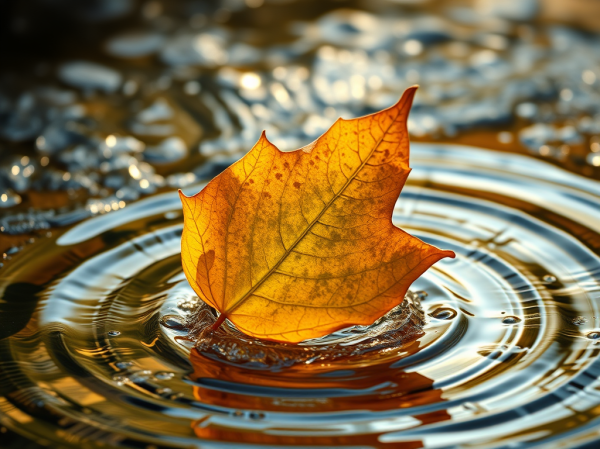
Elen felt the stream’s coolness luring her. One thought held her. “How am I to be guided by instincts?” she asked, her voice scarcely audible over the rippling water.
“Look at the tree,” Damian replied.
She turned to it.
“The tree doesn’t chase the water,” he said. “It takes only what it needs and grows; though static, it’s always reaching. Its trust is in its roots.”
Again, Elen peered at the tree. “If the tree knows it’s a tree,” she said, “how can I trust myself, if I don’t know what my instinct is?”
“Purpose,” said Damian, “cannot be found. It forms over time. Just as the tree is, you have to be anchored, and your branches have to reach toward your destiny.”
Elen looked at him: “What do you mean?”
Damian pointed to the stream: Leaves were floating along; at times they clustered together; then they diverged. “Mankind is a mirror of reciprocity. In harmony or in enmity, in sickness or in health, in poverty or in wealth, we see ourselves through others. The stream is not just water: it is a current of shared lives, fragile or strong. Only by engaging with others do you know who you are and what you are to be.”
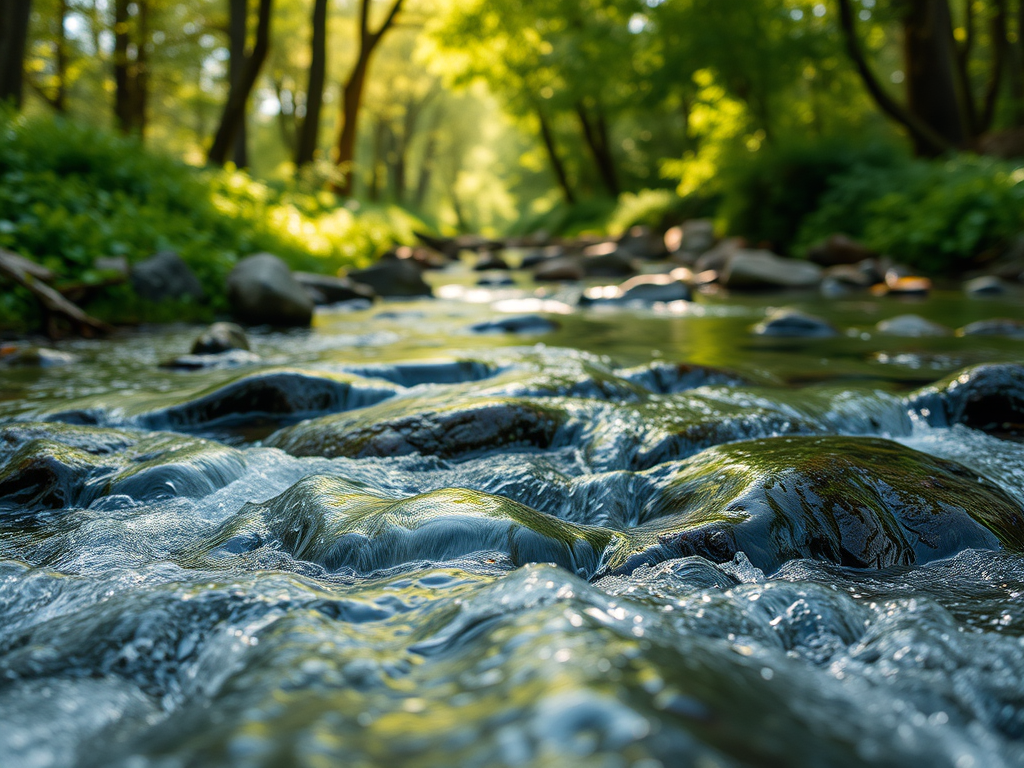
Elen thought about her village: the kindnesses and quarrels she had shared with neighbors, the ways their stories and struggles had shaped her. Now, she saw how books had consumed her.
“Am I to seek truth outside of myself?” she asked.
Damian smiled. “Yes, no one can carry the stream alone; peace comes from being together. It grows when we acknowledge that lives are bound.”
Elen closed her eyes and let the sounds of the forest (rushing water, rustling leaves, the pulse of the earth) enter her. In that stillness, she understood: Yearning was not hers alone; it was the thread of existence.
As she returned to the village, Elen glowed quietly. Seeking truth, she was no longer alone.
Her life was not an endpoint.
Editor Billy Bussell Thompson, New York, NY. December 29, 2024
*
Afterword
Motivated by an ongoing historical essay on Autocracy and Democracy, I offer this fable as a meditation on the balance between neutrality and vulnerability. The fable reflects the challenges of biases and personal ignorance.
Writing for me resembles standing at the edge of the Stream of Emery, where thought and emotion merge and flow as one. For years, I immersed myself in research and mistook the accumulation of knowledge for understanding. I found myself increasingly isolated: I was drowning in questions rather than being buoyed by answers. True meaning appeared not in an endless pursuit of analysis but through connections—rooted in empathy and lived realities. Like Elen, I came to see that knowledge is a touchstone, not an endpoint.
Intellectual neutrality requires restraint. It is a deliberate effort to approach ideas without bias, to listen rather than to assert, and to prioritize clarity. It is the practice of seeing the stream without letting it sweep you away. But no act of creation can fully separate itself from the self. Writing also demands vulnerability: the courage to confront one’s fears and desires. Vulnerability allows these truths to illuminate the work as if it were shining sunlight through water.
The stream invites us to wade in, yet it challenges us to avoid being swept away. The act of striving is where meaning resides. It’s not the destination but the questioning, the persisting, and the growing.
Neutrality is not silence, and vulnerability is not surrender.
R.F.M.T.
 Observations On Perception