*
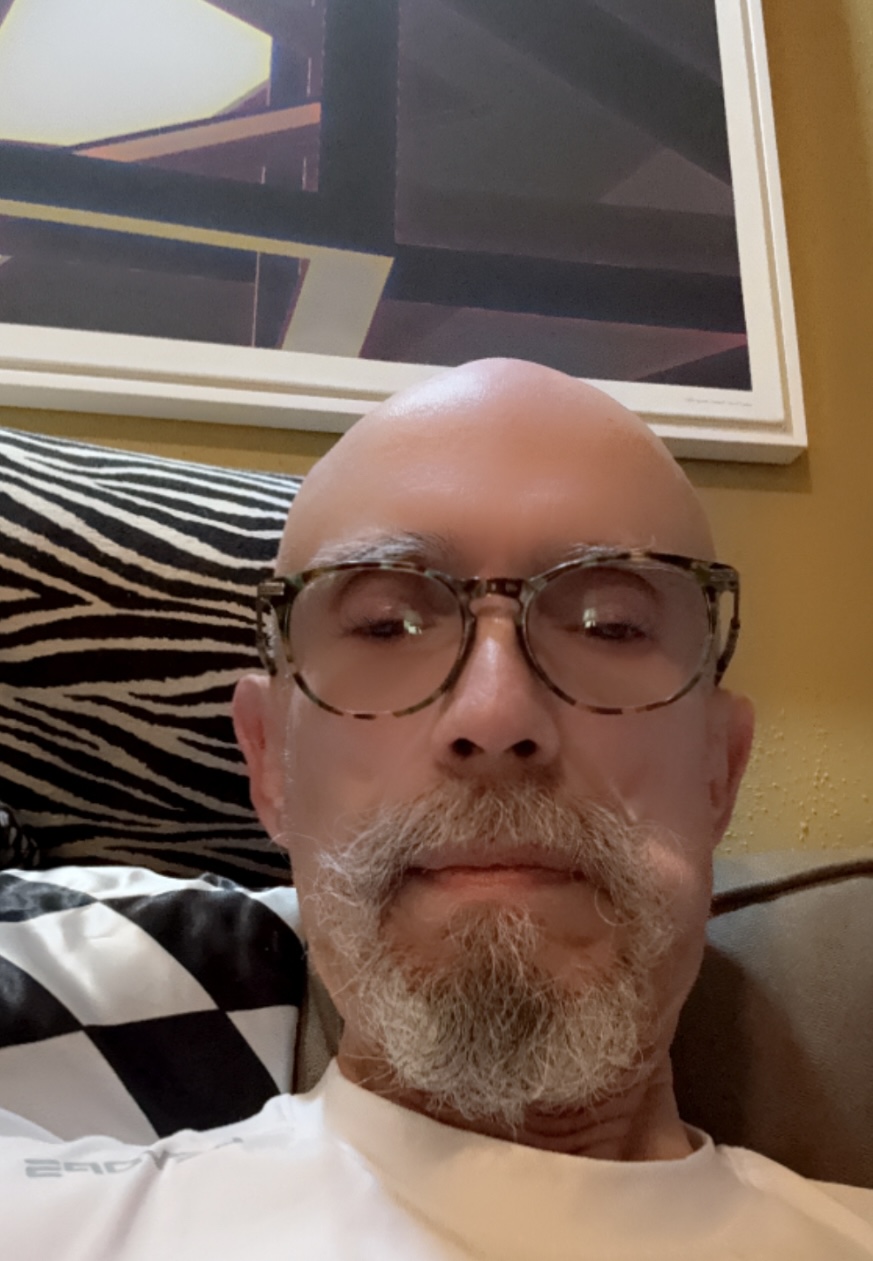
Author’s Note
“New York Love Letters” was written in the aftermath of my younger sister’s death. In our early adulthood, as I confronted the certainty of dying from AIDS, I learned of her diagnosis of schizophrenia. Our lives became bonded through different forms of vulnerability and endurance. Her survival became inseparable from my own. Over time, I came to define part of myself through the emotional, intellectual, and material support I provided her. When she died at sixty-nine and I found myself stable at seventy-one, I experienced not only grief, but the loss of a role that had shaped my identity. It was at that moment that writing became a means of survival. What follows emerged from that necessity.
First Letter: How Did I End Up in Manhattan?
I lived in Manhattan from 1982 to 2021, though I hadn’t planned to stay. Initially, it was meant to be temporary—a waiting point before Jurek’s return. But then he told me he was staying in Berlin. His decision, not mine, anchored me in the city. And when I learned that death had taken him, grief replaced waiting, and Manhattan became something else—perhaps a substitute, perhaps a necessity.
We had admired each other. Our conversations shaped me, deepened my understanding of art, and reinforced the creative instincts that guided me. As in every meaningful relationship, our exchanges defined us. He had a profound sense of what high art was, and his perspective challenged me to see beyond my own. Even after he was gone, his influence remained, though absence is a poor companion for inspiration.
Still, I had to find my place within Manhattan—amid its creative currents, its relentless demands, and its contradictions.
My academic foundation had been in fine arts, and I was veering into theater, much as I had years earlier in Venezuela. During the time Jurek and I were together, I moved from the experimental environment of the Art Department at the State University of New York at Buffalo (Bethune Hall) to the world of theatrical conventions at the Yale School of Drama’s Design Department. In between, I traveled with Jurek through Europe and attended set design seminars at the Salzburg International School of Arts.
At Yale’s Design Department welcoming new students, the chairman referred to my arrival as being via Salzburg—a remark delivered amidst what seemed to me like convivial bemusement. It lingered with me for years—whether as admiration or something else, I never fully understood. Instead of questioning the observation, I shifted the conversation to Albert Spaulding Cook’s influence in Buffalo, whose writings had guided my decision to bridge fine arts and theater—shifting from my understanding of what art meant to me to Cook’s particular regard for the designer’s interpretative role in service of the playwright. The response from the group was quick—and revealing. A couple of professors reacted not to my objectives, but to the mention of Cook himself, as they questioned whether he had ever been in Buffalo. I knew perfectly well he had and chose not to argue. Soon enough, I sensed a quiet resistance to ideas that didn’t align with prevailing norms—perhaps a reflection of the school’s priorities, though I never fully determined where I stood within them. After my second year, the chairman inquired if I wished to continue.
For the three years of the Master’s program, I did not find the formal rigor I had expected, yet I stayed the course. My aspirations in the fine arts remained intact, but my footing in the world depended on my role as a set designer—expected to conform to an interpretative craft rather than pursue art on my own terms. The program emphasized adherence to established standards over the cultivation of new approaches, a structure that felt at odds with my own desire to elevate set design—transforming it into an art form capable of standing alongside the finer, more expressive arts rather than relegating it to a supporting role. The principal counselor, of course, would never have admitted this. Whether my approach unsettled him or simply diverged from his expectations, I could never be sure. But I remained guided by instinct rather than precedent, much as I had been drawn to fine arts in the first place. He remained in the position until his late eighties before he died. I sometimes wonder how our arguments sat with him over the years—if they ever did at all.
Second Letter: Ten Years Later.
In Manhattan, the roads of set design and painting intersected, but neither provided stability or clear success. Professional networks seemed in disarray. From Broadway (where I worked as a principal assistant) to the experimental stages of Off-Off-Broadway, the struggle remained the same. Both the personal and professional aspects I found unsettling. Also, these were the years marked by the AIDS crisis, a time that left an indelible mark on me. I navigated these years, though they left their mark.
Walking through the galleries and streets of Manhattan in the 1980s felt like navigating a maze with no exit. There was the buzz of new ideas and the promise of fortune, yet every corner led to another dead end, much like my work in set design. Broadway was a field of intense competition, and Off-Off-Broadway unfolded in forgotten warehouses. Every path and every encounter suggested possibility, but in practice few could sustain themselves within an environment defined by labor precarity, relentless intensity, and limited compensation.
The lack of opportunities to establish myself as a designer mirrored my exclusion from galleries. Both signified exclusion, the denial of a real chance to build a reputation. Some doors never opened, others slammed shut before I could step through. A well-known Broadway designer would often introduce me both as an associate and a great artist, but never allowed me to compete with him. The income I managed to secure was precarious at best. Competition was intense, often driven by commercial interest over cultural ones. In like manner, galleries were run by grifters eager to exploit talent, while artistic directors prioritized profit over innovation. The promise of stardom—even if fleeting—often proved to be unattainable. Survival dictated my choices and forced me to navigate my limitations rather than transcend them.
In a city that constantly reinvented itself, where the streets were painted with the colors of addiction and struggle, it seemed as though no one was ever whole. The fractured sidewalks beneath me reflected my own disjointed ambitions. There were days I couldn’t even recognize the neighborhoods I once called home. In places where life was reduced to survival—where crack vials littered the sidewalks and people stumbled through their days—how could I hope to thrive, let alone create something lasting?
Set design in the world of spectacle was arduous, and the pay was meager—yet I did it out of love for the craft. At one point, a clever producer remarked that enjoying my work as much as I did seemed incompatible with the notion of being compensated for it. Eventually, I turned to commercial design for security; I took on work in film documentaries and the toy industry. But even there, professionalism was no guarantee of respect or fairness. The same challenges persisted. The Actors Fund of America and Visual AIDS provided important support during difficult times; they offered a space to remember those lost and reflect on artistic struggles.
In the early years, Manhattan’s pulse beat through the night in the form of whispered secrets between strangers, drawn together by the need for touch that didn’t require commitment. There was a safety in that anonymity, and yet it was a hollow shield against what I truly sought—something beyond the next fleeting encounter, beyond the walls of a bar or an apartment rented for the night. It was a city where love seemed to evaporate the moment it took form, and independence felt more like isolation than freedom.
As I struggled in the professional world, I found that the absence of fulfillment in my work mirrored the absence of love in my personal life. Both were a reflection of a larger void I had yet to name. Instability extended beyond work. Friendships and love affairs unraveled just as easily. Many friends I had known and loved were lost to AIDS; and deepened my sense of isolation. More than any professional setback, it was the absence of love that left the deepest void. I continued to wrestle with questions of purpose, which remained unresolved after years of reflection. The search for answers became its own struggle—just as illusive as success in a world with high demands.
The smell of decay and the sounds of sirens were never far behind. In neighborhoods where homeless families lived in the shadows of once-glorious buildings, survival came at any cost—whether it was a desperate hand reaching for money or a corner turned into something darker. There was a coldness to the city’s march forward, as if everything was disposable. My art, my efforts, my desires—they all seemed to be tangled in that same vicious cycle of consumption and neglect.
Third Letter: When I Met BBT
BBT’s intellect and honesty shaped my life in ways I didn’t fully grasp at first. I found myself drawn to his company and sought the creative nourishment that seemed lacking elsewhere. At the time, I felt I could withstand the challenges I faced—my health, affected by AIDS, careers that had not fully developed, and relationships that lacked commitment or mutual understanding. Several friends, overwhelmed by their own battles, took their own lives. This period was made worse by a climate that felt stifling and unfulfilling. I still missed Jurek, who had chosen Berlin to die away from me. New York had shown me the complexities of love amidst significant challenges: Indeed, Manhattan was a difficult place to find love and afford a career in the arts, yet it excited me.
Billy kept me from withdrawing completely; he offered both intellectual companionship and a belief in my creative potential.
But it was not always a relationship without tension. At times, Billy’s insistence on structure seemed more a reflection of his own deep-rooted uncertainties than just a call for discipline. I began to see that in his attempts to push me toward mastery, he was navigating his own struggles with self-doubt. We were both in this together—each trying to prove something, not just to the world, but to ourselves. There were moments where I resisted his guidance, and there were moments he resisted mine, but that tension, though uncomfortable, became a part of what kept us connected. In these uncomfortable truths, I realized we weren’t adversaries, but rather fellow travelers, each trying to find our place in a world that didn’t always make sense.
Creativity was my anchor, a means of channeling my energy into something meaningful. In the worst of times, I still found solace in it: A brush against canvas, a sentence coming together—proof that creation, that life itself, was still possible. Painting had been my life companion, but when a mentor from my younger years recently set aside his brushes to write, I wondered: Why couldn’t I? Billy helped me recognize my potential as a writer, a path I had first considered in childhood while listening to my father dictate letters to his secretary. At sixteen, a grammarian told me I was not just a painter but had the potential for a unique voice, though he often struggled to grasp what I was trying to say.
Fourth Letter: The Dark Side
Fifty-one years of struggle and resilience as an immigrant shaped my perspective. My father once called one of my New York apartments unpleasant and vowed never to return. But in that same space, I found moments of connection amidst difficult circumstances.
That contrast never left me: What others saw as squalor, I experienced as a space of potential. Even in tough situations, love found a way to exist.
Manhattan, in its rawness, revealed to me the price of progress and the silence of those left behind. I, too, was a casualty of that silence, wandering through the streets in search of something to fill the spaces that had grown hollow. Manhattan was more than just a backdrop; it was both my adversary and my accomplice. It challenged and sustained me in equal measure. It shaped my struggles, but it also revealed moments of meaning, sometimes in unexpected ways.
Romance came in my forties, an attempt at finding commitment, but it didn’t resonate in the way I hoped. When my sense of autonomy was at risk, I preferred solitude. Silence settled between the walls—a quiet ritual of distance even from my own passions.
Fifth Letter: Validations and Assaults
I remember both validations and assaults, from familiar faces and strangers alike. Yet even in misunderstandings, in accidental encounters—regardless of their nature—I found meaning. I was learning from all of them.
At some point, I wrote a letter to a Cardinal, an attempt to articulate inequity versus victimization within our world. It was an exercise in verbal gymnastics, a way of deciphering the reality I inhabited. Later, I embedded this letter into a composite painting entitled INRI: Its header spelled it out in a collage of one-dollar bills, which I had secured permanently out of fear of defacement.
A museum invited me to take part in a major exhibit celebrating Artists in the Marketplace—but only if I replaced INRI with another painting, one inspired by a fax I had sent a Paris Newsweek correspondent. That fax was a reflection of my concerns—about art, about struggle, and about the very marketplace the exhibit aimed to showcase. The correspondent had replied with a postcard depicting an ancient Egyptian painting of a man being eaten by a mule. A curious response, but fitting in its own way, so i made it part of the painting.
However, I had already committed the Fax painting to a Midtown gallery. I declined the museum’s request unless they agreed to exhibit INRI instead. The museum’s curator hesitated, unable to fully grasp its meaning. In the end, I didn’t participate. Her welcoming remark at the opening was: “You are quite a trooper to attend”—as though showing up despite the situation was an act of perseverance. Yet, perhaps it wasn’t as trivial as it seemed.
Galleries, too, operated within their own opaque structures. They took work on consignment, claiming 40% of the sale price, yet seldom disclosed who the buyers were. One painting I sold vanished into anonymity, with only a vague assurance that it had been “placed well.” There was no contract for the buyer, no record of negotiation beyond a verbal agreement—an arrangement that often left artists vulnerable, dependent on the gallery’s discretion. Selling art, I learned, was as much about trust as it was about how to negotiate talent.
On a different occasion, when a gallery’s partners split they proposed taking my work to London for their new venture. How could I trust them?
There were other two incidents that came to mind, bringing both frustration and a sense of irony. A California production at the Queen’s Kaufman Studios displaced four of my largest format paintings, which I had offered to rent. A co-producer had initially remarked that my paintings appeared to be worth millions, yet the storage staff discarded them. Their negligence took over a year to be compensated with a meager portion of their value, after a prolonged dispute between appraisers. Then, a corporate art advisor sold one of my paintings and failed to pay me the full 60% of the agreed-upon amount. The same volunteer lawyer who represented me allowed her to pay in installments over a year. Yet, had it not been for these events, I would not have been able to cover the costs of experimental drugs not covered by insurance. At one point, my insurance was suspended due to a lack of union contracts, as I was working as a freelancer without union affiliation.
In later years, a gallery in Denmark took interest in signing me up for a two year contract that required producing 20 paintings per month and compensating only for the cost of materials. I said flatly: No, thank you, and the director felt offended at how I negotiated the terms.
Then, I brought 25 years of my paintings back to Venezuela, which are now in storage—though uncertain of their condition, I am willing to let my family sell them at any price, as long as the paintings survive—while the work that evolved 18 years later I sold at auction—starting at $1 a piece.
These moments may seem separate, yet I recognize their connection: My creative choices and my resistance to imposed conditions—were they simply acts of defiance, or did they reveal something deeper? How much of my struggle, my insistence on meaning, and my reluctance to compromise, was tied to the absence of love? Did the absence of love make compromise feel like self-betrayal? Or, how did love (or its absence), shape my perception of validation and rejection?—I still ponder.
Sixth Letter: The Pursuit of Love and Validation
If I have a unique vision as a visual artist, then the opportunities that slipped through my hands were never mine to hold. My hands had nothing to do with that conflict. It was my destiny.
The circuitous nature of experience—the way despondency transforms into art, how a fax of despair or a letter becomes a painting—reminds me that creation and loss have always been intertwined. Manhattan wasn’t just a backdrop; it provoked, shaped, and at times, even dictated meaning.
Much reflection on the past is nothing more than an exercise in futility. Destiny reminds us how determined our lives are by incomprehensible forces. Agency, with regard to what has already occurred, can feel like an illusion. We live in an age of disbelief and speculation, where distrust and conflagration cohabit with the hysteria of minds seeking certainty in uncertainty. For these minds, life becomes a tool of gossip and an affirmation of fear. These are minds of prejudice and selfishness, incapable of conceiving of a future that does not align with their own discomforts. It is a syndrome of obscurantism, where paranoia and reactionary fear prevail over reason. Epistemological confinement reinforces a state in which contradictions are dismissed rather than examined, and doubt is exploited as evidence of conspiracy. It is the rejection of complexity in favor of dogma, an attachment to certainty that turns ignorance into conviction and speculation into doctrine. We do not change the past by dissecting it—we only sharpen our awareness of how little control we had in the first place. Balancing uncertainty is a fool’s errand. The only grace of dignity left to us mortals is in accepting our limitations—not as defeat, but as clarity. There is no contradiction in that acceptance. If anything, it allows for a different kind of agency—not in altering what was, but in deciding how to exist within what remains.
My story isn’t only about the pursuit of love but about what love—whether found, lost, or absent—left in its wake. Creativity was never separate from longing; it emerged from it, filled its voids, and, in some ways, became love’s most enduring form.
Perhaps these connections don’t need to be stated outright. They exist in the spaces between—between art and survival, between the lives I intersected with and those who vanished, between the city that bruised me and the city that made me.
Seventh Letter: David
When I finally met David, my husband, my life began to shift. We have now been together for twenty-five years, ten of them married. Before I met him, I had already resigned myself to the idea that being a couple was not possible. Then I discovered that he loved me truly and understood me with great depth. Without intending to, his love healed every emotional scar and freed me from obsession. His love allowed me to discover a stillness that I can return to in an instant—just as I always did before, but now we shared it. Even when challenged by life’s vicissitudes, I am assured of one thing: I am loved—loved in a pure, soulful way.
But love is not an act of erasure, nor is it simply the inverse of longing. The temptation to see my life in contrast—to say that struggle preceded love, that absence defined its arrival—feels, in some ways, like an illusion. Contrast can make meaning vivid, but it can also distort it. It can create division where there should be unity. I have learned that love does not invalidate the past; it reveals it in fuller detail. What came before was not an empty prelude to David’s presence. It was real, lived, and filled with its own weight.
My story isn’t a simple arc from darkness to light. It’s more like a series of echoes, where past and present constantly inform each other. The creative energy of silence—something I can return to in an instant—suggests a kind of equilibrium. It was always there, alongside my struggles. David’s love didn’t create it, but gave me the trust to fully inhabit it.
That distinction is crucial. If I were to define my happiness now in opposition to my past, I would be committing the same error that shaped much of my younger years—seeking meaning through contrast rather than through presence. The anchoring point I found in David’s love does not stand against what came before, but within it. Love does not negate struggle; it allows struggle to exist without consuming everything else.
Though the world is filled with imperfections and uncertainties, love transcends them—not as a counter-force, but as something capable of holding contradictions without dissolving them into opposites. Struggles don’t diminish the richness of one’s life; they give it texture, depth. And fulfillment, I now understand, is not found in simple resolutions but in the trust we cultivate. Love does not divide. It does not draw lines between before and after. It does not make meaning contingent upon contrast. Instead, it allows everything to exist at once, in the same breath.
My career in art and set design has followed its own path—one of persistence rather than mass recognition. My work has been exhibited, supported, and studied, but its true measure is in its endurance.
*
Ricardo Federico Morín Tortolero
February 21, 2025; Oakland Park, Florida
~
Author’s Note:
For those interested in the professional trajectory behind the experiences shared in New York Love Letters, the following Appendix provides a brief overview of my work in fine arts and set design.
Appendix
- Fine Arts: Ricardo Morín, born in Venezuela (1954), has been exhibited in both solo and group shows, and has received support from Visual AIDS and the Venezuelan government. Morín has also collaborated on a multidisciplinary art/anthropology research project and worked as an adjunct professor at Pratt Institute. For more detailed information, visit https://ricardomorin.com/Bio.html
- Set-Design: Ricardo Morín has worked as both principal set-design assistant for Broadway designers of musicals, dramas, and ballets and as an independent designer for various Off-Off Broadway plays and musicals. For more detailed information, visit https://ricardomorin.com/PDF/Theater-Resume.pdf
 Observations On Perception