*
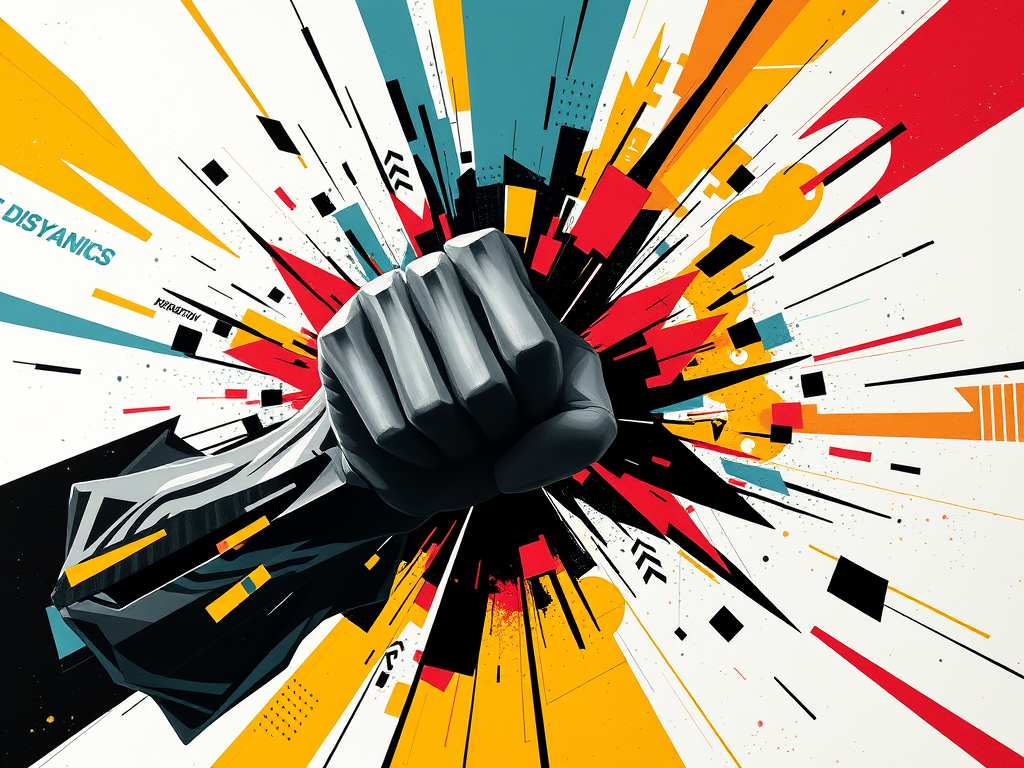
The Trump political project continues to unfold not as a coherent ideological program, but as a sustained campaign of disruption—domestically and internationally. What emerges is not a defined worldview, but a pattern of destabilization that weakens institutions, inflames public division, and elevates loyalty over legality, spectacle over substance.
Tariffs remain a favored tool—not to establish long-term trade policy, but to provoke confrontation, bypass negotiation channels, and reassert executive dominance. These measures often target allies as readily as adversaries, create economic uncertainty, and undermine multilateral systems.
Educational institutions face increasing censorship. From efforts to defund academic programs that address systemic inequality to pressures on universities perceived as ideologically oppositional, the aim is not reform but suppression—particularly of spaces that foster critical thinking, historical reckoning, or independent research.
Immigration enforcement continues to blur the line between legality and criminality. Lawful immigrants, including long-term residents, are deported under broad interpretations of threat, often to countries with which they have no substantial connection. The stated goal of targeting gang members or national security risks becomes indistinguishable from the broader effort to expel legal immigrants without criminal records. The result is an atmosphere of fear designed not merely to enforce policy, but to encourage self-deportation—a chilling effect that turns uncertainty into a tool of coercion. In the end, these actions serve more to fulfill campaign rhetoric than to implement coherent immigration reform, and they deepen the perception of instability rather than address root causes.
Administrative agencies are systematically weakened. Expertise is replaced with political loyalists, independent oversight is obstructed, and long-standing norms are bypassed. While the executive branch is not formally dismantled, many of its institutions are rendered ineffective, and thus leave the legislative and judicial branches to carry disproportionate weight in the balance of power.
Legal institutions are not exempt. Prominent law firms that engage in litigation related to civil rights, environmental regulation, or immigration increasingly face political scrutiny or reputational attacks. These pressures signal a broader effort to reshape the legal landscape to favor executive alignment over institutional independence.
Even the criteria used to define antisemitism are drawn into this broader reordering of public discourse. What was once a consensus-based framework to identify and combat bigotry is increasingly reframed to serve political ends. In some cases, criticism of state policies—particularly regarding U.S. allies—is labeled antisemitic, even when expressed within legal or human rights frameworks. Simultaneously, longstanding antisemitic rhetoric in extremist political circles is minimized or overlooked when it aligns with broader strategic aims. The result is a politicization of antisemitism that undermines both principled advocacy and genuine protection.
On the international stage, relations with powers such as Russia, Iran, and China are marked by strategic ambiguity. The stated goals often shift—oscillating between negotiation and provocation, between gestures toward peace and open confrontation. This lack of consistency, coupled with a failure to communicate clear diplomatic tenets, generates uncertainty among allies and adversaries alike. It weakens the credibility of U.S. foreign policy and destabilizes existing diplomatic frameworks. Ambiguity itself becomes the policy, which allows for maximal flexibility while offering minimal accountability.
What ties these disparate actions together is not a unified ideology, but a mode of governance: chaos as method, disruption as strategy. The erosion of institutional stability is not collateral—it is intentional. Through constant provocation, norm-breaking, and the redefinition of key terms, the Trump movement reshapes public expectations and challenges the very structure of U.S. democratic institutions.
This is not a matter of historical reflection—it is a live process, unfolding in real time, with consequences that stretch from the courtroom to the classroom, from border policy to global diplomacy.
*
Ricardo Federico Morín Tortolero
April 17, 2025—in transit from Florida to Pennsylvania
 Observations On Perception