*
*
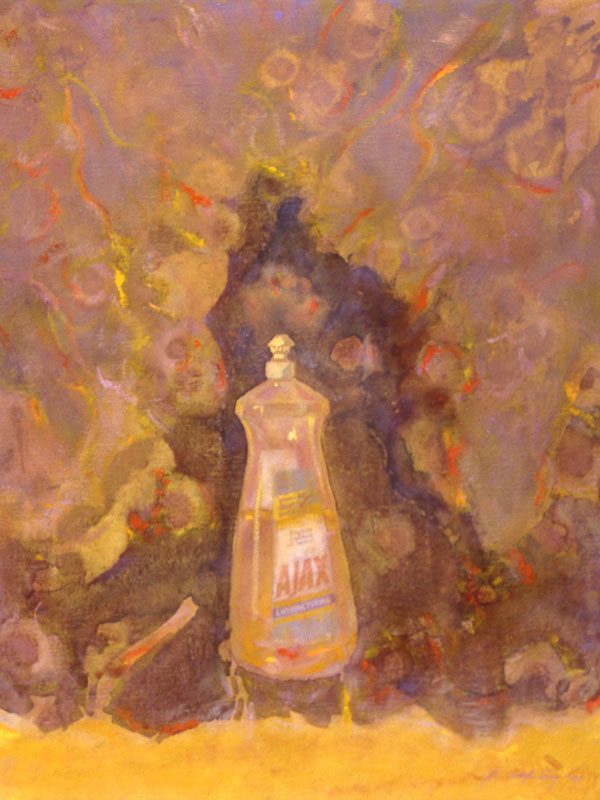
My Nest
24′”x30″
Oil on linen
1999
Ricardo F. Morín
January 1, 2026
Oakland Park, Fl
*
Help was not offered casually. It was offered over time, shaped by history, familiarity, and a belief that loyalty required staying present when circumstances were unsettled. Unclear commitments were accepted with the expectation that steadiness might compensate for instability, and that patience would allow clarity to arrive where it had not yet appeared.
As time passed, those commitments became harder to anticipate. Plans shifted after they were accepted. Expectations changed without being stated. What had been agreed to one week was revised the next. Each adjustment was absorbed rather than challenged. Meetings no longer produced decisions. Agreements no longer survived the week. The effort to remain fair became an effort to remain adaptable. What was not confronted was carried.
There was hesitation in naming what was occurring. Doing so felt severe. It risked appearing uncharitable or impatient. Silence often seemed preferable to objection, not because nothing was seen, but because what was seen resisted easy articulation. Silence, once a form of restraint, had ceased to clarify anything. Endurance appeared safer than judgment.
Gradually, the effects of that endurance became visible. Loyalty did not stabilize the situation. It prolonged it. The more uncertainty was accommodated, the more it became the organizing condition. Commitments lost their edges. Responsibility dispersed. Care, extended without limit, ceased to correct anything and instead made instability easier to sustain.
At one point, a friend chose a different posture. He remained attentive, but at a distance. He did not intervene repeatedly or attempt to steady what showed no sign of holding. At the time, that distance was easy to misread. Commitment, as it was then understood, appeared to require proximity. Restraint looked like withdrawal.
Only later did the significance of that posture become clear. What had appeared passive was a form of orientation. Limits had been recognized earlier, and conduct adjusted accordingly. Distance had not signaled indifference, but an understanding that presence, under unstable conditions, does not always improve outcomes. The difference lay not in intention, but in timing.
This recognition unsettled earlier assumptions. Proximity had been mistaken for responsibility. Endurance had been treated as virtue without asking whether it was sustaining anything beyond the appearance of care. What felt like loyalty had, in part, become permission. The most difficult admission was not about the actions of others, but about the role played in allowing those actions to continue without consequence.
Distance did not follow immediately. It came after repeated attempts to restore proportion, after explanations failed to hold, and after silence ceased to clarify anything. Withdrawing was not a rejection of concern. It was the only remaining way to prevent concern from being consumed by unpredictability. It was a way of preserving judgment, preventing concern from being consumed by unpredictability, and leaving open the possibility that conditions might yet change
Refusal, understood in this way, is not dramatic. It does not accuse or announce itself. It does not seek recognition. It withdraws consent quietly and allows arrangements either to stabilize or to reveal their own limits. What ends is not care, but participation in conditions that require self-deception to endure.
This form of refusal is not moral superiority. It is responsibility turned inward. It begins when remaining present requires abandoning one’s own judgment, and when loyalty, left unchecked, undermines what it was meant to protect. Silence, at that point, does not evade obligation. It restores coherence.
The act is restrained. Its consequences are durable. By stepping back, one ceases to supply the energy on which instability depends. What remains intact is judgment without foreclosing the possibility of renewal should proportion be restored. What is relinquished is the belief that endurance is always ethical—and refusal becomes the means by which clarity, rather than rupture, is maintained.
Tags: ethics, judgment, limits, Loyalty, refusal, responsibility, Silence, Withdrawal of consent
 Observations On Perception
PLease leave a Reply