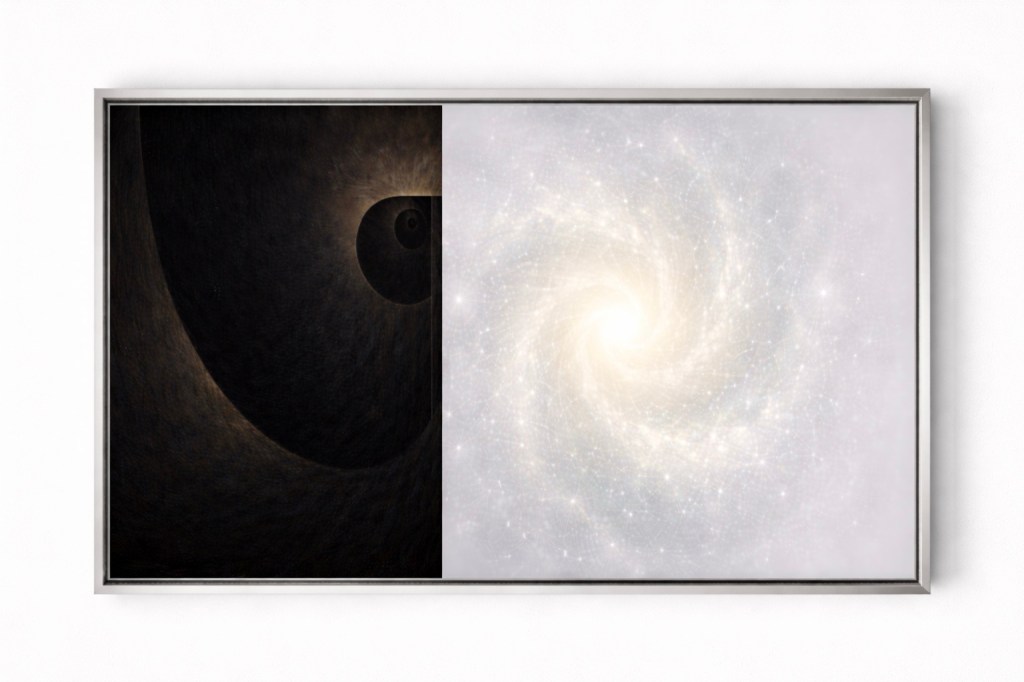
What It Is; What Is Not
CGI
2026
Ricardo F Morin
4 de enero de 2026
Oakland Park, Fl
Wannabe Axiom II
*
This essay treats inflation not as a technical variable but as an axiom. It asks when inflation ceases to appear as a policy outcome and begins to function as a background assumption. At that point, it no longer argues its case. It is endured.
Inflation is commonly described as neutral. It is said to affect all equally, to arise impersonally, and to correct excesses over time. These descriptions grant it the status of a natural condition rather than a decision mediated by institutions. In doing so, they suspend ethical inquiry.
What presents itself as general is, in practice, asymmetrical. Inflation redistributes value across time. Those who can defer consumption, hold assets, or hedge exposure are not affected in the same manner as those whose lives are indexed to wages, rent, or fixed obligations. A condition that produces predictable inequality while presenting itself as neutral contradicts its own description.
The contradiction deepens when inflation is framed as inevitable. Inevitability removes agency from decision while preserving its effects. Responsibility dissolves into explanation. Adjustment is demanded without consent, and patience is prescribed as virtue. The ethical tension does not lie in sacrifice itself, but in the absence of reciprocity. Those who decide are not exposed in the same temporal frame as those who absorb the cost.
Inflation operates quietly. It does not compel through force but through normalization. It is accepted because it is explained, and it persists because it is treated as unavoidable. What inflation is, then, is a distributive mechanism embedded in time. What it is not is neutral, impersonal, or shared equally.
The moment this distinction is obscured, inflation ceases to be examined and begins to rule as an axiom.
 Observations On Perception