“Orientation and Method”
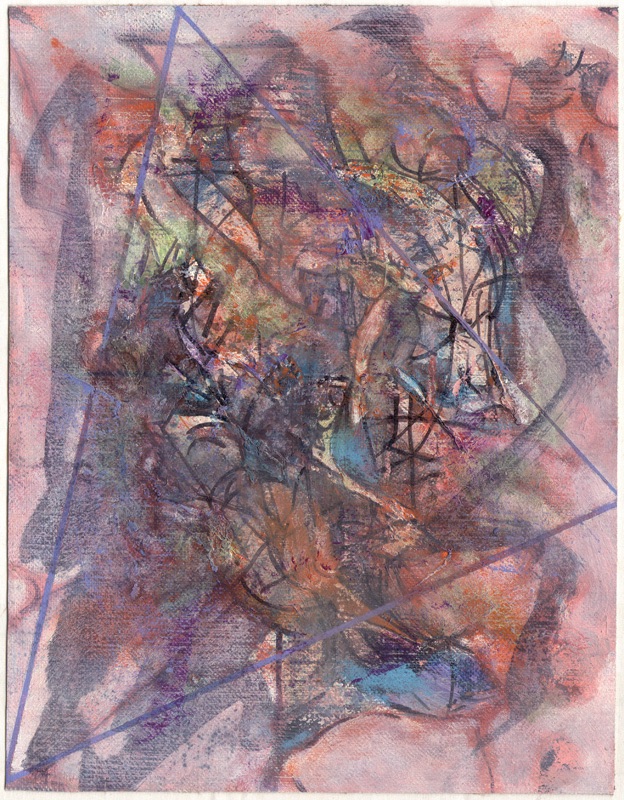
Triangulation Series Nº55
10″ × 12¾″
Oil on linen
2009
*
Ricardo F. Morín
March 15, 2026
Kissimmee, Fl
*
The essays collected here do not rest on disciplinary authority or academic specialization. Its origin lies in curiosity sustained through observation and prolonged engagement with visual form. Visual practice provides the initial grounding, where attention to composition, proportion, and spatial relation shapes perception and orients the work.
Prose appears, not as a rupture from visual practice but as its continuation in another medium. In moving from image to language, the work follows the same concerns: how perception organizes experience, how structure gives form to meaning, and how attention mediates the relation between awareness and the world.
The work does not assume the status of expertise as posture or credential. Instead it adopts a disposition toward inquiry that remains open, uneven in its results, and subject to variation. What orients the work is not mastery but attention, and not assertion but understanding.
The writing moves away from classification and toward the exposure of limits encountered through circumstance. Essays rely on balance and implicit structure to maintain neutrality. This allows certain positions to remain unclassified, not by design but by fidelity to the conditions from which they emerged. This orientation does not signal doctrine or method. It reflects reluctance to extend analysis beyond what experience appears to authorize.
From this point the writing aligns with a tradition of perceptive essays that begin from observation rather than conceptual systems. Language arises from perception and seeks to illuminate the conditions in which human beings act, judge, and speak. The effort is not to construct explanatory frameworks but to clarify realities that emerge through experience.
Conceptual vocabularies and technical classifications are set aside when they substitute analytic order for perceptive understanding. Such systems may organize discussion, yet they distance language from the circumstances they attempt to describe. The essays collected here proceed instead through observation of lived situations, historical experience, and the ethical tensions through which human beings interpret their lives.
Understanding in this tradition does not arise from method alone but from judgment, attention, and disciplined use of language. Each essay approaches its subject through observation and reflection, and allows reality to appear before interpretation organizes it.
 Observations On Perception