*
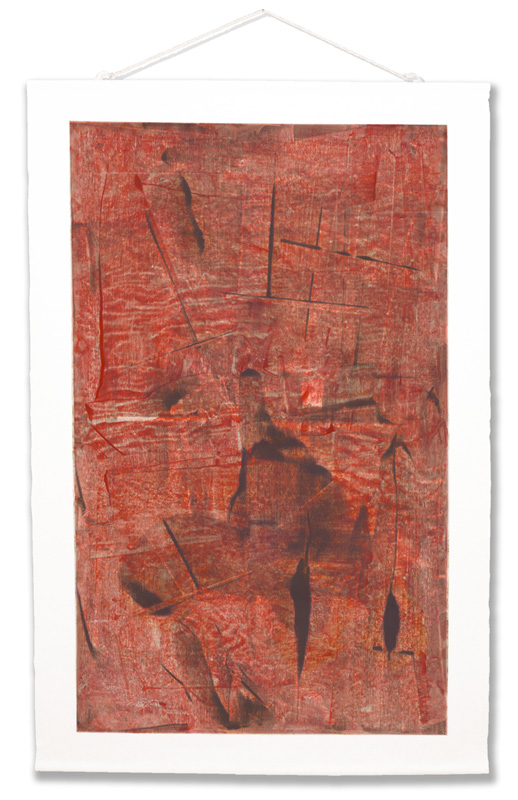
Ricardo Morín, Oil on linen scroll
43” x 72″ x 3/4″
2012
*
~
Author’s Note
This is a work of fiction inspired by historical events. While the story is rooted in real-world dynamics, all characters, dialogues, and specific incidents are entirely fictional. Any resemblance to actual persons, living or dead, is purely coincidental.
This narrative is not intended to depict, portray, or comment on any real individuals or events with factual accuracy. It is a literary exploration of themes relevant to society, history, and the human experience.
Ricardo F. Morín Tortolero, February 10, 2025
Oakland Park, Florida
~
*
List of Characters:
- 1. The Champions of Order and Hope:
• Aurelia: A principled guardian of constitutional values.
Traits: Wise, steadfast, compassionate. She embodies the enduring spirit of order.
• Marcos: A dedicated public servant bridging tradition and modernity.
Traits: Honest, diligent, empathetic. He upholds institutional integrity.
• Elena: A unifying presence with calm resolve and moral clarity.
Traits: Reflective, compassionate, inspiring. She acts as the moral compass of her community.
- 2. The Figures of Disruption:
• Soren: A brilliant yet reckless young tech savant.
Traits: Intelligent but impulsive, morally ambiguous. His actions expose the risks of unvetted innovation.
• Vera: An ambitious bureaucrat exploiting emerging technologies for gain.
Traits: Charismatic, calculating. She represents the seductive nature of power when ethics are compromised.
• Xander: A populist firebrand unsettling the established order.
Traits: Persuasive, rebellious, unpredictable. He stokes division with promises of rapid change.
• Don Narciso Beltrán: An impetuous, self-indulgent octogenarian.
Traits: Arrogant, narcissistic. He parades his delusions of “perfection,” and embodies the dangers of unchecked ego.
Ideology: Seeks to displace marginalized groups to impose his distorted vision of order.
- 3. The Keepers of Balance:
• Renato: A pragmatic administrator between innovation and tradition.
Traits: Level-headed, fair, resourceful. He exemplifies compromise without ethical sacrifice.
• Carmen: A seasoned advisor offering historical perspective.
Traits: Nurturing, experienced, reflective. She bridges past lessons with current challenges.
• Iker: A dedicated technician ensuring system stability.
Traits: Conscientious, methodical, courageous. He represents the unsung heroes of critical infrastructure.
*
Act I
A Nation at the Precipice
The air crackles with change—raw, electric, untempered. It surges through the avenues where history’s stones, heavy with forgotten oaths, bear silent witness to promises now unraveling. Beneath the alabaster facades of institutions once tempered by order, a quiet assault spreads. The people feel it in the marrow of their days, in the uneasy hush between headlines, in the glint of urgency behind every argument.
Once, the land moved to a measured cadence, set by laws unyielding to fleeting tempers. Now, the streets pulse with a different rhythm—a fevered drive toward something new, unburdened by the slow wisdom of the past. Progress and tradition, each staking its claim, wrestle in the dust of a nation standing on the edge of itself.
In the halls of power, where marble once stood as a bulwark against unchecked tides, whispers stir—of systems too rigid to bend, of minds too restless to wait. The parchment of governance, crisp with centuries of deliberation, meets the friction of unfettered innovation. Some call it progress, others self-destruction.
Yet beneath this clash, a deeper question remains: Does a nation endure by perfecting its foundations or by discarding them altogether? The answer, suspended between past and future, waits to be spoken—if only the voices of the present dare to choose.
*
Act II
The Shattering
It begins not with an explosion, but with a single breach—silent, insidious, precise. A door left ajar in the corridors of power, a signature scrawled where it should not be, a system once thought inviolable suddenly laid bare. The nation awakens to the aftermath, uncertain whether the ground beneath them has merely shifted or collapsed entirely.
In the din of speculation, two figures emerge—Soren, the architect of controlled chaos, and Don Narciso, the whisperer of gilded lies. One wields disruption as a scalpel, cutting through the sinews of governance with cold precision. The other, a master illusionist, cloaks upheaval in the fabric of righteousness and bends perception until even the most steadfast begin to doubt the contours of reality.
The people watch, rapt and confused. Some see salvation in the rise of these forces, a chance to shed the weight of old constraints. Others, those who still listen for the heartbeat of the republic, sense the tremor beneath their feet and wonder: Is this the moment when the foundation finally gives way?
The stage is set. The struggle is no longer abstract. The breach is real, and the hands that hold the future are already at work to reshape it in their own image.
*
Act III
The Gathering Storm
The breach widens. What was once an isolated fracture in the nation’s foundation now spreads and courses through institutions like veins turned septic. The days grow heavier with uncertainty, and in the void where order falters, new forces emerge—some to defend, others to dismantle, and a few to navigate the shifting ground.
The Call to Defend
Aurelia moves first, a voice of clarity in the rising chaos. Where others falter in fear or cynicism, she stands unyielding, wielding conviction like a torch against the encroaching dark. By her side, Marcos, a man of reasoned strength, gathers those who refuse to let history slip into ruin. And Elena, keen-eyed and relentless, sharpens truth into a blade that cuts through the veils of distortion spun by those who seek to reshape reality to suit their designs.
The Forces of Disruption
But against them rise the architects of disorder. Soren, ever the master of fracture, feeds the discord, to ensure no side gains enough ground to restore stability. Vera, a specter of unrepentant ambition, twists uncertainty into leverage to secure power in the shadows where the law’s reach begins to blur. Xander moves openly, charismatic and mercurial, a revolutionary to some, a destroyer to others. And Don Narciso, ever the weaver of illusions, speaks in riddles that soothe even as they deceive.
The Balance Seekers
Yet not all choose a side in the battle unfolding before them. Renato, the quiet strategist, watches, waits, and seeks the threads that might yet be rewoven before the fabric tears beyond repair. Carmen, pragmatic, negotiates between factions, desperate to slow the slide toward chaos. And Iker, burdened by both past and present, works in the shadows—not to seize power, but to ensure that whatever future emerges still bears the echoes of what was once whole.
The tension thickens. Every movement, every decision, tips the scale. And as the storm gathers on the horizon, one truth becomes clear: no one will emerge unchanged.
*
Chapter IV
The Masses
The masses do not lead; they follow, but with a fervor that shakes the very bones of the nation. Their cries rise in streets and squares, across glowing screens and whispered corners. What began as discontent has become something more—an anthem of anger, stripped of nuance, sharpened into conviction.
Their grievances, once tethered to reality, now drift free, shaped by the voices they have chosen to trust. Soren’s rhetoric courses through them like wildfire, his calculated fractures swelling into irreparable chasms. Vera’s ambition feeds their hunger for upheaval and promises power to those who feel unseen. Xander, the relentless provocateur, transforms their resentment into action, while Don Narciso shrouds them in visions of grandeur, while whispering to their ears that history bends to the will of those bold enough to seize it.
They speak not in dialogue, but in echoes—those that amplify what stirs their fury and silence what does not. To them, compromise is betrayal, and reflection is weakness. They are the force that makes destruction possible, not by design, but by sheer, unrelenting belief.
The Guardians of Common Sense
But against the tide stand those who refuse to be swept away. They are quieter, less visible, but no less resolute. They do not rally for glory or scream for vengeance; instead, they guard the ground beneath their feet, as they hold firm against the storm.
Aurelia’s voice reaches them, measured and unwavering and cut through the noise like a distant bell. Marcos gives them structure and remind them that reason is not passivity, but discipline. Elena arms them with truth and asserts that in an age of distortion, clarity itself is a weapon.
They are the ones who ask, What is gained? What is lost? They are not blinded by the promise of a new order nor lulled into complacency by the old. They see both the cracks and the foundation, and they stand—not to defend power, but to defend sense.
The Tipping Scales
The two factions watch each other with wary eyes, their struggles intertwining in ways neither fully understands. The Reason Without Reason surges forward to force change and break barriers, tgough often without knowing what they will build in the wreckage. The Guardians of Common Sense push back, not against progress, but against the recklessness that would see wisdom discarded in the name of speed.
And in this battle for the nation’s soul, it is neither the heroes nor the antiheroes who decide the outcome. It is these voices from below—the masses, the multitude, the unseen tide—that will tip the scales.
Which way they fall remains uncertain.
*
Chapter V
The Breaking Point
The streets tremble beneath the weight of decision. What once simmered in whispers and warnings now roars in the open—ideals no longer debated but brandished like weapons. The air, thick with the residue of old promises and new betrayals, pulses with the certainty that whatever comes next will leave nothing untouched.
The antiheroes make their final gambit. Soren, the tactician, moves like a shadow to orchestrate disorder where unity threatens to form. Vera stands at the precipice, poised to seize the moment, her ambition a blade sharpened by the chaos she helped ignite. Xander, the firebrand, revels in the combustion, his voice rising above the masses as they lurch toward destiny. And Don Narciso, the illusionist, offers the vision of victory—and never reveals for whom.
Across the divide, the heroes hold their ground. Aurelia, the last sentinel of reason, refuses to yield to hysteria. Marcos, steadfast and deliberate, gathers the scattered fragments of law and order and will them into an unbreakable shield. Elena, undeterred by the tide of misinformation, hurls truth into the storm and hopes that it will land where eyes have not yet closed.
The Final Blow
The masses surge, a force neither entirely controlled nor entirely free. The Reason Without Reason, pushed to their limits, demand collapse or conquest, their fury unshaken by consequence. The Guardians of Common Sense, though fewer, stand firm, their resistance not in rage but in resolve. The weight of their struggle shifts the balance, their voices merge into a single question: Will we break the foundation, or will we stand upon it?
The Reckoning
From the depths of the nation’s memory, the constitutional order awakens. The slow machinery of governance, thought too feeble to withstand the tide, begins to move. Checks long ignored now make themselves known. Laws, institutions, the silent architecture of balance—these rise, not as relics, but as forces unto themselves. The battle is no longer merely between men and their ambitions; it is between the transient and the enduring, the fleeting impulse and the structure that has weathered centuries.
In this moment, the outcome is not determined by strength alone, nor by passion, nor even by strategy. It is decided by what the nation remembers of itself—and whether it chooses to preserve that memory or cast it into the void.
The final choice looms. And once made, there will be no turning back.
*
Chapter VI
The Restoration
The dust settles, though the echoes of upheaval still linger in the air. The streets, once filled with the clamor of irreconcilable voices, now murmur with something quieter—fatigue, reflection, the tentative steps of a people relearning their own rhythm.
The battle did not end in conquest, nor in ruin, but in something subtler: the slow, stubborn reassertion of order. Not imposed from above, nor demanded by force, but reclaimed—piece by piece—by the quiet mechanisms that have long bound the nation together.
The institutions that once seemed fragile now reveal their hidden strength—not in their invincibility, but in their ability to bend without breaking. The checks, once dismissed as relics, prove their purpose—not by preventing crisis, but by ensuring that no single force, no matter how fervent, may hold absolute sway.
The antiheroes do not vanish. Soren retreats into the shadows and wait for another fracture to exploit. Vera, calculating, pivots to survive and adapts her ambitions to the shifting landscape. Xander’s voice dims but does not disappear, a reminder that dissent, even when reckless, is never truly extinguished. And Don Narciso? He smiles, enigmatic, because he knows that perception is never fixed—it only shifts.
Nor do the heroes claim triumph. Aurelia, weary but unbowed, understands that victory in democracy is never final. Marcos, pragmatic, turns to the long work of rebuilding what was shaken. Elena, relentless as ever, ensures that truth remains the foundation upon which all else is built.
The people—the masses who had been both the fuel and the fire—find themselves changed. Some remain embittered, unable to accept that the world they envisioned has not come to pass. But others, those who stood against destruction not out of fear but out of faith in something steadier, see that the foundation still holds.
The nation breathes again. Not in perfect harmony, not without scars, but with the knowledge that it has endured. That it will always endure—not through force or fury, but through the resilience of principles that, though tested, remain unbroken.
The storm has passed. But the sky, though clearing, holds the memory of what has been.
And what may come again.
*
Epilogue
The Quiet Turning
Time does not erase conflict, nor does it promise resolution. What it offers, instead, is distance—a vantage from which to see not only what was lost, but what endured.
The nation stands, as it always has, not unchanged, but unbroken. The tides of extremism will rise again, as they always do, for there is no final victory over the impulses of fear, ambition, and unrest. The masses, shifting, will be drawn to extremes, then back toward balance, as if testing the edges of reason before returning to the center.
Yet within this ceaseless motion lies the quiet rhythm of renewal. Accountability, once threatened, reasserts itself. Balance, though fragile, holds. And hope—fragile, tested, but unwavering—persists, not as illusion, but as choice.
The shroud that once veiled perfection has lifted and reveals not flawlessness, but resilience. Not certainty, but the will to seek it. Not a world without discord, but one where unity is still possible—not through sameness, but through a shared commitment to something greater than division.
The story does not end. It continues, written in the choices yet to be made. And within those choices lies the promise that, though the storm may return, so too will the light.
*
Ricardo F. Morín Tortolero, February 10, 2025
Oakland Park, Florida
Editor, Billy Bussel Thompson,
New York City, February 14, 2025
 Observations On Perception