*
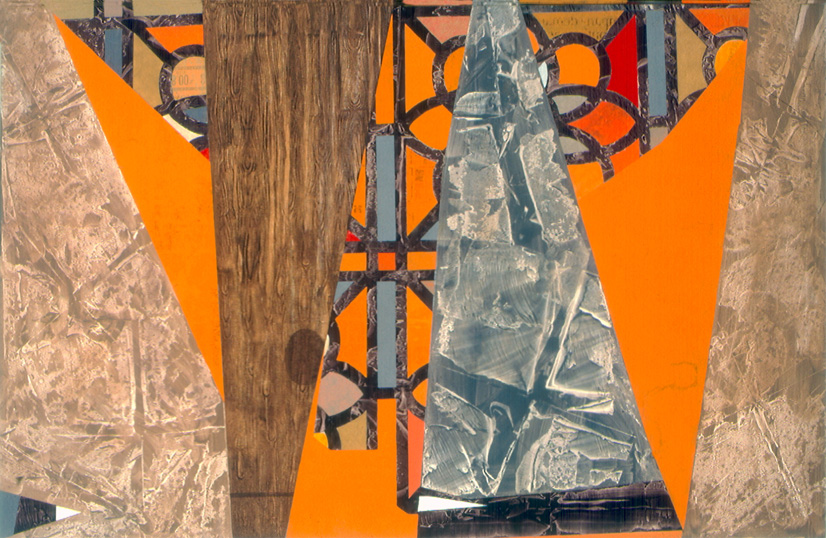
New York Series, Nº 11
54″ x 84″
Oil on canvas
1989
Ricardo F Morín
January 1, 2026
Oakland Park, Fl
The work began within a relationship marked by companionship and solidarity. Attention to language, discipline, and restraint developed through shared effort rather than assertion of authority. Standards were learned through proximity, conversation, and time. Whatever shape the writing later assumed did not arise in isolation; it took form within sustained exchange oriented toward craft.
For a time, that arrangement held. Growth moved in a common direction. Guidance clarified rather than constrained. Correction sharpened rather than narrowed. At that stage, there was no reason to imagine that continuation would require anything other than more work.
As the writing developed, friction appeared without a clear source. Questions emerged that did not settle easily. Revisions accumulated without resolving what they were meant to address. What had once felt like refinement began to feel like adjustment, though the difference was not immediately clear. The work continued, but with more hesitation.
Gratitude complicated recognition. What had been received was evident and could not be denied. To question the present form of the relation felt premature, even ungrateful. Endurance seemed preferable to interruption, especially while uncertainty could still be explained as part of growth.
Over time, small signs accumulated. Decisions were postponed. Directions shifted after agreement. Suggestions were acknowledged but returned unchanged. The writing slowed. Nothing dramatic occurred, but progress no longer felt proportionate to effort.
Attempts were made to restore balance. Clarifications were offered. Adjustments were accepted. The hope was that refinement of terms might recover the earlier ease of movement. Instead, the same tension reappeared, differently framed, without resolving what had prompted it.
At a certain point, the difficulty could no longer be treated as temporary. Continuing began to require forms of accommodation that altered how judgment operated while writing. Choices were made to preserve the relation rather than the work. What was being protected became harder to name.
Recognition did not arrive as certainty. It arrived as a limit. There were things the work could no longer do without distortion. There were directions it could no longer take without resistance that did not diminish over time.
Rupture followed hesitation, delay, and resistance. It did not resolve anything cleanly. It ended a form of continuity that had once been formative. What was relinquished was not gratitude, but dependence. What remained was the work itself, now proceeding without mediation.
The cost of rupture was not conflict, but exposure. Standards had to be held without reinforcement. Decisions could no longer be deferred. Failure, if it came, would no longer be shared.
Nothing in the rupture erased what had been learned. It marked the point at which learning could no longer continue in the same form. What followed was not freedom in the abstract, but authorship in the strict sense: judgment carried without shelter.
*
 Observations On Perception