*
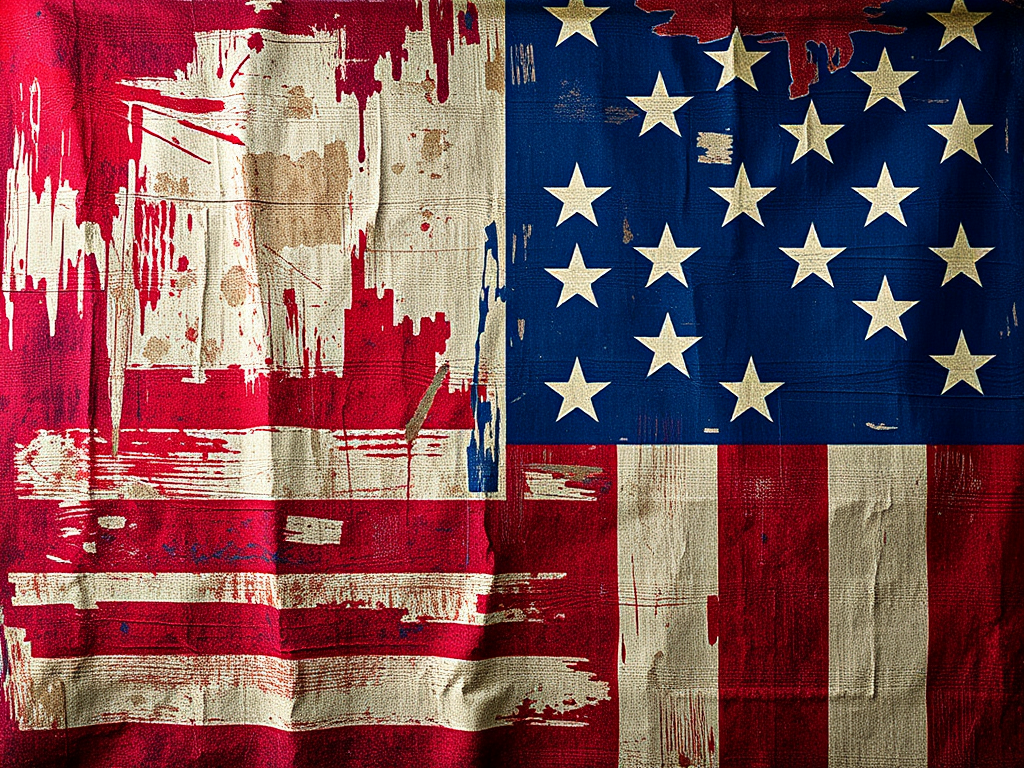
A Flag in Distress
CGI
2025
By Ricardo Morin
July 31, 2025
The recent public defense of media censorship by the current Chairman of the Federal Communications Commission—an appointee from the Trump era—marks a chilling development in the ongoing campaign to recast American institutions in the image of authoritarian grievance. Justified under the pretext of combating “invidious ideology” associated with Diversity, Equity, and Inclusion (DEI), the move signals a deeper ideological purge aimed not at restoring neutrality but at eliminating pluralism itself.
This defense of censorship, framed as a protection against ideological bias, in fact constitutes a stark betrayal of the First Amendment’s foundational commitments. Far from curbing excess, it institutionalizes a selective silencing of voices that challenge the dominant ethno-nationalist narrative increasingly embraced by Trump-aligned cultural warriors. It is not DEI that poses a threat to democratic cohesion, but rather the repressive apparatus now being assembled to discredit and dismantle it.
What is emerging is not policy, but performance—a spectacle of control designed to communicate power rather than to govern justly. In this, the parallels to the reign of Caligula are not accidental. The Roman emperor’s descent into theatrical cruelty and capricious edicts was not merely a symptom of madness but a deliberate assertion of dominance over law, decorum, and truth itself. Under Caligula, the empire was transformed into a stage upon which reality bent to the will of a singular, vindictive ego. Trumpism, in its media strategy and institutional manipulation, follows a similar logic: one that privileges loyalty over legitimacy, and spectacle over substance.
The FCC’s shift from regulatory independence to ideological enforcement exemplifies this logic. Rather than acting as a steward of public trust, the Commission is being repurposed as a gatekeeper of permissible narratives—an arbiter of who may speak and who must be silenced. The language of “protecting viewers” from divisive content serves as a smokescreen for restricting narratives that confront historical injustice, racial inequality, or structural exclusion.
If allowed to continue, such measures risk hollowing out the very idea of a democratic media ecosystem. In its place would emerge a curated domain of sanctioned speech, curated not for truth or civic health, but for the comfort of those in power. The result would not be national unity, but enforced conformity masquerading as patriotism.
This is not a return to law and order; it is a return to imperial whim. The question now is whether American institutions will continue to serve as instruments of democratic accountability, or whether they will become, like the Senate under Caligula, ornamental backdrops to a regime that no longer pretends to tolerate dissent.
*
 Observations On Perception