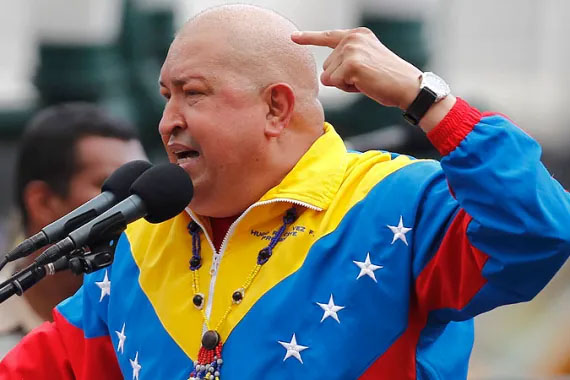
Long ago Venezuela ceased functioning as a recognizable republic governed through reciprocal law. What remained was the visible shell of a State occupied by criminal patronage networks, military corruption, narcotrafficking structures, paramilitary violence, ideological operatives, and political figures whose survival depended less on constitutional accountability than on protected access to force, money, and fear.
Government institutions continued functioning publicly while losing legitimacy internally. Courts remained. Elections remained. Ministries remained. Official speeches remained. Yet the relation between institutional language and lived reality fractured. Citizens learned to navigate contradictions that would once have appeared intolerable: corruption without consequence, violence without accountability, elections without trust, legality without reciprocity, patriotism fused with extraction.
The country did not collapse into chaos through sudden rupture. It normalized degradation step by step while preserving the appearance of institutional continuity. That was the true danger. Not disappearance of structures, but their survival after recognizability had already deteriorated within them.
Ten years ago Americans could still treat Venezuela as distant pathology, a failure belonging to another political culture. That illusion no longer holds.
The executive culture surrounding Donald Trump exposed mechanisms Americans once assumed constitutional tradition alone would prevent: attacks against institutional legitimacy, pressure upon electoral credibility, demands for personal loyalty over civic obligation, normalization of disinformation, contempt toward procedural restraint, degradation of judicial independence, and transformation of political identity into permanent grievance mobilized through resentment, fear, and spectacle.
The danger does not reside in resemblance alone. It resides in normalization. Citizens adapt. Language adapts. Institutions adapt. Contradictions that once produced alarm become explainable. Then tolerable. Then routine. What once appeared disqualifying becomes incorporated gradually into ordinary political life.
This does not make the United States Venezuela. Historical conditions, constitutional structures, federal distribution of power, and civic traditions remain different. But recognizable mechanisms do not require identical outcomes to remain dangerous.
What matters is whether language retains the capacity to name deterioration before deterioration completes its normalization.
Diagnostic anger begins there.
Not because anger possesses truth. Not because anger sanctifies perception. But because certain inequities become too substantial to absorb inwardly without falsification. Under such conditions, indifference demands greater distortion than anger.
This anger differs from ideological rage because it does not seek enemies as emotional nourishment. It seeks recognizability. It attempts to restore proportion between language and consequence after public discourse has begun dissolving that relation through euphemism, procedural theater, tribal loyalty, intimidation, propaganda, and institutional cowardice. It confronts conditions whose normalization depends precisely upon weakening direct recognition.
That is why diagnostic anger remains fundamentally different from violence even when severe in expression. Violence seeks domination, humiliation, submission, or destruction. Diagnostic anger seeks exposure. It attempts to invalidate conditions that permit inequity to harden gradually into accepted reality while institutions continue speaking the language of democratic legitimacy.
Some words divide because they dehumanize. Other words reveal divisions already operating beneath institutional language designed to conceal them. A political culture may continue invoking democracy while reorganizing itself around concentrated executive power, selective legality, disinformation, personal loyalty, and fear administered through permanent agitation. Under such conditions, excessive moderation in language becomes another form of concealment.
This does not authorize hysteria, fabrication, or totalization. The prose must preserve distinctions within the anger itself. The nouns must remain earned. The mechanisms must remain observable. The pressure must remain tied to recognizable conditions rather than rhetorical intoxication. Otherwise anger loses diagnostic force and becomes spectacle.
Yet once rigor is maintained, anger acquires another function. It protects language from surrendering completely to euphemism. Every deteriorating civic order develops vocabularies designed to neutralize recognition: stability, security, patriotism, emergency, normalization, procedural continuity. Diagnostic anger interrupts that sedation. It restores disproportion to speech where disproportion already exists in reality.
The risk of expressing such recognition openly is not merely reputational. The greater risk may lie in refusing expression once recognition has already occurred. Euphemism then ceases being caution and becomes inward cooperation with distortion itself.
That was always the deeper danger.
Venezuela demonstrated how collapse normalizes itself while continuing to speak the language of legitimacy. The lesson was never confined to Venezuela alone.
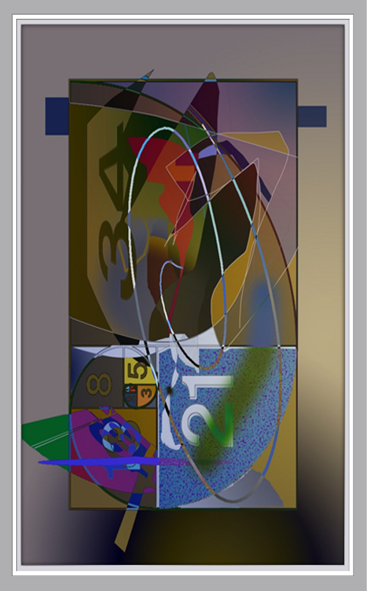
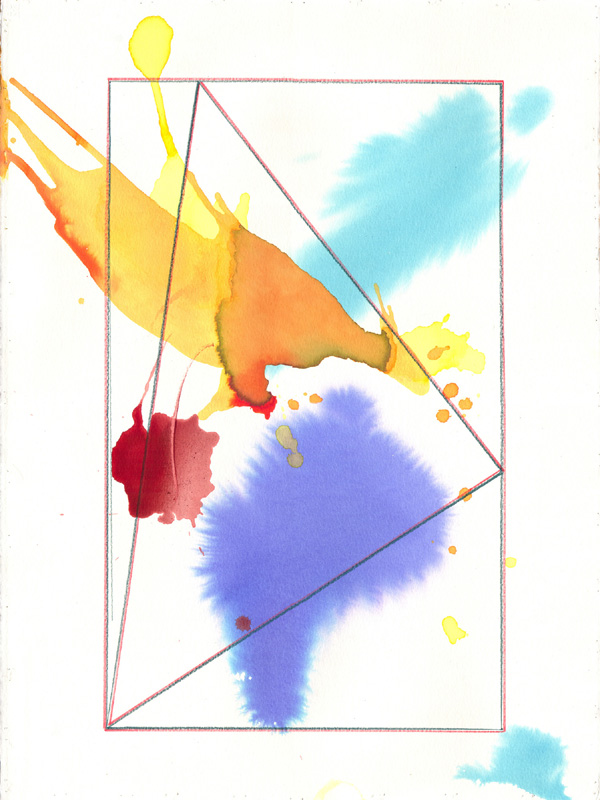
“Geometric Allegory” digital painting 2023 by Ricardo Morin (American visual artist born in Venezuela–1954)
*
Author’s Note
This installment examines how ideological labels, liberal, socialist, democratic, are deployed as instruments of alignment rather than as enforceable commitments. Venezuela is approached not as an exception, but as a case in which administrative practice, international positioning, and partisan abstraction converge to obscure responsibility. What follows traces how power is exercised through method rather than doctrine, how ideological language displaces accountability, and how clarity, rather than consensus, emerges as the first condition for recovery.
Ricardo F. Morín, January 12, 2026, Oakland Park, FL.
*
Chapter XIII
*
The Fifth Sign
~
The Pawned Republic
1
The Venezuelan economic crisis developed within a political environment in which control over foreign currency, public spending, and State revenues became increasingly concentrated in State-controlled allocation systems and extra-budgetary fiscal mechanisms. After exchange controls were established in 2003, access to foreign currency was centrally allocated through State mechanisms such as CADIVI, and by 2013 even government authorities were publicly acknowledging fraud in the assignment of preferential currency, including allocations to fictitious entities. At the fiscal level, parallel funds such as FONDEN administered substantial appropriations outside substantive parliamentary scrutiny, while public information on State spending and earmarked funds became increasingly unavailable. Under these conditions, the diversion of public resources did not appear as isolated misconduct but as a recurring feature of governance in which formal procedures governing budget approval and reporting remained nominally in place while independent verification and public disclosure diminished. What emerged was not the failure of a declared doctrine, but the consolidation of an administrative method in which access to public resources depended less on transparent procedure than on the concentration of discretionary control.
Debates that oppose socialism to capitalism misidentify the operative field. These terms describe beliefs about ownership and social purpose; they do not describe how economies are administered. Economic stability does not follow from declared purpose but from enforceable limits on taxation, spending, and contract execution. It depends on whether taxation follows rule, whether contracts are enforced without exception, whether budgets are bounded by procedure, and whether authority is exercised within limits enforced through budget law, contract enforcement, and institutional oversight. Where these conditions are absent, ideological designation does not fail; it becomes irrelevant.
As State procurement in sectors such as oil, infrastructure, and food imports became subject to political discretion, auditing functions weakened and oversight bodies lost operational independence. Revenues and contracts controlled by the State were increasingly used to redirect resources through discretionary allocation. Public authority ceased to function as a mediating structure and became an object of appropriation. The result was not episodic corruption but a stable arrangement in which diversion operated as an expected outcome of governance.
The mechanism did not explain action; it displaced its examination. Ideological language did not clarify operations; it rendered them inaccessible. Official discourse invoking class struggle and anti-imperialism redirected public attention from currency allocation, public spending, and procurement practices toward symbolic political conflict. These appeals replaced the examination of procedures with narratives of opposition that carried no capacity for control.
This substitution extended beyond the national sphere. Governments identifying with liberal or democratic traditions supported sanctions presented as instruments of pressure. In practice, these measures intensified economic hardship without altering the internal configuration of power. [1] At the same time, States maintaining political and economic alignment with the Venezuelan government, including China, Russia, and Cuba, permitted the attenuation of electoral oversight, judicial independence, and legislative authority and presented inaction as fidelity to principle. [2] Across these positions, ideological designation did not guide action. It concealed a convergence: measures that weakened society without altering authority, and positions that preserved authority without regard to how it was exercised.
2
What is presented as a divide between opposing systems resolves, in operation, into a convergence of practices. External pressure that weakens a population without altering authority, and external tolerance that preserves authority without regard to institutional dismantling, produce the same condition: the isolation of society from judicial, electoral, and legislative means of contesting authority.
Within that condition, the population is not situated between competing models of governance. It is rendered instrumental to positions that do not operate upon the mechanisms that sustain or constrain power. The language of alignment, whether in the form of solidarity, neutrality, or caution, does not alter this configuration when it remains detached from the procedures through which authority is exercised. [3]
Where accountability is not enforced, other forms of organization emerge without constraint. Criminal and informal economic networks operating without judicial or regulatory enforcement expand into the space left unregulated. Their growth does not require ideological justification; it follows from the absence of enforceable limits. [4] What is described as crisis does not begin with collapse. It begins when constraint is withdrawn from the exercise of power and remains abrogated without consequence.
Endnotes on Chapter XIII
[1] Francisco Rodríguez and Jeffrey Sachs, “Economic Sanctions as Collective Punishment: The Case of Venezuela,” The Lancet 393, no. 10178 (2019): 2584–2591; Center for Economic and Policy Research, “Sanctions in Venezuela: Economic and Humanitarian Impacts,” 2019.
[2] R. Evan Ellis, “The Maduro Regime’s Foreign Backers: China, Russia, Iran, and Cuba,” Center for Strategic and International Studies (CSIS), November 6, 2020; United Nations Human Rights Council, “Report on the Situation of Human Rights in the Bolivarian Republic of Venezuela,” 2022.
[3] Javier Corrales, “Democratic Backsliding Through Electoral Irregularities: The Case of Venezuela,” Perspectives on Politics 18, no. 2 (2020): 311–327.
[4] Insight Crime, “Venezuela’s Criminal Landscape: A Country of Collusion,” 2021; Transparency International, “Venezuela: Corruption Perceptions Index,” 2022.
*
Chapter XIV
*
The First Issue
~
Resisting Partisan Control:Civil Society’s Stance in Venezuela
1
Democratic life is not secured by a single principle but by the interaction of distinct forms: pluralism, partisanship, nonpartisanship, and antipartisanship. These forms do not resolve into unity. They define how authority is organized, contested, and limited within institutions such as parties, courts, and legislatures.
Pluralism establishes the condition under which difference can appear without being suppressed. Its function is to ensure that multiple positions can enter public space without requiring prior alignment. Where institutions fail to protect participation through electoral access and legal safeguards, participation contracts and representation narrows.
Partisanship organizes competition through structured alignment. Its function depends on a limit: that allegiance to a party does not supersede adherence to the rules governing the contest itself. When that limit dissolves, competition persists in form while its constraints disappear.
Nonpartisanship suspends alignment in order to preserve procedure. Its role is not neutrality in the abstract, but the maintenance of conditions under which decisions remain accountable to rule rather than to affiliation.
Antipartisanship emerges when these arrangements fail. It rejects parties as vehicles of representation, but in doing so it removes the structures through which accountability is exercised. Where this rejection becomes programmatic, it does not remove power. It removes the structures that limit it, leaving power to concentrate without opposition.
2
In Venezuela, antipartisanship became a governing strategy through the delegitimization of established parties and the centralization of authority in the executive. Public disillusionment with established parties permitted the emergence of a singular political alternative that did not operate outside institutions but reorganized them. Institutional limits were recast as impediments, and their removal was presented as restoration. What was removed, however, was not obstruction but constraint. [1]
Under Chávez, this method extended through the redirection of the State resources. Oil revenues were deployed to consolidate political alignment across sectors. Access to State-distributed resources increasingly depended on political alignment, particularly through government programs and public employment, establishing dependence in place of institutional trust. Under Maduro, this structure persisted under contraction: as resources diminished, the requirement of alignment intensified while preserving the same operational logic.
3
Clientelist practices were not introduced but expanded and centralized. What had been dispersed became systemic. Programs such as the Misiones Bolivarianas, funded through oil revenues and administered through State-aligned structures, illustrate this transformation. Their stated function was social provision; their operation linked access to political identification. In programs such as Barrio Adentro, healthcare delivery was administered through structures coordinated with the governing apparatus. [2] Benefits did not follow need alone, but alignment.
Policies of expropriation and currency control further restricted independent economic activity. By reallocating assets through administrative decision, these measures reduced the space within which alternative forms of organization could emerge. Economic contraction followed as a consequence of constrained operation.
4
The weakening of institutional structures displaced rather than eliminated organized activity. Civil society organizations assumed roles in legal defense, human rights documentation, and service provision where State institutions failed to operate consistently.
Organizations such as Provea, Foro Penal, and Transparencia Venezuela document violations, provide legal defense, and maintain records of administrative conduct. Electoral observation organizations document voting conditions and irregularities despite legal and operational restrictions. Community-based structures such as Mesas Técnicas de Agua coordinate access to basic services such as water supply in the absence of reliable State provision. These activities maintain a verifiable link between documented actions and their consequences, between public claims and records, and between authority and its legal limits. Where institutions no longer secure these relations, they are sustained through practice.
5
These formations do not constitute an alternative system of governance. They operate within limits imposed upon them, and their continuity remains contingent. Legislative measures increasing oversight of non-governmental organizations have further reduced their operational space.
What persists is not a program but a set of practices that maintain a verifiable link between action and consequence, authority and limit, and decision and verification. Where these relations are sustained, even in restricted form, the possibility of reconstruction remains.
Democratic recovery does not begin with alignment or design. It begins with the reestablishment of constraint upon power and the restoration of procedures through which actions can be examined and limited. Where these conditions are absent, declarations of principle do not fail; they do not operate.
Endnotes on Chapter XIV
[1] Javier Corrales and Michael Penfold, Dragon in the Tropics: Hugo Chávez and the Political Economy of Revolution in Venezuela (Washington: Brookings Institution Press, 2011), 19–24, 30–34.
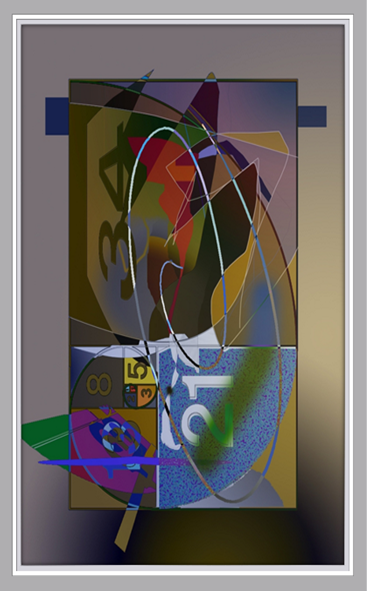
“Geometric Allegory” digital painting 2023 by Ricardo Morin (American visual artist born in Venezuela–1954)
*
Author’s Note:
The preceding chapters established a standard by which political life may be assessed. They did not propose an ideal government as a program, nor did they advance virtue as a moral aspiration detached from circumstance. They articulated, instead, a set of constraints—justice, restraint, and judgment—without which governance loses proportion and language loses meaning.
The chapters that follow examine how those constraints were displaced. They do not proceed from intention or ideology, but from accumulation. Political resentment, once mobilized as a source of legitimacy, became a governing instrument rather than a condition to be addressed. Military authority, long embedded in Venezuela’s institutional history, ceased to function as a stabilizing force and assumed a constitutive role in political identity. Party structures, rather than mediating between society and the State, hardened into asymmetries that neutralized opposition and converted pluralism into fragmentation.
These developments did not arise in isolation, nor were they the product of a single figure or moment. They emerged through a convergence of affect, coercion, and institutional design. The disappointment examined here is not emotional in nature. It is structural: a consequence of ideals retained as symbols after their operative limits had been removed.
“Part II” traces these mechanisms in sequence. What appears is not a rupture from the ethical geometry outlined earlier, but its progressive distortion. Virtue persists in language while constraint disappears in practice. Governance continues to speak in universal terms even as power concentrates and accountability dissolves. The result is not merely authoritarianism, but a political order in which disappointment becomes systemic—produced, sustained, and normalized.
*
Ricardo F. Morín, December 12, 2025, Oakland Park, Florida.
Chapter IX
~
The First Sign
*
On Political and Social Resentment
1
From the ashes of Venezuela’s fractured democracy arose a bitter sentiment:a resentment that reshaped the political and social fabric of the nation. Political and social resentment, born of inequality, historical grievances, and unfulfilled promises, became the primary currency of Hugo Chávez’s rhetoric and policies. This undercurrent of discontent allowed Chávez to rally the dispossessed under the banner of his Bolivarian Revolution, which reframed a nation’s despair as the foundation of his movement.
2
Chávez’s speeches evoked the memories of colonial exploitation and 20th-century corruption; they cast the elite as Venezuela’s oppressors. The enduring inequality between rural and urban areas, the oil-rich elite, and impoverished communities was central to this narrative. Through fiery oratory, Chávez positioned himself as the voice of the marginalized, promising economic justice and empowerment. [1]
3
Yet, behind the veneer of inclusion and equity lay policies that ultimately betrayed these ideals. The social programs known as Misiones, though impactful in the short term, were not sustainable. Funded by volatile oil revenues, these initiatives addressed symptoms rather than structural causes and ultimately deepened Venezuela’s dependency on oil wealth and the state’s centralized control. [2]
4
Despite their initial popularity, these policies created new inequalities. Access to state benefits became contingent on political loyalty and fostered division and mistrust among the very populations Chávez had vowed to uplift. Corruption and inefficiency plagued these programs, leaving many promises unfulfilled and further polarized Venezuelan society.
5
The Cult of Personality
*
Chávez’s charisma played a critical role in channeling resentment into political capital. His larger-than-life persona blurred the boundary between leader and nation; he transformed dissent into perceived betrayal of patriotism. This cult of personality, portraying critics as enemies of progress, allowed him to centralize power with little resistance.
6
As Chapter VI, Chronicles of Hugo Chávez, demonstrated, Chávez presented himself as the champion of the people, while his approach undermined pluralism and fostered a climate of fear and conformity. This dynamic cemented his control but weakened democratic institutions. His frequent invocation of historical grievances acted as a smokescreen for growing authoritarianism.
7
Exploiting Division
*
The Bolivarian Revolution thrived on cultural division, deliberately stoking class, racial, and regional tensions to consolidate power. Amplifying resentment and ensuring loyalty among his base, Chávez’s rhetoric of “us versus them” weaponized existing fractures in Venezuelan society. By cultivating distrust, his regime inhibited collective action across class or political lines and fractured the potential for broad-based scrutiny by a legitimate opposition.
8
This strategy also extended to the private sector. Expropriations, price controls, and the vilification of business leaders dismantled private enterprise and reinforced dependence on the State. These actions exacerbated economic decline, displaced blame onto perceived enemies of the revolution, and perpetuated cycles of resentment. [3]
9
Its Allure
*
Chávez’s manipulation of resentment was not simply a response to inequality but an exploitation of it. By harnessing historical and contemporary grievances, he galvanized a movement that promised to heal Venezuela’s wounds while simultaneously deepening its divisions. The promise of unity and progress became a pretext for authoritarianism; it left behind a legacy of mistrust, unmet expectations, and fractured institutions.[4]
10
When resentment is allowed to govern a nation, it may consume the very structures meant to protect it. Although Chávez offered hope to the disillusioned, his revolution ultimately amplified the very injustices it claimed to address.
~
Endnotes—Chapter IX
[1]Luis Vicente León,Chávez: La Revolución No Será Televisada (Caracas: Editorial Planeta, 2008) 112-127.
[2]Luis Vicente León, Misiones Sociales: Un Gobierno de Dependencia? (Caracas: Editorial Alfa, 2011) 45-59.
[3]Michael F. A. Sargeant,The Venezuelan Military Under Chávez: Political Influence and Militarization(New York: Columbia University Press, 2013) 150-165.
[4]Gustavo Coronel, Venezuela: The Collapse of a Democracy (Miami: Editorial Santillana, 2015) 203-220.
~
*
Chapter X
*
The Second Sign
~
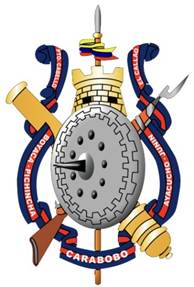
Emblem of the Bolivarian Army.
The Solid Pillar of Power: The Military Force
1
The dynamics outlined in earlier chapters reveal how the military functioned not merely as an institution but as an axis of political identity. Military rule has shaped Venezuela’s identity since its independence in 1811—see Appendix: 19th and 20th-century Constitutions. This endurance stems not only from political necessity but from a deeply ingrained belief in military dominance—a force that has long stifled Venezuela’s progress. For nearly two centuries, from the early republic to the present, the military has been the backbone of Venezuela’s governance, shaped by a succession of caudillos—each with distinct ambitions yet bound by reliance on military authority. Long cast as the steady hand in political turbulence, the military remains a rigid scaffold encasing Venezuela’s political landscape. Chávez’s rise and his reconfiguration of military influence must be understood within this context. As his predecessors had done, Chávez sought to harness military power within a new vision of State control and to intertwine military and political authority in ways that reinforced Venezuela’s autocratic rule.
2
In the wake of independence, Venezuela grappled with instability as military leaders—at times disciplined and at times opportunistic—imposed order in a fractured State. The first decades were marked by struggles between competing factions, from the rivalry between Simón Bolívar and José Antonio Páez to later military-led conflicts, including the struggles of the Blue Federalists in the 1860s and Cipriano Castro’s rise at the turn of the 20th century. Yet, the military’s rigid hierarchy and capacity for decisive action secured its position as the nation’s dominant force. Soldiers dictated national policies and shaped Venezuela’s fate from barracks and battlefields, not from parliamentary halls. Civilian governance, fragmented and short-lived, repeatedly failed to unify the country amid ongoing strife.
3
This legacy endures in General en Jefe Vladimir Padrino López and General en Jefe Diosdado Cabello, who embody the military’s entrenched presence in Venezuela’s political structure. Padrino López, as Minister of Defense, represents the continuity of military influence within the State. His strategic alliance with Nicolás Maduro, grounded in unwavering loyalty and ideological alignment with Hugo Chávez’s Bolivarian revolution, cements his role as a linchpin of the regime’s survival. Diosdado Cabello, who straddles both military and civilian power, leverages his military background to reinforce the government’s authority. Together, they embody the enduring fusion of discipline, ambition, and coercive power.
4
Vladimir Padrino López is widely regarded as a highly disciplined and pragmatic individual. He combines the traits of a loyal military officer with the political acumen necessary to navigate Venezuela’s volatile political landscape. He presents himself as a defender of institutional order and frequently emphasizes the military’s role as a stabilizing force in Venezuela. However, beneath this outward professionalism lies a figure integral to the Maduro regime’s political survival. Padrino López’s loyalty to Maduro has been central to the regime’s endurance. His calculated diplomacy, unlike the confrontational style of other officials, positions him as a pragmatic actor, particularly in dealing with international actors. He balances his public military role with behind-the-scenes influence and leverages his position to navigate internal power struggles. His emphasis on anti-imperialism and nationalism solidifies his standing within the military and political elite.
5
Padrino’s alleged role in the regime’s repression has made him controversial. He has been accused of involvement in systemic military corruption and illicit activities, including drug trafficking and illegal mining. These allegations raise concerns about his complicity in the regime’s criminal activities. His actions reflect calculated pragmatism: he presents himself as a pillar of stability, yet his actual influence remains ambiguous. Some analysts suggest that he could emerge as a power broker in times of crisis.
6
As we analyze the present power structures and their ties to Chávez’s legacy, we must examine the broader historical forces at play. Though often regarded as the architect of Venezuela’s autocratic system, Chávez both emerged from and reinforced the country’s longstanding traditions of militarism and populism. His rise was not an isolated event but the culmination of nearly two centuries of political and social currents. To focus solely on him is to overlook the historical forces that enabled and shaped his rule. Understanding Venezuela’s path to autocracy requires recognizing its political evolution—see Appendix: Constitutional Evolution in the 19th to 20th Centuries.
~
*
Chapter XI
*
The Third Sign
~
The Asymmetry of Political Parties
1
Since the late 20th century, Venezuela’s political landscape has undergone significant transformation, driven by persistent socio-economic instability that disproportionately affected the middle and lower classes. The democratic system established in 1958 was initially defined by a two-party duopoly—Acción Democrática (AD) and Partido Social Cristiano (COPEI)—instituted under the Pacto de Punto Fijo to stabilize democratic governance through alternating power-sharing (see item 26—Constitution of 1961—Appendix, A-1). [1][2][3] Over time, however, this duopoly increasingly monopolized the political arena and marginalized other voices, especially those of socialist and leftist groups. This exclusion not only suppressed pluralistic participation but also deepened discontent among Venezuela’s disadvantaged populations—a factor that ultimately contributed to the system’s collapse. [4]
2
Economic mismanagement, inequality, and political corruption during the 1980s and 1990s further discredited the two-party system. A widening debt crisis, coupled with falling oil prices, exacerbated social inequalities.[5][6] The Caracazo riots of 1989 marked a decisive rupture by exposing the growing gulf between the ruling elite and the general population and signaling the end of the old political order.[7] These riots, which erupted in response to austerity measures imposed by the International Monetary Fund, revealed deep political and social fractures in Venezuelan society. [8]
3
In the aftermath of these systemic failures and societal fractures, Hugo Chávez’s Movimiento V República (MVR) emerged in 1999 as a dominant force, offering populist rhetoric and pledges of wealth redistribution fueled by oil revenues. The Movimiento V República eventually transformed into the Partido Socialista Unido de Venezuela (PSUV) in 2007. This transition not only solidified the political left’s dominance but also reduced internal factionalism that could more effectively enforce its policies. [9][10][11]
4
Chávez’s death in 2013 left a power vacuum, and Nicolás Maduro’s rise to power was contested within the Partido Socialista Unido de Venezuela. Factionalism, particularly between military and civilian wings, complicated governance. Maduro’s consolidation of power relied on autocratic legalism—a practice involving the manipulation of the constitution, judicial subversion, and the exploitation of elections to sustain a democratic façade. Extralegal tactics, however, (such as repression, media censorship, and the co-optation of all branches of government) became essential means by which the regime maintained control. [12][13][14]
5
Though new opposition parties emerged, the Partido Socialista Unido de Venezuela continued to dominate the political landscape. Fragmentation became a defining obstacle for opposition parties, with internal disagreements over strategy and competing visions for engagement with the regime. The Partido Socialista Unido de Venezuela‘s strategy for weakening opposition parties persisted through judicial and electoral manipulation and the promotion of splinter groups, which led to a continued weakening of democratic resistance.
6
The opposition parties struggled to present a united front: a vulnerability that both Chávez and Maduro’s governments actively exploited. This partly explains the opposition’s failure in presenting itself as an effective alternative. Pivotal moments in Venezuela’s political crises were the 2004 recall referendum (when Chávez narrowly survived his recall) and the Ruling 156 by the Tribunal Supremo de Justicia in 2017 (which stripped the opposition-controlled Asamblea Nacional of its powers)—events that further deepened political tensions.[15][16][17]
7
As the political landscape became increasingly fragmented, opposition leaders attempted to develop alternative strategies, and new opposition parties emerged. Altogether, at one point, there were 49 parties (see Appendix: Item B). Despite this expansion, the ruling party has maintained its dominance, while the opposition is still in disarray. Political splintering has become a defining barrier for the opposition in mounting a challenge against the Partido Socialista Unido de Venezuela and has led to repeated failures in electoral and non-electoral arenas: internal divisions over strategy mean that some factions advocate dialogue while others push for more confrontational approaches. The Partido Socialista Unido de Venezuela has played a role through its policy of “divide and rule.” By co-opting certain opposition leaders, creating splinter groups, and using judicial and electoral mechanisms to weaken opposition parties, the regime has effectively neutralized potential threats to its dominance.
~
Endnotes—Chapter XI
[1] Martz, John D., Acción Democrática. Evolution of a Modern Political Party in Venezuela, (Princeton: Princeton University Press, 1966). Provides a detailed history of the Democratic Action (AD) party in a PhD thesis on Venezuela. https://doi.org/10.1215/00182168-46.4.468 .
[2] Ellner, Steve, “Venezuelan Revisionist Political History, 1908-1958: New Motives and Criteria for Analyzing the Past” (Latin American ResearchReview: The Latin American Studies Association, 30, no. 2, 1995), 91-121. This article offers critical context for the history of the Social Christian COPEI Party. https://www.jstor.org/stable/2503835 .
[3] Handlin, Samuel Paltiel, “The Politics of Polarization: Legitimacy Crises, Left Political Mobilization, and Party System Divergence in South America” (PhD diss., Political Science: University of California, Berkeley, Fall 2011), 8, 39-48, 54, 59, 73, 79, 81-86, 91-93, 95, 116, 168, 172.
[4] Myers, David J. “The Struggle to Legitimate Political Regimes in Venezuela: From Pérez Jiménez to Maduro” (Latin American Research Review: Cambridge University Press, October 23, 2017). DOI: https://doi.org/10.25222/larr.240 .
[6] Corrales, Javier, Fixing Democracy: The Venezuela Crisis and Global Lessons (Cambridge: Cambridge University Press, 2021), 99-133.
[7] López Maya, Margarita “The Venezuelan Caracazo of 1989: Popular Protest and Institutional Weakness,” Journal of Latin American Studies, 2003), 35, 117–137. DOI: 10.1017/S0022216X02006673
[10] Marta Harnecker, Understanding the Venezuelan Revolution: Hugo Chávez Talks to Marta Harnecker (New York: Monthly Review Press, 2005), 45-7.
[11] Barry Cannon, Hugo Chávez and the Bolivarian Revolution: Populism and Democracy in a Globalised Age (Manchester: Manchester University Press, 2009), 101-3.
[12] Gregory Wilpert, Changing Venezuela by Taking Power: The History and Policies of the Chávez Government (London: Verso Books, 2007), 102-04.
[13] Javier Corrales, and MIchael Penfold, Dragon in the Tropics: Hugo Chávez and the Political Economy of Revolution in Venezuela (Washington: Brookings Institution Press, 2011), 19-24, 30-34.
[15] Gustavo Delfino and Guillermo Salas, “Analysis of the 2004 Venezuela Referendum: The Official Results Versus the Petition Signatures,” (Project Euclid, November 2011). DOI: 10.1214/08-STS263
Reflections from previous chapters eventually lead to a more historical inquiry, in which the following archive, Chronicles of Hugo Chávez, becomes another lens through which I approach the Venezuelan experience.
*
Ricardo F. Morín, December 12, 2025, Oakland Park, Florida.
Chapter VI
*
Chronicles of Hugo Chávez
~
1
Hugo Chávez, who spearheaded the Bolivarian Revolution, was born on July 28, 1954, in Sabaneta, Venezuela. He died on March 5, 2013, at 4:25 p.m. VET (8:55 p.m. UTC) in Caracas, at the age of 58. As the leader of the revolution, Chávez left a discernible imprint on Venezuela’s political history. To reconstruct this history is to revisit a landscape whose consequences continue to shape Venezuelan life.
At the core of Chavismo lies a deliberate fusion of nationalism, centralized power, and military involvement in politics. This fusion shaped his vision for a new Venezuela, one that would be fiercely independent and proudly socialist.
~
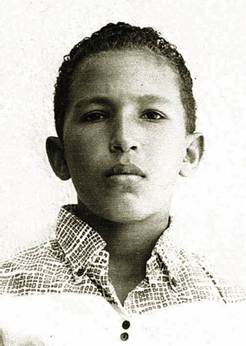
Hugo Chávez at age 11, sixth grade, 1965 (Photo: Reuters).
2
Hugo Chávez’s childhood was spent in a small town in Los Llanos, in the northwestern state of Barinas. This region has a history of indigenous chiefdoms (i.e., “leaderships,” “dominions,” or “rules”) dating back to pre-Columbian times. [1] Chávez was the second of six brothers, and his parents struggled to provide for the large family. As a result, he and his older brother Adán were sent to live with their paternal grandmother, Rosa Inés, in the city of Barinas. After her death, Chávez honored his grandmother’s memory with a poem; it concludes with a stanza that reveals the depth of their bond:
Entonces, / abrirías tus brazos/ y me abrazarías/ cual tiempo de infante/ y me arrullarías/ con tu tierno canto/ y me llevarías/ por otros lugares/ a lanzar un grito/ que nunca se apague.[2]
[Author’s translation: Then, /you would open your arms /and draw me in /as if returned to childhood /and you would steady me /with your tender voice /and you would carry me /to other places /to release a cry /that would not be extinguished].
3
In his second year of high school, Chávez encountered two influential teachers, José Esteban Ruiz Guevara and Douglas Ignacio Bravo Mora, both of whom provided guidance outside the regular curriculum. [3][4] They introduced Chávez to Marxism-Leninism as a theoretical framework, sparking his fascination with the Cuban Revolution and its principles—a turning point more visible in retrospect than it could have been in the moment.
4
At 17, Chávez enrolled in the Academia Militar de Venezuela at Fuerte Tiuna in Caracas, where he hoped to balance military training with his passion for baseball. He dreamed of becoming a left-handed pitcher, but his abilities did not match his ambition. Despite his initial lack of interest in military life, Chávez persisted in his training, graduating from the academy in 1975 near the bottom of his class.
5
Chávez’s military career began as a second lieutenant; he was tasked with capturing leftist guerrillas. As he pursued them, he found himself identifying with their cause and believed they fought for a better life. But by 1977, Chávez was prepared to abandon his military career and join the guerrillas. Seeking guidance, he turned to his brother Adán, who persuaded him to remain in the military by insisting, “We need you there.” [5] Chávez now felt a sense of purpose and understood his mission as a calling. In 1982, he and his closest military associates formed the Bolivarian Revolutionary Movement-200: they aimed to spread their interpretation of Marxism within the armed forces and ultimately hoped to stage a coup d’état. [6]
6
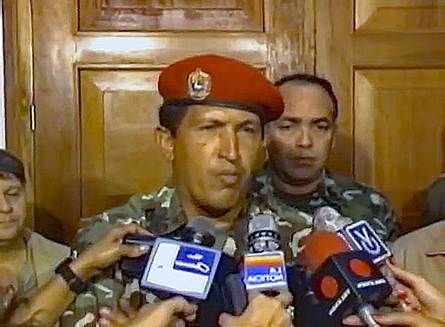
On February 4, 1992, Lieutenant Chávez and his military allies launched a revolt against the government of President Carlos Andrés Pérez. Their rebellion, however, was swiftly quashed. Surrounded and outnumbered, Chávez surrendered at the Cuartel de la Montaña, the military history museum in Caracas, near the presidential palace, on the condition that he be allowed to address his companions via television. He urged them to lay down their arms and to avoid further bloodshed. He proclaimed, « Compañeros, lamentablemente por ahora los objetivos que nos planteamos no fueron logrados . . . » [Author’s translation:“Comrades, unfortunately, our objectives have not been achieved… yet,”].[7] The broadcast marked the beginning of his political ascent.His words resonated across the nation and sowed the seeds of his political future.
~
Chávez announces his arrest on national television and urges insurgent troops to surrender.
7
In 1994, newly elected President Rafael Caldera Rodríguez pardoned him. [8] With this second chance, Chávez founded the Movimiento V República (MVR) in 1997 and rallied like-minded socialists to his cause. [9] Through a campaign centered on populist appeals, he secured an electoral victory at age 44.
8
In his first year as President, Chávez enjoyed an 80% approval rating. His policies sought to eradicate corruption in the government, to expand social programs for the poor, and to redistribute national wealth. Jorge Olavarría de Tezanos Pinto, initially a supporter, emerged by the end of the elections as a prominent voice of the opposition. Olavarría accused Chávez of undermining Venezuela’s democracy through his appointment of military officers to governmental positions. [10] At the same time, Chávez was drafting a new constitution, which allowed him to place military officers in all branches of government. The new constitution, ratified on December 15, 1999, paved the way for the “mega elections” of 2000, in which Chávez secured a term of six years. Although his party failed to gain full control of the Asamblea Nacional (National Assembly), it passed laws by decree through the mechanism of the Leyes Habilitantes (Enabling Laws). [11][12] Meanwhile, Chávez initiated reforms to reorganize the State‘sinstitutional structure, but the constitution’s requirements were not met. The appointment of judges to the new Corte Suprema de Justicia [CSJ]was carried out without rigor and raised concerns about its legitimacy and competence. Cecilia Sosa Gómez, the outgoing Corte Suprema de Justicia president, declared the rule of law “buried” and the court “self-dissolved.” [13][14]
9
Although some Venezuelans saw Chávez as a refreshing alternative to the country’s unstable democratic system, which had been dominated by three parties since 1958, many others expressed concern as the Partido Socialista Unido de Venezuela (PSUV) consolidated power and became the sole governing party. [15] Legislative and executive powers were increasingly centralized, and the narrowing of judicial guarantees limited citizens’ participation in the democratic process. Chávez’s close ties with Fidel Castro and his desire to model Venezuela after Cuba’s system—dubbed VeneCuba—raised alarm. [16] He silenced independent radio broadcasters, and he antagonized the United States and other Western nations. Instead, he strengthened ties with Iraq, Iran, and Libya. Meanwhile, domestically, his approval rating had plummeted to 30%, and anti-Chávez demonstrations became a regular occurrence.
10
On April 11, 2002, a massive demonstration of more than a million people converged on the presidential palace to demand President Chávez’s resignation. The protest turned violent when agents of the National Guard and masked paramilitaries opened fire on the demonstrators. [17] The tragic event—the Puente Llaguno massacre—sparked a military uprising that led to Chávez’s arrest and to the installation of a transitional government under Pedro Francisco Carmona Estanga. [18] Carmona’s leadership, however, was short-lived; he swiftly suspended the Constitution, dissolved the Asamblea Nacional and the Corte Suprema, and dismissed various officials. Within forty-eight hours, the army withdrew its support for Carmona. The vice president, Diosdado Cabello Rondón, was reinstated as president and promptly restored Chávez to power. [19]
11
The failed coup d’état enabled Chávez to purge his inner circle and to intensify his conflict with the opposition. In December 2002, Venezuela’s opposition retaliated with a nationwide strike aimed at forcing Chávez’s resignation. The strike targeted the state oil company Petróleos de Venezuela, S.A. (PDVSA), which generated roughly 80% of the country’s export revenues. [20] Chávez responded by dismissing its 38,000 employees and replacing them with loyalists. By February 2003, the strike had dissipated, and Chávez had once again secured control over the country’s oil revenues.
12
From 2003 to 2004, the opposition launched a referendum to oust Chávez as president, but soaring oil revenues, which financed social programs, bolstered Chávez’s support among lower-income sectors. [21] By the end of 2004, his popularity had rebounded, and the referendum was soundly defeated. In December 2005, the opposition boycotted the elections to the National Assembly and protested against the Consejo Nacional Electoral (National Electoral Council) (CNE). [22] As anticipated in view of the opposition boycott, Chávez’s coalition capitalized on the absence of an effective opposition and strengthened its grip on the Assembly. [23] By that point, legislative control rested almost entirely with Chávez’s coalition.What followed was not a departure from this trajectory, but its extension through formal policy.
13
In December 2006, Chávez secured a third presidential term, a victory that expanded the scope of executive initiative. He nationalized key industries—gold, electricity, telecommunications, gas, steel, mining, agriculture, and banking—along with numerous smaller entities.[24][25][26][27][28][29] Chávez also introduced a package of constitutional amendments designed to expand the powers of the executive and to extend its control over the Banco Central de Venezuela (BCV). In a controversial move, he unilaterally altered property rights and allowed the state to seize private real estate without judicial oversight. Furthermore, he proposed becoming president for life. In December 2007, however, the National Assembly narrowly rejected the package of sweeping reforms.
14
In February 2009, Chávez reintroduced his controversial proposals and succeeded in advancing them. Following strategic counsel from Cuba, he escalated the crackdown on dissent.[30] He ordered the arrest of elected opponents and shut down all private television stations.
15
In June 2011, Chávez announced that he would undergo surgery in Cuba to remove a tumor, a development that sparked confusion and concern throughout the country.[31] As his health came under increasing scrutiny, more voters began to question his fitness for office. Yet, in 2012, despite his fragile health, Chávez campaigned against Henrique Capriles and secured a surprise presidential victory.[32]
~
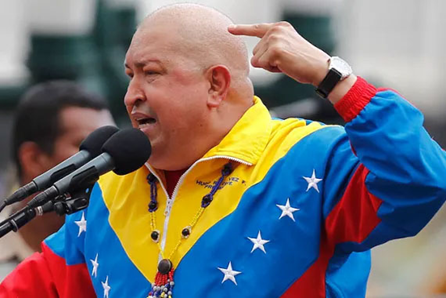
Chávez during the electoral campaign in February 2012.
16
In December 2012, Chávez underwent his fourth surgery in Cuba. Before departing Venezuela, he announced his plan for transition and designated Vice President Nicolás Maduro as his successor, alongside a powerful troika that included Diosdado Cabello [military chief] and Rafael Darío Ramírez Carreño [administrator of PDVSA].[33][34][35] Following the surgery, Chávez was transferred on December 11 to the Hospital Militar Universitario Dr. Carlos Arvelo (attached to the Universidad Militar Bolivariana de Venezuela, or UMBV) in Caracas, where he remained incommunicado, further fueling speculation and rumors. Some government officials dismissed reports of assassination, while others, including former Attorney General Luisa Ortega Díaz, claimed he had already died on December 28.[36] Maduro’s cabinet vehemently refuted these allegations and insisted that no crime had been committed. Amidst the uncertainty, Maduro asked the National Assembly to postpone the inaugurationindefinitely. This further intensified political tensions.
17
The National Assembly acquiesced to Maduro and voted to postpone the inauguration. Chávez succumbed to his illness on March 5. His body was embalmed in three separate stages without benefit of autopsy, which further fueled suspicions and conspiracy theories. Thirty days later, Maduro entered office amid sustained political uncertainty.[37] The implications of this transition extend beyond chronology; they shape the conditions examined in the chapters that follow in this series, which comprises 19 chapters, miscellaneous rubrics, and an appendix.
~
Endnotes:
§ 2
[1] Charles S. Spencer and Elsa M. Redmond, Prehispanic Causeways and Regional Politics in the Llanos of Barinas, Venezuela (Cambridge: Cambridge University Press, 2017). Abstract: “…relacionados con la dinámica política de la organización cacical durante la fase Gaván Tardía.” Published in Latin American Antiquity, vol. 9, no. 2 (June 1998): 95-110. https://doi.org/10.2307/971989
[4] L’Atelier des Archive, “Interview du révolutionnaire: Douglas Bravo au Venezuela [circa 1960]” (Transcript: “… conceptos injuriosos en contra de la revolución cubana …” [timestamp 1;11-14]), YouTube, October 14, 2016. https://www.youtube.com/watch?v=1cx2D5VM8VM
§ 5
[5] “Hugo Chavez Interview,”YouTube, transcript excerpt and time stamp unavailable: Original quote in Spanish (translated by the author): “. . . , if not, maybe I’ll leave the Army, no, you can’t leave, Adam told me so, no, we need you there, but who needs me?” Retrieved October 12, 2023.
[9] Gustavo Coronel, “Corruption, Mismanagement, and Abuse of Power in Hugo Chávez’s Venezuela,” Center for Global Liberty & Prosperity: Development Policy Analysis, no. 2 (CATO Institute, November 27, 2006). https://www.issuelab.org/resources/2539/2539.pdf.
[11] Mario J. García-Serra, “The ‘Enabling Law’: The Demise of the Separation of Powers in Hugo Chavez’s Venezuela,” University of Miami Inter-American Law Review, vol.32, no. 2, (Spring – Summer, 2001): 265-293. https://www.jstor.org/stable/40176554
[37] “Cuerpo de Chávez fue tratado tres veces para ser conservado: … intervenido con inyecciones de formol para que pudiera ser velado,” El Nacional De Venezuela – Gda, Enero 27, 2024, 05:50, actualizado Marzo 22, 2013, 20:51. https://www.eltiempo.com/amp/archivo/documento/CMS-12708339
Venezuela’s transition and Ukraine’s survival now constitute a single test: whether power can be constrained without illusion, and whether the United States can act coherently even when its president cannot perceive coherence himself.
This text does not argue for a policy or predict an outcome. It marks the threshold at which coherence ceases to be discretionary and becomes a condition of survival.
The United States cannot act in one theater in a way that invalidates the principles it claims to defend in another. If sovereignty, territorial integrity, institutional continuity, and legal accountability are treated as binding in Ukraine, they cannot become flexible, provisional, or strategically inconvenient in Venezuela. And the reverse must also hold: if those principles are treated as binding in Venezuela, they cannot be relaxed, reinterpreted, or selectively applied in Ukraine. Once that line is crossed in either direction, coherence collapses—not only rhetorically, but structurally. Power ceases to stabilize outcomes and instead begins to manage decay.
This is not a moral claim; it is a functional one. Modern power does not fail because it lacks force, but because it loses internal consistency. When the same instruments—sanctions, indictments, military pressure, diplomatic recognition—are applied according to circumstance rather than principle, they no longer constrain adversaries. They instruct them. Russia and China do not need to prevail militarily if they can demonstrate that legality itself is selective, contingent, and subject to reinterpretation by whoever holds advantage in the moment.
For this reason, no transition can rest on personalization. Trust between leaders is not a substitute for verification, nor can rapport replace institutions. This vulnerability is well known in personality-driven diplomacy and has been particularly visible under Donald Trump in his repeated misreading of Vladimir Putin. Yet the deeper danger is not psychological; it is procedural. Policy that depends on who speaks to whom cannot survive stress. Only policy that remains legible when personalities are removed can endure.
Nor can outcomes be declared before institutions exist to carry them. Territorial control without civilian authority is not stability. Elections conducted without enforceable security guarantees are not legitimacy. Resource access without escrow, audit, and legal review is not recovery, but extraction under a different name. When the United States accepts results without structures, it postpones collapse rather than preventing it.
Equally corrosive is legal improvisation. Law applied after action—indictments justified retroactively, sanctions reshaped to accommodate faits accomplis—does not constrain power; it performs it. Once legality becomes explanatory rather than directive, it loses its disciplining force. Adversaries learn that rules are narrative instruments, not boundaries.
Finally, there can be no tolerance for proxy preservation. A transition that leaves intact militias, shadow financiers, or coercive intermediaries is not a transition at all. It is a redistribution of risk that guarantees future rupture. External backers may be delayed, constrained, or audited, but they cannot be placated through ambiguity without undermining the entire process.
The test is stark and unforgiving. If an action taken in either Venezuela or Ukraine could not be defended, word for word, if taken in the other—or if a compromise tolerated in one would be condemned if replicated in the other—then the axiom has already been broken.
What must therefore remain true, in both places at once, is this: power must submit to the same standard it invokes—without exception, without personalization, and without retreat into expediency disguised as realism.
*
Authority Where Legitimacy Has Not Yet Converged
*
This section does not assess democratic legitimacy or political merit. It observes how authority is presently constituted and enforced when coherence is under stress.
A question posed during a press conference—regarding the opposition coalition led by María Corina Machado and the electoral victory of Edmundo González Urrutia—elicited a dismissive response from President Donald Trump. Asked why a transitional leadership would not center on that coalition, he replied that there was “no respect for her,” implying an absence of authority within the country.
Taken at face value, the remark appears personal. Read diagnostically, it exposes a more consequential distinction: legitimacy does not presently translate into authority inside Venezuela. The same distinction—between legitimacy and enforceable authority—has shaped Ukraine’s resistance to Russian invasion, where legitimacy was established internally but had to be defended materially against external aggression.
Electoral victory, international recognition, and moral credibility confer legitimacy. They do not, by themselves, confer enforceable power. Authority, as it exists on the ground, flows from the capacity to compel compliance—whether through control of coercive institutions, resource chokepoints, or the operational machinery of the state. In Ukraine, that authority is exercised defensively to preserve an already legitimate sovereign order against external aggression. In Venezuela, it persists independently of electoral outcome, sustained by institutions and mechanisms detached from legitimacy.
In this sense, the question raised by Trump’s remark is not whether Machado’s coalition is legitimate, but what presently lends authority within the country—and who is capable of enforcing decisions, preventing fragmentation, or compelling compliance. The answer is neither rhetorical nor normative. It is about how authority is currently constituted and exercised under present conditions.
Recent commentary surrounding U.S. engagement with Venezuelan actors has made this distinction operational rather than abstract. The marginalization of María Corina Machado has not turned on questions of democratic legitimacy, electoral mandate, or international recognition. It has turned on her unwillingness to participate in transactional arrangements with the existing technocratic and financial strata that currently exercise control within the State. In contrast, figures such as the Vice President Delcy Rodríguez are treated as viable interlocutors precisely because they command enforceable authority through continuity with those mechanisms—coercive, financial, and administrative—that persist independent of legitimacy. Criminality, in this logic, is not disqualifying. It is evidence of control. What is being selected for is not moral credibility, but negotiability under pressure.
This distinction matters because transitions that confuse legitimacy with authority tend to collapse into disorder or entrenchment. Authority negotiated without legitimacy produces repression. Legitimacy asserted without authority produces paralysis. Durable transition requires that the two converge—but they do not begin from the same place, nor do they converge through the same means.
In Ukraine, legitimacy and authority are aligned but strained by external aggression; in Venezuela, authority persists in the absence of legitimacy. Treating these conditions as morally or procedurally equivalent obscures the obligations they impose. When support is conditioned more heavily where legitimacy is intact than where it is absent, coherence gives way to ethical imbalance.
Trump’s comment does not clarify U.S. strategy. It does, however, expose the fault line along which policy now risks fracturing: whether authority is assessed and transformed in relation to legitimacy, or accommodated independently of it in the name of order. The choice is not neutral. It determines whether power reinforces or undermines the principles it invokes.
The distinction between legitimacy and authority does not negate the requirement of coherence. It sharpens it. When coherence is abandoned selectively, collapse is no longer an accident of transition but a consequence of duplicity.
Ricardo Morín Triangulación 9: The Rhetoric of Threat 56 x 76 cm Watercolor and wax crayon on paper 2007
Ricardo Morín
November 2025
Oakland Park, Florida
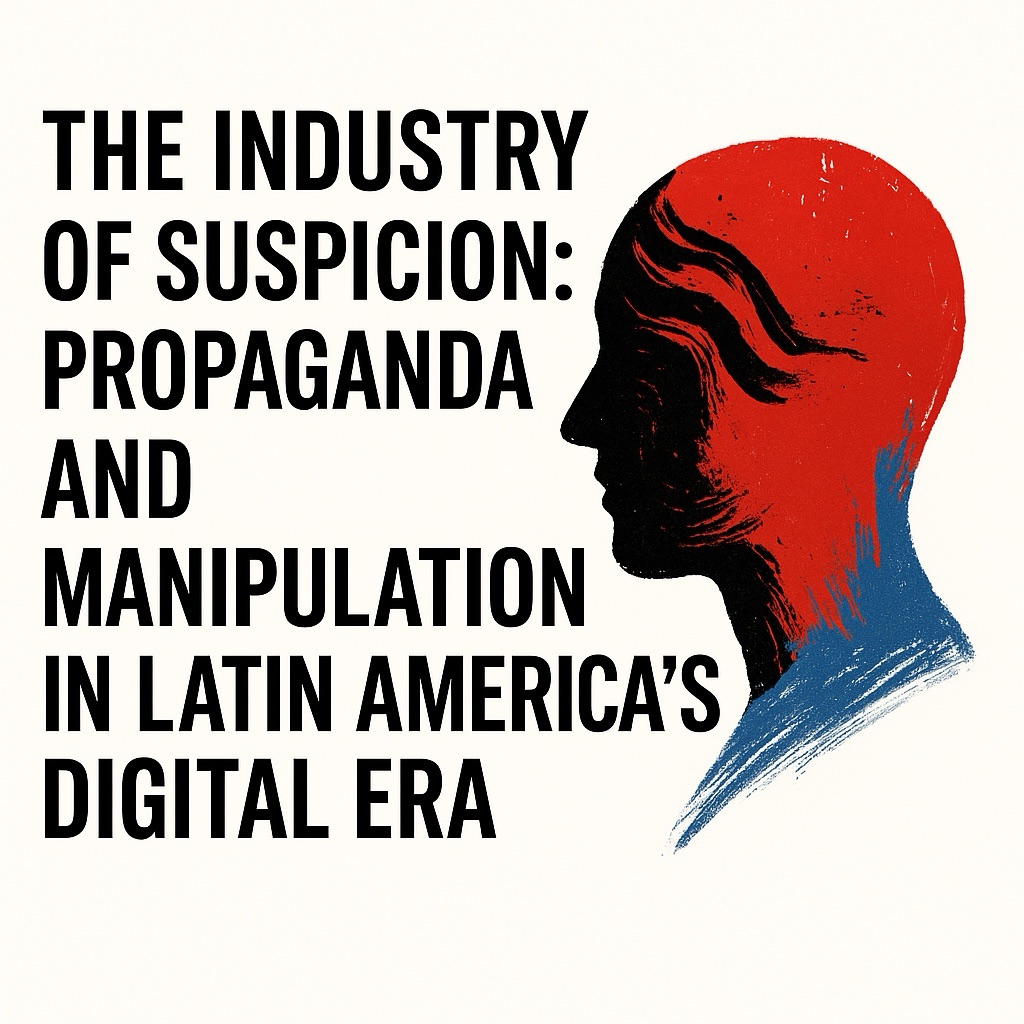
Authoritarian language does not arise as excess or accident; it emerges as a deliberate strategy designed to reorganize public perception until difference appears suspect and complexity becomes intolerable. Within this framework, the phrase attributed to the Argentine president Javier Milei—“if an immigrant does not adapt to your culture, then it is not immigration but an invasion” (or https://youtube.com/shorts/EJ9RRC3pyTQ?si=xehJCUD8fIIpaqsw )—functions as a mechanism of extreme reduction. It replaces the historical reality of migration with a binary schema meant to provoke alarm. The leader is not describing a fact; he is manufacturing an enemy.
This formulation shifts the migratory experience into a warlike imaginary in which any form of difference is construed as aggression. Culture—treated as a static and homogeneous block—is framed as a besieged territory requiring defense, and plurality as a threat that can only be resolved through submission. Under this logic, the migrant ceases to be a person and becomes an abstraction crafted to justify coercive impulse.
The paradox is unmistakable: what is proclaimed as the defense of identity is, in truth, an effort to standardize it; what is presented as caution operates as an instrument of fear. Rather than analyze, the language disciplines. And in doing so, it exposes its deeper function: it shapes an emotional climate ready to accept measures that, under any other light, would be incompatible with democratic life.
This is the dimension that most clearly reveals the nature of the statement: it is not a commentary on immigration but a mechanism of affective control. By turning coexistence into compulsory assimilation, it introduces a dehumanized conception of the social world, one in which diversity ceases to be constitutive and becomes an obstacle to be neutralized. Ultimately, this discourse seeks not to understand reality but to govern it.
In the post-truth landscape of Latin American media, where outrage has become currency, few figures illustrate the fusion of ideology and marketing as clearly as Inna Afinogenova. She has become the most recognizable voice of authoritarian suspicion in the Spanish-speaking sphere. From platforms such as Canal Red Latinoamérica, her discourse forms part of a vast network of disinformation spreading across the region, cloaked in the rhetoric of critical thinking and popular emancipation. These networks—spanning Moscow, Tehran, Beijing, and several Latin American governments—follow a single script: to dismantle trust in liberal democracy, to weaken institutions, and to turn permanent doubt into a substitute for conscience. In the name of informational sovereignty, they replace debate with discredit, analysis with suspicion, and truth with narrative. Their power lies not in blatant falsehoods but in the emotional manipulation that transforms confusion into conviction. Within this context, Afinogenova stands not as an isolated commentator but as the emblem of a sophisticated propaganda apparatus—one that disguises obedience to twenty-first-century autocracies beneath the costume of dissent.
Inna Afinogenova, born in Dagestan in 1989, is a Russian journalist who worked as deputy director of RT en Español until May 2022. She resigned citing her disagreement with the war in Ukraine and the imposition of a state-sanctioned narrative of aggression. Since then, she has collaborated with geopolitical and Latin American media such as LaBase, produced by the Spanish newspaper Público, and participates in Canal Red, an audiovisual project led by Pablo Iglesias (former vice-president of Spain and founder of the left-wing party Podemos, now active in political media). There she directs and hosts programs like CaféInna and contributes to political analysis, particularly on Latin America. Her audience is broad and her reach on digital platforms considerable, which makes her an influential figure in the political and informational debates of the Spanish-speaking world.
Her trajectory, however, has not escaped controversy. During her tenure at RT en Español, she was one of the network’s most visible faces in Latin America, amplifying narratives that portrayed Western powers as inherently deceitful and predatory. An opinion column in The Washington Post described her as “the Spanish voice of Russian propaganda,” citing her recurring defense of positions favorable to the Kremlin. In December 2021, two months before the invasion of Ukraine, she used her program Ahí les vato mock Western intelligence warnings of an imminent attack and predicted that “January will come, then February, and still no invasion,” implying that the media hysteria served the interests of NATO. Such episodes, though later overtaken by events, exemplify her rhetorical method: to transform skepticism into disbelief and disbelief into persuasion.
Following her departure from RT, Afinogenova has continued to operate in media circles ideologically aligned with the Latin American left, reinforcing a discourse that equates the Western press with manipulation and imperialism. Outlets such as Expediente Público have noted her role in shaping narratives within partisan campaigns, often echoing state-sponsored or geopolitically motivated lines from Russia, China, or Iran. Through Canal Red and Diario Red, both associated with Pablo Iglesias, she participates in content ecosystems that frequently recycle material from international broadcasters like CGTN. In countries such as Honduras, she has been accused of contributing to media strategies that favor left-wing candidates under the guise of “sovereign communication.” While the evidence does not show a direct chain of command linking her to a specific regime, the pattern of thematic consistency reveals a coherent ideological alignment rather than independent journalism.
This alignment has provoked renewed debate since the release of her recent video, “¿Premio Nobel de la Paz… o de la Guerra?”, where she presents the Nobel Peace Prize awarded to María Corina Machado as a maneuver of geopolitical design rather than a moral recognition. The video does not examine facts so much as it interprets intentions, suggesting that the award serves Western influence instead of honoring civic courage. The argument, though rhetorically effective, confuses correlation with causality. It is possible to acknowledge the imperfections of international institutions without denying the ethical weight of public bravery. The Nobel Prize, like every human institution, reflects judgments; but in this case, it distinguishes a life of civic risk undertaken without weapons, privileges, or access to the coercive power of the State.
Questioning motives is legitimate; insinuating conspiracies without evidence is not. Every critical voice bears responsibility, for truth demands proportion, not projection. The struggle of María Corina Machado cannot be reduced to the rhetoric of “Western intervention” or dismissed as “fabricated dissent.” It belongs to the conscience of a people seeking self-determination through legitimate means after decades of dispossession. Respecting pluralism requires granting others the same intellectual good faith one demands for oneself. Debate ennobles democracy only when grounded in verifiable facts and moral clarity, not when suspicion itself becomes the argument. Between necessary skepticism and systematic suspicion lies a moral frontier: crossing it is to pass from thinking freely to serving without knowing it.
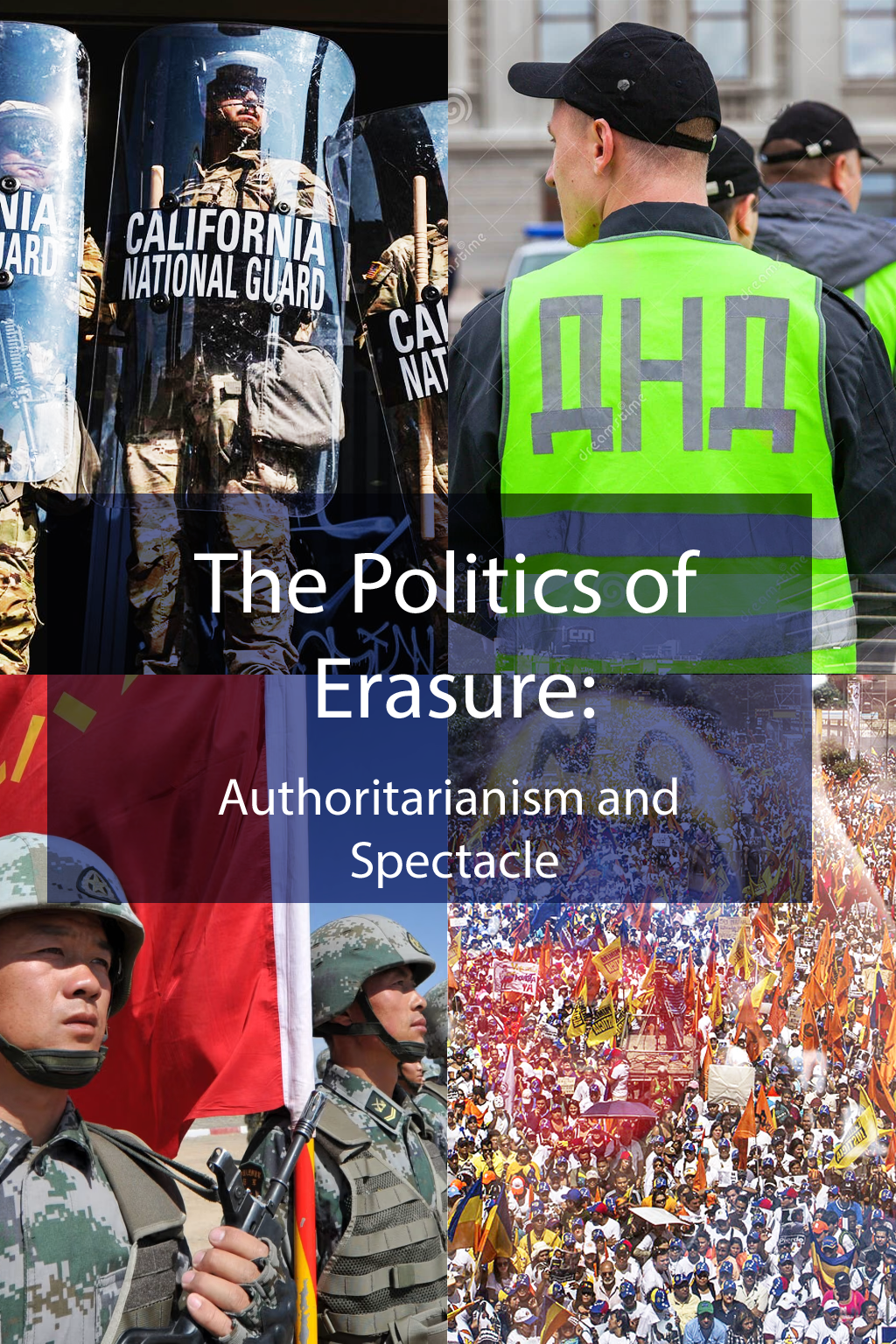
Cover design for the essay “The Politics of Erasure: Authoritarianism and Spectacle.” The composite image juxtaposes surveillance, militarization, propaganda, and mass spectacle to underscore how authoritarian regimes render lives expendable while legitimizing control through display.
By Ricardo Morín, In Transit to and from NJ, August 22, 2025
Authoritarianism in the present era does not present itself with uniform symbols. It emerges within democracies and one-party states alike, in countries with declining economies and in those boasting rapid growth. What unites these varied contexts is not the formal shape of government but the way power acts upon individuals: autonomy is curtailed, dignity denied, and dissent reclassified as threat. Control is maintained not only through coercion but also through the appropriation of universal values—peace, tolerance, harmony, security—emptied of their content and redeployed as instruments of supression. The result is a politics in which human beings are treated as expendable and spectacle serves as both distraction and justification.
In the United States, the Bill of Rights secures liberties, yet their practical force is weakened by structural inequality and concentrated control over communication. After the attacks of September 11, the USA PATRIOT Act authorized sweeping surveillance in the name of defending freedom, normalizing the monitoring of private communications (ACLU 2021). Protest movements such as the Black Lives Matter demonstrations of 2020 filled the streets, but their urgency was absorbed into the circuits of media coverage, partisan argument, and corporate monetization (New York Times 2020). What begins as protest often concludes as spectacle: filmed, replayed, and reframed until the original message is displaced by distractions. Meanwhile, the opioid epidemic, mass homelessness, and medical bankruptcy reveal how millions of lives are tolerated as expendable (CDC 2022). Their suffering is acknowledged in statistics but rarely addressed in policy, treated as collateral to an order that prizes visibility over remedy.
Venezuela offers a more direct case. The Ley contra el Odio (“Law against Hatred”), passed in 2017 by a constituent assembly lacking democratic legitimacy, was presented as a measure to protect tolerance and peace. In practice, it has been used to prosecute journalists, students, and citizens for expressions that in a democratic society would fall squarely within the realm of debate (Amnesty International 2019). More recently, the creation of the Consejo Nacional de Ciberseguridad has extended this logic to place fear and self-censorship among neighbors and colleagues (Transparencia Venezuela 2023). At the same time, deprivation functions as a tool of discipline: access to food and medicine is selectively distributed to turn scarcity into a means of control (Human Rights Watch 2021). The state’s televised rallies and plebiscites portray unity and loyalty, but the reality is a society fractured by exile, with over seven million citizens abroad and those who remain bound by necessity rather than consent (UNHCR 2023).
Russia combines repression with patriotic theater. The 2002 Law on Combating Extremist Activity and the 2012 “foreign agents” statute have systematically dismantled independent journalism and civil society (Human Rights Watch 2017), while the 2022 law against “discrediting the armed forces” criminalized even the description of war as war (BBC 2022). Citizens have been detained for carrying blank signs, which demonstrates how any act, however symbolic, can be punished if interpreted as dissent (Amnesty International 2022). The war in Ukraine has revealed the human cost of this system: conscripts drawn disproportionately from poorer regions and minority populations are sent to the frontlines, their lives consumed for national projection. At home, state television ridicules dissent as treason or foreign manipulation, while parades, commemorations, and managed elections transform coercion into duty. The official promise of security and unity is sustained not by coexistence but by the systematic silencing of plural voices, enforced equally through law, propaganda, and ritual display.
China illustrates the most technologically integrated model. The 2017 Cybersecurity Law and the 2021 Data Security Law require companies and individuals to submit to state control over digital information and extend surveillance across every layer of society (Creemers 2017; Kuo 2021). Social media platforms compel group administrators to monitor content and disperses the responsibility of conformity to citizens themselves (Freedom House 2022). At the same time, spectacle saturates the landscape: the Singles’ Day shopping festival in November generates billions in sales, broadcast as proof of prosperity and cohesion, while state media showcases technological triumphs as national achievements (Economist 2021). Entire communities, particularly in Xinjiang, are declared targets of re-education and surveillance. Mosques are closed, languages restricted, and traditions suppressed—all in the name of harmony (Amnesty International 2021). Stability is invoked, but the reality is the systematic denial of dignity: identity reduced to an administrative category, cultural life dismantled at will, and existence itself rendered conditional upon conformity to the designs of state power.
Taken together, these cases reveal a common logic. The United States commodifies dissent and normalizes abandonment as a permanent condition of public life. Venezuela uses deprivation to enforce discipline and the resulting compliance is publicly presented as loyalty to the state. Russia demands sacrifice and transforms coercion into patriotic duty. China fuses surveillance and prosperity and engineers conformity. Entire communities are suppressed in the name of harmony. The registers differ—commercial, ritualistic, militarized, digital—but the pattern is shared: dissent is stripped of legitimacy, lives are treated as expendable, and universal values are inverted to justify coercion.
References
ACLU: “Surveillance under the USA PATRIOT Act”. New York: American Civil Liberties Union, 2021. (This article documents how post-9/11 legislation expanded state surveillance in the United States and framed “security” as a justification for reducing privacy rights.)
Amnesty International: “Venezuela: Hunger for Justice. London: Amnesty International”, 2019. (Amnesty International reports on how Venezuela’s Ley contra el Odio has been used to prosecute citizens and silence dissent under the rhetoric of tolerance.)
Amnesty International: “Like We Were Enemies in a War: China’s Mass Internment, Torture and Persecution of Muslims in Xinjiang”. London: Amnesty International. 2021. (Amnesty International provides evidence of mass detention, surveillance, and cultural repression in Xinjiang carried out in the name of “harmony” and stability.)
Amnesty International: “Russia: Arrests for Anti-War Protests”. London: Amnesty International, 2022. (Amnesty International details the systematic arrest of Russian citizens, including those holding blank signs, under laws claiming to protect peace and order.)
BBC: “Russia Passes Law to Jail People Who Spread ‘Fake’ Information about Ukraine War.” March 4, 2022. (News coverage of Russia’s 2022 law criminalizing criticism of the war shows how “discrediting the armed forces” became a punishable offense.)
CDC.: “Opioid Overdose Deaths in the United States. Atlanta: Centers for Disease Control and Prevention”. 2022. (The CDC provides statistical evidence of widespread loss of life in the U.S. and underscores how entire populations are treated as expendable in public health.)
Creemers, Rogier: “Cybersecurity Law of the People’s Republic of China”: Translation with Annotations. Leiden University, 2017. (An authoritative translation and analysis of China’s 2017 Cybersecurity Law illustrate how digital oversight is institutionalized.)
UNHCR: “Refugee and Migrant Crisis in Venezuela: Regional Overview”. Geneva: United Nations High Commissioner for Refugees, 2023. (This report offers figures on the Venezuelan exodus and highlights the mass displacement caused by deprivation and repression.)
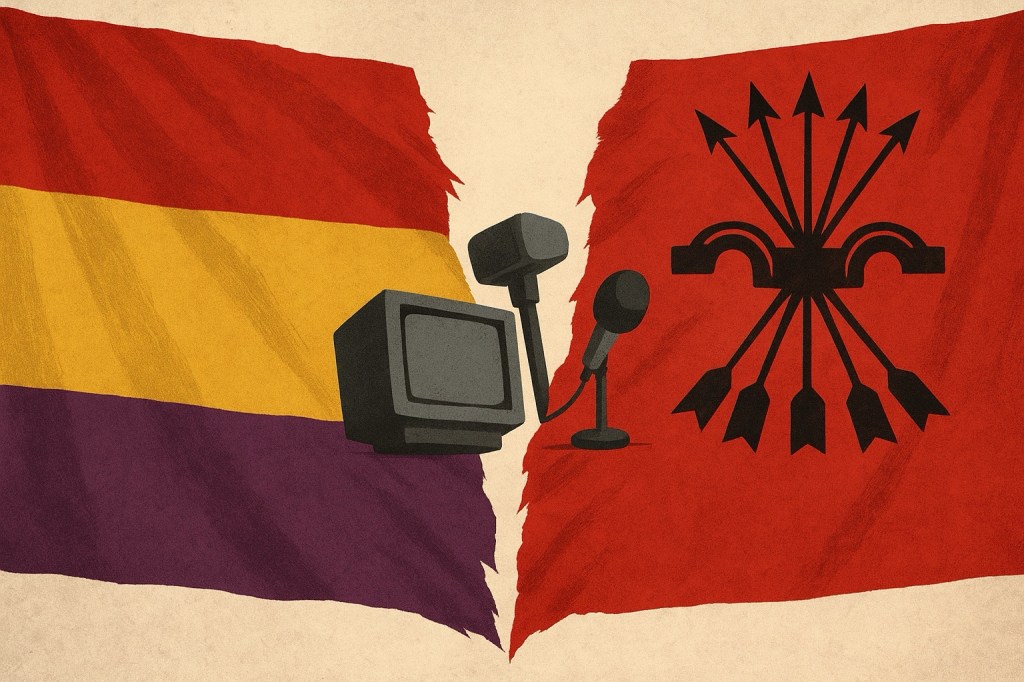
One cannot assess the Spanish political climate without acknowledging the rise of VOX, a far-right party founded in 2013 by former members of the conservative Partido Popular. Since 2018, VOX has gained traction by opposing regional autonomy, feminist legislation, and immigration, while defending a nationalist agenda that includes the revision—or outright rejection—of Spain’s historical reckoning with Francoism.
It is the symptom of a deeper democratic disillusionment. What resurfaces is not spontaneous historical memory, but a political and cultural framework that reasserts itself when the social agreements binding the present begin to fray. VOX’s references to the Franco regime are rarely doctrinaire or explicit, but they are unmistakable in the party’s rejection of the Democratic Memory Law, its exaltation of national unity as a sacred and untouchable principle, its condemnation of the autonomous state model, and its appeal to a so-called “natural order” that treats hierarchy, the traditional family, and social inequality as if they were objective facts of history.
What is most concerning is not that voices like these exist—they always have—but that they have regained institutional power and cultural legitimacy. Dissatisfaction with the political system, fatigue with ineffective parliamentary politics, and a growing sense of identity displacement feed into a shared national unease. This unease can be felt across a wide spectrum: small business owners who perceive the state as hostile, or young people who find no meaning in a hollow, bureaucratized political language. The grievances vary, but the far right offers a single channel: the emotional simplification of conflict—transforming fear into obedience, and uncertainty into wounded pride.
Within this framework, VOX presents itself as the only political actor with a unified narrative. Its strength does not lie in public policy, but in assertion. It offers no coherent platform of governance, but instead proposes a reactive, exclusionary identity. And here the progressive response often falters. While the institutional left—represented by the PSOE and remnants of Unidas Podemos—relies on rhetorical frames worn down by official discourse, segments of the academic and cultural intelligentsia (particularly university-affiliated think tanks and subsidized editorial circuits) have retreated into a ritualized defense of democracy, without reassessing its principles or renewing the language through which it is explained. Repeating just causes through exhausted formulas turns even the noblest ideas into noise.
Worse still, in the name of pluralism—or out of fear of being labeled sectarian—certain cultural institutions (El País, publishing houses like Taurus, or high-profile forums such as the Círculo de Bellas Artes) have offered platforms to reactionary voices under the pretext of open debate. In doing so, they have helped normalize a discourse that steadily unravels the ethical agreements underpinning democratic life. What is framed as tolerance may, in fact, be a form of structural surrender.
Spain’s history is burdened with wounds that were never fully closed. The political pacts of the Transition, born of necessity, opted for shared silence as the price of institutional stability. That silence allowed for peace, but left the past unresolved. Today, as new efforts—like the Democratic Memory Law—begin to reshape that narrative, fear returns: fear that to acknowledge historical violence might destabilize the present. VOX exploits this fear not with policy, but with symbolic refuge—offering a home to a version of Spain that feels lost.
The responsibility of the intellectual class is not to reassert inherited certainties or rehearse moral slogans. It is to sustain complexity: to resist the lure of simplification, to acknowledge the fatigue of progressive frameworks without falling into cynicism, and to offer new ways of thinking that preserve both rigor and empathy. Because while reactionary discourse gains ground through simplification, critical thought must hold its ground in nuance—even if nuance isn’t viral, even if it doesn’t win applause.
*
Annotated Bibliography
Preston, Paul: The Spanish Holocaust: Inquisition and Extermination in Twentieth-Century Spain. New York: W.W. Norton, 2012. (A comprehensive history of political and ideological violence during and after the Spanish Civil War, this work provides essential background for understanding the roots and continued appeal of Francoist narratives in Spain.)
Snyder, Timothy: On Tyranny: Twenty Lessons from the Twentieth Century. New York: Tim Duggan Books, 2017. (This compact, cautionary text distills key lessons from the collapse of democracies in 20th-century Europe and offers reflections that resonate strongly with contemporary authoritarian rhetoric.)
Stanley, Jason: How Fascism Works: The Politics of Us and Them. New York: Random House, 2018. (An incisive study of fascist techniques and psychological mechanisms, this book helps explain how divisive identity politics and historical denial function in modern ultranationalist movements.)
Brendan Carr, whom Donald Trump designated Chairman of the Federal Communications Commission (FCC), recently defended the use of regulatory authority to induce a “course correction” within the media. This intervention marks a disturbing turn in the use of public institutions to advance a politics of grievance. Justified as an effort to combat diversity, equity, and inclusion (DEI) initiatives, portrayed as forms of discrimination contrary to the public interest, this position reveals a broader ideological purge directed not toward restoring any genuine neutrality but toward eliminating pluralism itself.
This form of censorship, presented as a defense against “ideological indoctrination,” constitutes an explicit repudiation of fundamental democratic commitments, particularly the principle of freedom of speech. Equity does not threaten democratic cohesion. The danger lies in the repressive apparatus now being consolidated to discredit its purposes and silence its defenders. This strategy follows not a normative but a theatrical logic: it is a spectacle of power, not a legitimate exercise of government.
In this respect, the comparison with Caligula’s reign is revealing. The Roman emperor turned politics into a theater of personal rule, in which caprice displaced law and punishment was staged as a demonstration of dominion. His purpose was not merely to govern but to subjugate: reducing law to mere scenery for his will. Under Trump, institutional manipulation, the fixation on personal loyalty, and the staging of conflict reproduce this same logic. Truth and legality are subordinated to the performance of an authority beyond challenge.
The FCC’s transformation into an organ of ideological enforcement, far from being an exception, forms part of a broader pattern. The supposed protection of the public from “divisive” content provides a pretext for suppressing narratives that confront structural inequality, racial exclusion, or historical privilege. Within this rhetoric, equity and social justice become threats, while censorship assumes the form of cultural protection.
Censorship does not exhaust the mechanism at work. When public authority not only discourages dissent but also determines what may count as balanced, factual, or patriotic speech, it pressures the media to adopt the terms by which that authority legitimates its conduct. Oversight thereby becomes propaganda. If this course continues, a plural media environment will be dismantled, along with the conditions that make democratic deliberation possible. In its place, public communication will be organized around a narrower principle: institutional recognition will be reserved for speech that ratifies the ruling power’s account of itself. Far from fostering national unity, this order imposes conformity under the guise of patriotism.
This is not a restoration of institutional order but a return to imperial arbitrariness. Its defining sign is not the abolition of institutions, but their preservation as a backdrop for power that no longer submits to their constraints. The parallel with the Roman Senate under Caligula requires no assertion of historical equivalence. It rests on a precise operation: preserving institutional forms after their effective capacity to restrain power has been removed.