*
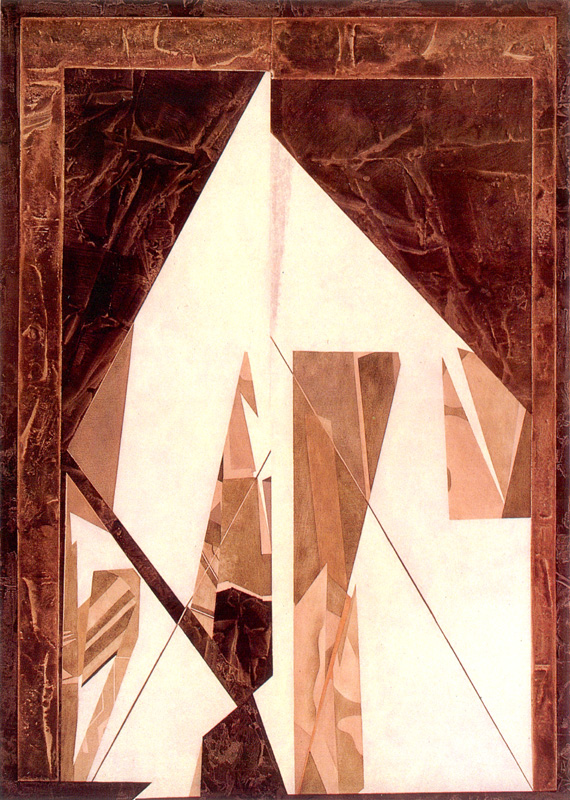
New York Series, No. 1
56″ x 84″
Oil on canvas
1992
Preface
What follows does not simplify or announce itself. It moves inward—through observation, thought, and the tension between clarity and disappearance. The soliloquy keeps to its own course: neither performing nor explaining, but sustaining an interior gaze. To read it is not to be guided, but to remain with it—where thinking becomes presence, and language measures what endures.
Soliloquy
Once upon a time, there lived within the writer a creative energy—its force and passion for self-expression—that sustained him. It was not summoned; it simply endured. So arresting was this presence that he could not discipline it into routine or mold it into a pattern for physical endurance. He could not pause it for walks or for any activity not already part of the act of creation itself. He resorted to standing while writing, walking while reading, sleeping while thinking.
His experience was never an affliction to be named or cured, but a life to be lived on its own terms—a creative testament to the fullness of being, not a clinical footnote to someone else’s definition. Choosing not to be defined by it honored both its agency and his lifelong work. It was a condition to be understood alone, even if shared in writing—yet never in search of validation.
Within the boundaries of personal insight, it revealed itself as a form of devotional absorption, one that brought dignity even in moments of physical strain and aging.
His refusal of validation was not an opposition to authority, but a denial that any external pressure should exist.
Some said there was nothing unique in anyone, that all expression merely reflected what had been learned. The writer did not disagree, yet he knew there was more to being than what one received—even from experience itself. Perhaps no one was unique, but each voice was distinct—formed from the sum total of an existence that could not be equated. From a random mixture, an ineffable summation, something emerged: something irreplaceable and irreproducible—not because it exceeded others, but because it belonged only to the one who bore it.
He feared madness—not as spectacle, but as the slow drift of meaning into isolation. The force within him was real, yet not entirely satisfying unless it discovered truth—truth that resonated not only within his own logic but in the logic of others. How else could one know oneself if intelligence remained solitary? Without echo, thought became a sealed chamber: intricate, yes, but airless. He did not seek certainty; he sought correspondence. It was not solitude he feared, but becoming untranslatable.
Life now appeared transient, precarious—timeless in sensation, yet embedded in time. It moved furtively—through failings, disappointments, and sudden moments of radiant clarity. Nothing could be reproduced. But he had come to accept that—not because it was lost, but because even memory altered what it held. What repeated was not the moment, but the act of noticing—the deepening of attention. And so he did not live to preserve what was, but to remain present as it changed. There was no going back, only going further—more attentively, more awake.
*
Ricardo F. Morin Tortolero
In transit on July 6, 2025
 Observations On Perception