
Posts Tagged ‘religion’

“Ritual: A Philosophy of Necessity”

September 20, 2025

*

Ricardo Morín
New York Series, Nº 5
54″ x 84″
Oil on canvas
1992

Preface

This essay seeks to define rituals without reliance on metaphors, abstractions, or moral judgments.   The method of this essay begins with etymology, then traces its biological foundation, and follows the extension of ritual into human conduct.   Ritual is treated as repetition with form, carried out by necessity to contain forces uncontrollable by command or intention.

The analysis will distinguish ritual from belief and superstition.    Belief attributes power beyond immediate function.   Superstition arises when belief assigns causality where none exists.    Ritual is not a belief, but only a procedure.   Its function is to regulate life through ordered repetition.

The chapters that follow address the principal domains in which ritual operates.   In sexuality, ritual prevents destabilization by giving desire a form through which it can move without collapse.   In distrust, friendship, enmity, and love, ritual contains states that resist control and makes them livable.   In governance, ritual holds ideological differences within limits that preserve continuity of community.

Ritual is necessary for existence.   It does not eliminate instinct, emotion, or conflict.   It gives them form and allows life to continue without disintegration.   This necessity is not external, but generated by life itself.   Where forces exceed control, ritual provides order.

*

Ricardo Morin. September 12, 2025, Bala Cynwyd, Pa.

I

The word ritual comes from the Latin ritus (a prescribed act performed in an ordered manner).    Its essence is repetition.   To speak of ritual is not to speak of tradition or abstraction, but of a necessity carried out for primal longing.

The biological basis of ritual is clear.   In many species, conflictive instinctive drives are contained by repeated actions which reduce uncertainty.    Birds perform dances before mating.   Wolves display submission to prevent attack.    Primates groom one another to ease tension.    These actions do not alter the external world.    They do not ensure mating, nor prevent danger, nor eliminate aggression.   They work by regulating behavior in ways preventing destabilization.    They arise from necessity:   without them, reproduction, survival, or cohesion could be placed at risk.

Human conduct extends this biological principle.    The handshake is a repeated act signaling non-aggression between strangers.   A funeral orders grief into sequence and allows the bereaved to endure loss.    A meal shared among people affirms cooperation and reduces the possibility of conflict.   Not one of these actions are effective because of a belief in causality.    They are effective because they are the product of repetition and recognition within the group.   They are necessary because without them, mistrust, grief, or rivalry would remain uncontained.

Instinct and emotion generate uncontrolled command or intention.   Repetition gives them form without elimination.    Herein lies the necessity:    life produces forces beyond control, and ritual provides their procedure without collapse.    Thus further inquiry rests here.

II

Belief begins where an act or event is taken to hold power beyond its immediate function.    To believe is to attribute meaning not evident in the act itself.   Belief provides orientation, but also creates vulnerability.

From belief grows superstition.   Superstition occurs when a gesture, a sign, or an accident is taken to determine good or bad luck.   Breaking glass is said to bring harm.   A number is said to bring luck.    The act or sign is given power it does not possess.    Superstition is belief that’s misdirected.   It relies on the conviction that external hidden forces govern external events and become accessible through signs and gestures.

Ritual does not depend on belief that an act can change fate or invoke hidden power.   Its effectiveness does not rest on what is imagined but on what is enacted.   A handshake obviates mistrust because it is repetition and recognition, not because of its magic.   A funeral allows provides ordered sequence and allows grief, but it does not alter death.   A meal shares cooperation through its mutuality, not because it calls luck.

The distinction is exact.   If ritual is the form, desire is the current that moves within it. Religious traditions have often cast desire as a deficit, a disorder, or a temptation to be repressed.   But desire is neither deficit nor disorder; it is vitality itself:   an energy that presses toward expression.   Ritual does not restrict this force; restriction belongs to fear and suffering.    Ritual contains fear and keeps excess within the limits of endurance and necessity.   Fasting, for example, does not abolish hunger but holds it in rhythm; it makes appetite a measure rather than a punishment.    By contrast, a prohibition that denies the legitimacy of desire transforms vitality into anxiety altogether.    In this way, ritual and desire are not opposed but interdependent:   the former is the channel, the latter the stream.

III

Sexual drive is pervasive in human life.    Left without form, it destabilizes both the individual and the community.    Its power lies in persistence.   Command cannot dismiss desire.   Desire presses for expression.    Every culture has developed rituals to contain and to regulate it.

Yet the grounds of sexual ritual are not repression but replication.    Nurture marks the human condition from birth:    in lactation, nurture consists in being fed, held, and sustained through another’s body.    In this original state, intimacy secures survival.    Later, desire repeats the structure.    The quest for union is both a return to that first condition of dependence and a transformation of it into adulthood.    Sexual ritual prolongs that first experience:    it carries within it the imprint of nurture.    It is not a matter of shame or judgment, but of continuity.

Courtship is the model.   Repeated gestures mark the approach to intimacy.   Ceremonies (words, gifts, dances) structure the encounter.   Desire is not eliminated, but gives form to sexuality and allows it to proceed without immediate conflict.    Marriage extends the process and establishes rules for its conduct within a recognizable frame.   Ritual transforms a disruptive force into a relation that can be carried within order.

Different cultural examples exemplify the variety of this process.    In Japan, tea ceremonies and formal visits have structured the first stages of marital negotiation.    In Victorian England, the presence of chaperones functioned as a mode of surveillance and set boundaries for courtship.   Among the Navajo in North America, the Kinaaldá ceremony marks a girl’s transition into womanhood and links individual desire and fertility with the continuation of the community.   In each case, ritual does not extinguish instinct but channels it into social life.

When desire cannot be enacted without risk, individuals turn to patterned acts that provide release without collapse.    Monastic traditions across cultures developed rituals of celibacy, which are supported by prayer, fasting, and other disciplines, containing sexual force.   In everyday life, other people turn to imagery (fantasy, dream, or artistic representation) and stage symbolically acts they long for but cannot realize.   Still others establish habits (exercise, meditation, or creative work) that redirect sexual energy into manageable outlets.   Longing, however, is not erased.   Its structure makes sure that desire moves within set limits without becoming overwhelming.

Obsession arises when desire remains unresolved and intrudes upon thought; it repeats itself without relief and it threatens stability.   Ritual is a way to contain obsession.    Through repetition, it acknowledges the force and gives it shape.    Though not eliminated, it has boundaries.

Ritual in the sphere of sexuality is not an option but a necessity.   It provides form where instinct would exceed measure.

IV

Reason alone does not govern human beings.   Emotional states persist in ways that resist control.   Distrust, friendship, enmity, and love cannot be removed by decree or maintained by thought.   Each requires ritual to provide continuity and containment.

Words alone cannot erase suspicion.    Distrust is one of the most persistent of these states. Suspicion cannot be erased by emotion.   Suspicion lingers and destabilizes interaction.   Ritual reduces its scope.   A greeting, an oath, or a contract are ceremonial acts repeated across encounters; they establish a minimum ground on which cooperation can occur.   These acts do not eliminate suspicion, but they allow engagement to proceed in spite of it.

Friendship depends on feelings, but feelings without form fade.   Ritual gives duration to friendship.    Shared meals, recurring visits, exchanges of favors, and so forth, are patterned acts that affirm a relation.   By themselves, they do not create friendship, but without them friendship weakens.   Rituals sustain that which cannot be commanded—the persistence of trust and attachment across time.

Enmity is no less powerful.    Unbounded hostility escalates until destruction follows.   Rituals channel hostility into limited form:    a duel, a contest, a formal debate—each provides a frame in which enmity can be expressed without collapse.   Even in war, treaties operate as ritual forms that restrict violence to recognizable limits.    Without them, conflict loses proportion.

Love in itself is unstable.   It begins in impulse and only lasts with repetition.   Daily gestures, renewed promises, anniversaries, and continuous acts of care provide a form to sustain it.    These rituals do not guarantee permanence, but they give a structure to love within which it can endure.    Without these rituals, love dissipates.

In all these states, ritual serves the same function.    It gives order where the force cannot be controlled directly.   It does not remove distrust, friendship, sexuality, enmity, or love.    It makes them livable.

V

Governance is the state where human forces are amplified by scale.    Distrust, enmity, and competing loyalties appear not only among individuals but among groups.    Ideological differences cannot be eliminated; they can be managed.   Ritual provides the procedure by which this is done.

One example is Parliamentary procedure.    Debate, order of speaking, and voting are repeated acts that permit conflict to be expressed without dissolution.    The forms themselves do not create agreement.   They provide limits within which disagreement can persist.

Civic ceremonies perform a related function.   Inaugurations, public oaths, and national commemorations do not change political conditions in of themselves.    Their repetition affirms the continuity of authority and gives recognition to transitions of power.   The acts are symbolic only in appearance; their real function is procedural stability.

Elections are more direct.   They do not remove ideological division.   They provide a repeated method for channeling conflict into outcomes recognizable by opposing sides.   Without elections, or when their results are not acknowledged, division tends toward rupture.

Ritual is necessity.    Governance depends on it.   Across species, ritual arises from the need to manage forces that exceed direct control.   Human conduct continues this principle.

In ancient Athens, the assembly and the use of the lot allowed opposition to be expressed without dissolving civic order.    Later, parliaments and councils provided ritual structures for negotiation between absolute monarchs and subjects.    In modern democracies, constitutions and electoral cycles maintain continuity by repeating forms that regulate the transfer of power.   When such rituals fail, the outcome is predictable.    Governance is a ritual that makes ideological differences livable.    Without ritual, politics reduces itself to domination and resistance, a cycle that cannot sustain order.


Annotated Bibliography

  • Arendt, Hannah: On Revolution. New York: Viking, 1963. (Arendt emphasizes the role of civic procedures in sustaining governance; this underlies Chapter V’s claim that ritual makes ideological difference livable.)
  • Douglas, Mary: Purity and Danger: An Analysis of Concepts of Pollution and Taboo. London: Routledge, 1966. (Douglas’s work on ritual boundaries informs Chapter IV’s discussion of distrust, enmity, and the management of instability through repeated acts.)
  • Durkheim, Émile: The Elementary Forms of Religious Life. New York: Free Press, 1995. (Durkheim argues that ritual is the foundation of social cohesion, an idea reflected in Chapter I’s claim that rituals regulate behavior and prevent destabilization.)
  • Freud, Sigmund: Three Essays on the Theory of Sexuality. New York: Basic Books, 2000. (Freud’s psychoanalytic discussion of sexual drive and obsession parallels Chapter III’s treatment of private rituals and the containment of unresolved desire.)
  • Geertz, Clifford: The Interpretation of Cultures. New York: Basic Books, 1973. (Geertz treats ritual as “models of” and “models for” reality; his ethnographic analysis supports the essay’s extension of ritual from sexuality to governance in Chapters IV and V.)
  • Habermas, Jürgen: Between Facts and Norms: Contributions to a Discourse Theory of Law and Democracy. Cambridge: MIT Press, 1996. (Habermas shows how ritualized procedures in discourse and law preserve governance under conflict; his thesis supports the essay’s treatment of parliamentary debate and elections.)
  • Jung, Carl Gustav: Symbols of Transformation. Princeton: Princeton University Press, 1956. (Jung traces how instinctual drives, especially sexuality, become ritualized in both individual psychology and collective culture; his analysis complements Chapter III.)
  • Turner, Victor: The Ritual Process: Structure and Anti-Structure. Chicago: Aldine, 1969. (Turner’s analysis of liminality informs Chapter III and IV, where sexuality, friendship, and enmity are shown to require ritual frames to carry disruptive forces without collapse.)

“Bound and Unbound:

August 31, 2025

The Articulation of Desire and Sin


*

Cover design by Ricardo Morín
00032
Oil On Linen
18 by 24 by 3/4 inches
2009

Author’s Note

This essay considers how cultures have spoken about desire through the language of sin, pathology, and identity. The aim is not to defend or condemn, but to observe how words have carried judgments across time and how those judgments still shape our understanding. The reflections that follow are an attempt to restore clarity, to see desire as part of life’s vitality rather than as a distortion imposed by inherited vocabularies.

Abstract

Historically, desire has been articulated through terms such as sexuality, fetishism, morality, and religion. Over time, these words shifted from description to judgment, producing a confusion between nature and culture. Evidence from animal behavior, biology, and public health demonstrates that variation in desire is neither anomaly nor pathology. By grounding ethics in dignity and consent rather than shame, desire can be recognized as a natural expression of vitality rather than a source of suspicion.

The Burden of Words

Our most familiar words already betray the history of our confusion. Sexuality, from the Latin sexus, once indicated simple biological differentiation; only in the nineteenth century did it expand into a comprehensive category, enveloping desire, identity, and conduct (Laqueur 1990). Fetishism, from the Portuguese feitiço (“charm” or “sorcery”), was first applied to African religious objects before being imported into European science, where it came to signify irrational sexual attachment (Foucault 1978). Morality, from mores (“customs”), originally described communal practices but hardened into prescriptions against desire, particularly under Christian influence. Religion, from religare (“to bind”), once meant binding communities into shared ritual but eventually came to bind individuals to guilt and suspicion about their own bodies. Here the meaning of Bound and Unbound comes into view: words that once bound desire to order and judgment now carry within them the possibility of unbinding, of returning desire to the realm of vitality rather than suspicion. Each of these terms began in description and shifted into judgment. When we use them today, we inherit their distortions.

The Articulation of Desire and Sin

Culture has long gazed upon desire not as part of life’s ordinary richness but as a threat to be monitored. Theologies cast it as sin; medical texts classified it as pathology; social codes framed it as danger (Foucault 1978). This does not clarify, it distorts. Sexuality becomes at once overexposed and diminished: in public, it is the subject of rules and prohibitions; in private, it collapses into unrealistic expectations that either inhibit expression or exaggerate it into fetish. What should be natural is turned into a negotiation with shame.

Nature provides a more honest account. Same-sex interactions have been documented in over four hundred species (Bagemihl 1999). Rams form lasting male–male bonds, often rejecting female partners. Dolphins employ genital contact across sexes to cement alliances (de Waal 2005). Swans, gulls, and penguins engage in same-sex pairings that rear offspring as successfully as heterosexual pairs (Roughgarden 2013). Among bonobos, sexual contact occurs across nearly every configuration and functions as a mechanism of peacekeeping and social cohesion (de Waal 2005). Even in insects, behaviors that humans describe as “homosexual” occur routinely as part of dominance rituals or sheer abundance of sexual drive. None of this destabilizes the species; rather, it integrates sexuality into the fabric of survival and affiliation.

Humans display similar variation. Chromosomal conditions such as Klinefelter syndrome (XXY) or Turner syndrome (XO) illustrate that biological sex is not a rigid binary but a spectrum (LeVay 2016). Hormonal influences during gestation shape attraction and behavior before culture applies its labels (Hrdy 1981). Neuroscientific studies suggest correlations between hypothalamic structures and orientation, though no single cause accounts for desire (LeVay 2016). What emerges is not a fixed order but a continuum. The insistence on strict categories—heterosexual or homosexual, normal or deviant—is not nature’s doing but culture’s imposition.

Yet culture continues to conflate desire with identity and narrows it into fixed roles. These categories can be politically useful, but they risk obscuring the fluidity of experience that biology reveals. When identity becomes prescriptive, individuals live their own vitality under suspicion, measuring themselves against cultural ideals that deny variation. The result is estrangement: desire filtered through shame.

An alternative frame already exists. The World Health Organization defines sexual health as “a state of physical, emotional, mental, and social well-being” that includes the possibility of safe and pleasurable experiences (WHO 2006). The World Association for Sexual Health has gone further, affirming sexual pleasure as a fundamental human right (WAS 2019). Such frameworks do not police desire; they protect individuals against coercion and exploitation. They suggest that the role of culture is not to dictate what desires are permissible but to ensure dignity and consent. Once these conditions are secured, desire resumes its natural role: a source of intimacy, bonding, creativity, and balance (Gruskin et al. 2019).

To confront nature’s complexity is to resist its reduction into morality plays of vice and virtue. Desire does not require validation from cultural obsession, nor does it deserve condemnation from inherited vocabularies of sin. It is an aspect of life, as ordinary and vital as hunger or sleep. To acknowledge it without fear is to reclaim joy. By lifting the burden of shame, we return desire to its proper place in the living order: not an aberration requiring defense, but a manifestation of vitality—one that connects us to each other and to the exuberance of nature itself.

*


Annotated Bibliography

  • Bagemihl, Bruce: Biological Exuberance: Animal Homosexuality and Natural Diversity. New York: St. Martin’s Press, 1999. (A landmark survey documenting same-sex behaviors in more than 450 species. Bagemihl’s research undermines claims that homosexuality is “unnatural” and illustrates the diversity of sexual expression across the animal kingdom. It is essential for grounding sexuality in biological rather than cultural terms.)
  • de Waal, Frans: Our Inner Ape: A Leading Primatologist Explains Why We Are Who We Are. New York: Riverhead Books, 2005. (Drawing on primate studies, de Waal emphasizes sex as a social tool among bonobos and chimpanzees, used for alliance-building and conflict resolution. His work demonstrates that sexual behavior is not confined to reproduction but serves broader social and evolutionary functions.)
  • Foucault, Michel: The History of Sexuality, Vol. 1: An Introduction. Translated by Robert Hurley. New York: Pantheon, 1978. (In this foundational text on the cultural construction of sexuality, Foucault argues that sexuality is not a timeless natural category but a discourse shaped by power and institutions. Provides the conceptual framework for understanding how morality and pathology have distorted natural instincts.)
  • Gruskin, Sofia, et al. “Sexual Health, Sexual Rights and Sexual Pleasure.” Global Public Health, 2019, 14(10): 1361–1372. (This article situates sexual pleasure within global public health frameworks. It underscores that fulfillment and pleasure are inseparable from health and rights, reinforcing the need for ethics based on dignity rather than prohibition.)
  • Hrdy, Sarah Blaffer: The Woman That Never Evolved. Cambridge, MA: Harvard University Press, 1981. (Hrdy reinterprets female primate behavior and shows active strategies in mating and alliance formation. Her work dismantles the myth of female passivity and demonstrates that sexual agency is integral to evolutionary success.)
  • Laqueur, Thomas: Making Sex: Body and Gender from the Greeks to Freud. Cambridge, MA: Harvard University Press, 1990. (Laqueur traces the cultural and historical shift from the “one-sex” model of antiquity to the modern “two-sex” binary. His work shows how scientific language helped construct cultural categories of sexuality and gender, making him central to the etymological and historical analysis of desire.
  • LeVay, Simon: Gay, Straight, and the Reason Why: The Science of Sexual Orientation. 2nd ed. New York: Oxford University Press, 2016. (LeVay synthesizes research on brain structures, genetics, and prenatal influences and argues that sexual orientation emerges from a complex interaction of biological factors. Useful for contextualizing the continuum of human desire.)
  • Roughgarden, Joan: Evolution’s Rainbow: Diversity, Gender, and Sexuality in Nature and People. Rev. ed. Berkeley: University of California Press, 2013. (Roughgarden challenges traditional Darwinian views of sexual selection, highlighting diversity in gender and sexuality across species. She bridges nonhuman variation and human experience and offers a scientific argument against binary understandings of sexuality.)
  • World Health Organization (WHO): “Defining Sexual Health.” Geneva: WHO, 2006. (This report defines sexual health as a state of well-being that includes the possibility of safe and pleasurable sexual experiences, free of coercion or violence. It offers authoritative language to argue that sexual fulfillment is a health matter, not a moral one.)
  • World Association for Sexual Health (WAS): “Declaration on Sexual Pleasure.” Mexico City: WAS, 2019.(This report affirms sexual pleasure as a fundamental human right. This declaration situates pleasure within global health and rights discourse, supporting the essay’s call for ethics rooted in dignity rather than shame.)

“The Mirage of Exceptionalism”

August 19, 2025

Ricardo Morin
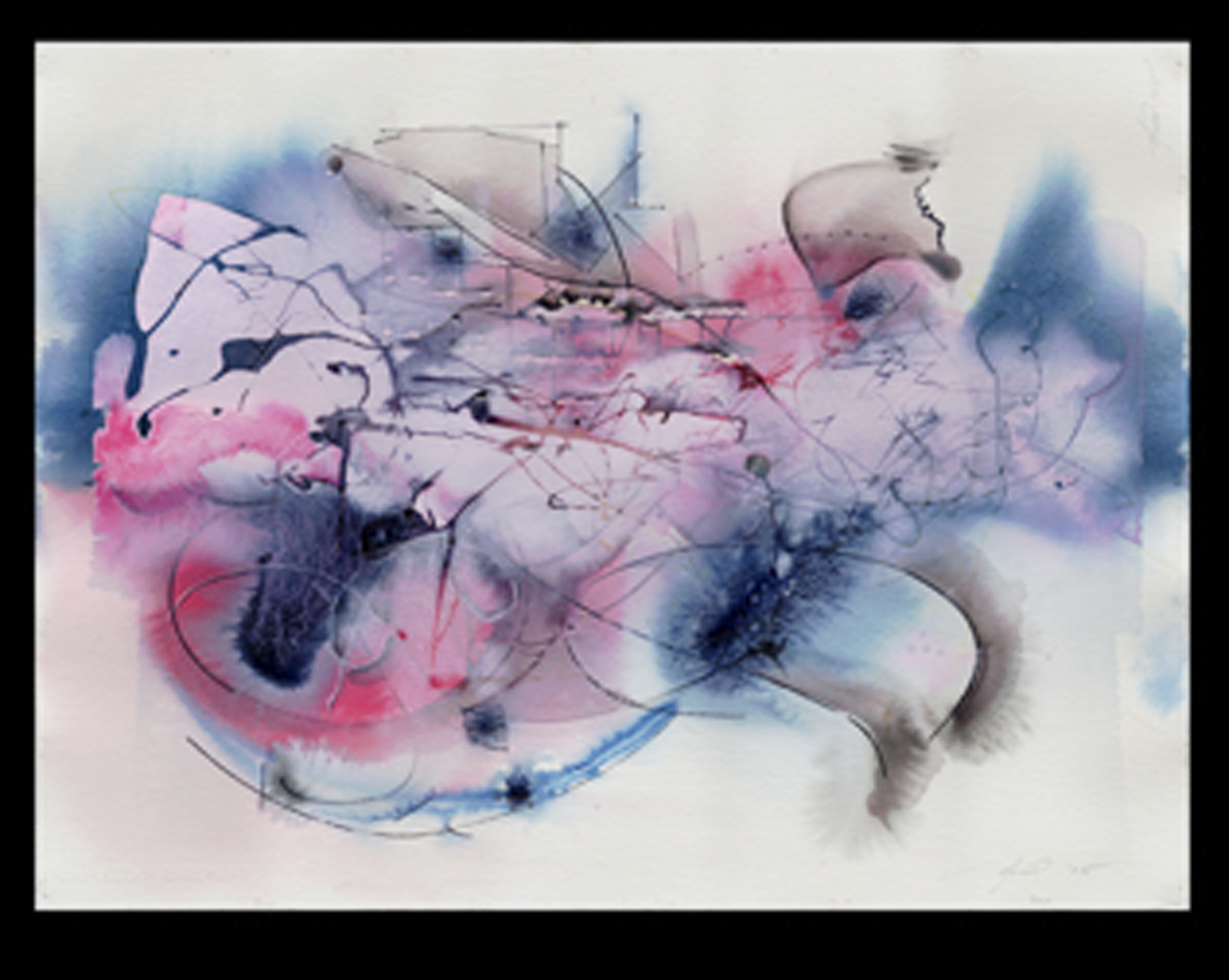
The Mirage of Exceptionalism
(Template Series)
1st out of six
Each 30″x 22″ = 66″h x 66″ overall
Watercolor on paper
2005

To the paradox that divides in the very act of seeking unity.

~


By Ricardo Morin
August 18, 2025, Bala Cynwyd, PA

*

Across traditions, faith has sought to articulate humanity’s highest aspirations. Scriptures, rituals, and doctrines were meant to give form to gratitude, humility, and reverence for creation. Yet time and again, these same legacies have been drawn into the service of division. The paradox lies in how beliefs that profess universal truth harden into claims of exceptional status and turn revelation into rivalry.

The Abrahamic faiths—Judaism, Christianity, and Islam—rooted themselves in texts anchored in antiquity. This permanence can inspire continuity, but when transposed into political life, belief risks becoming dogma, and dogma exclusion. What began as a celebration of humanity and its creator becomes instead an engine of contention.

Exceptionalism is not confined to any single tradition. It arises wherever uniqueness is mistaken for superiority, wherever the memory of a chosen people or a sacred covenant becomes a license to deny the dignity of others. Creationism, visions of Heaven, doctrines of righteousness—all contain the seeds of inspiration, but also of antagonism when set against rival paths.

In this sense, exceptionalism is less about the divine than about the human need to define boundaries. By exalting one path as singular, communities cast shadows on others. They forget that the multiplicity of belief might reveal instead the vastness of what humanity seeks to comprehend. The question is not whether one tradition is more luminous than another, but whether clarity itself can be hoarded without dimming the shared horizon of human dignity.

The tragedy of conflating exceptionalism with uniqueness is that it mistakes a gift for a weapon. To be unique is not to be superior; to inherit a tradition is not to monopolize truth. Religions, when true to their essence, point toward a mystery larger than themselves. When they lapse into rivalry, they obscure it.

The challenge before us is whether humanity can learn to let religions serve as languages of gratitude rather than banners of conquest. If belief is to celebrate creation, it must embrace the unity of humanity rather than sabotage it. Otherwise, the promise of transcendence is reduced to a struggle for dominance, and what was meant to honor the creator becomes instead a mirror of our most destructive instincts.

*


Annotated Bibliography

  • Armstrong, Karen. The Battle for God: A History of Fundamentalism. New York: Ballantine Books, 2001. (Armstrong explores how traditions across Judaism, Christianity, and Islam have produced militant forms of fundamentalism. She shows how claims of absolute truth often distort original spiritual intent and feed conflict instead of unity.)
  • Girard, René: Violence and the Sacred. Baltimore: Johns Hopkins University Press, 1977. (Girard argues that societies often channel violence into ritualized sacrifice. His insights illuminate how religious exceptionalism, rather than reducing violence, can redirect it toward outsiders deemed threatening to communal “uniqueness.”)
  • Küng, Hans: Christianity and the World Religions: Paths of Dialogue with Islam, Hinduism, and Buddhism. New York: Doubleday, 1986. (Küng advocates for dialogue across faiths, stressing that no single religion can claim monopoly on truth. His work directly challenges exceptionalist claims and encourages the search for shared ethical ground.)
  • Said, Edward W.: Covering Islam: How the Media and the Experts Determine How We See the Rest of the World. New York: Vintage, 1997. (Said critiques the portrayal of Islam as uniquely threatening, showing how narratives of exceptionalism become entrenched in political and cultural discourse. His analysis highlights how external perceptions reinforce divisions.)
  • Taylor, Charles: A Secular Age. Cambridge, MA: Belknap Press of Harvard University Press, 2007. (Taylor examines how modernity has shifted the role of religion and has complicated claims of universality. He shows how belief persists in pluralist societies, while exceptionalist frameworks struggle to adapt within a diverse human landscape.)

*


Edited by Billy Bussell Thompson, August 18, 2025, NY, NY.