Archive for September, 2025

“The Myth of Rupture:

September 30, 2025

Continuity as the Enabling Condition of Change”


Ricardo F. Morín
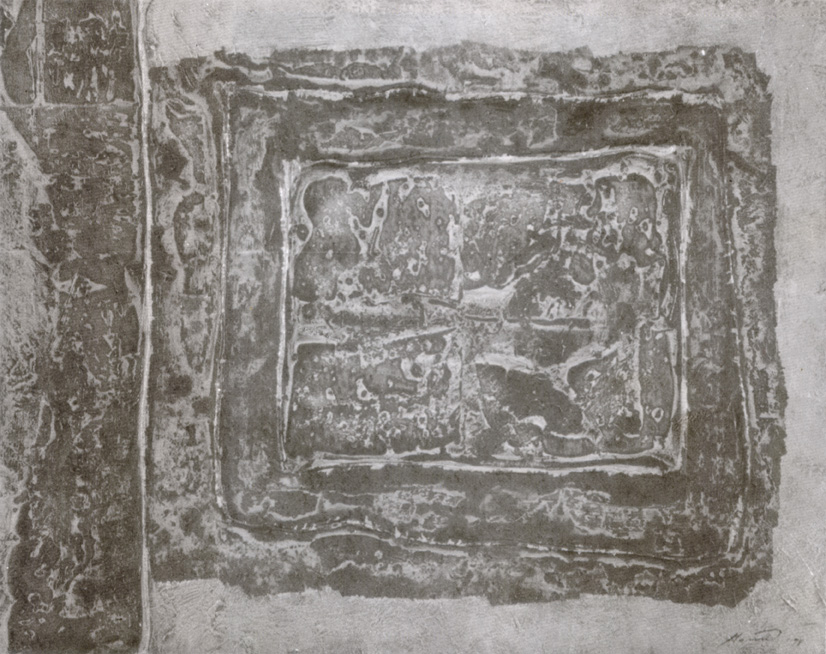
Untitled #6
Watercolor
2003

BY Ricardo Morin

September 30, 2025

Bala Cynwyd, Pa

Nothing human begins from nothing.   Institutions, languages, belief systems, and works of art all arise from what preceded them.   Creation is not the rejection of inheritance but the transformation of it.   Every act of making draws upon accumulated perception, memory, and experience.   This insight is crucial to understanding contemporary culture, where claims of unprecedented change often conceal deep continuities beneath the surface of novelty.   Human beings, bound by temporality, cannot detach themselves from what has been; they can only reorder and reinterpret the materials already available to them.

The notion of invention is often described as a break with the past, a leap into the unknown.   Yet even the most radical departures are shaped by what came before.   The ideals of modern democracy, for example, did not emerge spontaneously.   They were built upon classical Greek ideas of citizenship as a shared civic responsibility, rooted in isonomia—equality before the law—and in the belief that legitimate authority derives from the deliberation and participation of free citizens.   They also drew deeply on Roman conceptions of law as a universal and rational order capable of binding diverse peoples into a common political framework, and on the Roman principle of res publica, which conceived the State as a public entity oriented toward the common good rather than the will of a single ruler.   These foundational ideas, adapted and reinterpreted over centuries, provided the intellectual architecture on which modern democratic institutions were constructed.   Perception frames invention.   It provides the vocabulary, assumptions, and conceptual tools that make new ideas possible.   What seems entirely new still carries the imprint of what it sought to move beyond.   On closer examination, the products of creativity are not isolated acts of originality but reconfigurations of existing structures.   Evolution, rather than spontaneous emergence, governs how ideas, institutions, and cultures take shape.

Memory underlies this process.   It is not a passive record of events but an active medium through which possibilities are conceived and action becomes intelligible.   Imagination draws its material from memory; it combines and redirects memory toward conditions not yet realized.   This is nowhere more evident than in the idea of freedom, a concept that resists simple definition yet has long carried two complementary meanings.   The first, articulated most clearly in the classical Greek tradition, understands freedom as eleutheria—the condition of living without domination or external constraint, a state in which individuals are not subject to arbitrary power.   The second, rooted in the Roman legal and civic tradition, conceives freedom as libertas—the capacity to participate actively in the governance of a political community and to shape its laws and institutions.   Both meanings reveal how deeply freedom depends on historical precedent:   it requires language to articulate its claims, institutions to guarantee its exercise, and collective memory to frame its significance.   Far from existing apart from what has been, freedom is shaped and enabled by what has already been conceived, argued, and enacted.   Prior experience supplies the references and alternatives against which choices acquire meaning.   Without that reservoir of knowledge, novelty would lack coherence and direction, and the exercise of freedom would collapse into arbitrary impulse.   Human beings do not invent in a void; they work within the continuity of time and adapt what has been lived and learned into forms suited to what is yet to come.

This same dynamic defines the formation of identity.   Selfhood is not an isolated act of invention but a continuous negotiation with what has been received.   The very idea of the self has itself evolved through history:   in classical philosophy, it was often conceived as a psyche—an inner essence shaped by reason and virtue and embedded within a larger cosmic order.   Christian thought reinterpreted this understanding through the notion of the soul as a unique bearer of moral responsibility, oriented toward salvation and defined by its relationship to God.   Early modern thinkers such as John Locke then transformed this inheritance by grounding personal identity in memory and consciousness — a conception that would later inform modern ideas of individual autonomy.   Even the impulse to define oneself against the past relies on categories inherited from it.   Identity is therefore neither static nor wholly self-created; it is a process of reinterpretation through which the individual positions what is given in relation to what is chosen.   Human beings exist in the tension between inheritance and aspiration, between the weight of memory and the desire for renewal.   That tension is not an obstacle to authenticity but its condition, for without the framework provided by the past there would be nothing from which to depart.   Continuity and change are not opposing forces.   Without continuity, there is no ground on which to become.   Without change, continuity hardens into mere repetition.   The act of becoming depends on the dynamic between the two.

Viewed from this perspective, the human condition is defined less by pure invention than by the capacity to transform.   What is called “new” is the familiar reorganized with new intentions, the established redirected toward new purposes.   Recognizing this does not diminish creativity.   It clarifies its nature.   Humanity’s most significant achievements—in politics, art, science, and thought—are not escapes from what has been.   They are deliberate reinterpretations of what has been, shaped to answer new questions and confront new circumstances.   In the sciences, paradigmatic shifts often described as revolutions still follow this pattern.   Einstein’s theory of relativity did not erase Newtonian mechanics; it incorporated and extended its principles, a revision that revealed their limits while preserving their usefulness within a broader understanding of space, time, and motion.   This same principle governs artistic innovation.   The Renaissance revival of classical forms did not merely reproduce antiquity; it reinterpreted ancient visual languages to express the spiritual and humanistic concerns of a new era.   The evolution of digital communication and artificial intelligence reflects a comparable continuity.   The internet did not replace human interaction; it expanded its reach and scale, a transformation that altered how language circulates, how memory is archived, and how collective knowledge is formed.   Similarly, artificial intelligence—often portrayed as autonomous or unprecedented—rests on centuries of linguistic, mathematical, and conceptual developments.   These systems extend rather than supersede the cognitive inheritance from which they originate.   The future is built in this way:   not in its rejection of the past but in its continuous interaction with it.

Resistance to this understanding persists wherever the idea of evolution is denied.   Such resistance is rarely a matter of evidence alone.   It reflects a desire for permanence—for a beginning that is untouched by change and a truth that stands apart from time.   It offers certainty where process allows none and promises stability in place of adaptation.   Yet even this resistance is shaped by the forces it seeks to escape.   Languages evolve, beliefs adjust, and traditions adapt, even as they proclaim their immutability.   Those who defend what is fixed do so with concepts and arguments that themselves have been shaped by historical change.   The very doctrines that claim timeless authority — such as the medieval conception of divine sovereignty, once invoked to legitimize monarchies and later transformed into the principle of popular sovereignty in modern constitutional systems—reveal this dependence:   they persist not by remaining unchanged but by being continually reinterpreted to meet new contexts.   The contrast, therefore, is not between evolution and its absence, but between recognition and refusal.   The reality remains:   existence unfolds through transformation, and humanity, whether consciously or not, participates in that unfolding—a truth with profound implications for how societies remember their past, shape their present, and imagine their future.


Further Reading:

  • Arendt, Hannah: Between Past and Future: Eight Exercises in Political Thought. New York: Viking Press, 1961.
  • Kuhn, Thomas S.: The Structure of Scientific Revolutions. Chicago: University of Chicago Press, 1962.
  • MacIntyre, Alasdair: After Virtue: A Study in Moral Theory. Notre Dame, IN: University of Notre Dame Press, 1981.
  • Floridi, Luciano: The Philosophy of Information. Oxford: Oxford University Press, 2011.
  • Koselleck, Reinhart: Futures Past: On the Semantics of Historical Time. Translated by Keith Tribe. New York: Columbia University Press, 2004.
“Ritual: A Philosophy of Necessity”

September 20, 2025

*

Ricardo Morín
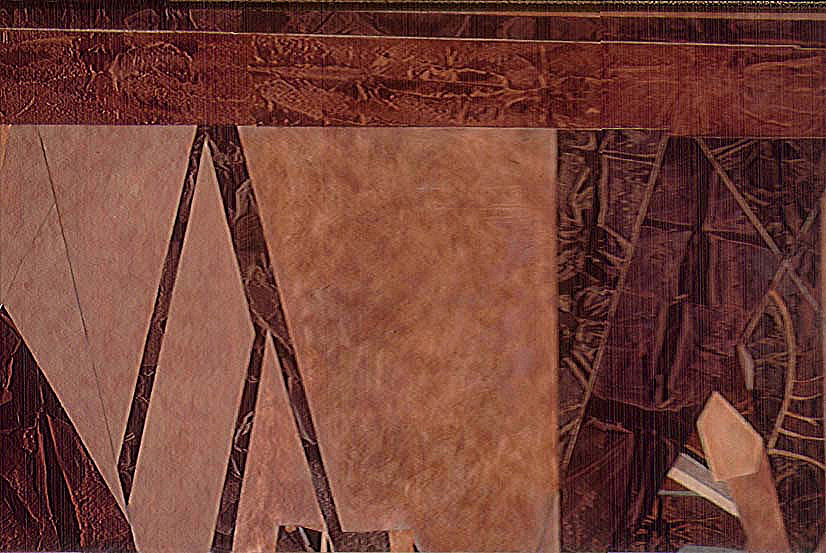
New York Series, Nº 5
54″ x 84″
Oil on canvas
1992

Preface

This essay seeks to define rituals without reliance on metaphors, abstractions, or moral judgments.   The method of this essay begins with etymology, then traces its biological foundation, and follows the extension of ritual into human conduct.   Ritual is treated as repetition with form, carried out by necessity to contain forces uncontrollable by command or intention.

The analysis will distinguish ritual from belief and superstition.    Belief attributes power beyond immediate function.   Superstition arises when belief assigns causality where none exists.    Ritual is not a belief, but only a procedure.   Its function is to regulate life through ordered repetition.

The chapters that follow address the principal domains in which ritual operates.   In sexuality, ritual prevents destabilization by giving desire a form through which it can move without collapse.   In distrust, friendship, enmity, and love, ritual contains states that resist control and makes them livable.   In governance, ritual holds ideological differences within limits that preserve continuity of community.

Ritual is necessary for existence.   It does not eliminate instinct, emotion, or conflict.   It gives them form and allows life to continue without disintegration.   This necessity is not external, but generated by life itself.   Where forces exceed control, ritual provides order.

*

Ricardo Morin. September 12, 2025, Bala Cynwyd, Pa.

I

The word ritual comes from the Latin ritus (a prescribed act performed in an ordered manner).    Its essence is repetition.   To speak of ritual is not to speak of tradition or abstraction, but of a necessity carried out for primal longing.

The biological basis of ritual is clear.   In many species, conflictive instinctive drives are contained by repeated actions which reduce uncertainty.    Birds perform dances before mating.   Wolves display submission to prevent attack.    Primates groom one another to ease tension.    These actions do not alter the external world.    They do not ensure mating, nor prevent danger, nor eliminate aggression.   They work by regulating behavior in ways preventing destabilization.    They arise from necessity:   without them, reproduction, survival, or cohesion could be placed at risk.

Human conduct extends this biological principle.    The handshake is a repeated act signaling non-aggression between strangers.   A funeral orders grief into sequence and allows the bereaved to endure loss.    A meal shared among people affirms cooperation and reduces the possibility of conflict.   Not one of these actions are effective because of a belief in causality.    They are effective because they are the product of repetition and recognition within the group.   They are necessary because without them, mistrust, grief, or rivalry would remain uncontained.

Instinct and emotion generate uncontrolled command or intention.   Repetition gives them form without elimination.    Herein lies the necessity:    life produces forces beyond control, and ritual provides their procedure without collapse.    Thus further inquiry rests here.

II

Belief begins where an act or event is taken to hold power beyond its immediate function.    To believe is to attribute meaning not evident in the act itself.   Belief provides orientation, but also creates vulnerability.

From belief grows superstition.   Superstition occurs when a gesture, a sign, or an accident is taken to determine good or bad luck.   Breaking glass is said to bring harm.   A number is said to bring luck.    The act or sign is given power it does not possess.    Superstition is belief that’s misdirected.   It relies on the conviction that external hidden forces govern external events and become accessible through signs and gestures.

Ritual does not depend on belief that an act can change fate or invoke hidden power.   Its effectiveness does not rest on what is imagined but on what is enacted.   A handshake obviates mistrust because it is repetition and recognition, not because of its magic.   A funeral allows provides ordered sequence and allows grief, but it does not alter death.   A meal shares cooperation through its mutuality, not because it calls luck.

The distinction is exact.   If ritual is the form, desire is the current that moves within it. Religious traditions have often cast desire as a deficit, a disorder, or a temptation to be repressed.   But desire is neither deficit nor disorder; it is vitality itself:   an energy that presses toward expression.   Ritual does not restrict this force; restriction belongs to fear and suffering.    Ritual contains fear and keeps excess within the limits of endurance and necessity.   Fasting, for example, does not abolish hunger but holds it in rhythm; it makes appetite a measure rather than a punishment.    By contrast, a prohibition that denies the legitimacy of desire transforms vitality into anxiety altogether.    In this way, ritual and desire are not opposed but interdependent:   the former is the channel, the latter the stream.

III

Sexual drive is pervasive in human life.    Left without form, it destabilizes both the individual and the community.    Its power lies in persistence.   Command cannot dismiss desire.   Desire presses for expression.    Every culture has developed rituals to contain and to regulate it.

Yet the grounds of sexual ritual are not repression but replication.    Nurture marks the human condition from birth:    in lactation, nurture consists in being fed, held, and sustained through another’s body.    In this original state, intimacy secures survival.    Later, desire repeats the structure.    The quest for union is both a return to that first condition of dependence and a transformation of it into adulthood.    Sexual ritual prolongs that first experience:    it carries within it the imprint of nurture.    It is not a matter of shame or judgment, but of continuity.

Courtship is the model.   Repeated gestures mark the approach to intimacy.   Ceremonies (words, gifts, dances) structure the encounter.   Desire is not eliminated, but gives form to sexuality and allows it to proceed without immediate conflict.    Marriage extends the process and establishes rules for its conduct within a recognizable frame.   Ritual transforms a disruptive force into a relation that can be carried within order.

Different cultural examples exemplify the variety of this process.    In Japan, tea ceremonies and formal visits have structured the first stages of marital negotiation.    In Victorian England, the presence of chaperones functioned as a mode of surveillance and set boundaries for courtship.   Among the Navajo in North America, the Kinaaldá ceremony marks a girl’s transition into womanhood and links individual desire and fertility with the continuation of the community.   In each case, ritual does not extinguish instinct but channels it into social life.

When desire cannot be enacted without risk, individuals turn to patterned acts that provide release without collapse.    Monastic traditions across cultures developed rituals of celibacy, which are supported by prayer, fasting, and other disciplines, containing sexual force.   In everyday life, other people turn to imagery (fantasy, dream, or artistic representation) and stage symbolically acts they long for but cannot realize.   Still others establish habits (exercise, meditation, or creative work) that redirect sexual energy into manageable outlets.   Longing, however, is not erased.   Its structure makes sure that desire moves within set limits without becoming overwhelming.

Obsession arises when desire remains unresolved and intrudes upon thought; it repeats itself without relief and it threatens stability.   Ritual is a way to contain obsession.    Through repetition, it acknowledges the force and gives it shape.    Though not eliminated, it has boundaries.

Ritual in the sphere of sexuality is not an option but a necessity.   It provides form where instinct would exceed measure.

IV

Reason alone does not govern human beings.   Emotional states persist in ways that resist control.   Distrust, friendship, enmity, and love cannot be removed by decree or maintained by thought.   Each requires ritual to provide continuity and containment.

Words alone cannot erase suspicion.    Distrust is one of the most persistent of these states. Suspicion cannot be erased by emotion.   Suspicion lingers and destabilizes interaction.   Ritual reduces its scope.   A greeting, an oath, or a contract are ceremonial acts repeated across encounters; they establish a minimum ground on which cooperation can occur.   These acts do not eliminate suspicion, but they allow engagement to proceed in spite of it.

Friendship depends on feelings, but feelings without form fade.   Ritual gives duration to friendship.    Shared meals, recurring visits, exchanges of favors, and so forth, are patterned acts that affirm a relation.   By themselves, they do not create friendship, but without them friendship weakens.   Rituals sustain that which cannot be commanded—the persistence of trust and attachment across time.

Enmity is no less powerful.    Unbounded hostility escalates until destruction follows.   Rituals channel hostility into limited form:    a duel, a contest, a formal debate—each provides a frame in which enmity can be expressed without collapse.   Even in war, treaties operate as ritual forms that restrict violence to recognizable limits.    Without them, conflict loses proportion.

Love in itself is unstable.   It begins in impulse and only lasts with repetition.   Daily gestures, renewed promises, anniversaries, and continuous acts of care provide a form to sustain it.    These rituals do not guarantee permanence, but they give a structure to love within which it can endure.    Without these rituals, love dissipates.

In all these states, ritual serves the same function.    It gives order where the force cannot be controlled directly.   It does not remove distrust, friendship, sexuality, enmity, or love.    It makes them livable.

V

Governance is the state where human forces are amplified by scale.    Distrust, enmity, and competing loyalties appear not only among individuals but among groups.    Ideological differences cannot be eliminated; they can be managed.   Ritual provides the procedure by which this is done.

One example is Parliamentary procedure.    Debate, order of speaking, and voting are repeated acts that permit conflict to be expressed without dissolution.    The forms themselves do not create agreement.   They provide limits within which disagreement can persist.

Civic ceremonies perform a related function.   Inaugurations, public oaths, and national commemorations do not change political conditions in of themselves.    Their repetition affirms the continuity of authority and gives recognition to transitions of power.   The acts are symbolic only in appearance; their real function is procedural stability.

Elections are more direct.   They do not remove ideological division.   They provide a repeated method for channeling conflict into outcomes recognizable by opposing sides.   Without elections, or when their results are not acknowledged, division tends toward rupture.

Ritual is necessity.    Governance depends on it.   Across species, ritual arises from the need to manage forces that exceed direct control.   Human conduct continues this principle.

In ancient Athens, the assembly and the use of the lot allowed opposition to be expressed without dissolving civic order.    Later, parliaments and councils provided ritual structures for negotiation between absolute monarchs and subjects.    In modern democracies, constitutions and electoral cycles maintain continuity by repeating forms that regulate the transfer of power.   When such rituals fail, the outcome is predictable.    Governance is a ritual that makes ideological differences livable.    Without ritual, politics reduces itself to domination and resistance, a cycle that cannot sustain order.


Annotated Bibliography

  • Arendt, Hannah: On Revolution. New York: Viking, 1963. (Arendt emphasizes the role of civic procedures in sustaining governance; this underlies Chapter V’s claim that ritual makes ideological difference livable.)
  • Douglas, Mary: Purity and Danger: An Analysis of Concepts of Pollution and Taboo. London: Routledge, 1966. (Douglas’s work on ritual boundaries informs Chapter IV’s discussion of distrust, enmity, and the management of instability through repeated acts.)
  • Durkheim, Émile: The Elementary Forms of Religious Life. New York: Free Press, 1995. (Durkheim argues that ritual is the foundation of social cohesion, an idea reflected in Chapter I’s claim that rituals regulate behavior and prevent destabilization.)
  • Freud, Sigmund: Three Essays on the Theory of Sexuality. New York: Basic Books, 2000. (Freud’s psychoanalytic discussion of sexual drive and obsession parallels Chapter III’s treatment of private rituals and the containment of unresolved desire.)
  • Geertz, Clifford: The Interpretation of Cultures. New York: Basic Books, 1973. (Geertz treats ritual as “models of” and “models for” reality; his ethnographic analysis supports the essay’s extension of ritual from sexuality to governance in Chapters IV and V.)
  • Habermas, Jürgen: Between Facts and Norms: Contributions to a Discourse Theory of Law and Democracy. Cambridge: MIT Press, 1996. (Habermas shows how ritualized procedures in discourse and law preserve governance under conflict; his thesis supports the essay’s treatment of parliamentary debate and elections.)
  • Jung, Carl Gustav: Symbols of Transformation. Princeton: Princeton University Press, 1956. (Jung traces how instinctual drives, especially sexuality, become ritualized in both individual psychology and collective culture; his analysis complements Chapter III.)
  • Turner, Victor: The Ritual Process: Structure and Anti-Structure. Chicago: Aldine, 1969. (Turner’s analysis of liminality informs Chapter III and IV, where sexuality, friendship, and enmity are shown to require ritual frames to carry disruptive forces without collapse.)

“Memories”

September 16, 2025

Author’s Note

Written years apart, Intervals and Memories reflect different moments of reckoning. Each stands on its own.

Ricardo Morín

September 14, 2016

New York City.

Memories

We are mirrors of the people in our lives, and through them we come to know ourselves. When I see you, I see myself also. To be vulnerable is to admit our fears and limitations. To grow is to accept them and other things as well—even that we are moving to the rhythm of a diverse and chaotic universe. Infinity is vast and varying time loses its hold.

Aging is part of the cycle that gives us birth and death. These are expressions of life. At every moment we end and begin anew. We let go of our ambitions so that we can live in the present. Our mind resists this and clings to the idea of independence, that it can re-create even itself.

Yet, the universe is a whole and we are part of it. We are free as persons, but never apart from that around us. Loneliness may be built into us and the mind may be in exile, but no barrier separates from the whole.


“Intervals”

September 2, 2025

*

Design cover by Ricardo Morín
Aposento Nº 2
29″ x 36″
Oil on canvas
1994

Author’s Note

Intervals is written in a cadence held taut at the threshold of life and death.   It does not withhold itself, though its language remains stripped of explanation.   Ambivalence may be inescapable, but it is not the aim.   The anonymity of the speaker is deliberate, to keep attention on what is spoken rather than on who speaks.

Ricardo Morín, September 11, 2025. Bala Cynwyd, Pa.

Intervals

To heal himself, he would cover his body in mud and then rinse it away.    Crouched beneath the burning sun, he stared diagonally from a corner across the far end of the yard.   From the clothesline he hung a black umbrella, upside down.    Into it he cast the last handful of potions. From its collapse, heavy with weight, he hoped to avoid his own death.

He covered his books with a black sheet; blindly he pulled one out at a time and, after finding a sentence giving meaning to his thoughts, he put it back.   He waited for revelation.    His mother, now old, took another book out and searched for a better reply.

Exhausted and sleepless, he lay wrapped in a red blanket with his back to the mirror.    Drenched in tears, he felt undone.   Shivers traced his spine, as though his entrails were on fire.

He woke to the sound of running water.   His mother would scrub his garments until the fabric began to fray.    He had painted the walls white; the doors ceased to be brown.    An intruder leapt over the fence.   Then, with a surprising strength, he tore up the garden.

Nights followed without sleep.    He was unaware of sunken cheekbones; only his neighbors’ gaze could see him wasting away.     He managed to fly afar.     Though attentive to life, he found disappointment.

On arrival the hotel summoned an ambulance.    After a ten-hour flight, septic shock seized him; a nurse asked him to choose a destination.    Shivers returned.    He saw many dying, though it was not his turn.     Days later, his flesh returned to life.

With the memory of past ties, he departed again disappointed.    He crossed another distance and knew how fragile his solitude was.

You rescued him and he you.    A bridge was built out of longing.    Three years of passion did not mend the abyss; he took his life and you remained.

A Roman curate attended his mother’s cries, while he twisted her son’s.     Little did the curate know that it was by his own design.     He called for you, a new love, to come.    To love, to sustain the bond of the moment.


Epilogue

Intervals rests on our fearful perception of death, solitude, survival, and rupture (an interval is the rhythm of time and its ending is the emptying of what the consciousness of fear carries in it).    An interval seeks neither consolation nor resolution; it remains with what occurs, in the exposure where solitude and fracture reveal the fragility of existence.