*
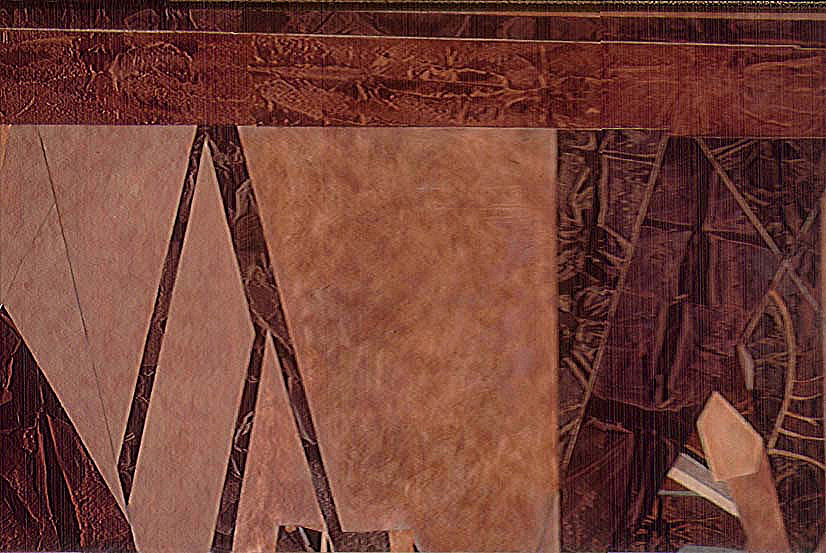
New York Series, Nº 5
54″ x 84″
Oil on canvas
1992
*
Preface
This essay seeks to define rituals without reliance on metaphors, abstractions, or moral judgments. The method of this essay begins with etymology, then traces its biological foundation, and follows the extension of ritual into human conduct. Ritual is treated as repetition with form, carried out by necessity to contain forces uncontrollable by command or intention.
The analysis will distinguish ritual from belief and superstition. Belief attributes power beyond immediate function. Superstition arises when belief assigns causality where none exists. Ritual is not a belief, but only a procedure. Its function is to regulate life through ordered repetition.
The chapters that follow address the principal domains in which ritual operates. In sexuality, ritual prevents destabilization by giving desire a form through which it can move without collapse. In distrust, friendship, enmity, and love, ritual contains states that resist control and makes them livable. In governance, ritual holds ideological differences within limits that preserve continuity of community.
Ritual is necessary for existence. It does not eliminate instinct, emotion, or conflict. It gives them form and allows life to continue without disintegration. This necessity is not external, but generated by life itself. Where forces exceed control, ritual provides order.
*
Ricardo Morin. September 12, 2025, Bala Cynwyd, Pa.
I
The word ritual comes from the Latin ritus (a prescribed act performed in an ordered manner). Its essence is repetition. To speak of ritual is not to speak of tradition or abstraction, but of a necessity carried out for primal longing.
The biological basis of ritual is clear. In many species, conflictive instinctive drives are contained by repeated actions which reduce uncertainty. Birds perform dances before mating. Wolves display submission to prevent attack. Primates groom one another to ease tension. These actions do not alter the external world. They do not ensure mating, nor prevent danger, nor eliminate aggression. They work by regulating behavior in ways preventing destabilization. They arise from necessity: without them, reproduction, survival, or cohesion could be placed at risk.
Human conduct extends this biological principle. The handshake is a repeated act signaling non-aggression between strangers. A funeral orders grief into sequence and allows the bereaved to endure loss. A meal shared among people affirms cooperation and reduces the possibility of conflict. Not one of these actions are effective because of a belief in causality. They are effective because they are the product of repetition and recognition within the group. They are necessary because without them, mistrust, grief, or rivalry would remain uncontained.
Instinct and emotion generate uncontrolled command or intention. Repetition gives them form without elimination. Herein lies the necessity: life produces forces beyond control, and ritual provides their procedure without collapse. Thus further inquiry rests here.
II
Belief begins where an act or event is taken to hold power beyond its immediate function. To believe is to attribute meaning not evident in the act itself. Belief provides orientation, but also creates vulnerability.
From belief grows superstition. Superstition occurs when a gesture, a sign, or an accident is taken to determine good or bad luck. Breaking glass is said to bring harm. A number is said to bring luck. The act or sign is given power it does not possess. Superstition is belief that’s misdirected. It relies on the conviction that external hidden forces govern external events and become accessible through signs and gestures.
Ritual does not depend on belief that an act can change fate or invoke hidden power. Its effectiveness does not rest on what is imagined but on what is enacted. A handshake obviates mistrust because it is repetition and recognition, not because of its magic. A funeral allows provides ordered sequence and allows grief, but it does not alter death. A meal shares cooperation through its mutuality, not because it calls luck.
The distinction is exact. If ritual is the form, desire is the current that moves within it. Religious traditions have often cast desire as a deficit, a disorder, or a temptation to be repressed. But desire is neither deficit nor disorder; it is vitality itself: an energy that presses toward expression. Ritual does not restrict this force; restriction belongs to fear and suffering. Ritual contains fear and keeps excess within the limits of endurance and necessity. Fasting, for example, does not abolish hunger but holds it in rhythm; it makes appetite a measure rather than a punishment. By contrast, a prohibition that denies the legitimacy of desire transforms vitality into anxiety altogether. In this way, ritual and desire are not opposed but interdependent: the former is the channel, the latter the stream.
III
Sexual drive is pervasive in human life. Left without form, it destabilizes both the individual and the community. Its power lies in persistence. Command cannot dismiss desire. Desire presses for expression. Every culture has developed rituals to contain and to regulate it.
Yet the grounds of sexual ritual are not repression but replication. Nurture marks the human condition from birth: in lactation, nurture consists in being fed, held, and sustained through another’s body. In this original state, intimacy secures survival. Later, desire repeats the structure. The quest for union is both a return to that first condition of dependence and a transformation of it into adulthood. Sexual ritual prolongs that first experience: it carries within it the imprint of nurture. It is not a matter of shame or judgment, but of continuity.
Courtship is the model. Repeated gestures mark the approach to intimacy. Ceremonies (words, gifts, dances) structure the encounter. Desire is not eliminated, but gives form to sexuality and allows it to proceed without immediate conflict. Marriage extends the process and establishes rules for its conduct within a recognizable frame. Ritual transforms a disruptive force into a relation that can be carried within order.
Different cultural examples exemplify the variety of this process. In Japan, tea ceremonies and formal visits have structured the first stages of marital negotiation. In Victorian England, the presence of chaperones functioned as a mode of surveillance and set boundaries for courtship. Among the Navajo in North America, the Kinaaldá ceremony marks a girl’s transition into womanhood and links individual desire and fertility with the continuation of the community. In each case, ritual does not extinguish instinct but channels it into social life.
When desire cannot be enacted without risk, individuals turn to patterned acts that provide release without collapse. Monastic traditions across cultures developed rituals of celibacy, which are supported by prayer, fasting, and other disciplines, containing sexual force. In everyday life, other people turn to imagery (fantasy, dream, or artistic representation) and stage symbolically acts they long for but cannot realize. Still others establish habits (exercise, meditation, or creative work) that redirect sexual energy into manageable outlets. Longing, however, is not erased. Its structure makes sure that desire moves within set limits without becoming overwhelming.
Obsession arises when desire remains unresolved and intrudes upon thought; it repeats itself without relief and it threatens stability. Ritual is a way to contain obsession. Through repetition, it acknowledges the force and gives it shape. Though not eliminated, it has boundaries.
Ritual in the sphere of sexuality is not an option but a necessity. It provides form where instinct would exceed measure.
IV
Reason alone does not govern human beings. Emotional states persist in ways that resist control. Distrust, friendship, enmity, and love cannot be removed by decree or maintained by thought. Each requires ritual to provide continuity and containment.
Words alone cannot erase suspicion. Distrust is one of the most persistent of these states. Suspicion cannot be erased by emotion. Suspicion lingers and destabilizes interaction. Ritual reduces its scope. A greeting, an oath, or a contract are ceremonial acts repeated across encounters; they establish a minimum ground on which cooperation can occur. These acts do not eliminate suspicion, but they allow engagement to proceed in spite of it.
Friendship depends on feelings, but feelings without form fade. Ritual gives duration to friendship. Shared meals, recurring visits, exchanges of favors, and so forth, are patterned acts that affirm a relation. By themselves, they do not create friendship, but without them friendship weakens. Rituals sustain that which cannot be commanded—the persistence of trust and attachment across time.
Enmity is no less powerful. Unbounded hostility escalates until destruction follows. Rituals channel hostility into limited form: a duel, a contest, a formal debate—each provides a frame in which enmity can be expressed without collapse. Even in war, treaties operate as ritual forms that restrict violence to recognizable limits. Without them, conflict loses proportion.
Love in itself is unstable. It begins in impulse and only lasts with repetition. Daily gestures, renewed promises, anniversaries, and continuous acts of care provide a form to sustain it. These rituals do not guarantee permanence, but they give a structure to love within which it can endure. Without these rituals, love dissipates.
In all these states, ritual serves the same function. It gives order where the force cannot be controlled directly. It does not remove distrust, friendship, sexuality, enmity, or love. It makes them livable.
V
Governance is the state where human forces are amplified by scale. Distrust, enmity, and competing loyalties appear not only among individuals but among groups. Ideological differences cannot be eliminated; they can be managed. Ritual provides the procedure by which this is done.
One example is Parliamentary procedure. Debate, order of speaking, and voting are repeated acts that permit conflict to be expressed without dissolution. The forms themselves do not create agreement. They provide limits within which disagreement can persist.
Civic ceremonies perform a related function. Inaugurations, public oaths, and national commemorations do not change political conditions in of themselves. Their repetition affirms the continuity of authority and gives recognition to transitions of power. The acts are symbolic only in appearance; their real function is procedural stability.
Elections are more direct. They do not remove ideological division. They provide a repeated method for channeling conflict into outcomes recognizable by opposing sides. Without elections, or when their results are not acknowledged, division tends toward rupture.
Ritual is necessity. Governance depends on it. Across species, ritual arises from the need to manage forces that exceed direct control. Human conduct continues this principle.
In ancient Athens, the assembly and the use of the lot allowed opposition to be expressed without dissolving civic order. Later, parliaments and councils provided ritual structures for negotiation between absolute monarchs and subjects. In modern democracies, constitutions and electoral cycles maintain continuity by repeating forms that regulate the transfer of power. When such rituals fail, the outcome is predictable. Governance is a ritual that makes ideological differences livable. Without ritual, politics reduces itself to domination and resistance, a cycle that cannot sustain order.
Annotated Bibliography
- Arendt, Hannah: On Revolution. New York: Viking, 1963. (Arendt emphasizes the role of civic procedures in sustaining governance; this underlies Chapter V’s claim that ritual makes ideological difference livable.)
- Douglas, Mary: Purity and Danger: An Analysis of Concepts of Pollution and Taboo. London: Routledge, 1966. (Douglas’s work on ritual boundaries informs Chapter IV’s discussion of distrust, enmity, and the management of instability through repeated acts.)
- Durkheim, Émile: The Elementary Forms of Religious Life. New York: Free Press, 1995. (Durkheim argues that ritual is the foundation of social cohesion, an idea reflected in Chapter I’s claim that rituals regulate behavior and prevent destabilization.)
- Freud, Sigmund: Three Essays on the Theory of Sexuality. New York: Basic Books, 2000. (Freud’s psychoanalytic discussion of sexual drive and obsession parallels Chapter III’s treatment of private rituals and the containment of unresolved desire.)
- Geertz, Clifford: The Interpretation of Cultures. New York: Basic Books, 1973. (Geertz treats ritual as “models of” and “models for” reality; his ethnographic analysis supports the essay’s extension of ritual from sexuality to governance in Chapters IV and V.)
- Habermas, Jürgen: Between Facts and Norms: Contributions to a Discourse Theory of Law and Democracy. Cambridge: MIT Press, 1996. (Habermas shows how ritualized procedures in discourse and law preserve governance under conflict; his thesis supports the essay’s treatment of parliamentary debate and elections.)
- Jung, Carl Gustav: Symbols of Transformation. Princeton: Princeton University Press, 1956. (Jung traces how instinctual drives, especially sexuality, become ritualized in both individual psychology and collective culture; his analysis complements Chapter III.)
- Turner, Victor: The Ritual Process: Structure and Anti-Structure. Chicago: Aldine, 1969. (Turner’s analysis of liminality informs Chapter III and IV, where sexuality, friendship, and enmity are shown to require ritual frames to carry disruptive forces without collapse.)

 Observations On Perception