Posts Tagged ‘adaptation’

“Vulnerability, Regulation, and the Work of Healing”

February 28, 2026
Ricardo F Morín
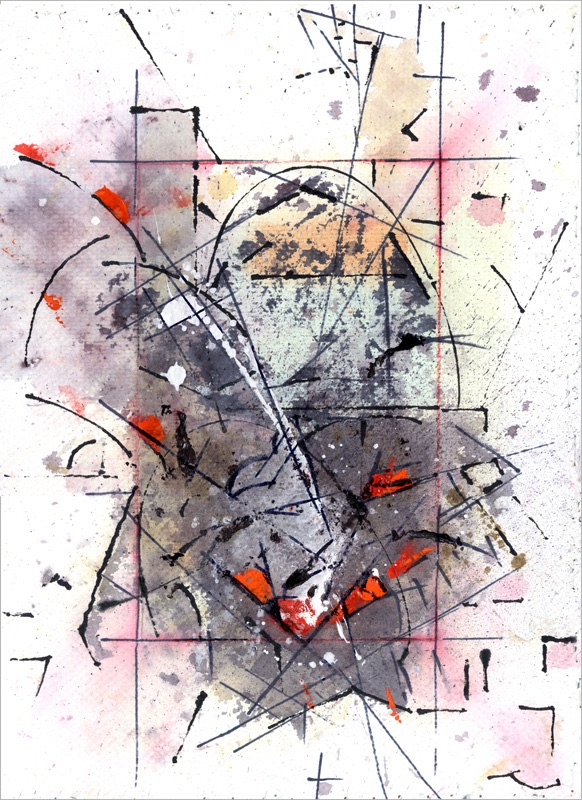
Window I
8” x 10”
Watercolor and ink on paper
2003

Ricardo F. Morín

February 18, 2026

Oakland Park, Fl

1
Most people first recognize vulnerability not through abstract reflection but when ordinary functions change.  Sleep becomes fragmented.  Movement requires calculation.  Attention shifts toward signals that once remained unnoticed.  Human life begins not from stability but from exposure.  The body exists within conditions it does not fully control and must continuously adapt to forces that exceed intention.  Vulnerability is not an exception. It is a structural condition of being alive.  Wellbeing does not remove this condition.  It reorganizes how one lives within it.

2
Attempts to explain healing often rely on simplified narratives of control, positivity, or emotional purification.  Such narratives overlook the complexity through which biological systems regulate themselves.  Hormones, neural pathways, immune responses, and behavioral patterns operate through feedback rather than command.  The organism adjusts through interaction, not through absolute mastery.  Understanding this distinction allows healing to be viewed less as conquest over illness and more as participation in an ongoing process of regulation.

3
Mental practices such as meditation, visualization, or structured breathing may influence physiological states.  Their value lies not in eliminating difficulty but in altering how perception interacts with bodily response.  Attention can change tension, breathing patterns can modify autonomic responses, and emotional framing can influence how stress signals are interpreted.  These practices do not replace biological realities.  They operate within existing physiological processes.

4
Many discussions of emotional life rely on familiar language about resentment or anger without examining how such patterns function in practice.  Emotional fixation narrows perception because it reduces the range of possible interpretations available to the mind.  When attention becomes rigid, the body often reflects that rigidity through muscular contraction, altered breathing, or disrupted sleep.  Recognizing this does not deny legitimate grievances.  It clarifies how sustained cognitive patterns shape physiological experience. What appears biologically as regulation appears conceptually as participation.

5
Healing must also acknowledge limits.  Not all illness can be traced to emotional origin, and not all suffering yields explanation.  Biological variability, environmental exposure, and genetic inheritance create outcomes that cannot be reduced to intention or belief.  Humility recognizes that the absence of explanation neither invalidates the search for meaning nor guarantees it.

6
Contemporary medical technology introduces a further dimension into this landscape.  Adaptive systems capable of measuring neural activity and adjusting stimulation in real time demonstrate that regulation is inherently dynamic. The nervous system functions through continuous feedback loops.  Closed loop neuromodulation technologies reveal this principle by making adjustment visible and measurable.  Rather than blocking pain entirely, such systems alter how signals are transmitted and interpreted, and allow the body to reorganize patterns that have become fixed through chronic strain.

7
Technology in this context does not replace the organism.  It participates alongside it.  The device measures electrical responses, modifies stimulation within clinical parameters, and supports gradual adaptation rather than immediate elimination of discomfort.  This reflects a shift in how regulation is understood. Healing increasingly involves collaboration between biological systems and external adaptive tools.  The boundary between internal regulation and technological assistance becomes relational rather than oppositional.

8
Because of this shift, improvement may appear indirectly.  Functional changes such as more consistent sleep, increased movement, or reduced hesitation in daily tasks often emerge before subjective perception of pain changes significantly.  The nervous system learns through repetition across time rather than through instant resolution.  Observing patterns over days or weeks becomes more meaningful than evaluating isolated moments.

9
The language of self healing therefore requires revision.  Healing does not imply independence from vulnerability.  It involves learning to inhabit vulnerability with greater precision, supported by practices, relationships, and technologies that expand the range of possible responses.  Faith, meditation, medical science, and personal discipline may each contribute, not as competing explanations but as complementary modes of engagement with the unknown.

10
Experience itself does not provide ultimate meaning.  Meaning arises from how experience is integrated into awareness.  When experience is treated as proof of certainty, rigidity follows.  When experience is held as information rather than identity, adaptation remains possible.  The aim is not to silence the mind or eliminate difficulty, but to allow perception to remain flexible enough to respond to change.

11
Healing, then, is neither purely psychological nor purely technological.  It is the ongoing negotiation between organism and environment, perception and physiology, vulnerability and adaptation.  Modern tools may refine this negotiation by providing new forms of feedback, yet the underlying condition remains unchanged.  Human beings continue to live within limits while developing new ways to respond to them.  The task is not to escape vulnerability but to regulate within it.


“Resilience:  What It Is and What It Is Not”

January 28, 2026
Ricardo F. Morin
What It Is; What Is Not
CGI
2026

Ricardo F. Morín

January 5, 2026

Oakland Park, Fl.

Wannabe Axiom IV


Resilience is often introduced as a descriptive term.  It names a capacity observed under pressure, a tendency to endure when conditions cannot immediately be altered.  In this sense, resilience appears neutral, even commendable.  It signals survival where collapse was possible, continuity where interruption was expected.  

Over time, however, resilience ceases to be merely observed and begins to be praised.  What was once noted becomes celebrated.  Endurance is elevated into virtue, and the ability to persist under strain is held up as evidence of strength.  In this shift, attention subtly moves away from the conditions that necessitated endurance in the first place.  

Once resilience is praised, it becomes expectable.  The language of admiration gives way to the language of obligation.  What some managed to do under duress is gradually treated as what all should do.  Endurance stops being exceptional and becomes normative.  The capacity to withstand replaces the question of why endurance is required.  

At this point, resilience performs a quiet inversion.  Conditions remain intact, while responsibility migrates toward those exposed to them.  Structures are left unexamined as individuals are encouraged to adapt.  Adjustment is relocated from systems to subjects.  What cannot be repaired is to be endured.  

This inversion carries a temporal dimension.  Resilience is framed as forward-looking strength, a promise that persistence will eventually be rewarded.  Harm is deferred rather than addressed.  Recovery is invoked in place of repair, and time is asked to absorb what policy or structure does not resolve.  

The ethical weight of this shift is unevenly distributed.  Those with the least capacity to alter their circumstances are most frequently called upon to be resilient.  Those with the greatest power to change conditions are least exposed to the demands of adaptation.  Resilience, though praised as universal, is imposed asymmetrically.  

As resilience becomes an expectation, dissent softens rather than disappears.  Complaint is not forbidden, but it is recoded.  Questioning conditions is treated as impatience.  Refusal to endure is framed as deficiency.  Endurance itself becomes a measure of maturity, and silence is mistaken for consent.  

What resilience is, then, is a capacity to endure conditions not of one’s making.  It is a descriptive fact of human behavior under pressure.  It names survival where alternatives are limited.  

What resilience is not is an ethic.  It is not a justification for harm, nor evidence that conditions are acceptable.  The ability to endure does not confer legitimacy on what is endured.  

“Geographies of Survival”

December 2, 2025

*

Ricardo Morín
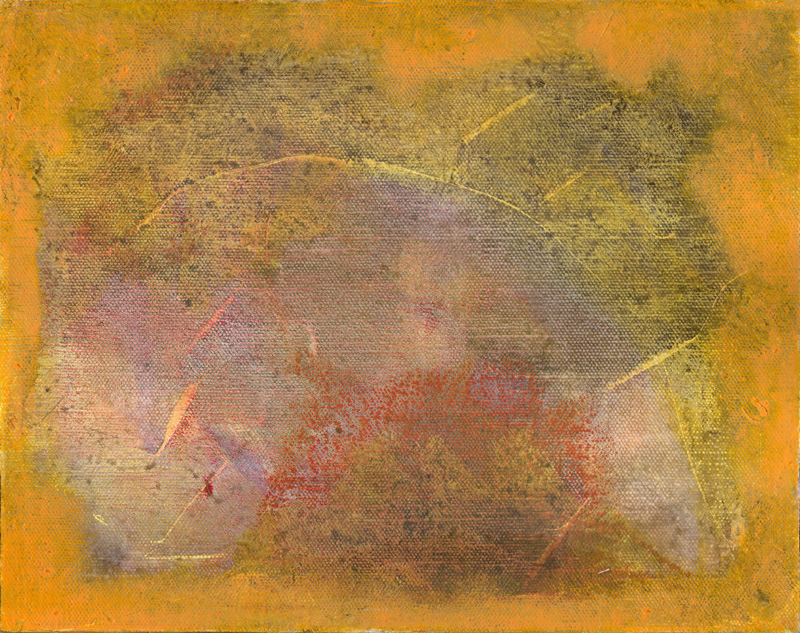
Still Thirty-seven: Geographies of Survival
Oil on linen & board
15″ x 12″ x 1/2″
2012

Ricardo F. Morín

November 2025

Oakland Park, Florida

This essay examines how human groups respond to instability when the conditions that once sustained them begin to fail.  Its focus is not on specific crises, events, or regions, but on the structural pressures that compel populations either to relocate or to defend their ground.   I approach the subject without moral interpretation and without attributing virtue or fault to the choices communities make under duress.  The aim is simply to describe the grammars of behavior that arise when survival becomes uncertain and to trace how identity, claims to legitimacy, and patterns of continuity reorganize themselves under those pressures.  The essay does not propose solutions or anticipate outcomes; it observes the patterns that emerge when stability dissolves and the land itself ceases to offer guarantees.

Geographies of Survival explores two fundamental responses to instability: migration and entrenchment.   When climate disruption, scarcity, or civic breakdown exceed a community’s capacity to endure, populations seek stability either through movement or through defending their position.   Migration reorganizes identity through adaptation to new conditions; entrenchment intensifies identity to preserve continuity in place.   These responses arise from the same pressures and function as parallel strategies for survival rather than opposing moral positions.   The essay examines how claims to legitimacy, patterns of identification, and the search for continuity are reshaped by these pressures, and how the friction between movement and resistance reflects structural forces rather than cultural incompatibility.   Its purpose is to illuminate the conditions under which these survival grammars emerge and the ways they transform the meaning of land, stability, and collective life.


1

Migration is often described as the movement of people from one place to another, but this description obscures the deeper forces at work.   Migration is not merely geography in motion; it is also the expression of a survival grammar that becomes visible whenever a community faces conditions it can no longer absorb.  Climate shifts, failing economies, collapsing states, and persisting insecurities create pressures that exceed the capacity of existing structures.   Under these pressures, a population confronts a choice so fundamental that it precedes ideology:  to move or to entrench.

2

These are not parallel options.   They are opposing responses built from the same materials—fear, instability, and the search for continuity.   Migration seeks stability by relocating; entrenchment seeks stability by confronting the agents of instability directly.   Neither response is superior.   Neither is voluntary.   Both emerge from conditions that compress judgment, narrow possibility, and force communities to defend themselves against forces too large to negotiate.

3

Migration begins when a group concludes that the geography that sustained it can no longer guarantee survival.   The land fails, or institutions collapse, or the future narrows.   Movement becomes the only remaining form of protection.   Yet movement does not dissolve identity—it reorganizes it.   A migrating population must redefine its internal coherence in relation to unfamiliar surroundings.   Identity becomes adaptive not by preference but by necessity.   Adaptation is not reinvention; it is survival.

4

Entrenchment moves in the opposite direction.   When a group chooses to remain in place, it must defend what movement would surrender:   territory, memory, continuity, and the stability that comes from rootedness.   Entrenchment therefore intensifies identification rather than loosening it.   Boundaries become rigid.   Narratives harden.   Conflict becomes a strategy rather than an interruption.   A community that fights to remain where it is must believe that displacement would erase it.   Confrontation becomes a method of preservation.

5

Cultural confrontation arises most sharply when a migrating population settles on land that another group interprets as an extension of its own continuity.   To the migrant community, the land represents safety, possibility, or relief from pressures that made departure unavoidable.   To the entrenched community, the same land represents memory, inheritance, and the boundary that protects its historical coherence.   Each group sees the other as the agent of potential erasure:   migrants perceive exclusion and hostility; entrenched populations perceive encroachment and loss.   Conflict escalates not because either group seeks domination, but because each interprets survival through a different grammar—adaptation for one, preservation for the other.

6

Policies adopted in countries such as Denmark and the United Kingdom illustrate how entrenched societies respond when migration is perceived as a threat. For many asylum seekers, these deterrent measures narrow the distance between the pressures that forced them to leave and the pressures they encounter upon arrival, a condition that makes stability difficult to distinguish from exclusion.   Governments frequently defend entrenched policies by arguing that the resources needed to support asylum seekers are limited, and that extending those resources further would risk weakening existing systems of welfare, housing, and public order.

7

These responses of movement and entrenchment seem incompatible, yet they describe a single reality:   populations under pressure behave according to the survival strategies available to them, not according to idealized accounts of culture or volition.   When migrants and entrenched populations come into contact, each sees the other through the lens of its own pressures.   Migrants see protection; the entrenched see threat.   Migrants carry adaptation; the entrenched carry defense.   Each posture misreads the other because each is responding to different forms of danger.

8

Climate change intensifies these divergent responses, not by determining them but by tightening the conditions under which communities must choose.   Climate does not produce conflict by itself; it alters the margins within which stability is possible.   Regions once predictable become irregular; resources once continuous become intermittent.   As these margins narrow, some populations interpret movement as the only viable safeguard, while others interpret remaining in place as the only defensible continuity.   The same pressure exposes different vulnerabilities, and each community responds according to its own history, capacity, and thresholds of endurance—rather than to climate alone.

9

The friction between these grammars—movement and entrenchment—should not be mistaken for a clash of civilizations.   It is a collision between two interpretations of threat.   One group treats survival as relocation; the other treats survival as resistance.   Both postures emerge from instability; both use identity as a tool shaped by circumstance rather than as a fixed inheritance.   Identity becomes an instrument of continuity, shaped by conditions that leave little room for negotiation or reflection.

10

The world often interprets these collisions through moral, ideological, or geopolitical frames, but such interpretations obscure the deeper movement:   instability reorganizes identity faster than identity reorganizes the world.   When geography shifts, populations adapt.   When populations adapt, meanings shift.   Collective life becomes contested not because cultures are inherently antagonistic, but because survival pressures force groups into patterns they would not otherwise choose.

11

If there is a universal character to the present century, it is this: the pressures that produce migration are the same pressures that produce conflict among those who refuse to migrate.   To understand one without the other is to misunderstand both.   Movement and entrenchment are not opposites but consequences—expressions of the structural instability that now shapes every region, every culture, every claim to continuity.

12

The question that follows is neither predictive nor ideological.   It is simply the next step in the logic of this analysis:   What forms of stability become possible when migration and entrenchment are understood not as opposing moral positions but as parallel responses to the same changing world?   The answer is not yet visible, but the conditions that will shape it already are.