Posts Tagged ‘embodiment’

“The Clinician”

May 3, 2026

Ricardo F. Morín
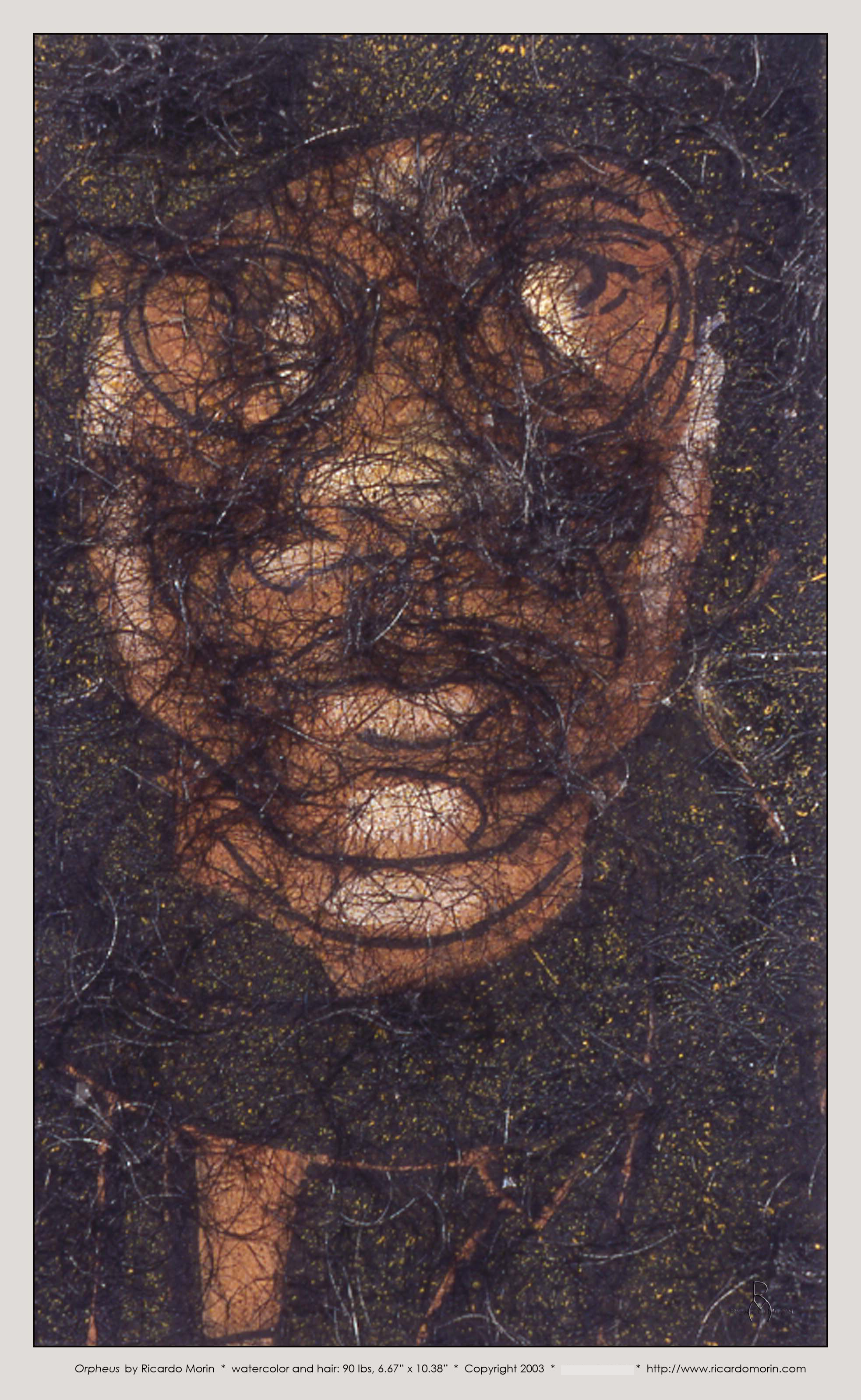
Orpheus
4.47″x 10.38″
2003

Scene One: Monday Morning

Could it be safe to take a shower between 7 and 8 am?

He will take his morning medication just before the shower.  

It is 43 degrees Fahrenheit outside, rising to 64 by the time he arrives at Penn Medicine in University City.

He considers scheduling an Uber for 11:45 am; his husband will say it is too early.

It’s 7:05.  He hears his husband making the beds in the next room.  He goes to shower.

His husband asks whether he would be up to taking a ride tomorrow, the day before departure.

He says he would decide based on how he felt.

Each choice has required assessment.

Two bowel movements.  A familiar pattern, a sense of incomplete evacuation.  An anti-diarrheal may be needed.

Not diarrhea.  An accelerated colon.

He does not exceed 2 mg unless it becomes continuous.

Propulsion.  Heartburn.  Hiatal hernia.  Micro-aspirations.  They do not occur separately, especially while recovering from a respiratory infection.

It’s 8:40 am.  Three hours before the Uber arrives.

Would a warm compress help?

His husband hears him cough and asks if he wants tea.

The N95 mask was used recently at the ER.  The new ones are in the carry-on.  Is it necessary to look for them?

His husband helps.  He will keep a mask for the flight to London.  It is reassuring, even in business class.

Should he take a nasal cleanser on the cruise to the British Isles?

He switches shoes.  Cold feet persist.  No marked improvement.

With an hour and a half before leaving, better not to wear shoes.  Wool slippers instead.  Cold feet persist.  He will decide on the spot before leaving:  the clogs.

The interior temperature is 66 degrees with the humidifier on.

He is dressed warmly, but the air feels nippy.

He does not turn up the heat.

He turns off the humidifier, rests his feet over the yoga bolster, and covers them with a blanket.

Scene Two: Monday Afternoon

When he spoke to the physician, she asked, in a friendly tone, how often he visited his family in Venezuela.  He said he would not assume she was unfamiliar with Venezuela.  For over three decades, it had not been safe for him to return.*

She stated that his resilience was a testament to how far HIV treatment had advanced.  He did not respond immediately.  When he did, he was not entirely sure whether medication or sheer DNA disposition had protected him from opportunistic infections, though he had developed full AIDS.

She was eager to know who he was.  At the same time, he detected a degree of vulnerability in her:  a young, enthusiastic virologist, a mother of seven months.

He asked about the baby’s name.  She shared it.  She said the child was struggling to walk and that the intensity of it felt overwhelming.

When he brought up his infectious disease doctor before moving from New York to Florida, he mentioned that both she and her husband were HIV positive.  She had treated him for twenty-five years.  Her care was not only clinical.  It was also informed by lived knowledge, though she never made it the center of her care.  He held that knowledge as a standard to meet.

The physician widened her eyes.  She said she knows this was her first child and that much lay ahead;  right now it felt demanding.  He said she will eventually look back on this time with affection.  She completed his sentence.

What he is now talking about is not diagnostic, analytic, or logical.  It is something else.

Before they part, she says she looks forward to learning from him.  He quips:  learning from each other.

The physician led the consultation from the moment she stated her objectives.  She said she wanted to show herself and hoped he would do the same.  It was unusual.  She was poised, centered.  He had not experienced this kind of rapport before.  Was it his letter of introduction?  The way he had organized his clinical history and his team of caregivers?

Afterward, his husband asks whether she is the right fit.  He answers with hesitation.  Her eagerness repeats itself.  Time will tell.

He wonders whether his husband sees himself reflected in his responses, and about his own perception, whether there is intent behind it.

Shortly after they return home, his husband comes to him.  He wants to hug and kiss him, pleased with how it went.  He says, “we did it; we are now safe to travel with everything in the right place.”  Then he returns seconds later to tell him it was because of his generosity.

*

Scene Three: Monday Night

*

After he left the office of the infectious disease doctor at Penn Medicine, and before returning home past 4 pm, he was hungry.  They stopped at the hospital cafeteria, where he had chicken noodle soup loaded with condiments, more than he would normally have.

The soup was saltier than his preference.

When he took the first spoonful, his throat and esophageal sphincter contracted, and he paused.

He remembered that small sips, spaced a few minutes apart, were necessary.  After a few sips, he reached a level of comfort that allowed him to finish the soup.

They walked outside, and by the main entrance he ordered an Uber back home.  He arrived just in time to consider the next meal after the soup.

He had two consecutive meals without heartburn.

He had been weighed at 126 pounds.  He had lost six to eight pounds since contracting a viral infection.

At 9:34 pm, he was watching a movie about bodies living with severe disabilities.

His rib cage felt as if it were pressing on his liver.

He had been dealing with a medication-induced fatty liver and elevated enzymes.

He realized that liver failure is possible, though he had been a long-term HIV survivor without ever facing a major opportunistic infection, even when he experienced wasting syndrome thirty years ago and had only thirty-four T cells.

He cannot account for his good fortune, but he knows he has it.

Ricardo F. Morín

April 29, 2026

Bala Cynwyd, Pa
Video portrait set to a Piazzolla tango composition. Mixed media drawing rendered in Maya. Red and black figure study with rotating fields; hair and flame introduced in sequence, drawing from a classical descent motif.

“Vulnerability, Regulation, and the Work of Healing”

February 28, 2026
Ricardo F Morín
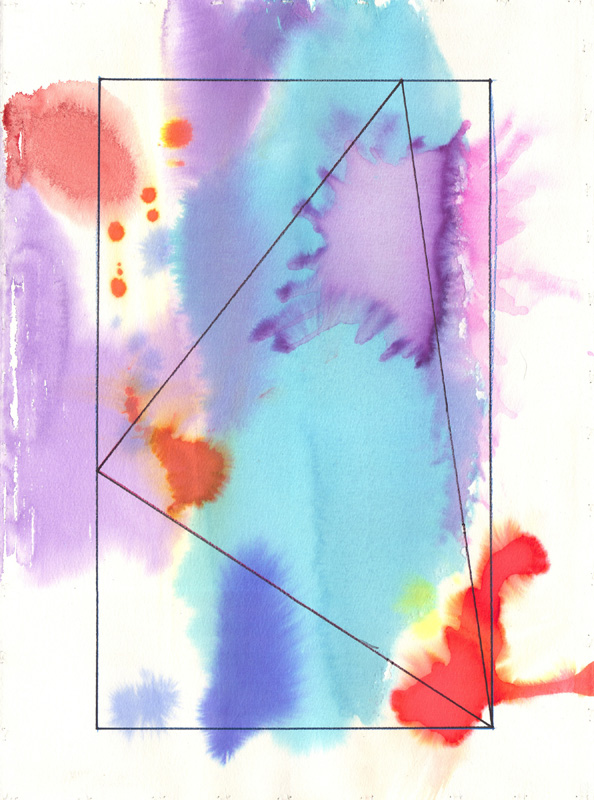
Window I
8” x 10”
Watercolor and ink on paper
2003

1
Most people first recognize vulnerability not through abstract reflection but when ordinary functions change.  Sleep becomes fragmented.  Movement requires calculation.  Attention shifts toward signals that once remained unnoticed.  Human life begins not from stability but from exposure.  The body exists within conditions it does not fully control and must continuously adapt to forces that exceed intention.  Vulnerability is not an exception. It is a structural condition of being alive.  Wellbeing does not remove this condition.  It reorganizes how one lives within it.

2
Attempts to explain healing often rely on simplified narratives of control, positivity, or emotional purification.  Such narratives overlook the complexity through which biological systems regulate themselves.  Hormones, neural pathways, immune responses, and behavioral patterns operate through feedback rather than command.  The organism adjusts through interaction, not through absolute mastery.  Understanding this distinction allows healing to be viewed less as conquest over illness and more as participation in an ongoing process of regulation.

3
Mental practices such as meditation, visualization, or structured breathing may influence physiological states.  Their value lies not in eliminating difficulty but in altering how perception interacts with bodily response.  Attention can change tension, breathing patterns can modify autonomic responses, and emotional framing can influence how stress signals are interpreted.  These practices do not replace biological realities.  They operate within existing physiological processes.

4
Many discussions of emotional life rely on familiar language about resentment or anger without examining how such patterns function in practice.  Emotional fixation narrows perception because it reduces the range of possible interpretations available to the mind.  When attention becomes rigid, the body often reflects that rigidity through muscular contraction, altered breathing, or disrupted sleep.  Recognizing this does not deny legitimate grievances.  It clarifies how sustained cognitive patterns shape physiological experience. What appears biologically as regulation appears conceptually as participation.

5
Healing must also acknowledge limits.  Not all illness can be traced to emotional origin, and not all suffering yields explanation.  Biological variability, environmental exposure, and genetic inheritance create outcomes that cannot be reduced to intention or belief.  Humility recognizes that the absence of explanation neither invalidates the search for meaning nor guarantees it.

6
Contemporary medical technology introduces a further dimension into this landscape.  Adaptive systems capable of measuring neural activity and adjusting stimulation in real time demonstrate that regulation is inherently dynamic. The nervous system functions through continuous feedback loops.  Closed loop neuromodulation technologies reveal this principle by making adjustment visible and measurable.  Rather than blocking pain entirely, such systems alter how signals are transmitted and interpreted, and allow the body to reorganize patterns that have become fixed through chronic strain.

7
Technology in this context does not replace the organism.  It participates alongside it.  The device measures electrical responses, modifies stimulation within clinical parameters, and supports gradual adaptation rather than immediate elimination of discomfort.  This reflects a shift in how regulation is understood. Healing increasingly involves collaboration between biological systems and external adaptive tools.  The boundary between internal regulation and technological assistance becomes relational rather than oppositional.

8
Because of this shift, improvement may appear indirectly.  Functional changes such as more consistent sleep, increased movement, or reduced hesitation in daily tasks often emerge before subjective perception of pain changes significantly.  The nervous system learns through repetition across time rather than through instant resolution.  Observing patterns over days or weeks becomes more meaningful than evaluating isolated moments.

9
The language of self healing therefore requires revision.  Healing does not imply independence from vulnerability.  It involves learning to inhabit vulnerability with greater precision, supported by practices, relationships, and technologies that expand the range of possible responses.  Faith, meditation, medical science, and personal discipline may each contribute, not as competing explanations but as complementary modes of engagement with the unknown.

10
Experience itself does not provide ultimate meaning.  Meaning arises from how experience is integrated into awareness.  When experience is treated as proof of certainty, rigidity follows.  When experience is held as information rather than identity, adaptation remains possible.  The aim is not to silence the mind or eliminate difficulty, but to allow perception to remain flexible enough to respond to change.

11
Healing, then, is neither purely psychological nor purely technological.  It is the ongoing negotiation between organism and environment, perception and physiology, vulnerability and adaptation.  Modern tools may refine this negotiation by providing new forms of feedback, yet the underlying condition remains unchanged.  Human beings continue to live within limits while developing new ways to respond to them.  The task is not to escape vulnerability but to regulate within it.

*

Ricardo F. Morín, February 18, 2026, Oakland Park, Florida.


“Stirrings”

November 30, 2025

*

Ricardo Morín
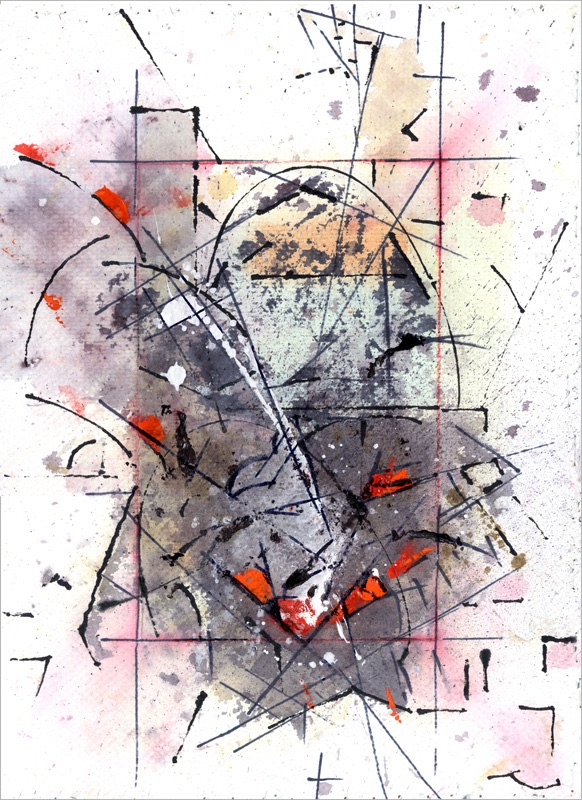
Triangulation 6: Stirrings—Remociones
22″ x 30″
Watercolor and ink
2006

Ricardo Morin

November 2025

Oakland Park, Florida

Stirrings is a four-part haiku cycle that traces the quiet movement from openness to pain, from endurance to renewal.   Each poem enters the body—breath, joints, thought, sweetness—to reveal how life continues in fleeting moments of air, light, and vitality.   The sequence is presented in parallel English and Castilian Spanish.


I

heart thrown wide

breath cradled in blood—

the world stirs the air

*

corazón abierto

el aliento en la sangre—

el mundo agita el aire

II

joints drawn tight

thought held within pain—

the day lifts its light

*

articulaciones tensas

el pensamiento en el dolor—

el día alza su luz

III

may I be love

through the deepening lows—

to rise once again

*

que yo sea amor

en estos hondos descensos—

para alzarme otra vez

IV

sweet peaches warm

their juice the taste of life—

as if death forgot

*

melocotones tibios

su jugo el sabor de la vida—

como si la muerte olvidara