Posts Tagged ‘ideology’

“CIVIC AGENCY”

December 9, 2025

*

Ricardo Morín
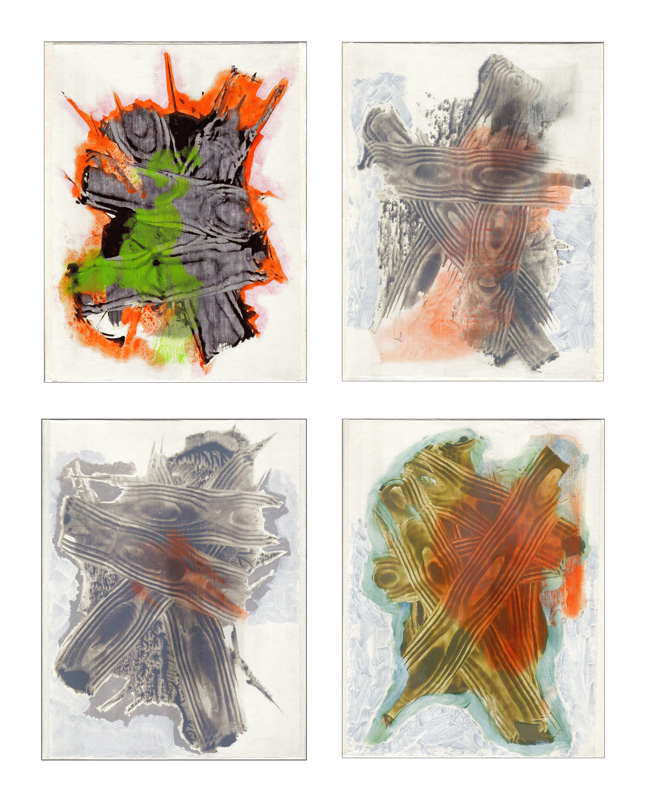
Teratological Topographies Series One: CIVIC AGENCY
Oil On Linen
Quadtych: Each panel: 14 by 18 by 3/4 inches
2009

Ricardo F. Morín

November, 2025

Oakland Park, Florida

Billy Bussell Thompson, Editor, NY, NY

This essay examines conditions frequently distorted by ideology, moral inheritance, or historical narrative.   Questions of sovereignty, occupation, revolution, exile, and national identity are often debated through claims that appeal to absolutes—religious entitlement, historical grievance, or revolutionary legitimacy.   These claims differ in language but share the same structure:   they place a single idea over civic realities of people whose lives are structured by such narratives.

To address what is obscured by these narratives, the essay turns to a structural factor that cuts across these differences:   civic agency, understood as the capacity of people to shape the conditions of civic life through their participation, representation, and lawful processes.   When civic agency is removed—whether through external control, internal authoritarianism, or deterrence directed at displaced populations; the form of the constraint may change, but the civic effect remains constant.

This essay does not compare political histories.   It examines how State power, in its various configurations, regulates civic life.   It considers how ideology obscures this regulation and how populations experience the consequences of decisions in which they have little or no role.   The goal is not to reduce political conflict but to call attention to the structures that determine whether freedom is possible or remains beyond reach.

This essay will argue that the most reliable way to understand situations that appear politically incompatible—such as Palestinian statelessness and Cuban authoritarian sovereignty—is to examine the structural absence of the civic agency that defines both.   Although the forms of constraint differ, the civic condition comes together:   the State, whether external or internal, restricts the capacity of the population to shape its own civic life.   By analyzing how State regulation limits participation, suppresses representation, or fragments jurisdiction, this essay will show how civic agency becomes the central measure of freedom.   It will further examine how ideological narratives, policies of deterrence, and migratory pressures hide this structural reality.   The aim is not to adjudicate political claims but to bring to light the conditions under which civic life can be formed, protected, or denied.


1

Every attempt to understand political life must begin with the recognition that populations do not experience freedom as an abstraction; they experience it through the structures regulating their civic existence.   These structures determine how decisions are made, how authority is exercised, and whether or not people can participate in shaping the conditions for their own lives.   Civic agency is therefore not an ideal but a condition that either exists or not.   When it is absent, freedom appears as a formal claim rather than a lived condition.

2

Civic agency consists of three components:   participation, representation, and lawful process.   Participation allows individuals and communities to influence public decisions.   Representation provides continuity between the governed and the governing body.   Lawful processes ensure that authority is exercised within defined limits.   When any of these components is removed, the people lose their capacity to shape the civic environment they inhabit.   This loss may occur by external regulation, internal authoritarianism, or policies reducing civic life to a set of restrictions that diminishes a shared domain.

3

The absence of civic agency can take different forms.   A population may be governed by institutions that do not recognize the communities’ sovereignty and thus leave civic agency subject to regulations that the people have no significant role in its shaping.   Alternatively, a people may inhabit a sovereign State that suppresses political pluralism, restricts lawful dissent, and monopolizes institutional authority.   In both cases, the civic condition is suppressed:   the people are without the ability to influence the rules that govern them.

4

The Palestinian case illustrates the first form.   Multiple authorities regulate movement, territory, and public life without providing unified jurisdiction or sovereign protection.   Decisions made by external States define daily existence and leave the population without consistent civic rights or a stable institutional framework.   The absence of sovereignty is not only territorial but civic; this absence takes away the mechanisms by which participation and representation are possible.

5

The situation with Cuba represents the second form.   Although the State possesses sovereignty, it concentrates political authority within a single institutional apparatus and restricts lawful avenues for dissent, competition, or structural reform.   Citizens live under a system that maintains political continuity by restricting avenues for participation.   Sovereignty prevails; civic agency is limited.

6

Palestine and Cuba differ, of course, in history, structure, and origin; yet they align in one respect:   the State, whether external or internal, restricts participation in ways that make civic agency unattainable.   The absence of agency is the common element that marks the civic condition beneath political narratives.   This absence also provides a framework through which populations that experience different forms of constraint are to be understood without conflation.

7

Ideological narratives frequently align with existing distributions of power.   Religious entitlement asserts that land is secured by divine mandate rather than civic protection.   Revolutionary rhetoric proclaims that political authority is justified by historical struggle rather than accountability.   Both forms of narrative elevate an absolute over the civic realities of the population.   They replace agency with allegiance, and they interpret restriction as necessity, and not as a failure of representation.

8

Migration provides a third lens through which the limits of civic agency become visible.  People leave their countries when the structures regulating their lives collapse or become uninhabitable.  They seek stability, protection, and the ability to rebuild civic participation in new surroundings.   Yet policies of deterrence in host States often mirror the pressures that displaced them.   The new States restrict the migrants’ movements, their access to social institutions, and narrow the possibilities of belonging to a civic order.   These policies do not reproduce the original dilemma, but host States reintroduce the experience of living under rules that they cannot influence.

9

For many asylum seekers, these restrictive measures narrow the distance between the pressures that forced their departure and the pressures they encounter upon their arrival, a shift that makes stability hard to distinguish from exclusion.  European examples such as Denmark and the United Kingdom reveal how deterrence is used to discourage asylum without acknowledging the civic vacancy it creates.  The United States employs similar policies at its borders and presents deterrence as an instrument of order, which leaves migrants suspended between exclusion and unresolved civic status.

10

The structural argument is not that these situations are equivalent, but that the absence of civic agency creates a civic condition transcending political differences.   Populations ruled without participation, governed without representation, or confined within systems that restrict lawful processes experience freedom as external to their civic environment.   This condition cannot be explained by ideology because ideology addresses identity, justification, or legitimacy—not agency.

11

Understanding civic agency clarifies the difference between political claims and civic realities.   Sovereignty does not guarantee freedom; revolution does not guarantee participation; religious entitlement does not guarantee protection.   Civic agency exists only when people can shape the conditions that guide them.   When this becomes impossible, the people do not inhabit a civic order but a regulated space.

12

When civic agency becomes the measure through which political life is understood, ideological narratives lose their authority, and the structure of constraint becomes visible.  This visibility does not resolve conflict but reveals the conditions under which freedom can either emerge or remain unapproachable.   Civic agency is where the possibility of civic life begins and where its absence becomes structurally apparent.


“The Grammar of Conflict”

October 9, 2025

Ricardo F. Morín
Untitled #2
Watercolor
10”x12”
2003

By Ricardo F. Morín

Oct. 9, 2025

Bala Cynwyd, Pa

Conflict endures not only because of the grievances that ignite it, but also because of the internal logic that sustains it.    Hatred, victimhood, hypocrisy, tribalism, and violence do not operate as separate forces; they form an interdependent system that is justified at every turn.   This essay examines a system of conflict as a grammar—a set of rules and patterns through which antagonism shapes thought, legitimizes action, and perpetuates itself across generations.    The objective is not to judge but to expose how conflict becomes self-sustaining, how violence evolves from an instrument into a ritual, and how contradiction becomes the very foundation upon which societies act in ways that betray their own professed values.


1

Conflict, when stripped down to its structure, is less an event than a language.   Conflict is learned, repeated, and transmitted—not as instinct alone but as a structured framework through which people interpret events and justify actions.   Violence is only one expression of conflict; beneath the act lies a sequence of ideas and reactions that not only precede violence but also weave hostility deliberately into a fabric of continuity.   Understanding this grammar of conflict is essential, because it shows how human beings can remain locked in cycles of harm long after the original reasons have disappeared—not by accident, but because the rhetoric sustaining conflict extends the original violence far beyond its initial cause.    What appears spontaneous is often scripted, and what seems inevitable is, more often than not, the cumulative result of choices that have hardened into reflex.

2

Hatred is the first syntax of this grammar.    Conflict does not erupt suddenly but accumulates over time, layer upon layer, through memory, myth, and selective narration.    Conflict is presented as a defense against a perceived threat or subordination; yet its deeper function is preservation.    Hatred sustains identity by defining itself against what it is not.   Conflict, once entrenched, ceases to depend on immediate threat.   Conflict becomes self-justifying.   It becomes a lens that reinterprets evidence in conformity with its narrative and expectations.    Conflict prepares the ground on which it thrives and provides ready-made explanations for future disputes.

3

Victimhood gives hatred an enduring vocabulary.   It converts the suffering from a past event into a permanent political and social resource.   Suffering is a condition we all inhabit.    Yet to make suffering the core of collective identity is strategic.    Suffering allows communities to claim moral authority and to legitimize otherwise illegitimate actions.    The story of injury becomes a foundation for retaliation.    Herein, however, lies a trap:   identity anchored in victimhood threatens the cessation of its narrative.    Without the presence of an adversary, legitimacy loses potency.    The original wound remains open—remembered and weaponized for all that follows.    Each new act of aggression is framed as a defense of dignity and as a reaffirmation of suffering.

4

Hypocrisy is the structure holding this system together.    Hypocrisy enables simultaneous denunciation and deployment of violence.    It is a proclamation of ideals systematically violated.    Hypocrisy not only conceals contradiction; it embodies it.    It is, in fact, a vain attempt to invoke justice, to speak of universal rights, and to decry cruelty.    The resulting duplicity is essential.    Hypocrisy presents violence as a legitimate principle, domination as protection, and exclusion as necessity.

5

Once hatred, victimhood, and hypocrisy have aligned, violence becomes a ritual—not a reaction.    This ritual can claim instrumental goals:    the recovery of lost territory, the righting of past wrongs, or the assurance of safety.    But over time, the purpose fades and the pattern remains.    Each act tries to confirm the legitimacy of the last and to prepare a justification for the next.   The cycle no longer requires triggers; conflict sustains itself through momentum.    Violence becomes a means through which the collective is used to consolidate identity and to institutionalize memory.

6

Tribalism is a ritual of emotional power.   Conflict reduces the complexity of human experience to affiliation and exclusion.  Within this framework, radically different standards judge shifting actions according to who commits them.   What outsiders called terrorism becomes a defensive force within the tribe.   The tyranny of an enemy becomes the tribe’s strength.   Tribalism turns contradiction into coherence; it makes hypocrisy acceptable; it transforms violence into allegiance and reprisal into obligation.    The more deeply divisions define a society, the more indispensable conflict becomes to its sense of purpose.

7

Violence is no longer a response; it is a condition.    Violence persists not because it serves immediate goals, but because it affirms permanence.   Ending a cycle means dismantling its sustaining narratives; it means acknowledging an enemy is not immutable; victimhood is no longer unique; ideals no longer coexist with betrayals.

8

The illusion of inevitability is insidious.    If conflict frames destiny, accountability dissolves.    Reaction explains every action as defensive.   Herein, recognition diminishes agency; violence becomes not a choice but a forced external condition, an illusion allowing the cycle to continue.

9

Breaking the continuation is neither difficult nor mysterious.   Hatred as an explanation simplifies and legitimizes the narrative; it offers ideological reassurance; it sustains a false sense of control.    Together they form a system that seems natural, but familiarity is not fate.    The grammar of conflict is learned; what is learned can be unlearned.   The first step is to elucidate and to recognize what seems inevitable is only a choice disguised as a reaction.   Thus societies can construct new grammars, without enmity, without vengeance, and without domination.

10

To diagnose conflict is not to diminish suffering or to excuse violence.    An understanding of how suffering and violence endure reveals that each helps to sustain the other.    Profound injuries are not those inflicted once but are those kept alive by stories repeated about them.    The cycle endures because unreason has its own reason; it preserves the stories that keep us injured and persuades us of their necessity.    It is not that people act without reason, but that they rationalize the irrational until irrationality itself becomes the organizing principle of their behavior.    Exposing their grammar is not a solution, but it is a beginning:   a way to make visible the architecture of antagonism and, perhaps, to imagine forms of coexistence that no longer depend on perpetual conflict for their justification.


Edited by Billy Bussell Thompson, Oct. 9, 2025, NYC, NY

“Echoes of a Decanter”

March 5, 2025

*

This image has an empty alt attribute; its file name is 0005.jpg
Decantation [2003], CGI by Ricardo Morín

*


The air inside the old factory was thick with dust and conviction.      They had scrubbed the floors, repainted the walls, and reclaimed the space from its past, but the scent of rust and oil still lingered.      It smelled like work—like history.

Emil stood on a makeshift stage, elevated by wooden pallets stacked two high.      His voice carried across the room, each word striking with certainty.

“This is not another failed experiment.      This is not a return to old mistakes.      We are forging a new path—beyond capitalism, beyond the betrayals of so-called socialism.      This time, we get it right.”

Applause.      Nods of approval.      They had heard these words before, but this time, they believed them.

Isolde sat at the back, arms crossed, expression unreadable.      She had stood in this same room decades ago, listening to a different voice, hearing the same promise.      The factory, reborn each time, looked different, yet the space was always the same—a decanter of sorts, enclosing the same history, slowly pouring out its essence, again and again.

After the speech, as people gathered in small circles of animated discussion, Emil approached her.

“You don’t look convinced.”

“I don’t mistake passion for direction,” she said.

Emil smiled, as if indulging an elder.      “This time is different, Isolde.      We’ve studied history.      We won’t repeat their mistakes.”

She exhaled, looking past him to the crowd.      The factory hummed quietly behind them, a machine just starting to remember its old rhythms.      “You misunderstand history.      It’s not something you repeat.      It’s something that returns to you, whether you invite it or not.”

He shook his head.      He didn’t believe in ghosts.      But the air, thick with the weight of their past, seemed to hum with the same unspoken inevitability.      It reminded Isolde of something trapped within glass—preserved, yet futile in its attempts to remain unbroken. . .


The first weeks were golden.

Decisions were made by assembly.      Every worker had an equal say, an equal share, an equal stake.      The old machinery roared to life under new hands.      They printed new posters, declaring the rebirth of labor, the death of the boss.

For the first time, they worked for themselves.

But cracks, barely visible at first, began to form.

Meetings dragged for hours, circular debates with no resolution.      Some tasks were more desirable than others—some avoided the heavy lifting, citing ideological objections.      “Why should one person labor while another coordinates?”

“Because someone must,” Isolde murmured to herself.      Unheard.

Then came the first real crisis: a large order, a deadline, a need for efficiency.      The factory moved too slowly.      The assembly stalled.      Arguments flared.

“We need someone to oversee production,” Emil admitted.      “Just temporarily.”

A vote was cast.      A mediator was appointed.      He wasn’t a manager, they told themselves, just a guide.      But the balance had shifted.      The factory, like a vessel caught in an unrelenting tide, began to carry more than it could manage.

Isolde watched, saying nothing.


The mediator, needing to keep things moving, made quick decisions.      The assembly approved them after the fact.      The difference was subtle, but it grew.

Some workers were better at certain tasks, so roles solidified.      Someone had to negotiate with suppliers.      Someone had to ensure deadlines were met.      The mediator took on these roles, because it was easier.

“We need structure,” he explained.      “Not hierarchy, just order.”

Emil, exhausted, nodded.      The structure, which had once felt so free, began to settle into something heavier.      Something permanent.      Like the decanter that holds liquid—only to release it back into the world, though it never truly escapes its confines.

One evening, alone in his office—the office that wasn’t supposed to exist—he flipped through old books.      The words were familiar, but they read differently now.      He found a passage from an old revolutionary text, underlined by his own hand years ago:

“The first illusion of power is that it does not exist.”

He closed the book.      His fingers lingered on the edge of the paper, as though searching for something that had slipped away, like water escaping through a crack.


The next crisis arrived without warning.      A strike—among themselves.      Some demanded higher pay.      “Shouldn’t work be compensated by effort?”      They were equals, but some were more equal in labor than others.

Emil tried to reason with them.      “That’s not how this works.      We’re breaking that cycle.”

“Then why do you sit in the office while we sweat on the floor?”

He had no answer.

Another vote.      A restructuring.      A new proposal:      an oversight committee.      The committee became a board.      Outside investors offered financial stability.      A small compromise.      A necessary evil.

By the end of the year, the factory had become what it swore it never would.

Emil found Isolde in the break room, sipping tea.

“We tried,” he said.      “So did we,” she replied.

Silence.

“Why does it always end this way?” he asked.

Isolde set her cup down.      Her eyes met his, trapped in exhaustion, as though each glance carried the gravity of countless broken promises, like a fractured decanter.

“Because we are human.”


Years later, Emil walked past the factory.      It was thriving.      Not revolutionary.      Not a failure.      Just another business.

Inside, a new group of young activists had gathered.      Their leader, no older than he had been, stood on stacked wooden pallets, speaking with fire.

“We are not repeating the past.      We are forging a new path.      This time, we get it right.”

Emil did not stop to listen.

From the distance, Isolde watched.

“And so it begins again,” she whispered.

~

Ricardo Federico Morín Tortolero

March 5, 2025; Oakland Park, Florida