Posts Tagged ‘illusion’

“The Veil of Liberation: Venezuela and the Machinery of Power”

October 10, 2025


Ricardo F. Morín — Oct. 10, 2025

Although the awarding of the Nobel Peace Prize (2025) to María Corina Machado brings joy and honor to those who still believe in the possibility of a democratic Venezuela, it also reveals a far more complex reality; one that demands reflection.

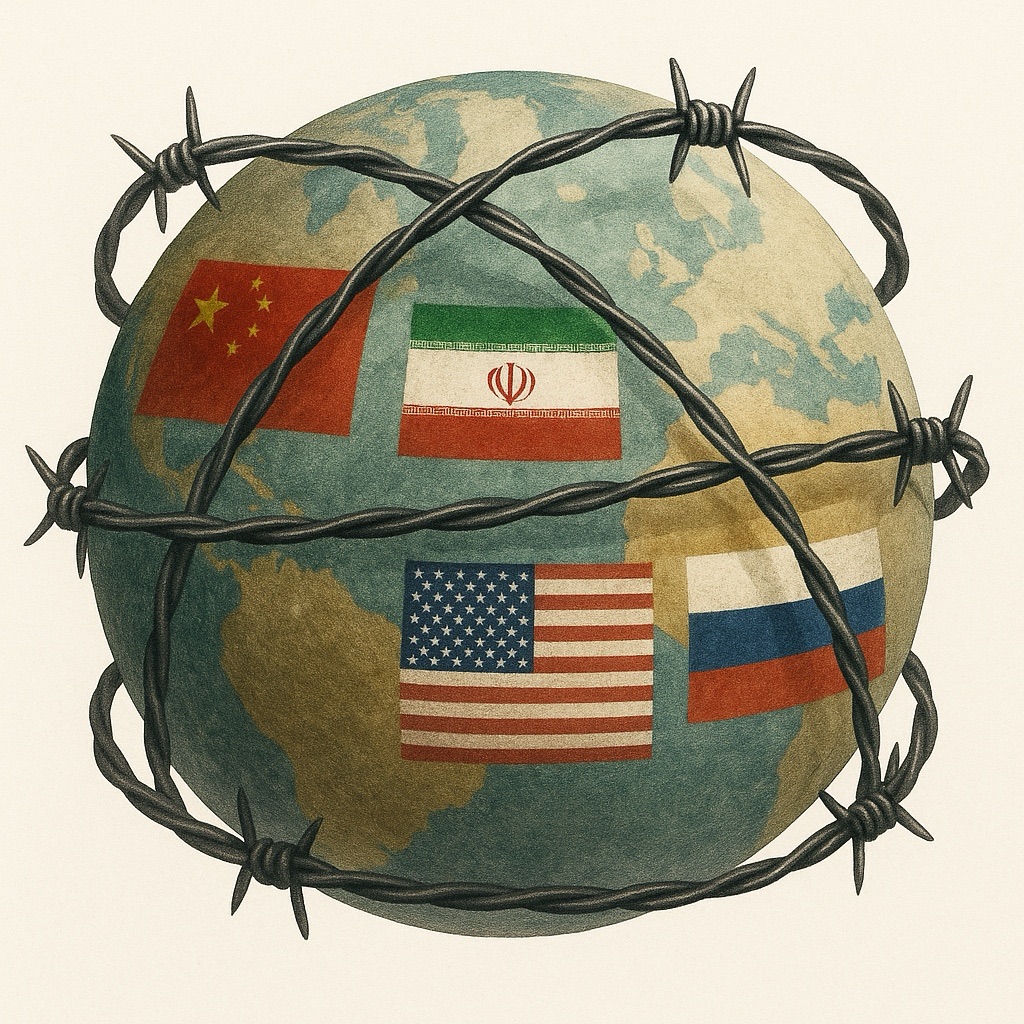
The international press has yet to grasp the dream surrounding the supposed liberation of Venezuela from a narco-state.     Venezuelans continue to wait indefinitely for liberation.    Beneath this hope lies a deeper bondage: the nation’s territory continues to be bound to multinational interests (Chinese, Russian, American, and others) driven not by ideology but by competition between investors and criminal networks.    For all of them, a prolonged conflict in Venezuela is convenient; it serves as a bridge to a regional metamorphosis and justifies the expropriation of the natural resources of the country; it aims at consolidating hemispheric dominance by the multinational interests.     The situation in Venezuela is therefore not only political but also structural; it is an experiment in which sovereignty is traded for access and resistance itself becomes a form of captivity.

The crisis in Venezuela reveals a moral conflict in modern politics:    how suffering can both be exploited and perpetuated when comprehension yields to fantasy.   The dream of liberation has become one of the nation’s most persistent fantasies.   Behind the language of emancipation lies a silent convergence of global interests; each one sustains the very conflict it claims to oppose.   In Venezuela, disorder legitimizes intervention and chaos provides the pretext for extraction.   In this sense, Venezuela is not merely a nation in distress but also a stage upon which the grammar of domination continues to be enacted through the vocabulary of deliverance

The challenge is no longer to imagine freedom as an external rescue but to comprehend how dependence disguises itself as salvation.  Only comprehension (the act of seeing beyond grievance and beyond consolation) can pierce the veil of liberation and restore meaning to the very idea of freedom.


Editor: Billy Bussell Thompson

“The Delusion of Authority: …

July 21, 2025

Power, Storytelling, and the Fear of Losing Significance

By Ricardo Morin, July 2025

Ricardo Morin
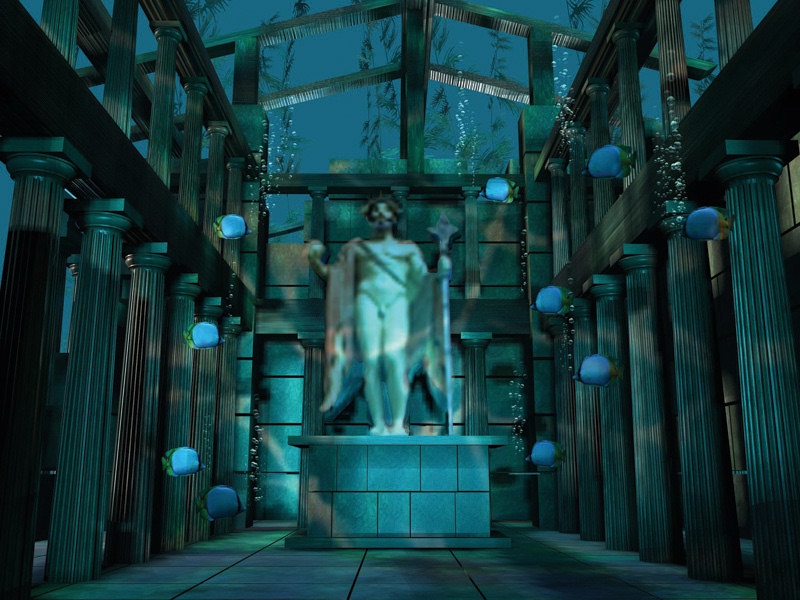
The Stilobato of Zeus Underwater
CGI
2003

Abstract

This essay examines the human mind’s compulsion to invent stories—not merely to understand reality, but to replace it. It explores how narrative becomes a refuge from the void, a form of self-authorship that seeks both meaning and control. The tension between rational observation and imaginative projection is not a flaw in human reason, but a clue to our instability: we invent to matter, to belong, and to assert that we are more than we fear we might be. At its core, this is a reflection on the seductive authority of story—the way it offers not just identity but grandeur, not just comfort but a fragile illusion of power. Beneath every myth may lie the terror of nothingness—and the quiet hope that imagination might rescue us from the fear of a diminished understanding of our own importance.

.

The Delusion of Authority: Power, Storytelling, and the Fear of Losing Significance

We tell stories to make sense of life. That much seems obvious. But if we look a little deeper, we may find that the stories we tell—about ourselves, our beliefs, our traditions, even our suffering—aren’t just about sense-making. They’re about power. Not always power over others, but something more private and often more dangerous: the power to feel central, secure, and superior in a world that rarely offers those guarantees.

This need shows up in ways that often appear noble: tradition, loyalty, virtue, cultural pride, spiritual clarity. But beneath many of these lies a hunger to be more than we are. To matter more than we fear we do. To fix the feeling that we are not quite enough on our own.

We don’t like to think of this as a thirst for power. It sounds selfish. But in its quieter form, it’s not selfishness—it’s survival. It’s the need to look in the mirror and see someone real. To look at the world and feel part of a story that means something. And when we don’t feel that, we make one up.

Sometimes it takes the shape of tradition: the rituals, the mottos, the flags. These things give us the illusion that we are part of something lasting, something sacred. But often, what they really do is offer us borrowed certainty. We repeat what others have repeated before us, and in that repetition we feel safe. We mistake performance for truth. This is how belonging becomes obedience—and how ritual becomes a mask that hides the absence of real thought.

Sometimes it takes the shape of insight. We adopt the language of spiritual clarity or mystical knowing. We speak in riddles, or listen to those who do. But often, this too is about authority: the idea that we can bypass doubt and land in a place of higher understanding. When we hear phrases such as “listen with all your being,” or “intellectual understanding isn’t real understanding,” we are being invited to give up reason in exchange for what feels like truth. But the feeling of truth is not the same as the hard work of clarity.

And sometimes, this hunger for centrality shows up in identity. We claim pain, pride, or history as a kind of moral capital. We say “my people” as if that phrase explains everything. And maybe sometimes it does. But when identity becomes a shield against criticism or a weapon against others, it stops being about belonging and starts being about authority—about who gets to speak, who gets to be right, who gets to be seen.

Even reason itself is not immune. We use logic, not only to understand, but to protect ourselves from uncertainty. We argue not only to clarify, but also to win. And slowly, without noticing, we turn the pursuit of truth into a performance of control.

All of this is understandable. The world is confusing. The self is fragile. And deep down, most of us are terrified of being insignificant. We fear being one more nameless voice in the crowd. One more moment in time. One more life that ends and disappears.

So we reach for authority. If we can’t control life, maybe we can control meaning. If we can’t escape time, maybe we can tell a story that lasts. But this, too, is a delusion—one that leads to suffering, to isolation, and to conflict.

Because when everyone is the center of their own story, when every group insists on its own truth, when every insight claims to stand above question—no one listens. No one changes. And no one grows.

But what if we gave up the need to be right, to be central, to be superior?

What if we didn’t need to be grand in order to be real?

What if we could tell stories not to control reality, but to share it?

That would require something more difficult than intelligence. It would require humility. The willingness to be small. To be uncertain. To live without authority and still live meaningfully.

This isn’t easy. Everything in us pushes against it. But perhaps this is the only path that leads us out of performance and into presence. Out of delusion and into clarity. Not the clarity of slogans or doctrine, but the clarity of attention—of seeing without needing to rule over what is seen.

We don’t need to be gods. We don’t need to be heroes. We just need to be human—and to stop pretending that being human isn’t already enough.

*

Annotated Bibliography

  • Arendt, Hannah: The Origins of Totalitarianism. New York: Harcourt, Brace & World, 1951. (A foundational study on how ideological certainty and group identity can undermine thought, clearing the way for emotional conformity and mass control.)
  • Beard, Mary: Twelve Caesars: Images of Power from the Ancient World to the Modern. Princeton: Princeton University Press, 2021. (Explores how images and stories of rulers are crafted to sustain the illusion of divine or inherited authority.)
  • Frankl, Viktor E.: Man’s Search for Meaning. Boston: Beacon Press, 2006. (Reflects on the will to meaning as a basic human drive, particularly under extreme suffering, showing how narrative can sustain dignity and life.)
  • Kermode, Frank: The Sense of an Ending: Studies in the Theory of Fiction. Oxford: Oxford University Press, 1967. (Examines how people impose beginnings, middles, and ends on chaotic experience, seeking structure through storytelling.)
  • Nietzsche, Friedrich: On the Genealogy of Morality. Translated by Carol Diethe. Edited by Keith Ansell-Pearson. Cambridge: Cambridge University Press, 2007. (Argues that moral systems often arise from resentment and masked power struggles rather than pure virtue or reason.)
  • Oakeshott, Michael: Rationalism in Politics and Other Essays. Indianapolis: Liberty Fund, 1991. (Critiques the rationalist impulse to systematize human life, warning against overconfidence in reason’s ability to master reality.)
  • Todorov, Tzvetan: Facing the Extreme: Moral Life in the Concentration Camps. Translated by Arthur Denner and Abigail Pollack. New York: Metropolitan Books, 1996. (Offers insight into how identity and morality hold—or collapse—under conditions that strip away illusion, highlighting the limits of narrative.)
  • Wallace, David Foster: This Is Water: Some Thoughts, Delivered on a Significant Occasion, about Living a Compassionate Life. New York: Little, Brown, 2009. (A short meditation on how default thinking shapes our perception and how awareness—not authority—offers a path to freedom.)

“Echoes of a Decanter”

March 5, 2025

*

This image has an empty alt attribute; its file name is 0005.jpg
Decantation [2003], CGI by Ricardo Morín

*


The air inside the old factory was thick with dust and conviction.      They had scrubbed the floors, repainted the walls, and reclaimed the space from its past, but the scent of rust and oil still lingered.      It smelled like work—like history.

Emil stood on a makeshift stage, elevated by wooden pallets stacked two high.      His voice carried across the room, each word striking with certainty.

“This is not another failed experiment.      This is not a return to old mistakes.      We are forging a new path—beyond capitalism, beyond the betrayals of so-called socialism.      This time, we get it right.”

Applause.      Nods of approval.      They had heard these words before, but this time, they believed them.

Isolde sat at the back, arms crossed, expression unreadable.      She had stood in this same room decades ago, listening to a different voice, hearing the same promise.      The factory, reborn each time, looked different, yet the space was always the same—a decanter of sorts, enclosing the same history, slowly pouring out its essence, again and again.

After the speech, as people gathered in small circles of animated discussion, Emil approached her.

“You don’t look convinced.”

“I don’t mistake passion for direction,” she said.

Emil smiled, as if indulging an elder.      “This time is different, Isolde.      We’ve studied history.      We won’t repeat their mistakes.”

She exhaled, looking past him to the crowd.      The factory hummed quietly behind them, a machine just starting to remember its old rhythms.      “You misunderstand history.      It’s not something you repeat.      It’s something that returns to you, whether you invite it or not.”

He shook his head.      He didn’t believe in ghosts.      But the air, thick with the weight of their past, seemed to hum with the same unspoken inevitability.      It reminded Isolde of something trapped within glass—preserved, yet futile in its attempts to remain unbroken. . .


The first weeks were golden.

Decisions were made by assembly.      Every worker had an equal say, an equal share, an equal stake.      The old machinery roared to life under new hands.      They printed new posters, declaring the rebirth of labor, the death of the boss.

For the first time, they worked for themselves.

But cracks, barely visible at first, began to form.

Meetings dragged for hours, circular debates with no resolution.      Some tasks were more desirable than others—some avoided the heavy lifting, citing ideological objections.      “Why should one person labor while another coordinates?”

“Because someone must,” Isolde murmured to herself.      Unheard.

Then came the first real crisis: a large order, a deadline, a need for efficiency.      The factory moved too slowly.      The assembly stalled.      Arguments flared.

“We need someone to oversee production,” Emil admitted.      “Just temporarily.”

A vote was cast.      A mediator was appointed.      He wasn’t a manager, they told themselves, just a guide.      But the balance had shifted.      The factory, like a vessel caught in an unrelenting tide, began to carry more than it could manage.

Isolde watched, saying nothing.


The mediator, needing to keep things moving, made quick decisions.      The assembly approved them after the fact.      The difference was subtle, but it grew.

Some workers were better at certain tasks, so roles solidified.      Someone had to negotiate with suppliers.      Someone had to ensure deadlines were met.      The mediator took on these roles, because it was easier.

“We need structure,” he explained.      “Not hierarchy, just order.”

Emil, exhausted, nodded.      The structure, which had once felt so free, began to settle into something heavier.      Something permanent.      Like the decanter that holds liquid—only to release it back into the world, though it never truly escapes its confines.

One evening, alone in his office—the office that wasn’t supposed to exist—he flipped through old books.      The words were familiar, but they read differently now.      He found a passage from an old revolutionary text, underlined by his own hand years ago:

“The first illusion of power is that it does not exist.”

He closed the book.      His fingers lingered on the edge of the paper, as though searching for something that had slipped away, like water escaping through a crack.


The next crisis arrived without warning.      A strike—among themselves.      Some demanded higher pay.      “Shouldn’t work be compensated by effort?”      They were equals, but some were more equal in labor than others.

Emil tried to reason with them.      “That’s not how this works.      We’re breaking that cycle.”

“Then why do you sit in the office while we sweat on the floor?”

He had no answer.

Another vote.      A restructuring.      A new proposal:      an oversight committee.      The committee became a board.      Outside investors offered financial stability.      A small compromise.      A necessary evil.

By the end of the year, the factory had become what it swore it never would.

Emil found Isolde in the break room, sipping tea.

“We tried,” he said.      “So did we,” she replied.

Silence.

“Why does it always end this way?” he asked.

Isolde set her cup down.      Her eyes met his, trapped in exhaustion, as though each glance carried the gravity of countless broken promises, like a fractured decanter.

“Because we are human.”


Years later, Emil walked past the factory.      It was thriving.      Not revolutionary.      Not a failure.      Just another business.

Inside, a new group of young activists had gathered.      Their leader, no older than he had been, stood on stacked wooden pallets, speaking with fire.

“We are not repeating the past.      We are forging a new path.      This time, we get it right.”

Emil did not stop to listen.

From the distance, Isolde watched.

“And so it begins again,” she whispered.

~

Ricardo Federico Morín Tortolero

March 5, 2025; Oakland Park, Florida