*
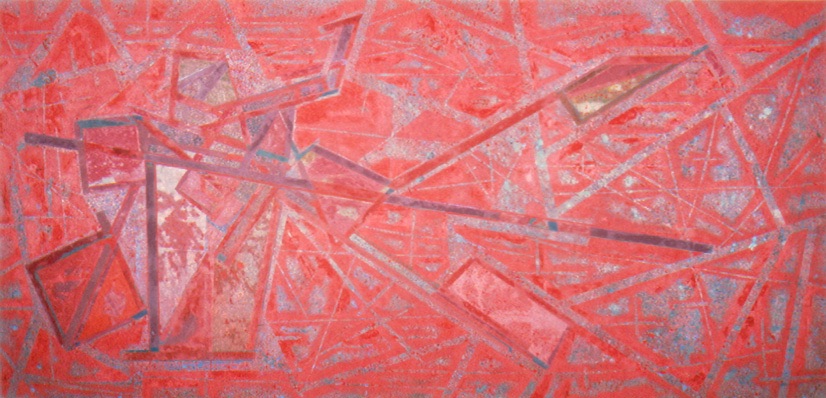
Buffalo Series, Nº 7
36″ x 78″
Oil on canvas
1979
In a public forum, one participant says: “This country was built by people who came from other places and settled here over time.” Another responds: “People who enter without authorization must be expelled.” Both statements remain. No one relates them to one another.
A participant on one side says: “My parents came here and became citizens.” From the other side, someone responds: “The law must be applied.” A third asserts: “There must be order.” No one asks how those people were received at the time. The statements remain separate.
Someone returns to the earlier point: “How was the situation of those people determined when they arrived?” The interlocutor does not respond. Another voice responds: “People must come through the proper channel.” The question does not hold. The exchange continues from the response.
From that moment on, each intervention turns toward the application of the law. No one asks under what conditions that law is applied or to whom it extends. One insists on borders. Another rejects politics. No one asks how the situation of people is determined. No one asks how those present are classified. The initial statements remain. They are not related to one another.
Then one participant repeats the earlier claim: “This country was built by people who came from other places.” Another repeats: “People who enter without authorization must be expelled.” For a moment, both statements are held together. No one determines whether the same conditions apply to both. No one asks whether one statement limits or includes the other. The moment passes.
Those who arrived under earlier conditions and those now subject to controls can be named. The same terms are not used for both.
The phrases continue to appear. They serve to defend positions and to oppose them. They do not return to the initial statements. They allow each participant to adopt a position without relating them.
In the end, both statements remain: one is not examined against the other, neither is withdrawn. They are left in place. The separation is maintained. The exchange continues without relating them.
*
Ricardo F. Morín
April 2026
In transit

