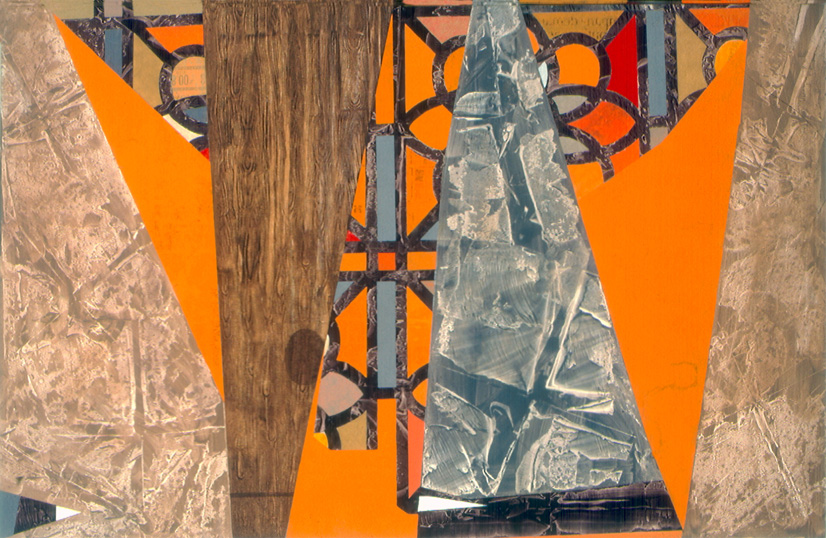
Ricardo F. Morín New York Series, Nº 11 54″ x 84″ Oil on canvas 1989
Ricardo F Morín
January 1, 2026
Oakland Park, Fl
The work began within a relationship marked by companionship and solidarity. Attention to language, discipline, and restraint developed through shared effort rather than assertion of authority. Standards were learned through proximity, conversation, and time. Whatever shape the writing later assumed did not arise in isolation; it took form within sustained exchange oriented toward craft.
For a time, that arrangement held. Growth moved in a common direction. Guidance clarified rather than constrained. Correction sharpened rather than narrowed. At that stage, there was no reason to imagine that continuation would require anything other than more work.
As the writing developed, friction appeared without a clear source. Questions emerged that did not settle easily. Revisions accumulated without resolving what they were meant to address. What had once felt like refinement began to feel like adjustment, though the difference was not immediately clear. The work continued, but with more hesitation.
Gratitude complicated recognition. What had been received was evident and could not be denied. To question the present form of the relation felt premature, even ungrateful. Endurance seemed preferable to interruption, especially while uncertainty could still be explained as part of growth.
Over time, small signs accumulated. Decisions were postponed. Directions shifted after agreement. Suggestions were acknowledged but returned unchanged. The writing slowed. Nothing dramatic occurred, but progress no longer felt proportionate to effort.
Attempts were made to restore balance. Clarifications were offered. Adjustments were accepted. The hope was that refinement of terms might recover the earlier ease of movement. Instead, the same tension reappeared, differently framed, without resolving what had prompted it.
At a certain point, the difficulty could no longer be treated as temporary. Continuing began to require forms of accommodation that altered how judgment operated while writing. Choices were made to preserve the relation rather than the work. What was being protected became harder to name.
Recognition did not arrive as certainty. It arrived as a limit. There were things the work could no longer do without distortion. There were directions it could no longer take without resistance that did not diminish over time.
Rupture followed hesitation, delay, and resistance. It did not resolve anything cleanly. It ended a form of continuity that had once been formative. What was relinquished was not gratitude, but dependence. What remained was the work itself, now proceeding without mediation.
The cost of rupture was not conflict, but exposure. Standards had to be held without reinforcement. Decisions could no longer be deferred. Failure, if it came, would no longer be shared.
Nothing in the rupture erased what had been learned. It marked the point at which learning could no longer continue in the same form. What followed was not freedom in the abstract, but authorship in the strict sense: judgment carried without shelter.
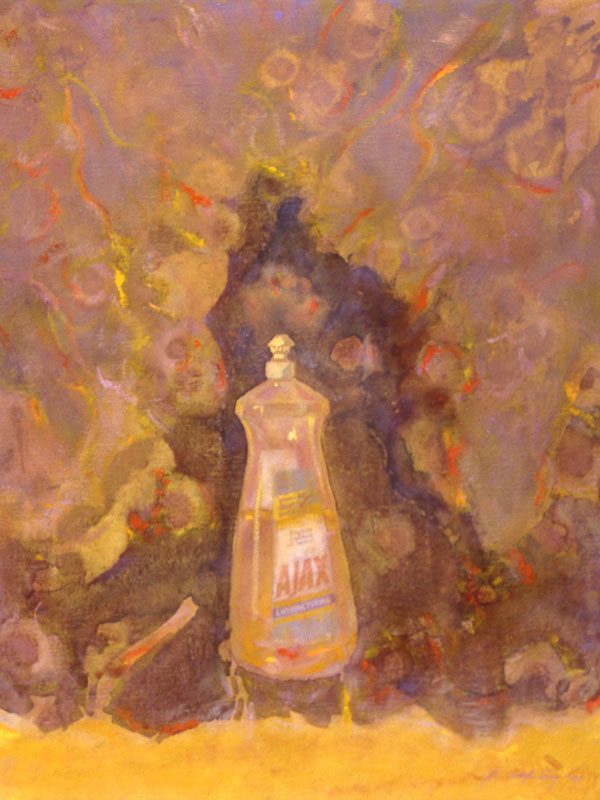
Ricardo F. Morín My Nest 24′”x30″ Oil on linen 1999
Ricardo F. Morín
January 1, 2026
Oakland Park, Fl
*
Help was not offered casually. It was offered over time, shaped by history, familiarity, and a belief that loyalty required staying present when circumstances were unsettled. Unclear commitments were accepted with the expectation that steadiness might compensate for instability, and that patience would allow clarity to arrive where it had not yet appeared.
As time passed, those commitments became harder to anticipate. Plans shifted after they were accepted. Expectations changed without being stated. What had been agreed to one week was revised the next. Each adjustment was absorbed rather than challenged. Meetings no longer produced decisions. Agreements no longer survived the week. The effort to remain fair became an effort to remain adaptable. What was not confronted was carried.
There was hesitation in naming what was occurring. Doing so felt severe. It risked appearing uncharitable or impatient. Silence often seemed preferable to objection, not because nothing was seen, but because what was seen resisted easy articulation. Silence, once a form of restraint, had ceased to clarify anything. Endurance appeared safer than judgment.
Gradually, the effects of that endurance became visible. Loyalty did not stabilize the situation. It prolonged it. The more uncertainty was accommodated, the more it became the organizing condition. Commitments lost their edges. Responsibility dispersed. Care, extended without limit, ceased to correct anything and instead made instability easier to sustain.
At one point, a friend chose a different posture. He remained attentive, but at a distance. He did not intervene repeatedly or attempt to steady what showed no sign of holding. At the time, that distance was easy to misread. Commitment, as it was then understood, appeared to require proximity. Restraint looked like withdrawal.
Only later did the significance of that posture become clear. What had appeared passive was a form of orientation. Limits had been recognized earlier, and conduct adjusted accordingly. Distance had not signaled indifference, but an understanding that presence, under unstable conditions, does not always improve outcomes. The difference lay not in intention, but in timing.
This recognition unsettled earlier assumptions. Proximity had been mistaken for responsibility. Endurance had been treated as virtue without asking whether it was sustaining anything beyond the appearance of care. What felt like loyalty had, in part, become permission. The most difficult admission was not about the actions of others, but about the role played in allowing those actions to continue without consequence.
Distance did not follow immediately. It came after repeated attempts to restore proportion, after explanations failed to hold, and after silence ceased to clarify anything. Withdrawing was not a rejection of concern. It was the only remaining way to prevent concern from being consumed by unpredictability. It was a way of preserving judgment, preventing concern from being consumed by unpredictability, and leaving open the possibility that conditions might yet change
Refusal, understood in this way, is not dramatic. It does not accuse or announce itself. It does not seek recognition. It withdraws consent quietly and allows arrangements either to stabilize or to reveal their own limits. What ends is not care, but participation in conditions that require self-deception to endure.
This form of refusal is not moral superiority. It is responsibility turned inward. It begins when remaining present requires abandoning one’s own judgment, and when loyalty, left unchecked, undermines what it was meant to protect. Silence, at that point, does not evade obligation. It restores coherence.
The act is restrained. Its consequences are durable. By stepping back, one ceases to supply the energy on which instability depends. What remains intact is judgment without foreclosing the possibility of renewal should proportion be restored. What is relinquished is the belief that endurance is always ethical—and refusal becomes the means by which clarity, rather than rupture, is maintained.
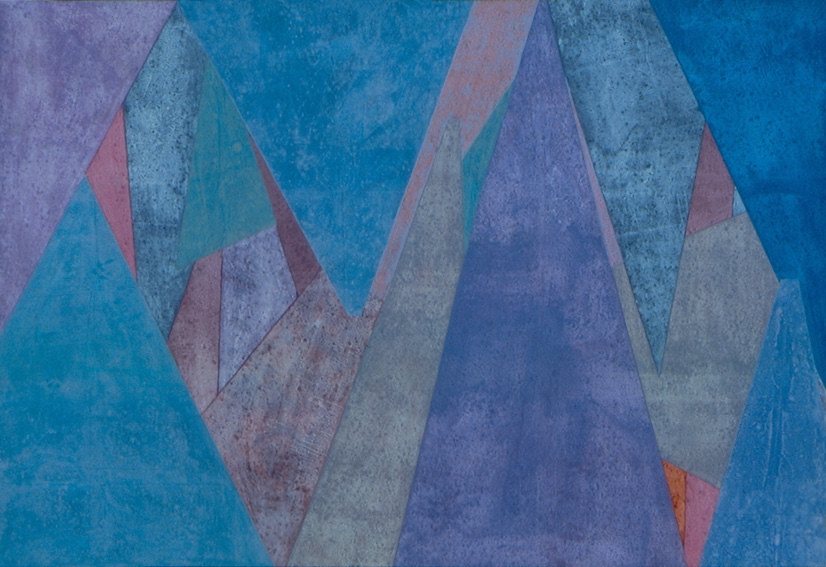
Ricardo Morín Bulwark Formerly titled Buffalo Series, Nº 3 Oil on linen, 60 × 88 in. 1980 Exhibited: Hallwalls Contemporary Arts Center, Buffalo, New York, May 1980 Destroyed while in third-party custody; extant as digital archival record only.
*
Ricardo F. Morin
December 23, 2025
Kissimmee, Fl
*
I did not encounter the boundaries that would later govern my writing either through instruction or doctrine, but through a remark made in passing by my father when I was still a child. He stated, without hesitation or elaboration, that he could not imagine existing under a political system that threatened individual liberty and private autonomy, and that life under such conditions would no longer be a life he could inhabit. The formulation was extreme, yet even then it was clear that it was not intended as a proposal, a threat, or a performance. It functioned instead as a boundary: an indication of where survival, once stripped of dignity, would no longer merit the name of living.
The force of that remark did not reside in its literal content, but in the clarity with which it established a limit. Extreme statements often draw attention by excess, but this one operated differently. It did not seek reaction or allegiance. It closed a door. What it marked was the point at which judgment ceased to be negotiable—not because compromise becomes difficult, but because continuation itself loses coherence. What it marked was not expression but diagnosis. It identified a threshold beyond which endurance would amount to acquiescence in one’s own negation.
That distinction—between living and merely persisting—would take years to acquire its full weight. One can remain alive and yet no longer inhabit the conditions under which action, responsibility, and choice remain intelligible. The body endures; the terms of authorship do not. What is surrendered in such cases is not comfort or advantage, but authorship over one’s own conduct: the capacity to remain the source and bearer of one’s actions.
Only later did historical irony give that childhood memory a broader frame. My father died one year before Venezuela entered a prolonged political order that normalized civic humiliation and displaced individual responsibility.This coincidence does not confer foresight or vindication.It merely underscores the nature of the limit he articulated.He did not claim to predict outcomes or to possess superior insight. He identified a condition he would not inhabit, regardless of how common, administratively justified, or socially enforced it might become.
What was transmitted through that remark was not an ideology, nor even a political position, but a refusal. It was a refusal to treat dignity as contingent, and a refusal to accept adaptation as inherently neutral. Such refusals are not dramatic. They do not announce themselves as virtues. They operate quietly, shaping what one will not do, what one will not say, and what one will not permit to pass through one’s actions in exchange for continuity, safety, or approval.
Writing, I have come to understand, is not exempt from the constraints that govern action. Symbolic form does nor suspend responsibility. Language acts. It frames possibilities, distributes responsibility, and licenses certain responses while it forecloses others. To write without regard for what one’s words enable is to treat expression and conduct as if they belonged to different orders. They do not. The same boundary that governs action governs language: one must not inhabit forms that require the habitual abandonment of autonomy.
Authorial responsability does not entail moral exhibition or the performance of virtue. Responsibility in writing does not consist in adopting the correct posture or aligning with approved conclusions. It consists in refusing methods that rely on coercion, humiliation, or rhetorical pressure in place of clarity. It requires attention not only to what is asserted, but to what is permitted to continue through tone, implication, and omission. Precision here is not a stylistic preference; it is a moral discipline.
Restraint, in this sense, is not passivity but a method of authorship. It is a form of interruption in the circulation of what one does not consent to carry forward. To decline to amplify what one does not consent to carry is an act of selection, and an exercise of agency. In an environment where excess, outrage, and reactive urgency are often mistaken for seriousness, restraint becomes a way of maintaining authorship over one’s participation. Restraint limits reach, but it preserves coherence between what is said and what is lived.
Such restrain inevitably carries a cost. Urgency is more than speed; it is the condition under which reflection itself begins to appear as a liability. Reflection serves as a procedural safeguard of agency and authorship—and, with them, of ethical responsibility—even when circumstances cannot be governed and one is compelled to choose within constraint. Restraint resists urgency, narrows reach, and foregoes certain forms of recognition. These losses are not incidental; they are constitutive. To accept all available registers or platforms in the name of relevance is to treat survival as the highest good. The boundary articulated long ago indicates otherwise: that there are conditions under which continuation exacts a price too high to pay.
Authorial responsibility, then, is not a matter of expression but of alignment between language and action. It asks whether one’s language inhabits the same ethical terrain as one’s conduct. It asks whether the forms one adopts require compromises one would refuse in action. The obligation is not to persuade or to prevail, but to remain answerable to the limits one has acknowledged.
What remains is not a doctrine but a stance: a stance standing without dramatization, without escape, and without concession to forms that promise endurance at the expense of dignity. Such a posture does not announce itself as resistance, nor does it seek exemption from consequence. It holds its ground without appeal. In doing so, it affirms that authorship—like autonomy—begins where certain lines are no longer crossed.
*
What remains unaddressed is the more fragile condition beneath authorship itself: the way thinking precedes command, and at times repositions the author before any stance can be assumed.
The memory of my father appears as a moving target—not an idea slipping out of control, but it is a standard shifting under my feet while I was still advancing. I did not invite it in the sense of intention or plan. Nor did I resist it. I noticed it moving before I could decide what it demanded.
That experience is unsettling because it violates a comforting assumption: that thought is something we deploy, rather than something that displaces us.
The uncertainty about whether I had invited it is itself a sign that I was not instrumentalizing my thinking. When thought is summoned as a tool, it remains fixed. When it emerges in response to something that matters, it moves, because it is adjusting to reality rather than arranging it. That movement feels like a loss of control only if authorship is understood as command.
I allowed the discomfort of not knowing whether I had summoned what was now demanding attention only if authorship is understood as control. This was resistance under motion, not paralysis of judgment. The question arises only when thinking is still alive enough to be displaced.
The target moved because it was attached to the terrain of perception, not to the self doing the perceiving.
 Observations On Perception