Posts Tagged ‘diagnostic writing’

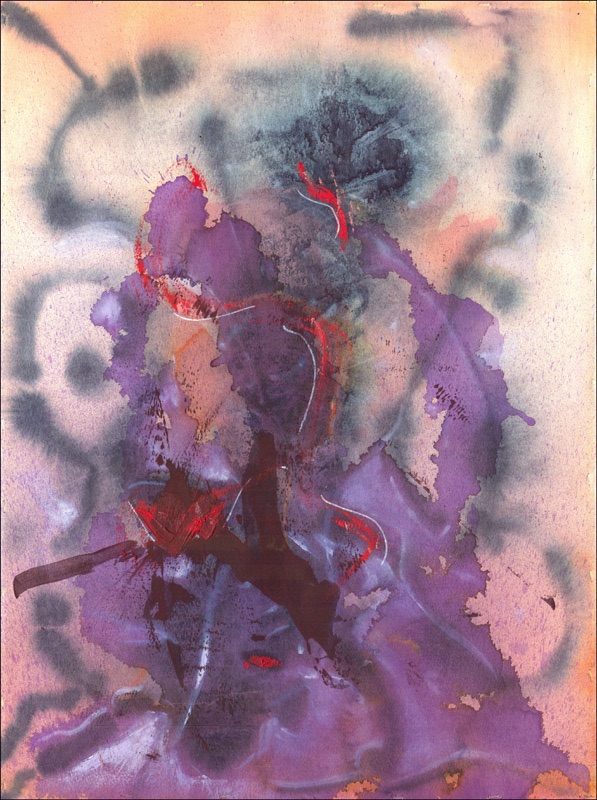
“UNTITLED”

September 2, 2026
Untitled 013
22″ x 30″
Watercolors, charcoal, oil, white-out and ink on paper
2006

*

*

PREFATORY THRESHOLD

This text speaks from before knowing.  It does not begin from opposition or certainty, but from attention.  It was written without an imagined adversary and without the expectation that clarity must arrive through force.  What follows is not an effort to prevail, but an effort to remain intact in the face of reduction.  It resists haste not as a stylistic preference, but as an ethical necessity.  If it asks anything of the reader, it is only this:  to allow thought to unfold without being pressed into position too quickly, and without mistaking firmness for hardness.  What follows was written to be answerable to itself before it was released to others.

AUTHOR’S NOTE

i.  Certain explanatory habits persist across cultures with remarkable resilience.  Among them is the tendency to attribute intellectual capacity to lineage, proximity to power, or inherited authority, while treating social order as evidence of cognitive superiority.  This tendency presents itself as realism.  It often claims to see through idealism, sentiment, or abstraction, offering instead a hierarchy of who thinks and who merely follows.  Yet this posture rests on a conceptual shortcut:  it conflates intelligence with authority, competence with legitimacy, and institutional efficiency with civic authorship.

ii.  Such reasoning is not confined to any one society or political system.  It appears wherever technical success is mistaken for intellectual depth, and wherever constraint on expression is interpreted as proof of cultural immaturity rather than as a condition requiring separate examination.  In these contexts, intelligence is presumed to reside in visible centers of power or wealth, while its broader social distribution remains unexamined.  The result is a recurring fallacy:  the reduction of intellectual life to pedigree, affiliation, or command, rather than to the slow, cumulative reproduction of cognitive capacity across a society.

iii.  The pages that follow proceed from the premise that this fallacy can be examined without polemic and without recourse to moral ranking.  They do so by separating what is often collapsed:  intellectual maturity, civic agency, and political structure.  By attending carefully to population-level indicators and institutional continuity, the analysis seeks to clarify how intelligence circulates, how it is reproduced, and under what conditions it adapts.  The aim is not to correct opinion, but to render certain assumptions untenable once their terms are made explicit.

Ricardo F Morín

Dec. 23, 2025

Kissimmee, Fl


1.  Claims about the intellectual character of societies often circulate without reference to how such claims could be tested.  They rely instead on surface indicators—visible wealth, administrative order, or the presence of foreign professionals—and treat these as sufficient evidence of cognitive hierarchy.  In this way, intelligence is inferred from outcomes rather than examined as a social condition.  What remains unasked is whether intellectual capacity is narrowly concentrated or broadly reproduced, whether it is episodic or sustained, and whether it belongs to a few visible actors or to the structure of society itself.

2.  To address this gap, it is necessary first to separate questions that are routinely collapsed.  Intellectual maturity refers to the distribution of learned capacity within a population:  literacy, analytical competence, and the ability to engage with complex systems over time.  Civic agency concerns the extent to which members of a society participate in the authorship of political norms and decisions.  Political structure describes how authority is organized and exercised.  None of these can be inferred reliably from the others.  A society may display high levels of cognitive competence while limiting political participation, just as a system may permit formal participation without cultivating broad intellectual depth.

3.  Once these distinctions are held, the inquiry can proceed on empirical rather than impressionistic grounds.  The question is no longer who appears to govern effectively or who occupies visible positions of expertise, but how intellectual capacity is reproduced across a population.  This shifts attention to measurable features:  population composition, access to education, continuity of learning across generations, and the dispersion of professional competence.  These indicators do not capture the full texture of intellectual life, but they do establish whether intelligence functions as a social norm or as a specialized exception.

4.  Population structure is the first of these features.  The proportion of citizens to non-citizens, the permanence of residency, and the pathways through which individuals are incorporated into social institutions all bear directly on claims of intellectual self-reliance.  Where a society depends heavily on transient or externally sourced populations for skilled labor, intellectual capacity may be present without being socially reproduced.  Conversely, where the majority of the population passes through shared educational and civic institutions, cognitive competence is more likely to become a generalized condition rather than a segmented one.

5.  Education, in this sense, is not treated as an index of prestige or international ranking, but as a mechanism of continuity.  What matters is not the existence of elite institutions, but whether learning is organized as a public system through which successive cohorts acquire comparable capacities.  When educational access is uneven, discontinuous, or stratified by origin, intellectual life tends to cluster.  When it is broadly accessible and institutionally stable, cognitive competence diffuses across social strata, becoming an ordinary feature of the society rather than an exceptional attribute of a few.

6.  Comparable learning assessments, while necessarily limited, provide a further point of orientation.  Their value lies less in absolute ranking than in the dispersion of results.  A system in which high performance is confined to a narrow segment differs fundamentally from one in which competence is widely distributed and low performance is comparatively rare.  When variance is low and outcomes cluster toward shared standards, intellectual capacity functions as a collective baseline.  When variance is high, intelligence appears as an unevenly allocated resource, often reinforcing existing social or institutional divisions.

7.  Workforce composition extends this analysis beyond schooling into adult social life.  The question here is whether professional and technical competence emerges predominantly from within the society or is supplied from outside it.  Where expertise is internally generated, careers form predictable trajectories that link education, training, and institutional participation over time.  Where expertise is externally concentrated, knowledge circulates instrumentally, often detached from long-term social integration.  In such cases, intellectual capacity may sustain systems effectively without becoming a shared social inheritance.

8.  When these elements are considered together—population structure, educational continuity, learning dispersion, and workforce formation—a clearer picture of intellectual life emerges.  The issue is no longer whether intelligence is present, but whether it is socially anchored.  An intellectually self-reliant society is one in which cognitive competence persists independently of particular individuals or external inflows, because it is reproduced through ordinary institutional pathways.  Where such anchoring is absent, intellectual life may remain visible and effective, yet it functions as an adjunct to the system rather than as a property of the society itself.

9.  Political constraint enters the analysis at this point as a separate consideration.  Limits on civic agency shape how intellectual life is expressed, not whether it exists.  Where participation in political authorship is restricted, individuals and institutions adjust by directing intellectual effort toward domains that remain accessible:  administration, technical problem-solving, economic organization, and academic inquiry.  This adjustment does not diminish cognitive capacity, but it alters the pathways through which intelligence circulates, favoring modes of expression that are compatible with institutional stability and personal security.

10.  Such adaptation should not be mistaken for intellectual passivity.  It reflects an awareness of boundaries rather than their absence.  Where civic agency is constrained, intellectual life often assumes a transactional character, advancing through alignment, reformulation, and indirect influence rather than open contestation.  This mode of circulation allows intelligence to remain active and cumulative while avoiding unnecessary exposure.  The presence of constraint, therefore, does not negate intellectual maturity;  it defines the conditions under which that maturity is exercised and sustained.

11.  These considerations allow the analysis to move from general structure to a specific empirical case without altering its terms.  Singapore presents a society in which intellectual maturity is not confined to visible elites or foreign enclaves, but is reproduced internally across the population through stable educational pathways, shared linguistic frameworks, and predictable institutional trajectories.  The presence of political constraint does not obscure this pattern;  it clarifies it.  Intellectual life remains socially anchored and cumulative, even as its public expression is shaped by the limits placed on civic authorship.

12.  A different configuration appears where intellectual capacity is not socially reproduced at scale but assembled through external concentration.  In Qatar and Dubai, technical and professional competence is highly visible and often effective, yet it is demographically segmented and institutionally detachable.  Expertise enters these systems largely through contractual or expatriate pathways, circulates instrumentally, and exits without forming a cumulative social inheritance.  In such contexts, intellectual life supports governance and economic performance, but it does not become a generalized condition of the citizenry, nor does it generate expectations of civic authorship.

13.  The contrast between these formations is therefore not a matter of cultural refinement or comparative intelligence.  It turns on whether intellectual maturity is embedded in the ordinary reproduction of society or appended to it as a functional resource.  Where intelligence is socially distributed, it persists even under political constraint and shapes expectations across generations.  Where it is externally concentrated, it remains contingent on continued importation and administrative management.  Treating these configurations as variations of the same model obscures the structural conditions under which intellectual life either takes root or remains peripheral to the society that hosts it.

14.  It is at this juncture that the neocolonial fallacy becomes fully visible.  By attributing intellectual capacity to foreign origin, visible authority, or inherited command, it misreads structural dependence as cognitive superiority and social reproduction as mere execution.  The fallacy persists because it draws its confidence from outcomes rather than from processes, mistaking managed efficiency for intellectual depth and treating constraint as evidence of immaturity.  Once the distinction between socially reproduced intelligence and externally concentrated expertise is held, this mode of reasoning loses its explanatory force, not through rebuttal, but through exposure of the assumptions on which it relies.

15.  Once these distinctions are maintained, certain claims no longer remain available.  Assertions that equate order with intelligence, or that locate intellectual capacity primarily in foreign provenance, cease to function as descriptions and can only persist as gestures of authority.  What remains is a bounded field in which societies may be examined without recourse to pedigree or presumption:  by the ways intelligence is reproduced, constrained, or assembled, and by the limits such arrangements place on civic authorship.  Beyond that boundary, comparison gives way to classification, and the fallacy that initiated the inquiry no longer governs how the facts may be read.

16.  At that point, the inquiry closes of its own accord.  When intellectual life is examined as a function of social reproduction rather than lineage or command, the terms that sustain neocolonial comparison no longer apply.  What remains is not a hierarchy to be defended or overturned, but a set of conditions that delimit what can plausibly be said about intelligence, authority, and society.  The analysis does not ask for agreement;  it leaves behind a narrower field in which claims must now stand or fall by the structures they invoke, rather than by the confidence with which they are asserted.

EPILOGIC THRESHOLD

This text speaks from after having seen.  Nothing that has been examined here requires assent.  But some ways of speaking no longer remain neutral once their conditions have been made visible.  After attending to how intelligence is reproduced, constrained, or assembled, certain reductions cannot be returned to without cost.  What remains is not a conclusion to defend, but a narrower field in which claims now stand exposed to the structures they rely upon.  If the text leaves anything behind, it is this responsibility:  not to undo with ease what required care to see.


APPENDIX:  ANNOTATED BIBLIOGRAPHY

OECD (Organisation for Economic Co-operation and Development).  2019.  PISA 2018 Results (Volume I):  What Students Know and Can Do.  Paris:  OECD Publishing.  https://www.oecd.org/pisa/publications/pisa-2018-results-volume-i-5f07c754-en.htm.

OECD (Organisation for Economic Co-operation and Development).  2019.  PISA 2018 Results:  Country Profiles—Singapore, Qatar, United Arab Emirates.  Paris:  OECD.  https://gpseducation.oecd.org/.

OECD (Organisation for Economic Co-operation and Development).  2023.  Education at a Glance 2023:  OECD Indicators.  Paris:  OECD Publishing.  https://www.oecd.org/education/education-at-a-glance/.

Singapore Department of Statistics.  2023.  Population Trends 2023.  Singapore.  https://www.singstat.gov.sg/publications/population/population-trends.

Singapore Ministry of Education.  2022.  Education Statistics Digest.  Singapore.  https://www.moe.gov.sg/resources/statistics.

Qatar Planning and Statistics Authority.  2023.  Qatar Statistical Yearbook.  Doha.  https://www.psa.gov.qa/en/statistics/Statistical%20Yearbook/.

Federal Competitiveness and Statistics Centre (United Arab Emirates).  2023.  Statistical Yearbook of the United Arab Emirates.  Abu Dhabi.  https://fcsc.gov.ae/en-us/Pages/Statistics/StatisticalYearbook.aspx.

World Bank.  2023.  World Development Indicators.  Washington, DC.  https://databank.worldbank.org/source/world-development-indicators.

UNDP (United Nations Development Programme).  2022.  Human Development Report 2021/2022.  New York.  https://hdr.undp.org/content/human-development-report-2021-22.

“Bulwark”

January 25, 2026

Ricardo Morín
Bulwark
Formerly titled Buffalo Series, Nº 3
Oil on linen, 60 × 88 in.
1980
Exhibited: Hallwalls Contemporary Arts Center, Buffalo, New York, May 1980
Destroyed while in third-party custody; extant as digital archival record only.

*

I did not encounter the boundaries that would later govern my writing either through instruction or doctrine, but through a remark made in passing by my father when I was still a child.   He stated, without hesitation or elaboration, that he could not imagine existing under a political system that threatened individual liberty and private autonomy, and that life under such conditions would no longer be a life he could inhabit.  The formulation was extreme, yet even then it was clear that it was not intended as a proposal, a threat, or a performance.   It functioned instead as a boundary:   an indication of where survival, once stripped of dignity, would no longer merit the name of living.

The force of that remark did not reside in its literal content, but in the clarity with which it established a limit.   Extreme statements often draw attention by excess, but this one operated differently.  It did not seek reaction or allegiance.  It closed a door.   What it marked was the point at which judgment ceased to be negotiable—not because compromise becomes difficult, but because continuation itself loses coherence. What it marked was not expression but diagnosis.  It identified a threshold beyond which endurance would amount to acquiescence in one’s own negation.

That distinction—between living and merely persisting—would take years to acquire its full weight.  One can remain alive and yet no longer inhabit the conditions under which action, responsibility, and choice remain intelligible.  The body endures; the terms of authorship do not.  What is surrendered in such cases is not comfort or advantage, but authorship over one’s own conduct:  the capacity to remain the source and bearer of one’s actions.

Only later did historical irony give that childhood memory a broader frame.  My father died one year before Venezuela entered a prolonged political order that normalized civic humiliation and displaced individual responsibility.   This coincidence does not confer foresight or vindication.   It merely underscores the nature of the limit he articulated.   He did not claim to predict outcomes or to possess superior insight.  He identified a condition he would not inhabit, regardless of how common, administratively justified, or socially enforced it might become.

What was transmitted through that remark was not an ideology, nor even a political position, but a refusal.  It was a refusal to treat dignity as contingent, and a refusal to accept adaptation as inherently neutral.  Such refusals are not dramatic.   They do not announce themselves as virtues.   They operate quietly, shaping what one will not do, what one will not say, and what one will not permit to pass through one’s actions in exchange for continuity, safety, or approval.

Writing, I have come to understand, is not exempt from the constraints that govern action.   Symbolic form does nor suspend responsibility.   Language acts.   It frames possibilities, distributes responsibility, and licenses certain responses while it forecloses others.   To write without regard for what one’s words enable is to treat expression and conduct as if they belonged to different orders.   They do not.   The same boundary that governs action governs language:   one must not inhabit forms that require the habitual abandonment of autonomy.

Authorial responsability does not entail moral exhibition or the performance of virtue.   Responsibility in writing does not consist in adopting the correct posture or aligning with approved conclusions.   It consists in refusing methods that rely on coercion, humiliation, or rhetorical pressure in place of clarity.   It requires attention not only to what is asserted, but to what is permitted to continue through tone, implication, and omission.   Precision here is not a stylistic preference; it is a moral discipline.

Restraint, in this sense, is not passivity but a method of authorship.  It is a form of interruption in the circulation of what one does not consent to carry forward.   To decline to amplify what one does not consent to carry is an act of selection, and an exercise of agency.   In an environment where excess, outrage, and reactive urgency are often mistaken for seriousness, restraint becomes a way of maintaining authorship over one’s participation.   Restraint limits reach, but it preserves coherence between what is said and what is lived.

Such restrain inevitably carries a cost.   Urgency is more than speed; it is the condition under which reflection itself begins to appear as a liability.   Reflection serves as a procedural safeguard of agency and authorship—and, with them, of ethical responsibility—even when circumstances cannot be governed and one is compelled to choose within constraint.  Restraint resists urgency, narrows reach, and foregoes certain forms of recognition.   These losses are not incidental; they are constitutive.  To accept all available registers or platforms in the name of relevance is to treat survival as the highest good.   The boundary articulated long ago indicates otherwise:   that there are conditions under which continuation exacts a price too high to pay.

Authorial responsibility, then, is not a matter of expression but of alignment between language and action.   It asks whether one’s language inhabits the same ethical terrain as one’s conduct.  It asks whether the forms one adopts require compromises one would refuse in action.   The obligation is not to persuade or to prevail, but to remain answerable to the limits one has acknowledged.

What remains is not a doctrine but a stance:   a stance standing without dramatization, without escape, and without concession to forms that promise endurance at the expense of dignity.   Such a posture does not announce itself as resistance, nor does it seek exemption from consequence.   It holds its ground without appeal.   In doing so, it affirms that authorship—like autonomy—begins where certain lines are no longer crossed.


*

What remains unaddressed is the more fragile condition beneath authorship itself:   the way thinking precedes command, and at times repositions the author before any stance can be assumed.

The memory of my father appears as a moving target—not an idea slipping out of control, but it is a standard shifting under my feet while I was still advancing.   I did not invite it in the sense of intention or plan.   Nor did I resist it.   I noticed it moving before I could decide what it demanded.

That experience is unsettling because it violates a comforting assumption:   that thought is something we deploy, rather than something that displaces us.

The uncertainty about whether I had invited it is itself a sign that I was not instrumentalizing my thinking.   When thought is summoned as a tool, it remains fixed.   When it emerges in response to something that matters, it moves, because it is adjusting to reality rather than arranging it.   That movement feels like a loss of control only if authorship is understood as command.

I allowed the discomfort of not knowing whether I had summoned what was now demanding attention only if authorship is understood as control.   This was resistance under motion, not paralysis of judgment.   The question arises only when thinking is still alive enough to be displaced.

The target moved because it was attached to the terrain of perception, not to the self doing the perceiving.

*

Ricardo F. Morin, December 23, 2025, Kissimmee, Florida.


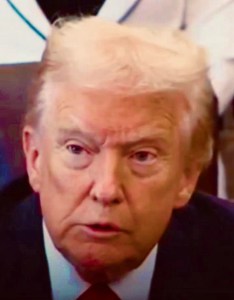
“Portrait of a President”

December 12, 2025

This text is not an argument for or against a political figure, nor an exercise in moral adjudication.    It is a diagnostic portrait grounded in publicly documented actions, observable conduct, and historically verifiable record.    Where legal distinctions matter, they are observed; where perception diverges from motive, that divergence is examined rather than dismissed.

The purpose of the portrait is not to negate the experiences of those who perceive sincerity or warmth in the subject, but to place such perceptions within a broader structure of behavior over time.    Momentary affect (Affeck), private demeanor, and selective encounters are not treated here as evidence of character continuity, but as elements that coexist—sometimes uneasily—with patterns that have had public consequence.

This approach also governs how claims about exceptional capacity are handled.    Assertions that substitute myth for evidence—such as declarations of near-superhuman intelligence—are not taken at face value.    Whatever one makes of erratic reasoning, procedural confusion, or repeated misapprehension of legal and institutional constraints, such claims require the suspension of observable reality.    In this sense, they function less as description than as compensation:    they are attempts to reconcile dissonance with an image of mastery.    When coherence falters, recourse shifts elsewhere.    Validation through untruth does not illuminate capacity; it neutralizes contradiction.

No medical, psychological, or pathological claims are advanced.    The analysis remains strictly within the realm of conduct, posture, and recurrence.    Interpretation is offered where warranted; restraint is exercised where fact alone must suffice.

Readers inclined toward affirmation or rejection are invited to suspend both impulses.    The text asks only that actions be considered in sequence, and that patterns be examined without haste.    Agreement is not presumed; careful reading is.

Ricardo F. Morín

Dec. 2025

Oakland Park, Florida

Billy Bussell Thompson, Editor


A Diagnostic Essay on Power, Posture, and Historical Pattern

What follows does not treat the body as evidence of interior disposition, but as a public surface upon which habits of power, repetition, and assertion have settled over time.

At the threshold of his ninth decade, the president’s physiognomy does not merely register the natural course of aging, but a progressive separation between impulse and restraint, between reflex and those mechanisms that once might have moderated it.    What appears is not absence, but misalignment:    capacities that persist without coordination, reactions that proceed without mediation.

The depletion of mental reserves is visible in the face as sustained tension.    Within it coexist—without reconciliation—ambition and denial, assertion and fragility.    The friction between lived reality and unyielding aspiration registers as hardened pride, resistant to revision.

This disjunction was already visible decades ago.    In 1989, during the Central Park gang-rape case in New York City, he acted publicly with a full-page newspaper advertisement that asserted guilt and called for severe punishment of five young men who had not yet been tried.    That impulsive certainty contributed to the hardening of public condemnation and accompanied years of wrongful incarceration before their eventual exoneration.    That judgment was not revisited.    The episode did not merely reveal error; it revealed an instinctive structure:   certainty displacing deliberation, accusation preceding process.

The same insistence on continuity over correction appears elsewhere, not only in conduct but in presentation.    The carefully maintained architecture of the public image—down to the elaborate construction of the hair, preserved with remarkable consistency across decades—signals a preference for stabilization without altering course.    Change is absorbed at the surface; the form is retained.

It is worth noting, however, that many among his followers—and even some who do not align with him politically but refrain from opposing him for reasons of self-preservation—describe him not as sycophants, but out of a genuine belief that there exists a side of him that is sincere, even warm.    This perception should not be dismissed outright.    It reflects an experienced reality for those who encounter him in limited or controlled contexts.    Yet it merits examination, precisely because such impressions can collapse momentary demeanor with durable motive.    Warmth, when unmoored from consistency or restraint, does not necessarily temper impulse; it may instead coexist with it, selectively deployed, while underlying patterns remain unchanged.

That same reflex remains latent now, seemingly undiminished by time.    It reappears not as argument, but as posture.

The mouth, shaped by a retracted upper lip, indicates containment rather than speech.    Impulse appears held in suspension rather than moderated.    The eyes, asymmetrical and vigilant, remain oriented outward rather than inward, and register the surrounding environment less as a field of exchange than as a space to be assessed.    The raised brows no longer convey conviction; they recur as a habitual assertion, repeatedly reaffirmed.    The skin, excessively oxygenated and cast in a plated golden hue, emphasizes surface continuity over variation; it renders vitality as appearance rather than integration.

Breathing registers as effortful rather than relaxed, marked by insistence rather than ease.    The slight forward inclination of the head does not solicit response; it precedes it and positions the surrounding world as something to be met rather than encountered.

Across these gestures, continuity replaces adjustment.    The body sustains assertion even as conditions shift and preserves posture where recalibration might otherwise occur.

Subsequent years reinforce the structure already visible in earlier conduct.    Civil findings, publicly documented associations, and recurring allegations—distinct in legal status yet convergent in pattern—consistently exhibit the same sequence:    impulse preceding judgment, dominance supplanting restraint, consequence treated as incidental rather than corrective.

Taken as a whole, the portrait does not depict the disappearance of better instincts, but their displacement.    They persist as non-operative remnants—present, yet sidelined—while more primitive reflexes increasingly shape gesture and response.    What once might have moderated action now stands apart, as the figure continues to operate through inertia rather than integration.


The term “derangement” entered public discourse not as a diagnosis, but as an accusation.    It was used to explain opposition, dissent, and even tragedy.    When a murdered individual was described as a victim of so-called “Trump Derangement Syndrome,” the phrase did not seek to describe belief.    It functioned as displacement.    Attention shifted away from the violent act and toward loyalty.    The action was not examined; the critic was pathologized.

That inversion raises a broader question:    whether the conduct it shields has precedents in American presidential history.

The United States has had impulsive, vindictive, and reckless presidents.    Andrew Jackson governed through personal animus and disregarded judicial authority.    Richard Nixon cultivated enemies and acted in secrecy against constitutional limits.    Woodrow Wilson suppressed dissent and imposed ideological conformity during wartime.    Each violated the ethical expectations of his time.    Each altered the standards of the office.

In every case, however, an external measure remained.    Jackson knew which law he defied.    Nixon concealed his actions because concealment still mattered.    Wilson justified repression by appealing to national unity and moral necessity.    Their excesses were legible because the norms they breached were still recognized.

What distinguishes the present case is not the presence of ethical failure, but the absence of ethical reference altogether.

Disagreement is no longer treated as opposition, but as pathology.    Responsibility is not debated; it is transferred.    Facts are not rebutted; they are dismissed as hostile fabrications.    Tragedy is neither examined nor mourned; it is absorbed as grievance.    The categories that once structured judgment—truth, responsibility, proportion—are not merely violated.    They are stripped of standing.

This is not only authoritarian behavior.    It is governance by assertion.    Repetition replaces justification.    Loyalty replaces evaluation.    The self becomes the measure through which reality is ordered.

Historical comparisons are tempting.    Caligula.    Genghis Khan.    Other names surface by instinct.    Not because the scale is comparable, but because the logic feels familiar.

Even so, tyrants governed within recognizable frameworks:    divine right, conquest, destiny, lineage.    Their cruelty operated within an order that produced meaning, however brutal.

No such framework is invoked here.    Authority rests neither on the law nor tradition. It appeals to neither theology nor ideology.    It rests solely on personal identification.    Those who align are affirmed.    Those who dissent are declared defective.

The danger does not lie in the breaking of norms—American history offers many such examples—but in the removal of the criteria by which a norm is recognized.    When opposition is defined as illness, there is nothing left to debate.    When tragedy is explained by belief rather than by action, there is nothing left to examine.    The public is not asked to judge.    It is asked to align.

This condition requires no diagnosis to be understood.    It requires attention.

What is observable is sufficient:    the language used, the repeated reversals, the ease with which responsibility dissolves into accusation.    The portrait that emerges is neither one of exceptional intelligence nor of singular malice.    It is that of a presidency exercised without measure, where contradiction no longer registers as contradiction and power asserts itself without external reference.

Such a presidency tests more than institutions.    It tests whether citizens can still distinguish between disagreement and deviance, between explanation and excuse, between loyalty and judgment.

The portrait does not need to close with a warning.    Observation is enough.    What remains is a scene in which authority is sustained not by what is done, but by who aligns—and in which the office, stripped of measure, comes to reflect only the person who occupies it.