*
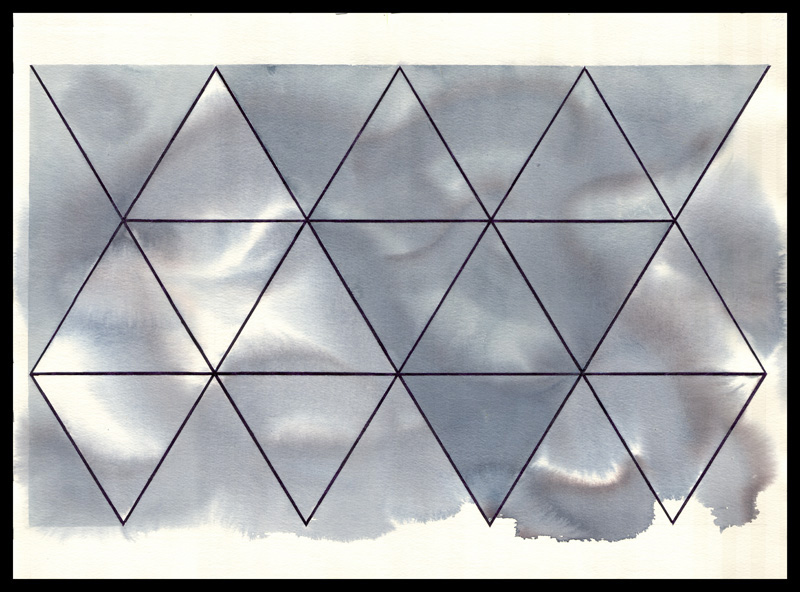
Silence III
22’ x 30”
Watercolor, graphite, gesso, acrylic on paper
2010
Ricardo F. Morín
February 15, 2026
Oakland Park, Fl
- Rethinking Identity and Entitlement in Civic Life
The phrase “my people” draws lines. It signals allegiance before argument begins. It may express familiarity, shared memory, or recognition. Yet the same words separate one group from another. A boundary forms, often without intention. Those inside feel affirmed; those outside may feel unseen.
Such moments rarely begin as acts of exclusion. They arise from ordinary human impulses: the desire to protect what feels familiar, to defend what has been wounded, or to claim space where one has felt overlooked. But when identity becomes the primary language through which claims are made, conversations change. Disagreement becomes personal. Listening becomes strategic. The space where people meet as equals contracts.
Group identity has long provided people with strength and protection. It helps individuals recover dignity when they feel ignored or misunderstood, and it offers language through which shared experiences can be recognized. Yet the same force can also narrow perception. When group identity becomes the main lens through which people judge one another, ideas are weighed less on their merit and more on the speaker’s affiliation.
When ideas begin to be judged primarily through identity rather than merit, the change is often subtle. An exchange that begins openly can become defensive as participants look for signs of alignment or opposition. Words are weighed for allegiance. Questions are interpreted as challenges rather than invitations to examine ideas together. Over time, dialogue shifts from exploration toward defense of positions. Judgment shifts from the merit of an idea to the standing of the speaker.
Many people carry an expectation into public life that they will be treated consistently. Uneven rules are recognized quickly. When identity determines whose voice counts before ideas are heard, trust weakens not only among those excluded, but also among those unsure whether they are seen as individuals or as representatives of a category.
Problems deepen when identity stops being one part of a person’s experience and begins to overshadow all others. Public debate narrows. Arguments are interpreted as attacks on identity rather than disagreements over ideas. People feel compelled to defend positions not because they are persuaded by them, but because reconsidering publicly may be treated as betrayal. The result is not stronger community, but increasing rigidity, where listening carries risk and reconsideration feels unsafe.
People turn toward simplification and absolutism to reduce uncertainty and relieve the strain of complexity. This tendency does not permanently define human interaction; it marks moments when ambiguity feels intolerable and certainty appears easier to sustain. Certainty offers relief, but it reduces the space in which plurality can endure. The tension itself does not disappear; only the way people attempt to manage it changes.
Contemporary communication technologies accelerate the circulation and visibility of opinion. Expressions that promise certainty or provoke fear travel farther and faster; expressions that sustain ambiguity move more slowly. This circulation amplifies tendencies toward simplification, reinforcing what attracts attention rather than what withstands examination.
When identity becomes the basis for deciding who others are before dialogue takes shape, examination gives way to labeling. Nuance is set aside. Individuals become symbols of larger struggles, and ordinary encounters carry the weight of broader conflicts. Under these conditions, disagreement resembles confrontation even when intentions remain sincere.
Public life rests on an expectation that the same rules apply to all. Uneven application becomes visible when some voices are heard more readily than others or when identity determines credibility before ideas are considered. Under these conditions, conversation shifts from exchange toward competition for recognition, and the possibility of shared judgment becomes more difficult to sustain.
The tension does not belong to one group alone; this situation affects everyone who participates in public life. Each person seeks recognition while fearing misinterpretation. Attempts to resolve disagreement through persuasion alone often reach limits beyond individual control. Listening, under these conditions, does not erase distance but allows interaction to continue despite it.
Differences remain, and disagreement persists. The lines that divide do not disappear; they shift, harden, or soften as people respond to one another in ordinary encounters. Living together does not remove tension; living together reveals tension. No shared answer resolves the matter. Each person must decide how to respond and how to live alongside others within limits no one fully controls.
*
 Observations On Perception