Posts Tagged ‘constitutional crisis’

“Unmasking Disappointment: Series V”

March 25, 2026

*

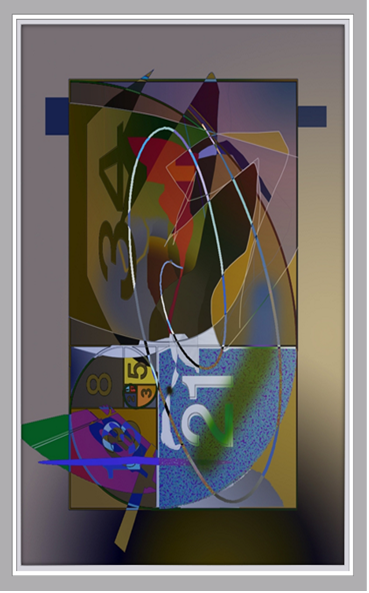
“Geometric Allegory” digital painting 2023 by Ricardo Morin (American visual artist born in Venezuela–1954)

Ricardo F. Morín

December 26, 2025

Oakland Park, Fl

This installment continues Chapter XII, “The Fourth Sign,” following the initial discussion of Autocracy (§§ 1–9).    It focuses on Venezuela, examining §§ 10–25 in which the earlier framework is applied to a specific national case.    The chapter concludes in a separate installment devoted to The Asymmetry of Sanctions (§§ 26–34).

Venezuela

10

To grasp the practical implications of autocracy and its concentration of power, I defer to Rafael Arráiz Lucca’s book, Venezuela:   1830 a nuestros días:   Breve historia política [2016].    Here, Arráiz Lucca provides a comprehensive history of Venezuela from independence to today. [1]   He covers political, economic, and social changes that have shaped the nation.    He explores early struggles and the rise of military strongmenand has treated Hugo Chávez’s rise to power, his ideology, and the effects of his policies on society.   He has also examined the continuing influence of Chávez under Nicolás Maduro.    In his view, both Chávez and Maduro have exemplified regimes that have centralized power and suppressed dissent.

11

The country’s political trajectory has been profoundly shaped by its enduring history of military rule.   Since independence in 1811, twenty-five military officers have held the presidency, presided over 172 years of governance, and entrenched the military’s influence in the nation’s political fabric. [2]   The transition to representative democracy in 1961 marked a significant shift, which ushered in thirty-eight-years of civilian-led stability under the Punto Fijo Pact (see Chapter XI).   This civilian era, however, was not free from upheaval.   The 1989 Caracazo riots, coupled with the failed coup attempt by Hugo Chávez in 1992, revealed the fragility of civilian democracy and the lingering appeal of military leadership in moments of crisis. [3][4]

12

The Caracazo riots and the subsequent repression had laid bare deep societal fractures that undermined confidence in civilian governance.   For many, the chaos and disillusionment rekindled the perception of the military as a force of order and stability, a perception rooted in the nation’s long history of caudillo leadership.   Chávez’s rise can be understood as a direct outgrowth of this historical legacy:   a charismatic military figure presenting himself as the answer to the failures of civilian politics.   The violent repression following the riots, coupled with the systemic inability to address the economic and social inequities they symbolized, paved the way for a return to autocratic tendencies, cloaked in populist rhetoric.   This marked the beginning of a new authoritarian era, shaped not only by the fractures of the present but also by the shadows of the past.

13

The presidency of Hugo Chávez continued the tradition of authoritarianism that had been seen earlier during the regime of General Marcos Pérez Jiménez. [5]    As in the era of Pérez Jiménez, Chávez relied on oil to finance his policies. [6]

14

For Hugo Chávez, “participatory democracy” aimed at empowering marginalized groups.   He created community councils and social missions, which became instruments of his political control—the so-called Bolivarian ideology.    Participation therein hinged on one’s loyalty to Chávez, which ultimately led to the marginalization of people opposed to his policies.   His blend of populism and authoritarianism framed dissent as being unpatriotic and thus hindered national progress.   This approach enabled him to undervalue the power of law; the legislative and judicial branches of government became dependent on the executive.

15

With the endorsement of Nicolás Maduro by Hugo Chávez in 2012, the country slid further into authoritarianism. [7]  Opposition parties such as Vente Venezuela, Primero de Justicia, Un Nuevo Tiempo, and Voluntad Popular accused Chávez and Maduro of manipulating the Consejo Nacional Electoral[8][9][10][11][12]

16

After the death of Chávez, Maduro faced similar accusations in the 2013 and 2018 elections.   The Organization of American States, the Lima Group, the International Contact Group, and the Group of Seven concurred. [13][14][15]   Human Rights Watch and Amnesty International have also questioned his legitimacy. [16][17]    One exception is  the United Nations’ Security Council debate (press release SC/13719), which urged Venezuelans to resolve their crisis internally. [18][19]

17

Following Venezuela’s 2016 suspension from Mercosur, Latin American responses varied and then changed as political administrations changed. [20][21]  Initially, Argentina favored the measures by the Organization of American States to apply diplomatic pressure on Venezuela and sought to address the political and humanitarian crises there. [22]    It also recognized Juan Guaidó as the legitimate president, though in 2019, it changed and became an advocate for mediation.   At first, Brazil recognized Guaidó and was for sanctions against the Venezuelan government, and then in 2023 asked for mediation. [23]   Between 2018–22, Colombia accused the Maduro regime of drug trafficking and of giving support to the guerrilla groups, the National Liberation Army and the Revolutionary Armed Forces; Colombia broke diplomatic relations. [24]    Later, in 2022, a new administration reopened diplomatic ties and promoted non-intervention.   Chile has consistently urged sanctions against Maduro’s government, and even referred Venezuela to the International Criminal Court (ICC). [25][26]  Peru expelled Venezuela’s ambassador:   The immediate trigger for the expulsion was Venezuela’s Tribunal Supremo de Justicia’s move to dissolve the opposition-controlled Asamblea Nacional, which Peru saw as a step toward authoritarian control. [27]    As all other members of the Lima Group did, Peru regularized the status of Venezuelan migrants.   In the beginning, Mexico condemned the human rights abuses in Venezuela and called for the release of all political prisoners, but, in 2018, it shifted to a non-interventional approach and in 2022 offered mediation as the only recourse. [28][29][30]

18

Ahead of the 2024 presidential election, opposition leader María Corina Machado was disqualified after having won her coalition’s primary. [31]  The Tribunal Supremo de Justicia based its decision on her alleged support of U.S. sanctions, supposed corruption, and accusations holding her responsible for losses related to the American subsidiary Citgo of the Venezuelan State-owned oil and natural gas company:   Petróleos de Venezuela, S.A. (PDVSA).   Machado’s denial of access to the allegations against her was a blatant violation of due process.   Her disqualification left Edmundo González Urrutia as the unified opposition candidate. [32]

19

Both campaigns engaged in tactics of intimidation.   González’s coalition deployed 200,000 observers across 16,000 voting centers and Maduro’s administration intensified media censorship and repression.   After Maduro declared victory, protests resulted in extrajudicial killings, arrests, and crackdowns on independent media. [33]

20

González’s coalition collaborated with international observers, including the Organization of American States, the European Union Electoral Observation Mission, the Carter Center, and the United States Mission to the United Nations, to monitor irregularities. [34][35][36][37]   The government, however, withheld disaggregated voting data critical for audits—supposedly because the data had been hacked—and imposed travel restrictions on foreign observers. [38]    The Carter Center criticized the elections for failing to meet international standards of transparency, fairness, and impartiality. [39]

21

Maduro accused both Machado and González of having incited unrest and announced investigations into the crimes of “usurpation of functions” and “military insurrection,” each carrying thirty-year prison sentences.   On August 8, 2024, González left for Spain after the government had granted him safe passage.

22

To understand Venezuela’s political and institutional landscape, one must examine how global indices assess the state of its democracy.    The Economist Intelligence Unit’s Democracy Index, the Freedom House’s Global Freedom Index, and the Transparency International’s Corruption Perceptions Index all provide distinct metrics illuminating Venezuela’s democratic decline under Nicolás Maduro.

23

The Democracy Index ranks countries with higher scores as more democratic.    Freedom House and Transparency International diverge from this by using lower scores to indicate worse outcomes, with lower numbers signifying less freedom and higher corruption.

24

In the Economist Intelligence Unit’s Democracy Index, Venezuela ranked as the least democratic country in South America in 2008; in 2022, it ranked 147th out of a total of 167 countries. [40]   Likewise, in 2023, Freedom House’s Global Freedom Index finds that Venezuela scored low both as a democracy and high corruption, while in its Corruption Perceptions Index Venezuela scored 13 out of 100 and was positioned as one of the most corrupt nations globally. [41]

25

Additionally, a report by Transparency International’s Corruption Perceptions Index for the period from 2012 to 2023 has highlighted the severe corruption to be found in Venezuela. [42]   In its 2023 Corruption Perceptions Index, out of 180 countries, Venezuela received a score of 13 out of 100, ranking 177th.   These indicators present a clear picture of Venezuelan authoritarianism and of the deterioration of its political landscape in recent years.

~


Endnotes

§ 10

  • [1]    Rafael Arráiz Lucca, Venezuela:    1830 a nuestros días:    Breve historia política. (Caracas:    Editorial Alfa, 2016), 15-151, 212-37.

§ 11

  • [2]   José Gregorio Petit Primera, ”Presidentes de Venezuela (1811-2012).   Un análisis estadístico-descriptivo,” Revista Venezolana:   Análisis de Coyuntura (Caracas: Universidad Central de Venezuela, XXII-1, 2016), 47-56.
  • [3]   The Punto Fijo Pact was a political agreement signed by the three predominant political parties—Acción Democrática (AD), Comité de Organización Política Electoral Independiente (COPEI), and Unión Republicana Democrática (URD)—at the residence of Rafael Caldera (COPEI): Punto Fijo.   The pact aimed to stabilize the country after the fall of dictator Marcos Pérez Jiménez [1952-1958] by ensuring democratic alternation of power, institutional continuity, and preventing single-party rule.   While it contributed to political stability and a peaceful transition to democracy, critics argue that it also entrenched elite dominance, marginalized smaller parties, and fostered systemic corruption.    As a foundational element in Venezuela’s post-dictatorship political landscape, the agreement shaped the nation’s governance for decades.   Its legacy, however, is marked by political divisions, as the pact’s structure increasingly excluded some groups and led to dissatisfaction among factions.    This period reflects both the challenges and achievements of Venezuela’s efforts to establish a stable and inclusive democracy.
  • [4]   Rafael Arráiz Lucca, “February 4, 1992: The Day Venezuelans Learned the Name ‘Hugo Chávez,” (Caracas Chronicles, February 04, 2019). https://www.caracaschronicles.com/2019/02/04/february-4-1992-the-day-venezuelans-learned-the-name-hugo-chavez/

§ 13

  • [5]   Fredy Rincón Noriega, El Nuevo Ideal Nacional y los planes Económicos- Militares de Pérez Jiménez 1952-1957 (Caracas: Ediciones Centauro, 1981)–Kindle Edition
  • Judith Ewell, The Indictment of a Dictator: The Extradition and Trial of Marcos Perez (College Station:  A&M University Press, 1981).
  • [6]   Both leaders have employed centralized power and state control over resources, though their approaches differed.   Pérez Jiménez emphasized technocratic and infrastructural development.    His policies, as outlined in the Nuevo Ideal Nacional, focused on large-scale construction projects and urban modernization.    These initiatives promoted economic growth, but their benefit was directed towards the middle and upper classes.    Chávez, on the other hand, pursued a blend of populism and socialism aimed at redistributing oil wealth through extensive social programs for the poor.    These policies increased the State’s dependence on oil revenues and left the country vulnerable to market fluctuations.

§ 15

§ 16

  • [13]   The Lima Group, formed in August 2017, includes: Argentina, Brazil, Canada, Chile, Colombia, Costa Rica, Guatemala, Honduras, Mexico, Panama, Paraguay, Peru, Guyana, and St. Lucia.
  • [14]   The International Contact Group (the European Union, Costa Rica, Ecuador, and Uruguay) advocates for credible elections and have voiced concerns about the Consejo Nacional Electoral’s impartiality.
  • [15]   Group of Seven (G7)–Canada, France, Germany, Italy, Japan, the United Kingdom, and the United States–has condemned electoral irregularities in Venezuela and called for independent oversight.  Allegations of voter registration manipulation by the Consejo Nacional Electoral, has heightened suspicions of vote tampering.
  • [16]    Venezuela’s Humanitarian Crisis:    Severe Medical and Food Shortages, Inadequate and Repressive Government Response, Human Rights Watch, October 24, 2016. https://www.hrw.org/report/2016/10/24/venezuelas-humanitarian-crisis/severe-medical-and-food-shortages-inadequate-and
  • [17]   “Venezuela: New research shows how calculated repression by Maduro government could constitute the crime against humanity of persecution,” Amnesty International, February 10, 2022. https://www.amnesty.org/en/latest/news/2022/02/venezuela-calculated-repression-maduro-government/
  • [18]   Venezuelans Must Resolve Crisis Themselves, Security Council Delegates Agree while Differing over Legitimacy of Contending Parties. Briefing on Weekend Incidents Biased, Says Foreign Minister as Speakers for United States, Russian Federation Exchange Barbs,” United Nations: Meetings Coverage and Press Releases, 8472nd Meeting, SC/13719, February 26, 2019. https://press.un.org/en/2019/sc13719.doc.htm
  • [19]   In February 2019, a United Nations Security Council Report debated whether to supervise elections or mediate between Maduro’s government and the opposition. Ultimately, the Council upheld a non-interventionist approach while offering to mediate.

§ 17

§ 18

§ 19

§ 20

§ 24

§ 25


“Governing by Exception: The American Executive”

November 18, 2025

*

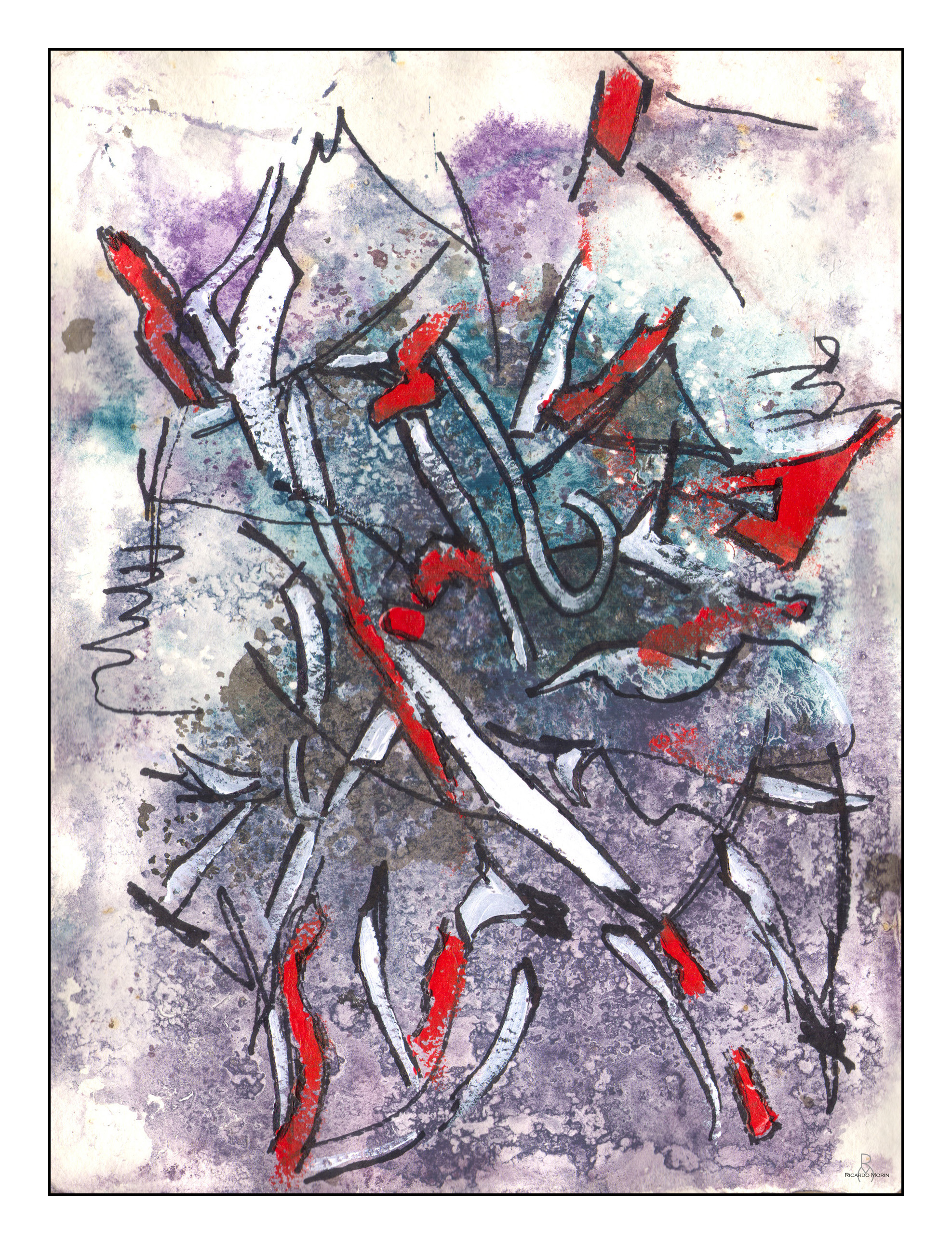
Ricardo Morín
Untitled #3: Governing by Exception
10″x12″
Watercolor
2003

By Ricardo F. Morín

October 10, 2025

Bala Cynwyd, Pa

Power unexamined becomes its own justification—Anonymous civic maxim.

Prologue

Governance is the moral discipline of order—the effort to keep authority aligned with conscience so that power remains a function of justice, not an instrument of self-interest.  Government enacts that discipline:   necessary, fallible, and ever in danger of mistaking permanence for legitimacy.


1

Political history rarely unfolds as a straight line.  It accumulates as a palimpsest in which new regimes—imperial, republican, authoritarian, and democratic—write their doctrines over the residues of previous orders.   Institutions and laws rarely vanish; they survive as layers of precedent and practice that later governments reinterpret to serve new purposes.   The present political moment in the United States should be examined within that structure of accumulation.  What appears to be a radical break with constitutional tradition is, in fact, the latest rewriting of an existing template.   The mechanisms that once safeguarded the republic now expand the reach of executive power; these mechanisms reveal how continuity and rupture coexist in the same act.

2

During the first half year of the Trump administration’s return to office, the political system of the United States has entered a state of controlled dislocation.  Executive directives have overridden congressional appropriations, suspended statutory programs, and reorganized entire departments under provisional authority.   A government shutdown, declared an administrative necessity, has become a method for restructuring the State.   Mass dismissals, selective funding freezes, and the redefinition of agency mandates have become coordinated tools for concentrating authority in the executive branch.  These are not isolated disputes between branches of government.  These actions reveal a coherent strategy of reconfiguration, executed through administrative acts that appear lawful but are designed to disfigure the balance of powers from within.

3

The guiding principle of this transformation is the normalization of exception.   Powers that earlier generations considered temporary—emergency measures to be used only under extreme threat—have become ordinary instruments of governance.  The invocation of the Insurrection Act, intended for rebellion or lawless obstruction, now functions as justification for domestic military deployment in states governed by political opposition.  The use of this authority is framed as a response to rising crime, even when verified data show a national decline.   In this inversion of logic, the declaration of emergency precedes its necessity.   The government generates the crisis it claims to confront and allows coercive measures to appear both inevitable and legitimate. What dissolves in this process is not only institutional restraint but the moral discipline of order—the very principle that once bound authority to conscience: i.e. the active faculty of perception through which recognition becomes responsibility and seeing acquires ethical weight.

4

This redefinition of authority as authoritarianism is reinforced by judicial doctrine.   The Supreme Court’s 2024 decision in Trump v. United States established that a president enjoys absolute immunity for “core official acts” and presumptive immunity for all other actions undertaken in an official capacity.  This ruling altered the meaning of accountability.  It placed the office of the president above ordinary legal scrutiny by presuming legality wherever official duty could be claimed.   The decision inverted the constitutional order that once defined the presidency as a position constrained by law.  Under this new interpretation, legality flows from function rather than from statute.   The Court did not invent executive supremacy; it legalized its evolution.   By insulating the executive office from the consequences of its acts, the judiciary, perhaps unintentionally, became an instrument of the very transformation it was designed to prevent.

5

Measured against the triad of government powers—legislative, executive, and judicial—the present equilibrium reveals a pronounced distortion.   Each branch retains its formal outline, yet its interior authority has thinned. Congress’s control of the purse has been undermined by impoundment and selective disbursement.   Administrative agencies have been hollowed out through abrupt firings and structural reorganizations.   The judiciary, bound by its own doctrines of deference and immunity, finds itself unable to intervene effectively.   What remains of institutional balance depends less on constitutional principle than on administrative inertia.  The machinery of government continues to function, but its continuity now rests on habit rather than on law.

6

This condition does not yet constitute overt dictatorship.  It represents a subtler phenomenon—a system that operates through legal forms but concentrates power in practice.   Authority remains constitutional in appearance while using those same procedures to entrench unilateral control.  The pattern can be recognized not through proclamations but through measurable actions:   decrees replacing legislation, “temporary” orders renewed without expiration, funds withheld from political adversaries, and federal troops dispatched to jurisdictions where disorder has not been empirically established.   Each measure, taken alone, seems limited and justified.   Together they form an architecture of exception—an invisible framework that reorganizes power without declaring revolution. Beneath this architecture lies the decline of the moral discipline of order, where legality endures but conscience recedes.

7

A forensic approach must therefore focus not on accusation but on diagnosis.  The purpose is to identify where practice diverges from principle, and where legal continuity conceals political mutation.  The question is not whether democracy has vanished, but how far the republic has drifted from its own operational norms.   This drift can be measured empirically through ordinary data:  the number of appropriations ignored or delayed, the duration and scope of emergency declarations, the ratio of confirmed officials to acting appointees, and the frequency with which presidential immunity is invoked to block review.   Each indicator marks a step away from the rule of shared power that defines constitutional democracy.

8

The concept of the republic, in its classical and Enlightenment sense, presupposed a balance between power and virtue:   the rule of law safeguarded by citizens free from dependence.   In contemporary practice, that idea has been reduced to a partisan label.   The republicanism that once demanded civic responsibility now coexists with mechanisms—PAC financing (Political Action Committee: An organization that raises and spends money to elect political candidates), factional loyalty, corporate influence—that transform governance into an instrument of private interest.   Thus the very word that once signified restraint now conceals its opposite:   a system where representation serves its sponsors more faithfully than its citizens.

9

History suggests that constitutional systems rarely collapse through open defiance.  They decline through adaptation.   The Roman Republic did not abolish its institutions; it gradually converted them into imperial offices.   Modern democracies follow similar paths when crisis is used to justify the consolidation of power.  Executive authority expands, legislative restraint weakens, and judicial caution hardens into complicity.  The American case fits this pattern.   The existing framework of the Constitution remains in place, yet its meaning shifts incrementally through interpretation, precedent, and administrative habit.  The transformation proceeds without formal amendment because each deviation is defended as continuity.

10

The metrics of decline are structural rather than moral.   When legality depends on will—the self-legitimating impulse of power once detached from moral accountability—and will is shielded from scrutiny, the architecture of restraint loses coherence.   Here the moral discipline of governance yields to the self-justifying logic of power.   What follows is not anarchy but organized dislocation—a condition in which institutions operate as before yet serve opposite purposes; in truth it is anarchy disguised as its own absence.   Procedures are observed; substance is inverted.   The outward appearance of democracy persists, while its inner logic is replaced by a system that governs through perpetual exception.

11

The task for observers and citizens alike is not to forecast collapse but to recognize mutation.  Political systems rarely announce their turning points; they disguise themselves as routine.  The test of civic intelligence is the capacity to detect when law becomes vocabulary, when oversight becomes performance, and when the state of exception ceases to be temporary.   The republic continues to function, but it functions under altered premises.   The preservation of legality therefore depends not only on the design of institutions but also on the vigilance of those who interpret them. Justice endures only where institutions remember that they exist to limit power, defend the vulnerable, and preserve the moral foundation from which authority derives its right to act.

12

The endurance of the republic will therefore depend not on the spectacle of its elections but on the recovery of its first obligation:   to keep authority answerable to the moral idea from which it draws its right to act.   Justice endures only where institutions remember that they exist to limit power, defend the vulnerable, and preserve the moral discipline of order through which freedom remains lawful and law remains human.   When that memory fades, what remains is administration without soul—a government still standing, but no longer governing.