~

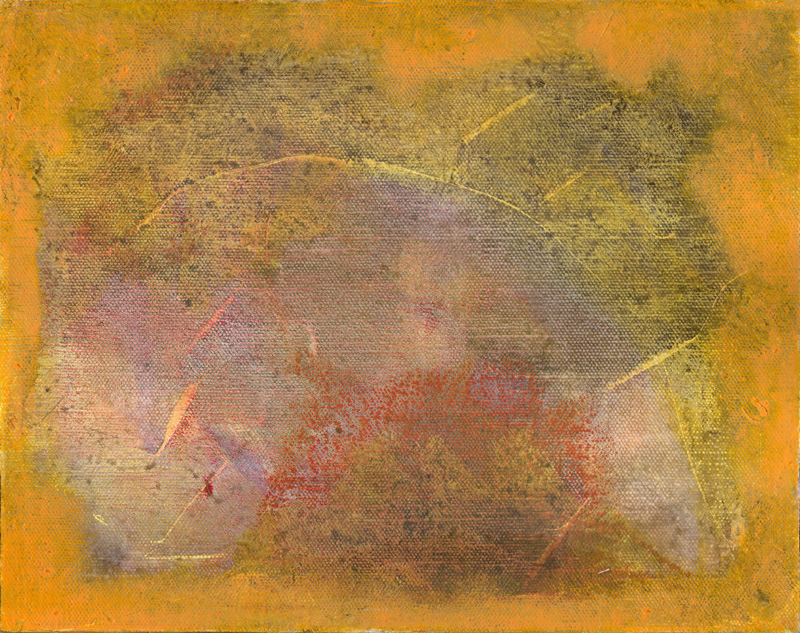
Landscape II: River Grass
18” x 24”
Sepia on newsprint
2003
Ricardo F Morin
Dec. 6, 2025
Naples. Florida
*
Author’s Note
This diptych, “River Grass” and “Naples in the Morning,” brings together a reflection on continuity and a brief observation of everyday life. Two scenes—one sustained, the other fleeting—register how experience, silence, and attention shape presence. The first part, “River Grass,” does not present an argument, a confession, or a theory. It offers an observation shaped over time by proximity rather than distance. The focus is not on individual psychology or relational conflict, but on patterns that take form across generations and persist quietly within everyday life.
What follows avoids moral explanation and narrative resolution. It attends instead to continuity—how restraint, generosity, and presence may be transmitted not through instruction or memory, but through posture, habit, and orientation. The intention is to describe without adjudicating, and to clarify without assigning cause where cause cannot be cleanly isolated. What is traced here represents one possible orientation among many, shaped by inheritance but not exhaustive of its effects—an invitation not to mistake the channel for the ocean.
Orientation of “River Grass”
What follows attends to what persists when lives are shaped by continuity rather than interruption.
I. Inheritance
Not all inheritance arrives as memory. Some is conveyed without story, without date, without language. It enters through atmosphere rather than narrative—through cadence, restraint, posture, and a preference for continuity over display. In such cases, history is not recalled; it is carried.
This form of inheritance does not announce itself as trauma. It leaves no single scene to revisit, no episode that can be isolated and explained. Instead, it appears as a way of moving through the world: measured, attentive, resistant to excess. The past exerts influence not by instruction but by shaping what feels permissible, sustainable, or necessary.
Under these conditions, restraint is not experienced as loss. It functions as orientation. Accommodation does not signal submission but competence. Stability reflects not the absence of desire but the quiet placement of desire among other priorities. What is transmitted is not fear but caution—an ethic of endurance refined over time.
Because no event is foregrounded, little invites interpretation. The absence of visible distress encourages the assumption of ease. Life appears ordered, generous, and intact. Yet the inheritance remains active and structures conduct without requiring acknowledgment. It persists not as memory but as form.
Such inheritance often resists recognition precisely because it has succeeded. The past has not repeated itself. Continuity has been preserved. What remains is a posture oriented toward sustaining that continuity—a vigilance so normalized that it passes as temperament rather than history.
II. Restraint
Restraint, in this context, does not operate as inhibition or denial. It functions as a stabilizing orientation—an internal calibration shaped over time. Action is guided less by expression than by proportion and durability. What governs choice is not moral judgment but coherence.
Such restraint often coexists with clarity and decisiveness. Boundaries are maintained without conflict; decisions are made without excess emphasis. What is avoided is not agency but surplus. Expression is moderated not through fear of consequence, but through an internal sense of sufficiency.
Accommodation here is frequently misread. It does not arise from compliance or uncertainty, but from an assessment of impact. Space yielded to others reflects confidence in structure rather than retreat from position. Presence remains intact even when it is not foregrounded.
This orientation produces a stability that can appear effortless. Friction is minimized. Demands are rare. The absence of insistence is readily mistaken for ease or contentment. Yet the restraint at work is active, not passive—and continuously shapes what is articulated, deferred, or left unspoken.
Over time, restraint becomes difficult to distinguish from identity. It ceases to register as a choice among alternatives and hardens into posture. The question of expression recedes, replaced by an emphasis on responsibility, proportion, and non-disruption.
*
III. Generosity
Generosity shaped by inherited restraint rarely announces itself. It does not seek recognition or reciprocation, nor does it depend on visibility for validation. It appears instead as availability, as the quiet removal of obstacles, as the willingness to yield space without narrative or sacrifice.
In this form, giving is non-transactional. No balance is tracked; no return anticipated. What is offered is steadiness rather than favor. Support unfolds without appeal, often unnoticed, absorbed into ordinary conduct. The absence of demand is integral rather than incidental.
Because it imposes no weight, such generosity leaves little trace. Others encounter freedom without sensing its source. Autonomy is enabled without attribution. The one who gives remains present yet unmarked.
Over time, the habit of making room for others becomes more practiced than the habit of entering it. Attention turns outward and refines responsiveness while narrowing self-directed articulation. What persists is not loss, but redirection.
This configuration resists conventional readings of imbalance. No grievance emerges; no conflict announces asymmetry. Generosity remains intact, even exemplary. What shifts subtly is internal emphasis: presence exercised through allowance rather than assertion.
*
IV. Desire
Desire, within this orientation, is neither denied nor suppressed. It is repositioned. Its legitimacy is not questioned, but its urgency is diminished. What is set aside is not longing itself, but the expectation that longing must organize life.
Desire is acknowledged yet rarely centered. Expression is permitted elsewhere more readily than inwardly claimed. Attention gravitates toward what preserves stability rather than what intensifies experience. Satisfaction arises from coherence rather than culmination.
This produces no vacancy. Life remains engaged and responsive. What diminishes is insistence. Continuity comes to matter more than appetite; durability more than immediacy.
Because this arrangement is not framed as renunciation, it escapes notice. No moral language surrounds it. Nothing is named as sacrifice. Desire persists at a distance—observed, managed, deferred without struggle.
Over time, identity becomes shaped less by pursuit than by maintenance. Expression gives way to stewardship. Meaning accrues not through arrival, but through the avoidance of rupture.
*
V. Virtue
Patterns organized around restraint and continuity are often mistaken for moral attainment. Composure is read as wisdom; accommodation as maturity; silence as depth. Because no disturbance arises, the orientation escapes examination. What functions smoothly is presumed complete.
This misreading is reinforced by social frameworks that reward stability over inquiry. Absence of conflict is taken as evidence of balance. Generosity without demand is praised rather than interrogated. Its costs remain obscured precisely because they impose nothing on others.
Virtue, in this setting, becomes indistinguishable from habit. Adaptive orientation solidifies into character, and character into expectation. Reliability is affirmed repeatedly, deepening its hold.
The result is not deception but omission. The steadiness is genuine. What goes unrecognized is how fully such an arrangement organizes life around preservation rather than presence. The question of displacement remains unasked, not refused.
Misreading occurs through success. Relations endure. Structures hold. No obvious harm appears. And so the deeper configuration—quiet, durable, historically shaped—continues beneath the language of virtue.
*
VI. Continuity
At a certain threshold, continuity shifts from supporting means to governing end. Life becomes organized not around fulfillment, but around preservation. What matters most is that nothing essential is exposed to rupture, whether through excess demand or through untested assertion.
Fulfillment is not rejected, but subordinated. Satisfaction arises from duration rather than intensity. Time is oriented toward extension, not culmination. What is valued is the capacity to carry forward intact.
This proves effective. The past does not recur. Stability holds. Loss is contained rather than amplified. Inherited imperatives are honored not through recollection, but through conduct.
Yet when continuity occupies this position, the range of permissible movement narrows. Change must justify itself in advance. Desire must demonstrate durability before enactment. Expression yields to maintenance.
The future is approached as responsibility rather than as open terrain. Meaning accumulates through safeguarding what is essential rather than through the exploration of possibilities. Success becomes synonymous with the preservation of continuity.
*
VII. Presence
Presence, in its final form here, does not organize itself around position or priority. It functions laterally and sustains structure without becoming its focus. Life is held together through attentiveness rather than through claims to authority or justification. The course of life proceeds without pressure to arrive at an explanation that secures its coherence.
This mode of presence resists visibility. It does not seek recognition or assert precedence. Its efficacy lies in what remains intact rather than in what is achieved. Others move freely, often unaware of the support permitting such freedom.
To remain outside the center is not withdrawal. Engagement continues—measured, responsive, intact. What is avoided is domination, not participation. Influence is exercised through stability rather than direction.
The image implied by the title takes form. A river that advances without force, reshaping terrain through the sustained persistence of its course. Motion without spectacle. Endurance without inscription. The course is maintained by flowing around obstruction rather than confronting it.
What remains is continuity itself—quietly sustained, seldom noticed, and difficult to name.
*
“Naples in the Morning”
I sat across from my husband at a breakfast place in Naples, Florida. Diagonally behind him sat a young couple. The woman was small—almost childlike in scale—next to her husband, who stood well over six feet.
None of us had ordered yet. She carefully arranged her silverware and napkin, aligning them with deliberate precision, almost ritualistic. Her hair fell forward, parted to either side of her face like curtains drawn closed. When she lifted her chin, her facial features—Asian in appearance—came briefly into view. Despite her slightness, her posture suggested control rather than fragility.
When our glances crossed, she held my gaze longer than expected, nearly staring. She then lowered her head, hiding again behind her hair. Moments later, she lifted it once more and made the sign of the cross—forehead, chest, shoulder to shoulder—before turning fully back toward her husband. No words were exchanged.
When the food arrived, she resumed the same careful demeanor. She sliced her omelet into small, uniform squares, placed the knife down, and paused. Each piece was lifted individually, slowly, with unbroken repetition, as if rehearsed. The sequence carried the quality of performance. Though she remained oriented toward her husband, her torso shifted intermittently, angling slightly in my direction.
When they finished and moved toward the register, she rose first and walked ahead, chin lowered, hair once again masking her surroundings. He followed—tall, broad, moving through the room with visible ease. His stride was expansive, unguarded.
They left without speaking.
Diptych.

 Observations On Perception