Posts Tagged ‘Endurance’

“River Grass”

December 7, 2025

Ricardo Morin
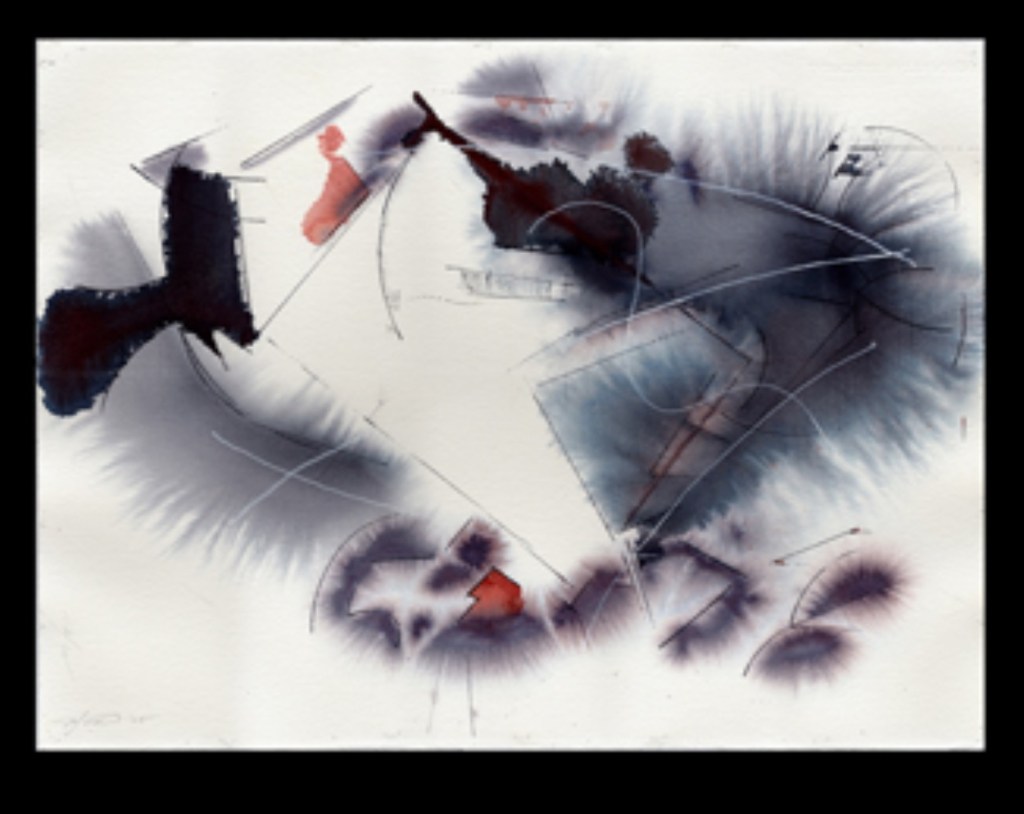
Landscape II: River Grass
18” x 24”
Sepia on newsprint 
2003

Ricardo F Morin

Dec. 6, 2025

Naples. Florida

*

This diptych, “River Grass” and “Naples in the Morning,” brings together a reflection on continuity and a brief observation of everyday life.  Two scenes—one sustained, the other fleeting—register how experience, silence, and attention shape presence.  The first part, “River Grass,” does not present an argument, a confession, or a theory.  It offers an observation shaped over time by proximity rather than distance.   The focus is not on individual psychology or relational conflict, but on patterns that take form across generations and persist quietly within everyday life.

What follows avoids moral explanation and narrative resolution.   It attends instead to continuity—how restraint, generosity, and presence may be transmitted not through instruction or memory, but through posture, habit, and orientation.   The intention is to describe without adjudicating, and to clarify without assigning cause where cause cannot be cleanly isolated.   What is traced here represents one possible orientation among many, shaped by inheritance but not exhaustive of its effects—an invitation not to mistake the channel for the ocean.


Orientation of “River Grass”

What follows attends to what persists when lives are shaped by continuity rather than interruption.

Not all inheritance arrives as memory.   Some is conveyed without story, without date, without language.   It enters through atmosphere rather than narrative—through cadence, restraint, posture, and a preference for continuity over display.   In such cases, history is not recalled; it is carried.

This form of inheritance does not announce itself as trauma.   It leaves no single scene to revisit, no episode that can be isolated and explained.   Instead, it appears as a way of moving through the world:   measured, attentive, resistant to excess.   The past exerts influence not by instruction but by shaping what feels permissible, sustainable, or necessary.

Under these conditions, restraint is not experienced as loss.  It functions as orientation.  Accommodation does not signal submission but competence.   Stability reflects not the absence of desire but the quiet placement of desire among other priorities.   What is transmitted is not fear but caution—an ethic of endurance refined over time.

Because no event is foregrounded, little invites interpretation.   The absence of visible distress encourages the assumption of ease.   Life appears ordered, generous, and intact.   Yet the inheritance remains active and structures conduct without requiring acknowledgment.   It persists not as memory but as form.

Such inheritance often resists recognition precisely because it has succeeded.   The past has not repeated itself.   Continuity has been preserved.   What remains is a posture oriented toward sustaining that continuity—a vigilance so normalized that it passes as temperament rather than history.

Restraint, in this context, does not operate as inhibition or denial.   It functions as a stabilizing orientation—an internal calibration shaped over time.   Action is guided less by expression than by proportion and durability.   What governs choice is not moral judgment but coherence.

Such restraint often coexists with clarity and decisiveness.   Boundaries are maintained without conflict; decisions are made without excess emphasis.   What is avoided is not agency but surplus.   Expression is moderated not through fear of consequence, but through an internal sense of sufficiency.

Accommodation here is frequently misread.   It does not arise from compliance or uncertainty, but from an assessment of impact.   Space yielded to others reflects confidence in structure rather than retreat from position.   Presence remains intact even when it is not foregrounded.

This orientation produces a stability that can appear effortless.   Friction is minimized.   Demands are rare.   The absence of insistence is readily mistaken for ease or contentment.   Yet the restraint at work is active, not passive—and continuously shapes what is articulated, deferred, or left unspoken.

Over time, restraint becomes difficult to distinguish from identity.   It ceases to register as a choice among alternatives and hardens into posture.   The question of expression recedes, replaced by an emphasis on responsibility, proportion, and non-disruption.

Generosity shaped by inherited restraint rarely announces itself.   It does not seek recognition or reciprocation, nor does it depend on visibility for validation.   It appears instead as availability, as the quiet removal of obstacles, as the willingness to yield space without narrative or sacrifice.

In this form, giving is non-transactional.   No balance is tracked; no return anticipated.   What is offered is steadiness rather than favor.   Support unfolds without appeal, often unnoticed, absorbed into ordinary conduct.   The absence of demand is integral rather than incidental.

Because it imposes no weight, such generosity leaves little trace.   Others encounter freedom without sensing its source.   Autonomy is enabled without attribution.   The one who gives remains present yet unmarked.

Over time, the habit of making room for others becomes more practiced than the habit of entering it.   Attention turns outward and refines responsiveness while narrowing self-directed articulation.   What persists is not loss, but redirection.

This configuration resists conventional readings of imbalance.   No grievance emerges; no conflict announces asymmetry.   Generosity remains intact, even exemplary.   What shifts subtly is internal emphasis: presence exercised through allowance rather than assertion.

Desire, within this orientation, is neither denied nor suppressed.   It is repositioned.   Its legitimacy is not questioned, but its urgency is diminished.   What is set aside is not longing itself, but the expectation that longing must organize life.

Desire is acknowledged yet rarely centered.   Expression is permitted elsewhere more readily than inwardly claimed.   Attention gravitates toward what preserves stability rather than what intensifies experience.   Satisfaction arises from coherence rather than culmination.

This produces no vacancy.   Life remains engaged and responsive.   What diminishes is insistence.   Continuity comes to matter more than appetite; durability more than immediacy.

Because this arrangement is not framed as renunciation, it escapes notice.   No moral language surrounds it.   Nothing is named as sacrifice.   Desire persists at a distance—observed, managed, deferred without struggle.

Over time, identity becomes shaped less by pursuit than by maintenance.   Expression gives way to stewardship.   Meaning accrues not through arrival, but through the avoidance of rupture.

Patterns organized around restraint and continuity are often mistaken for moral attainment.   Composure is read as wisdom; accommodation as maturity; silence as depth.   Because no disturbance arises, the orientation escapes examination.   What functions smoothly is presumed complete.

This misreading is reinforced by social frameworks that reward stability over inquiry.   Absence of conflict is taken as evidence of balance.   Generosity without demand is praised rather than interrogated.   Its costs remain obscured precisely because they impose nothing on others.

Virtue, in this setting, becomes indistinguishable from habit.   Adaptive orientation solidifies into character, and character into expectation.   Reliability is affirmed repeatedly, deepening its hold.

The result is not deception but omission.   The steadiness is genuine.   What goes unrecognized is how fully such an arrangement organizes life around preservation rather than presence.   The question of displacement remains unasked, not refused.

Misreading occurs through success.   Relations endure.   Structures hold.   No obvious harm appears.   And so the deeper configuration—quiet, durable, historically shaped—continues beneath the language of virtue.

At a certain threshold, continuity shifts from supporting means to governing end.   Life becomes organized not around fulfillment, but around preservation.   What matters most is that nothing essential is exposed to rupture, whether through excess demand or through untested assertion.

Fulfillment is not rejected, but subordinated.   Satisfaction arises from duration rather than intensity.   Time is oriented toward extension, not culmination.   What is valued is the capacity to carry forward intact.

This proves effective.   The past does not recur.   Stability holds.   Loss is contained rather than amplified.   Inherited imperatives are honored not through recollection, but through conduct.

Yet when continuity occupies this position, the range of permissible movement narrows.   Change must justify itself in advance.   Desire must demonstrate durability before enactment.   Expression yields to maintenance.

The future is approached as responsibility rather than as open terrain.   Meaning accumulates through safeguarding what is essential rather than through the exploration of possibilities.   Success becomes synonymous with the preservation of continuity.

Presence, in its final form here, does not organize itself around position or priority.   It functions laterally and sustains structure without becoming its focus.   Life is held together through attentiveness rather than through claims to authority or justification.   The course of life proceeds without pressure to arrive at an explanation that secures its coherence.

This mode of presence resists visibility.  It does not seek recognition or assert precedence.   Its efficacy lies in what remains intact rather than in what is achieved.  Others move freely, often unaware of the support permitting such freedom.

To remain outside the center is not withdrawal.   Engagement continues—measured, responsive, intact.   What is avoided is domination, not participation.  Influence is exercised through stability rather than direction.

The image implied by the title takes form.   A river that advances without force, reshaping terrain through the sustained persistence of its course.  Motion without spectacle.  Endurance without inscription.  The course is maintained by flowing around obstruction rather than confronting it.

What remains is continuity itself—quietly sustained, seldom noticed, and difficult to name.


*

“Naples in the Morning”

I sat across from my husband at a breakfast place in Naples, Florida.  Diagonally behind him sat a young couple.  The woman was small—almost childlike in scale—next to her husband, who stood well over six feet.

None of us had ordered yet.  She carefully arranged her silverware and napkin, aligning them with deliberate precision, almost ritualistic.   Her hair fell forward, parted to either side of her face like curtains drawn closed.  When she lifted her chin, her facial features—Asian in appearance—came briefly into view.  Despite her slightness, her posture suggested control rather than fragility.

When our glances crossed, she held my gaze longer than expected, nearly staring.  She then lowered her head, hiding again behind her hair.   Moments later, she lifted it once more and made the sign of the cross—forehead, chest, shoulder to shoulder—before turning fully back toward her husband.   No words were exchanged.

When the food arrived, she resumed the same careful demeanor.   She sliced her omelet into small, uniform squares, placed the knife down, and paused.  Each piece was lifted individually, slowly, with unbroken repetition, as if rehearsed.  The sequence carried the quality of performance.   Though she remained oriented toward her husband, her torso shifted intermittently, angling slightly in my direction.

When they finished and moved toward the register, she rose first and walked ahead, chin lowered, hair once again masking her surroundings.  He followed—tall, broad, moving through the room with visible ease.  His stride was expansive, unguarded.

They left without speaking.


“The Seventh Watch”

August 6, 2025

*


Ricardo Morin
The Seventh Watch
(Template Series, 5th panel)
Watercolor over paper
22” x 30”
2005

Introductory Note

Ricardo Morin is a writer and researcher of the history of thought as a dynamic and evolving practice—a student of unspoken gestures, a language stronger than words, especially when interlocutors no longer listen to each other. Drawing on reflections on the cycles of life and a personal experience approaching the last, he invites readers to consider how quiet vigilance and tenderness can shape a meaningful existence. The Seventh Watch emerges from decades of living attentively, offering a humble testament to dignity through perseverance and care.

71 Years

I’ve lived seventy-one years. That alone still surprises me—not because I ever expected an early end, but because each year has asked more of me than the last. There was no dramatic fall, no single crisis to point to. Just a slow, constant shaping—of the body, of temperament, of the will.

Illness didn’t come in childhood. It arrived later, in my early twenties, during a snowbound winter in Buffalo. I was just beginning to live on my own, full of ambition and unfinished dreams. The diagnosis was mononucleosis—but it wasn’t the name that mattered. It was the way it interrupted momentum, slowed my pace, and revealed something deeper: the lifelong task of learning to live within my own limits.

That was the beginning—not of a medical history, but of a different kind of vigilance. Not directed outward, but inward. A quiet realization took root: that survival, if it was to be meaningful, required not just endurance, but restraint. A way of protecting myself from myself. That discipline wasn’t harsh—it became a kind of devotion. Not to self-denial, but to finding the clarity of a peaceful mind. To living with more care than urgency.

I don’t see illness as noble, but I do see in it a mirror—not for the pain, but for the truth it reflects. What can be tended, what must be relinquished, what deserves attention. I don’t claim wisdom from illness, but I recognize what it’s taught me to let go of: illusion, pride, and the frantic chase after things that do not last—such as the accumulation of wealth or power.

I’ve come to think of it simply as endurance—the kind illness teaches when you stop resisting and begin listening. There’s an ethical arc in this awareness—not born of dogma or belief, but shaped by experience. It bends not toward triumph, but toward tenderness.

This isn’t a story of pathology. It’s a story of attention—of refining the self without hardening it. Of discovering that maturity means knowing when to persist and when to pause. That the quiet act of sustaining one’s life—daily, attentively—is its own form of courage.

I never set out to write a testament. But seventy-one years in, I see the outlines more clearly. And in that, there is dignity.

Yet, dignity is not a reward. It arrives without announcement, without ceremony. It builds slowly—through the daily rituals of rising, of choosing what to carry and what to set down. It does not shield one from sorrow, nor make suffering easier to bear. But it gives the days a certain weight.

I’ve come to cherish that weight—not as a burden, but as proof. Proof that I’ve lived through each season not untouched, but intact. And that, even now, the task is not to escape life’s demands, but to meet them with steadiness.

What I’ve learned isn’t mine alone. Anyone who lives long enough will be asked to reckon with time—not as a thief, but as a sculptor. Illness, especially, teaches us how little control we truly have—yet how much presence we’re still capable of. It humbles and joins us. Not in sameness, but in mutual recognition.

Endurance, I’ve found, is not passive. It’s not about waiting for pain to pass. It is active, quiet, often unseen. It means choosing how to live when choice feels narrow. It means tending to life not with haste, but with attention.

There is no finish line to this work. Just the quiet act of continuing.

So I continue—not because I must, but because life, even in its reduced dimensions, still offers room for meaning. Some days that meaning is faint. Other days it is simply the act of rising, or writing a letter, or remembering the snow. But it is there. And as long as it is, I remain.

*


“A Threshold of Silence”

February 12, 2025

*

Michael Basso
(June 28, 1955 – May 28, 2025)

~


During the last decade of his life, Michael’s health declined steadily, much as his father’s had in the years before him, burdened by a succession of illnesses that gradually narrowed the ordinary horizons of living.  Yet he continued to embrace each day with quiet resolve, even as the growing uncertainty of his own body became impossible to ignore.  His suffering was never his alone.  It was shared by the husband who remained at his side and by those who loved him. His final years revealed a condition that ultimately belongs to every human life.

*

Sometimes suddenly, sometimes almost imperceptibly through the passing years, there comes a moment when mortality ceases to be an abstraction.  It is no longer a distant eventuality, safely concealed beneath the routines of ordinary life or softened by the expectation of time still remaining.  It becomes immediate, undeniable, and inseparable from the consciousness through which we experience the world.

For some, this awakening begins with the quiet betrayals of the body.  A stiffness that no longer disappears with rest, a memory that hesitates before returning, a step taken with unexpected caution, each becomes a subtle reminder that permanence was always an illusion.  For others, it begins with loss.  The death of a friend, a sibling, a parent, or a spouse quietly reveals that what has happened to another now belongs, inevitably, to oneself.

Such awareness alters the measure of time.  The future no longer appears boundless, nor does the past remain merely a record of what has been.  Each assumes a different proportion.  Without consciously intending it, we begin to measure life less by what has been accomplished than by what still remains possible.

The mind instinctively resists this recognition.  It seeks refuge in plans, obligations, familiar routines, and the reassuring continuity of ordinary existence, as though attention itself might postpone what reason already knows.  Mortality becomes something acknowledged intellectually while remaining emotionally distant.

This awakening is neither an achievement nor a failure.  It is simply one of the conditions of being human.  From the moment mortality is no longer imagined but personally recognized, every subsequent experience of decline, suffering, endurance, and acceptance acquires a meaning it could not previously possess.

~


*

II. The Decline: Mind and Body

Decline rarely announces itself through a single decisive event.  More often, it advances quietly, measured by changes so gradual that they are first mistaken for passing inconveniences.  The body no longer responds with its former certainty.  Movements once performed without thought require intention.  Strength diminishes, endurance shortens, and the senses begin, almost imperceptibly, to surrender their former clarity.

The mind follows a similar course.  Memory hesitates where it once answered effortlessly.  Thoughts arrive more slowly or dissolve before reaching completion.  Attention becomes increasingly fragile, interrupted by moments of uncertainty that were once unknown.  Yet awareness often remains sufficiently intact to perceive these changes with unsettling precision.  There is a particular solitude in witnessing the gradual alteration of one’s own faculties while still possessing the clarity to understand what is being lost.

Medicine seeks, rightly, to preserve function, relieve suffering, and extend the years in which life may continue with purpose.  Its achievements have transformed the experience of aging and illness beyond what earlier generations could have imagined.  Yet no intervention alters the fundamental condition from which every life begins.  The body remains finite, and every effort to preserve it ultimately encounters limits beyond which restoration is no longer possible.

The deepest transformation, however, is neither physical nor intellectual.  It lies in the gradual recognition that decline is not an interruption of life, but one of its final expressions.  What first appeared exceptional slowly reveals itself to be part of the same natural order through which every living being passes.

~


*

III. The Distractions That Delay Acceptance

To recognize mortality is not the same as to accept it.  Awareness may arrive suddenly, yet acceptance often remains distant, deferred by the mind’s persistent inclination to continue living as though time were still without measure.  We do not turn away because we are incapable of understanding death.  We turn away because we remain deeply attached to life.

This attachment reveals itself in countless ways.  We make plans, pursue ambitions, strengthen the body, cultivate the mind, and seek new remedies for the illnesses that accompany advancing age.  We continue to build, repair, organize, and anticipate tomorrow, not merely because these activities possess value in themselves, but because they reaffirm our place within a future we instinctively presume will continue.

The reluctance to let go arises from more than fear alone.  Lives remain unfinished.  Promises have yet to be fulfilled, conversations remain incomplete, responsibilities endure, and those we love continue to depend upon us.  Even after a long and abundant life, there persists the quiet conviction that something essential still awaits completion.  What binds us to life is often less the fear of dying than the unwillingness to leave unfinished what we believe still belongs to our care.

These attachments are neither weaknesses nor illusions to be dismissed.  They are expressions of love, responsibility, curiosity, and hope, the very qualities through which life acquires meaning.  Yet they also postpone the inward stillness from which acceptance may eventually emerge.  Before the end can be received with peace, the mind must gradually relinquish not only its fear of death, but also its expectation that life must always continue.

~


*

IV. The Weight of Suffering and Endurance

Suffering is among the few certainties shared by every sentient being.   It is neither rare nor exceptional, but woven into the fabric of existence from its first breath to its last.   Yet, for all its universality, suffering remains profoundly individual.   No two lives experience it in precisely the same way, nor can its weight be fully measured by those who do not bear it.

Pain assumes many forms.   It may arise from illness, injury, or the gradual weakening of the body.   It may also emerge from quieter losses, the diminishing of memory, the erosion of independence, the loneliness of watching the world continue without us, or the grief that accompanies every meaningful attachment.   Some burdens are visible and readily acknowledged.   Others remain concealed, carried in silence and known only to the one who endures them.

Suffering, however, is not the same as endurance.   Suffering is what life imposes.   Endurance is the human response to what has been imposed.   It is the quiet capacity to continue despite pain, uncertainty, or loss.   It allows ordinary lives to bear extraordinary burdens without surrendering the desire to remain engaged with the world.

The measure of endurance cannot be determined from the outside.   What one person carries with apparent ease may overwhelm another.   A burden once thought unbearable may gradually become part of daily existence, while a seemingly lesser sorrow may exhaust reserves that have long been silently diminishing.   Endurance follows no universal scale, for it reflects not only the magnitude of suffering but also the unique history, temperament, relationships, and inner resources of the individual who bears it.

For this reason, suffering should never be confused with weakness, nor endurance with invulnerability.   To endure is not to deny pain, but to continue living in its presence.   It is one of the quietest expressions of human dignity, requiring neither recognition nor admiration to possess its full measure.

Every life eventually encounters the limits of endurance, although those limits cannot be predicted or judged by others.   They reveal themselves only within the silent experience of the individual who bears them.   Before acceptance becomes possible, one must first come to understand not only the reality of suffering, but also the extraordinary capacity to endure it.

~


*

V. The Unseen Threshold

Life does not depart all at once.   It recedes quietly at first, almost imperceptibly in its withdrawal.   The breath grows shallower, not in gasps but in a gradual easing, as though the body has begun to ask less of the world.   Weight diminishes, not only in flesh but also in presence.   The self appears to loosen its attachment to the demands that once defined ordinary existence.   A once restless mind drifts more freely, its thoughts lingering less upon the past, the future, or even the urgency of the present.

These changes need not be understood as signs of failure or defeat.   They often resemble a gradual lessening of effort.   The body begins to relinquish tasks it once performed without thought.   Rest occupies more of the day than activity.   Silence becomes more welcome than conversation.   Even the struggle to remain gradually yields to intervals of quiet that seem neither forced nor resisted.   The body often appears to recognize this transition before the mind fully understands it.

There also comes a moment of recognition that seldom announces itself dramatically.   It is rarely defined by a diagnosis or measured by the calendar.   Rather, it emerges through lived experience.   Some continue to resist its approach and devote their remaining strength to extending each day.   Others seem gradually to accommodate its presence, much as one yields to sleep after a long period of wakefulness.

Within this progression, control itself begins to assume a different meaning.   The effort to command every remaining moment often gives way to a willingness to accompany the body’s own course.   What earlier appeared to demand resistance may gradually invite release.   The conclusion of life comes to resemble not an interruption of its order, but one of its final expressions.

Death remains neither something to be conquered nor something that can be indefinitely postponed.   It stands as the final threshold of every life, unseen until it is approached and fully known only by the one who crosses it.

~


*

To think of death without fear, to sit with it unguarded and allow it to be what it is, may represent one of the last transformations of consciousness.   For much of life the mind recoils from its certainty, surrounding it with distractions, explanations, ambitions, and unfinished obligations.   Yet there often comes a time when these gradually lose their urgency, and death no longer appears as an interruption but as the natural conclusion of a life that has followed its own course.

As this change unfolds, fear itself may begin to assume a different character.   The body has already entered the work of relinquishment.   The mind, more slowly, begins releasing its attachment to unfinished meanings, unresolved questions, and the expectation that one more day might alter what has already become complete.   Acceptance does not arise from certainty.   It emerges gradually as resistance itself becomes less necessary.

No single course belongs to every life.   Some meet mortality with acceptance, others with fear, resistance, or uncertainty.   Illness, circumstance, or the limits of consciousness may leave little opportunity for reflection.   The experience admits no universal progression.   Yet where acceptance gradually emerges, it reveals not a victory over death, but one possible way of inhabiting its certainty.

Stillness differs from resignation.   Resignation suggests defeat before an unwanted circumstance.   Stillness suggests something quieter, an increasing harmony between the body’s condition and the mind’s understanding of it.   The effort to negotiate with what cannot be altered slowly diminishes.   What remains is neither triumph nor surrender, but a growing reconciliation with the course life has taken.

From within that reconciliation, life may be seen differently.   Its value no longer depends upon its indefinite continuation, but upon having been lived.   The quiet that once seemed empty gradually becomes sufficient in itself.   Little remains to be defended.   Little remains to be explained.   What has been given begins to appear complete.

~


*

VII. The Living Memory

No life is lived in solitude, and no journey toward acceptance is completed alone.   Along the way we are shaped, guided, and sustained by those whose lives become inseparable from our own.   Even after they are gone, their presence continues in memory, affection, and the countless ways they have altered the lives they touched.

Michael’s final years offered such a presence.   Those who remained beside him witnessed not only the gradual demands of illness, but also the quiet persistence with which he continued to inhabit each day.   His life, no less than his death, reminds us that mortality is never experienced by one person alone.   It is shared by families, by companions, and by all who accompany another through the final chapters of life.

Death strips away much that once appeared essential.   What remains is often simpler than we had imagined.   Affection endures.   Gratitude remains.   Memory continues its work long after physical presence has departed.

To those who have accompanied us through life, we owe more than remembrance.   We owe the recognition that much of who we have become was formed through their companionship, their patience, and their love.   Their absence does not erase that gift.   It leaves it more clearly visible.

They are no longer present as they once were.   Yet what they entrusted to those who loved them continues beyond their lives, carried quietly within the memory and affection of others.   In that continuing presence, gratitude finds its most enduring expression.

*

Ricardo F. Morín Tortolero

June 11, 2025, Capitol Hill , D.C.


*