*
Ricardo F. Morín
Restored, itinerant poem from May 15, 2013
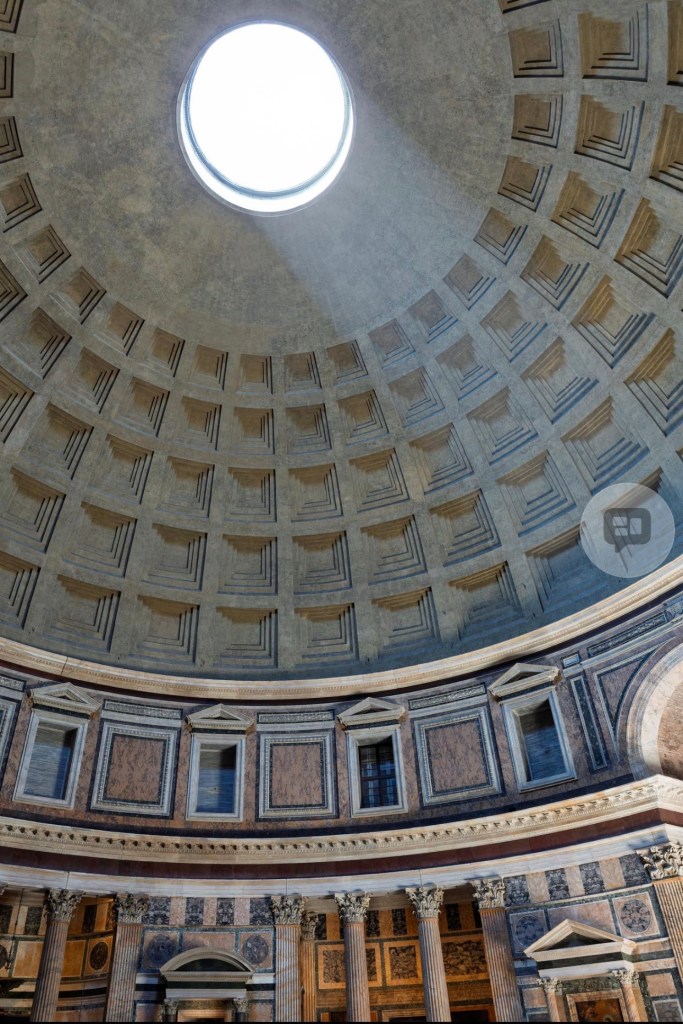
Il Pantheon, Roma: costruito da Marco Agrippa nel 27 a.C.
Ricardo F. Morin
March 12, 2026
Oakland Park, Florida
*
The Pantheon, Rome: an ancient form through which light continues to question the present.
Il Pantheon, Roma: una forma antica attraverso la quale la luce continua a interrogare il presente.
I
1.
This is not a message, a dictum, or a prescription.
Non è un messaggio, un motto o una prescrizione.
2.
It will not be a road that leads anywhere.
Non sarà un cammino verso qualcosa.
3.
Nor will it be an elegy for a poet.
Né sarà un’elegia per un poeta.
4.
It will be found there beyond the veil of appearances.
Sarà trovato lì al di là del velo delle apparenze.
5.
Beyond the conventions of our world.
Al di là delle convenzioni del nostro mondo.
*
II
6.
We will dream with open eyes.
Sogneremo ad occhi aperti.
7.
Pondering what our origin may be.
Ponderando quale sia la nostra origine.
8.
Will it truly be different from ours.
Sarà davvero diversa dalla nostra.
9.
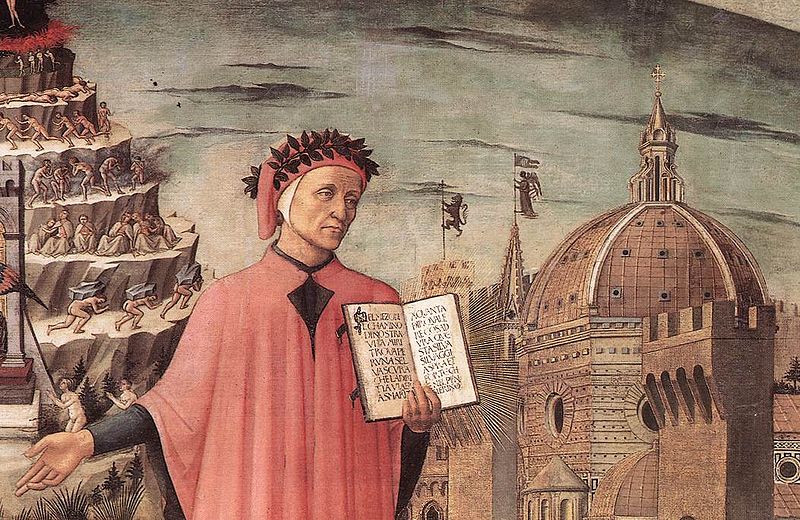
What is there in the tears of Dante Alighieri that is not also in ours.
Che cosa vi è nel pianto di Dante Alighieri che non sia anche nel nostro.
10.
What is there in the Italian language that sets it apart from others.
Che cosa vi è nella lingua italiana che la renda diversa dalle altre.
*
III
11.
What resides in the effigy of the word that prevents us from seeing beyond it.
Che cosa avrà l’effigie della parola che ci impedirà di vedere al di là di essa.
12.
Could we inquire into the meaning of our epiphanies.
Potremo indagare il significato delle nostre epifanie.
13.
Without the force of a revered symbol standing upon its illusory pedestal.
Senza la forza di un simbolo venerato posto sul suo piedistallo illusorio.
14.
What would be the uncertainty in the songbooks of Giovanni Boccaccio.
Quale sarà l’incertezza nei canzonieri di Giovanni Boccaccio.
15.
Would it not mirror our own awareness of love now.
Non sarà forse uguale alla nostra consapevolezza dell’amore adesso.
*
IV
16.
We have dreamed standing upright.
Abbiamo sognato in piedi.
17.
Wondering what lay within the rebellion of Giosuè Carducci.
Domandandoci che cosa vi fosse nella ribellione di Giosuè Carducci.
18.
Was it not perhaps the same as ours now.
Non era forse la stessa cosa della nostra adesso.
19.
And what was the ignorance of Francesco Petrarca.
E qual era l’ignoranza di Francesco Petrarca.
20.
Was it truly different from our own.
Era davvero diversa dalla nostra.
*
V
21.
Could we see without stepping outside the limits.
Potremmo vedere senza uscire dai limiti.
22.
Within the boundaries of a reality devoid of object.
Entro i confini di una realtà priva di oggetto.
23.
Would it coincide with the total movement of life.
Sarebbe in armonia con il movimento totale della vita.
24.
We would have dreamed of consolation.
Avremmo sognato di consolazione.
25.
Reflecting on what truth about our nature Luigi Pulci might reveal.
Meditando quale sarebbe la verità sulla nostra natura secondo Luigi Pulci.
*
*
VI
26.
Is there a distinction that surpasses the word without becoming division.
Esiste forse una distinzione che superi la parola senza essere divisiva.
27.
When we dream while walking.
Quando sogniamo camminando.
28.
Wondering whether our passion.
Chiedendoci se la nostra passione.
29.
Is different from the voice of yesterday’s poet.
È diversa dalla voce del poeta di ieri.
30.
What is the solitude of Poliziano and is it different from our own.
Qual è la solitudine di Poliziano ed è diversa dalla nostra.
*
VII
31.
What is gained through our knowledge of Carlo Porta.
Che cosa acquistiamo nella nostra conoscenza di Carlo Porta.
32.
Can we understand and listen to him in total silence.
Possiamo comprenderlo e ascoltarlo nel silenzio totale.
33.
Without uttering a single word within the sanctuary of our room.
Senza pronunciare una parola nel santuario della nostra stanza.
34.
While we dream of infinite vulnerability.
Mentre sogniamo una vulnerabilità infinita.
35.
Quietly asking what distortion may reside within our intellect regarding Giuseppe Ungaretti.
Chiedendoci silenziosamente quale sia la perversione del nostro intelletto riguardo a Giuseppe Ungaretti.
*
VIII
36.
Was this the cunning of those who substitute emptiness for desire.
Era questa l’astuzia di chi sostituisce il nulla al desiderio.
37.
We had dreamed of suffering.
Avevamo sognato la sofferenza.
38.
Unable to resist the call of common sense.
Incapaci di resistere al richiamo del buon senso.
39.
Without the certainty of understanding.
Senza la certezza della comprensione.
40.
Wondering whether the uncertainty of Torquato Tasso was also our own.
Chiedendoci se l’incertezza di Torquato Tasso fosse anche la nostra.
*
IX
41.
We dreamed when thoughts were absent.
Sognavamo quando i pensieri erano assenti.
42.
Wondering whether our heart was different from that of Lorenzo Da Ponte.
Chiedendoci se il nostro cuore fosse diverso da quello di Lorenzo Da Ponte.
43.
A wandering troubadour in an unjust world.
Un trovatore errante in un globo iniquo.
44.
Who prayed and gathered alms.
Che pregava e raccoglieva elemosina.
45.
In exchange for peace.
In cambio di pace.
*
X
46.
Was there something of the torment of Salvatore Quasimodo.
Vi era qualcosa del tormento di Salvatore Quasimodo.
47.
Different from the sadness over our own destiny.
Diverso dalla tristezza per il nostro destino.
48.
We had dreamed while remaining awake.
Avevamo sognato restando svegli.
49.
While we could see in an instant.
Mentre potevamo vedere in un istante.
50.
That without compassion tears remain incomplete.
Che senza compassione le lacrime restano incomplete.
*
XI
51.
Does Giovanni Raboni speak of an extraordinary love.
Parla Giovanni Raboni di un amore straordinario.
52.
Where opposites no longer exist.
Dove gli opposti non esistono.
53.
A force manifested through an indivisible movement.
Una forza manifestata da un movimento indivisibile.
54.
When we dream with open eyes.
Quando sogniamo ad occhi aperti.
55.
Wondering whether we will observe our reflection beyond words.
Ponderando se osserveremo il nostro riflesso al di là delle parole.
*
*