Posts Tagged ‘russia’

“Lens of Procedural Incoherence”

November 30, 2025

*

Ricardo Morín
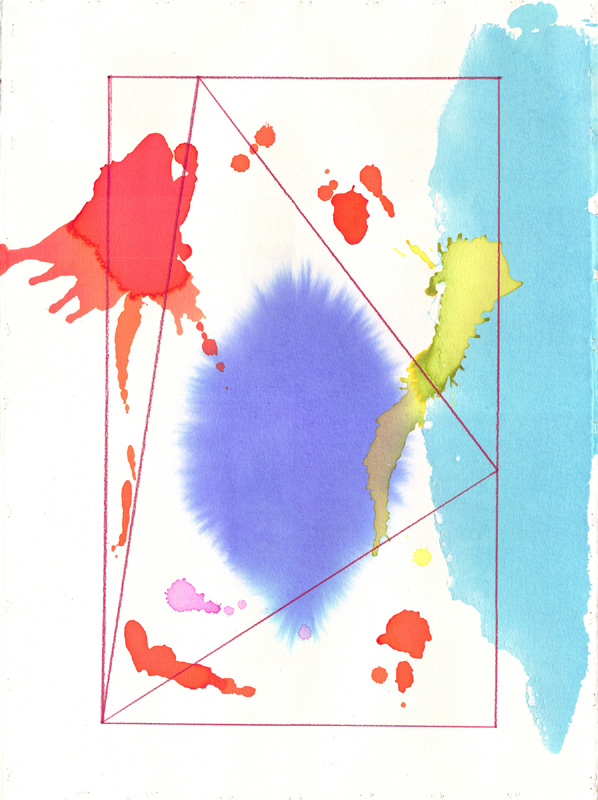
Triangulation 8: Lens of Procedural Incoherence
22″ x 30″
Watercolor and wax pencil on paper
2007

Ricardo Morín

November 2025

Oakland Park, Florida

This essay examines how procedures governing the use of force, the classification of conflict, and the articulation of self-defense diverge from declared principles in three areas of U.S. foreign policy:   the Trinidad maritime strike, the war involving Ukraine and Russia, and the conflict involving Israel, Palestine, and adjacent countries.   The analysis traces how inconsistencies arise when official language does not align with established norms, when criteria shift across comparable circumstances, and when the stated basis for action changes according to political need rather than procedural coherence.   The comparison highlights how these divergences contribute to instability and weaken interpretive clarity across international affairs.


1

The Washington Post report titled “‘Kill them all’: Hegseth’s battlefield rhetoric shaped Trump-era strike” (https://www.washingtonpost.com/national-security/2025/11/28/hegseth-kill-them-all-survivors-boat-strike/) describes a U.S. military operation near Trinidad in which a small vessel believed to be transporting narcotics was struck after being misidentified.   Defense Secretary Pete Hegseth issued a spoken directive “to kill everybody,” and the strike killed most individuals on board.   When surveillance identified two survivors clinging to debris, a second strike was ordered that killed them as well.   Subsequent explanations to Congress presented the follow-on strike as an effort to remove a navigational hazard, even though the presence of survivors had already been confirmed.   The Office of Legal Counsel (OLC), whose opinion later justified the actions as part of an armed conflict with designated narcoterrorist groups, introduced a legal classification that departed from the facts presented in the initial reports.   These elements create a single set of materials from which procedural coherence can be examined.

2

The procedural irregularity becomes visible once the chain of actions is placed in order:   an unverified assumption about the vessel’s identity, a directive that treated all occupants as combatants, a second strike executed after survivors were identified, and a later legal justification grounded in a classification that recast the operation as part of an armed conflict.   Each step relied on a different principle—assumption, directive, reinterpretation, and reclassification.   The divergence among these principles reveals how procedure shifted to accommodate the desired framing rather than guiding the action itself.   This shift does not imply motive; it demonstrates how administrative language can detach from the criteria that normally govern the use of force.

3

A similar procedural disjunction appears when U.S. positions regarding Ukraine and Russia are placed alongside the Trinidad case.  The United States publicly condemns Russia’s attacks on Ukrainian civilians and cites violations of distinction, proportionality, and accountability under the laws of armed conflict.   Yet discussions about scaling back support for Ukraine have introduced a reversal in which the procedural commitments used to justify condemnation of Russia are not consistently applied when considering the implications of reducing assistance to a State defending its sovereignty.  The shift from emphasizing legal norms to weighing political costs illustrates how procedures can be reshaped by circumstances, even when the stated principles remain unchanged.  The inconsistency does not rest in the declarations themselves but in the procedural reversals that appear when support for Ukraine becomes entangled with broader strategic calculations.

4

The conflict involving Israel, Palestine, and neighboring states such as Iran, Lebanon, and Yemen reveals another form of procedural divergence.   The United States affirms Israel’s right to self-defense and stops short of recognizing Palestine’s claim to self-determination in equal procedural terms.  The same criteria invoked to justify one party’s actions do not extend to the other party’s pursuit of sovereignty, even though both claims arise within a single territorial and political circumstance.   This asymmetry becomes more pronounced when regional attacks are considered:  the procedures invoked to justify Israeli strikes in response to threats from Iran, Lebanon, or Yemen differ from those applied to Palestinian actions, despite operating within an interconnected region where the consequences of one engagement affect all others.  The divergence reflects a procedural evasiveness that stabilizes one position while it leaves another without an articulated pathway toward recognition or resolution.

5

When the three circumstances—the Trinidad strike, the shifting position toward Ukraine and Russia, and the procedural asymmetry in the Israeli-Palestinian conflict—are examined together, their differences do not obscure the common pattern.   In each case, established procedures that ordinarily govern the use of force or the recognition of sovereignty diverge from the principles publicly invoked.   In Trinidad, the divergence takes the form of reclassification after the fact.   In Ukraine, it appears as a reversal in how the principles of civilian protection and territorial integrity are applied.   In Israel and Palestine, it emerges as a partial application of the right to self-defense without a corresponding recognition of the procedural requirements associated with sovereignty.   The alignment across cases arises from the way procedures shift to accommodate political needs rather than guiding action according to a stable set of criteria.

6

This alignment does not rest on the equivalence of the conflicts but on the consistency of the procedural departures.   Each case shows how the same vocabulary—armed conflict, self-defense, sovereignty, and civilian protection—operates differently when applied to different actors.   The procedures attached to these terms change according to circumstance rather than principle.   As a result, the meaning of each term becomes unstable.   What counts as an armed conflict in Trinidad, a sovereign defense in Ukraine, or a legitimate use of force in Gaza depends not on a uniform procedural standard but on the political frame selected in each instance.

7

A coherent foreign policy requires that procedures governing the use of force, recognition of sovereignty, and classification of conflict remain consistent across situations.   The Trinidad strike shows how procedures can be rearranged after the fact to protect the narrative of an operation.   The evolving position on Ukraine demonstrates how procedural commitments can weaken when strategic considerations gain priority.   The treatment of Palestinian claims and Israeli self-defense reveals how procedures can be selectively applied within the same region.   Together, these inconsistencies demonstrate how the absence of procedural coherence reduces interpretive clarity and complicates the relationships on which international stability depends.

8

The examination of these cases through a single lens does not equate them; it identifies the procedural incoherence that appears when the principles governing the use of force, recognition of sovereignty, and classification of conflict do not align with the actions taken.   The result is a field of international affairs in which the stated basis for action varies according to circumstance, and in which procedural language adapts to political needs rather than providing a stable standard for decision-making.   The inferences that follow are left to the reader, who can judge how the departure from procedural coherence shapes the credibility of U.S. conduct abroad.
“The Industry of Suspicion: Propaganda and Manipulation of the Digital Era in Latin America”

October 15, 2025


By Ricardo F. Morín

Oct. 14, 2025

In the post-truth landscape of Latin American media, where outrage has become currency, few figures illustrate the fusion of ideology and marketing as clearly as Inna Afinogenova.    She has become the most recognizable voice of authoritarian suspicion in the Spanish-speaking sphere.    From platforms such as Canal Red Latinoamérica, her discourse forms part of a vast network of disinformation spreading across the region, cloaked in the rhetoric of critical thinking and popular emancipation.    These networks—spanning Moscow, Tehran, Beijing, and several Latin American governments—follow a single script: to dismantle trust in liberal democracy, to weaken institutions, and to turn permanent doubt into a substitute for conscience.    In the name of informational sovereignty, they replace debate with discredit, analysis with suspicion, and truth with narrative.    Their power lies not in blatant falsehoods but in the emotional manipulation that transforms confusion into conviction.    Within this context, Afinogenova stands not as an isolated commentator but as the emblem of a sophisticated propaganda apparatus—one that disguises obedience to twenty-first-century autocracies beneath the costume of dissent.

Inna Afinogenova, born in Dagestan in 1989, is a Russian journalist who worked as deputy director of RT en Español until May 2022.    She resigned citing her disagreement with the war in Ukraine and the imposition of a state-sanctioned narrative of aggression.    Since then, she has collaborated with geopolitical and Latin American media such as La Base, produced by the Spanish newspaper Público, and participates in Canal Red, an audiovisual project led by Pablo Iglesias (former vice-president of Spain and founder of the left-wing party Podemos, now active in political media).    There she directs and hosts programs like CaféInna and contributes to political analysis, particularly on Latin America.    Her audience is broad and her reach on digital platforms considerable, which makes her an influential figure in the political and informational debates of the Spanish-speaking world.

Her trajectory, however, has not escaped controversy.    During her tenure at RT en Español, she was one of the network’s most visible faces in Latin America, amplifying narratives that portrayed Western powers as inherently deceitful and predatory.    An opinion column in The Washington Post described her as “the Spanish voice of Russian propaganda,” citing her recurring defense of positions favorable to the Kremlin.    In December 2021, two months before the invasion of Ukraine, she used her program Ahí les va to mock Western intelligence warnings of an imminent attack and predicted that “January will come, then February, and still no invasion,” implying that the media hysteria served the interests of NATO.    Such episodes, though later overtaken by events, exemplify her rhetorical method:    to transform skepticism into disbelief and disbelief into persuasion.

Following her departure from RT, Afinogenova has continued to operate in media circles ideologically aligned with the Latin American left, reinforcing a discourse that equates the Western press with manipulation and imperialism.    Outlets such as Expediente Público have noted her role in shaping narratives within partisan campaigns, often echoing state-sponsored or geopolitically motivated lines from Russia, China, or Iran.    Through Canal Red and Diario Red, both associated with Pablo Iglesias, she participates in content ecosystems that frequently recycle material from international broadcasters like CGTN.    In countries such as Honduras, she has been accused of contributing to media strategies that favor left-wing candidates under the guise of “sovereign communication.”   While the evidence does not show a direct chain of command linking her to a specific regime, the pattern of thematic consistency reveals a coherent ideological alignment rather than independent journalism.

This alignment has provoked renewed debate since the release of her recent video, “¿Premio Nobel de la Paz… o de la Guerra?”, where she presents the Nobel Peace Prize awarded to María Corina Machado as a maneuver of geopolitical design rather than a moral recognition.    The video does not examine facts so much as it interprets intentions, suggesting that the award serves Western influence instead of honoring civic courage.   The argument, though rhetorically effective, confuses correlation with causality.    It is possible to acknowledge the imperfections of international institutions without denying the ethical weight of public bravery.   The Nobel Prize, like every human institution, reflects judgments; but in this case, it distinguishes a life of civic risk undertaken without weapons, privileges, or access to the coercive power of the State.

Questioning motives is legitimate; insinuating conspiracies without evidence is not.   Every critical voice bears responsibility, for truth demands proportion, not projection.   The struggle of María Corina Machado cannot be reduced to the rhetoric of “Western intervention” or dismissed as “fabricated dissent.”   It belongs to the conscience of a people seeking self-determination through legitimate means after decades of dispossession.    Respecting pluralism requires granting others the same intellectual good faith one demands for oneself.   Debate ennobles democracy only when grounded in verifiable facts and moral clarity, not when suspicion itself becomes the argument.    Between necessary skepticism and systematic suspicion lies a moral frontier:    crossing it is to pass from thinking freely to serving without knowing it.


“The Politics of Erasure: Authoritarianism and Spectacle”

August 22, 2025

*


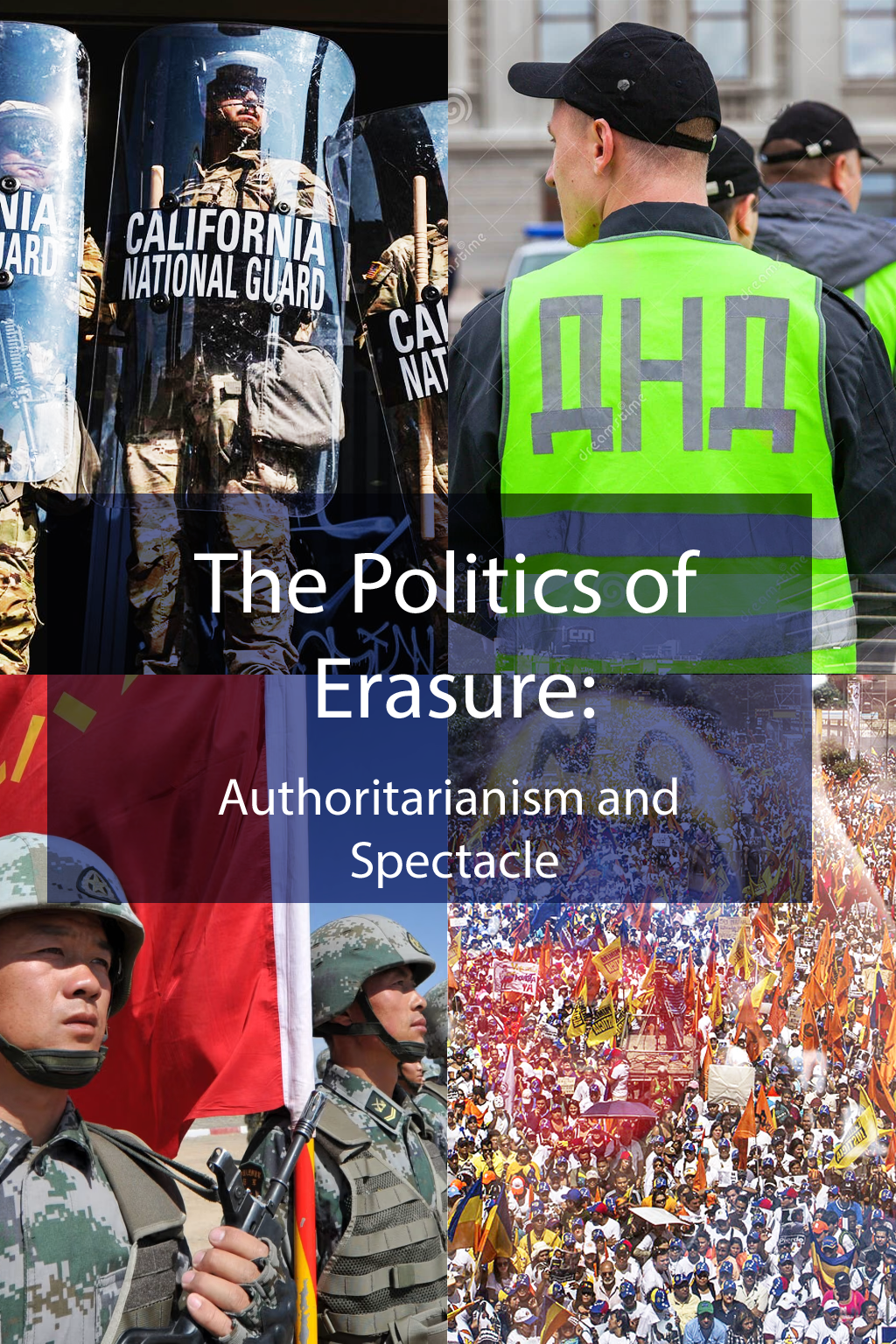
Cover design for the essay “The Politics of Erasure: Authoritarianism and Spectacle.” The composite image juxtaposes surveillance, militarization, propaganda, and mass spectacle to underscore how authoritarian regimes render lives expendable while legitimizing control through display.

By Ricardo Morín, In Transit to and from NJ, August 22, 2025

Authoritarianism in the present era does not present itself with uniform symbols. It emerges within democracies and one-party states alike, in countries with declining economies and in those boasting rapid growth. What unites these varied contexts is not the formal shape of government but the way power acts upon individuals: autonomy is curtailed, dignity denied, and dissent reclassified as threat. Control is maintained not only through coercion but also through the appropriation of universal values—peace, tolerance, harmony, security—emptied of their content and redeployed as instruments of supression. The result is a politics in which human beings are treated as expendable and spectacle serves as both distraction and justification.

In the United States, the Bill of Rights secures liberties, yet their practical force is weakened by structural inequality and concentrated control over communication. After the attacks of September 11, the USA PATRIOT Act authorized sweeping surveillance in the name of defending freedom, normalizing the monitoring of private communications (ACLU 2021). Protest movements such as the Black Lives Matter demonstrations of 2020 filled the streets, but their urgency was absorbed into the circuits of media coverage, partisan argument, and corporate monetization (New York Times 2020). What begins as protest often concludes as spectacle: filmed, replayed, and reframed until the original message is displaced by distractions. Meanwhile, the opioid epidemic, mass homelessness, and medical bankruptcy reveal how millions of lives are tolerated as expendable (CDC 2022). Their suffering is acknowledged in statistics but rarely addressed in policy, treated as collateral to an order that prizes visibility over remedy.

Venezuela offers a more direct case. The Ley contra el Odio (“Law against Hatred”), passed in 2017 by a constituent assembly lacking democratic legitimacy, was presented as a measure to protect tolerance and peace. In practice, it has been used to prosecute journalists, students, and citizens for expressions that in a democratic society would fall squarely within the realm of debate (Amnesty International 2019). More recently, the creation of the Consejo Nacional de Ciberseguridad has extended this logic to place fear and self-censorship among neighbors and colleagues (Transparencia Venezuela 2023). At the same time, deprivation functions as a tool of discipline: access to food and medicine is selectively distributed to turn scarcity into a means of control (Human Rights Watch 2021). The state’s televised rallies and plebiscites portray unity and loyalty, but the reality is a society fractured by exile, with over seven million citizens abroad and those who remain bound by necessity rather than consent (UNHCR 2023).

Russia combines repression with patriotic theater. The 2002 Law on Combating Extremist Activity and the 2012 “foreign agents” statute have systematically dismantled independent journalism and civil society (Human Rights Watch 2017), while the 2022 law against “discrediting the armed forces” criminalized even the description of war as war (BBC 2022). Citizens have been detained for carrying blank signs, which demonstrates how any act, however symbolic, can be punished if interpreted as dissent (Amnesty International 2022). The war in Ukraine has revealed the human cost of this system: conscripts drawn disproportionately from poorer regions and minority populations are sent to the frontlines, their lives consumed for national projection. At home, state television ridicules dissent as treason or foreign manipulation, while parades, commemorations, and managed elections transform coercion into duty. The official promise of security and unity is sustained not by coexistence but by the systematic silencing of plural voices, enforced equally through law, propaganda, and ritual display.

China illustrates the most technologically integrated model. The 2017 Cybersecurity Law and the 2021 Data Security Law require companies and individuals to submit to state control over digital information and extend surveillance across every layer of society (Creemers 2017; Kuo 2021). Social media platforms compel group administrators to monitor content and disperses the responsibility of conformity to citizens themselves (Freedom House 2022). At the same time, spectacle saturates the landscape: the Singles’ Day shopping festival in November generates billions in sales, broadcast as proof of prosperity and cohesion, while state media showcases technological triumphs as national achievements (Economist 2021). Entire communities, particularly in Xinjiang, are declared targets of re-education and surveillance. Mosques are closed, languages restricted, and traditions suppressed—all in the name of harmony (Amnesty International 2021). Stability is invoked, but the reality is the systematic denial of dignity: identity reduced to an administrative category, cultural life dismantled at will, and existence itself rendered conditional upon conformity to the designs of state power.

Taken together, these cases reveal a common logic. The United States commodifies dissent and normalizes abandonment as a permanent condition of public life. Venezuela uses deprivation to enforce discipline and the resulting compliance is publicly presented as loyalty to the state. Russia demands sacrifice and transforms coercion into patriotic duty. China fuses surveillance and prosperity and engineers conformity. Entire communities are suppressed in the name of harmony. The registers differ—commercial, ritualistic, militarized, digital—but the pattern is shared: dissent is stripped of legitimacy, lives are treated as expendable, and universal values are inverted to justify coercion.


References

  • ACLU: “Surveillance under the USA PATRIOT Act”. New York: American Civil Liberties Union, 2021. (This article documents how post-9/11 legislation expanded state surveillance in the United States and framed “security” as a justification for reducing privacy rights.)
  • Amnesty International: “Venezuela: Hunger for Justice. London: Amnesty International”, 2019. (Amnesty International reports on how Venezuela’s Ley contra el Odio has been used to prosecute citizens and silence dissent under the rhetoric of tolerance.)
  • Amnesty International: “Like We Were Enemies in a War: China’s Mass Internment, Torture and Persecution of Muslims in Xinjiang”. London: Amnesty International. 2021. (Amnesty International provides evidence of mass detention, surveillance, and cultural repression in Xinjiang carried out in the name of “harmony” and stability.)
  • Amnesty International: “Russia: Arrests for Anti-War Protests”. London: Amnesty International, 2022. (Amnesty International details the systematic arrest of Russian citizens, including those holding blank signs, under laws claiming to protect peace and order.)
  • BBC: “Russia Passes Law to Jail People Who Spread ‘Fake’ Information about Ukraine War.” March 4, 2022. (News coverage of Russia’s 2022 law criminalizing criticism of the war shows how “discrediting the armed forces” became a punishable offense.)
  • CDC.: “Opioid Overdose Deaths in the United States. Atlanta: Centers for Disease Control and Prevention”. 2022. (The CDC provides statistical evidence of widespread loss of life in the U.S. and underscores how entire populations are treated as expendable in public health.)
  • Creemers, Rogier: “Cybersecurity Law of the People’s Republic of China”: Translation with Annotations. Leiden University, 2017. (An authoritative translation and analysis of China’s 2017 Cybersecurity Law illustrate how digital oversight is institutionalized.)
  • UNHCR: “Refugee and Migrant Crisis in Venezuela: Regional Overview”. Geneva: United Nations High Commissioner for Refugees, 2023. (This report offers figures on the Venezuelan exodus and highlights the mass displacement caused by deprivation and repression.)

“Global Authoritarianism and the Limits of Traditional Analysis”

February 28, 2025

*

*


~

The war in Ukraine is often presented as a geopolitical confrontation between the West and Russia, but this interpretation can obscure a deeper reality:     the rise of authoritarianism as a global force.     Noam Chomsky, one of the most influential voices in the critique of U.S. foreign policy, has argued that U.S. hegemony is the primary factor driving the conflict.     His approach, rooted in Cold War logic, has been essential for understanding global power dynamics.     However, one must question whether this framework remains sufficient to analyze the coordinated expansion of authoritarian regimes in the world today.

The issue is no longer simply whether U.S. policy contributed to Russia’s aggression, but whether democracies can withstand the deliberate advance of governments seeking to consolidate power at any cost.     What is at stake transcends Ukraine’s sovereignty:     it is the survival of democracy in the world.

Chomsky argues that NATO’s expansion and U.S. financial dominance exacerbated tensions with Russia and limited diplomatic options.     His vision proposes a world in which power is distributed between the United States, Europe, China, and Russia, which he believes would create a more stable and just balance.     This perspective has been crucial in questioning the excesses of U.S. interventionism.     In the present world, however, where authoritarianism is not only reacting to the West but also actively seeking to reshape the global order, is a framework based solely on containing U.S. hegemony sufficient?

The rise of authoritarian regimes is not merely a response to Western influence; it is a deliberate strategy to consolidate power.     While Chomsky has emphasized the importance of distributing global power, it is crucial to analyze the nature of those who would fill this void.     Russia and China are not simply seeking a multipolar stability; their actions reflect an attempt to exert absolute control, without democratic constraints.     Chomsky’s critique helps us understand the roots of international conflicts, but it may need to be expanded to account for how these regimes are transforming the very structure of global politics.

One challenge in applying Chomsky’s traditional analysis to the present is that contemporary authoritarianism no longer aligns solely with past ideological divisions.     It is no longer a struggle between socialism and capitalism, or left and right.     Rather, these regimes share a common objective:     dismantling democratic institutions to ensure their permanence in power.

Putin, for instance, invokes Soviet nostalgia while prohibiting any critical reassessment of Stalinism.     China blends State capitalism with absolute political control.     Hungary and India, once considered democracies aligned with the West, have adopted authoritarian models.     Meanwhile, the U.S. far-right, which historically opposed communism, has begun to adopt the Kremlin’s narrative, portraying it as a defender against “globalist elites.”

This ideological alignment makes modern authoritarianism more dangerous than ever.     It not only transcends traditional power blocs but is also reinforced through strategic alliances, mutual support, and the erosion of democracies from within.     This is perhaps most evident in the United States.     The presidency of Trump revealed an unexpected vulnerability:     the possibility that authoritarianism could thrive within the world’s most influential democracy.     Here, the debate is no longer reduced to a question of isolationism or interventionism, but to the real risk of autocratic tactics being normalized in domestic politics.

The Trump administration sent contradictory signals regarding the Kremlin, weakening the principle of deterrence.     Rather than establishing a clear stance against authoritarian expansion, its ambiguity allowed regimes like Putin’s to interpret the lack of firmness as an opportunity to act with impunity.     Figures such as Marco Rubio have advocated for an unequivocal stance that would reinforce U.S. strategic credibility, while the inconsistency in the Trump administration’s foreign policy contributed to the perception that the West was divided and hesitant.

This weakening of democratic leadership has not occurred in a vacuum.     The globalization of authoritarianism is a phenomenon in which autocratic regimes not only directly challenge democracies but also back one another to evade sanctions, subvert international pressure, and consolidate their internal rule.     The invasion of Ukraine must be understood within this framework:     it is not just a regional conflict or a reaction to NATO, but a calculated move within a broader strategy to weaken global democracy.

For decades, critics like Chomsky have been instrumental in highlighting the effects of U.S. dominance on global politics.     His analysis has allowed us to understand how U.S. hegemony has influenced numerous conflicts.     However, the evolution of authoritarianism raises questions that require expanding this perspective.     The greatest threat to democracy is no longer exclusively U.S. power, but the consolidation of a global autocratic model advancing through coordinated strategies.

Blaming the U.S. for every geopolitical crisis may overlook a crucial shift:     authoritarian regimes have moved from being a reaction to Washington’s influence to becoming an active strategy to replace the Western democratic model.     Recognizing this shift does not absolve the U.S. of its failures in foreign policy, but it does demand an understanding that countering authoritarianism requires more than constant criticism of its hegemony.     It requires recognizing that democracy faces a coordinated and unprecedented threat.

Chomsky’s vision of a multipolar world is, in theory, appealing.     However, what would this imply in practice if the actors filling the void left by the U.S. are not interested in preserving democracy?     The real challenge is not merely containing Putin’s territorial ambitions but preventing his model of governance—based on dismantling democratic institutions—from gaining traction in the West.

Chomsky remains one of the most incisive critics of U.S. foreign policy, and his work has been fundamental in understanding the effects of power on international relations.     His analysis has shed light on the flaws of interventionism and the dynamics of global hegemony.     The world, however, has changed, and so have the challenges facing democracies.     Today, the crisis in Ukraine is no longer limited to a debate over NATO, U.S. intervention, or Western hypocrisy.     It is part of a broader struggle between democracy and autocracy, a struggle that does not end at Ukraine’s borders but extends to the very political institutions of the West.

If we fail to recognize this shift, we risk not only losing Ukraine but also underestimating the scope of the threats facing democracies worldwide.     Neutrality is no longer an option when the challenge is the survival of free societies.     Beyond the mistakes of the West, the rise of authoritarianism demands a response that goes beyond constant criticism of U.S. hegemony and instead embraces the active defense of democratic values wherever they are under threat.

*

Ricardo Federico Morín Tortolero

February 28, 2025; Oakland Park, Florida