There’s a certain kind of person the world seems to admire—sharp-tongued, composed, deliberate. He moves through life as if he’s never doubted the sound of his own voice. His gestures are practiced, his opinions unshakable. It’s a performance of authority, and to many, it’s compelling.
But I’ve never fit that mold. I don’t hold myself like someone bracing for a fight with the world. I don’t presume to master a room. And more and more, I’ve come to believe that what makes a person is not how forcefully he presents himself, but how honestly he shows up.
Vulnerability has never been fashionable. It doesn’t draw applause or dominate the stage. But it’s where I’ve found the most truth. Not in being right, or revered, or untouchable—but in admitting how little I know, how often I’ve failed, and how much of life resists explanation.
We’re taught to act as if we’ve earned our place—through effort, through cleverness, through some innate worth. But I’ve lived long enough to see how much is assumed, how much is favored, how many doors open not because of merit but because of circumstance, appearance, proximity to power. The world flatters performance. It often mistakes loudness for depth, certainty for wisdom.
But beneath all that, we’re fallible—achingly so. We get things wrong. We hurt people. We retreat when we should have stayed, and speak when silence would have been kinder. We tell ourselves stories to survive, not always to understand.
And yet, that fallibility isn’t shameful. It’s not a flaw to be punished—it’s the most human part of us. The mistake is not in being wrong; it’s in pretending we’re not. Intimacy begins where performance ends—when we stop curating ourselves and let others see what is: our confusion, our fear, our imperfect love.
I’ve stopped wanting to impress. I want to be known. I want to know others—not through their accomplishments or their poses, but through the quiet truths they carry. I don’t need anyone to be flawless. I need them to be present, to meet me somewhere beneath the surface.
That, to me, is strength. Not the kind that commands a crowd, but the kind that sits across from others, unguarded, and says, “Me too. I don’t have it either.”
The world may never reward dishonesty with applause. But it will reward it with connection—with moments that feel real, human, and lasting. And in the end, I think that’s the only recognition that ever matters. Not the illusion of certainty or the performance of strength, but the willingness to return, again and again, to the quiet inside us—the one where we are fallible, open, and fully alive.
Silence Ten Ricardo Morín, Oil on linen scroll 43” x 72″ x 3/4″ 2012
*
~
Author’s Note
This is a work of fiction inspired by historical events.While the story is rooted in real-world dynamics, all characters, dialogues, and specific incidents are entirely fictional.Any resemblance to actual persons, living or dead, is purely coincidental.
This narrative is not intended to depict, portray, or comment on any real individuals or events with factual accuracy.It is a literary exploration of themes relevant to society, history, and the human experience.
Ricardo F. Morín Tortolero, February 10, 2025
Oakland Park, Florida
~
*
List of Characters:
1. The Champions of Order and Hope:
• Aurelia:A principled guardian of constitutional values.
Traits:Wise, steadfast, compassionate. She embodies the enduring spirit of order.
• Marcos:A dedicated public servant bridging tradition and modernity.
Traits: Honest, diligent, empathetic. He upholds institutional integrity.
• Elena:A unifying presence with calm resolve and moral clarity.
Traits: Reflective, compassionate, inspiring. She acts as the moral compass of her community.
2. The Figures of Disruption:
• Soren:A brilliant yet reckless young tech savant.
Traits: Intelligent but impulsive, morally ambiguous. His actions expose the risks of unvetted innovation.
• Vera: An ambitious bureaucrat exploiting emerging technologies for gain.
Traits: Charismatic, calculating. She represents the seductive nature of power when ethics are compromised.
• Xander:A populist firebrand unsettling the established order.
Traits: Persuasive, rebellious, unpredictable. He stokes division with promises of rapid change.
• Don Narciso Beltrán: An impetuous, self-indulgent octogenarian.
Traits: Arrogant, narcissistic. He parades his delusions of “perfection,” and embodies the dangers of unchecked ego.
Ideology: Seeks to displace marginalized groups to impose his distorted vision of order.
3. The Keepers of Balance:
• Renato: A pragmatic administrator between innovation and tradition.
Traits: Level-headed, fair, resourceful. He exemplifies compromise without ethical sacrifice.
Traits: Nurturing, experienced, reflective. She bridges past lessons with current challenges.
• Iker:A dedicated technician ensuring system stability.
Traits: Conscientious, methodical, courageous. He represents the unsung heroes of critical infrastructure.
*
Act I
A Nation at the Precipice
The air crackles with change—raw, electric, untempered. It surges through the avenues where history’s stones, heavy with forgotten oaths, bear silent witness to promises now unraveling. Beneath the alabaster facades of institutions once tempered by order, a quiet assault spreads. The people feel it in the marrow of their days, in the uneasy hush between headlines, in the glint of urgency behind every argument.
Once, the land moved to a measured cadence, set by laws unyielding to fleeting tempers. Now, the streets pulse with a different rhythm—a fevered drive toward something new, unburdened by the slow wisdom of the past. Progress and tradition, each staking its claim, wrestle in the dust of a nation standing on the edge of itself.
In the halls of power, where marble once stood as a bulwark against unchecked tides, whispers stir—of systems too rigid to bend, of minds too restless to wait. The parchment of governance, crisp with centuries of deliberation, meets the friction of unfettered innovation. Some call it progress, others self-destruction.
Yet beneath this clash, a deeper question remains: Does a nation endure by perfecting its foundations or by discarding them altogether? The answer, suspended between past and future, waits to be spoken—if only the voices of the present dare to choose.
*
Act II
The Shattering
It begins not with an explosion, but with a single breach—silent, insidious, precise. A door left ajar in the corridors of power, a signature scrawled where it should not be, a system once thought inviolable suddenly laid bare. The nation awakens to the aftermath, uncertain whether the ground beneath them has merely shifted or collapsed entirely.
In the din of speculation, two figures emerge—Soren, the architect of controlled chaos, and Don Narciso, the whisperer of gilded lies. One wields disruption as a scalpel, cutting through the sinews of governance with cold precision. The other, a master illusionist, cloaks upheaval in the fabric of righteousness and bends perception until even the most steadfast begin to doubt the contours of reality.
The people watch, rapt and confused. Some see salvation in the rise of these forces, a chance to shed the weight of old constraints. Others, those who still listen for the heartbeat of the republic, sense the tremor beneath their feet and wonder: Is this the moment when the foundation finally gives way?
The stage is set. The struggle is no longer abstract. The breach is real, and the hands that hold the future are already at work to reshape it in their own image.
*
Act III
The Gathering Storm
The breach widens. What was once an isolated fracture in the nation’s foundation now spreads and courses through institutions like veins turned septic. The days grow heavier with uncertainty, and in the void where order falters, new forces emerge—some to defend, others to dismantle, and a few to navigate the shifting ground.
The Call to Defend
Aurelia moves first, a voice of clarity in the rising chaos.Where others falter in fear or cynicism, she stands unyielding, wielding conviction like a torch against the encroaching dark. By her side, Marcos, a man of reasoned strength, gathers those who refuse to let history slip into ruin. And Elena, keen-eyed and relentless, sharpens truth into a blade that cuts through the veils of distortion spun by those who seek to reshape reality to suit their designs.
The Forces of Disruption
But against them rise the architects of disorder. Soren, ever the master of fracture, feeds the discord, to ensure no side gains enough ground to restore stability. Vera, a specter of unrepentant ambition, twists uncertainty into leverage to secure power in the shadows where the law’s reach begins to blur. Xander moves openly, charismatic and mercurial, a revolutionary to some, a destroyer to others. And Don Narciso, ever the weaver of illusions, speaks in riddles that soothe even as they deceive.
The Balance Seekers
Yet not all choose a side in the battle unfolding before them. Renato, the quiet strategist, watches, waits, and seeks the threads that might yet be rewoven before the fabric tears beyond repair. Carmen, pragmatic, negotiates between factions, desperate to slow the slide toward chaos. And Iker, burdened by both past and present, works in the shadows—not to seize power, but to ensure that whatever future emerges still bears the echoes of what was once whole.
The tension thickens. Every movement, every decision, tips the scale. And as the storm gathers on the horizon, one truth becomes clear: no one will emerge unchanged.
*
Chapter IV
The Masses
The masses do not lead; they follow, but with a fervor that shakes the very bones of the nation. Their cries rise in streets and squares, across glowing screens and whispered corners. What began as discontent has become something more—an anthem of anger, stripped of nuance, sharpened into conviction.
Their grievances, once tethered to reality, now drift free, shaped by the voices they have chosen to trust. Soren’s rhetoric courses through them like wildfire, his calculated fractures swelling into irreparable chasms. Vera’s ambition feeds their hunger for upheaval and promises power to those who feel unseen. Xander, the relentless provocateur, transforms their resentment into action, while Don Narciso shrouds them in visions of grandeur, while whispering to their ears that history bends to the will of those bold enough to seize it.
They speak not in dialogue, but in echoes—those that amplify what stirs their fury and silence what does not. To them, compromise is betrayal, and reflection is weakness. They are the force that makes destruction possible, not by design, but by sheer, unrelenting belief.
The Guardians of Common Sense
But against the tide stand those who refuse to be swept away. They are quieter, less visible, but no less resolute. They do not rally for glory or scream for vengeance; instead, they guard the ground beneath their feet, as they hold firm against the storm.
Aurelia’s voice reaches them, measured and unwavering and cut through the noise like a distant bell. Marcos gives them structure and remind them that reason is not passivity, but discipline. Elena arms them with truth and asserts that in an age of distortion, clarity itself is a weapon.
They are the ones who ask, What is gained? What is lost? They are not blinded by the promise of a new order nor lulled into complacency by the old. They see both the cracks and the foundation, and they stand—not to defend power, but to defend sense.
The Tipping Scales
The two factions watch each other with wary eyes, their struggles intertwining in ways neither fully understands. The Reason Without Reason surges forward to force change and break barriers, tgough often without knowing what they will build in the wreckage. The Guardians of Common Sense push back, not against progress, but against the recklessness that would see wisdom discarded in the name of speed.
And in this battle for the nation’s soul, it is neither the heroes nor the antiheroes who decide the outcome. It is these voices from below—the masses, the multitude, the unseen tide—that will tip the scales.
Which way they fall remains uncertain.
*
Chapter V
The Breaking Point
The streets tremble beneath the weight of decision. What once simmered in whispers and warnings now roars in the open—ideals no longer debated but brandished like weapons. The air, thick with the residue of old promises and new betrayals, pulses with the certainty that whatever comes next will leave nothing untouched.
The antiheroes make their final gambit. Soren, the tactician, moves like a shadow to orchestrate disorder where unity threatens to form. Vera stands at the precipice, poised to seize the moment, her ambition a blade sharpened by the chaos she helped ignite. Xander, the firebrand, revels in the combustion, his voice rising above the masses as they lurch toward destiny. And Don Narciso, the illusionist, offers the vision of victory—and never reveals for whom.
Across the divide, the heroes hold their ground. Aurelia, the last sentinel of reason, refuses to yield to hysteria. Marcos, steadfast and deliberate, gathers the scattered fragments of law and order and will them into an unbreakable shield. Elena, undeterred by the tide of misinformation, hurls truth into the storm and hopes that it will land where eyes have not yet closed.
The Final Blow
The masses surge, a force neither entirely controlled nor entirely free. The Reason Without Reason, pushed to their limits, demand collapse or conquest, their fury unshaken by consequence. The Guardians of Common Sense, though fewer, stand firm, their resistance not in rage but in resolve. The weight of their struggle shifts the balance, their voices merge into a single question: Will we break the foundation, or will we stand upon it?
The Reckoning
From the depths of the nation’s memory, the constitutional order awakens. The slow machinery of governance, thought too feeble to withstand the tide, begins to move. Checks long ignored now make themselves known. Laws, institutions, the silent architecture of balance—these rise, not as relics, but as forces unto themselves. The battle is no longer merely between men and their ambitions; it is between the transient and the enduring, the fleeting impulse and the structure that has weathered centuries.
In this moment, the outcome is not determined by strength alone, nor by passion, nor even by strategy. It is decided by what the nation remembers of itself—and whether it chooses to preserve that memory or cast it into the void.
The final choice looms. And once made, there will be no turning back.
*
Chapter VI
The Restoration
The dust settles, though the echoes of upheaval still linger in the air. The streets, once filled with the clamor of irreconcilable voices, now murmur with something quieter—fatigue, reflection, the tentative steps of a people relearning their own rhythm.
The battle did not end in conquest, nor in ruin, but in something subtler: the slow, stubborn reassertion of order. Not imposed from above, nor demanded by force, but reclaimed—piece by piece—by the quiet mechanisms that have long bound the nation together.
The institutions that once seemed fragile now reveal their hidden strength—not in their invincibility, but in their ability to bend without breaking. The checks, once dismissed as relics, prove their purpose—not by preventing crisis, but by ensuring that no single force, no matter how fervent, may hold absolute sway.
The antiheroes do not vanish. Soren retreats into the shadows and wait for another fracture to exploit. Vera, calculating, pivots to survive and adapts her ambitions to the shifting landscape. Xander’s voice dims but does not disappear, a reminder that dissent, even when reckless, is never truly extinguished. And Don Narciso? He smiles, enigmatic, because he knows that perception is never fixed—it only shifts.
Nor do the heroes claim triumph. Aurelia, weary but unbowed, understands that victory in democracy is never final. Marcos, pragmatic, turns to the long work of rebuilding what was shaken. Elena, relentless as ever, ensures that truth remains the foundation upon which all else is built.
The people—the masses who had been both the fuel and the fire—find themselves changed. Some remain embittered, unable to accept that the world they envisioned has not come to pass. But others, those who stood against destruction not out of fear but out of faith in something steadier, see that the foundation still holds.
The nation breathes again. Not in perfect harmony, not without scars, but with the knowledge that it has endured. That it will always endure—not through force or fury, but through the resilience of principles that, though tested, remain unbroken.
The storm has passed. But the sky, though clearing, holds the memory of what has been.
And what may come again.
*
Epilogue
The Quiet Turning
Time does not erase conflict, nor does it promise resolution. What it offers, instead, is distance—a vantage from which to see not only what was lost, but what endured.
The nation stands, as it always has, not unchanged, but unbroken. The tides of extremism will rise again, as they always do, for there is no final victory over the impulses of fear, ambition, and unrest. The masses, shifting, will be drawn to extremes, then back toward balance, as if testing the edges of reason before returning to the center.
Yet within this ceaseless motion lies the quiet rhythm of renewal. Accountability, once threatened, reasserts itself. Balance, though fragile, holds. And hope—fragile, tested, but unwavering—persists, not as illusion, but as choice.
The shroud that once veiled perfection has lifted and reveals not flawlessness, but resilience. Not certainty, but the will to seek it.Not a world without discord, but one where unity is still possible—not through sameness, but through a shared commitment to something greater than division.
The story does not end. It continues, written in the choices yet to be made. And within those choices lies the promise that, though the storm may return, so too will the light.
Untitled Landscape 22″ x 30″ Watercolors, charcoal, oil, white-out and ink on paper 2006
Prologue
This is not a historical account, but an invention, honest and emotional, a dream woven into the baroque folds of poetic prose. It is not a logical manifesto, but a sensuous invocation of a place that has haunted my imagination.
Ricardo F. Morín Tortolero,
March 12, 2026, Oakland Park, Florida
*
Ulysses knew it as the land of the sirens, a place that, during the Middle Ages, would rise to become a great maritime empire. Protected at the foot of the imposing Mount Cerreto, the Duchy of Amalfi found refuge here, as if enveloped in the embrace of a chrysalis of ancestral muses.
The tragedy “The Duchess of Malfi” by John Webster, the realism of Henrik Ibsen, and the Gesamtkunstwerk of the much maligned Richard Wagner have echoed in the destiny of this legendary caryatid of pleasure perched above the Gulf of Salerno. Among the cliffs the thunderous dance of cascading mountains unfolds with magnificence. They seem to move to the rhythm of the Podalirio butterfly, recalling the less venerable Crusades, the cloisters, and the monasteries of earlier centuries. The mountains and the sea stacks still exhale the residue of a barbaric metamorphosis carved by innumerable civilizations. And yet today our restless gaze traces the origins of the past while discovering the seductive fragrance of la dolce vita.
Carved into a promontory at the edge of a precipice, between the villages of Cetara and Vietri, celebrated for their anchovies in oil and their multicolored ceramics, rises our magnificent hotel, the Cetus. In the chromatic cacophony of the rainbow and its rocky outcrops, the eternal compass guides the rowing regattas that wind along the coastline, navigating from south toward the northwest, from the Tyrrhenian Sea to the Ligurian Sea.
Nearby the Canneto River descends through the Valley of the Mills, where the whisper of the wind carries Renaissance ballads written upon the famed bambagina paper. As though we were turning back time, the fjords fold beneath a radiant sky touched by the delicate mist of cold winds. We hear the hum of bees and breathe the piercing aroma of sfusato lemons from Mount Etna, while limoncello releases its intoxicating golden essence. The depths of the peninsula exhale the taste and fragrance of its most captivating fruits.
So intense is the essence of the Amalfi Republic that it seems to sow lava into the turquoise waters and upon the promontories that for centuries protected it from collapse. We sing the Falalella beneath the twilight haze and drift along the shimmering coastline of Salerno, Positano, and Ravello, gently bathed by a cool drizzle. With the sway of life, crimson clouds mirror themselves in still waters, casting their glow upon the blue bay of Salerno.
Amalfi, jewel of Salerno, is framed by the region of Campania, where the majestic sanctuaries of Herculaneum and Paestum rise solemnly to greet us. From the ashes that once wove mythical times, the archaeological expeditions of eighteenth century Pompeii revealed, among many discoveries, ancient frescoes depicting the Cycle of the Roman Mysteries as well as the conquests of Alexander the Great.
The touch of ancestral hands still resonates through our senses. Sweet is the vision beneath the spring sun. It leaps from ravine to valley and swaying like a cascading stair until it reaches the ancient pier. There we had anchored, near the dock from which the great galleys once departed toward unknown lands. They, like my beloved and I, have departed as well, leaving behind the vision of the paradise of the sirens.
*
Ricardo F. Morín, March 12, 2026, Oakland Park, Fl
Ricardo MorínAscension, CGI, 2005 by Ricardo Morín
Introduction
Power, in its rawest form, bends and distorts. It reflects the body depicted in Ascension as it strains against the scaffolding of control—and embodies the turbulent forces we inhabit.[1] These elements frame a reflection not only on Venezuela’s struggles but on the universal gravity of power that entraps us all. I wonder if blaming these forces oversimplifies a system thriving on collective complicity. Can self-compassion hold us accountable without succumbing to guilt—when despair paralyzes?
Positioned between The Stream of Emery, a fable of renewal, and Unmasking Disappointment, an upcoming essay on historical reckoning, this story continues a journey through entanglement, responsibility, and the enduring search for self-liberation.[2]
~
THE FETTERS OF POWER
I
While my husband drove from Fort Lauderdale to Orlando, I had a conversation with my friend BBT. It was one of those unsettling conversations that reveals how vast forces can overwhelm us. He spoke of power, not as a tool, nor even as a desire, but as the primal force that pushes humanity toward authoritarian oligarchies. Greed, according to him, is secondary, a symptom of something deeper: the irresistible gravity of power itself.
II
I thought of Michel Foucault and his theories on power, and for a moment, I felt a flash of clarity. But the more I tried to articulate his ideas, the more inadequate they seemed. The weight of reality crushes academic musings as the world descends into ruin. We fail to recognize ourselves as creatures trapped by our own errors.
III
Then, I remembered my cousin Ivelisse’s voice, trembling while holding back tears, as she recounted Nicolás Maduro’s inauguration, January 10. For her, it was not just a political event; it was a symbol of our fall, of our dissolution as a people. Her despair was mine, and ours was Venezuela’s—a nation habitually entrusting faith in saviors who never arrive.
IV
Across the world, power and greed—legitimized by crime or not—justify the rise of tyranny. And we, in our confusion, have no answers in the face of these tides of unchecked ambition.
V
BBT, ever pragmatic, said simply: “Just enjoy yourself.” His advice both stung and comforted me. But how could I? How could I enjoy anything when the world feels so fragile?Every thought circles back to the same questions: What can I do to counteract these forces? How can I make sense of this struggle?
VI
Still, I cling to one belief: that one day, a collective awakening will emerge, a rising tide of awareness. If there is to be a better world, it will not come from saviors or struggles for power, but from an alignment of minds and hearts. My role, if I have one, is to contribute to that legacy—not for fame or ambition, but for peace.
VII
Peace is what I seek, not only for myself but for others: a legacy that transcends my own life, one that serves as a quiet resistance to the forces of greed and power. Only then, perhaps, will I find the simplicity BBT spoke of—not as surrender, but as understanding.
Postscript
It is easy to lose sight of the deeper currents that drive us, particularly when we are immersed in the tides of ambition, power, and cynicism. In moments of crisis, these forces surge, often obscuring our judgment and steering us off course. Yet, amidst their overwhelming presence, one truth remains: surrendering to love sustains us.
Ultimately, what really matters is love.It alone sustains us above all else.It can anchor us against the forces that threaten to lead us astray.
Perhaps with that recognition is where peace begins—not in the world outside or its lack of validation, but in the quiet acceptance of what we can change, and what we cannot.
Ricardo Federico Morín Tortolero, Oakland Park, Fl. December 29, 2024
Dedicated to Billy Bussell Thompson and David Lowenberger
In a village at the edge of a forest lived a woman named Elen. From early on, a great disquiet stirred within her.
Piecing together fragments of others’ insights, she took refuge in books and scrolls. With every answer uncovered, more questions remained.
“Elen, why do you never rest?” her neighbors asked as they watched her pace the village paths.
“Because something is calling to me,” she replied. “I feel a purpose, a truth . . . . But I don’t know where to look.”
One day, a pilgrim named Damian came to the village. His eyes illuminated him and news of his arrival spread quickly. Elen was eager to know him.
She led him to her study and pointed out her books and maps.
“I’ve been devoted to research,” as she gestured toward the shelves. “But the more I look, the more incomplete I feel. I’m filled with desire, shame . . . . I long for peace. I thought knowledge would complete me. Instead, something is missing. How did explorers of old find their voice?”
Damian glanced at her and replied. “You treat knowledge as shackles. It’s only a touchstone; what you need is instinct.”
Elen frowned uncertainly. “What do you mean?”
“Come with me,” he said.
They walked into the valley and the air grew cooler with each step. Above them, eagles circled: their cries, sharp but distant. She kept silent; her mind turned Damian’s words over, and over.
They reached a clearing. At its center stood an ancient tree, whose branches reached toward the heavens and its roots gripped the earth. There murmured a stream with glinting waters.
“This,” said Damian, “is the Stream of Emery. Its waters hold the substance of all things: truth, blinding; mystery, ever deepening; illusion, tempting; wisdom, changing. Anyone who partakes may glimpse his destiny, though, he is often more adrift than before.”
As if spellbound, Elen knelt and gazed into the stream. “Why would anyone willingly submit to abandonment?”
Damian picked up a leaf and floated it on the water. The current swept it downstream and spun it in lazy circles until it vanished. “Knowledge flows like this stream,” he said, his eyes on the water. “Chase every ripple, and you’ll only drift farther from yourself; the answers are not in the stream, but in how you move up to it.”
Elen felt the stream’s coolness luring her. One thought held her. “How am I to be guided by instincts?” she asked, her voice scarcely audible over the rippling water.
“Look at the tree,” Damian replied.
She turned to it.
“The tree doesn’t chase the water,” he said. “It takes only what it needs and grows; though static, it’s always reaching. Its trust is in its roots.”
Again, Elen peered at the tree. “If the tree knows it’s a tree,” she said, “how can I trust myself, if I don’t know what my instinct is?”
“Purpose,” said Damian, “cannot be found. It forms over time. Just as the tree is, you have to be anchored, and your branches have to reach toward your destiny.”
Elen looked at him: “What do you mean?”
Damian pointed to the stream: Leaves were floating along; at times they clustered together; then they diverged. “Mankind is a mirror of reciprocity. In harmony or in enmity, in sickness or in health, in poverty or in wealth, we see ourselves through others. The stream is not just water: it is a current of shared lives, fragile or strong. Only by engaging with others do you know who you are and what you are to be.”
Elen thought about her village: the kindnesses and quarrels she had shared with neighbors, the ways their stories and struggles had shaped her. Now, she saw how books had consumed her.
“Am I to seek truth outside of myself?” she asked.
Damian smiled. “Yes, no one can carry the stream alone; peace comes from being together.It grows when we acknowledge that lives are bound.”
Elen closed her eyes and let the sounds of the forest (rushing water, rustling leaves, the pulse of the earth) enter her. In that stillness, she understood: Yearning was not hers alone; it was the thread of existence.
As she returned to the village, Elen glowed quietly. Seeking truth, she was no longer alone.
Her life was not an endpoint.
Editor Billy Bussell Thompson, New York, NY. December 29, 2024
*
Afterword
Motivated by an ongoing historical essay on Autocracy and Democracy, I offer this fable as a meditation on the balance between neutrality and vulnerability. The fable reflects the challenges of biases and personal ignorance.
Writing for me resembles standing at the edge of the Stream of Emery, where thought and emotion merge and flow as one. For years, I immersed myself in research and mistook the accumulation of knowledge for understanding. I found myself increasingly isolated: I was drowning in questions rather than being buoyed by answers. True meaning appeared not in an endless pursuit of analysis but through connections—rooted in empathy and lived realities. Like Elen, I came to see that knowledge is a touchstone, not an endpoint.
Intellectual neutrality requires restraint. It is a deliberate effort to approach ideas without bias, to listen rather than to assert, and to prioritize clarity. It is the practice of seeing the stream without letting it sweep you away. But no act of creation can fully separate itself from the self. Writing also demands vulnerability: the courage to confront one’s fears and desires. Vulnerability allows these truths to illuminate the work as if it were shining sunlight through water.
The stream invites us to wade in, yet it challenges us to avoid being swept away. The act of striving is where meaning resides. It’s not the destination but the questioning, the persisting, and the growing.
Neutrality is not silence, and vulnerability is not surrender.
First, I would like to share with my readers my utmost gratitude to Billy Bussell Thompson (b. November 23, 1942), Ph.D., Professor Emeritus of Linguistics at Hofstra University, for his generosity in being a mentor and editor. His scholarly trajectory goes from 1963 to 1993. Among his most salient publications in English, we have: Relic and Literature . . .; Bilingualism in Moorish Spain; The Myth of the Magdalen . . .; etc. . . .
II
Since 1989, our friendship has extended over more than three decades. We have worked in close proximity on at least a dozen articles and short stories (published in WordPress). I have been fortunate to count on his frankness and support. He has never minced words. He has been blunt, when any of my drafts seemed without merit. When that was the case, the articles went into a shredder, and I was satisfied by the integrity of his prose, as well as by my understanding of my own limitations as a writer. Prof. Bussell Thompson (B.B.T.) usually compares the skill of prose writing with that of a narrowing cone of vision. This selective cone of vision is akin to the aesthetic integrity of a visual work of art. With the present endeavor, Prof. B.B.T. believed, from the very beginning, in the possibility of bringing forth this story as a team. Even though we live in different regions – geographically far apart – of the USA, we have had no trouble communicating via phone and email.
III
This narrative seeks to explain the confusion found in society and politics, and even their seeming lack of purpose. For this reason, I dedicate my narrative to the readers.
IV
Initially, I knew not where this would lead. I submitted a five-paragraph draft to professor B.B.T. As he began to read, he paused and asked if I was alluding to Plato’s allegory of the cave. Surprised, I asked him to stop. I replied that his reference to Plato placed me in a different perspective. Gratefully, I added that his question was most welcome; at that point, I wanted to read more before continuing.
V
He encouraged me to reread Plato’s dialogues. To this he added that I take into account any ambiguity associated with Plato’s conception of the ideal authority of the State (politeia) or Nation. He referred to the Platonic ideas controversial in current discussions. He also recommended reading José Ortega y Gasset (1883-1955). He included The Revolt of the Masses[1929]and The Dehumanization of Art[1925]. He suggested that I be aware of Ortega’s meritocratic liberal perspective (though we believed that Ortega had not been known for openly endorsing any political ideology) and to heed the relevance Ortega gives to the man who is aware of his limitations – opposed to the man who is unaware: both the bourgeoisie and the mass man (who exemplify, for him la razón sinrazón [the reason for unreason]) – as explained in The Revolt of the Masses. And finally, I focus on the distinction between “content” and “form,” to explain the break by the avant-garde from the bourgeoisie.
VI
Professor B.B.T. and I also had an exchange of ideas over the parallels between the Platonic and Orteguian thought. He advised me then to read anew Meditations on Quixote[1914] both in Spanish and in English. There, B.B.T. thought that I could find a significant or productive landscape of ideas on which to reflect and, thus, be able to develop my own interpretations about the nature of knowledge, its limits, and how to find the meaning of the ideal of truth.
VII
In writing my last short story, entitled In Darkness, Professor B.B.T. had already urged me to note the meaning for circunstancia1 (“circumstance”) as defined by Ortega in Meditations on Quixote. It was clear to us that both Ortega’s phenomenological approach to “circumstance” and Plato’s thesis on the transformation of the individual (through knowledge) shared commonalities, which nurtured my own narrative.
VIII
But, the narrative journey proved to be just as challenging as Professor B.B.T. had pointed out. His criticism, even then, never ceased being constructive and energetic. His compassion was present as long as I was mindful of the necessity for clarity and precision. Often, he would cite Ernest Hemingway’s authenticity and precision.
IX
Time and time again, I experienced enormous pain in trying to comprehend what I wished to express. Freeing my prose from superficiality was like taking a deep breath to exhale the vagueness of my anxieties. Sometimes I was unable to get away from the obvious. Other times, either I hid behind the complex, or I would cling to abstract and cryptic thinking: the reductive jargon of the social sciences. Professor B.B.T. repeatedly suggested succinctness: I needed to respect the simplicity of language and find a way to its accessibility. Bringing Plato and Ortega to the reader was my responsibility. I was not to imitate them nor to think like them, but to represent them authentically. My first obligation was to the reader. For this I had to avoid euphemisms, randomness, and diversion. The affirmation of effective communication is an objective worth the effort. I would only understand myself, if I were to understand the reader.
X
B.B.T.’s exhortations and criticisms, I welcomed enthusiastically. His challenge became mine. He has been exorcising my limitations for two decades: Every time we have worked together, I have discovered something new in myself. I have become more attuned to both English and Spanish. I have had to be my own translator. In these instances, I have grown more respectful of the two languages. I have had to capture their essence by comparing them: the one informs the other.
*
Prologue
In Plato’s dialogue Theaetetus[circa 369 B.C.E.], Socrates proposes that the extraordinary extraction of ideas is like bringing forth a new life and purging what is unnecessary. Likewise, the aim here is to produce and discuss what enlightenment is, and the obstacles to its achievement. Socrates has helped me in my definition of knowledge: Is morality universal, or is objective morality even possible? For these ideas I am indebted both to Plato and to Ortega y Gasset.
Ricardo F Morin, December 19, 2022
Editor Billy Bussell Thompson
*
Plato, Roman marble bust copied from Greek original, 4th century B.C.E., Capitoline Museums, Rome.
*
Socrates, Roman marble bust copied from Greek original, 2nd half of the 4th century B.C.E., Capitoline Museums, Rome.
*
José Ortega y Gasset (1883-1955), detail of photograph of his impersonation of Honoré de Balzac, circa 1900.
*
One way to objectivity is to recognize one’s own subjectivity. Metaphors for understanding reality are rare. One sees the world primarily through one’s own experience. It is difficult (though not impossible) to understand what one has not experienced. Truth never rests: It is not singular, but always plural.
Anonymous
*
1
Index
1. Awareness of the Transformation of One’s Self:
The highest principle of inquiry is consciousness of one’s self. In inquiry lie the beginnings of change.
2
Index
2. The Absence of Trust:
In our age of disbelief, the stories we tell each other about the past and the present seem to be in a state of collapse. There is a lack of continuity in the social order, increasingly suffocated by misinformation and distrust. We challenge each other over what is real and what is not.
3
Index
3. The Unassailable Truth:
For most of us an ultimate truth remains unattainable and the stories we share from the past and the present no longer seem useful. Along with the disappearance of our past stories, both the person who seeks truth and the act of giving a person his due are in crisis. Our society finds itself defined by a decline in trust both in government and its institutions. Despairingly, the challenge is that the creation of new stories has become an act of preservation. Likewise, autocracy is on the ascendance. A lack of faith has sown aimlessness. What can change this course of despair? What will bring enlightenment to us?
4
Index
4. Consciousness:
Knowledge is constantly changing and the result of this destabilization carries us into greater disorder. For this reason clarity is more necessary than ever to understand ourselves. Even if clarity is not always possible, to know oneself is imperative. Thus arises the tension between continuity and change. Here lies the quest for survival.
5
Index
5. Not Knowing:
Not knowing is the essential condition of existence, despite one’s apparent desire for knowledge or for authority. To know is to inquire. Reality, though fleeting, inspires reflection. Change begins with the recognition that one is not in isolation. Not even the one (who seeks self-sacrifice for his spiritual advancement) by absolute cloister could get rid of his entanglement with the world. It is by relating to other people and his environment that this person comes to know who he is. Not even he (who despises the symbols of fear) is capable of freeing himself from his anguish. The fear of not knowing hangs over all of us. It is possible that striving without measure (in the aspiration for rationality) only leads us to end up being irrational: Here lies the origin of complexity given the absence of innocence.
6
Index
6. The Energy of Life:
In his theory of cultural attributes (Meditaciones del Quijote, Meditaciónpreliminar; Índice8, Lapantera o del sensualismo, pág. 21), José Ortega y Gasset gives us his concept of razón vital2, which means reason is expressed through life itself. Ortega parses the European mind into two archetypes: the Germanic and the Mediterranean. The former is meditative and the latter sensuous. Of the sensuous he says: The predominance of the senses usually implies a deficiency in inner powers. What is meditating as compared with seeing? As soon as the retina is hit by the arrow from without, our inner personal energy hastens and stops the intrusion. The impression is registered, subjected to civilized order; it is thought, and in this way it is integrated in the building up of our personality, and cooperates within it – Evelyn Rugg and Diego Martín’s translation – Notes and Introduction by Julián Marías – pp. 85-86. The Orteguian admonition here is to find the balance between extremes: between the excesses and deficiencies of these two archetypes.
7
Index
7. Human Agency and Its History:
A second source for my understanding of the mind and the senses is found in Plato’s Republic (politeia) – Socrates’s dialogue of the allegory of the cave at the beginning of Book Seven. There have been many interpretations. Mine differs. My purpose is to rid suffering from the mind of the freed slave. Once freed from shackles, the mind of the freed slave (who ascends to the mouth of the cave) discovers its own vision of the world. Despite the sun’s glare, the uneducated mind is transformed by the newly found ideal of truth. But the awareness by the prisoner (who has remained behind) is inseparable from the condition of the freed man: The slave (remaining in shadows of suffering) is not entirely separable from the memory of the freed man. Because of suffering, the freed man’s mind is aware of its inability to know. At the same time, the freed mind learns how its own transformation may be dependent on the new course of its history. This mind’s actions allow participation in change, and change is possible through self examination. The mind examines itself through meditating. Meditation is not an obligation, but a necessity. Meditation is the result of the mind’s freedom and it is the means to understanding its own choices in its approach to truth: But this effort is only an approximation to the infinity of truth. The freed mind (facing the visible world) is lacking here. Thus, the freed mind recognizes that neither its actions nor the course of its history is predictable. They (i.e. the mind’s actions and the course of its history) come from multiple possibilities about belief.
The freed mind realizes that time is an illusion: Time is fleeting, false, and deceitful. The mind, habitually trapped in its past, remains mired in pain. Anger (which comes from the past in search for justice) has for its sole purpose the manifestation of resentment. But anger only manages to put its existence on hold, awaiting compensation. Just as time is an illusion for the mind, the quest for emotional reparation is also an illusion. For the mind, there is no vindication by being trapped in the labyrinth of illusion. Only the rationality of active love can compensate for anger. If the mind of the lover of truth can project itself lovingly in the direction that it resents, then a liberating sense of bravery arises towards itself. Anger and sentimentality are one and the same. As the force of love sheds sentimentality, one’s desires dissipate and with them anger as well. Thereby, violence ceases to exist. Socrates’s allegory of the mind (freed from suffering) carries all these implications and comparisons towards a goal of Ideal Truth.
8
Index
8. Alertness:
In an effort to understand Ortega’s concept of circumstancia (“circumstance”), his Meditación preliminar, Indice 6,Culturamediterránea, explains to us that when he goes through the landscape of ideas he has to meditate with alertnesson the influence of his experiences. Needless to say, this includes all his past and present relations, the geographies he has occupied, and everything he has done in life. Ortega forewarns us of the risks in this act of meditation: We are accompanied by a keen suspicion that, at the slightest hesitation on our part, the whole world could collapse, and we with it. When we meditate, our mind has to be kept at full tension; it is a painful and integral effort – Index 6, Mediterranean Culture, translated by Evelyn Rugg and Diego Marín (Introduction and notes by Julián Marías [a favorite student of Ortega y Gasset]), p. 34. In Plato’s dialogues, the same “effort” is found: Through the act of meditation, Socrates’s freed man draws transformation and redemption from the narrow crevices among ideas. Meditation helps the lover of truth get closer to his existential condition; it offers him the possibility of reacting differently, and sustains him with the very energy that life provides.
9
Index
9. Faith:
For the one who fears meditation, having faith in one’s own actions and changes are not sufficient for inquiry. History is not alive for him: It is at a point of no return; it is dead. This person is in a world of despair and surrounded by the proverbial dancing of shadows. This person is bound in his own chains, is overwhelmed by a lack of confidence, and is, without trust, unable to make a leap of faith. Neither the notion of individuality nor the concept of free will seems satisfactory any longer. This person relinquishes personal power and is unaware of the forces influencing his mind and his senses. His refusal to face reality becomes a conscious decision for the suppression of truth. This refusal is antithetical to life itself. For him, life becomes enslavement and stands in opposition to the freed man, who fearlessly ponders the reality of the visible world, and passionately delves into the exploration of the unknown. The mind of the freed man represents Ortega’s concept of razón vital, desirous to be absorbed by it.
10
Index
10.Deliverance:
Distractions can be multiple. In Ortega’s playful analysis, he implies that if meditation is extraneous to the fears of the mind, it can succumb to obsession, and even fall despairingly into manias. Ortega values the relevance of every influence. He understands that a human being and his landscape are not separate. The unity of the two means his salvation by circunstancia (“circumstance”): Thus his appreciation of circunstancia: Yo soy yo y mi circunstancia, si no la salvo a ella no me salvo yo – Al Lector, Índice, pág. 41 (which I translate as “I am myself [in a world of perceptions] and also the material world that surrounds me; if I don’t save them, I don’t save myself”). Incidentally, here Ortega preempts his conclusion with what he has read in the Bible: Benefac loco illi quo notus es3 (loosely translated into English as “do good in the place where you are known”). With these remarks, Ortega reinforces the idea that he is unable to disassociate himself from his surroundings. If he is to flourish and to find salvation, it will be necessary for him to understand and protect what he shares with his environment.
Parallel to Ortega’s analysis is Plato’s Socratic allegory, which teaches us the effect that the visible world has on our mind. From these two perspectives, the mind tends to be discouraged by what it does not understand. Awareness of the visible world’s influence is for both thinkers an instinct for survival. To be aware, therefore, means to be silent, away from the deafening sound of fear. As long as there is fear, promoted by the progress of civilization, there will be no movement or separation from distractions. Confronting fear means dispersing it, making it disappear. Dispersal of fear is fundamental to the understanding of self. Releasing oneself from fear is confronting one’s not-knowing. Enslavement (at the depth of the cave) is equivalent to accepting the impositions of fear. Both, for Ortega and Plato, the opposition to indifference is found through meditation; thereby one is able to be alert and know oneself.
11
Index
11. Perception and Storytelling:
True confidence is living in uncertainty. An overriding fact is that human beings organize themselves around the making of stories. Every story we create is an act of piety that consoles the mind. Yet new stories and old ones are provisional tools that fill the gap of our faith, filling in the void of our ignorance. Whether the story be true or not, storytelling rescues us from ourselves. Storytelling is our razón vital. It seeks to expose us to the best possible meaning of ourselves: Meaning in storytelling is found by investing oneself with the willpower to exceed adversity. Meaning is found by creating something new within oneself. Meaning is found in one’s vulnerability and in the constant pain to overcome it. The process of finding meaning reveals that one cannot control Truth. Happiness depends on how one accepts the absence of control, and how we can stop disliking our limitations.
Storytelling persuades us to think that one’s actions will spread deeply into one’s consciousness. One may not always be able to defeat the element of preconception, for bias is always with us. As long as suffering, uncertainty, and the effort to overcome them exist, bias will persist. Bias lurks behind our thoughts, quiet and insidious, yet it is there for a reason in spite of its harmful effects. The irony is that if one banished preconceptions, there would be no further progress. In any story, if the hero overcomes the villainy of bias, it is because he is able to change: If one does not overcome bias, one does not grow and there is no transformation. Success is not as important as the struggle to overcome bias. Every time adversity comes to us, it is an opportunity for the recognition of those preconceptions that still reside in ourselves. Success does not provide happiness. Happiness is only possible through self discovery. As such, one becomes symbolically the whole of humanity. This is its highest expression: The creation of something new as we face adversity, and the worse the adversity, the greater the opportunity.
12
Index
12. Reasoning (sentience vs sapience):
Awareness of fiction is the appreciation of the paradox between what is and what is not. Knowledge expresses not only the awareness of one’s own intuitions and senses, but also the reasoning about those intuitions, senses, and impressions. That is, every time we examine the perception of our memory, we are editing our understanding. Thus, the way we organize and observe ourselves comes from our desires and senses at that moment, and this comes from our memories. For instance, it is difficult for us to agree on a common origin or a common thread uniting us as a species, even if that may be true. Whether we wish it or not, we define ourselves by the histories we create either in groups or in countries. In doing so, we are actually imagining separate and fragmented believes that we belong to separate locales, cultures, and races. Yet, there is an unavoidable thread that connects us as a species. Such composition is found in our common and preponderant origin, though our perception may resist being part of it. We endow ourselves with differences dictated by the conditioning of our perceptions. InThe Revolt of the Masses, Ortega refers to this condition as la razón de sinrazón (“reason without reason”), which explains our deeply rooted irrationality and fragmentation. Knowledge implies greater content than what is gained through the form of our perceptions. Our minds tend to abbreviate history, even believing that it does not exist. Yet the more expansive the “circumstance” or condition of apprehending truth, the greater the maturity our existence demands from us.
13
Index
13. Maturing Emotional Intelligence:
If a human being is the measure of all things, then also one comes to appreciate that knowledge is always inconclusive. Thus, meditation strengthens our mind, our memory, our learning, our attention, and our self awareness. Meditation on the past, the present, or the future depends on emotional intelligence. Emotional intelligence is based on capturing the import of influences from all areas of a man’s life, from one’s behavior to one’s relationship with others and one’s environment. Ultimate reality depends on the level of maturity of a person, and it is through meditation that one matures. Hence, how a person chooses to act depends on meditation and his level of emotional intelligence. For the fanatic (obsessed with fear) meditation seems impossible. For the fanatic, doubt is not the issue. The fanatic seeks to reiterate cycles. The fanatic fails to understand that fear of change is irrational because it is inevitable that the world is constantly evolving. The fanatic seeks to change what is beyond his control. From the Orteguian point of view, this person,within a closed valuation system, does not find consolation because his mind fears what it does not understand.
14
Index
14. Our Connection to the Universe:
From Ortega’s perspective of Cervantes’s Don Quixote[1605-15], we learn that the courage granted by Love – not hate – impels us towards understanding …the useless remains of a shipwreck that life, in its perpetual surge, throws at our feet. – To The Reader, p. 31. Loveis a divine architect who, according to Plato came down to the world – ὥστε τὀ πᾶν αὐτῶ ξυνδέδέσθα – so that every thing in the universe might be linked together: Separation means extinction. Hatred, which separates, isolates, and pulls apart, dismembers the world, and destroys individuality – To the Reader, p. 33.
Hence, Ortega explains that the imperative for the individual is to reflect on one’s circunstancia (in medias res), … to arouse the desire of understanding the universal in its particulars. – To the Reader, p. 31: To ignore the fact that each thing has a character of its own, and not that we wish to demand of it, is, in my opinion, the true capital sin, which I call a sin of the heart because it derives its nature from lack of love. There is nothing so illicit as to dwarf the world by means of our manias and blindness, to minimize reality, to suppress mentally fragments of what exists. This happens when one demands that what is deep should appear in the same way as what is superficial. No, there are things that present only that part of themselves which is strictly necessary to enable us to realize that they lie concealed behind it. – p. 62.
15
Index
15. A Heroic Perspective:
Knowledge comes before fanaticism. Fanaticism is, for Ortega, the rejection of the perspectives of others. Ortega points to reasoning as an act of charity, which uncovers differences, and suggests that understanding is akin to the circling of an eagle in flight. To be oneself, for Ortega, is the same as it is for Cervantes. The act of being a hero takes place through a sensitive exploration of the nature of reality. In Ortega’s view, as well as for Cervantes’s, the will of the hero belongs only to the persona of Don Quixote: Because to be a hero means to be one out of many, to be oneself if we refuse to have our actions determined by heredity or environment, it is because we seek to base the origin of our actions on ourselves and only on ourselves. The hero’s will is not that of his ancestors, nor of his society, but his own. This will to be oneself is heroism. – First Meditation, 15, The Hero, p. 149. … I do not think that there is a more profound originality than this practical, active originality of the hero. His life is a perpetual resistance to the habitual and customary. Each movement that he has to make has first had to overcome custom and invent a new kind of gesture. Such a life is a perpetual suffering, a constant tearing oneself away from the part of oneself, which is given over to habit and is a prisoner of matter. – First Meditation, 15, The Hero – p. 149.
16
Index
16. The Fear of fate:
A Socratic life is heroic, but if unexamined, of no value. In the pain of living, one has to embrace the fact that the examination of fear is part of life. Alongside this examination, fate is never artificial. Fate does not deceive, even in our misfortunes. Fate is not illusive, though our perception of time may be. Instead, fate challenges us to change. In change, fate protects us from stagnation. What appears to be random is, in fact, an opportunity for learning. Consequently, fate exists not for attacking, but for stimulating our transformation. Fate does not move against us, but challenges us to change by confronting obstacles. Fate attacks fear, because one’s fear takes away one’s ability to make choices. Narratives of fear turn out to be self-fulfilling prophesies. Fear deceives and defines us. It hampers survival. Fear prevents our evolving, it paralices us: We resist giving up habits because of fear. Thus one languishes and fails to overcome disbelief.
17
Index
17. Boundlessness and Humility:
The shadow of shame represents one’s flaws. The shadow is what one wishes not to be, though its shadow be part of oneself. Only, when the shadow is accepted with humility, do its flaws dissolve in the act of loving oneself with compassion. Ultimately, the fanatic will recognize his incompleteness and become aware of his own insignificance: The incapacity for completeness looms over all of us. Only through risk does one learn the extent of one’s bounds and how much further one may go. We advance through humility and humility appreciates neither truth nor falsehood. Humility is the acknowledgment of one’s inexorable estrangement from an infinite truth. Only the humble voice recognizes the struggle for understanding and change. Both depend on a flight from despair. For Ortega and for Plato, the mark of the highest values is found in our vulnerability. If we surrender absolutely, then we find redemption.
18
Index
18. Epilogue:
My perspective treats Plato and Ortega outside of any theistic justification. I leave aside any application of Plato to theological thought. Likewise, I ignore any attempt to ascribe religious respects to Ortega’s theory of values. For me their notions, when applied to theology, are not credible. I understand Plato and Ortega in their search for the limits of human perception and rationality. Efforts to apply their philosophies as religious foundations are outside of my purpose.
The depth of Plato and Ortega’s thought is not to be found in a method for objective morality. Nor is it ethical relativism, nor even is it found in a claim of universality. Ideologies on morality are derived from norms dictated by theologians, seemingly unwilling to relinquish authority. The role of the lovers of truth is not to dictate virtue nor to define the godhead. Their teachings are centered on rationalism. Their humanism is based on a concept of justice that is antithetical to fixed norms. The paradigm of true knowledge – according to Plato and Ortega – is derived from love based on the originality of heroism. This love does not reside outside of the individual. This love is not found in the promise of a transcendental world. This love finds man’s salvation in the present. This love calls for self examination. And above all, this love is a liberation from the numbness of the mind.
*
Endnotes:
1 For Ortega circunstancia, is a representation of the sum total of influences in the consciousness of a man, thus expressing the reason for his existence.
2Razón vital stands as Ortega y Gasset’s philosophy which views that reason is, in of itself, an expression of life.
Ortega y Gasset, José, Meditaciones del Quijote: Meditación Preliminar y Meditación Primera, (Madrid: PUBLICACIONES DE LA RESIDENCIA DE ESTUDIANTES, SERIE II.—VOL. I, Universidad Central de Madrid, 1914)
Cervantes Saavedra, Miguel de. The Ingenious Gentleman Don Quixote of La Mancha[1605–1615] (Cambridge: Harvard Publishing Company, 1893. Translated by John Ormsby. 4 vols. in 8 books. Limited Edition No. 71/320. 1st edition.
Platón. Teeteto. Introducción, traducción y notas de Marcelo Boeri. Buenos Aires: Editorial Losada, 2006.
Ortega y Gasset, José, La rebelión de las masas (Madrid: Editorial Revista de Occidente, 1928). Fue publicado inicialmente en 1927 como una serie de artículos en el diario El Sol, antes de ser recopilado en formato de libro en 1928 por Editorial Revista de Occidente en Madrid.
I share with the reader my utmost sincere gratitude to Billy Bussell Thompson, PhD in Linguistics, Professor Emeritus at Hofstra University, who has been a lifelong mentor, editor, and closest friend. I also express my deep appreciation for the nuance of sensitive and perceptive editing contributed by both, my perspicacious sister Bonnie Morín, playwright, producer and director of the Madrid Method Workshop in Spain (https://www.metodomadrid.es/), and by her daughter, the talented niece Natalia Velarde (@nix.conbotas), graphic artist and author. I also give thanks for a much awaited reunion with her other daughter, the unequaled niece Camila Velarde, Lic. in philosophy and choreography. Last, I thank my dear husband David Lowenberger, whom I consider to be the most influential in every aspect of my life. Their perception and wisdom served as inspiration and guide for the realization of this short story.
Ricardo F. Morin T., 21 February 2021
_________________________________________________
PREFACE:
Choking On One’s Own Saliva
My father once said how dismal his life would be were his identity lost to the orthodoxy of religion.It was no coincidence that, in reaction to the pieties of five generations, my father was to become a criminologist. For most of his life, he thought that the traditional stories about complementary retribution, binary belief in reward and condemnation, were fantasies, harmless until they became radicalized as replacements for inquiry. As a young man he based his own doctoral dissertation on such principles. Unfortunately, those convictions he deemed delusional were ultimately his own at the end of his life.
I think that, except for the instigation of violence through the search for meaning and its attachment to fiction, whether the violence arises from retribution or self-preservation, a person has no reason to become fearful or destructive. The only remedy to violence is knowing the difference between fantasy and reality.
As I reflected on my own father’s contradictions, I remembered what he had told me when I was a child, that lying was a survival skill. It enabled a person to hide himself in secrecy, not necessarily out of moral incompetence. It arose either from charity or from the fear of being judged. For him lying was part of becoming a competent adult. It was a way to hide imperfections and vulnerabilities. However, if sincerity or honesty were to threaten my father’s survival, it would be because he wanted rather to invent a story instead of looking into his ignorance and diminished understanding of his own importance. Was it natural for him to hide behind lies, or was it his own hubris? Perhaps he was choking on his own saliva during his entire life. He suffered from the delusion that he could avoid truth, or that he could control not facing up to it. Was this a fear of loosing control? Was that a reason why he could not find self-understanding? The mystery was centered not in his self-questioning, but in his fictionalizing his own life, no differently from our forebears.
__________________________
Gangs of West Harlem
1
The Process
For the third time I was serving on jury duty. As on previous occasions, I introduced myself as a visual artist during the voir dire. This time the defense lawyer inquired if I was a portraitist. I reasoned to myself the question was intended to probe the degrees of observation a painter aspired to. I replied that my interest as a visual artist was in the conceptual processes of abstract art, no different from that of a portraitist or any other representational painter, seeking to observe and interpret the essence of a subject. What I chose to represent through abstraction or conception was just as concrete as that of a sitter for a portraitist.
2
The Rules
The trial concerned the murder of a fourteen-year-old boy, and I was selected juror number 12. Previously, I served on civil cases. In civil cases, the preponderance of the evidence is the determining principle. In a criminal trial, the ruling principle is the measure of reasonable doubt. The rules were cautionary and aimed to avoid bias on the part of the jury. In their deliberations jurors were to concentrate on the evidence presented and not on background. Also jurors were not to share information with other people outside of their own forum. I did not know how my participation in a murder trial would affect me. The day after the trial began, juror number 11 was replaced by an alternate.
Testimony lasted 17 days. During that time our electronic devices, cell phones, laptops, and tablets were allowed. On the 18th day, when jury’s deliberations started, these devices were taken away from us. Before this, we had been permitted to speak on matters not related to the trial. We were a diverse group and had very little in common. During court hearings, we had been allowed to take notes while we sat in the jury box. After the days’ proceedings, our note pads were left on our respective seats. When deliberations began, we could take our pads back and forth between the jury box and the jury room. Only then, were we able to study our notes and refer to our observations. Only then, could we begin to talk about the case with each other.
3
The Jurors
The foreman of the jury was an office manager, who felt comfortable in his role as moderator. His communication skills were excellent; even when he disagreed, his manner never expressed condescension. Some jurors were reticent and never voiced a judgment one way or the other. The youngest member of the jury did not find the witness of the crime unreliable. Other jurors were open minded. A teacher remained calm throughout; she listened to others before expressing her own views. Another juror was impatient about the length of the trial. She complained that she had a toddler to care for at home. Aside from myself, there were two other retirees, one of whom was a corporate lawyer, who reminded us of the distinction between civil and criminal cases. Reasonable doubt existed in varying degrees for every member of the jury, save for the youngest one.
4
The Defendant: In dubio pro reo
The defense lawyer had her client plead the fifth amendment. The accused gazed solicitously, with a kind of clawing eagerness. He looked seven years younger in his freshly starched white shirt and tie. His hair was a cropped Afro, and he had across his upper lip a straight mustache. His dress was conceived obviously to attest to his wholesomeness. Since the time of the murder, he has been a detainee at Rikers Island. Sitting barely 30 feet away from the jury, the accused bore a grin across his face whenever he looked towards the jurors. Some members of the jury interpreted his countenance as gloating. Others saw his expression as self pity or abjection, even an attempt at winning us over. His grin, a kind of twisted grimace, was unflappable and even disturbing to us. By the end, however, we dismissed our apprehensions. It was impossible to know whether the accused was remorseful or just trying to beguile us. More important, was the question of consistency. If doubt was to play a part in the case, it had to arise from the evidence. Key was whether the accused was a lone assailant or whether there might have been others involved. Certainty had to come from the assessment of facts, and not be based on appearances.
5
The Prosecution
The prosecution charged the defendant with “first degree” murder. This implied premeditation with malice aforethought. The prosecution added two other charges: murder in the “second degree,” suggesting lack of premeditation. The third charge was for felony murder: death caused during the commission of a felony using an illegal weapon and with extreme indifference to human life. Rendering judgment on these charges rested on intent. Each member of the jury would have to reach an approximation of the truth, and no other reasonable explanation could explain the evidence presented at the trial. The verdict, of course, would have to be unanimous. Proof of the direct involvement of the accused was paramount. The evidence had to show the accused had committed the crime. Was the victim’s death the result of self-defense or was it deliberate? The question before the jury was whether there were circumstances outside the control of the accused. How did his instincts and fears come into play with his own actions. Could the jurors differentiate all of these aspects?
6
Testimonies
I
July’s weather was overbearingly hot. The air conditioning in the jury room was old and as inefficient as it was in the court room; the jury room was even more stifling than the courtroom, particularly between the long intervals of each day’s proceedings. The room was barely large enough for the long table and its 12 uncomfortable chairs. In this tight space it was almost impossible for the jurors to walk around, to go to the water-fountain, or even to the single restroom available. Lunch breaks were much appreciated. On the few days when there was a breeze, we could open the windows, but had to put up with street noise. In the court room, no such liberties were permitted
II
By the third week of the proceedings, the judge began standing with his arms folded against his hips. With a baffled face, he would turn around and stand behind his chair, his black robe half unfurled, and his necktie loosened. At times, he assumed what seemed to be a meditative expression with both arms folded over the back of the chair. Other times, he supported himself with one of his elbows over the back of the chair. One of his hands was placed against his chin, giving him a certain look of abandon. For me, this informality broke up the monotony of the case, as if it were helping him stay awake, and mollified the stultifying heat.
III
The aspects of this case had been under investigation for seven years. We, the jurors, were astonished at the lack of cohesion to the accusations. The statements by the witnesses in no way corresponded to the arguments made by the prosecutor. In fact, the prosecution’s case was stale. One wondered if there was any justification for this trial. The only merit to the case seemingly was using the authority of a jury trial to render a verdict, either for exoneration or conviction.
IV
According to testimony given by the police, the crime resulted from two rival gangs. The gang members’ ages ranged from 12 to 40. The defendant’s lawyer provided their pictures to the jury. The pictures showed them in expensive clothing. Both groups seemed to be showing off, as if they were the source of the neighborhood’s pride. Each group had its own hand signs as mottoes. According to the police, on the night of the murder the two gangs fought over their territory for the peddling of drugs. The defendant became the prime suspect two years into the investigation. According to one of the detectives, the defendant sought to intimidate younger members of the opposing gang, as a means of establishing his own authority over them. The defendant’s motive was said to be an attempt to sooth his own anger for being “dissed.” The jury found these to be speculative. For us the only facts credible were those of the struggle between them.
V
The first eyewitness, aged 13 years at the time of the murder, was the centerpin of the prosecution’s defense. He had been a close friend of the victim, and his proximity to the deed made him valuable. During the course of several days of testimony, two officers escorted him in dressed in an orange jumpsuit, both hands and ankles shackled. They removed only his handcuffs when he sat down on the stand. From the defendant’s attorney, we learned that he had been in custody for two years on a different murder charge. The defendant’s attorney asked him: Are you here today in exchange for lenience for the indictment you face? He thrust his arms and shoulders forward. His answers seemed evasive while the prosecution objected. The question was withdrawn, but the jury would not forget it. His hand partly covered his face, especially his eyes and nose. His head shifted from side to side. He pointed to the defendant, rubbed his chin, and accused him of being the killer. Yet, his deportment was indiscernible and seemed manipulative. Obviously he had not seen from where the bullet had come. His allegations sounded implausible, as if they had been rehearsed. He had an air of entitlement, exuding hatred. During the prosecution’s examination, he revealed his conversion to Islam, and stated he had become a better person by the teachings of the Prophet. For the jury, however, his demeanor was that of an unrepentant malefactor. His lack of doubt hinted at a life of crime, without a sense of any morality.
VI
The prosecutor’s second witness spoke softly, yet his testimony seemed tentative. By his own account, he had been at the edges of the riotous horde. A circle had formed around the hooded individual and the victim. When questioned by the defense, he hesitated before admitting having seeing another armed buddy. But at the end, he relented. He recalled that other gang members had shot into the sky. He acknowledged that other guns had been used, thus accounting for multiple shells found by the police. The bullet, however, that pierced the victim’s heart was a mystery. The jury was at a loss as to what had gone on. Was it retaliation? Was it the shooter egging on accomplices? No answer was forthcoming, neither from this witness nor from the previous one.
VII
Even though, the defense attorney tried to unravel the credibility of the prosecutor’s two eyewitnesses, she tripped over her own words. Not unnoticed was her assertion that the gunman might have carried a gun inside the pocket of his hoodie. Since no one had yet claimed to having seen him draw a gun, her attention to this matter seemed out of place. Was she trying to negate the hooded man’s innocence, while at the same time admitting to her client’s involvement? Jurors never understood her purpose, since the identity of the person in the hood had never been made clear. For the defendant her digression was inconsequential. But not for the jury because it augmented our doubts. Nevertheless, the defense attorney rebutted the evidence gathered by the police.
VIII
On the night of the murder, a pedestrian called the neighborhood foot patrol’s attention to a commotion on the street. The patrol did nothing until the police arrived in their cars and found the body of some one killed. The crowd around the victim had already dispersed and none of the neighbors willingly spoke of what they had seen. The jury was dismayed that the arrest warrant was issued two years after the event. The defense lawyer emphasized that, in the course of those two years, any witnesses’ recollection surely must have faded. She argued: “… just to be pointing a finger at an alleged culprit, out of a desire to seek closure, should not be deemed evidentiary in and of itself.”
7
The Evidence
We asked to see the video evidence before and after the shooting. Witnesses had stated that the defendant on the night of the murder had gone to a tenement looking for a gun, which was shared by all members of his gang. There were two cameras, both of which had restrictive angles of vision.The video was grainy: the product of low resolution security cameras. There was no sound and the imagery was choppy. The lobby camera showed someone descending the stairs to exit, wearing a baseball cap underneath a hoodie. Only his lips and chin were visible. The jury’s dilemma was how to identify the person. The woman with the child at home emphasized “…those features could have been any member of either gang.”
The crime took placed at midnight. There was no traffic and the street was poorly lighted. For a second time, we examined the tape from the outside camera. We concentrated on the footage just before the shooting. It was murky and it showed the person in the hoodie stepping outside the building. The victim’s back was visible and his friend was behind him. There were several flashes of gun fire with one of them coming from next to the victim. A person in the hoodie faced the camera wielding a gun.
Ballistic evidence showed that the trajectory of the bullet came from a short distance before it entered the body of the victim. Maybe the shot came from the position of the hooded man but this was only a guess. More importantly, no guns were ever recovered and we still did not know who the gunman was. In summary, the testimonies, the analysis, and the written accounts were all useless to us.
8
The Community
Jurors were in agreement that the accounts given by the two gangs and the community were not to be trusted. The two gangs lived in two adjacent blocks. Drug infested, the community had become their victim. Solidarity showed itself as hostility. Assault not only on the street but at home was rife. Mothers, brothers and, sisters commonly were attacked. The death rate was high, which in and of itself was evidence that this community was sowing the seeds of its own destruction. Teenagers commonly stole and murdered. Only the rare adolescent was exempt. No social program could help. We, as jurors, were we only agents of retribution?
9
Blindness
From the first days of deliberation, the jurors were uncertain if the accused had taken any part at all. On our fourth day, the young woman who had been most adamant about the guilt of the accused began to waver. Most jurors still thought him to be innocent, but four remained unconvinced. The more jurors accepted their own limitations, the more difficult it became to form an opinion. The phrase blind justice turned piercingly poignant.
10
Unanimity
The majority argued with the four hold outs. Tensions rose with the thermometer. The heat of the midday, the humidity, and the noise from the street became increasingly unbearable. With the windows closed, we turned on the anemic air conditioner and became more fearful than ever of not measuring up to the task. Our disagreements put us on edge and were nerve racking. Slowly we moved towards common ground. One by one, concessions were made. By the time of the third vote, the foreman hesitantly voted against conviction. There were still three jurors holding strongly for conviction. We gave ourselves a minute of silence before voting again. The decision was unanimous innocent. Surprisingly, had we presented a wrongful conviction, or had we derailed the case?
11
Announcing the Verdict
Jurors summoned the guard and handed him a yellow manila envelope with the verdict. After we had returned to the court room, the judge polled us individually. Indelibly imprinted on us was the murdered child’s mother’s face. From the start she had sat alone on the back left corner of the court room. Her sorrow contrasted sharply with the defendant’s family. I felt wary of these families’ reactions. I was deflated, even felt inadequate, indeed insignificant. Knowledge here was slippery.
An uproar reigned in the courtroom. The cries of the murdered child’s mother collided with the joy of the defendant’s family. Repeatedly, the judge admonished the room to be silent. He closed by thanking the jurors for their service, who were in a state of shock. Were we right or were we wrong?, I asked myself.
12
The Randomness of Truth
Chance dominated the jury’s participation. I recalled with fear my father’s imperative about hiding behind fiction as an instrument of self reliance.
The jury broke up. The judge stared at us with a smile as we climbed down to the exit. We walked to where we had deliberated and collected our belongings. We moved to an elevator at the opposite end of the court house. Below, the family of the acquitted man awaited us and, as we approached, they shouted their deafening thanks. The corruption was now complete.
________________________________________________
Epilogue
Ended the theater of misalliance, jurors, the lawyers, and witnesses became actors in the absurd. Our verdict was uncertain: Lost of life and life was foremost. Society seems predetermined: Advantage and disadvantage are in confrontation. What a role do abandonment and darkness play in the human condition?, I pondered. It just seems as if indifference inflicts itself onto destiny.
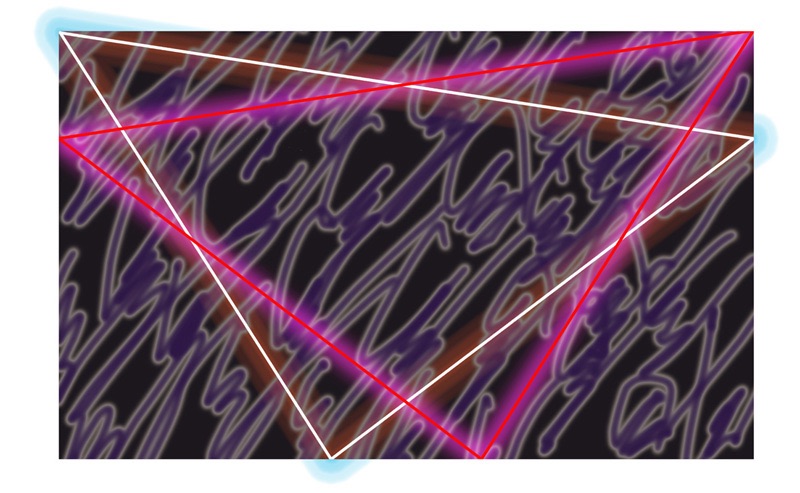
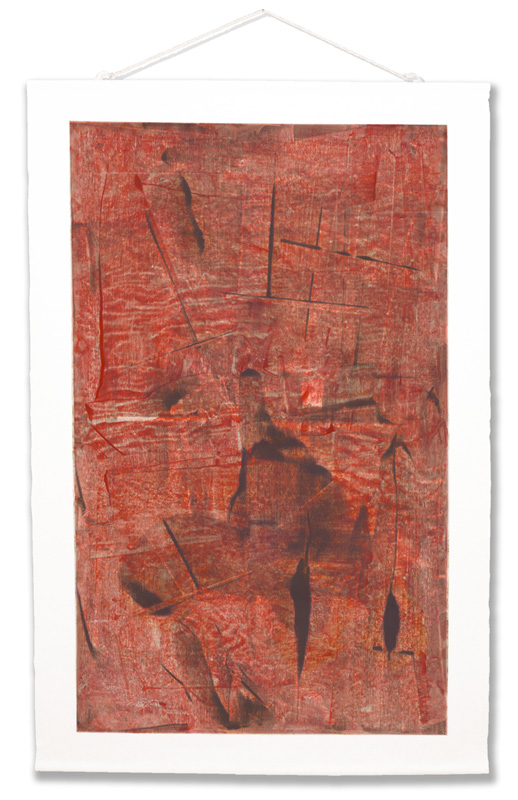
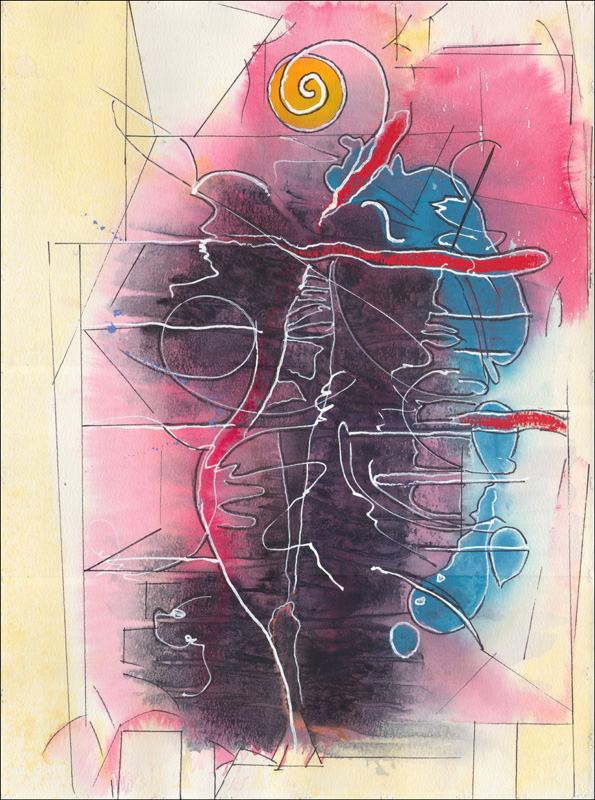







 Observations On Perception