*
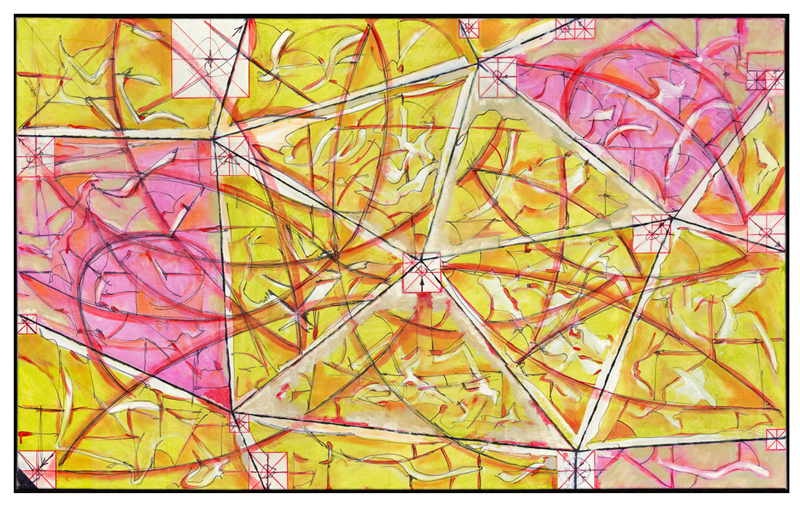
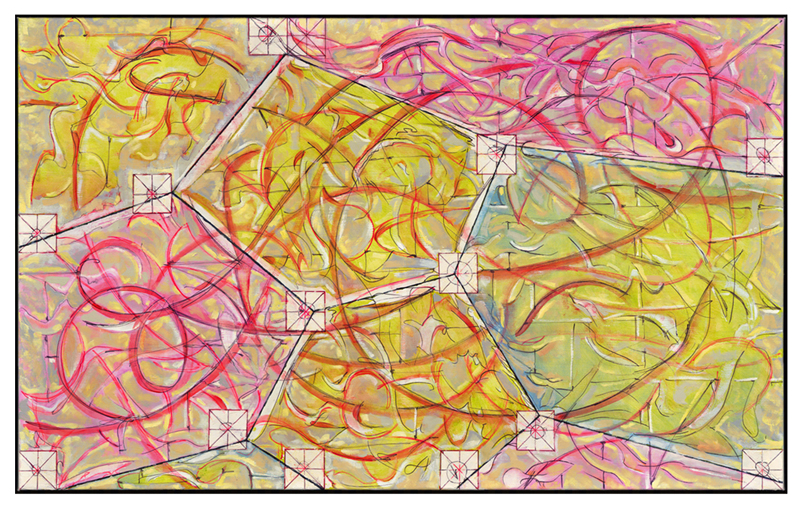
Icosahedron
60″x 37″
Oil on linen
2005
Ricardo F. Morín
February 7, 2026
Oakland Park, Fl
The distinction between interpretive language and diagnostic language reveals two different orientations toward reality. Interpretive language organizes perception toward meaning. Diagnostic language exposes structure without directing conclusion. One arranges understanding along a path; the other clarifies the field in which understanding may arise.
Interpretation assumes that experience requires orientation. Relationships are framed so that coherence appears through guided association. Even when presented as open, interpretation tends toward closure because perception is arranged toward resolution.
Diagnostic language operates differently. Ambiguity is neither eliminated nor prolonged; it is delineated. Diagnosis distinguishes conditions rather than resolving them. Explanation yields to observation. Persuasion yields to precision.
Deliberative cognition is frequently mistaken for reverie. Pauses, refinements, and resistance to premature closure may appear as distance from reality. The appearance misidentifies abstraction. Abstraction does not detach thought from reality; it alters the manner of approach. Detachment occurs only when abstraction becomes residence rather than instrument.
A dreamer inhabits possibility through imagination. Someone perceived as having their head in the clouds is judged to have lost practical grounding. Both descriptions describe perception rather than structure. The decisive difference lies in engagement: abstraction used diagnostically sharpens contact with reality rather than replacing it.
A moment during jury selection clarifies this distinction. The question of whether an artist is a portraitist probes not technique but observation. The response dissolves the assumed divide between abstraction and representation. Abstract practice does not reduce proximity to the real. Portraiture and abstraction pursue the same task: perceiving essence. What changes is the mode of access. Abstraction functions as diagnosis: a way of revealing structure without reliance on literal appearance.
Diagnostic writing operates as abstraction operates in visual art. The real is not abandoned. Perception is reorganized so that underlying relations become visible. Narrative direction is withheld. Structure emerges through juxtaposition rather than instruction.
Misunderstanding arises when guidance is expected instead of exposure. Questions that refine perception appear as uncertainty. Delayed closure appears as hesitation. The intention differs: clarity arises from structural recognition rather than interpretive resolution.
An ethic of restraint underlies this approach. Vision and humility remain central yet cannot be declared without dissolving into performance. Once asserted, vision becomes self-promotion and humility becomes display. Both remain implicit, revealed through attention rather than proclaimed through identity. Precision replaces authority. Clarity replaces prescription.
The opposition between realism and abstraction dissolves under this view. Thought does not detach by entering conceptual terrain. Detachment begins when abstraction becomes refuge. Used diagnostically, abstraction becomes passage: movement through uncertainty that returns with sharpened perception.
The question is not whether one is a dreamer or someone with their head in the clouds. The distinction lies in how abstraction is inhabited. Some remain suspended within possibility. Others traverse it deliberately, revealing structures otherwise unseen.
Diagnostic language belongs to the latter movement. It directs nothing and claims nothing. It creates conditions of visibility in which perception clarifies without coercion and understanding emerges without command.