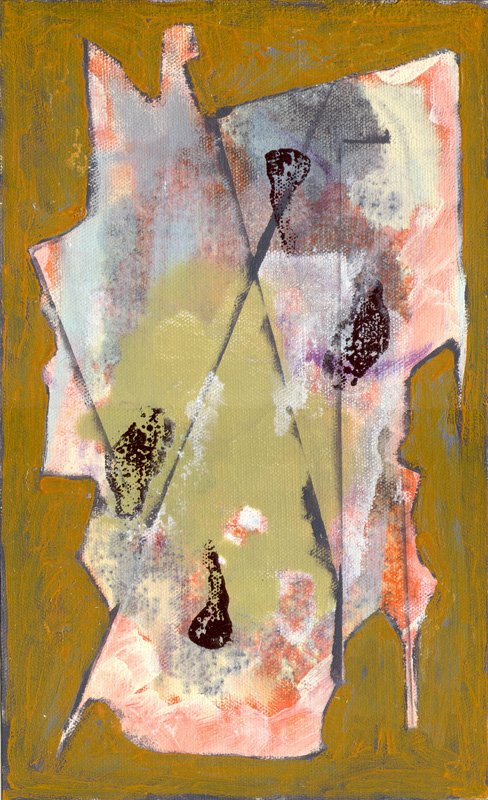
Infinity 28
10“ x 16 ½”
Oil on linen
2009
Ricardo F. Morín
March 4, 2026
Oakland Park, Fl
Periods of concentrated authority generate structural pressure. When power is centralized within identifiable institutions, imbalance accumulates in visible form. In imperial systems, authority was embodied in monarchies or colonial administrations whose command over territory and taxation was direct and hierarchical. Constraint could be traced to a center, and responsibility could be assigned to that center.
When constraint is focal, resistance becomes focal. Revolution arises within this concentration. It invokes volition as the capacity to begin anew and to alter institutions through deliberate action. It articulates collective will as capable of remaking arrangements that appear fixed. Because authority is visible and centralized, collective action can be directed toward a specific structure.
Yet revolutionary moments do not emerge outside causation. Industrial dislocation alters patterns of labor. Political exclusion restricts participation. Economic strain intensifies inequality. These pressures accumulate within existing systems and make rupture conceivable. Revolution takes shape within these pressures and remains subject to them even after institutions change. The removal of a regime does not remove the conditions that made opposition necessary.
When centralized authority recedes or is dismantled, power does not disappear. It reorganizes. Control that once operated through territorial command becomes distributed across interacting systems. Production depends on supply chains that cross borders. Financial decisions in one capital affect markets elsewhere. Communication networks link populations in real time. Constraint no longer emanates from a single command structure; it emerges from the interaction of multiple arrangements.
This reorganization alters the terrain of rupture. When authority is concentrated, opposition can focus upon a sovereign center. When authority is distributed, constraint persists across multiple domains at once. Action directed at one site does not dissolve the conditions sustained elsewhere. The object of transformation becomes diffuse because causation is no longer confined to a single locus.
Constraint diffused across systems does not eliminate causation; it multiplies its channels. Structural pressure persists even when its sources are dispersed. What changes is not the presence of constraint, but the manner in which it operates.
Determinism, in this context, does not negate action. It names the continuity of condition across transformation. Institutions may change. Authority may reorganize. Yet causation remains operative within new arrangements. Revolution marks a threshold within structure. Determinism marks the field that structure continues to impose.
When constraint is distributed across interacting systems, civic agency operates within that distribution. Action cannot assume a single locus of control where none exists. Recognition of segmentation becomes part of responsibility. Individual and collective decisions take place within arrangements that no single act can dissolve.
The forms that emerge reflect the interaction between structural condition and human response.

