*
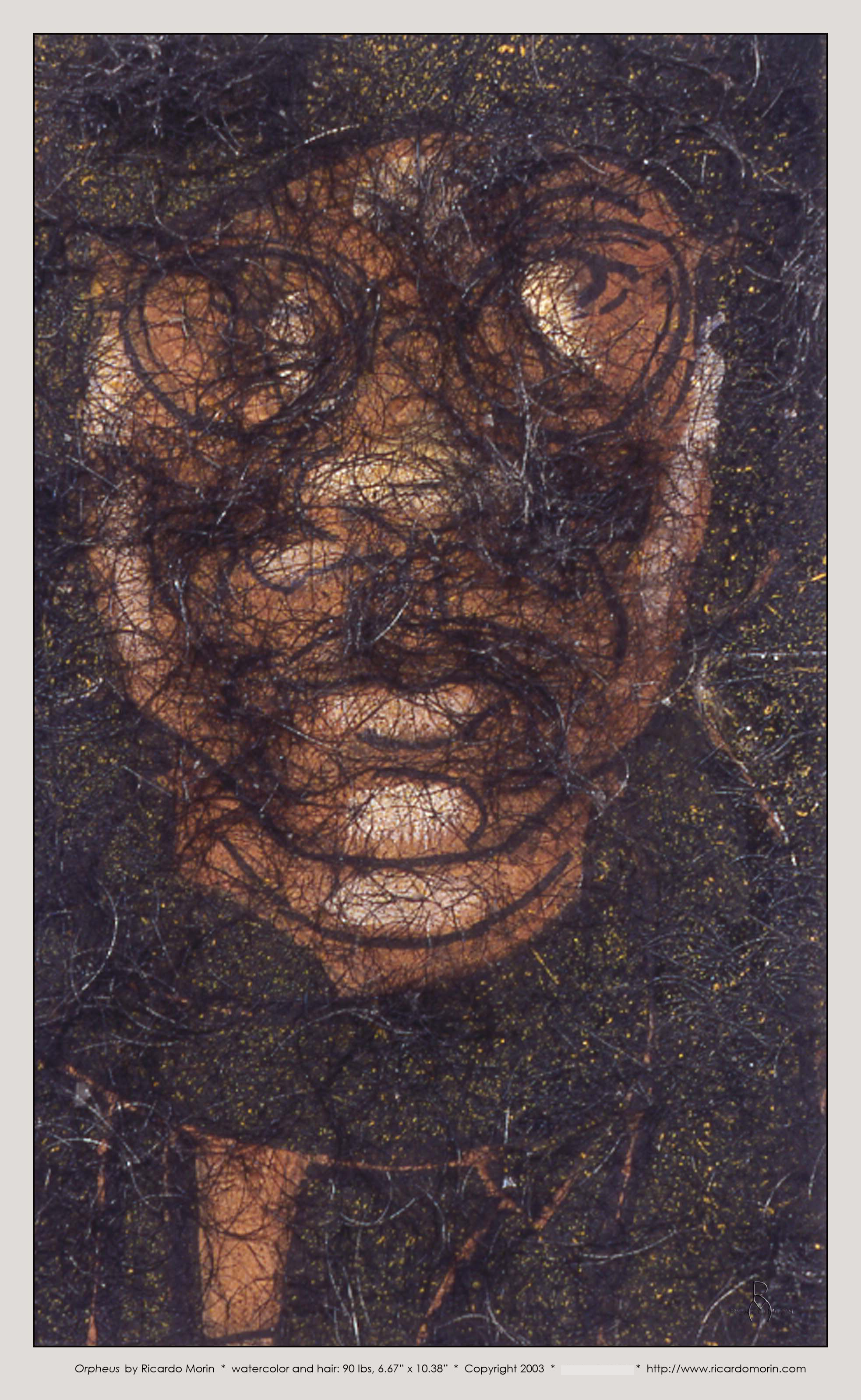
Orpheus
4.47″x 10.38″
2003
Scene One: Monday Morning
*
Could it be safe to take a shower between 7 and 8 am?
He will take his morning medication just before the shower.
It is 43 degrees Fahrenheit outside, rising to 64 by the time he arrives at Penn Medicine in University City.
He considers scheduling an Uber for 11:45 am; his husband will say it is too early.
It’s 7:05. He hears his husband making the beds in the next room. He goes to shower.
His husband asks whether he would be up to taking a ride tomorrow, the day before departure.
He says he would decide based on how he felt.
Each choice has required assessment.
Two bowel movements. A familiar pattern, a sense of incomplete evacuation. An anti-diarrheal may be needed.
Not diarrhea. An accelerated colon.
He does not exceed 2 mg unless it becomes continuous.
Propulsion. Heartburn. Hiatal hernia. Micro-aspirations. They do not occur separately, especially while recovering from a respiratory infection.
It’s 8:40 am. Three hours before the Uber arrives.
Would a warm compress help?
His husband hears him cough and asks if he wants tea.
The N95 mask was used recently at the ER. The new ones are in the carry-on. Is it necessary to look for them?
His husband helps. He will keep a mask for the flight to London. It is reassuring, even in business class.
Should he take a nasal cleanser on the cruise to the British Isles?
He switches shoes. Cold feet persist. No marked improvement.
With an hour and a half before leaving, better not to wear shoes. Wool slippers instead. Cold feet persist. He will decide on the spot before leaving: the clogs.
The interior temperature is 66 degrees with the humidifier on.
He is dressed warmly, but the air feels nippy.
He does not turn up the heat.
He turns off the humidifier, rests his feet over the yoga bolster, and covers them with a blanket.
*
Scene Two: Monday Afternoon
When he spoke to the physician, she asked, in a friendly tone, how often he visited his family in Venezuela. He said he would not assume she was unfamiliar with Venezuela. For over three decades, it had not been safe for him to return.*
She stated that his resilience was a testament to how far HIV treatment had advanced. He did not respond immediately. When he did, he was not entirely sure whether medication or sheer DNA disposition had protected him from opportunistic infections, though he had developed full AIDS.
She was eager to know who he was. At the same time, he detected a degree of vulnerability in her: a young, enthusiastic virologist, a mother of seven months.
He asked about the baby’s name. She shared it. She said the child was struggling to walk and that the intensity of it felt overwhelming.
When he brought up his infectious disease doctor before moving from New York to Florida, he mentioned that both she and her husband were HIV positive. She had treated him for twenty-five years. Her care was not only clinical. It was also informed by lived knowledge, though she never made it the center of her care. He held that knowledge as a standard to meet.
The physician widened her eyes. She said she knows this was her first child and that much lay ahead; right now it felt demanding. He said she will eventually look back on this time with affection. She completed his sentence.
What he is now talking about is not diagnostic, analytic, or logical. It is something else.
Before they part, she says she looks forward to learning from him. He quips: learning from each other.
The physician led the consultation from the moment she stated her objectives. She said she wanted to show herself and hoped he would do the same. It was unusual. She was poised, centered. He had not experienced this kind of rapport before. Was it his letter of introduction? The way he had organized his clinical history and his team of caregivers?
Afterward, his husband asks whether she is the right fit. He answers with hesitation. Her eagerness repeats itself. Time will tell.
He wonders whether his husband sees himself reflected in his responses, and about his own perception, whether there is intent behind it.
Shortly after they return home, his husband comes to him. He wants to hug and kiss him, pleased with how it went. He says, “we did it; we are now safe to travel with everything in the right place.” Then he returns seconds later to tell him it was because of his generosity.
*
Scene Three: Monday Night
*
After he left the office of the infectious disease doctor at Penn Medicine, and before returning home past 4 pm, he was hungry. They stopped at the hospital cafeteria, where he had chicken noodle soup loaded with condiments, more than he would normally have.
The soup was saltier than his preference.
When he took the first spoonful, his throat and esophageal sphincter contracted, and he paused.
He remembered that small sips, spaced a few minutes apart, were necessary. After a few sips, he reached a level of comfort that allowed him to finish the soup.
They walked outside, and by the main entrance he ordered an Uber back home. He arrived just in time to consider the next meal after the soup.
He had two consecutive meals without heartburn.
He had been weighed at 126 pounds. He had lost six to eight pounds since contracting a viral infection.
At 9:34 pm, he was watching a movie about bodies living with severe disabilities.
His rib cage felt as if it were pressing on his liver.
He had been dealing with a medication-induced fatty liver and elevated enzymes.
He realized that liver failure is possible, though he had been a long-term HIV survivor without ever facing a major opportunistic infection, even when he experienced wasting syndrome thirty years ago and had only thirty-four T cells.
He cannot account for his good fortune, but he knows he has it.
Ricardo F. Morín
April 29, 2026
Bala Cynwyd, Pa

