Posts Tagged ‘care’

“The Clinician”

May 3, 2026

Ricardo F. Morín
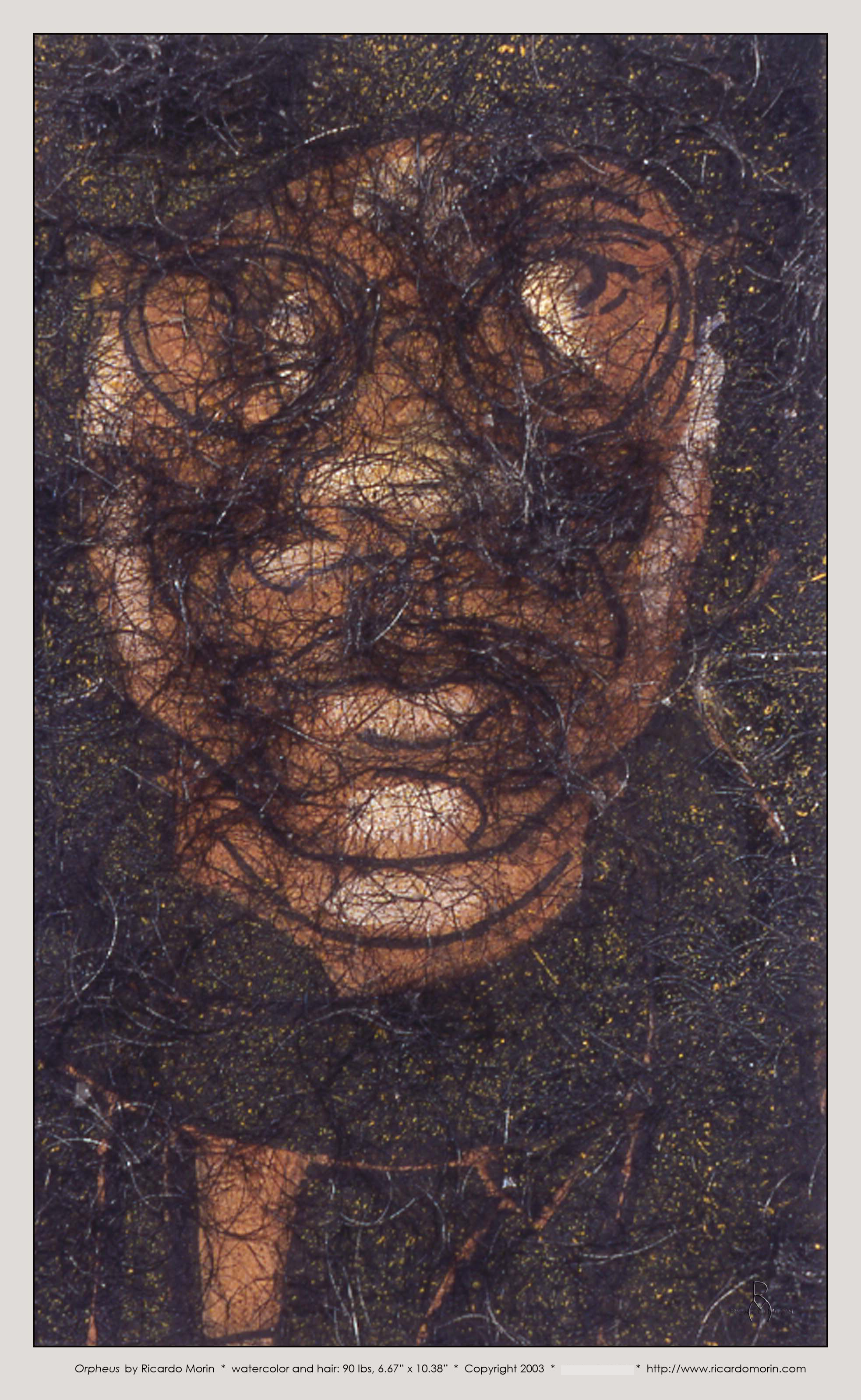
Orpheus
4.47″x 10.38″
2003

Scene One: Monday Morning

Could it be safe to take a shower between 7 and 8 am?

He will take his morning medication just before the shower.  

It is 43 degrees Fahrenheit outside, rising to 64 by the time he arrives at Penn Medicine in University City.

He considers scheduling an Uber for 11:45 am; his husband will say it is too early.

It’s 7:05.  He hears his husband making the beds in the next room.  He goes to shower.

His husband asks whether he would be up to taking a ride tomorrow, the day before departure.

He says he would decide based on how he felt.

Each choice has required assessment.

Two bowel movements.  A familiar pattern, a sense of incomplete evacuation.  An anti-diarrheal may be needed.

Not diarrhea.  An accelerated colon.

He does not exceed 2 mg unless it becomes continuous.

Propulsion.  Heartburn.  Hiatal hernia.  Micro-aspirations.  They do not occur separately, especially while recovering from a respiratory infection.

It’s 8:40 am.  Three hours before the Uber arrives.

Would a warm compress help?

His husband hears him cough and asks if he wants tea.

The N95 mask was used recently at the ER.  The new ones are in the carry-on.  Is it necessary to look for them?

His husband helps.  He will keep a mask for the flight to London.  It is reassuring, even in business class.

Should he take a nasal cleanser on the cruise to the British Isles?

He switches shoes.  Cold feet persist.  No marked improvement.

With an hour and a half before leaving, better not to wear shoes.  Wool slippers instead.  Cold feet persist.  He will decide on the spot before leaving:  the clogs.

The interior temperature is 66 degrees with the humidifier on.

He is dressed warmly, but the air feels nippy.

He does not turn up the heat.

He turns off the humidifier, rests his feet over the yoga bolster, and covers them with a blanket.

Scene Two: Monday Afternoon

When he spoke to the physician, she asked, in a friendly tone, how often he visited his family in Venezuela.  He said he would not assume she was unfamiliar with Venezuela.  For over three decades, it had not been safe for him to return.*

She stated that his resilience was a testament to how far HIV treatment had advanced.  He did not respond immediately.  When he did, he was not entirely sure whether medication or sheer DNA disposition had protected him from opportunistic infections, though he had developed full AIDS.

She was eager to know who he was.  At the same time, he detected a degree of vulnerability in her:  a young, enthusiastic virologist, a mother of seven months.

He asked about the baby’s name.  She shared it.  She said the child was struggling to walk and that the intensity of it felt overwhelming.

When he brought up his infectious disease doctor before moving from New York to Florida, he mentioned that both she and her husband were HIV positive.  She had treated him for twenty-five years.  Her care was not only clinical.  It was also informed by lived knowledge, though she never made it the center of her care.  He held that knowledge as a standard to meet.

The physician widened her eyes.  She said she knows this was her first child and that much lay ahead;  right now it felt demanding.  He said she will eventually look back on this time with affection.  She completed his sentence.

What he is now talking about is not diagnostic, analytic, or logical.  It is something else.

Before they part, she says she looks forward to learning from him.  He quips:  learning from each other.

The physician led the consultation from the moment she stated her objectives.  She said she wanted to show herself and hoped he would do the same.  It was unusual.  She was poised, centered.  He had not experienced this kind of rapport before.  Was it his letter of introduction?  The way he had organized his clinical history and his team of caregivers?

Afterward, his husband asks whether she is the right fit.  He answers with hesitation.  Her eagerness repeats itself.  Time will tell.

He wonders whether his husband sees himself reflected in his responses, and about his own perception, whether there is intent behind it.

Shortly after they return home, his husband comes to him.  He wants to hug and kiss him, pleased with how it went.  He says, “we did it; we are now safe to travel with everything in the right place.”  Then he returns seconds later to tell him it was because of his generosity.

*

Scene Three: Monday Night

*

After he left the office of the infectious disease doctor at Penn Medicine, and before returning home past 4 pm, he was hungry.  They stopped at the hospital cafeteria, where he had chicken noodle soup loaded with condiments, more than he would normally have.

The soup was saltier than his preference.

When he took the first spoonful, his throat and esophageal sphincter contracted, and he paused.

He remembered that small sips, spaced a few minutes apart, were necessary.  After a few sips, he reached a level of comfort that allowed him to finish the soup.

They walked outside, and by the main entrance he ordered an Uber back home.  He arrived just in time to consider the next meal after the soup.

He had two consecutive meals without heartburn.

He had been weighed at 126 pounds.  He had lost six to eight pounds since contracting a viral infection.

At 9:34 pm, he was watching a movie about bodies living with severe disabilities.

His rib cage felt as if it were pressing on his liver.

He had been dealing with a medication-induced fatty liver and elevated enzymes.

He realized that liver failure is possible, though he had been a long-term HIV survivor without ever facing a major opportunistic infection, even when he experienced wasting syndrome thirty years ago and had only thirty-four T cells.

He cannot account for his good fortune, but he knows he has it.

Ricardo F. Morín

April 29, 2026

Bala Cynwyd, Pa
Video portrait set to a Piazzolla tango composition. Mixed media drawing rendered in Maya. Red and black figure study with rotating fields; hair and flame introduced in sequence, drawing from a classical descent motif.

“The Seventh Watch”

August 6, 2025

*


Ricardo Morin
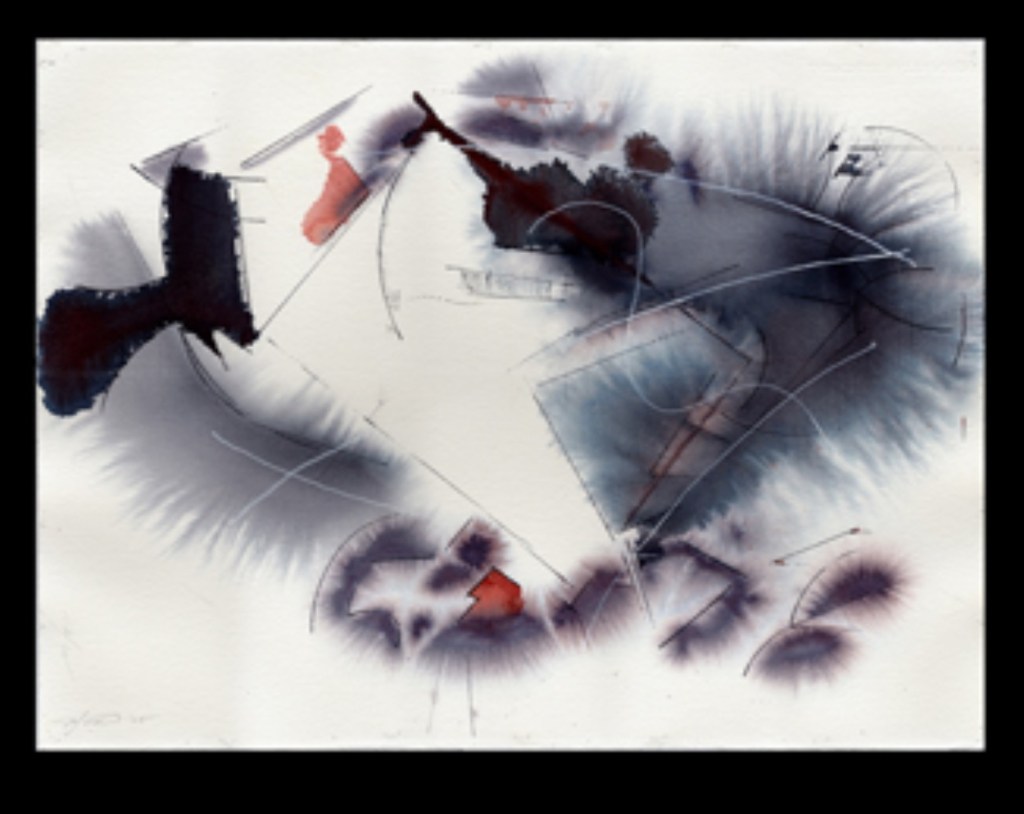
The Seventh Watch
(Template Series, 5th panel)
Watercolor over paper
22” x 30”
2005

Introductory Note

Ricardo Morin is a writer and researcher of the history of thought as a dynamic and evolving practice—a student of unspoken gestures, a language stronger than words, especially when interlocutors no longer listen to each other. Drawing on reflections on the cycles of life and a personal experience approaching the last, he invites readers to consider how quiet vigilance and tenderness can shape a meaningful existence. The Seventh Watch emerges from decades of living attentively, offering a humble testament to dignity through perseverance and care.

71 Years

I’ve lived seventy-one years. That alone still surprises me—not because I ever expected an early end, but because each year has asked more of me than the last. There was no dramatic fall, no single crisis to point to. Just a slow, constant shaping—of the body, of temperament, of the will.

Illness didn’t come in childhood. It arrived later, in my early twenties, during a snowbound winter in Buffalo. I was just beginning to live on my own, full of ambition and unfinished dreams. The diagnosis was mononucleosis—but it wasn’t the name that mattered. It was the way it interrupted momentum, slowed my pace, and revealed something deeper: the lifelong task of learning to live within my own limits.

That was the beginning—not of a medical history, but of a different kind of vigilance. Not directed outward, but inward. A quiet realization took root: that survival, if it was to be meaningful, required not just endurance, but restraint. A way of protecting myself from myself. That discipline wasn’t harsh—it became a kind of devotion. Not to self-denial, but to finding the clarity of a peaceful mind. To living with more care than urgency.

I don’t see illness as noble, but I do see in it a mirror—not for the pain, but for the truth it reflects. What can be tended, what must be relinquished, what deserves attention. I don’t claim wisdom from illness, but I recognize what it’s taught me to let go of: illusion, pride, and the frantic chase after things that do not last—such as the accumulation of wealth or power.

I’ve come to think of it simply as endurance—the kind illness teaches when you stop resisting and begin listening. There’s an ethical arc in this awareness—not born of dogma or belief, but shaped by experience. It bends not toward triumph, but toward tenderness.

This isn’t a story of pathology. It’s a story of attention—of refining the self without hardening it. Of discovering that maturity means knowing when to persist and when to pause. That the quiet act of sustaining one’s life—daily, attentively—is its own form of courage.

I never set out to write a testament. But seventy-one years in, I see the outlines more clearly. And in that, there is dignity.

Yet, dignity is not a reward. It arrives without announcement, without ceremony. It builds slowly—through the daily rituals of rising, of choosing what to carry and what to set down. It does not shield one from sorrow, nor make suffering easier to bear. But it gives the days a certain weight.

I’ve come to cherish that weight—not as a burden, but as proof. Proof that I’ve lived through each season not untouched, but intact. And that, even now, the task is not to escape life’s demands, but to meet them with steadiness.

What I’ve learned isn’t mine alone. Anyone who lives long enough will be asked to reckon with time—not as a thief, but as a sculptor. Illness, especially, teaches us how little control we truly have—yet how much presence we’re still capable of. It humbles and joins us. Not in sameness, but in mutual recognition.

Endurance, I’ve found, is not passive. It’s not about waiting for pain to pass. It is active, quiet, often unseen. It means choosing how to live when choice feels narrow. It means tending to life not with haste, but with attention.

There is no finish line to this work. Just the quiet act of continuing.

So I continue—not because I must, but because life, even in its reduced dimensions, still offers room for meaning. Some days that meaning is faint. Other days it is simply the act of rising, or writing a letter, or remembering the snow. But it is there. And as long as it is, I remain.

*


“The Ethics of Expression, Part II”

June 13, 2025

*


Ricardo Morín
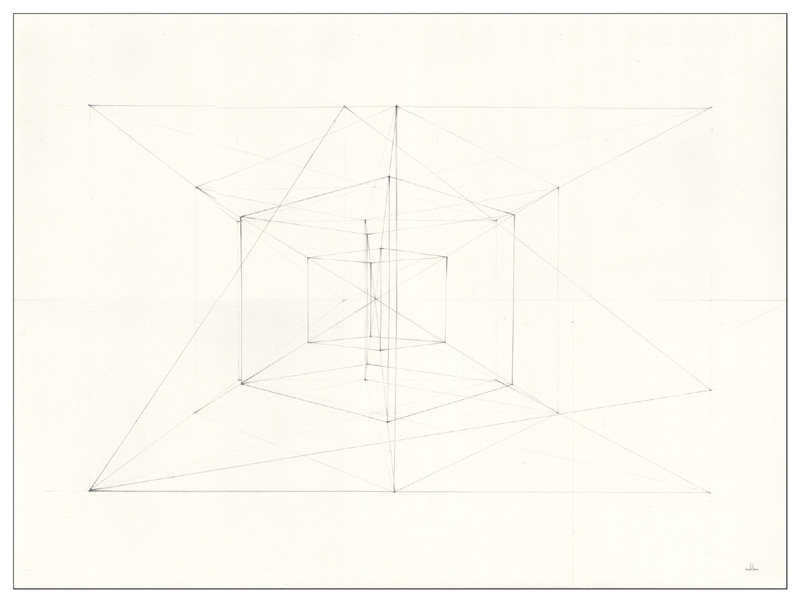
Triangulation 4
22″ x 30″
Graphite on paper
2006

To my sister Bonnie

*

Ricardo F. Morín

June 2025

Oakland Park, Florida

Author’s Note

This reflection was originally drafted before The Ethics of Perception, Part I, yet it belongs to the same inquiry into attention, understanding, and ethical relation.


There are moments when the truest form of intimacy is silence.
At other times, it’s the quiet labor of reaching for the right word—however incomplete—that brings us closer.
Expression, in this light, is not just a vehicle for communication, but an act of care.

To speak, to withhold, to write, to listen—each choice carries a particular weight.   
Intimacy lives in these gestures:    not in grand declarations, but in the ethics of how we reveal ourselves—and how we receive what another dares to offer.
What follows is not a theory, but a reflection on how intimacy appears in expression—and in its absence.

It’s hard to pinpoint the moment when something becomes intimate.
It isn’t always a touch, or a glance, or even a confession.
Sometimes, it’s just a pause—a shared pause—between one word and the next, when both people sense that something true is either about to be said or has just been said, without quite naming it.

Once, sitting face to face, I watched someone I cared for stare silently out the window.
I said nothing either.
There was no gesture, no disclosure, no clarifying words.
And yet the silence didn’t feel empty—it felt full.
In that stillness, something passed between us—not a message, not even an understanding, but a kind of permission:

To exist without explanation.
To be present without having to perform.

That moment stayed with me not because it was dramatic, but because it was unplanned.
I hadn’t expected it, and I couldn’t have recreated it.
I only knew, afterward, that I had been in the presence of something rare:
an intimacy that asked nothing more than to be.

And yet, not all intimacy is born in silence or in someone else’s presence.
Some comes later, through writing—in that long interval between feeling and saying.
Some is only possible thanks to the quiet distance that makes reflection possible.

The word intimacy often evokes physical closeness:
the realm of touch, proximity, lovers, secrets shared in the dark.
But what if intimacy were less about closeness than about permission?
The permission to be undefended.
To move slowly.
To be unclear—and still be trusted.

To be intimate with someone is not merely to be known, but to be seen—
seen without the pressure to explain yourself quickly or justify what you feel.
It’s an opening, and it’s also a risk:
the risk of being misunderstood, and the deeper risk of being understood too well.

Some forms of intimacy unfold face to face.
Others require distance.
Some happen through dialogue.
Others need a single voice, speaking on one’s own in a quiet room.

That’s where writing begins—
not as performance, but as a long conversation, uninterrupted.

Intimacy shifts with context, with time,
with the shape of the self we bring to another.
It is not one thing—
not just closeness, or tenderness, or vulnerability—
but a set of ways we allow ourselves to be known,
and sometimes, to know another.

There’s the intimacy of the body—
perhaps the most visible and least understood.
It belongs to touch, proximity,
the instinctive draw toward another’s presence.
But this form can deceive:
physical closeness without emotional resonance is common—
and easily faked.
Yet when body and emotion align,
there’s a wordless attunement:
a hand resting on a shoulder for just the right amount of time;
a breath falling into rhythm without intention.

Then there’s emotional intimacy:
the slow courage to say what one feels—
not just when it’s beautiful or convenient,
but when it’s awkward, incomplete, or raw.
This kind of intimacy isn’t given—it’s earned.
It may take years, or a single night.
Trust lives here—or breaks.

There’s also intellectual intimacy:
what arises in conversation
when ideas flow without anyone guarding their ground.
It’s rare.
Most social spaces reward speed,
the need to shine, or the safety of politeness.
But sometimes, with someone equally curious,
thought expands in the presence of the other—
not in agreement, but in response.
There’s nothing to prove—
only the pleasure of discovery.
That’s intellectual intimacy.
It creates a different kind of closeness—
not of feeling, but of perception.

Stranger still is narrative intimacy—
the kind that forms not between two people in the same room,
but between the one who writes and the one who reads,
separated by silence and time.
It isn’t immediate—
but it isn’t less real.
A voice emerges from the page
and seems to speak directly to you,
as if it knew the contours of your mind.
You feel understood—without being seen.
You may never meet the person who wrote those words,
but something in you shifts.
You are no longer alone.

These are not rigid categories.
They overlap, interrupt, evoke one another.
One may deepen another.
Physical presence can create emotional safety.
Intellectual closeness can open into unexpected tenderness.
And still, each has its own rhythm,
its own grammar—
and its own risks.

In that complexity, intimacy ceases to be a condition.
It becomes a practice:
something we learn,
lose,
revise,
and sometimes write
when no other form is possible.

Writing, too, is a kind of intimacy—
not only with others,
but with oneself.
Especially when it’s honest—
when what’s written is not just clever or correct,
but true.
That kind of writing doesn’t flatter.
It doesn’t argue.
It reveals.

We write to bring something forth—
not just for an audience,
but to hear ourselves think,
to see what we didn’t yet know we felt.
In writing, we become witnesses to our own consciousness—
both its lucidity and its evasions.

We follow a sentence
not only for its logic,
but for the feeling it carries.
And when that feeling falters,
we know we’ve lost the thread.

So we begin again, and again—
trying not just to explain,
but to say something that feels just.

In that sense, writing is an ethical act.
It demands attention.
It requires patience.
It invites us to inhabit our own experience
with precision—
even when that experience is fragmented or unresolved.

And if we are lucky—
if we are honest—
something in that effort will reach someone else.
Not to impress.
Not to convince.
But to accompany.

Sometimes you reach out—carefully, sincerely—and receive silence, indifference, or a response so misaligned it makes you feel naïve for having tried.
Other times, the failure is subtler:
a conversation that scatters just as something real begins to take shape—or a listener who hears your words, but not your meaning.

Those moments stay with us.
Not because they’re dramatic, but because they remind us how precarious intimacy can be.
It can’t be forced—just as humility can’t.
Both require a quiet letting go—a willingness to offer something without knowing how it will be received.
We can prepare the ground, make the gesture, risk the truth—but the rest depends on the other: their timing, their capacity, their willingness to meet us there.

There’s also the experience of being misunderstood—not just in fact, but in essence.
You try to say something that matters, and the other person responds to what they think you said—or to a version of you that never was.
It’s a blow—
that mismatch between what you tried to share and what actually landed.
The desire for intimacy becomes exposure without connection—a wound instead of a bridge.

Sometimes we avoid intimacy not because we don’t want it, but because we fear what it might cost.
We’ve been made to feel clumsy—for caring too much, or for being too visible.
Or we’ve shared something intimate, only to have it treated lightly—or analyzed without feeling.
After that, we grow cautious.
We speak less—or in fragments—or not at all.

It’s in the wake of such rejections—large or small—that writing ceases to be mere expression.
It becomes repair.
Writing allows us to recover what was lost in the moment—
to name what never reached its destination,
to finish the thought no one waited for,
to say it again—this time without interruption, without assumptions, without fear.

And while writing cannot undo the failure of a shared moment, it can offer something else:
coherence.
A record.
A form of truth that endures—even if it wasn’t heard.

In this way, writing becomes a quiet act of insistence—not against the world, but on behalf of the self.
It’s a way of saying:
What I tried to share still matters—even if it wasn’t received.

In the end, intimacy is not a state but a gesture—
repeated again and again—
toward understanding,
toward presence,
toward a shared sense that may arrive… or may not.

Sometimes that gesture is a word spoken at the right moment.
Sometimes it’s a silence held just long enough for the other to speak.
And sometimes it’s the act of writing—solitary, patient, unfinished—
offered not to a crowd,
but to a single imagined reader
who, one day, might need what you are now trying to say.

Writing, at its core, is a form of listening.
Not only to others,
but to the self that doesn’t rush,
doesn’t perform,
doesn’t need to persuade.

To the self that waits—
that wants to be known not by what it manages to say in quick response,
but by what it keeps trying to say with care.

That’s why I return to the page:
not because it guarantees connection,
but because it keeps the door open.
Because in a world that demands speed, certainty, and charm,
writing makes room for something slower and more faithful:
the long, unfinished gesture of trying to reach someone—
perhaps even oneself—
with something resonant.

And when intimacy happens—on the page or in life—
it’s never because we found the perfect words.
It’s because someone stayed.
Someone listened.
Someone let the moment open—without rushing to close it.

That’s what I’m doing now:
writing not to end something,
but to leave it open—
so that something of greater consequence might enter.

*

Ricardo F Morín Tortolero

Capitol Hill, D.C., June 9, 2025