Posts Tagged ‘attention’

“The Ethics of Perception, Part I”

November 20, 2025

Ricardo Morín
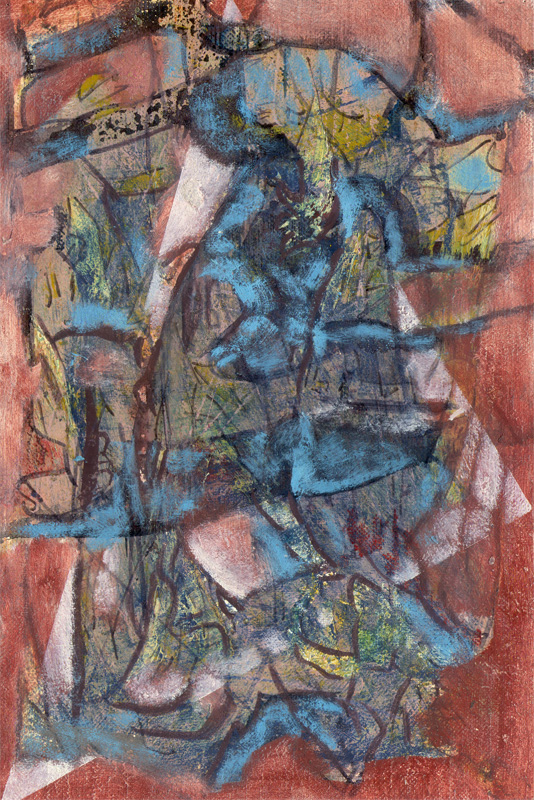
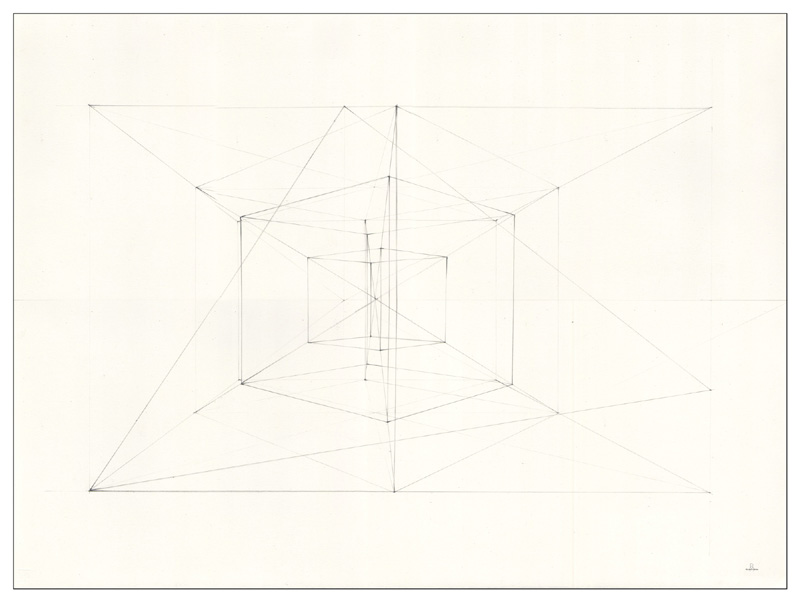
Triangulation 4: The Ethics of Perception
22″ x 30″
Graphite on paper
2006

Ricardo F. Morín

October 2025

Oakland Park, Fl

Introduction

Perception often seems immediate and uncomplicated.    We see, we hear, we react.    Yet between that first contact with the world and the choices we make in response, something slower and more fragile takes place:    the formation of meaning.    In that interval—between what appears and what we assert—not only understanding is at stake, but ethics as well.

This essay begins with a simple question:    what changes when understanding matters more than assertion?    In a culture that prioritizes reaction, utility, and certainty, pausing to perceive can seem inefficient.    Yet it is precisely this pause that allows experience to take shape without force and keeps the relationship between consciousness and the shared world in proportion.

The Ethics of Perception does not propose rules or moral systems.    It examines how sustained attention—able to receive before imposing—can restore coherence between inner life and external reality.    From this basic gesture, ethics ceases to operate as an external norm and becomes a way of being in relation.

Perception

Perception may be understood as the emergent outcome of mechanisms collectively designated as intelligence in the abstract.    These mechanisms do not operate solely as interior cognitive functions, nor are they reducible to external systems, conventions, or instruments.    Perception arises at the continuous interface between interior awareness and exterior structure, where sensory intake, pattern recognition, and interpretive ordering converge through sustained attunement.

Such a relation does not presume opposition between internal and external domains.    Cognitive processes and environmental conditions function as co-present and mutually generative forces.    Disruptions frequently described as pathological more accurately reflect misalignment within this reciprocal relation rather than intrinsic deficiency in any constituent mechanism.    When normative frameworks privilege particular modes of perceptual attunement, divergence is reclassified as deviation and difference is rendered as dysfunction.

Models grounded in categorization or spectral positioning provide descriptive utility but often presuppose hierarchical centers.    An account oriented toward attunement redirects emphasis away from comparative placement and toward relational orientation.    Perceptual coherence depends less on position within a classificatory schema than on sensitivity to the ongoing exchange between interior processing and exterior configuration.

Claims of authority over perceptual normality weaken under recognition of ubiquity.    If the interaction between cognitive mechanism and environmental structure constitutes a universal condition rather than an exceptional trait, no institution, metric, or discipline retains exclusive legitimacy to define deviation.    Evaluation becomes contextual, norms provisional, and classification descriptive rather than prescriptive.

Within this framework, perception is not measured by conformity, efficiency, or accommodation to dominant systems.    Perception denotes the sustained capacity to remain aligned with the dynamic interaction of interior awareness and exterior articulation without collapsing one domain into the other.    Such an understanding accommodates analytical abstraction, scientific modeling, artistic discernment, contemplative depth, and systemic reasoning without elevating any singular mode of intelligence above others.

Considered in this light, perception resists enclosure within diagnostic, cultural, or hierarchical boundaries.    What persists is not a ranked spectrum of cognitive worth but a field of relational variance governed by emergence, attunement, and reciprocal presence.


1

Understanding begins with seeing the world as it is, before any claim or assertion shapes its meaning.    My disposition turns toward perceiving, attending, and responding rather than toward struggle or untested impulse.    This orientation works as a discipline through which clarity and proportion take form.    Thought, in this sense, does not impose significance; it receives it through the living exchange of experience.    Perceiving gathers the immediate presence of the world, and understanding shapes that presence into sense.    Both arise from the same motion of awareness, where observation ripens into comprehension.    Philosophy then ceases to be an act of mastery and becomes a way of seeing that restores balance between mind and existence.

2

Philosophy has long been driven by the impulse to assert rather than to understand.    From antiquity to modern times, thinkers built systems meant to secure certainty and protect thought from doubt.    Nietzsche inherited that impulse and inverted it by turning volition into affirmation.    His view freed reason from dogma yet confined it within self-assertion.    Understanding, by contrast, grows from recognizing that meaning arises in relation.    The act of grasping does not depend on force but on perception.    When thought observes instead of imposing, the world reveals its own coherence.    Ethics springs from that revelation, because to understand is already to enter into relation with what is seen.    Comprehension is therefore not passive; it is active participation in the unfolding of reality.

3

Perception becomes ethical when it recognizes that every act of seeing carries responsibility.    To perceive is to acknowledge what stands before us—not as an object to be mastered but as a presence that coexists with our own.    Awareness is never neutral; it bears the weight of how we attend, interpret, and respond.    When perception remains steady, recognition deepens into connection.    A single moment makes this visible:    watching an elderly person struggle with opening a door, the mind perceives first, then understands, and then responds—not out of impulse, but out of the recognition of a shared human condition.    Art enacts this same movement.    The painter, the writer, and the musician do not invent the world; they meet it through form.    Each creative gesture records a dialogue between inner and outer experience, where understanding becomes recognition of relation.    The moral value of art lies not in a message but in the quality of attention it sustains.    To live perceptively is to practice restraint and openness together:    restraint keeps volition from overpowering what is seen, and openness lets the world speak through its details.    In that steady practice, ethics ceases to be rule and becomes a way of living attentively within relation.

4

Modern life tempts the mind to react before it perceives.    The speed of information, the immediacy of communication, and the constant surge of stimuli fragment awareness.    In that climate, unexamined volition regains its force; it asserts, selects, and consumes out of bias rather than understanding.    What vanishes is the interval between experience and reflection—the pause in which perception matures into thought.    Ethical life, understood as living with awareness of relation, re-emerges when that interval is restored.    A culture that values perception above reaction can recover the sense of proportion that technology and ideology often distort.    The task is not to reject innovation but to exercise discernment within it.    Every act of attention becomes resistance to distraction, and every moment of silence reclaims the depth that noise obscures.    When perception reaches the point of recognizing another consciousness as equal in its claim to reality, understanding acquires moral weight.    Such recognition requires patience—the willingness to see without appropriation and to remain present without possession.

5

All philosophy begins as a gesture toward harmony.    The mind seeks to know its bond with the world yet often confuses harmony with control.    When understanding replaces conquest, thought rediscovers its natural proportion.    The world is not a stage for self-assertion but a field of correspondence where awareness meets what it perceives.    To think ethically is to think in relation.    The act of grasping restores continuity between inner and outer life and shows that knowing itself is participation.    Each meeting with reality—each moment of seeing, listening, or remembering—becomes an occasion to act with measure.    The reflective mind neither retreats from the world nor dominates it.    It stands within experience as both witness and participant, and lets perception reach its human fullness:    the ability to recognize what lies beyond oneself and to respond without domination.    When thought arises from attention instead of struggle, it reconciles intelligence with presence and restores the quiet balance that modern life has displaced.    In that reconciliation, philosophy fulfills its oldest task—to bring awareness into harmony with existence.

“The Seventh Watch”

August 6, 2025

*


Ricardo Morin
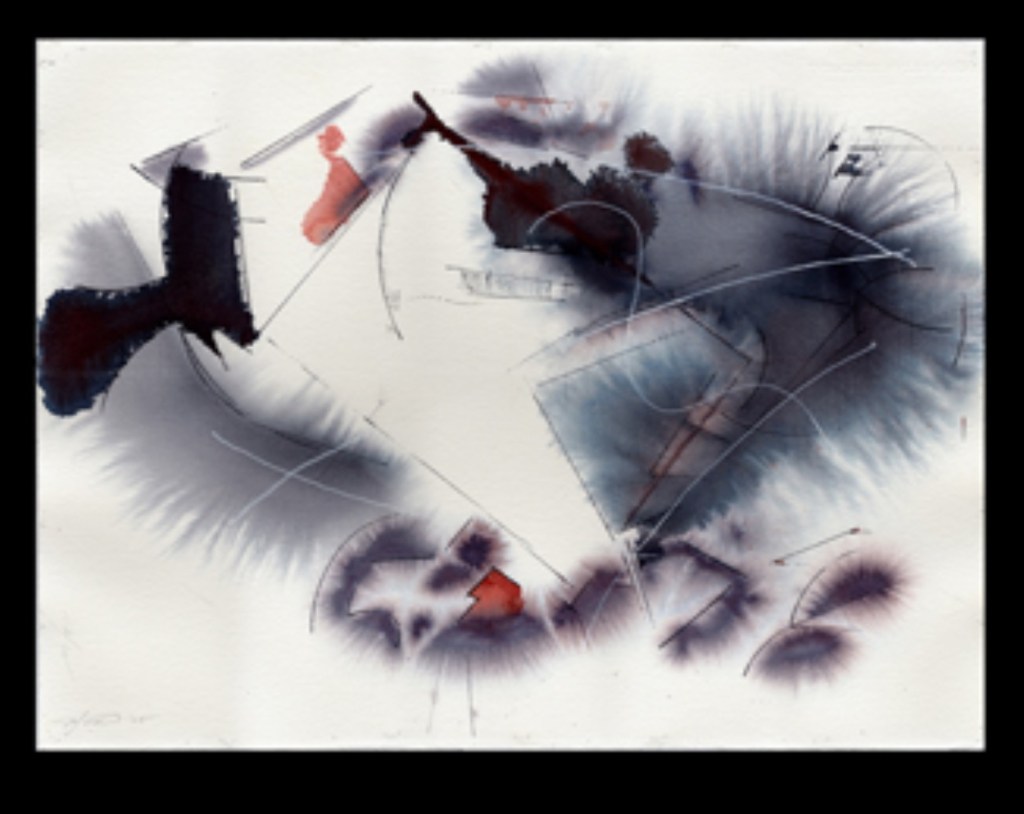
The Seventh Watch
(Template Series, 5th panel)
Watercolor over paper
22” x 30”
2005

Introductory Note

Ricardo Morin is a writer and researcher of the history of thought as a dynamic and evolving practice—a student of unspoken gestures, a language stronger than words, especially when interlocutors no longer listen to each other. Drawing on reflections on the cycles of life and a personal experience approaching the last, he invites readers to consider how quiet vigilance and tenderness can shape a meaningful existence. The Seventh Watch emerges from decades of living attentively, offering a humble testament to dignity through perseverance and care.

71 Years

I’ve lived seventy-one years. That alone still surprises me—not because I ever expected an early end, but because each year has asked more of me than the last. There was no dramatic fall, no single crisis to point to. Just a slow, constant shaping—of the body, of temperament, of the will.

Illness didn’t come in childhood. It arrived later, in my early twenties, during a snowbound winter in Buffalo. I was just beginning to live on my own, full of ambition and unfinished dreams. The diagnosis was mononucleosis—but it wasn’t the name that mattered. It was the way it interrupted momentum, slowed my pace, and revealed something deeper: the lifelong task of learning to live within my own limits.

That was the beginning—not of a medical history, but of a different kind of vigilance. Not directed outward, but inward. A quiet realization took root: that survival, if it was to be meaningful, required not just endurance, but restraint. A way of protecting myself from myself. That discipline wasn’t harsh—it became a kind of devotion. Not to self-denial, but to finding the clarity of a peaceful mind. To living with more care than urgency.

I don’t see illness as noble, but I do see in it a mirror—not for the pain, but for the truth it reflects. What can be tended, what must be relinquished, what deserves attention. I don’t claim wisdom from illness, but I recognize what it’s taught me to let go of: illusion, pride, and the frantic chase after things that do not last—such as the accumulation of wealth or power.

I’ve come to think of it simply as endurance—the kind illness teaches when you stop resisting and begin listening. There’s an ethical arc in this awareness—not born of dogma or belief, but shaped by experience. It bends not toward triumph, but toward tenderness.

This isn’t a story of pathology. It’s a story of attention—of refining the self without hardening it. Of discovering that maturity means knowing when to persist and when to pause. That the quiet act of sustaining one’s life—daily, attentively—is its own form of courage.

I never set out to write a testament. But seventy-one years in, I see the outlines more clearly. And in that, there is dignity.

Yet, dignity is not a reward. It arrives without announcement, without ceremony. It builds slowly—through the daily rituals of rising, of choosing what to carry and what to set down. It does not shield one from sorrow, nor make suffering easier to bear. But it gives the days a certain weight.

I’ve come to cherish that weight—not as a burden, but as proof. Proof that I’ve lived through each season not untouched, but intact. And that, even now, the task is not to escape life’s demands, but to meet them with steadiness.

What I’ve learned isn’t mine alone. Anyone who lives long enough will be asked to reckon with time—not as a thief, but as a sculptor. Illness, especially, teaches us how little control we truly have—yet how much presence we’re still capable of. It humbles and joins us. Not in sameness, but in mutual recognition.

Endurance, I’ve found, is not passive. It’s not about waiting for pain to pass. It is active, quiet, often unseen. It means choosing how to live when choice feels narrow. It means tending to life not with haste, but with attention.

There is no finish line to this work. Just the quiet act of continuing.

So I continue—not because I must, but because life, even in its reduced dimensions, still offers room for meaning. Some days that meaning is faint. Other days it is simply the act of rising, or writing a letter, or remembering the snow. But it is there. And as long as it is, I remain.

*


“Questions That Hold Their Answers”

August 3, 2025

*


Ricardo Morin
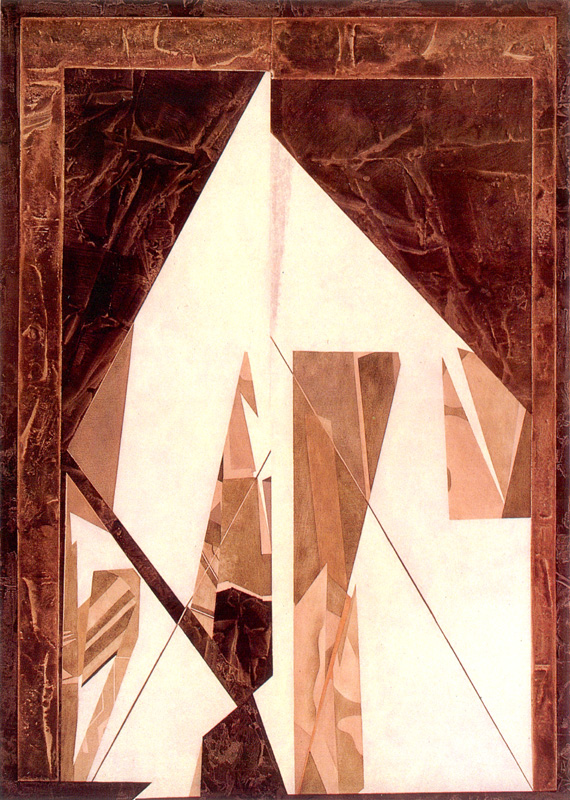
Sonata Series
Each 30″x 22″= 60″h x 66″ overall
Watercolor on paper
2003

By Ricardo Morin

August 3, 2025

The Whittington chime, though rooted in the specific historical and ecclesiastical context of St. Mary-le-Bow in London, speaks in a language far broader than its origins. Every fifteen minutes, its melody punctuates the passage of time—not with dominance or insistence, but with a sequence of tones that seem to lean toward attentiveness rather than control. It does not call; it invites. Its fourfold phrasing unfolds with the day and carves it gently into intervals of awareness.

The hour does not ask to be heard.

It leans, it yields, it breathes.

In four phrases, time steps into its own shadow—

Not to rule, but to be received.

The first phrase is sparse and anticipatory. It announces nothing—yet it creates space for something to begin. The second phrase, slightly more confident, suggests that the shape of what’s coming may already be present in what has been. The third phrase swells with fullness, as though recognizing that something unspoken has come to form. And the fourth does not repeat or resolve—it releases. A soft culmination, an unforced closure. Nothing more is needed.

Four phrases like footprints.

Not forward, but inward.

The last does not complete the first—

It simply continues without demand.

Time is neither summoned nor announced—it is welcomed in silence. The melody performs a quiet orienting function. It makes no claims, prescribes no doctrine, and excludes no one. It requires attention, not belief. It passes through space and enters those who allow it, and in doing so, it reveals time not as a line to be followed, but as a vessel to be filled.

There is no message, only rhythm.

No doctrine, only form.

Not a path to walk,

But a shape to inhabit.

This surrender—this subtle willingness to listen—is not weakness, nor is it a form of passivity. It is a kind of interior readiness, a posture of faith in what does not insist upon itself. As one hears the chime at a distance—through open window, across an empty street, or at the center of a sleepless night—it becomes clear that regularity is not rigidity. It is a form of grounding, a pulse that reminds us of something more than measurement: the possibility that rhythm itself is a form of remembering.

Some things endure not because they hold us fast—

But because they return.

Each return is a soft petition:

Are you listening now?

To be transformed by time, the vessel must remain open. And openness is not emptiness in the deficient sense, but the fullness of a receptivity that listens before it responds. There are patterns here, but they do not bind. They unfold. Each phrase in the chime allows what came before to echo—faintly, without repetition—and then continues without imitation. It does not search for novelty, nor does it cling to what has passed.

It simply arrives.

An echo does not ask for an answer.

It waits until the shape of silence

Begins to sing it back.

In this way, the melody becomes an offering. And if there is meaning to be found in its intervals, it is not imposed from without. It is disclosed in the act of listening. Each person who hears it becomes part of its form, not by adding to it, but by receiving it. And in receiving, they are also shaped.

Some questions do not seek reply.

They seek a place to rest.

They carry their answers folded within—

Waiting only to be heard.

We often think of arrival as the end of something—as the completion of a search. But perhaps it is not the final step that matters most. Perhaps what matters is the quiet unfolding that prepares us to meet it. The chime does not deliver anything. It accompanies. It affirms that movement can be gentle, that order can serve grace, and that meaning is not attained, but awakened …

… —gently, without insistence.

It arrives, and we recognize it—

Not because we were waiting,

But because we were listening.

*


“A Soliloquy”

July 6, 2025

*

Ricardo Morin
New York Series, No. 1
56″ x 84″
Oil on canvas
1992

Preface

What follows does not simplify or announce itself.  It moves inward—through observation, thought, and the tension between clarity and disappearance.  The soliloquy keeps to its own course:  neither performing nor explaining, but sustaining an interior gaze.  To read it is not to be guided, but to remain with it—where thinking becomes presence, and language measures what endures.


Soliloquy

Once upon a time, there lived within the writer a creative energy—its force and passion for self-expression—that sustained him. It was not summoned; it simply endured.  So arresting was this presence that he could not discipline it into routine or mold it into a pattern for physical endurance.  He could not pause it for walks or for any activity not already part of the act of creation itself.  He resorted to standing while writing, walking while reading, sleeping while thinking.

His experience was never an affliction to be named or cured, but a life to be lived on its own terms—a creative testament to the fullness of being, not a clinical footnote to someone else’s definition.  Choosing not to be defined by it honored both its agency and his lifelong work.  It was a condition to be understood alone, even if shared in writing—yet never in search of validation.

Within the boundaries of personal insight, it revealed itself as a form of devotional absorption, one that brought dignity even in moments of physical strain and aging.

His refusal of validation was not an opposition to authority, but a denial that any external pressure should exist.

Some said there was nothing unique in anyone, that all expression merely reflected what had been learned.  The writer did not disagree, yet he knew there was more to being than what one received—even from experience itself.  Perhaps no one was unique, but each voice was distinct—formed from the sum total of an existence that could not be equated. From a random mixture, an ineffable summation, something emerged:  something irreplaceable and irreproducible—not because it exceeded others, but because it belonged only to the one who bore it.

He feared madness—not as spectacle, but as the slow drift of meaning into isolation.  The force within him was real, yet not entirely satisfying unless it discovered truth—truth that resonated not only within his own logic but in the logic of others.  How else could one know oneself if intelligence remained solitary?  Without echo, thought became a sealed chamber:  intricate, yes, but airless.  He did not seek certainty; he sought correspondence.  It was not solitude he feared, but becoming untranslatable.

Life now appeared transient, precarious—timeless in sensation, yet embedded in time.  It moved furtively—through failings, disappointments, and sudden moments of radiant clarity.  Nothing could be reproduced.  But he had come to accept that—not because it was lost, but because even memory altered what it held.  What repeated was not the moment, but the act of noticing—the deepening of attention.   And so he did not live to preserve what was, but to remain present as it changed.  There was no going back, only going further—more attentively, more awake.

*

Ricardo F. Morin Tortolero

In transit on July 6, 2025


“Unattainable Gestures”

June 14, 2025

“Echoes of a life devoted to the elusive”

*


Ricardo F Morin
Triangulation Series Nº 38
9” x 13”
Oil on linen
2009

*

In memoriam José Luis Montero


For him, inspiration didn’t strikeit settled.    It arrived not with answers, but with permission to begin.

There was no ritual.    No dramatic turning point.    Only the canvas, the scent of oil, the shifting light across the floor.    One day folding into the next, until the work became its own weather—sometimes clear, sometimes stormy, but always present.

He believed in attention, not mastery.

What moved him wasn’t how the painting was achieved at any given moment, but when deconstructed he had to reclaim it, not out of skill, but out of necessity—when the hand moved before thought, and something more honest than intention began to lead.    And when it happened, it asked everything of him.

Any one watching—anyone but him—would have seen very little.    A trace.    A pause.    A slight adjustment.    But inside, something in him was listening—not to himself, but to the world, the material, the echo of a form not yet known.

He didn’t make work to be remembered, though he carried each piece like a child of his.    He made it to stay alive.    And when he encountered a finished painting years later, it stirred him physically.    It wasn’t nostalgia.    It was the smell of pigment, the sound of bristles, the grief of something nearly realized—lost, then found again.

Some days, the work moved with a kind of ease.    Other days, it refused.    He learned not to chase either.

He always began without knowing what he was after.    A shade.    A flicker of transparency.    A stroke that unsettled the surface.    Often the brush would stop midair, suspended while he waited for the next move to reveal itself.    Sometimes nothing came.    Those pieces sat untouched for weeks—a quiet unease in the corner of the room.

He lived alongside their silence.

The studio was never clean, but always ordered.    Rags folded.    Jars fogged with old turpentine.    Walls bearing soft outlines of past canvases.    The mess wasn’t careless.    It was lived-in—not careless, just lived-in.    Notes of Goethe’s pyramidal harmony hung besides mineral samples, sketches, color wheels, torn letters from art dealers.    Not for revelation—but for proximity.

Not every piece held.    Some failed completely.    Others, losing urgency layer by layer, failed gradually,    He kept those too—not as records, but as reminders.    Where the hand had gone quiet.    Where the work had ceased to ask.    Yet they became platforms—spaces for later returns, for deeper entry.

His days had no fixed schedule, though a rhythm formed over the years—a long devotion, interrupted, resumed, endured.

Now, he arrived late morning from the City.    The studio held the faint scent of wax and turpentine, laced with something older—dust, fabric, memory.    He opened a window if weather allowed.    Not for light but for air.    For movement.    For the slow turning of the fans like breath.

He made tea.    Sometimes he played Bach, or a pianist, whose fingers pressed deeper into the keys than others.    Other mornings:    National Public Radio.    A poet, a scientist, someone trying to say the impossible in ordinary words.    He liked the trying more than the saying.

He painted standing—rarely seated.    Some days he moved constantly between easel, sink, and mixing table.    Other days he barely moved at all.    Just watched.

Lunch was simple.    Bread.    Fruit.    A little cheese.    Sometimes eggs, lentils, soup across several days.    He didn’t eat out much—not out principle, but because it broke the thread.

If tired, he would lie on the couch at the back wall.    Twenty, thirty minutes.    No more.    And when he woke, the light had shifted again—slanted, softened, more forgiving.    The canvas looked changed.    As if it had waited for his absence.

Late afternoons were often the best.    A second wind, free of pressure.    There was a looseness in the air, born from knowing no one would knock or call.    He spoke to the work then—not aloud, but inwardly.    This tint?    Too warm.    This stroke?    Too sure.    Let it break.    Let it breathe.    Let it speak without saying.

Sometimes the medium resisted.    A brush faltered.    A gesture collapsed.    He didn’t fight.    He gave it space.    If he stayed patient, it found its rhythm again.

Not everything reached completion.    Some works remained opennot abandoned, simply finished enough.    Others came suddenly, like music that plays without lifting the fingers.

By evening, he cleaned his tools.    Never rushed.    He wiped the palette.    Rinsed the jars.    Hung the rags to dry.    It was a kind of thanks.    Not to the painting.    To the day.

Then lights out.    Door closed.    Nothing declared.    Nothing completed.    Yet something always moved forward.

Grief, too, remained.    It lived in the room like dust—settled in corners, clinging to stretchers still bare, woven into old white sheets.

His sister’s illness came slowly, then all at once—while Adagio in G Minor played low across the studio.    He painted through it.    Not to escape, but because stopping would have undone him.    In the silence between strokes, he could feel her breath weakening.    Sometimes he imagined she could see the work from wherever she was.    That each finished piece carried a word he hadn’t dared to say aloud.    She would have understood.    She always had.

Later, when his former lover died—alone, unexpectedly, in Berlin—he stopped painting altogether.    The studio felt still in a way he couldn’t enter.    Even the canvas turned away from him.    When he returned, it was with a muted palette.    Dry.    Indifferent.    The first brush stroke broke in two.    He left it.    And continued.

Desire, too, had quieted.    Not vanished.    Just softened.    In youth it had been urgent, irrepressible.    Now it hovered—an echo that came and went.    He didn’t shame it or perform it.    He lived beside it, the way one lives beside a field once burned, now slowly greening.

Grief didn’t interrupt the work.    It deepened it.    Not in theme—but in texture.    Some of those paintings seemed familiar to others.    But he knew what they held—the weight of holding steady while coming apart inside.

Even now, some colors recalled a bedside.    A winter walk.    The sound of someone no longer breathing.    A flat grey.    A blue once brilliant, now tempered between longing and restraint.

He wondered sometimes about that tension.

But when he painted, stillness returned.

Seventeen years ago, when chemotherapy ended, the days grew quieter.

There was no triumph. Just a slow return to rhythm—different now.    The body had changed.    So had the mind.    He couldn’t paint for hours without fatigue.    The gestures once fluid were heavier, more tentative.

He didn’t resist it.

The studio remained, but the center of gravity shifted.    Where once he reached for a brush, now he reached for a pen.    At first, just notes.    Fragments.    A way to hold the day together.    Then came sentences.    Paragraphs.    Not about himself, not directly.    About time.    Memory.    Presence.    Writing became a solace.    A way to shape what the body could no longer carry. A place to move, still, with care.

It wasn’t the end of painting.    Just a pause.    A migration.    Writing required its own attention, its own patience.    And he recognized in that a familiar devotion.

Sometimes, the canvas still called.    It would rest untouched for weeks.    Then one day, without announcement, he would begin again.

The two practices lived side by side.    Some days the brush.    Some days the page.    No hierarchy.    No regret.    Only the quiet persistence of a life still unfolding.

There is no final piece.    No last word.

He understands now:    a life is not made of things finished, but of gestures continued—marks made in good faith, even when no one is watching.    A sentence begun.    A color mixed.    A canvas turned to the wall—not in shame, but because it had said enough.

He no longer asks what comes next.    That question no longer troubles him.

If anything remains, it will not be the name, or the archive, or even the objects themselves.    It will be the integrity of attention—the way he returned, again and again, to meet the moment as it was.

Not to make something lasting.
But to live, briefly, in truth.

*

Ricardo F Morin Tortolero

Bala Cynwyd, Pa., June 14, 2025

Editor:    Billy Bussell Thompson


Author’s Note

This piece, like much of what I’ve made in recent years, exists because of those who have sustained me.

To David Lowenberger—whose love and steadfastness give my life its rhythm.    Without him, continuity itself would falter.

To José Luis Montero, my first art teacher, whose presence early on became a compass I’ve never stopped following.

To my parents, whose quiet influence shaped my regard for form, devotion, and care.

And always, to my friend and editor, Billy Bussell Thompson, whose voice lives quietly in mine.