Posts Tagged ‘Grief’

“The Tree and Us”

August 8, 2026

*

We tend to think we know where a tree comes from.   We place a seed in the ground, water it, wait, and eventually a green shoot breaks through the surface.   The explanation seems almost too simple to deserve a question.   The tree comes from the earth.

Yet a mature tree can weigh thousands of pounds, and almost none of the increase in its dry mass comes from the soil.   The minerals absorbed by its roots are indispensable, but they account for only a small fraction of the matter that eventually becomes trunk, bark, branches, and roots.   Much of the carbon incorporated into the body of the tree entered through its leaves as carbon dioxide, an invisible gas dispersed throughout the atmosphere.   With water and the energy of sunlight, the tree incorporates that carbon into sugars, cellulose, lignin, and the extraordinary architecture we call wood.

That much of a tree’s dry mass originates in the atmosphere is elementary biology.   Its implications are anything but elementary.

A tree appears solid, independent, and bounded.   We can touch its bark and walk around its trunk.   We can distinguish precisely where the tree ends and the air begins.   Yet the history of the matter that constitutes the tree contradicts the apparent simplicity of that boundary.   The matter that now forms a trunk was once dispersed through the atmosphere.   Water entered the tree from the soil and will leave it again.   Minerals passed from rock into soil and from soil into roots.   Energy arriving from a star made possible the chemical transformations that sustain living structure.

The tree, then, is better understood as an organized continuity than as an isolated object.

And so are we.

The contrast between our ordinary perception and this material exchange can be unsettling because perception encourages us to picture the body as a closed unit.   We experience ourselves as contained within the outlines of our bodies and conceive of the world as a reality beginning beyond the skin.   We speak naturally of what occurs within the body and what lies beyond its limits.   These distinctions are useful and biologically necessary, but their usefulness does not make them absolute.

Every breath contradicts the idea of an entirely closed bodily boundary.

Matter that a moment ago was outside our bodies subsequently participates in the body’s internal chemistry.   Oxygen enters the bloodstream.   Carbon dioxide leaves it.   Water passes through us.   Food supplies matter for tissue and chemical energy for vital processes, while tissues are continually broken down and rebuilt.   The substances that compose us have histories immensely older than our own appearance and will continue to enter other processes once our present organization has ceased.

We are not, therefore, substances that permanently possess a fixed collection of matter.   We are organized processes that maintain a recognizable form through continuous exchange.

Individuality does not become unreal merely because our bodies depend upon continuous exchange.   A tree remains a tree, and we remain ourselves.   The continuous exchange of matter and energy, together with the relationships that sustain life, does not erase the difference between the tree and us.   It is more fruitful to understand individuality precisely as differentiation within continuity.

We do not have to choose between absolute separation and indistinction.

The tree is not the same as us, yet the tree and we do not belong to entirely separate orders of existence.   We arise within the same material world, depend upon intersecting cycles, and participate in exchanges that precede each of our individual forms.   Our difference is real, but our separation is never complete.

We habitually imagine the subject as an inner realm set apart from an external object.   We look at the tree.   But our experience never arises from an isolated consciousness contemplating a reality wholly external to itself.   We see because we possess bodies capable of sight, because light travels between the world and our eyes, because the nervous system transforms physical events into perception, and because our bodies already belong to the same world that appears before us.

We do not exist first and enter into relation with the world afterward.   Our relation to the world is part of the very condition of our existence.

The separation between the perceiving subject and the perceived world therefore ceases to constitute an absolute opposition.   The perceiving subject and the perceived world belong to the same sensible field.   We may say that our individuality is a conscious differentiation occurring within a continuity that has never ceased to contain us.

The idea of differentiation within continuity acquires a different gravity when we lose someone.

When someone we love dies, absence imposes itself with a gravity that seems absolute.   A voice no longer answers.   A body is no longer available to touch.   The consciousness with which we once shared words, gestures, and attention no longer responds to our own.   We confront a rupture that no philosophical subtlety should attempt to erase.

Yet death may compel us to reconsider what it has actually interrupted and what it has not.

We often speak as though the person had been removed entirely from existence, as though an individual life were an isolated portion of the world that death could simply annul.   Material processes do not conform to such absolute cancellation.   Matter does not fall into nothingness.   Energy does not simply disappear.   Structures dissolve, bonds break, and substances enter new cycles.

Matter continues to undergo transformation, but that continuity is not enough to preserve the person.   The continued circulation of atoms does not mean that the singular consciousness we knew and loved continues with them.   With death, the living form that made that singular consciousness possible comes to an end.

We never existed as isolated substances confronting an external reality.   Our bodily, perceptual, and relational experience has always arisen within the same sensible reality to which we still belong.

A life also remains inscribed in other lives.   It leaves memories, alters decisions, awakens affections, and produces consequences within a shared world.   Death may bring the consciousness of that person to an end, but it cannot remove from reality the events that life made possible or the transformations it produced in those who remain.

We cannot infer from the conservation of matter or energy that personal consciousness survives death.   Science provides no basis for such a conclusion.   Nor does the continuity of physical processes constitute evidence that an individual mind persists after death.

But neither are we required to imagine death as an expulsion from existence.

The person who has died no longer persists as the conscious organism through which we knew and loved that person.   Yet nothing requires us to imagine that the life itself has somehow fallen outside the world from which it arose.   The individual organization has ceased.   Material continuity, belonging to the sensible world, and the consequences of that life have not been annulled.

Once we recognize that physical continuity does not demonstrate personal survival, it becomes understandable that the ancient idea of reincarnation might enter our thoughts.   Nothing we have recognized, however, implies the migration of an individual consciousness from one body to another.

Perhaps we can reformulate the intuition that the word reincarnation attempts to name.

The continuity of existence need not mean the repetition of the individual.   The matter and energy that made a life possible enter new configurations, while the relationships and consequences produced by that life remain inscribed in the lives of those it affected.   The person does not reappear in those new configurations or in the lives transformed by that person’s own, but the end of a singular form does not therefore amount to an absolute fall into nothingness.

The carbon in our bodies belonged before us to other organisms and material processes and will later become part of others.   The elements that compose our bodies have histories reaching back to earlier generations of stars.   The living world continually incorporates, transforms, releases, and reincorporates matter.

Our life begins within that ceaseless exchange and retains a form for an interval.

Transience does not make our lives insignificant.   On the contrary, perhaps it is precisely the transient character of form that gives a life significance.   A melody does not become unreal because its notes do not continue sounding forever.   The identity of a melody resides in an organization that unfolds through time.   We do not require music to become permanent matter before granting it reality.

Why should we require permanence of ourselves?

Perhaps we resemble a melody more than a monument.

Our existence does not consist in the permanence of a substance exclusively our own, but in an organized continuity of matter and energy within processes that exceed every individual.   For a time, that continuity takes the form of a particular body, a particular perception, and a particular voice.   That individual acquires a history and a name.   Loves particular people.   Remembers particular rooms.   Looks at a tree and recognizes a presence distinct from itself.

When we look again at the tree, we discover unexpectedly that the separation between our bodies and the world was never as absolute as we had imagined.

We discover that matter which appears solid may once have been dispersed through the air.   Matter that appears motionless participates in constant exchange.   An organism that appears self-sufficient depends upon innumerable relationships.   Forms we perceive as separate can retain genuine differences without ever having been absolutely severed from one another.

We need not deny that death has occurred.   We need not invent certainties about what happens to consciousness when the body can no longer sustain it.   We can acknowledge the full gravity of absence while also examining the assumption that absence amounts to absolute separation.

Death brings a singular form of presence to an end, but it cannot turn into absolute separation a life that was never absolutely separate from the world or from other lives.   Those we have loved do not remain as consciousnesses demonstrably accessible to us, but neither can their lives be excluded from the shared reality in which they occurred and of which our own lives remain a part.

The singular form of each person cannot be replaced.   That person’s consciousness cannot simply be reconstructed from the matter of the organism that once sustained it.   Yet that life created relationships, left memories, and generated consequences that now belong to the actual history of the world and to the lives of those transformed by its presence.

We continue within the same reality that once held us together, not because death has preserved an intact personal identity, but because separation was never the original condition of our existence.

The tree thus becomes a way of understanding that extends beyond the example of photosynthesis.   The existence of the tree invites us to reconsider the categories by which we divide reality.   Air and wood, self and world, presence and absence, permanence and transformation may not stand on opposite sides of the absolute boundaries we habitually draw.

Perhaps existence does not consist primarily of separate things that occasionally enter into relation with one another.

Perhaps relationships are constitutive, and individual forms arise within them.

We can therefore say, without giving the phrase a literal biological meaning, that the tree is also us.   Not because our differences disappear, but because every difference occurs within a continuity that no individual form originates and no individual ending can abolish.

We do not stand outside existence looking in from the exterior.

We are among the transient forms capable of recognizing the continuity of the existence to which we belong.

*

Ricardo F. Morín

August 8, 2026

Bala Cynwyd, Pennsylvania

“Unattainable Gestures”

June 14, 2025

“Echoes of a life devoted to the elusive”

*


Ricardo F Morin
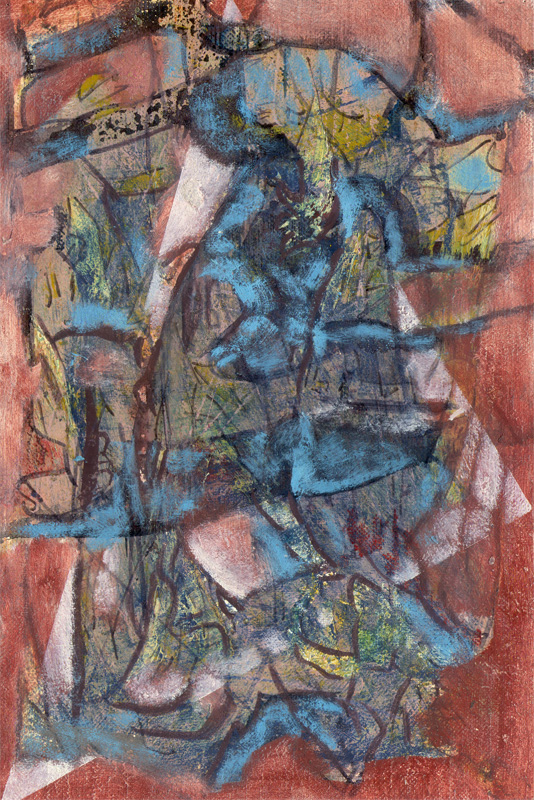
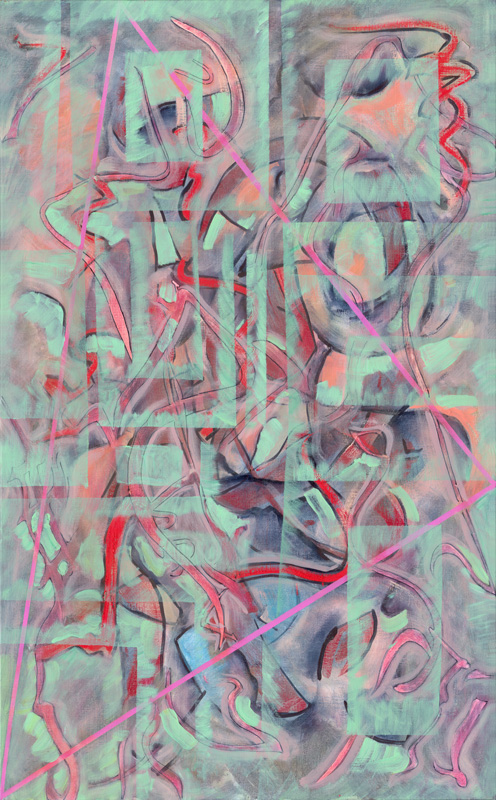
Triangulation Series Nº 38
9” x 13”
Oil on linen
2009

*

In memoriam José Luis Montero


For him, inspiration didn’t strikeit settled.    It arrived not with answers, but with permission to begin.

There was no ritual.    No dramatic turning point.    Only the canvas, the scent of oil, the shifting light across the floor.    One day folding into the next, until the work became its own weather—sometimes clear, sometimes stormy, but always present.

He believed in attention, not mastery.

What moved him wasn’t how the painting was achieved at any given moment, but when deconstructed he had to reclaim it, not out of skill, but out of necessity—when the hand moved before thought, and something more honest than intention began to lead.    And when it happened, it asked everything of him.

Any one watching—anyone but him—would have seen very little.    A trace.    A pause.    A slight adjustment.    But inside, something in him was listening—not to himself, but to the world, the material, the echo of a form not yet known.

He didn’t make work to be remembered, though he carried each piece like a child of his.    He made it to stay alive.    And when he encountered a finished painting years later, it stirred him physically.    It wasn’t nostalgia.    It was the smell of pigment, the sound of bristles, the grief of something nearly realized—lost, then found again.

Some days, the work moved with a kind of ease.    Other days, it refused.    He learned not to chase either.

He always began without knowing what he was after.    A shade.    A flicker of transparency.    A stroke that unsettled the surface.    Often the brush would stop midair, suspended while he waited for the next move to reveal itself.    Sometimes nothing came.    Those pieces sat untouched for weeks—a quiet unease in the corner of the room.

He lived alongside their silence.

The studio was never clean, but always ordered.    Rags folded.    Jars fogged with old turpentine.    Walls bearing soft outlines of past canvases.    The mess wasn’t careless.    It was lived-in—not careless, just lived-in.    Notes of Goethe’s pyramidal harmony hung besides mineral samples, sketches, color wheels, torn letters from art dealers.    Not for revelation—but for proximity.

Not every piece held.    Some failed completely.    Others, losing urgency layer by layer, failed gradually,    He kept those too—not as records, but as reminders.    Where the hand had gone quiet.    Where the work had ceased to ask.    Yet they became platforms—spaces for later returns, for deeper entry.

His days had no fixed schedule, though a rhythm formed over the years—a long devotion, interrupted, resumed, endured.

Now, he arrived late morning from the City.    The studio held the faint scent of wax and turpentine, laced with something older—dust, fabric, memory.    He opened a window if weather allowed.    Not for light but for air.    For movement.    For the slow turning of the fans like breath.

He made tea.    Sometimes he played Bach, or a pianist, whose fingers pressed deeper into the keys than others.    Other mornings:    National Public Radio.    A poet, a scientist, someone trying to say the impossible in ordinary words.    He liked the trying more than the saying.

He painted standing—rarely seated.    Some days he moved constantly between easel, sink, and mixing table.    Other days he barely moved at all.    Just watched.

Lunch was simple.    Bread.    Fruit.    A little cheese.    Sometimes eggs, lentils, soup across several days.    He didn’t eat out much—not out principle, but because it broke the thread.

If tired, he would lie on the couch at the back wall.    Twenty, thirty minutes.    No more.    And when he woke, the light had shifted again—slanted, softened, more forgiving.    The canvas looked changed.    As if it had waited for his absence.

Late afternoons were often the best.    A second wind, free of pressure.    There was a looseness in the air, born from knowing no one would knock or call.    He spoke to the work then—not aloud, but inwardly.    This tint?    Too warm.    This stroke?    Too sure.    Let it break.    Let it breathe.    Let it speak without saying.

Sometimes the medium resisted.    A brush faltered.    A gesture collapsed.    He didn’t fight.    He gave it space.    If he stayed patient, it found its rhythm again.

Not everything reached completion.    Some works remained opennot abandoned, simply finished enough.    Others came suddenly, like music that plays without lifting the fingers.

By evening, he cleaned his tools.    Never rushed.    He wiped the palette.    Rinsed the jars.    Hung the rags to dry.    It was a kind of thanks.    Not to the painting.    To the day.

Then lights out.    Door closed.    Nothing declared.    Nothing completed.    Yet something always moved forward.

Grief, too, remained.    It lived in the room like dust—settled in corners, clinging to stretchers still bare, woven into old white sheets.

His sister’s illness came slowly, then all at once—while Adagio in G Minor played low across the studio.    He painted through it.    Not to escape, but because stopping would have undone him.    In the silence between strokes, he could feel her breath weakening.    Sometimes he imagined she could see the work from wherever she was.    That each finished piece carried a word he hadn’t dared to say aloud.    She would have understood.    She always had.

Later, when his former lover died—alone, unexpectedly, in Berlin—he stopped painting altogether.    The studio felt still in a way he couldn’t enter.    Even the canvas turned away from him.    When he returned, it was with a muted palette.    Dry.    Indifferent.    The first brush stroke broke in two.    He left it.    And continued.

Desire, too, had quieted.    Not vanished.    Just softened.    In youth it had been urgent, irrepressible.    Now it hovered—an echo that came and went.    He didn’t shame it or perform it.    He lived beside it, the way one lives beside a field once burned, now slowly greening.

Grief didn’t interrupt the work.    It deepened it.    Not in theme—but in texture.    Some of those paintings seemed familiar to others.    But he knew what they held—the weight of holding steady while coming apart inside.

Even now, some colors recalled a bedside.    A winter walk.    The sound of someone no longer breathing.    A flat grey.    A blue once brilliant, now tempered between longing and restraint.

He wondered sometimes about that tension.

But when he painted, stillness returned.

Seventeen years ago, when chemotherapy ended, the days grew quieter.

There was no triumph. Just a slow return to rhythm—different now.    The body had changed.    So had the mind.    He couldn’t paint for hours without fatigue.    The gestures once fluid were heavier, more tentative.

He didn’t resist it.

The studio remained, but the center of gravity shifted.    Where once he reached for a brush, now he reached for a pen.    At first, just notes.    Fragments.    A way to hold the day together.    Then came sentences.    Paragraphs.    Not about himself, not directly.    About time.    Memory.    Presence.    Writing became a solace.    A way to shape what the body could no longer carry. A place to move, still, with care.

It wasn’t the end of painting.    Just a pause.    A migration.    Writing required its own attention, its own patience.    And he recognized in that a familiar devotion.

Sometimes, the canvas still called.    It would rest untouched for weeks.    Then one day, without announcement, he would begin again.

The two practices lived side by side.    Some days the brush.    Some days the page.    No hierarchy.    No regret.    Only the quiet persistence of a life still unfolding.

There is no final piece.    No last word.

He understands now:    a life is not made of things finished, but of gestures continued—marks made in good faith, even when no one is watching.    A sentence begun.    A color mixed.    A canvas turned to the wall—not in shame, but because it had said enough.

He no longer asks what comes next.    That question no longer troubles him.

If anything remains, it will not be the name, or the archive, or even the objects themselves.    It will be the integrity of attention—the way he returned, again and again, to meet the moment as it was.

Not to make something lasting.
But to live, briefly, in truth.

*

Ricardo F Morin Tortolero

Bala Cynwyd, Pa., June 14, 2025

Editor:    Billy Bussell Thompson


Author’s Note

This piece, like much of what I’ve made in recent years, exists because of those who have sustained me.

To David Lowenberger—whose love and steadfastness give my life its rhythm.    Without him, continuity itself would falter.

To José Luis Montero, my first art teacher, whose presence early on became a compass I’ve never stopped following.

To my parents, whose quiet influence shaped my regard for form, devotion, and care.

And always, to my friend and editor, Billy Bussell Thompson, whose voice lives quietly in mine.


“A Bond’s Trace”

June 3, 2025


Ricardo Morín
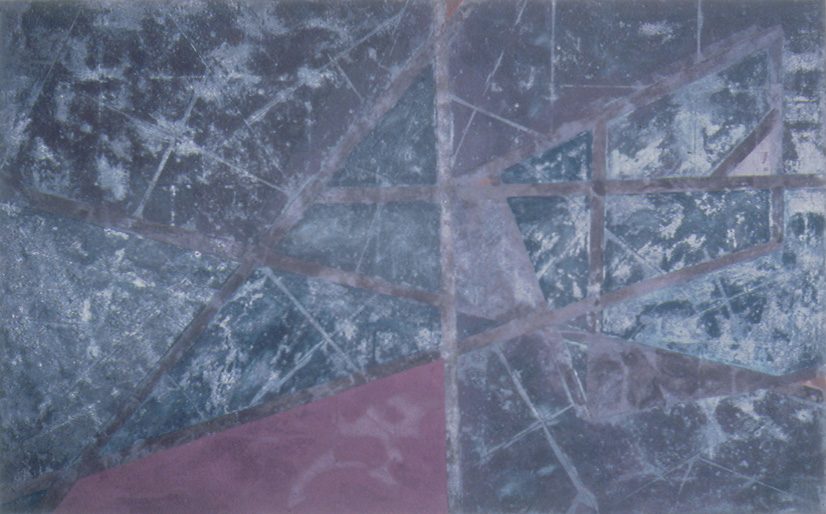
Buffalo Series, Nº 12
46" x 60"
Oil on canvas
1979
Ricardo Morín
Buffalo Series, Nº 12
46″ x 60″
Oil on canvas
1979

For those of us who have lost someone,

whose presence now rests in memory

and whose absence shapes who we are.

May this story preserve something of their enduring trace.


Julian tried to put into writing what he had dreamed.

He wondered:    could writing remain faithful to the one who watches, trembles, and longs to understand?

He dreamed he was offering his mother a bowl of viper’s broth.    The serpent’s head and torn fragments of its body were still writhing, as if unaware of their condition: alive, though undone. He held the bowl with both hands; it had been handed to him by an old woman seated at the far end of a wide, shallow circular pond.    The pond seemed to contain more than water—perhaps time, or memory, or fate.    Around him loomed shadows—blurred figures repeating the same ritual, or perhaps none at all.    He could not tell.

The path to his mother was arduous; the ground was slick with a substance he could not name.    The air was dense, weighted by an oppressive silence that made each step slow, burdensome.    The viper twisted in the broth, struggling to flee.   Even so, he kept the bowl steady.    He believed—in some quiet corner of himself—that if his mother drank, healing might be reached, or understanding, or peace for them both.

When he reached her, he knelt.    He spoke gently, urging her to drink while the broth was still warm.    “Hold the spoon carefully,” he whispered.    “Just small sips.”    But she turned her face away.    She would not drink.    Whether out of fear, pride, or rejection of what was offered, he did not know.    The viper shuddered, and his heart tightened in anguish.

He awoke unsettled, exhausted.    The dream still veiled his perception.    His breath was strained, shallow in the thick air of the room.    Why couldn’t he find calm?    What, exactly, kept him awake?

He wondered if it had been a premonition—a latent fear of his own decline.    Was the writhing snake a vision of his mind losing its serenity?    Were the slow gait, the unstable ground, the trembling hands a rehearsal of his own fading?    Or was it grief—that quiet interloper of the soul, forever hungry, never sated?

He only knew he had tried to help, to steady, to offer comfort that could not be received.    And in doing so, he faced not only the absence of his mother, but the shadow of his own dread—the question of who would walk beside him when his own farewell arrived.

But perhaps—he thought—there is something sacred in the attempt.    In the offering, even when refused.    In the slow advance—however uncertain it may be.


There, humility may dwell:

the kind that does not demand,

and yet disarms pain

by its presence—

too steady to be cast aside.

It meets no resistance—

only the quiet invitation to be welcomed.

Ricardo F. Morin Tortolero

Bala Cynwyd, Pa, June 2, 2025


“What the Mind Forgets but the Heart Quietly Keeps”

April 20, 2025

*

*


“Mario Vargas Llosa was a daring truth-teller.   He was also my friend.”

— Marie Arana, The Washington Post

Read the full article


*

I sent Marie Arana’s moving tribute to my sister, Bonnie, who had directed several of Vargas Llosa’s plays in Madrid and had encountered him on more than one occasion.    I knew this news would strike a deeply personal chord.

“It’s clear how deeply Vargas Llosa’s death has affected you,” I wrote to her.

“You felt close to him—not only as a reader or as a playwright, but as someone whose voice accompanied you through many chapters of your life.    Your grief resonates with me, because I understand what it means to lose a figure who, though not family, becomes part of our inner landscape—someone who shapes our ideas, our convictions, even our way of seeing the world.”

She replied:    “the death of such a brilliant mind—so present for decades—left a void that is hard to name.”    That idea moved me deeply.

“It saddens me profoundly,” I wrote back,

“to consider the silence that now follows him.    I understand why this hits you so hard—perhaps because Vargas Llosa stood for the very opposite:    a luminous intellect, fiercely articulate.   To imagine even he is gone…    it hurts.”

“I’m with you,” I added.

“And even from afar, I hold you in this grief.”

These reflections stirred memories of our own family—of our father, whose cognitive decline began after a traumatic brain injury.    He slowly lost his speech, his clarity, his grasp of the world around him.

And our mother, who held on much longer, also slipped away eventually—her presence fading in slow motion.

Our paternal and maternal uncles, Calixto and Fredy, experienced the same kind of long, quiet departure.    Years of silence.   Gradual disappearances.    Losses we didn’t always know how to name, but which marked us all.

It’s a pattern I can’t overlook.

I’ve done the research.    (You may not know this.)    Genetically, my risk for similar decline falls in a moderate range.   Not a verdict, not a guarantee—just a presence.   A shadow that walks beside me, saying nothing, revealing nothing.

Sometimes I wonder whether knowing this helps or hurts.

But I choose to know.

I choose to face it.

Because if ever I find myself on that road, I want to walk it with the same dignity I saw in our parents—even in confusion, even in silence—when their eyes could still recognize us with a flicker of tenderness.

And I want you to know that.

I want us both to remember.

*

Ricardo Federico Morín Tortolero

April 17, 2025; in transit from Florida to Pennsylvania