*
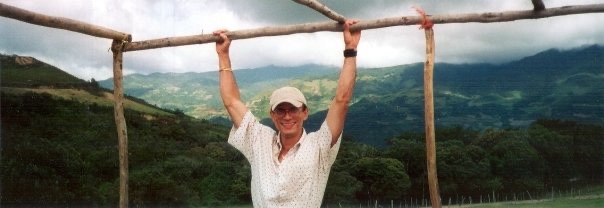
During those first years through 1976, Buffalo accumulated heavier snowfalls than usual, with blizzards exceeding those of previous winters. In some neighborhoods the snow rose beyond the rooftops of houses. The wind crossed the streets with an intensity unfamiliar to someone who had grown up in Valencia, Venezuela. In the art studios of Bethune Hall, at the State University of New York at Buffalo, canvases leaned against one another while students worked for hours in silence or beneath scattered conversations. The smell of oil, turpentine, and damp wood continuously permeated the interiors.
He had arrived in the United States in 1972 at seventeen years of age. Displacement did not consist solely in leaving one country behind. It also altered the daily perception of the simplest things: the scent of cities, winter light entering through windows, the relation between the body and climate, the constant sound of a language still only partially familiar.
Before Buffalo there had been Valencia. The Arturo Michelena School of Fine Arts. The first hours of drawing during childhood. Later, during adolescence, the summers studying painting in the private studio of the Hungarian painter Lazlo Lenyel. Even then, however, painting seemed less a future profession than a form of attention. Preparing the surface of a canvas produced an experience difficult to explain outside the act of painting itself.
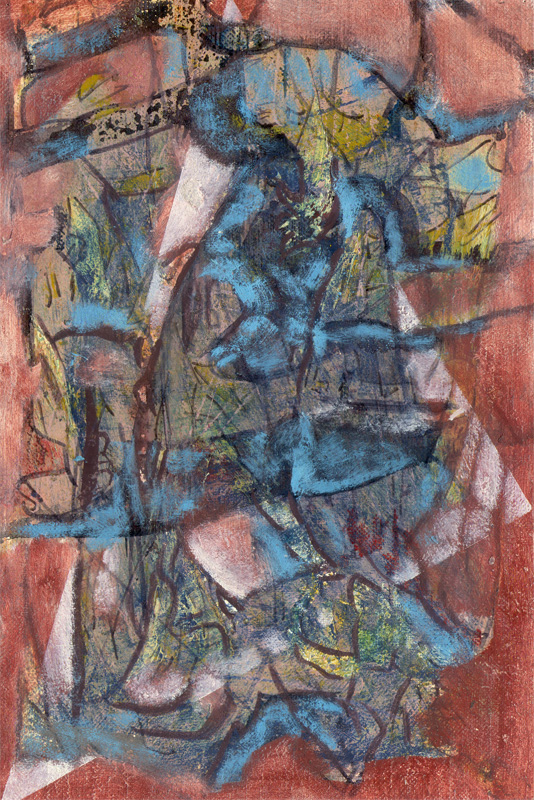
During those years canvases began accumulating rapidly. Some were destroyed. Others remained leaning against walls for months before receiving another layer of paint. The organization of the studio changed constantly. Painting did not yet follow a precise theory. There was instead a physical insistence: returning each day to observe relations of color, spatial tension, surface, and rhythm.
In 1976 he returned briefly to Venezuela. There he studied privately with the Málaga-born artist José Luis Montero before returning once again to Buffalo under the guidance of Herta Kane and James Jipson. Gradually the first exhibitions began. In May of that same year he presented “Works by Ricardo Morin” at the Villa Maria College Gallery.
Conversations about art during those years frequently revolved around movements, historical legitimacy, abstraction, expressionism, or formal theory. Yet many of the most intense hours occurred far from any discourse. Remaining alone in the studio, slowly shaping how certain surfaces retained or rejected light, seemed to contain an experience more concrete than many of the explanations later constructed around the work.
In 1977 the Venezuelan Ministry of Education awarded him a full scholarship to complete a B.F.A. at SUNY Buffalo. The thesis exhibition, Buffalo Series 1979, was later curated by Seymour Drumlevitch at the Alamo Gallery of the State University of New York at Buffalo. [1] Shortly afterward, Buffalo Series No. 1, 1980, received the Birge Wall Covering Award and the Reed Foundation Award at the 38th Western New York Show at the Albright Knox Art Gallery. [2]
Awards, exhibitions, and scholarships briefly made continuity seem attainable. During certain periods it seemed possible to imagine a relatively stable professional trajectory. Yet that stability coexisted with another sensation more difficult to name: the persistent impression that the real work was taking place elsewhere, far from the forms through which it was publicly interpreted.
In 1979 he attended stage design seminars taught by Gunther Schneider-Siemsen at the Internationale Sommerakademie für Bildende Kunst Salzburg. There he received the Förderungspreis Leistung der Stadt Salzburg award. Shortly afterward Drumlevitch recommended that he apply to the M.F.A. program of the Yale School of Drama.
At Yale the theater workshops functioned on another scale of production. Constructions, lighting, scenic architecture, models, and technical equipment occupied spaces inside buildings adapted for the stage. Physical labor was continuous. Stage design also offered a concrete possibility of economic survival within New York.
During the first years after Yale he worked as a set designer in New York’s Off-Off-Broadway circuit, collaborating with Irene Fornés and Max Ferrá at INTAR. [3] At the same time he worked as principal assistant to established Broadway designers. Workshops, constructions, and rehearsals occupied much of the days and nights.
By the late 1980s he obtained a loft in Tribeca devoted exclusively to painting. Large-format canvases leaned against high walls while painting once again began occupying the center of daily life. The studio was filled with accumulated materials: stretchers, pigments, tools, fragments of canvas, and drawings tacked against the walls.
At certain moments it seemed possible to sustain both lives simultaneously: theater and painting. New York still retained industrial areas where some artists could work within relatively spacious environments. Yet even during those years of greatest professional activity, a tension persisted between the public continuity of a career and the quieter experience of the work itself.
In 1993 interruption appeared. Due to AIDS he was forced to abandon the loft, suspend professional activity, and return to Venezuela seeking refuge with his family. The diagnosis rapidly altered the entire structure of daily life. Many previous continuities disappeared within a few months: work, economic stability, studio, city, professional rhythm.
Between 1993 and 1996 his health deteriorated considerably. He spent long periods inside the family home with little physical energy and frequent medical interruptions. It was then that the Aposentos series began. The second painting of the series, Aposento No. 2, was selected for the “XIV Municipal Painting Salon: Homage to Carlos Cruz-Diez,” held in 1994 at the Municipal Art Gallery of Maracay. [4]
He painted slowly. Canvases remained stacked against the walls for entire weeks before receiving another intervention. The body fatigued quickly. Light shifted inside the room while the paintings remained motionless for hours or entire days. At times the work advanced only a few centimeters.
Painting then began acquiring another rhythm. It no longer seemed to respond solely to the continuity of a career or to the possibility of exhibition. Some works emerged more as accompaniment than affirmation.
During those same years he worked voluntarily at Fundación Metaguardia, created in Valencia as a center of information and support for people with terminal illnesses, many of them also living in conditions of indigence. The foundation integrated emotional support, activities connected to the arts, and pro bono medical services.
Silent conversations, long periods of waiting, weakened bodies, and shared vulnerability slowly altered the perception of many previous categories. Illness seemed to render secondary many differences that had previously organized much of daily attention.
In 1996 he finally returned to New York in order to access the new antiretroviral treatment. His immunity was practically nonexistent. Soon afterward he sought assistance from the Department of Human Resources because of his condition of destitution. He first stayed at the transitional Paradise Hotel in the Bronx and later at the Common Ground program at the Hotel Times Square.
Paradise was a profoundly unstable place. Narrow corridors, moldering rooms, and constant precariousness altered the perception of time. Some people disappeared suddenly. Others remained locked inside their rooms for entire days. The noise of doors, televisions, and arguments continuously crossed through the walls of the building.
Even so he continued painting. Small canvases rested against walls or on improvised furniture near the window. The continuity of the work no longer depended upon ideal conditions. It depended only upon continuing to work within whatever circumstances were available.
During those years an unexpected sensation of emptiness also appeared. Not necessarily as absolute loss, but rather as a gradual reduction of the interior noise through which ambition, identity, or permanence had once been sustained. Within that emptiness certain forms of attention slowly began acquiring greater intensity: breathing, light upon surfaces, the rhythm of the body while walking through the city, the noise of certain rooms, the momentary presence of familiar faces.
In September 1998 he received support from the New York organization Visual AIDS, which organized a joint exhibition based on watercolor and oil portraits together with Nicolo Cataldi at St. Mark’s Church. Later came other collective exhibitions and alternative platforms. Some of the paintings from the early 1990s were later described by the artist Jo-ey Tang as “love letters to the city of New York”.
In 2000 he received a VESID rehabilitation grant that included specialized training in digital tools and computer equipment. The computer then slowly became incorporated into the visual work. Between 2000 and 2003 he used digital media combined with watercolor and hand drawing to reinterpret fifteenth-century Persian miniatures through geometric processes of reconstruction. [5]
Later, between 2005 and 2012, he taught a course titled Pictorial Perspective at Pratt Institute. Meanwhile he developed the Triangulation Series, working with suspended geometries, reduced spaces, and hanging formats. [6]
After completing chemotherapy in 2008 for an AIDS-related Non-Hodgkin lymphoma, systemic muscular disorders began preventing him from even stretching large canvases. The hanging canvases then emerged also as a direct consequence of physical limitations. The body slowly began imposing another relation to space, time, and work.
The canvases remained suspended for weeks while light varied across the surfaces. Physical movements were slower. Material reduction altered perception as well. Silence ceased feeling like absence and began functioning as another form of attention.
Between 2009 and 2010 he initiated the Metaphors of Silence series. [7] Many of the works emerged slowly within prolonged periods of physical stillness. The need to explain aesthetic experience intellectually gradually began losing intensity before the experience of observation itself.
During those same years he collaborated with Dr. Andrew Irving in an experimental project on art, anthropology, and human experience related to New York Stories. Part of those dialogues were later incorporated into The Art of Life and Death: Radical Aesthetics and Ethnographic Practice. [8]
With the passing of years certain tensions slowly began losing sharpness. Illness remained present, although it no longer organized each moment of the day in the same way. Certain forms of ambition or anxiety surrounding continuity, recognition, or permanence seemed gradually to diminish without disappearing entirely.
Painting continued occupying a central place, though no longer necessarily as an exclusive affirmation of identity. Other things also remained: conversations, walks, reading, physical exercise, breathing finding rhythm again, the momentary attenuation of certain aches, light changing across the surfaces of the city, brief encounters throughout the day.
Some afternoons he continued walking slowly while breathing found rhythm and light descended across the buildings. Aging, fragility, and the proximity of death did not disappear. Neither did they remain completely separate from the movement of existence itself.
Ricardo F. Morín
May 17, 2026
Bala Cynwyd, Pennsylvania
Endnotes
[1] Buffalo Series 1979:
https://www.ricardomorin.com/l-series-html/62.html
[2] Buffalo Series No. 1, 1980:
https://www.ricardomorin.com/l-series-html/53.html
[3] Theater productions and press references:
https://www.nytimes.com/1986/04/17/theater/stage-lovers-at-intar.html
[4] Aposento No. 2:
https://www.ricardomorin.com/l-series-html/11.html
[5] Platonic Interactions Series and related works:
https://www.artmajeur.com/en/rfmorin/artworks?page=5
[6] Triangulation Series:
https://www.ricardomorin.com/Triangulation_Series.html
[7] Metaphors of Silence:
https://ricardomorin.wordpress.com/2010/11/24/metaforas-del-silencio/
[8] Andrew Irving, The Art of Life and Death: Radical Aesthetics and Ethnographic Practice:
https://www.academia.edu/53478128/The_Art_of_Life_and_Death_Radical_Aesthetics_and_Ethnographic_Practice_Andrew_Irving_Chicago_Hau_Books_2017_264_pp