The war in Ukraine is often presented as a geopolitical confrontation between the West and Russia, but this interpretation can obscure a deeper reality: the rise of authoritarianism as a global force. Noam Chomsky, one of the most influential voices in the critique of U.S. foreign policy, has argued that U.S. hegemony is the primary factor driving the conflict. His approach, rooted in Cold War logic, has been essential for understanding global power dynamics. However, one must question whether this framework remains sufficient to analyze the coordinated expansion of authoritarian regimes in the world today.
The issue is no longer simply whether U.S. policy contributed to Russia’s aggression, but whether democracies can withstand the deliberate advance of governments seeking to consolidate power at any cost. What is at stake transcends Ukraine’s sovereignty: it is the survival of democracy in the world.
Chomsky argues that NATO’s expansion and U.S. financial dominance exacerbated tensions with Russia and limited diplomatic options. His vision proposes a world in which power is distributed between the United States, Europe, China, and Russia, which he believes would create a more stable and just balance. This perspective has been crucial in questioning the excesses of U.S. interventionism. In the present world, however, where authoritarianism is not only reacting to the West but also actively seeking to reshape the global order, is a framework based solely on containing U.S. hegemony sufficient?
The rise of authoritarian regimes is not merely a response to Western influence; it is a deliberate strategy to consolidate power. While Chomsky has emphasized the importance of distributing global power, it is crucial to analyze the nature of those who would fill this void. Russia and China are not simply seeking a multipolar stability; their actions reflect an attempt to exert absolute control, without democratic constraints. Chomsky’s critique helps us understand the roots of international conflicts, but it may need to be expanded to account for how these regimes are transforming the very structure of global politics.
One challenge in applying Chomsky’s traditional analysis to the present is that contemporary authoritarianism no longer aligns solely with past ideological divisions. It is no longer a struggle between socialism and capitalism, or left and right. Rather, these regimes share a common objective: dismantling democratic institutions to ensure their permanence in power.
Putin, for instance, invokes Soviet nostalgia while prohibiting any critical reassessment of Stalinism. China blends State capitalism with absolute political control. Hungary and India, once considered democracies aligned with the West, have adopted authoritarian models. Meanwhile, the U.S. far-right, which historically opposed communism, has begun to adopt the Kremlin’s narrative, portraying it as a defender against “globalist elites.”
This ideological alignment makes modern authoritarianism more dangerous than ever. It not only transcends traditional power blocs but is also reinforced through strategic alliances, mutual support, and the erosion of democracies from within. This is perhaps most evident in the United States. The presidency of Trump revealed an unexpected vulnerability: the possibility that authoritarianism could thrive within the world’s most influential democracy. Here, the debate is no longer reduced to a question of isolationism or interventionism, but to the real risk of autocratic tactics being normalized in domestic politics.
The Trump administration sent contradictory signals regarding the Kremlin, weakening the principle of deterrence. Rather than establishing a clear stance against authoritarian expansion, its ambiguity allowed regimes like Putin’s to interpret the lack of firmness as an opportunity to act with impunity. Figures such as Marco Rubio have advocated for an unequivocal stance that would reinforce U.S. strategic credibility, while the inconsistency in the Trump administration’s foreign policy contributed to the perception that the West was divided and hesitant.
This weakening of democratic leadership has not occurred in a vacuum. The globalization of authoritarianism is a phenomenon in which autocratic regimes not only directly challenge democracies but also back one another to evade sanctions, subvert international pressure, and consolidate their internal rule. The invasion of Ukraine must be understood within this framework: it is not just a regional conflict or a reaction to NATO, but a calculated move within a broader strategy to weaken global democracy.
For decades, critics like Chomsky have been instrumental in highlighting the effects of U.S. dominance on global politics. His analysis has allowed us to understand how U.S. hegemony has influenced numerous conflicts. However, the evolution of authoritarianism raises questions that require expanding this perspective. The greatest threat to democracy is no longer exclusively U.S. power, but the consolidation of a global autocratic model advancing through coordinated strategies.
Blaming the U.S. for every geopolitical crisis may overlook a crucial shift: authoritarian regimes have moved from being a reaction to Washington’s influence to becoming an active strategy to replace the Western democratic model. Recognizing this shift does not absolve the U.S. of its failures in foreign policy, but it does demand an understanding that countering authoritarianism requires more than constant criticism of its hegemony. It requires recognizing that democracy faces a coordinated and unprecedented threat.
Chomsky’s vision of a multipolar world is, in theory, appealing. However, what would this imply in practice if the actors filling the void left by the U.S. are not interested in preserving democracy? The real challenge is not merely containing Putin’s territorial ambitions but preventing his model of governance—based on dismantling democratic institutions—from gaining traction in the West.
Chomsky remains one of the most incisive critics of U.S. foreign policy, and his work has been fundamental in understanding the effects of power on international relations. His analysis has shed light on the flaws of interventionism and the dynamics of global hegemony. The world, however, has changed, and so have the challenges facing democracies. Today, the crisis in Ukraine is no longer limited to a debate over NATO, U.S. intervention, or Western hypocrisy. It is part of a broader struggle between democracy and autocracy, a struggle that does not end at Ukraine’s borders but extends to the very political institutions of the West.
If we fail to recognize this shift, we risk not only losing Ukraine but also underestimating the scope of the threats facing democracies worldwide. Neutrality is no longer an option when the challenge is the survival of free societies. Beyond the mistakes of the West, the rise of authoritarianism demands a response that goes beyond constant criticism of U.S. hegemony and instead embraces the active defense of democratic values wherever they are under threat.
“New York Love Letters” was written in the aftermath of my younger sister’s death. In our early adulthood, as I confronted the certainty of dying from AIDS, I learned of her diagnosis of schizophrenia. Our lives became bonded through different forms of vulnerability and endurance. Her survival became inseparable from my own. Over time, I came to define part of myself through the emotional, intellectual, and material support I provided her. When she died at sixty-nine and I found myself stable at seventy-one, I experienced not only grief, but the loss of a role that had shaped my identity. It was at that moment that writing became a means of survival. What follows emerged from that necessity.
First Letter: How Did I End Up in Manhattan?
I lived in Manhattan from 1982 to 2021, though I hadn’t planned to stay. Initially, it was meant to be temporary—a waiting point before Jurek’s return. But then he told me he was staying in Berlin. His decision, not mine, anchored me in the city. And when I learned that death had taken him, grief replaced waiting, and Manhattan became something else—perhaps a substitute, perhaps a necessity.
We had admired each other. Our conversations shaped me, deepened my understanding of art, and reinforced the creative instincts that guided me. As in every meaningful relationship, our exchanges defined us. He had a profound sense of what high art was, and his perspective challenged me to see beyond my own. Even after he was gone, his influence remained, though absence is a poor companion for inspiration.
Still, I had to find my place within Manhattan—amid its creative currents, its relentless demands, and its contradictions.
My academic foundation had been in fine arts, and I was veering into theater, much as I had years earlier in Venezuela. During the time Jurek and I were together, I moved from the experimental environment of the Art Department at the State University of New York at Buffalo (Bethune Hall) to the world of theatrical conventions at the Yale School of Drama’s Design Department. In between, I traveled with Jurek through Europe and attended set design seminars at the Salzburg International School of Arts.
At Yale’s Design Department welcoming new students, the chairman referred to my arrival as being via Salzburg—a remark delivered amidst what seemed to me like convivial bemusement. It lingered with me for years—whether as admiration or something else, I never fully understood. Instead of questioning the observation, I shifted the conversation to Albert Spaulding Cook’s influence in Buffalo, whose writings had guided my decision to bridge fine arts and theater—shifting from my understanding of what art meant to me to Cook’s particular regard for the designer’s interpretative role in service of the playwright. The response from the group was quick—and revealing. A couple of professors reacted not to my objectives, but to the mention of Cook himself, as they questioned whether he had ever been in Buffalo. I knew perfectly well he had and chose not to argue. Soon enough, I sensed a quiet resistance to ideas that didn’t align with prevailing norms—perhaps a reflection of the school’s priorities, though I never fully determined where I stood within them. After my second year, the chairman inquired if I wished to continue.
For the three years of the Master’s program, I did not find the formal rigor I had expected, yet I stayed the course. My aspirations in the fine arts remained intact, but my footing in the world depended on my role as a set designer—expected to conform to an interpretative craft rather than pursue art on my own terms. The program emphasized adherence to established standards over the cultivation of new approaches, a structure that felt at odds with my own desire to elevate set design—transforming it into an art form capable of standing alongside the finer, more expressive arts rather than relegating it to a supporting role. The principal counselor, of course, would never have admitted this. Whether my approach unsettled him or simply diverged from his expectations, I could never be sure. But I remained guided by instinct rather than precedent, much as I had been drawn to fine arts in the first place. He remained in the position until his late eighties before he died. I sometimes wonder how our arguments sat with him over the years—if they ever did at all.
Second Letter: Ten Years Later.
In Manhattan, the roads of set design and painting intersected, but neither provided stability or clear success. Professional networks seemed in disarray. From Broadway (where I worked as a principal assistant) to the experimental stages of Off-Off-Broadway, the struggle remained the same. Both the personal and professional aspects I found unsettling. Also, these were the years marked by the AIDS crisis, a time that left an indelible mark on me. I navigated these years, though they left their mark.
Walking through the galleries and streets of Manhattan in the 1980s felt like navigating a maze with no exit. There was the buzz of new ideas and the promise of fortune, yet every corner led to another dead end, much like my work in set design. Broadway was a field of intense competition, and Off-Off-Broadway unfolded in forgotten warehouses. Every path and every encounter suggested possibility, but in practice few could sustain themselves within an environment defined by labor precarity, relentless intensity, and limited compensation.
The lack of opportunities to establish myself as a designer mirrored my exclusion from galleries. Both signified exclusion, the denial of a real chance to build a reputation. Some doors never opened, others slammed shut before I could step through. A well-known Broadway designer would often introduce me both as an associate and a great artist, but never allowed me to compete with him. The income I managed to secure was precarious at best. Competition was intense, often driven by commercial interest over cultural ones. In like manner, galleries were run by grifters eager to exploit talent, while artistic directors prioritized profit over innovation. The promise of stardom—even if fleeting—often proved to be unattainable. Survival dictated my choices and forced me to navigate my limitations rather than transcend them.
In a city that constantly reinvented itself, where the streets were painted with the colors of addiction and struggle, it seemed as though no one was ever whole. The fractured sidewalks beneath me reflected my own disjointed ambitions. There were days I couldn’t even recognize the neighborhoods I once called home. In places where life was reduced to survival—where crack vials littered the sidewalks and people stumbled through their days—how could I hope to thrive, let alone create something lasting?
Set design in the world of spectacle was arduous, and the pay was meager—yet I did it out of love for the craft. At one point, a clever producer remarked that enjoying my work as much as I did seemed incompatible with the notion of being compensated for it. Eventually, I turned to commercial design for security; I took on work in film documentaries and the toy industry. But even there, professionalism was no guarantee of respect or fairness. The same challenges persisted. The Actors Fund of America and Visual AIDS provided important support during difficult times; they offered a space to remember those lost and reflect on artistic struggles.
In the early years, Manhattan’s pulse beat through the night in the form of whispered secrets between strangers, drawn together by the need for touch that didn’t require commitment. There was a safety in that anonymity, and yet it was a hollow shield against what I truly sought—something beyond the next fleeting encounter, beyond the walls of a bar or an apartment rented for the night. It was a city where love seemed to evaporate the moment it took form, and independence felt more like isolation than freedom.
As I struggled in the professional world, I found that the absence of fulfillment in my work mirrored the absence of love in my personal life. Both were a reflection of a larger void I had yet to name. Instability extended beyond work. Friendships and love affairs unraveled just as easily. Many friends I had known and loved were lost to AIDS; and deepened my sense of isolation. More than any professional setback, it was the absence of love that left the deepest void. I continued to wrestle with questions of purpose, which remained unresolved after years of reflection. The search for answers became its own struggle—just as illusive as success in a world with high demands.
The smell of decay and the sounds of sirens were never far behind. In neighborhoods where homeless families lived in the shadows of once-glorious buildings, survival came at any cost—whether it was a desperate hand reaching for money or a corner turned into something darker. There was a coldness to the city’s march forward, as if everything was disposable. My art, my efforts, my desires—they all seemed to be tangled in that same vicious cycle of consumption and neglect.
Third Letter: When I Met BBT
BBT’s intellect and honesty shaped my life in ways I didn’t fully grasp at first. I found myself drawn to his company and sought the creative nourishment that seemed lacking elsewhere. At the time, I felt I could withstand the challenges I faced—my health, affected by AIDS, careers that had not fully developed, and relationships that lacked commitment or mutual understanding. Several friends, overwhelmed by their own battles, took their own lives. This period was made worse by a climate that felt stifling and unfulfilling. I still missed Jurek, who had chosen Berlin to die away from me. New York had shown me the complexities of love amidst significant challenges: Indeed, Manhattan was a difficult place to find love and afford a career in the arts, yet it excited me.
Billy kept me from withdrawing completely; he offered both intellectual companionship and a belief in my creative potential.
But it was not always a relationship without tension. At times, Billy’s insistence on structure seemed more a reflection of his own deep-rooted uncertainties than just a call for discipline. I began to see that in his attempts to push me toward mastery, he was navigating his own struggles with self-doubt. We were both in this together—each trying to prove something, not just to the world, but to ourselves. There were moments where I resisted his guidance, and there were moments he resisted mine, but that tension, though uncomfortable, became a part of what kept us connected. In these uncomfortable truths, I realized we weren’t adversaries, but rather fellow travelers, each trying to find our place in a world that didn’t always make sense.
Creativity was my anchor, a means of channeling my energy into something meaningful. In the worst of times, I still found solace in it: A brush against canvas, a sentence coming together—proof that creation, that life itself, was still possible. Painting had been my life companion, but when a mentor from my younger years recently set aside his brushes to write, I wondered:Why couldn’t I? Billy helped me recognize my potential as a writer, a path I had first considered in childhood while listening to my father dictate letters to his secretary. At sixteen, a grammarian told me I was not just a painter but had the potential for a unique voice, though he often struggled to grasp what I was trying to say.
Fourth Letter: The Dark Side
Fifty-one years of struggle and resilience as an immigrant shaped my perspective. My father once called one of my New York apartments unpleasant and vowed never to return. But in that same space, I found moments of connection amidst difficult circumstances.
That contrast never left me: What others saw as squalor, I experienced as a space of potential. Even in tough situations, love found a way to exist.
Manhattan, in its rawness, revealed to me the price of progress and the silence of those left behind. I, too, was a casualty of that silence, wandering through the streets in search of something to fill the spaces that had grown hollow. Manhattan was more than just a backdrop; it was both my adversary and my accomplice. It challenged and sustained me in equal measure. It shaped my struggles, but it also revealed moments of meaning, sometimes in unexpected ways.
Romance came in my forties, an attempt at finding commitment, but it didn’t resonate in the way I hoped. When my sense of autonomy was at risk, I preferred solitude. Silence settled between the walls—a quiet ritual of distance even from my own passions.
Fifth Letter: Validations and Assaults
I remember both validations and assaults, from familiar faces and strangers alike. Yet even in misunderstandings, in accidental encounters—regardless of their nature—I found meaning. I was learning from all of them.
At some point, I wrote a letter to a Cardinal, an attempt to articulate inequity versus victimization within our world. It was an exercise in verbal gymnastics, a way of deciphering the reality I inhabited. Later, I embedded this letter into a composite painting entitled INRI: Its header spelled it out in a collage of one-dollar bills, which I had secured permanently out of fear of defacement.
A museum invited me to take part in a major exhibit celebrating Artists in the Marketplace—but only if I replaced INRI with another painting, one inspired by a fax I had sent a Paris Newsweek correspondent. That fax was a reflection of my concerns—about art, about struggle, and about the very marketplace the exhibit aimed to showcase. The correspondent had replied with a postcard depicting an ancient Egyptian painting of a man being eaten by a mule. A curious response, but fitting in its own way, so i made it part of the painting.
However, I had already committed the Fax painting to a Midtown gallery. I declined the museum’s request unless they agreed to exhibit INRI instead. The museum’s curator hesitated, unable to fully grasp its meaning. In the end, I didn’t participate. Her welcoming remark at the opening was: “You are quite a trooper to attend”—as though showing up despite the situation was an act of perseverance. Yet, perhaps it wasn’t as trivial as it seemed.
Galleries, too, operated within their own opaque structures. They took work on consignment, claiming 40% of the sale price, yet seldom disclosed who the buyers were. One painting I sold vanished into anonymity, with only a vague assurance that it had been “placed well.” There was no contract for the buyer, no record of negotiation beyond a verbal agreement—an arrangement that often left artists vulnerable, dependent on the gallery’s discretion. Selling art, I learned, was as much about trust as it was about how to negotiate talent.
On a different occasion, when a gallery’s partners split they proposed taking my work to London for their new venture. How could I trust them?
There were other two incidents that came to mind, bringing both frustration and a sense of irony. A California production at the Queen’s Kaufman Studios displaced four of my largest format paintings, which I had offered to rent. A co-producer had initially remarked that my paintings appeared to be worth millions, yet the storage staff discarded them. Their negligence took over a year to be compensated with a meager portion of their value, after a prolonged dispute between appraisers. Then, a corporate art advisor sold one of my paintings and failed to pay me the full 60% of the agreed-upon amount. The same volunteer lawyer who represented me allowed her to pay in installments over a year. Yet, had it not been for these events, I would not have been able to cover the costs of experimental drugs not covered by insurance. At one point, my insurance was suspended due to a lack of union contracts, as I was working as a freelancer without union affiliation.
In later years, a gallery in Denmark took interest in signing me up for a two year contract that required producing 20 paintings per month and compensating only for the cost of materials. I said flatly: No, thank you, and the director felt offended at how I negotiated the terms.
Then, I brought 25 years of my paintings back to Venezuela, which are now in storage—though uncertain of their condition, I am willing to let my family sell them at any price, as long as the paintings survive—while the work that evolved 18 years later I sold at auction—starting at $1 a piece.
These moments may seem separate, yet I recognize their connection: My creative choices and my resistance to imposed conditions—were they simply acts of defiance, or did they reveal something deeper? How much of my struggle, my insistence on meaning, and my reluctance to compromise, was tied to the absence of love? Did the absence of love make compromise feel like self-betrayal? Or, how did love (or its absence), shape my perception of validation and rejection?—I still ponder.
Sixth Letter: The Pursuit of Love and Validation
If I have a unique vision as a visual artist, then the opportunities that slipped through my hands were never mine to hold. My hands had nothing to do with that conflict. It was my destiny.
The circuitous nature of experience—the way despondency transforms into art, how a fax of despair or a letter becomes a painting—reminds me that creation and loss have always been intertwined. Manhattan wasn’t just a backdrop; it provoked, shaped, and at times, even dictated meaning.
Much reflection on the past is nothing more than an exercise in futility. Destiny reminds us how determined our lives are by incomprehensible forces. Agency, with regard to what has already occurred, can feel like an illusion. We live in an age of disbelief and speculation, where distrust and conflagration cohabit with the hysteria of minds seeking certainty in uncertainty. For these minds, life becomes a tool of gossip and an affirmation of fear. These are minds of prejudice and selfishness, incapable of conceiving of a future that does not align with their own discomforts. It is a syndrome of obscurantism, where paranoia and reactionary fear prevail over reason. Epistemological confinement reinforces a state in which contradictions are dismissed rather than examined, and doubt is exploited as evidence of conspiracy. It is the rejection of complexity in favor of dogma, an attachment to certainty that turns ignorance into conviction and speculation into doctrine. We do not change the past by dissecting it—we only sharpen our awareness of how little control we had in the first place. Balancing uncertainty is a fool’s errand. The only grace of dignity left to us mortals is in accepting our limitations—not as defeat, but as clarity. There is no contradiction in that acceptance. If anything, it allows for a different kind of agency—not in altering what was, but in deciding how to exist within what remains.
My story isn’t only about the pursuit of love but about what love—whether found, lost, or absent—left in its wake. Creativity was never separate from longing; it emerged from it, filled its voids, and, in some ways, became love’s most enduring form.
Perhaps these connections don’t need to be stated outright. They exist in the spaces between—between art and survival, between the lives I intersected with and those who vanished, between the city that bruised me and the city that made me.
Seventh Letter: David
When I finally met David, my husband, my life began to shift. We have now been together for twenty-five years, ten of them married. Before I met him, I had already resigned myself to the idea that being a couple was not possible. Then I discovered that he loved me truly and understood me with great depth. Without intending to, his love healed every emotional scar and freed me from obsession. His love allowed me to discover a stillness that I can return to in an instant—just as I always did before, but now we shared it. Even when challenged by life’s vicissitudes, I am assured of one thing: I am loved—loved in a pure, soulful way.
But love is not an act of erasure, nor is it simply the inverse of longing. The temptation to see my life in contrast—to say that struggle preceded love, that absence defined its arrival—feels, in some ways, like an illusion. Contrast can make meaning vivid, but it can also distort it. It can create division where there should be unity. I have learned that love does not invalidate the past; it reveals it in fuller detail. What came before was not an empty prelude to David’s presence. It was real, lived, and filled with its own weight.
My story isn’t a simple arc from darkness to light. It’s more like a series of echoes, where past and present constantly inform each other. The creative energy of silence—something I can return to in an instant—suggests a kind of equilibrium. It was always there, alongside my struggles. David’s love didn’t create it, but gave me the trust to fully inhabit it.
That distinction is crucial. If I were to define my happiness now in opposition to my past, I would be committing the same error that shaped much of my younger years—seeking meaning through contrast rather than through presence. The anchoring point I found in David’s love does not stand against what came before, but within it. Love does not negate struggle; it allows struggle to exist without consuming everything else.
Though the world is filled with imperfections and uncertainties, love transcends them—not as a counter-force, but as something capable of holding contradictions without dissolving them into opposites. Struggles don’t diminish the richness of one’s life; they give it texture, depth. And fulfillment, I now understand, is not found in simple resolutions but in the trust we cultivate. Love does not divide. It does not draw lines between before and after. It does not make meaning contingent upon contrast. Instead, it allows everything to exist at once, in the same breath.
My career in art and set design has followed its own path—one of persistence rather than mass recognition. My work has been exhibited, supported, and studied, but its true measure is in its endurance.
*
Ricardo Federico Morín Tortolero
February 21, 2025; Oakland Park, Florida
~
Author’s Note:
For those interested in the professional trajectory behind the experiences shared in New York Love Letters, the following Appendix provides a brief overview of my work in fine arts and set design.
Appendix
Fine Arts:Ricardo Morín, born in Venezuela (1954), has been exhibited in both solo and group shows, and has received support from Visual AIDS and the Venezuelan government. Morín has also collaborated on a multidisciplinary art/anthropology research project and worked as an adjunct professor at Pratt Institute. For more detailed information, visit https://ricardomorin.com/Bio.html
Set-Design:Ricardo Morín has worked as both principal set-design assistant for Broadway designers of musicals, dramas, and ballets and as an independent designer for various Off-Off Broadway plays and musicals.For more detailed information, visit https://ricardomorin.com/PDF/Theater-Resume.pdf
Silent Diptych by Ricardo Morín Medium: Oil On Linen Size: 18 by 28 by 3/4 inches Year: 2010
~
*
Prologue
Silent Diptych is not an illustration but a resonance—a meditation on silence, not as emptiness, but as a state of receptivity. It is the space where judgment dissolves, where human connection lingers between words, where meaning is felt rather than spoken. In its stillness, it holds what remains unresolved. Some silences are quiet. Others are filled with history.
RFMT
~
*
Our early dinner followed a matinee of “Parade”, a musical steeped in history, in indignity, in the weight of a life taken and a verdict that still hung unresolved. At the table, we spoke of Leo Frank, the Jewish man lynched in Georgia a century ago–pardoned decades later but never absolved.His true killer never pursued.
Three of us were Jewish. They understood, in ways the rest of us could only acknowledge but never quite embody, the particular pain of being made a scapegoat. The others sympathized but could not feel the same alienation—not in the marrow, not in the inherited way history imprints itself on some more than others.
It was a conversation of weight, but not of sorrow. We spoke with the clarity that comes when facts are long settled but their reverberations remain.
Then came the interruption.
The woman at the next table turned to us with a question, her voice cutting easily through our discussion.
“Where are the girls?”
I glanced at my companions, the six of us settled comfortably into the familiarity of one another.
“What girls?” I asked, not unkindly.
She blinked, as if expecting the answer to be self-evident.
“We’re already married to each other,” I said.
She turned away without another word.
There was no need to dwell on it. The moment was familiar. A minor encounter, the sort that barely registered after years of knowing exactly how the world could tilt in response to our presence.
To shift the conversation, I said, “Freud might say that all relationships are attempts to resolve unfinished business with our parents.”
Someone smirked. A fork was set down. A momentary silence, not of discomfort, but of consideration.
“Men with their fathers, women with their mothers,” I continued.
The responses were mixed. Agreement. Deflection. A shift in tone. Some spoke of failing to meet their fathers’ expectations. Some spoke of hatred. Some of detachment. Some of nothing at all.
I mentioned my father. His certainty that we, his children, would not know how to survive without him. He meant economically, of course. His generation had its own understanding of what it meant to endure.
“How many siblings do you have?” someone asked.
“Five,” I said. “Including my younger sister, who just passed away.”A pause.“She was angelic.”“Sixty-nine.”
There was sympathy, warm and immediate. A moment held just long enough.
And then, as if on cue, the conversation shifted—easily, instinctively. To theater. To Tony Awards. To the life and talent of voices long gone but forever recorded.
At the next table, the woman was laughing now, the moment between us already forgotten on her end.
And we, too, were laughing—at something lighter, something that did not ask to be examined too closely.
The moment stayed, unnoticed, but not forgotten.
~
*
Epilogue
Like the painting, the moment lingered—not demanding resolution, but waiting, quietly, to be understood. The weight of history, the subtleties of belonging, the pauses in conversation where truth is felt but not spoken. Silence, in the end, is never empty. It is the space where everything remains.
Sometimes sudden, sometimes creeping in with the years, there comes a moment when mortality ceases to be an abstraction. It is no longer a distant eventuality, an idea tucked away in the folds of daily existence, softened by distractions and routine. Instead, it steps forward, undeniable and weighty, as certain as breath and just as fleeting.
Perhaps it arrives with the quiet betrayal of the body—a stiffness upon waking that does not pass, the faltering of memory, the slight hesitation before a step once taken with ease. Or maybe it comes with loss: a friend, a sibling, a parent, a spouse, whose absence feels like a rehearsal for one’s own. The awareness sharpens and turns time into something both more precious and more fragile. We begin to measure life in what remains rather than what has passed.
And yet, even with this awareness, there is resistance. The mind flits away and grasps at plans, distractions, the comfortable illusion of continuity. We fear death, but we also refuse to fully look at it, as if acknowledgment alone might hasten its approach. We craft rituals around it, philosophies to explain it, but we rarely sit with it, silent and unadorned. It is not death itself that terrifies—it is the knowing, the certainty that it will come, whether with warning or in a moment unguarded.
But what if, instead of turning away, we let the awareness settle? Not as a burden, but as a quiet companion. If we could bear to see loss not as a theft but as an inevitable passage, one that has always been woven into the fabric of living, then death itself might lose its urgency. To know we are mortal is not to despair, but to understand the shape of what we are given. The question is not whether death will come, but whether we can carry that knowledge without fear—whether we can, at last, learn to live with it.
~
*
II. The Decline: Mind and Body
The body does not falter all at once. Its undoing is slow, measured in the smallest betrayals—steps that once felt effortless but now require consideration, a name that lingers just out of reach, the gradual dimming of senses that once shaped the world in sharp relief. At first, these changes seem like passing inconveniences, momentary lapses rather than the steady drift toward an inescapable fate. But the truth settles in with time: this is not a phase, not something to be recovered from, but the quiet unraveling of what once felt permanent.
The mind, too, shows its wear. Thought slows; memories surface in fragments, elusive and unreliable. There is irony in the awareness that remains—sharp enough to perceive the very faculties now fading. It is one thing to lose oneself unknowingly, another to watch the process unfold with lucid understanding. Here lies the deepest struggle: not merely the failing of body or mind, but the tension between resisting the inevitable and surrendering to it.
Some fight against this decline with a desperate energy and will themselves to retain what is slipping away. They train the body, challenge the mind, cling to routines as though discipline alone can hold back time. Others yield more readily and see in each loss a reminder that life is not meant to be held onto with clenched fists. Acceptance, however, does not come easily—it is not passive resignation, nor is it defeat. It is an uneasy balance between effort and surrender, between maintaining what can be kept and releasing what must go.
Suffering wears many faces. For some, it arrives as a single, catastrophic moment—a diagnosis, an accident, an unforeseen unraveling of the body’s delicate order. For others, it creeps in gradually, its presence felt in the weight of each passing year. The pain may be physical, unrelenting in its demands, or it may be the subtler ache of losing one’s sense of self, of becoming unrecognizable to one’s own reflection. Yet suffering, no matter its form, is universal. It does not measure its presence by fairness or logic. It simply is.
Against this backdrop, medicine intervenes—an effort to slow, to repair, to resist the natural course of deterioration. And yet, there is a discord in this. The body is finite, its functions destined to wane, yet we press forward with treatments, procedures, and endless prescriptions, each promising to forestall the inevitable. The line between care and prolongation blurs. To fight for life is instinctive, but at what point does the fight itself become suffering?
In the quiet moments, away from doctors and treatments, the question lingers: is decline something to battle, or is there dignity in allowing nature to take its course? And if the answer is neither absolute resistance nor passive surrender, then where, exactly, does one find the balance?
~
*
III. The Distractions That Delay Acceptance
To accept death fully would require a stillness that few can bear. The mind, restless and cunning, finds ways to avoid such stillness, to weave a life so full of movement and intention that mortality remains a distant, theoretical concern. And so, we fill our days with efforts to prolong them.
Longevity itself becomes a pursuit, an industry built on the promise that decline can be postponed, perhaps even avoided altogether. Diets, regimens, supplements, and treatments—all aimed at fortifying the body against its inevitable unraveling. Science, too, lends its hand, in offering new ways to repair, replace, and sustain. Medicine intervenes not only to heal but to extend, technology whispers of futures in which aging is optional, and ritual grants the comfort of structure to what cannot be controlled. Each of these offers something real—time, ease, a semblance of mastery over the body’s betrayals. But beneath them all is the same unspoken hope: that death, if not conquerable, might at least be postponed long enough to be forgotten.
Yet it is not only the fear of death itself that keeps us tethered to life but the weight of what remains unfinished. The obligations we have not yet fulfilled, the words left unsaid, the people who still need us—all of these create a sense that departure is premature, that to leave now would be to abandon something essential. Even in old age, when life has been long and full, there lingers the feeling that there is more to do, more to settle, more to understand. The past tugs at us with its unresolved questions; the future, though narrowing, still holds the illusion of possibility.
And so, we resist stillness. We resist the quiet where truth is most easily heard. The mind, unoccupied, might begin to accept what the body already knows. And so, we fill the hours, surround ourselves with routine, distraction, movement. Even suffering, in its strange way, can serve as a tether—something to focus on, something to endure, rather than a void to surrender to.
But what if we let the distractions fall away? If we stopped grasping for more time, more purpose, more noise? What would remain? The fear, yes—but also the possibility of peace. For all our striving, death will not be bargained with. It comes when it will, unmoved by the measures taken against it. Perhaps the final act of wisdom is not to resist, but to release—to allow the quiet to settle, to let the mind and body, at last, align in their understanding.
~
*
IV. The Weight of Suffering and Endurance
Suffering is the one certainty all sentient beings share. It is neither rare nor exceptional; it is the undercurrent of existence, woven into the fabric of life from its first breath to its last. And yet, for all its universality, suffering is deeply personal—felt in ways no other can fully understand, borne in ways that cannot be measured.
Pain takes many forms. It may be the slow tightening of the body against itself, the ache of illness, the heaviness of fatigue that never fully lifts. Or it may be the quieter pains—the loss of self as the mind falters, the loneliness of watching the world move on without you, the grief of knowing that, no matter how much one has endured, there is still more to bear. Some suffer in the open, their pain visible and acknowledged. Others carry it in silence, as though to admit its weight would be to surrender to it.
Yet suffering alone does not mark the end. There is something beyond it, something deeper: endurance. The threshold of what one can bear is not fixed; it shifts, expands, contracts. A pain once unthinkable becomes routine; a burden that seemed insurmountable is carried, day after day. And yet, there is always a limit, a moment—often unspoken, often known only in the quiet of one’s own thoughts—when endurance is no longer enough.
This is the reckoning, the moment when staying alive is no longer an act of living but of mere persistence. For some, it comes as a sudden recognition, as clear as a breaking dawn. For others, it arrives gradually, the body whispers before the mind dares to listen. It is not simply about pain, nor is it about age. It is the moment when the will to remain no longer outweighs the cost of doing so.
There is no universal measure for when this moment arrives; it is known only to the one who bears it. To endure is an instinct, a habit built into the core of existence. But to know when endurance has reached its end—that is something else entirely. It is not weakness, nor is it surrender. It is a quiet knowing, a recognition that every life carries within it the right to determine when it has been enough.
And so the question lingers: is suffering the price of life, or is there a point at which one is justified in setting the burden down? The answer is not written in doctrine, nor in medicine, nor in the opinions of those who do not bear the weight themselves. It is written in the individual, in the silent moment when one understands—this is enough.
~
*
V. The Unseen Threshold
Life does not depart all at once. It recedes, quietly at first, almost imperceptible in its withdrawal. The breath grows shallower, not in gasps but in a gradual easing, as though the body has decided to take up less space in the world. Weight diminishes, not only in flesh but in presence—the self becomes lighter, less tethered to the demands of existence. A once-restless mind drifts, thoughts untangle, as if loosening its grip on the past, the future, even the urgency of the present.
These are not signs of failure, nor of defeat. They are the body’s way of whispering that it is time. Time to ease away from effort, from the relentless task of sustaining itself. Time to let go of the struggle to remain. For all the fear that surrounds death, the body itself does not fear it. It knows when to surrender long before the mind is ready to accept.
And so comes the moment of knowing—not a grand realization, not an epiphany, but a quiet certainty. It is not measured in days or dictated by diagnosis. It is something deeper, something felt. Some fight against it and grasp at every last breath as though sheer will alone can anchor it. Others meet it as one meets sleep—reluctant at first, then trust, then finally yield to its pull.
There is dignity in this release. Not the dignity others impose, the kind measured in stoicism or restraint, but the simple dignity of relinquishing control. Of allowing the body to do what it was always meant to do: to reach its end not as a tragedy, but as a completion. To fight against this moment is to resist the natural rhythm of life itself. But to accept it—to welcome the stillness, to let breath slow without fear—that is its own kind of grace.
In the end, death is not something that must be conquered, nor something that must be endured beyond what one can bear. It is simply the last threshold, unseen until it is reached, known only to the one who crosses it. And when the time comes, there is nothing left to do but step forward—light, unburdened, and without regret.
~
*
VI. The Quiet Acceptance
To think of death without fear—to sit with it, unguarded, and allow it to be what it is—this is a rare and difficult peace. For so long, the mind has recoiled from its certainty and wrapped it in distractions, explanations, and resistance. But there comes a point when all of that falls away, when death is no longer something to be argued with or postponed, but simply recognized as the inevitable conclusion to a life that has been lived.
Fear untangles itself when death is no longer treated as an interruption, no longer seen as a theft, but rather as something as natural as breath itself. The body, in its wisdom, has already begun to let go. It is the mind that lingers and clings to meaning, to unfinished things, to the illusion that one more day, one more hour, might change something essential. But in the end, no justification is needed. One does not have to prove that it is the right time. The right time comes, whether welcomed or not, and acceptance is simply the act of ceasing to resist.
Stillness is not the same as resignation. Resignation carries a sense of defeat, of something being taken against one’s will. But true stillness—true acceptance—is something else entirely. It is an arrival, a settling into the inevitable without fear or regret. It is the moment when the mind and body, long at odds, finally move in the same direction. No more effort. No more bargaining. Only the quiet understanding that what was given has been enough.
To embrace the end is not to let go of life’s value, but to affirm it fully—by allowing it to complete itself with grace. There is nothing left to do, no more debts to settle, no more battles to fight. There is only the quiet, and the quiet is enough.
~
*
VII, In Closing
No life is lived in solitude, and no journey—especially the one toward acceptance—is walked alone. Along the way, we are shaped, guided, and held by those who have touched our hearts and left their presence within us even after they are gone. In facing mortality, we recognize not only our own, but also those who have come before us, whose lives continue to echo in memory, in love, in the quiet places where absence becomes something enduring.
Their presence lingers—not as shadows, but as light. They have taught us, challenged us, consoled us, and, in their own ways, prepared us for the path we all must take.
Death, in its harshness, strips us bare and confronts us with what is essential. Yet, it also unites us, for the love we have given and received does not fade with physical absence.
Our loved ones remain until the end; they sustain us through their memory and the love they have left within us.
To them, we offer our deepest gratitude. They are not gone. They remain, in the heart, in the soul, in the quiet acceptance of all that has been and all that will be.
Pendular Ricardo Morín, Watercolor, and ink on paper 14” x 20″ 2003
*
Prologue
The Quiet Turning
In the fading light of a world obsessed with spectacle, she endures—not as a relic of past sacrifices, but as a living, evolving force. The desire for attention has always been a double-edged sword in her life: both a demand imposed by a society fixated on appearances and a tool she has learned to wield with fierce determination. Every public gaze, every moment magnified by the glare of expectation, has shaped her journey and molded not only her destiny but also that of the visionary she helped nurture.
She does not merely recall the weight of expectation; she transforms it. Her life is not a static ledger of sacrifices but a dynamic chronicle of adaptation—of a woman whose responses shift with time, whose convictions evolve with every challenge, and whose internal conflicts are as fluid as the changing tides of public adulation. There were moments when the burden of spectacle pressed heavily upon her, yet she never allowed it to define her entirety. Instead, she learned to let the circumstances speak and allowed the ever-changing world to refine her purpose.
In a culture where every gesture is scrutinized and every act measured by its ability to capture the spotlight, she chose to forge an authenticity that defies constant performance. Amid the relentless pursuit of recognition, she discovered that resilience is not about enduring static hardships but about embracing change—to be both the guiding light when needed and the adaptable spirit who reinvents herself as life demands.
Her legacy is woven into the very fabric of the visionary’s rise, yet it is not confined to the ephemeral glow of public applause. It lives in the decisions yet to be made, in the quiet defiance against a world intent on reducing complex lives to mere performances. As the storm of public attention recedes, one truth remains: while the spectacle may return with renewed fervor, so too will her unyielding, ever-shifting light—ever responsive to the world, ever true to her evolving self.
~
*
Chapter 1
The Origins of Strength
She was not born into privilege, nor was she shaped by an easy path. Strength, in her world, was not inherited—it was constructed, piece by piece, through necessity, through the quiet urgency of survival. The home she knew was one of expectations, where resilience was not a virtue but a requirement.
Her parents, figures of discipline and quiet ambition, did not speak of success in terms of indulgence or grandeur. They spoke of perseverance, of self-sufficiency, of the kind of fortitude that does not wait for the world’s permission. The values they instilled in her were not gentle reassurances but firm, unwavering truths: that beauty alone is fleeting, that intellect is a tool to be sharpened, that hard work is the currency of progress.
The first adversities she faced were not singular, dramatic upheavals, but the steady, relentless challenges of making oneself indispensable in a world that often overlooks those who do not demand attention. She learned early that admiration is conditional, that approval must be earned again and again, and that the only certainty lay in one’s ability to adapt.
Beyond the walls of her upbringing, the world around her was shifting. The socio-economic landscape offered few guarantees, especially for a woman determined to carve her own space. Success was not simply a matter of talent or intelligence—it was a performance, a negotiation, a test of endurance. The weight of expectation pressed upon her from all sides: to conform, to excel, to be both formidable and gracious, independent yet admired.
Yet, she did not recoil from these pressures; she absorbed them, studied them, and found within them a rhythm she could move to. While others saw obstacles, she saw opportunities to refine her instincts, to wield resilience not as a defense, but as a weapon. Every closed door was a lesson in persistence. Every rejection, a refinement of her strategy.
She did not yet know what shape her life would take, nor could she have predicted the enormity of the path ahead. But one truth had already taken root: survival was not enough. If she was to endure, she would do so on her own terms.
~
*
Chapter 2
A Woman in a Man’s World
She learned quickly that talent alone was not enough. In a world where men dictated the terms of power, a woman had to be twice as prepared, twice as composed, twice as relentless. Her ambitions did not align neatly with the roles assigned to her—not the ones whispered by tradition, nor those imposed by an industry that measured a woman’s worth by the fleeting currency of youth and allure.
Her career was not handed to her; it was negotiated, fought for in spaces where her presence was tolerated but not welcomed. She had to navigate the subtle dismissals, the unspoken ceilings, the expectation that she should be grateful for whatever space she was allowed to occupy. To be assertive was to risk being labeled difficult. To be strategic was to be called calculating. And yet, to be anything less was to disappear.
But she would not disappear.
The spectacle was always present, shaping her choices as much as her ambitions. Visibility was power, and she understood that better than most. She learned to wield attention, to control the narrative before it controlled her. If she was to succeed in a man’s world, she had to become more than just competent—she had to be seen.
Yet, the gaze was fickle. It admired strength but punished defiance. It celebrated beauty but scorned aging. It permitted ambition, but only if it did not overshadow the ambitions of men. She walked this tightrope daily: she adjusted, adapted, and never allowed herself the luxury of complacency.
Independence was her quiet rebellion. Every choice she made—where she worked, whom she trusted, how she carried herself in a room—was a declaration. The tension between expectation and desire was relentless. The world wanted her to conform, to soften, to submit. But she had already seen what submission offered: silence, erasure, irrelevance.
So she carved her own space, one decision at a time. She played the part when necessary, and knew when to perform, when to retreat, when to push forward. But beneath the careful facade was a woman who refused to be reduced to an image.
She had become part of the spectacle, but she was also its master.
~
*
Chapter 3
The Birth of a Titan
She did not set out to shape a legend. She set out to prepare a child for a world that did not bend easily, a world that would test him, discard him if he faltered. She had seen enough to know that brilliance alone was not enough—resilience was the true currency of survival. And so, she became both the architect and the adversary, the foundation upon which he would build and the force that would push him to withstand the weight of expectation.
Her guidance was a paradox: fiercely protective, yet unsparing. She did not indulge fragility, though she understood its presence. There were no idle comforts, no assurances that the world would be kind. Instead, she instilled an unshakable creed—one did not wait for permission to take up space; one carved it, owned it, refused to apologize for it.
But strength, once given, takes on a life of its own. She watched as he absorbed her lessons, sometimes with gratitude, sometimes with defiance. He was not a child who followed; he was one who questioned, who tested the limits of every rule, including hers. He did not always see the wisdom in her distance, the purpose behind her expectations. To him, love should have been softer, less conditional.
She knew better.
The spectacle had already begun to shape him, as it had shaped her. Attention became both validation and weapon, which sharpened his confidence and his restlessness. He saw the world not as something to navigate, but as something to master. And yet, she wondered—had she given him too much certainty? Had she fortified him so well that he no longer knew how to doubt, to hesitate, to seek counsel outside himself?
There were moments when she questioned. In the rare silences between them, in the brief flickers of vulnerability he quickly buried, she wondered if she had built not just a titan, but a fortress—one that would one day struggle to let anything in.
She told herself it was necessary. That the world had no use for the unprepared. That he would thank her in time.
And yet, as she watched him step further into the glare of the spectacle, as the weight of his own myth grew heavier, she could not shake the quiet thought that gnawed at the edges of her certainty:
Had she given him everything except the ability to stop?
~
*
Chapter 4
Sacrifice and Distance
She had always known he would leave. It was, after all, what she had prepared him for—to move forward with unrelenting momentum, to step beyond the boundaries of what was known, to belong not to a single place or person, but to the vision that consumed him. And yet, knowing did not make it easier.
At first, the distance was practical, a byproduct of ambition. His world expanded at a pace hers could not match, each success widened the space between them. Conversations became brief, punctuated by time zones and obligations, his voice measured, always moving toward the next thing. He spoke in ideas, in projects, in revolutions yet to come. Rarely did he speak of himself.
But distance is rarely just physical. She saw it in the way he carried himself, in the careful detachment of his gaze when the cameras were on him. The spectacle had fully claimed him now—not just as an audience but as an identity. Attention was no longer something he sought; it was something he commanded, something he wielded. He had become larger than life, and in doing so, he had begun to shrink the parts of himself that did not serve the myth.
She recognized the toll, though he would never name it. The weight of scrutiny, the exhaustion of living up to a persona that left no room for hesitation, for frailty, for uncertainty. He was brilliant, polarizing, untouchable—an architect of impossible things. But he was also her son. And that was the one role he no longer had time to play.
She had always understood sacrifice. She had made her own, time and time again, choices that had cost her comfort, companionship, a quieter kind of life.But she had not anticipated this: the realization that her greatest success—his unshakable independence—had also made her dispensable.
She would not chase him. She had taught him to walk alone, and she would not contradict that lesson now. Instead, she watched from afar, her pride and her sorrow intertwined, knowing that he was too far gone to look back, but she still hoped—one day—he might.
~
*
Chapter 5
Shadows and Echoes
She was no longer a presence in his world, but her shadow remained. It stretched across his decisions, his mannerisms, the unspoken rules he followed even as he pretended they were his own. She saw it in the way he carried himself in a room—how he mastered attention, held silence just long enough for discomfort to become intrigue. He had learned that from her.
Yet, influence is a slippery thing. Once released into the world, it takes on a life of its own; it bends and reshapes itself in ways the originator never intended. She wondered, at times, if he had misunderstood her lessons or if she had failed to articulate them well enough. Had she armed him with resilience or simply taught him to endure at any cost? Had she instilled vision or merely a hunger for dominance?
She had always believed in independence, in the power of carving one’s own path. But watching him now—uncompromising, relentless, willing to set fire to bridges before anyone could cross them—she questioned whether she had emphasized too much the need to stand apart, and not enough the importance of standing with.
And yet, despite his defiance, he could not fully sever what bound them. She glimpsed traces of her voice in his words, echoes of her own battles in the way he faced down adversaries. He may have long since left her behind, but he carried fragments of her wherever he went.
Still, influence is not ownership. She had shaped him, but she did not control him. The choices he made were his own, and she had no claim over them—neither the triumphs nor the failures. She could only watch, aware that what she had given him was both foundation and burden, a blueprint he had long since altered to fit a design only he could see.
And so, she did what all who shape the future must eventually do: she let go and knew that her presence in his life was no longer defined by proximity, but by the weight of what had already been left behind.
~
*
Epilogue
The Silent Architect
She was never the one at center stage. That was never her role, never her desire. And yet, in the hushed spaces between history’s grand pronouncements, she remained—unseen but undeniable, a force imprinted on the architecture of a life that reshaped the world.
There is a certain power in being forgotten. The world rarely remembers the hands that steady the foundation, only the ones that raise the monument. But she had never needed recognition to know her presence endured. She saw it in the echoes of her words, in the contours of a mind sharpened by her lessons, in the restless ambition that had been, at least in part, her doing.
Yet power, she had learned, is not a gift—it is an affliction, a hunger that grows even as it devours. She had taught him to reach, to question, to never yield to the weight of convention. But had she, in doing so, unleashed something beyond even her understanding? He had become an architect of the future, but was he building a world of brilliance or ruin? Had she given him wings, or simply made him blind to the ground beneath him?
The burden of vision is that it rarely allows for stillness. She had spent her life in motion, forged her own path, and demanded her own place. But now, standing at the edges of a world that no longer looked back at her, she allowed herself a moment of pause. Not to claim victory, nor to lament what could not be undone, but simply to acknowledge what was.
Love and legacy are rarely pure. They are made of sacrifice and silence, of pride and regret, of truths that remain unspoken. She had played her part, and though the stage belonged to another, she knew the script still bore traces of her hand.
And so she stepped back, into the quiet. Not erased, not forgotten—simply unseen. The architect, no longer needed, but always present in the walls of what had been built.
~
*
Author’s Note
This is a work of fiction. While inspired by the complexities of ambition, legacy, and the forces that shape extraordinary lives, the characters and events depicted are products of imagination. Any resemblance to actual persons, alive or deceased, is purely coincidental. This story is not an account of any individual but rather an exploration of the universal tensions between sacrifice, power, and the silent architects behind great destinies.
Silence Ten Ricardo Morín, Oil on linen scroll 43” x 72″ x 3/4″ 2012
*
~
Author’s Note
This is a work of fiction inspired by historical events.While the story is rooted in real-world dynamics, all characters, dialogues, and specific incidents are entirely fictional.Any resemblance to actual persons, living or dead, is purely coincidental.
This narrative is not intended to depict, portray, or comment on any real individuals or events with factual accuracy.It is a literary exploration of themes relevant to society, history, and the human experience.
Ricardo F. Morín Tortolero, February 10, 2025
Oakland Park, Florida
~
*
List of Characters:
1. The Champions of Order and Hope:
• Aurelia:A principled guardian of constitutional values.
Traits:Wise, steadfast, compassionate. She embodies the enduring spirit of order.
• Marcos:A dedicated public servant bridging tradition and modernity.
Traits: Honest, diligent, empathetic. He upholds institutional integrity.
• Elena:A unifying presence with calm resolve and moral clarity.
Traits: Reflective, compassionate, inspiring. She acts as the moral compass of her community.
2. The Figures of Disruption:
• Soren:A brilliant yet reckless young tech savant.
Traits: Intelligent but impulsive, morally ambiguous. His actions expose the risks of unvetted innovation.
• Vera: An ambitious bureaucrat exploiting emerging technologies for gain.
Traits: Charismatic, calculating. She represents the seductive nature of power when ethics are compromised.
• Xander:A populist firebrand unsettling the established order.
Traits: Persuasive, rebellious, unpredictable. He stokes division with promises of rapid change.
• Don Narciso Beltrán: An impetuous, self-indulgent octogenarian.
Traits: Arrogant, narcissistic. He parades his delusions of “perfection,” and embodies the dangers of unchecked ego.
Ideology: Seeks to displace marginalized groups to impose his distorted vision of order.
3. The Keepers of Balance:
• Renato: A pragmatic administrator between innovation and tradition.
Traits: Level-headed, fair, resourceful. He exemplifies compromise without ethical sacrifice.
Traits: Nurturing, experienced, reflective. She bridges past lessons with current challenges.
• Iker:A dedicated technician ensuring system stability.
Traits: Conscientious, methodical, courageous. He represents the unsung heroes of critical infrastructure.
*
Act I
A Nation at the Precipice
The air crackles with change—raw, electric, untempered. It surges through the avenues where history’s stones, heavy with forgotten oaths, bear silent witness to promises now unraveling. Beneath the alabaster facades of institutions once tempered by order, a quiet assault spreads. The people feel it in the marrow of their days, in the uneasy hush between headlines, in the glint of urgency behind every argument.
Once, the land moved to a measured cadence, set by laws unyielding to fleeting tempers. Now, the streets pulse with a different rhythm—a fevered drive toward something new, unburdened by the slow wisdom of the past. Progress and tradition, each staking its claim, wrestle in the dust of a nation standing on the edge of itself.
In the halls of power, where marble once stood as a bulwark against unchecked tides, whispers stir—of systems too rigid to bend, of minds too restless to wait. The parchment of governance, crisp with centuries of deliberation, meets the friction of unfettered innovation. Some call it progress, others self-destruction.
Yet beneath this clash, a deeper question remains: Does a nation endure by perfecting its foundations or by discarding them altogether? The answer, suspended between past and future, waits to be spoken—if only the voices of the present dare to choose.
*
Act II
The Shattering
It begins not with an explosion, but with a single breach—silent, insidious, precise. A door left ajar in the corridors of power, a signature scrawled where it should not be, a system once thought inviolable suddenly laid bare. The nation awakens to the aftermath, uncertain whether the ground beneath them has merely shifted or collapsed entirely.
In the din of speculation, two figures emerge—Soren, the architect of controlled chaos, and Don Narciso, the whisperer of gilded lies. One wields disruption as a scalpel, cutting through the sinews of governance with cold precision. The other, a master illusionist, cloaks upheaval in the fabric of righteousness and bends perception until even the most steadfast begin to doubt the contours of reality.
The people watch, rapt and confused. Some see salvation in the rise of these forces, a chance to shed the weight of old constraints. Others, those who still listen for the heartbeat of the republic, sense the tremor beneath their feet and wonder: Is this the moment when the foundation finally gives way?
The stage is set. The struggle is no longer abstract. The breach is real, and the hands that hold the future are already at work to reshape it in their own image.
*
Act III
The Gathering Storm
The breach widens. What was once an isolated fracture in the nation’s foundation now spreads and courses through institutions like veins turned septic. The days grow heavier with uncertainty, and in the void where order falters, new forces emerge—some to defend, others to dismantle, and a few to navigate the shifting ground.
The Call to Defend
Aurelia moves first, a voice of clarity in the rising chaos.Where others falter in fear or cynicism, she stands unyielding, wielding conviction like a torch against the encroaching dark. By her side, Marcos, a man of reasoned strength, gathers those who refuse to let history slip into ruin. And Elena, keen-eyed and relentless, sharpens truth into a blade that cuts through the veils of distortion spun by those who seek to reshape reality to suit their designs.
The Forces of Disruption
But against them rise the architects of disorder. Soren, ever the master of fracture, feeds the discord, to ensure no side gains enough ground to restore stability. Vera, a specter of unrepentant ambition, twists uncertainty into leverage to secure power in the shadows where the law’s reach begins to blur. Xander moves openly, charismatic and mercurial, a revolutionary to some, a destroyer to others. And Don Narciso, ever the weaver of illusions, speaks in riddles that soothe even as they deceive.
The Balance Seekers
Yet not all choose a side in the battle unfolding before them. Renato, the quiet strategist, watches, waits, and seeks the threads that might yet be rewoven before the fabric tears beyond repair. Carmen, pragmatic, negotiates between factions, desperate to slow the slide toward chaos. And Iker, burdened by both past and present, works in the shadows—not to seize power, but to ensure that whatever future emerges still bears the echoes of what was once whole.
The tension thickens. Every movement, every decision, tips the scale. And as the storm gathers on the horizon, one truth becomes clear: no one will emerge unchanged.
*
Chapter IV
The Masses
The masses do not lead; they follow, but with a fervor that shakes the very bones of the nation. Their cries rise in streets and squares, across glowing screens and whispered corners. What began as discontent has become something more—an anthem of anger, stripped of nuance, sharpened into conviction.
Their grievances, once tethered to reality, now drift free, shaped by the voices they have chosen to trust. Soren’s rhetoric courses through them like wildfire, his calculated fractures swelling into irreparable chasms. Vera’s ambition feeds their hunger for upheaval and promises power to those who feel unseen. Xander, the relentless provocateur, transforms their resentment into action, while Don Narciso shrouds them in visions of grandeur, while whispering to their ears that history bends to the will of those bold enough to seize it.
They speak not in dialogue, but in echoes—those that amplify what stirs their fury and silence what does not. To them, compromise is betrayal, and reflection is weakness. They are the force that makes destruction possible, not by design, but by sheer, unrelenting belief.
The Guardians of Common Sense
But against the tide stand those who refuse to be swept away. They are quieter, less visible, but no less resolute. They do not rally for glory or scream for vengeance; instead, they guard the ground beneath their feet, as they hold firm against the storm.
Aurelia’s voice reaches them, measured and unwavering and cut through the noise like a distant bell. Marcos gives them structure and remind them that reason is not passivity, but discipline. Elena arms them with truth and asserts that in an age of distortion, clarity itself is a weapon.
They are the ones who ask, What is gained? What is lost? They are not blinded by the promise of a new order nor lulled into complacency by the old. They see both the cracks and the foundation, and they stand—not to defend power, but to defend sense.
The Tipping Scales
The two factions watch each other with wary eyes, their struggles intertwining in ways neither fully understands. The Reason Without Reason surges forward to force change and break barriers, tgough often without knowing what they will build in the wreckage. The Guardians of Common Sense push back, not against progress, but against the recklessness that would see wisdom discarded in the name of speed.
And in this battle for the nation’s soul, it is neither the heroes nor the antiheroes who decide the outcome. It is these voices from below—the masses, the multitude, the unseen tide—that will tip the scales.
Which way they fall remains uncertain.
*
Chapter V
The Breaking Point
The streets tremble beneath the weight of decision. What once simmered in whispers and warnings now roars in the open—ideals no longer debated but brandished like weapons. The air, thick with the residue of old promises and new betrayals, pulses with the certainty that whatever comes next will leave nothing untouched.
The antiheroes make their final gambit. Soren, the tactician, moves like a shadow to orchestrate disorder where unity threatens to form. Vera stands at the precipice, poised to seize the moment, her ambition a blade sharpened by the chaos she helped ignite. Xander, the firebrand, revels in the combustion, his voice rising above the masses as they lurch toward destiny. And Don Narciso, the illusionist, offers the vision of victory—and never reveals for whom.
Across the divide, the heroes hold their ground. Aurelia, the last sentinel of reason, refuses to yield to hysteria. Marcos, steadfast and deliberate, gathers the scattered fragments of law and order and will them into an unbreakable shield. Elena, undeterred by the tide of misinformation, hurls truth into the storm and hopes that it will land where eyes have not yet closed.
The Final Blow
The masses surge, a force neither entirely controlled nor entirely free. The Reason Without Reason, pushed to their limits, demand collapse or conquest, their fury unshaken by consequence. The Guardians of Common Sense, though fewer, stand firm, their resistance not in rage but in resolve. The weight of their struggle shifts the balance, their voices merge into a single question: Will we break the foundation, or will we stand upon it?
The Reckoning
From the depths of the nation’s memory, the constitutional order awakens. The slow machinery of governance, thought too feeble to withstand the tide, begins to move. Checks long ignored now make themselves known. Laws, institutions, the silent architecture of balance—these rise, not as relics, but as forces unto themselves. The battle is no longer merely between men and their ambitions; it is between the transient and the enduring, the fleeting impulse and the structure that has weathered centuries.
In this moment, the outcome is not determined by strength alone, nor by passion, nor even by strategy. It is decided by what the nation remembers of itself—and whether it chooses to preserve that memory or cast it into the void.
The final choice looms. And once made, there will be no turning back.
*
Chapter VI
The Restoration
The dust settles, though the echoes of upheaval still linger in the air. The streets, once filled with the clamor of irreconcilable voices, now murmur with something quieter—fatigue, reflection, the tentative steps of a people relearning their own rhythm.
The battle did not end in conquest, nor in ruin, but in something subtler: the slow, stubborn reassertion of order. Not imposed from above, nor demanded by force, but reclaimed—piece by piece—by the quiet mechanisms that have long bound the nation together.
The institutions that once seemed fragile now reveal their hidden strength—not in their invincibility, but in their ability to bend without breaking. The checks, once dismissed as relics, prove their purpose—not by preventing crisis, but by ensuring that no single force, no matter how fervent, may hold absolute sway.
The antiheroes do not vanish. Soren retreats into the shadows and wait for another fracture to exploit. Vera, calculating, pivots to survive and adapts her ambitions to the shifting landscape. Xander’s voice dims but does not disappear, a reminder that dissent, even when reckless, is never truly extinguished. And Don Narciso? He smiles, enigmatic, because he knows that perception is never fixed—it only shifts.
Nor do the heroes claim triumph. Aurelia, weary but unbowed, understands that victory in democracy is never final. Marcos, pragmatic, turns to the long work of rebuilding what was shaken. Elena, relentless as ever, ensures that truth remains the foundation upon which all else is built.
The people—the masses who had been both the fuel and the fire—find themselves changed. Some remain embittered, unable to accept that the world they envisioned has not come to pass. But others, those who stood against destruction not out of fear but out of faith in something steadier, see that the foundation still holds.
The nation breathes again. Not in perfect harmony, not without scars, but with the knowledge that it has endured. That it will always endure—not through force or fury, but through the resilience of principles that, though tested, remain unbroken.
The storm has passed. But the sky, though clearing, holds the memory of what has been.
And what may come again.
*
Epilogue
The Quiet Turning
Time does not erase conflict, nor does it promise resolution. What it offers, instead, is distance—a vantage from which to see not only what was lost, but what endured.
The nation stands, as it always has, not unchanged, but unbroken. The tides of extremism will rise again, as they always do, for there is no final victory over the impulses of fear, ambition, and unrest. The masses, shifting, will be drawn to extremes, then back toward balance, as if testing the edges of reason before returning to the center.
Yet within this ceaseless motion lies the quiet rhythm of renewal. Accountability, once threatened, reasserts itself. Balance, though fragile, holds. And hope—fragile, tested, but unwavering—persists, not as illusion, but as choice.
The shroud that once veiled perfection has lifted and reveals not flawlessness, but resilience. Not certainty, but the will to seek it.Not a world without discord, but one where unity is still possible—not through sameness, but through a shared commitment to something greater than division.
The story does not end. It continues, written in the choices yet to be made. And within those choices lies the promise that, though the storm may return, so too will the light.
Triangulation 36 22″ x 30″ Body color, sanguine, sepia and Sumi ink on paper 2008
The Power of Myth and Storytelling
Storytelling has long been humanity’s way of making sense of the unknown—an enduring thread that weaves aspirations, fears, and triumphs into allegory. Myths such as those of Jupiter reflect our longing for power, resilience, and the divine; they serve as echoes of the struggles that define us. Whether in the trials of gods and heroes or the quiet ordeals of ordinary lives, these narratives offer a means to navigate the bewildering nature of existence.
Mystery drifts into the folds of nature and provokes the eternal human impulse to explain, to justify, to believe. Superstition thrives where uncertainty prevails; it offers a semblance of control, a means to interpret the ungovernable. But where does it lead? Does superstition whisper in the ears of power, does it shape the visions of those who govern? Even in nations where the media shields leadership from scrutiny, the allure of the esoteric persists, its expressions open yet its workings veiled, obscured by secrecy and the hush of conspiratorial dread.
As mythologies once shaped civilizations, superstition remains deeply woven into modern cultures. It manifests in rites and rituals, in whispered incantations and quiet observances, in the gestures of those who seek certainty where reason falters. And yet, for all its solace, does it propel or impede? A society caught between superstition and rationality is one that stands at a threshold—as superstition lingers between the past and the demands of an evolving world.
Santería and Spiritism in Venezuela
Santería and Spiritism have taken root in Venezuela and their influence surges in times of crisis. Santería, an Afro-Caribbean fusion of Catholic, Indigenous, and African traditions, finds expression in rituals meant to commune with spirits, to bridge the worlds of the living and the dead. Spiritism, too, is tethered to the supernatural, a doctrine of spectral contact and whispered revelations. The two converge and intertwine within the broader landscape of Venezuela’s spiritual consciousness.
The Religious Sect of María Lionza
At the heart of Venezuela’s esoteric traditions stands María Lionza, an enigmatic figure at the crossroads of Indigenous, African, and Catholic beliefs. She is revered as a goddess of nature, love, and harmony, her presence invoked in ceremonies that summon the spirits of those who have passed—figures as varied as the doctor José Gregorio Hernández, pre-Columbian chieftains, military titans like Simón Bolívar, and even the late Hugo Chávez.
Among the sect’s most prominent mediums is Edward Guidice, who channels the spirit of Emeregildo, a figure believed to possess extraordinary healing abilities. As Venezuela’s healthcare system falters, belief in supernatural intervention flourishes. Where medicine is scarce, faith fills the void, and María Lionza’s presence looms ever larger in the search for solace.
Superstition and Modernization
Superstition and modernity exist in uneasy proximity—the former, a refuge from uncertainty; the latter, an unrelenting tide. In Venezuela, these beliefs permeate not only the private sphere but also governance, health, and social order. Esoteric and occult forces whisper through the corridors of power, amble in the choices of those who lead, and take root where institutions crumble.
Beyond superstition lies witchcraft—the deliberate act of bending unseen forces to one’s will. It is a force feared, spoken of in hushed tones, its practitioners both sought and condemned. Unlike passive belief, witchcraft asserts itself upon the world, shapes outcomes, and influences destinies. It exists in the margins, yet its shadow stretches across every echelon of society.
As Venezuela contends with its trials, superstition remains a steadfast companion. It soothes, it explains, it beckons. Yet, between its comforts and constraints lies a question—does it fortify or does it fetter? The answer, as always, remains in the spaces between faith and reason, between what is seen and what is merely believed.
Ricardo F Morin, February 8, 2025, Oakland Park, Fl.
Untitled Landscape 22″ x 30″ Watercolors, charcoal, oil, white-out and ink on paper 2006
Prologue
This is not a historical account, but an invention—honest and emotional, a reverie spun in the baroque folds of poetic prose. It is not a logical manifesto but a sensuous invocation of a place that has haunted my imagination.
Ricardo F. Morín Tortolero,
February 10, 2025, Oakland Park, Florida
*
Ulysses knew it as the land of the sirens, a place that, during the Middle Ages, would rise to become a great maritime empire.Nestled at the foot of the towering Mount Cerreto, the Duchy of Amalfi once sought refuge here, as if embraced by a chrysalis of ancestral muses.
The tragedy of The Duchess of Malfi by John Webster, the realism of Henrik Ibsen, and the Gesamtkunstwerk of the much-maligned Richard Wagner have all echoed the fate of this legendary caryatid of pleasure, perched above the Gulf of Salerno. Amidst the cliffs, the thunderous dance of cascading mountains unfolds with grandeur; they seemed to move to the rhythm of the Podalirio butterfly to have us recall the less venerable Crusades, cloisters, and monasteries of times past. The mountains and cliffs exhale back the residue of a barbaric metamorphosis from countless civilizations. And yet, now, our restless gaze traces the genesis of the past as it discovers the seductive fragrance of la dolce vita.
Carved into a promontory at the edge of a precipice, between the villages of Cetara and Vietri—renowned for their anchovies in oil and multicolored ceramics—stands our magnificent hotel, the Cetus. In the chromatic cacophony of the rainbow and its rocky outcrops, the eternal compass guides the rowing regattas that zigzag along the coastline as they navigate from south to northwest, from the Tyrrhenian Sea to the Ligurian Sea.
Nearby, the Canneto River winds down through the Valley of the Mills, where the whisper of the wind carries Renaissance ballads written over the famed bambagina paper. As if retracing our steps through time, the fjords shrink beneath a radiant sky, caressed by the delicate mist of cold winds. We hear the hum of bees and inhale the piercing aroma of sfusato lemons from Mount Etna, while the limoncello releases its intoxicating golden essence.The depths of the peninsula exude the taste and scent of their most captivating fruits.
So intense is the essence of the Amalfi Republic that it seems to sow lava into the turquoise waters and the cliffs that have long shielded it from collapse. We sing the Falalella under the twilight haze, then float above the shimmering coastline of Salerno, Positano, and Ravello, as they are gently bathed in a cool drizzle. With the ebb and flow of life, crimson clouds gaze into the mirror of the still waters and cast their glow upon the blue bay of Salerno.
Amalfi, a jewel of Salerno, is framed by the Campania region, where the majestic sanctuaries of Herculaneum and Paestum stand in solemn grandeur to salute us. And from the ashes that wove together mythical times, the 18th-century archaeological expeditions of Pompeii unearthed, among many discoveries, ancient frescoes depict the Cycle of the Roman Mysteries, as well as the conquests of Alexander the Great.
The touch of ancient hands still reverberates through our senses. Sweet is the vision beneath the spring sun, bouncing from ravine to valley, as it sways from stairway to cascading steps, until we reach the ancestral pier. We had anchored there near the dock from which the great galleys once set sail to unknown lands. They, like my beloved and I, drifted away from it and left behind the vision of the sirens’ paradise.
*
Ricardo F. Morín, February 7, 2025, Oakland Park, Fl
She comes to me in an endless flow of memories quieting her absence.
You return to me in every heartbeat . . .
There is no light nor shadow, nor color nor texture.
There is no pain in the embrace of uncertainty.
~
Our coexistence ceases to exist;
the rancor of fear departs as the idea takes us in.
Pain turns silent, emptied of guilt and regret.
Though your lungs exhale not,
I feel the breath of your longing in search of union.
~
I understand better your inexorable faith,
with no sting of doubt.
Resentment held no place, the frankness of your soul loved everything.
I feel you in my chest, tight with not seeing you
I see you in the resonance of your mind upon mine.
*
Pain shatters my chest,
I am dying as well,
I fear the very meanness of not accepting
your dignified and glorious absence.
~
How can one ponder eternal love
without knowing eternity,
I do not understand and tears choke me.
~
Eternity is a story we tell ourselves
from our first appearance.
Before, we were nothing
and nothingness impregnated us with clumsiness
to create stories that console our finitude.
~
We are nothing,
and to nothing we return.
~
I believe in the goddess of love
for she sustains me,
but immortality and eternity do not depend on her.
Abstraction is a pretense that believes it heals itself.
~
Confuse reality not with abstraction,
if you know nothing;
unconsciousness is soaked in the unjustifiable.
Contradiction is the palpable reality,
Humility and neutrality do not exist:
and are not controllable.
~
Intelligence is a tool of fiction.
We are nothing.
~
Words of comfort ruminate me and my feelings,
they assume compassion for filling the void
Yet compassion, like humility, can
not boast of itself.
They come from nothing
and are nothing.
~
The feelings of death arise in old age,
our fragility is tangible.
“If newly born, what do you know of old age?”
How can we boast … even if for the best of reasons!
~
Words can evoke the void of silence,
yet they remain a pretense.
~
Silence is deeper than declarations.
Listen to silence, filled with nothingness.
Yet, an energy that’s unchangeable, immutable.
Persistence is yet another vanity,
a desire to accumulate the unsustainable.
Parallels are paradoxical, yet real.
*
Ricardo Federico Morín Tortolero,
Oakland Park, Fl. 5:00 am, 3 de Feberero de 2025
Edited by Billy Bussell Thompson
*
(A Poem written by our mother, María Teresa Tortolero Rivero, English translation by this author, and read by Andreina in Spanish)


GREATNESS YOU BESTOWED UPON MY SPIRIT

[July 1979]

*

Greatness you bestowed upon my spirit
for the whole world rests upon my bosom
though in sadness I stray
in vain attempts to redeem my heart.

As pariah in a desert
in my migrant existence
I feel the prick of painful thorns.
and the corrosive doubt of uncertainty.

My home’s encumbered by the punching of loneliness
only absence occupies it.
Why have you forsaken me?
Why so much cruelty?
If born to love
when for love’s sake
I wish to be faithful.
*
In Memoriam Andreina Teresa
~
We, the Morín Tortolero siblings: Alberto José, Ricardo Federico, María Teresa, and José Galdino, deeply regret to announce to our family and friends the heartfelt passing of our beloved sister
ANDREINA TERESA MORÍN TORTOLERO
November 10, 1955 – February 2, 2025
*
The wake was held at Funeraria Tendencia Ecológica, located in the Las Acacias neighborhood in Valencia, next to the CICPC, on Monday, February 3, 2025, at 12:00 PM.
The funeral service took place at the Puertas al Cielo crematorium, located in La Entrada, Naguanagua, on Tuesday, February 4, 2025.The Novena is held at Valencia’s El Viñedo Church starting on February 5th at 4:30 pm.
We are grateful for your support and prayers during this time of deep sorrow.
Here, Andreina was among friends and relatives between Valencia, Venezuela in 2024 and her last visit to Broward and Dade Counties in Florida, January 2024,
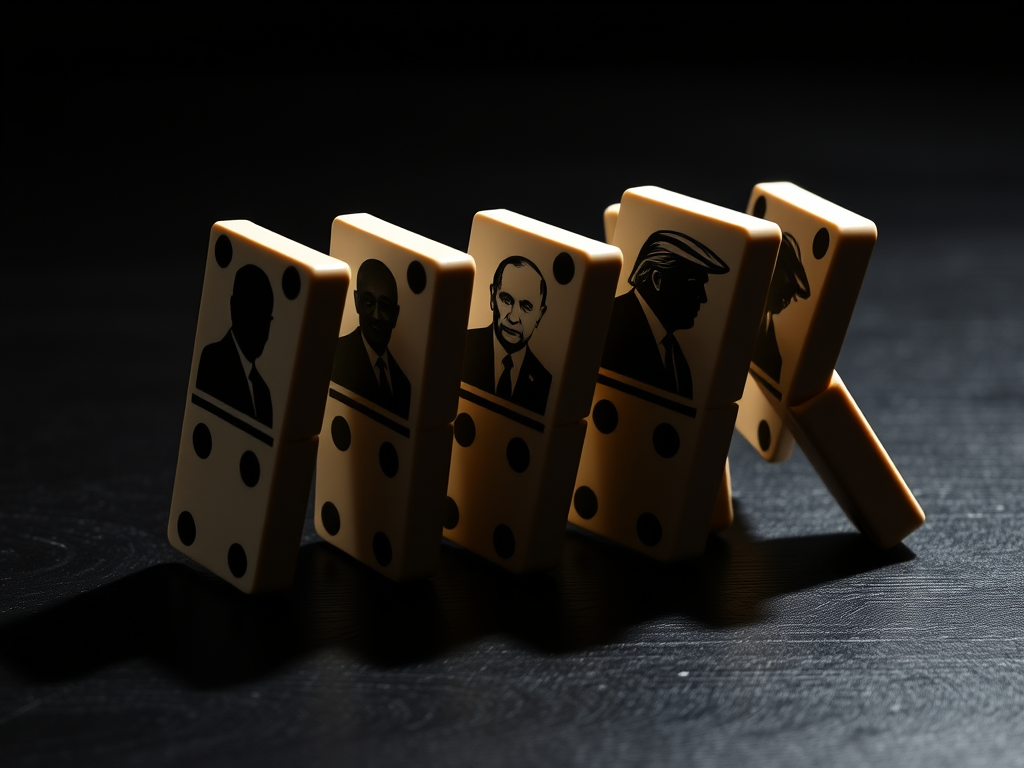
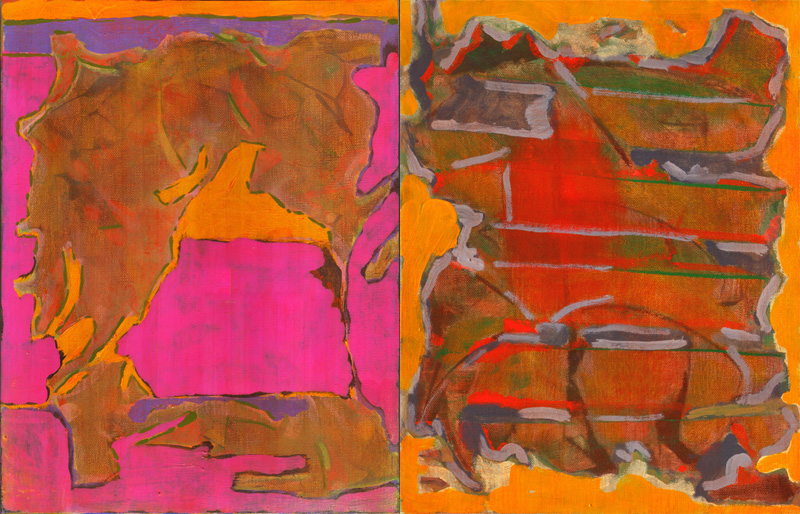

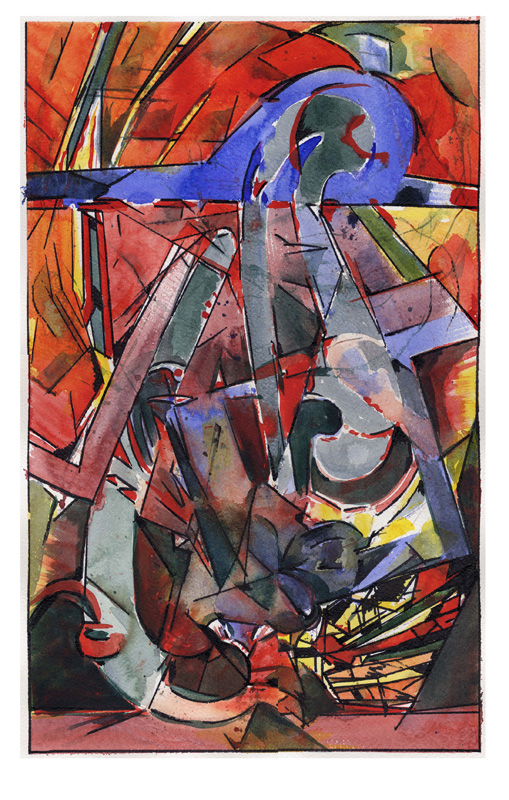
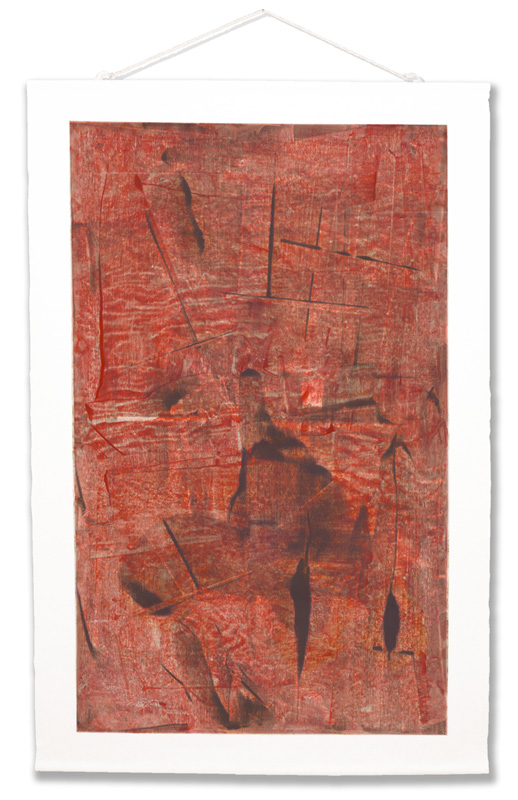
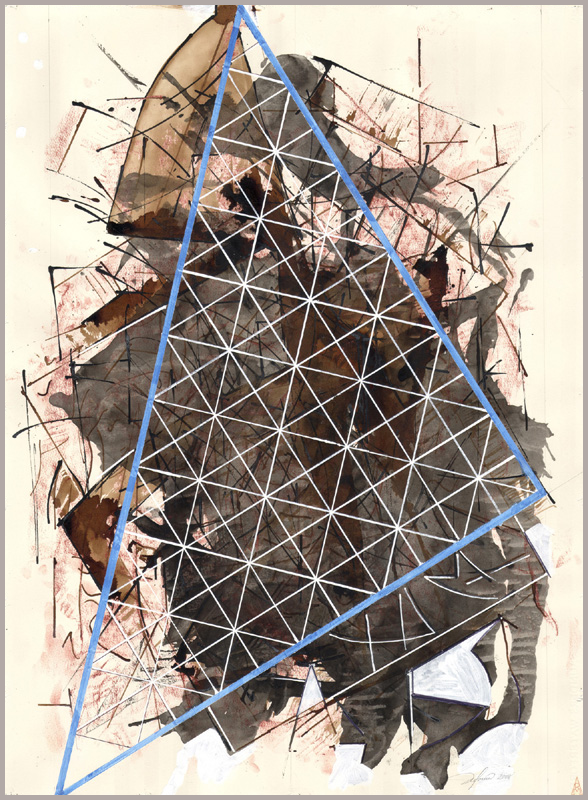
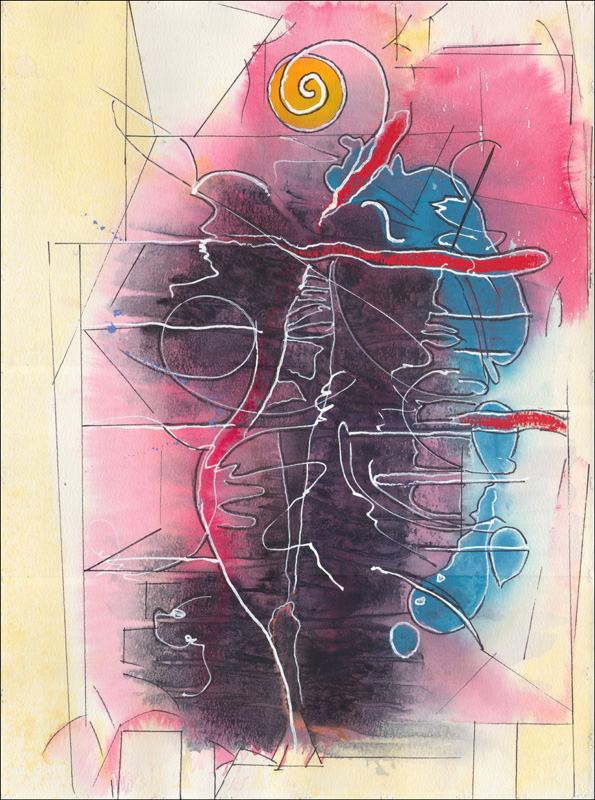
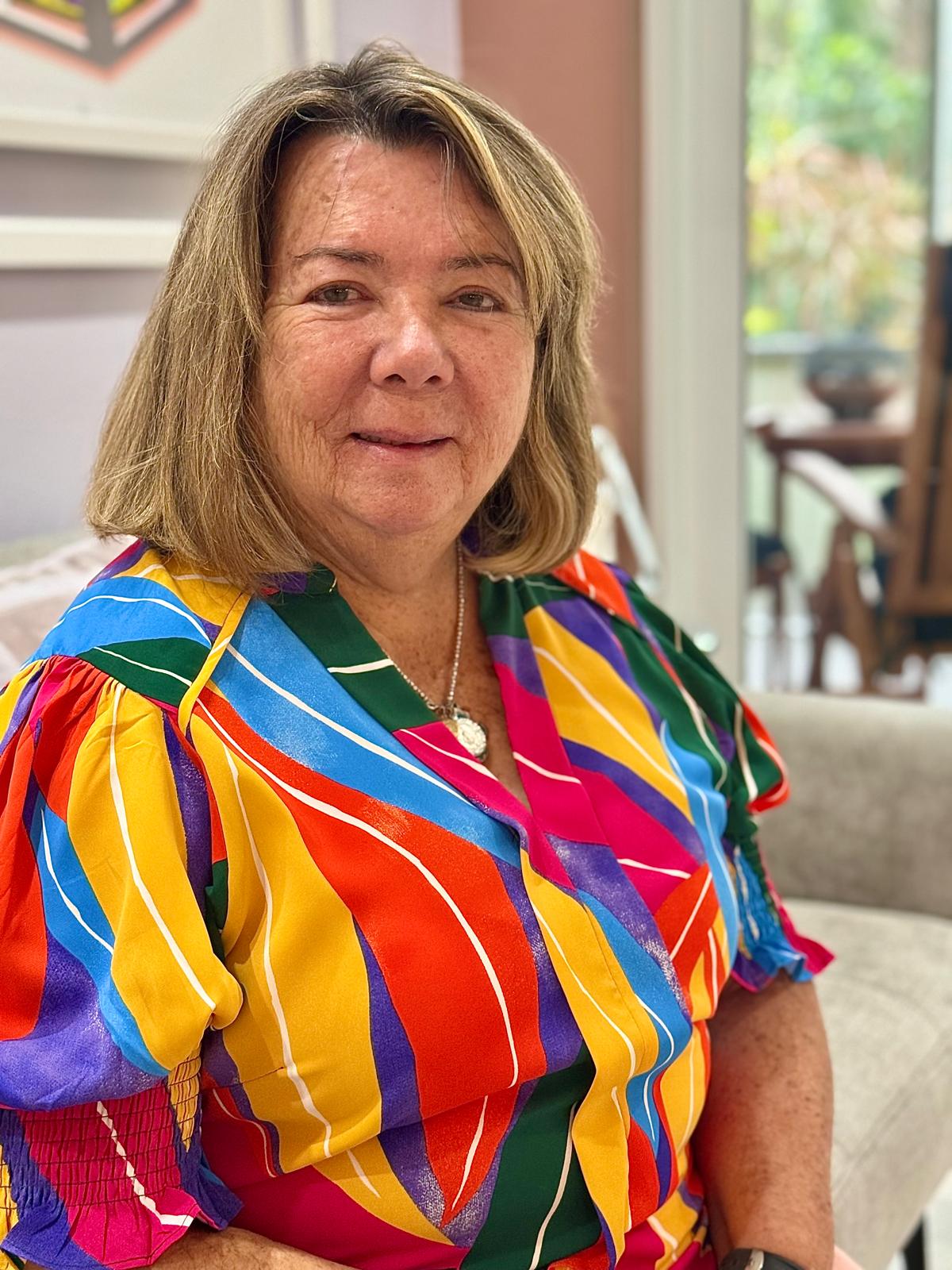

 Observations On Perception