Silent Diptych by Ricardo Morín Medium: Oil On Linen Size: 18 by 28 by 3/4 inches Year: 2010
~
*
Prologue
Silent Diptych is not an illustration but a resonance—a meditation on silence, not as emptiness, but as a state of receptivity. It is the space where judgment dissolves, where human connection lingers between words, where meaning is felt rather than spoken. In its stillness, it holds what remains unresolved. Some silences are quiet. Others are filled with history.
RFMT
~
*
Our early dinner followed a matinee of “Parade”, a musical steeped in history, in indignity, in the weight of a life taken and a verdict that still hung unresolved. At the table, we spoke of Leo Frank, the Jewish man lynched in Georgia a century ago–pardoned decades later but never absolved.His true killer never pursued.
Three of us were Jewish. They understood, in ways the rest of us could only acknowledge but never quite embody, the particular pain of being made a scapegoat. The others sympathized but could not feel the same alienation—not in the marrow, not in the inherited way history imprints itself on some more than others.
It was a conversation of weight, but not of sorrow. We spoke with the clarity that comes when facts are long settled but their reverberations remain.
Then came the interruption.
The woman at the next table turned to us with a question, her voice cutting easily through our discussion.
“Where are the girls?”
I glanced at my companions, the six of us settled comfortably into the familiarity of one another.
“What girls?” I asked, not unkindly.
She blinked, as if expecting the answer to be self-evident.
“We’re already married to each other,” I said.
She turned away without another word.
There was no need to dwell on it. The moment was familiar. A minor encounter, the sort that barely registered after years of knowing exactly how the world could tilt in response to our presence.
To shift the conversation, I said, “Freud might say that all relationships are attempts to resolve unfinished business with our parents.”
Someone smirked. A fork was set down. A momentary silence, not of discomfort, but of consideration.
“Men with their fathers, women with their mothers,” I continued.
The responses were mixed. Agreement. Deflection. A shift in tone. Some spoke of failing to meet their fathers’ expectations. Some spoke of hatred. Some of detachment. Some of nothing at all.
I mentioned my father. His certainty that we, his children, would not know how to survive without him. He meant economically, of course. His generation had its own understanding of what it meant to endure.
“How many siblings do you have?” someone asked.
“Five,” I said. “Including my younger sister, who just passed away.”A pause.“She was angelic.”“Sixty-nine.”
There was sympathy, warm and immediate. A moment held just long enough.
And then, as if on cue, the conversation shifted—easily, instinctively. To theater. To Tony Awards. To the life and talent of voices long gone but forever recorded.
At the next table, the woman was laughing now, the moment between us already forgotten on her end.
And we, too, were laughing—at something lighter, something that did not ask to be examined too closely.
The moment stayed, unnoticed, but not forgotten.
~
*
Epilogue
Like the painting, the moment lingered—not demanding resolution, but waiting, quietly, to be understood. The weight of history, the subtleties of belonging, the pauses in conversation where truth is felt but not spoken. Silence, in the end, is never empty. It is the space where everything remains.
Sometimes sudden, sometimes creeping in with the years, there comes a moment when mortality ceases to be an abstraction. It is no longer a distant eventuality, an idea tucked away in the folds of daily existence, softened by distractions and routine. Instead, it steps forward, undeniable and weighty, as certain as breath and just as fleeting.
Perhaps it arrives with the quiet betrayal of the body—a stiffness upon waking that does not pass, the faltering of memory, the slight hesitation before a step once taken with ease. Or maybe it comes with loss: a friend, a sibling, a parent, a spouse, whose absence feels like a rehearsal for one’s own. The awareness sharpens and turns time into something both more precious and more fragile. We begin to measure life in what remains rather than what has passed.
And yet, even with this awareness, there is resistance. The mind flits away and grasps at plans, distractions, the comfortable illusion of continuity. We fear death, but we also refuse to fully look at it, as if acknowledgment alone might hasten its approach. We craft rituals around it, philosophies to explain it, but we rarely sit with it, silent and unadorned. It is not death itself that terrifies—it is the knowing, the certainty that it will come, whether with warning or in a moment unguarded.
But what if, instead of turning away, we let the awareness settle? Not as a burden, but as a quiet companion. If we could bear to see loss not as a theft but as an inevitable passage, one that has always been woven into the fabric of living, then death itself might lose its urgency. To know we are mortal is not to despair, but to understand the shape of what we are given. The question is not whether death will come, but whether we can carry that knowledge without fear—whether we can, at last, learn to live with it.
~
*
II. The Decline: Mind and Body
The body does not falter all at once. Its undoing is slow, measured in the smallest betrayals—steps that once felt effortless but now require consideration, a name that lingers just out of reach, the gradual dimming of senses that once shaped the world in sharp relief. At first, these changes seem like passing inconveniences, momentary lapses rather than the steady drift toward an inescapable fate. But the truth settles in with time: this is not a phase, not something to be recovered from, but the quiet unraveling of what once felt permanent.
The mind, too, shows its wear. Thought slows; memories surface in fragments, elusive and unreliable. There is irony in the awareness that remains—sharp enough to perceive the very faculties now fading. It is one thing to lose oneself unknowingly, another to watch the process unfold with lucid understanding. Here lies the deepest struggle: not merely the failing of body or mind, but the tension between resisting the inevitable and surrendering to it.
Some fight against this decline with a desperate energy and will themselves to retain what is slipping away. They train the body, challenge the mind, cling to routines as though discipline alone can hold back time. Others yield more readily and see in each loss a reminder that life is not meant to be held onto with clenched fists. Acceptance, however, does not come easily—it is not passive resignation, nor is it defeat. It is an uneasy balance between effort and surrender, between maintaining what can be kept and releasing what must go.
Suffering wears many faces. For some, it arrives as a single, catastrophic moment—a diagnosis, an accident, an unforeseen unraveling of the body’s delicate order. For others, it creeps in gradually, its presence felt in the weight of each passing year. The pain may be physical, unrelenting in its demands, or it may be the subtler ache of losing one’s sense of self, of becoming unrecognizable to one’s own reflection. Yet suffering, no matter its form, is universal. It does not measure its presence by fairness or logic. It simply is.
Against this backdrop, medicine intervenes—an effort to slow, to repair, to resist the natural course of deterioration. And yet, there is a discord in this. The body is finite, its functions destined to wane, yet we press forward with treatments, procedures, and endless prescriptions, each promising to forestall the inevitable. The line between care and prolongation blurs. To fight for life is instinctive, but at what point does the fight itself become suffering?
In the quiet moments, away from doctors and treatments, the question lingers: is decline something to battle, or is there dignity in allowing nature to take its course? And if the answer is neither absolute resistance nor passive surrender, then where, exactly, does one find the balance?
~
*
III. The Distractions That Delay Acceptance
To accept death fully would require a stillness that few can bear. The mind, restless and cunning, finds ways to avoid such stillness, to weave a life so full of movement and intention that mortality remains a distant, theoretical concern. And so, we fill our days with efforts to prolong them.
Longevity itself becomes a pursuit, an industry built on the promise that decline can be postponed, perhaps even avoided altogether. Diets, regimens, supplements, and treatments—all aimed at fortifying the body against its inevitable unraveling. Science, too, lends its hand, in offering new ways to repair, replace, and sustain. Medicine intervenes not only to heal but to extend, technology whispers of futures in which aging is optional, and ritual grants the comfort of structure to what cannot be controlled. Each of these offers something real—time, ease, a semblance of mastery over the body’s betrayals. But beneath them all is the same unspoken hope: that death, if not conquerable, might at least be postponed long enough to be forgotten.
Yet it is not only the fear of death itself that keeps us tethered to life but the weight of what remains unfinished. The obligations we have not yet fulfilled, the words left unsaid, the people who still need us—all of these create a sense that departure is premature, that to leave now would be to abandon something essential. Even in old age, when life has been long and full, there lingers the feeling that there is more to do, more to settle, more to understand. The past tugs at us with its unresolved questions; the future, though narrowing, still holds the illusion of possibility.
And so, we resist stillness. We resist the quiet where truth is most easily heard. The mind, unoccupied, might begin to accept what the body already knows. And so, we fill the hours, surround ourselves with routine, distraction, movement. Even suffering, in its strange way, can serve as a tether—something to focus on, something to endure, rather than a void to surrender to.
But what if we let the distractions fall away? If we stopped grasping for more time, more purpose, more noise? What would remain? The fear, yes—but also the possibility of peace. For all our striving, death will not be bargained with. It comes when it will, unmoved by the measures taken against it. Perhaps the final act of wisdom is not to resist, but to release—to allow the quiet to settle, to let the mind and body, at last, align in their understanding.
~
*
IV. The Weight of Suffering and Endurance
Suffering is the one certainty all sentient beings share. It is neither rare nor exceptional; it is the undercurrent of existence, woven into the fabric of life from its first breath to its last. And yet, for all its universality, suffering is deeply personal—felt in ways no other can fully understand, borne in ways that cannot be measured.
Pain takes many forms. It may be the slow tightening of the body against itself, the ache of illness, the heaviness of fatigue that never fully lifts. Or it may be the quieter pains—the loss of self as the mind falters, the loneliness of watching the world move on without you, the grief of knowing that, no matter how much one has endured, there is still more to bear. Some suffer in the open, their pain visible and acknowledged. Others carry it in silence, as though to admit its weight would be to surrender to it.
Yet suffering alone does not mark the end. There is something beyond it, something deeper: endurance. The threshold of what one can bear is not fixed; it shifts, expands, contracts. A pain once unthinkable becomes routine; a burden that seemed insurmountable is carried, day after day. And yet, there is always a limit, a moment—often unspoken, often known only in the quiet of one’s own thoughts—when endurance is no longer enough.
This is the reckoning, the moment when staying alive is no longer an act of living but of mere persistence. For some, it comes as a sudden recognition, as clear as a breaking dawn. For others, it arrives gradually, the body whispers before the mind dares to listen. It is not simply about pain, nor is it about age. It is the moment when the will to remain no longer outweighs the cost of doing so.
There is no universal measure for when this moment arrives; it is known only to the one who bears it. To endure is an instinct, a habit built into the core of existence. But to know when endurance has reached its end—that is something else entirely. It is not weakness, nor is it surrender. It is a quiet knowing, a recognition that every life carries within it the right to determine when it has been enough.
And so the question lingers: is suffering the price of life, or is there a point at which one is justified in setting the burden down? The answer is not written in doctrine, nor in medicine, nor in the opinions of those who do not bear the weight themselves. It is written in the individual, in the silent moment when one understands—this is enough.
~
*
V. The Unseen Threshold
Life does not depart all at once. It recedes, quietly at first, almost imperceptible in its withdrawal. The breath grows shallower, not in gasps but in a gradual easing, as though the body has decided to take up less space in the world. Weight diminishes, not only in flesh but in presence—the self becomes lighter, less tethered to the demands of existence. A once-restless mind drifts, thoughts untangle, as if loosening its grip on the past, the future, even the urgency of the present.
These are not signs of failure, nor of defeat. They are the body’s way of whispering that it is time. Time to ease away from effort, from the relentless task of sustaining itself. Time to let go of the struggle to remain. For all the fear that surrounds death, the body itself does not fear it. It knows when to surrender long before the mind is ready to accept.
And so comes the moment of knowing—not a grand realization, not an epiphany, but a quiet certainty. It is not measured in days or dictated by diagnosis. It is something deeper, something felt. Some fight against it and grasp at every last breath as though sheer will alone can anchor it. Others meet it as one meets sleep—reluctant at first, then trust, then finally yield to its pull.
There is dignity in this release. Not the dignity others impose, the kind measured in stoicism or restraint, but the simple dignity of relinquishing control. Of allowing the body to do what it was always meant to do: to reach its end not as a tragedy, but as a completion. To fight against this moment is to resist the natural rhythm of life itself. But to accept it—to welcome the stillness, to let breath slow without fear—that is its own kind of grace.
In the end, death is not something that must be conquered, nor something that must be endured beyond what one can bear. It is simply the last threshold, unseen until it is reached, known only to the one who crosses it. And when the time comes, there is nothing left to do but step forward—light, unburdened, and without regret.
~
*
VI. The Quiet Acceptance
To think of death without fear—to sit with it, unguarded, and allow it to be what it is—this is a rare and difficult peace. For so long, the mind has recoiled from its certainty and wrapped it in distractions, explanations, and resistance. But there comes a point when all of that falls away, when death is no longer something to be argued with or postponed, but simply recognized as the inevitable conclusion to a life that has been lived.
Fear untangles itself when death is no longer treated as an interruption, no longer seen as a theft, but rather as something as natural as breath itself. The body, in its wisdom, has already begun to let go. It is the mind that lingers and clings to meaning, to unfinished things, to the illusion that one more day, one more hour, might change something essential. But in the end, no justification is needed. One does not have to prove that it is the right time. The right time comes, whether welcomed or not, and acceptance is simply the act of ceasing to resist.
Stillness is not the same as resignation. Resignation carries a sense of defeat, of something being taken against one’s will. But true stillness—true acceptance—is something else entirely. It is an arrival, a settling into the inevitable without fear or regret. It is the moment when the mind and body, long at odds, finally move in the same direction. No more effort. No more bargaining. Only the quiet understanding that what was given has been enough.
To embrace the end is not to let go of life’s value, but to affirm it fully—by allowing it to complete itself with grace. There is nothing left to do, no more debts to settle, no more battles to fight. There is only the quiet, and the quiet is enough.
~
*
VII, In Closing
No life is lived in solitude, and no journey—especially the one toward acceptance—is walked alone. Along the way, we are shaped, guided, and held by those who have touched our hearts and left their presence within us even after they are gone. In facing mortality, we recognize not only our own, but also those who have come before us, whose lives continue to echo in memory, in love, in the quiet places where absence becomes something enduring.
Their presence lingers—not as shadows, but as light. They have taught us, challenged us, consoled us, and, in their own ways, prepared us for the path we all must take.
Death, in its harshness, strips us bare and confronts us with what is essential. Yet, it also unites us, for the love we have given and received does not fade with physical absence.
Our loved ones remain until the end; they sustain us through their memory and the love they have left within us.
To them, we offer our deepest gratitude. They are not gone. They remain, in the heart, in the soul, in the quiet acceptance of all that has been and all that will be.
Pendular Ricardo Morín, Watercolor, and ink on paper 14” x 20″ 2003
*
Prologue
The Quiet Turning
In the fading light of a world obsessed with spectacle, she endures—not as a relic of past sacrifices, but as a living, evolving force. The desire for attention has always been a double-edged sword in her life: both a demand imposed by a society fixated on appearances and a tool she has learned to wield with fierce determination. Every public gaze, every moment magnified by the glare of expectation, has shaped her journey and molded not only her destiny but also that of the visionary she helped nurture.
She does not merely recall the weight of expectation; she transforms it. Her life is not a static ledger of sacrifices but a dynamic chronicle of adaptation—of a woman whose responses shift with time, whose convictions evolve with every challenge, and whose internal conflicts are as fluid as the changing tides of public adulation. There were moments when the burden of spectacle pressed heavily upon her, yet she never allowed it to define her entirety. Instead, she learned to let the circumstances speak and allowed the ever-changing world to refine her purpose.
In a culture where every gesture is scrutinized and every act measured by its ability to capture the spotlight, she chose to forge an authenticity that defies constant performance. Amid the relentless pursuit of recognition, she discovered that resilience is not about enduring static hardships but about embracing change—to be both the guiding light when needed and the adaptable spirit who reinvents herself as life demands.
Her legacy is woven into the very fabric of the visionary’s rise, yet it is not confined to the ephemeral glow of public applause. It lives in the decisions yet to be made, in the quiet defiance against a world intent on reducing complex lives to mere performances. As the storm of public attention recedes, one truth remains: while the spectacle may return with renewed fervor, so too will her unyielding, ever-shifting light—ever responsive to the world, ever true to her evolving self.
~
*
Chapter 1
The Origins of Strength
She was not born into privilege, nor was she shaped by an easy path. Strength, in her world, was not inherited—it was constructed, piece by piece, through necessity, through the quiet urgency of survival. The home she knew was one of expectations, where resilience was not a virtue but a requirement.
Her parents, figures of discipline and quiet ambition, did not speak of success in terms of indulgence or grandeur. They spoke of perseverance, of self-sufficiency, of the kind of fortitude that does not wait for the world’s permission. The values they instilled in her were not gentle reassurances but firm, unwavering truths: that beauty alone is fleeting, that intellect is a tool to be sharpened, that hard work is the currency of progress.
The first adversities she faced were not singular, dramatic upheavals, but the steady, relentless challenges of making oneself indispensable in a world that often overlooks those who do not demand attention. She learned early that admiration is conditional, that approval must be earned again and again, and that the only certainty lay in one’s ability to adapt.
Beyond the walls of her upbringing, the world around her was shifting. The socio-economic landscape offered few guarantees, especially for a woman determined to carve her own space. Success was not simply a matter of talent or intelligence—it was a performance, a negotiation, a test of endurance. The weight of expectation pressed upon her from all sides: to conform, to excel, to be both formidable and gracious, independent yet admired.
Yet, she did not recoil from these pressures; she absorbed them, studied them, and found within them a rhythm she could move to. While others saw obstacles, she saw opportunities to refine her instincts, to wield resilience not as a defense, but as a weapon. Every closed door was a lesson in persistence. Every rejection, a refinement of her strategy.
She did not yet know what shape her life would take, nor could she have predicted the enormity of the path ahead. But one truth had already taken root: survival was not enough. If she was to endure, she would do so on her own terms.
~
*
Chapter 2
A Woman in a Man’s World
She learned quickly that talent alone was not enough. In a world where men dictated the terms of power, a woman had to be twice as prepared, twice as composed, twice as relentless. Her ambitions did not align neatly with the roles assigned to her—not the ones whispered by tradition, nor those imposed by an industry that measured a woman’s worth by the fleeting currency of youth and allure.
Her career was not handed to her; it was negotiated, fought for in spaces where her presence was tolerated but not welcomed. She had to navigate the subtle dismissals, the unspoken ceilings, the expectation that she should be grateful for whatever space she was allowed to occupy. To be assertive was to risk being labeled difficult. To be strategic was to be called calculating. And yet, to be anything less was to disappear.
But she would not disappear.
The spectacle was always present, shaping her choices as much as her ambitions. Visibility was power, and she understood that better than most. She learned to wield attention, to control the narrative before it controlled her. If she was to succeed in a man’s world, she had to become more than just competent—she had to be seen.
Yet, the gaze was fickle. It admired strength but punished defiance. It celebrated beauty but scorned aging. It permitted ambition, but only if it did not overshadow the ambitions of men. She walked this tightrope daily: she adjusted, adapted, and never allowed herself the luxury of complacency.
Independence was her quiet rebellion. Every choice she made—where she worked, whom she trusted, how she carried herself in a room—was a declaration. The tension between expectation and desire was relentless. The world wanted her to conform, to soften, to submit. But she had already seen what submission offered: silence, erasure, irrelevance.
So she carved her own space, one decision at a time. She played the part when necessary, and knew when to perform, when to retreat, when to push forward. But beneath the careful facade was a woman who refused to be reduced to an image.
She had become part of the spectacle, but she was also its master.
~
*
Chapter 3
The Birth of a Titan
She did not set out to shape a legend. She set out to prepare a child for a world that did not bend easily, a world that would test him, discard him if he faltered. She had seen enough to know that brilliance alone was not enough—resilience was the true currency of survival. And so, she became both the architect and the adversary, the foundation upon which he would build and the force that would push him to withstand the weight of expectation.
Her guidance was a paradox: fiercely protective, yet unsparing. She did not indulge fragility, though she understood its presence. There were no idle comforts, no assurances that the world would be kind. Instead, she instilled an unshakable creed—one did not wait for permission to take up space; one carved it, owned it, refused to apologize for it.
But strength, once given, takes on a life of its own. She watched as he absorbed her lessons, sometimes with gratitude, sometimes with defiance. He was not a child who followed; he was one who questioned, who tested the limits of every rule, including hers. He did not always see the wisdom in her distance, the purpose behind her expectations. To him, love should have been softer, less conditional.
She knew better.
The spectacle had already begun to shape him, as it had shaped her. Attention became both validation and weapon, which sharpened his confidence and his restlessness. He saw the world not as something to navigate, but as something to master. And yet, she wondered—had she given him too much certainty? Had she fortified him so well that he no longer knew how to doubt, to hesitate, to seek counsel outside himself?
There were moments when she questioned. In the rare silences between them, in the brief flickers of vulnerability he quickly buried, she wondered if she had built not just a titan, but a fortress—one that would one day struggle to let anything in.
She told herself it was necessary. That the world had no use for the unprepared. That he would thank her in time.
And yet, as she watched him step further into the glare of the spectacle, as the weight of his own myth grew heavier, she could not shake the quiet thought that gnawed at the edges of her certainty:
Had she given him everything except the ability to stop?
~
*
Chapter 4
Sacrifice and Distance
She had always known he would leave. It was, after all, what she had prepared him for—to move forward with unrelenting momentum, to step beyond the boundaries of what was known, to belong not to a single place or person, but to the vision that consumed him. And yet, knowing did not make it easier.
At first, the distance was practical, a byproduct of ambition. His world expanded at a pace hers could not match, each success widened the space between them. Conversations became brief, punctuated by time zones and obligations, his voice measured, always moving toward the next thing. He spoke in ideas, in projects, in revolutions yet to come. Rarely did he speak of himself.
But distance is rarely just physical. She saw it in the way he carried himself, in the careful detachment of his gaze when the cameras were on him. The spectacle had fully claimed him now—not just as an audience but as an identity. Attention was no longer something he sought; it was something he commanded, something he wielded. He had become larger than life, and in doing so, he had begun to shrink the parts of himself that did not serve the myth.
She recognized the toll, though he would never name it. The weight of scrutiny, the exhaustion of living up to a persona that left no room for hesitation, for frailty, for uncertainty. He was brilliant, polarizing, untouchable—an architect of impossible things. But he was also her son. And that was the one role he no longer had time to play.
She had always understood sacrifice. She had made her own, time and time again, choices that had cost her comfort, companionship, a quieter kind of life.But she had not anticipated this: the realization that her greatest success—his unshakable independence—had also made her dispensable.
She would not chase him. She had taught him to walk alone, and she would not contradict that lesson now. Instead, she watched from afar, her pride and her sorrow intertwined, knowing that he was too far gone to look back, but she still hoped—one day—he might.
~
*
Chapter 5
Shadows and Echoes
She was no longer a presence in his world, but her shadow remained. It stretched across his decisions, his mannerisms, the unspoken rules he followed even as he pretended they were his own. She saw it in the way he carried himself in a room—how he mastered attention, held silence just long enough for discomfort to become intrigue. He had learned that from her.
Yet, influence is a slippery thing. Once released into the world, it takes on a life of its own; it bends and reshapes itself in ways the originator never intended. She wondered, at times, if he had misunderstood her lessons or if she had failed to articulate them well enough. Had she armed him with resilience or simply taught him to endure at any cost? Had she instilled vision or merely a hunger for dominance?
She had always believed in independence, in the power of carving one’s own path. But watching him now—uncompromising, relentless, willing to set fire to bridges before anyone could cross them—she questioned whether she had emphasized too much the need to stand apart, and not enough the importance of standing with.
And yet, despite his defiance, he could not fully sever what bound them. She glimpsed traces of her voice in his words, echoes of her own battles in the way he faced down adversaries. He may have long since left her behind, but he carried fragments of her wherever he went.
Still, influence is not ownership. She had shaped him, but she did not control him. The choices he made were his own, and she had no claim over them—neither the triumphs nor the failures. She could only watch, aware that what she had given him was both foundation and burden, a blueprint he had long since altered to fit a design only he could see.
And so, she did what all who shape the future must eventually do: she let go and knew that her presence in his life was no longer defined by proximity, but by the weight of what had already been left behind.
~
*
Epilogue
The Silent Architect
She was never the one at center stage. That was never her role, never her desire. And yet, in the hushed spaces between history’s grand pronouncements, she remained—unseen but undeniable, a force imprinted on the architecture of a life that reshaped the world.
There is a certain power in being forgotten. The world rarely remembers the hands that steady the foundation, only the ones that raise the monument. But she had never needed recognition to know her presence endured. She saw it in the echoes of her words, in the contours of a mind sharpened by her lessons, in the restless ambition that had been, at least in part, her doing.
Yet power, she had learned, is not a gift—it is an affliction, a hunger that grows even as it devours. She had taught him to reach, to question, to never yield to the weight of convention. But had she, in doing so, unleashed something beyond even her understanding? He had become an architect of the future, but was he building a world of brilliance or ruin? Had she given him wings, or simply made him blind to the ground beneath him?
The burden of vision is that it rarely allows for stillness. She had spent her life in motion, forged her own path, and demanded her own place. But now, standing at the edges of a world that no longer looked back at her, she allowed herself a moment of pause. Not to claim victory, nor to lament what could not be undone, but simply to acknowledge what was.
Love and legacy are rarely pure. They are made of sacrifice and silence, of pride and regret, of truths that remain unspoken. She had played her part, and though the stage belonged to another, she knew the script still bore traces of her hand.
And so she stepped back, into the quiet. Not erased, not forgotten—simply unseen. The architect, no longer needed, but always present in the walls of what had been built.
~
*
Author’s Note
This is a work of fiction. While inspired by the complexities of ambition, legacy, and the forces that shape extraordinary lives, the characters and events depicted are products of imagination. Any resemblance to actual persons, alive or deceased, is purely coincidental. This story is not an account of any individual but rather an exploration of the universal tensions between sacrifice, power, and the silent architects behind great destinies.
Silence Ten Ricardo Morín, Oil on linen scroll 43” x 72″ x 3/4″ 2012
*
~
Author’s Note
This is a work of fiction inspired by historical events.While the story is rooted in real-world dynamics, all characters, dialogues, and specific incidents are entirely fictional.Any resemblance to actual persons, living or dead, is purely coincidental.
This narrative is not intended to depict, portray, or comment on any real individuals or events with factual accuracy.It is a literary exploration of themes relevant to society, history, and the human experience.
Ricardo F. Morín Tortolero, February 10, 2025
Oakland Park, Florida
~
*
List of Characters:
1. The Champions of Order and Hope:
• Aurelia:A principled guardian of constitutional values.
Traits:Wise, steadfast, compassionate. She embodies the enduring spirit of order.
• Marcos:A dedicated public servant bridging tradition and modernity.
Traits: Honest, diligent, empathetic. He upholds institutional integrity.
• Elena:A unifying presence with calm resolve and moral clarity.
Traits: Reflective, compassionate, inspiring. She acts as the moral compass of her community.
2. The Figures of Disruption:
• Soren:A brilliant yet reckless young tech savant.
Traits: Intelligent but impulsive, morally ambiguous. His actions expose the risks of unvetted innovation.
• Vera: An ambitious bureaucrat exploiting emerging technologies for gain.
Traits: Charismatic, calculating. She represents the seductive nature of power when ethics are compromised.
• Xander:A populist firebrand unsettling the established order.
Traits: Persuasive, rebellious, unpredictable. He stokes division with promises of rapid change.
• Don Narciso Beltrán: An impetuous, self-indulgent octogenarian.
Traits: Arrogant, narcissistic. He parades his delusions of “perfection,” and embodies the dangers of unchecked ego.
Ideology: Seeks to displace marginalized groups to impose his distorted vision of order.
3. The Keepers of Balance:
• Renato: A pragmatic administrator between innovation and tradition.
Traits: Level-headed, fair, resourceful. He exemplifies compromise without ethical sacrifice.
Traits: Nurturing, experienced, reflective. She bridges past lessons with current challenges.
• Iker:A dedicated technician ensuring system stability.
Traits: Conscientious, methodical, courageous. He represents the unsung heroes of critical infrastructure.
*
Act I
A Nation at the Precipice
The air crackles with change—raw, electric, untempered. It surges through the avenues where history’s stones, heavy with forgotten oaths, bear silent witness to promises now unraveling. Beneath the alabaster facades of institutions once tempered by order, a quiet assault spreads. The people feel it in the marrow of their days, in the uneasy hush between headlines, in the glint of urgency behind every argument.
Once, the land moved to a measured cadence, set by laws unyielding to fleeting tempers. Now, the streets pulse with a different rhythm—a fevered drive toward something new, unburdened by the slow wisdom of the past. Progress and tradition, each staking its claim, wrestle in the dust of a nation standing on the edge of itself.
In the halls of power, where marble once stood as a bulwark against unchecked tides, whispers stir—of systems too rigid to bend, of minds too restless to wait. The parchment of governance, crisp with centuries of deliberation, meets the friction of unfettered innovation. Some call it progress, others self-destruction.
Yet beneath this clash, a deeper question remains: Does a nation endure by perfecting its foundations or by discarding them altogether? The answer, suspended between past and future, waits to be spoken—if only the voices of the present dare to choose.
*
Act II
The Shattering
It begins not with an explosion, but with a single breach—silent, insidious, precise. A door left ajar in the corridors of power, a signature scrawled where it should not be, a system once thought inviolable suddenly laid bare. The nation awakens to the aftermath, uncertain whether the ground beneath them has merely shifted or collapsed entirely.
In the din of speculation, two figures emerge—Soren, the architect of controlled chaos, and Don Narciso, the whisperer of gilded lies. One wields disruption as a scalpel, cutting through the sinews of governance with cold precision. The other, a master illusionist, cloaks upheaval in the fabric of righteousness and bends perception until even the most steadfast begin to doubt the contours of reality.
The people watch, rapt and confused. Some see salvation in the rise of these forces, a chance to shed the weight of old constraints. Others, those who still listen for the heartbeat of the republic, sense the tremor beneath their feet and wonder: Is this the moment when the foundation finally gives way?
The stage is set. The struggle is no longer abstract. The breach is real, and the hands that hold the future are already at work to reshape it in their own image.
*
Act III
The Gathering Storm
The breach widens. What was once an isolated fracture in the nation’s foundation now spreads and courses through institutions like veins turned septic. The days grow heavier with uncertainty, and in the void where order falters, new forces emerge—some to defend, others to dismantle, and a few to navigate the shifting ground.
The Call to Defend
Aurelia moves first, a voice of clarity in the rising chaos.Where others falter in fear or cynicism, she stands unyielding, wielding conviction like a torch against the encroaching dark. By her side, Marcos, a man of reasoned strength, gathers those who refuse to let history slip into ruin. And Elena, keen-eyed and relentless, sharpens truth into a blade that cuts through the veils of distortion spun by those who seek to reshape reality to suit their designs.
The Forces of Disruption
But against them rise the architects of disorder. Soren, ever the master of fracture, feeds the discord, to ensure no side gains enough ground to restore stability. Vera, a specter of unrepentant ambition, twists uncertainty into leverage to secure power in the shadows where the law’s reach begins to blur. Xander moves openly, charismatic and mercurial, a revolutionary to some, a destroyer to others. And Don Narciso, ever the weaver of illusions, speaks in riddles that soothe even as they deceive.
The Balance Seekers
Yet not all choose a side in the battle unfolding before them. Renato, the quiet strategist, watches, waits, and seeks the threads that might yet be rewoven before the fabric tears beyond repair. Carmen, pragmatic, negotiates between factions, desperate to slow the slide toward chaos. And Iker, burdened by both past and present, works in the shadows—not to seize power, but to ensure that whatever future emerges still bears the echoes of what was once whole.
The tension thickens. Every movement, every decision, tips the scale. And as the storm gathers on the horizon, one truth becomes clear: no one will emerge unchanged.
*
Chapter IV
The Masses
The masses do not lead; they follow, but with a fervor that shakes the very bones of the nation. Their cries rise in streets and squares, across glowing screens and whispered corners. What began as discontent has become something more—an anthem of anger, stripped of nuance, sharpened into conviction.
Their grievances, once tethered to reality, now drift free, shaped by the voices they have chosen to trust. Soren’s rhetoric courses through them like wildfire, his calculated fractures swelling into irreparable chasms. Vera’s ambition feeds their hunger for upheaval and promises power to those who feel unseen. Xander, the relentless provocateur, transforms their resentment into action, while Don Narciso shrouds them in visions of grandeur, while whispering to their ears that history bends to the will of those bold enough to seize it.
They speak not in dialogue, but in echoes—those that amplify what stirs their fury and silence what does not. To them, compromise is betrayal, and reflection is weakness. They are the force that makes destruction possible, not by design, but by sheer, unrelenting belief.
The Guardians of Common Sense
But against the tide stand those who refuse to be swept away. They are quieter, less visible, but no less resolute. They do not rally for glory or scream for vengeance; instead, they guard the ground beneath their feet, as they hold firm against the storm.
Aurelia’s voice reaches them, measured and unwavering and cut through the noise like a distant bell. Marcos gives them structure and remind them that reason is not passivity, but discipline. Elena arms them with truth and asserts that in an age of distortion, clarity itself is a weapon.
They are the ones who ask, What is gained? What is lost? They are not blinded by the promise of a new order nor lulled into complacency by the old. They see both the cracks and the foundation, and they stand—not to defend power, but to defend sense.
The Tipping Scales
The two factions watch each other with wary eyes, their struggles intertwining in ways neither fully understands. The Reason Without Reason surges forward to force change and break barriers, tgough often without knowing what they will build in the wreckage. The Guardians of Common Sense push back, not against progress, but against the recklessness that would see wisdom discarded in the name of speed.
And in this battle for the nation’s soul, it is neither the heroes nor the antiheroes who decide the outcome. It is these voices from below—the masses, the multitude, the unseen tide—that will tip the scales.
Which way they fall remains uncertain.
*
Chapter V
The Breaking Point
The streets tremble beneath the weight of decision. What once simmered in whispers and warnings now roars in the open—ideals no longer debated but brandished like weapons. The air, thick with the residue of old promises and new betrayals, pulses with the certainty that whatever comes next will leave nothing untouched.
The antiheroes make their final gambit. Soren, the tactician, moves like a shadow to orchestrate disorder where unity threatens to form. Vera stands at the precipice, poised to seize the moment, her ambition a blade sharpened by the chaos she helped ignite. Xander, the firebrand, revels in the combustion, his voice rising above the masses as they lurch toward destiny. And Don Narciso, the illusionist, offers the vision of victory—and never reveals for whom.
Across the divide, the heroes hold their ground. Aurelia, the last sentinel of reason, refuses to yield to hysteria. Marcos, steadfast and deliberate, gathers the scattered fragments of law and order and will them into an unbreakable shield. Elena, undeterred by the tide of misinformation, hurls truth into the storm and hopes that it will land where eyes have not yet closed.
The Final Blow
The masses surge, a force neither entirely controlled nor entirely free. The Reason Without Reason, pushed to their limits, demand collapse or conquest, their fury unshaken by consequence. The Guardians of Common Sense, though fewer, stand firm, their resistance not in rage but in resolve. The weight of their struggle shifts the balance, their voices merge into a single question: Will we break the foundation, or will we stand upon it?
The Reckoning
From the depths of the nation’s memory, the constitutional order awakens. The slow machinery of governance, thought too feeble to withstand the tide, begins to move. Checks long ignored now make themselves known. Laws, institutions, the silent architecture of balance—these rise, not as relics, but as forces unto themselves. The battle is no longer merely between men and their ambitions; it is between the transient and the enduring, the fleeting impulse and the structure that has weathered centuries.
In this moment, the outcome is not determined by strength alone, nor by passion, nor even by strategy. It is decided by what the nation remembers of itself—and whether it chooses to preserve that memory or cast it into the void.
The final choice looms. And once made, there will be no turning back.
*
Chapter VI
The Restoration
The dust settles, though the echoes of upheaval still linger in the air. The streets, once filled with the clamor of irreconcilable voices, now murmur with something quieter—fatigue, reflection, the tentative steps of a people relearning their own rhythm.
The battle did not end in conquest, nor in ruin, but in something subtler: the slow, stubborn reassertion of order. Not imposed from above, nor demanded by force, but reclaimed—piece by piece—by the quiet mechanisms that have long bound the nation together.
The institutions that once seemed fragile now reveal their hidden strength—not in their invincibility, but in their ability to bend without breaking. The checks, once dismissed as relics, prove their purpose—not by preventing crisis, but by ensuring that no single force, no matter how fervent, may hold absolute sway.
The antiheroes do not vanish. Soren retreats into the shadows and wait for another fracture to exploit. Vera, calculating, pivots to survive and adapts her ambitions to the shifting landscape. Xander’s voice dims but does not disappear, a reminder that dissent, even when reckless, is never truly extinguished. And Don Narciso? He smiles, enigmatic, because he knows that perception is never fixed—it only shifts.
Nor do the heroes claim triumph. Aurelia, weary but unbowed, understands that victory in democracy is never final. Marcos, pragmatic, turns to the long work of rebuilding what was shaken. Elena, relentless as ever, ensures that truth remains the foundation upon which all else is built.
The people—the masses who had been both the fuel and the fire—find themselves changed. Some remain embittered, unable to accept that the world they envisioned has not come to pass. But others, those who stood against destruction not out of fear but out of faith in something steadier, see that the foundation still holds.
The nation breathes again. Not in perfect harmony, not without scars, but with the knowledge that it has endured. That it will always endure—not through force or fury, but through the resilience of principles that, though tested, remain unbroken.
The storm has passed. But the sky, though clearing, holds the memory of what has been.
And what may come again.
*
Epilogue
The Quiet Turning
Time does not erase conflict, nor does it promise resolution. What it offers, instead, is distance—a vantage from which to see not only what was lost, but what endured.
The nation stands, as it always has, not unchanged, but unbroken. The tides of extremism will rise again, as they always do, for there is no final victory over the impulses of fear, ambition, and unrest. The masses, shifting, will be drawn to extremes, then back toward balance, as if testing the edges of reason before returning to the center.
Yet within this ceaseless motion lies the quiet rhythm of renewal. Accountability, once threatened, reasserts itself. Balance, though fragile, holds. And hope—fragile, tested, but unwavering—persists, not as illusion, but as choice.
The shroud that once veiled perfection has lifted and reveals not flawlessness, but resilience. Not certainty, but the will to seek it.Not a world without discord, but one where unity is still possible—not through sameness, but through a shared commitment to something greater than division.
The story does not end. It continues, written in the choices yet to be made. And within those choices lies the promise that, though the storm may return, so too will the light.
Triangulation 36 22″ x 30″ Body color, sanguine, sepia and Sumi ink on paper 2008
The Power of Myth and Storytelling
Storytelling has long served as a means through which individuals organize and interpret experience, particularly in situations where outcomes are uncertain or difficult to explain. Across cultures, narratives about gods, heroes, or exemplary figures provide structured accounts of conflict, endurance, and resolution. These accounts do not merely reflect imagination; they establish recognizable patterns through which individuals relate personal experience to shared forms of meaning. When events exceed immediate comprehension, such narratives offer a way to situate those events within an intelligible sequence. In this sense, myth does not function as an alternative to reality, but as a provisional framework through which uncertainty is rendered interpretable.
Uncertainty generates a need for explanation. When events cannot be readily understood or predicted, individuals seek to assign meaning in order to reduce ambiguity and regain a sense of orientation. In such conditions, belief systems—whether religious, cultural, or informal—provide interpretive frameworks that organize what would otherwise remain indeterminate. These frameworks do not arise arbitrarily; they develop where institutional or empirical forms of explanation are limited, inaccessible, or insufficient. Their function is not only to explain, but to stabilize perception by offering a coherent account of events. The question that follows is not whether such systems exist, but how they influence decisions, shape expectations, and operate within broader structures of authority.
Belief systems persist beyond their initial formation when they continue to provide explanatory value under changing conditions. In contemporary settings, practices commonly described as superstition emerge in situations where uncertainty remains unresolved despite the presence of institutional frameworks. These practices appear in repeated actions, ritualized behaviors, and shared expectations that guide decision-making in the absence of reliable outcomes. Their persistence does not indicate a simple opposition between tradition and modernity, but rather the coexistence of multiple interpretive frameworks operating at the same time. A society in which these frameworks overlap is not defined by the presence of belief alone, but by how such beliefs influence behaviors, shape choices, and interact with institutional forms that may not fully resolve uncertainty.
Santería and Spiritism in Venezuela
In Venezuela, practices commonly identified as Santería and Spiritism are present in both private and collective settings, particularly during periods of economic or institutional instability. These practices involve structured interactions with symbolic or spiritual intermediaries through rituals, consultations, and prescribed actions. Participants may seek guidance, protection, or resolution of specific problems when institutional responses are delayed, inaccessible, or perceived as ineffective. The recurrence of these practices can be observed in repeated visits to practitioners, the use of ritual objects, and the incorporation of prescribed behaviors into daily decision-making. Their presence does not displace institutional systems entirely (health and education), but operates alongside them, providing an additional interpretive framework through which individuals attempt to manage uncertainty and act within conditions that remain difficult to predict.
The Sect of María Lionza
Within Venezuela, the figure of María Lionza occupies a central place in a network of practices that combine elements from Indigenous, African, and Catholic traditions. Devotional activities associated with this figure include organized gatherings, ceremonial rituals, and the invocation of named entities identified as spirits of historical or symbolic figures. Participants report experiences in which mediums enter altered states and communicate messages attributed to these entities. These interactions are often sought in order to obtain guidance, address personal or familial concerns, or seek intervention in matters perceived as unresolved through conventional means. The recurrence of these practices can be observed in periodic ceremonies, the continued presence of recognized mediums, and the transmission of ritual knowledge across participants. Their function is not limited to belief alone, but extends to shaping decisions, reinforcing shared expectations, and providing an interpretive structure through which individuals respond to conditions that remain uncertain or difficult to control.
In conditions where access to medical care becomes limited or unreliable, individuals may turn to practitioners associated with spiritual or ritual frameworks. This shift occurs when healthcare systems are inaccessible, delayed or unable to provide satisfactory outcomes. Participants may seek these services when formal healthcare systems are delayed, inaccessible, or unable to provide satisfactory outcomes. This shift can be observed in the substitution of clinical consultations with ritual practices, the use of non-medical prescriptions, and the reliance on guidance attributed to spiritual intermediaries. The effect is not only a change in treatment choices, but a reorganization of decision-making processes, where perceived efficacy is evaluated through experience, testimony, and repetition rather than institutional validation. In this way, the expansion of such practices corresponds to identifiable constraints within institutional systems, rather than to belief alone.
In the case described, the distinction does not lie in the presence of belief, but in the moment when belief begins to guide decisions that previously depended on medical consultation or prescribed treatment. This can be observed when, in the absence of access to or confidence in healthcare services, clinical consultations are replaced by ritual consultations, or when non-medical indications substitute prescribed treatments. Although autosuggestion can produce observable biological effects, these cannot always be predicted or attributed to a single causal factor. In such cases, the issue shifts from how events are interpreted to how action is taken in response to them. The tension becomes visible in that substitution: when one form of guidance displaces another in decisions that carry verifiable consequences.
Superstition and Modernization
Belief-based practices and formal institutional frameworks often operate simultaneously rather than in direct opposition. In Venezuela, these practices can be observed not only in private settings but also in decisions that affect health, economic activity, and social coordination. Individuals who participate in belief-based systems may incorporate guidance derived from those systems into choices that would otherwise rely on formal procedures or institutional criteria. This influence does not require formal authority to be effective; it operates through personal conviction, shared expectations, and repeated validation within social networks. As a result, multiple interpretive frameworks may coexist within the same decision-making environment, sometimes reinforcing and at other times complicating the application of institutional rules. The outcome is not the replacement of one system by another, but the interaction of parallel structures that shape conduct under conditions where formal mechanisms do not fully resolve uncertainty.
In addition to belief-based practices that provide explanation or guidance, there are also practices in which individuals attribute intentional influence to unseen or non-observable forces. These practices are often described in terms of intervention, protection, or harm, and may involve the deliberate use of rituals, objects, or intermediaries believed to affect outcomes. The presence of such beliefs can be observed in precautionary behaviors, avoidance patterns, and decisions made in anticipation of perceived external influence. Individuals may seek practitioners not only to interpret events, but to alter expected outcomes through prescribed actions. Whether or not such influence can be demonstrated, the belief in its possibility affects behaviors by shaping expectations, redirecting choices, and reinforcing interpretive frameworks that extend beyond empirical verification. In this way, the significance of these practices lies in their observable impact on conduct, rather than in the validation of the forces they invoke.
Under conditions of sustained uncertainty, belief-based practices persist because they provide interpretive and practical responses where institutional systems remain incomplete or unreliable. These practices do not operate in isolation, but alongside institutional frameworks, influencing how individuals interpret events and make decisions within constrained environments. Their presence reflects not only continuity with past traditions, but also ongoing responses to present conditions in which outcomes remain difficult to predict. The question is not whether such beliefs should be reduced to or replaced by formal systems, but how their influence can be understood in relation to observable conduct, decision-making processes, and the limits of institutional capacity. In this sense, the analysis of belief-based practices requires attention to the conditions under which they arise, the mechanisms through which they operate, and the effects they produce, rather than reliance on symbolic or interpretive descriptions that remain ungrounded in demonstrable sequence.
Ricardo F Morin, February 8, 2025, Oakland Park, Fl.
Untitled Landscape 22″ x 30″ Watercolors, charcoal, oil, white-out and ink on paper 2006
Prologue
This is not a historical account, but an invention, honest and emotional, a dream woven into the baroque folds of poetic prose. It is not a logical manifesto, but a sensuous invocation of a place that has haunted my imagination.
Ricardo F. Morín Tortolero,
March 12, 2026, Oakland Park, Florida
*
Ulysses knew it as the land of the sirens, a place that, during the Middle Ages, would rise to become a great maritime empire. Protected at the foot of the imposing Mount Cerreto, the Duchy of Amalfi found refuge here, as if enveloped in the embrace of a chrysalis of ancestral muses.
The tragedy “The Duchess of Malfi” by John Webster, the realism of Henrik Ibsen, and the Gesamtkunstwerk of the much maligned Richard Wagner have echoed in the destiny of this legendary caryatid of pleasure perched above the Gulf of Salerno. Among the cliffs the thunderous dance of cascading mountains unfolds with magnificence. They seem to move to the rhythm of the Podalirio butterfly, recalling the less venerable Crusades, the cloisters, and the monasteries of earlier centuries. The mountains and the sea stacks still exhale the residue of a barbaric metamorphosis carved by innumerable civilizations. And yet today our restless gaze traces the origins of the past while discovering the seductive fragrance of la dolce vita.
Carved into a promontory at the edge of a precipice, between the villages of Cetara and Vietri, celebrated for their anchovies in oil and their multicolored ceramics, rises our magnificent hotel, the Cetus. In the chromatic cacophony of the rainbow and its rocky outcrops, the eternal compass guides the rowing regattas that wind along the coastline, navigating from south toward the northwest, from the Tyrrhenian Sea to the Ligurian Sea.
Nearby the Canneto River descends through the Valley of the Mills, where the whisper of the wind carries Renaissance ballads written upon the famed bambagina paper. As though we were turning back time, the fjords fold beneath a radiant sky touched by the delicate mist of cold winds. We hear the hum of bees and breathe the piercing aroma of sfusato lemons from Mount Etna, while limoncello releases its intoxicating golden essence. The depths of the peninsula exhale the taste and fragrance of its most captivating fruits.
So intense is the essence of the Amalfi Republic that it seems to sow lava into the turquoise waters and upon the promontories that for centuries protected it from collapse. We sing the Falalella beneath the twilight haze and drift along the shimmering coastline of Salerno, Positano, and Ravello, gently bathed by a cool drizzle. With the sway of life, crimson clouds mirror themselves in still waters, casting their glow upon the blue bay of Salerno.
Amalfi, jewel of Salerno, is framed by the region of Campania, where the majestic sanctuaries of Herculaneum and Paestum rise solemnly to greet us. From the ashes that once wove mythical times, the archaeological expeditions of eighteenth century Pompeii revealed, among many discoveries, ancient frescoes depicting the Cycle of the Roman Mysteries as well as the conquests of Alexander the Great.
The touch of ancestral hands still resonates through our senses. Sweet is the vision beneath the spring sun. It leaps from ravine to valley and swaying like a cascading stair until it reaches the ancient pier. There we had anchored, near the dock from which the great galleys once departed toward unknown lands. They, like my beloved and I, have departed as well, leaving behind the vision of the paradise of the sirens.
*
Ricardo F. Morín, March 12, 2026, Oakland Park, Fl
She comes to me in an endless flow of memories quieting her absence.
You return to me in every heartbeat . . .
There is no light nor shadow, nor color nor texture.
There is no pain in the embrace of uncertainty.
~
Our coexistence ceases to exist;
the rancor of fear departs as the idea takes us in.
Pain turns silent, emptied of guilt and regret.
Though your lungs exhale not,
I feel the breath of your longing in search of union.
~
I understand better your inexorable faith,
with no sting of doubt.
Resentment held no place, the frankness of your soul loved everything.
I feel you in my chest, tight with not seeing you
I see you in the resonance of your mind upon mine.
*
Pain shatters my chest,
I am dying as well,
I fear the very meanness of not accepting
your dignified and glorious absence.
~
How can one ponder eternal love
without knowing eternity,
I do not understand and tears choke me.
~
Eternity is a story we tell ourselves
from our first appearance.
Before, we were nothing
and nothingness impregnated us with clumsiness
to create stories that console our finitude.
~
We are nothing,
and to nothing we return.
~
I believe in the goddess of love
for she sustains me,
but immortality and eternity do not depend on her.
Abstraction is a pretense that believes it heals itself.
~
Confuse reality not with abstraction,
if you know nothing;
unconsciousness is soaked in the unjustifiable.
Contradiction is the palpable reality,
Humility and neutrality do not exist:
and are not controllable.
~
Intelligence is a tool of fiction.
We are nothing.
~
Words of comfort ruminate me and my feelings,
they assume compassion for filling the void
Yet compassion, like humility, can
not boast of itself.
They come from nothing
and are nothing.
~
The feelings of death arise in old age,
our fragility is tangible.
“If newly born, what do you know of old age?”
How can we boast … even if for the best of reasons!
~
Words can evoke the void of silence,
yet they remain a pretense.
~
Silence is deeper than declarations.
Listen to silence, filled with nothingness.
Yet, an energy that’s unchangeable, immutable.
Persistence is yet another vanity,
a desire to accumulate the unsustainable.
Parallels are paradoxical, yet real.
*
Ricardo Federico Morín Tortolero,
Oakland Park, Fl. 5:00 am, 3 de Feberero de 2025
Edited by Billy Bussell Thompson
*
(A Poem written by our mother, María Teresa Tortolero Rivero, English translation by this author, and read by Andreina in Spanish)


GREATNESS YOU BESTOWED UPON MY SPIRIT

[July 1979]

*

Greatness you bestowed upon my spirit
for the whole world rests upon my bosom
though in sadness I stray
in vain attempts to redeem my heart.

As pariah in a desert
in my migrant existence
I feel the prick of painful thorns.
and the corrosive doubt of uncertainty.

My home’s encumbered by the punching of loneliness
only absence occupies it.
Why have you forsaken me?
Why so much cruelty?
If born to love
when for love’s sake
I wish to be faithful.
*
In Memoriam Andreina Teresa
~
We, the Morín Tortolero siblings: Alberto José, Ricardo Federico, María Teresa, and José Galdino, deeply regret to announce to our family and friends the heartfelt passing of our beloved sister
ANDREINA TERESA MORÍN TORTOLERO
November 10, 1955 – February 2, 2025
*
The wake was held at Funeraria Tendencia Ecológica, located in the Las Acacias neighborhood in Valencia, next to the CICPC, on Monday, February 3, 2025, at 12:00 PM.
The funeral service took place at the Puertas al Cielo crematorium, located in La Entrada, Naguanagua, on Tuesday, February 4, 2025.The Novena is held at Valencia’s El Viñedo Church starting on February 5th at 4:30 pm.
We are grateful for your support and prayers during this time of deep sorrow.
Here, Andreina was among friends and relatives between Valencia, Venezuela in 2024 and her last visit to Broward and Dade Counties in Florida, January 2024,
In a world where we often demand certainty and control, we find ourselves fragmented, trapped in boxes of our own making, unable to embrace the fullness of our existence. The image before you captures this tension: a body suspended in a delicate scaffold, exposed yet bound, vulnerable yet distant. The crimson red that pulses through this figure’s radiography mirrors the emotional intensity of our internal conflicts—irrational beliefs, loneliness, and the distortion of our own feelings. Here, we find a body that is both present and absent, much like the self we attempt to control through rigid dogmas, unfounded convictions, or the false security of unquestioned assumptions.
Such beliefs, pervasive in religion, politics, and culture, offer a semblance of control in a world we cannot fully comprehend. Yet, they often bind us more tightly than we realize; they lead us away from self-compassion and deeper understanding. We cling to them as anchors as we seek certainty, but in doing so, we only isolate ourselves further and obscure the possibility of transformation and healing. Just as the body remains whole, though fragmented, so too can we find healing by letting go of the illusions that distort our sense of self.
This image invites you to reflect on the tension between our desires for control and the reality of our emotional vulnerability. Our human condition urges a return to the boy, to ourselves, and to the truth of being—free from the distortions that prevent us from embracing the raw authenticity of life.
Section I
Irrationality
*
Ignorance is an essential condition of our existence, despite our hubristic desire to control knowledge. We are like travelers in a dense fog as we glimpse shadows of trees that seem both near and far—each step reveals something new while obscuring what we thought we understood. This fog invites exploration, not eradication, as its presence reminds us that certainty is an illusion.The moment we attempt to dispel it entirely—to demand certainty and mastery—we reject the depth and richness of uncertainty and trade it for the rigidity of shallow, dogmatic beliefs. To embrace this uncertainty is to accept the vastness of what remains unknown:that which liberates us from the paralysis of false clarity.
Section II
The Transformative Power of Love and Self-Compassion
*
Love has the power to heal wounds unseen, but it is first a seed within oneself. When nurtured, this seed grows into an awareness of the shared fragility of existence—the recognition that no one is immune to suffering. Consider the quiet solidarity in a kind word offered to a stranger, the unspoken bond formed in moments of shared grief, or the simple grace of forgiving someone else’s faults, while knowing your own are equally imperfect. These acts remind us that we are not isolated in our suffering but connected through it. In acknowledging this interconnectedness, we cultivate a compassion that transcends individuality. It allows us to honor the humanity in others as we learn to honor it in ourselves.
Section III
Aloneness Versus Loneliness
*
Think of aloneness as your defining character, a realm where your thoughts and feelings can exist unfiltered, untouched by comparison. Loneliness, however, emerges when this solitude becomes an echo chamber of unmet desires, a distortion that amplifies the absence of external validation into a consuming need. To perceive aloneness as loneliness is to conflate a natural state with an unhealthy yearning, much like mistaking silence for emptiness. Aloneness offers clarity, a space to reflect and grow, while loneliness, though painful, can teach us where we most need to nurture ourselves. By reframing loneliness as a symptom rather than a sentence, we can transform it into an opportunity for self-understanding.
PostScript
*
As I reflect on the journey of these ideas, I’m reminded of a time nearly 16 years ago when I found solace in the writings of Jiddu Krishnamurti, a spiritual teacher my mother had studied in my younger years. His ideas, like Buddhism before it, served as a preamble—a glimpse into a deeper understanding that I did not fully grasp until later in life. It was only in my fifties, after embracing writing as a form of creative expression, that I began to unravel the layers of truth hidden within his words.
During this period, my editor, with whom I shared my growing interest in Krishnamurti, referred to him as a “kook”—a label that seemed to reflect the contradictions inherent in Krishnamurti’s philosophy. My admiration for both Krishnamurti and my editor was marked by an internal conflict. I struggled to reconcile the imperfections I saw in both of them with my own sense of integrity and independence. In time, I came to understand that their imperfections were no different from my own—and that the wisdom I sought was not in their perfection, but in the very acceptance of imperfection itself.
This acceptance allowed me to learn from both of them while retaining my own autonomy, a reminder that growth comes not from flawless certainty, but from the ability to navigate contradiction and complexity. Just as we can find truth in our own imperfect understanding, so too can we extend compassion to others: to acknowledge that their contradictions are part of the shared human experience.
In this journey, I’ve learned that the tension between certainty and uncertainty is not something to resolve but something to live with—a space where self-compassion and wisdom can grow, imperfect though they may be.
Ricardo F Morin Tortolero, January 18, 2025, Oakland Park, Florida.
Editor, Billy Bussell Thompson, February 14, 2025, New York City.
Ricardo MorínAscension, CGI, 2005 by Ricardo Morín
Introduction
Power, in its rawest form, bends and distorts. It reflects the body depicted in Ascension as it strains against the scaffolding of control—and embodies the turbulent forces we inhabit.[1] These elements frame a reflection not only on Venezuela’s struggles but on the universal gravity of power that entraps us all. I wonder if blaming these forces oversimplifies a system thriving on collective complicity. Can self-compassion hold us accountable without succumbing to guilt—when despair paralyzes?
Positioned between The Stream of Emery, a fable of renewal, and Unmasking Disappointment, an upcoming essay on historical reckoning, this story continues a journey through entanglement, responsibility, and the enduring search for self-liberation.[2]
~
THE FETTERS OF POWER
I
While my husband drove from Fort Lauderdale to Orlando, I had a conversation with my friend BBT. It was one of those unsettling conversations that reveals how vast forces can overwhelm us. He spoke of power, not as a tool, nor even as a desire, but as the primal force that pushes humanity toward authoritarian oligarchies. Greed, according to him, is secondary, a symptom of something deeper: the irresistible gravity of power itself.
II
I thought of Michel Foucault and his theories on power, and for a moment, I felt a flash of clarity. But the more I tried to articulate his ideas, the more inadequate they seemed. The weight of reality crushes academic musings as the world descends into ruin. We fail to recognize ourselves as creatures trapped by our own errors.
III
Then, I remembered my cousin Ivelisse’s voice, trembling while holding back tears, as she recounted Nicolás Maduro’s inauguration, January 10. For her, it was not just a political event; it was a symbol of our fall, of our dissolution as a people. Her despair was mine, and ours was Venezuela’s—a nation habitually entrusting faith in saviors who never arrive.
IV
Across the world, power and greed—legitimized by crime or not—justify the rise of tyranny. And we, in our confusion, have no answers in the face of these tides of unchecked ambition.
V
BBT, ever pragmatic, said simply: “Just enjoy yourself.” His advice both stung and comforted me. But how could I? How could I enjoy anything when the world feels so fragile?Every thought circles back to the same questions: What can I do to counteract these forces? How can I make sense of this struggle?
VI
Still, I cling to one belief: that one day, a collective awakening will emerge, a rising tide of awareness. If there is to be a better world, it will not come from saviors or struggles for power, but from an alignment of minds and hearts. My role, if I have one, is to contribute to that legacy—not for fame or ambition, but for peace.
VII
Peace is what I seek, not only for myself but for others: a legacy that transcends my own life, one that serves as a quiet resistance to the forces of greed and power. Only then, perhaps, will I find the simplicity BBT spoke of—not as surrender, but as understanding.
Postscript
It is easy to lose sight of the deeper currents that drive us, particularly when we are immersed in the tides of ambition, power, and cynicism. In moments of crisis, these forces surge, often obscuring our judgment and steering us off course. Yet, amidst their overwhelming presence, one truth remains: surrendering to love sustains us.
Ultimately, what really matters is love.It alone sustains us above all else.It can anchor us against the forces that threaten to lead us astray.
Perhaps with that recognition is where peace begins—not in the world outside or its lack of validation, but in the quiet acceptance of what we can change, and what we cannot.
Ricardo Federico Morín Tortolero, Oakland Park, Fl. December 29, 2024
Dedicated to Billy Bussell Thompson and David Lowenberger
In a village at the edge of a forest lived a woman named Elen. From early on, a great disquiet stirred within her.
Piecing together fragments of others’ insights, she took refuge in books and scrolls. With every answer uncovered, more questions remained.
“Elen, why do you never rest?” her neighbors asked as they watched her pace the village paths.
“Because something is calling to me,” she replied. “I feel a purpose, a truth . . . . But I don’t know where to look.”
One day, a pilgrim named Damian came to the village. His eyes illuminated him and news of his arrival spread quickly. Elen was eager to know him.
She led him to her study and pointed out her books and maps.
“I’ve been devoted to research,” as she gestured toward the shelves. “But the more I look, the more incomplete I feel. I’m filled with desire, shame . . . . I long for peace. I thought knowledge would complete me. Instead, something is missing. How did explorers of old find their voice?”
Damian glanced at her and replied. “You treat knowledge as shackles. It’s only a touchstone; what you need is instinct.”
Elen frowned uncertainly. “What do you mean?”
“Come with me,” he said.
They walked into the valley and the air grew cooler with each step. Above them, eagles circled: their cries, sharp but distant. She kept silent; her mind turned Damian’s words over, and over.
They reached a clearing. At its center stood an ancient tree, whose branches reached toward the heavens and its roots gripped the earth. There murmured a stream with glinting waters.
“This,” said Damian, “is the Stream of Emery. Its waters hold the substance of all things: truth, blinding; mystery, ever deepening; illusion, tempting; wisdom, changing. Anyone who partakes may glimpse his destiny, though, he is often more adrift than before.”
As if spellbound, Elen knelt and gazed into the stream. “Why would anyone willingly submit to abandonment?”
Damian picked up a leaf and floated it on the water. The current swept it downstream and spun it in lazy circles until it vanished. “Knowledge flows like this stream,” he said, his eyes on the water. “Chase every ripple, and you’ll only drift farther from yourself; the answers are not in the stream, but in how you move up to it.”
Elen felt the stream’s coolness luring her. One thought held her. “How am I to be guided by instincts?” she asked, her voice scarcely audible over the rippling water.
“Look at the tree,” Damian replied.
She turned to it.
“The tree doesn’t chase the water,” he said. “It takes only what it needs and grows; though static, it’s always reaching. Its trust is in its roots.”
Again, Elen peered at the tree. “If the tree knows it’s a tree,” she said, “how can I trust myself, if I don’t know what my instinct is?”
“Purpose,” said Damian, “cannot be found. It forms over time. Just as the tree is, you have to be anchored, and your branches have to reach toward your destiny.”
Elen looked at him: “What do you mean?”
Damian pointed to the stream: Leaves were floating along; at times they clustered together; then they diverged. “Mankind is a mirror of reciprocity. In harmony or in enmity, in sickness or in health, in poverty or in wealth, we see ourselves through others. The stream is not just water: it is a current of shared lives, fragile or strong. Only by engaging with others do you know who you are and what you are to be.”
Elen thought about her village: the kindnesses and quarrels she had shared with neighbors, the ways their stories and struggles had shaped her. Now, she saw how books had consumed her.
“Am I to seek truth outside of myself?” she asked.
Damian smiled. “Yes, no one can carry the stream alone; peace comes from being together.It grows when we acknowledge that lives are bound.”
Elen closed her eyes and let the sounds of the forest (rushing water, rustling leaves, the pulse of the earth) enter her. In that stillness, she understood: Yearning was not hers alone; it was the thread of existence.
As she returned to the village, Elen glowed quietly. Seeking truth, she was no longer alone.
Her life was not an endpoint.
Editor Billy Bussell Thompson, New York, NY. December 29, 2024
*
Afterword
Motivated by an ongoing historical essay on Autocracy and Democracy, I offer this fable as a meditation on the balance between neutrality and vulnerability. The fable reflects the challenges of biases and personal ignorance.
Writing for me resembles standing at the edge of the Stream of Emery, where thought and emotion merge and flow as one. For years, I immersed myself in research and mistook the accumulation of knowledge for understanding. I found myself increasingly isolated: I was drowning in questions rather than being buoyed by answers. True meaning appeared not in an endless pursuit of analysis but through connections—rooted in empathy and lived realities. Like Elen, I came to see that knowledge is a touchstone, not an endpoint.
Intellectual neutrality requires restraint. It is a deliberate effort to approach ideas without bias, to listen rather than to assert, and to prioritize clarity. It is the practice of seeing the stream without letting it sweep you away. But no act of creation can fully separate itself from the self. Writing also demands vulnerability: the courage to confront one’s fears and desires. Vulnerability allows these truths to illuminate the work as if it were shining sunlight through water.
The stream invites us to wade in, yet it challenges us to avoid being swept away. The act of striving is where meaning resides. It’s not the destination but the questioning, the persisting, and the growing.
Neutrality is not silence, and vulnerability is not surrender.
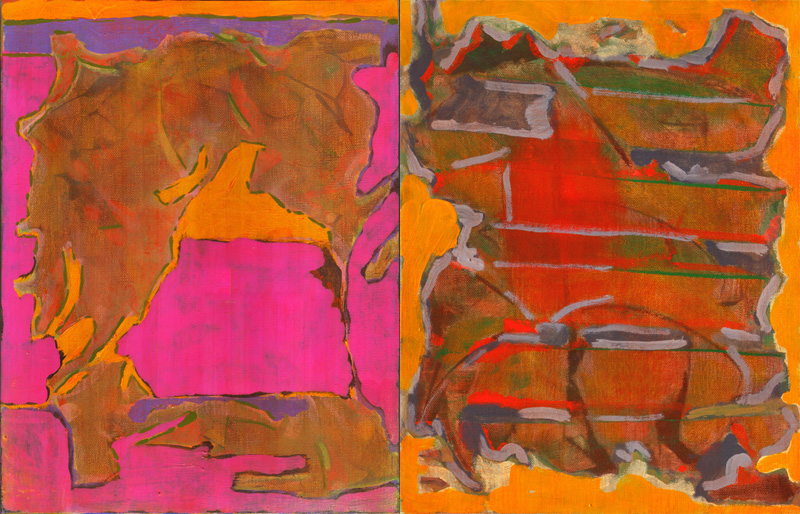

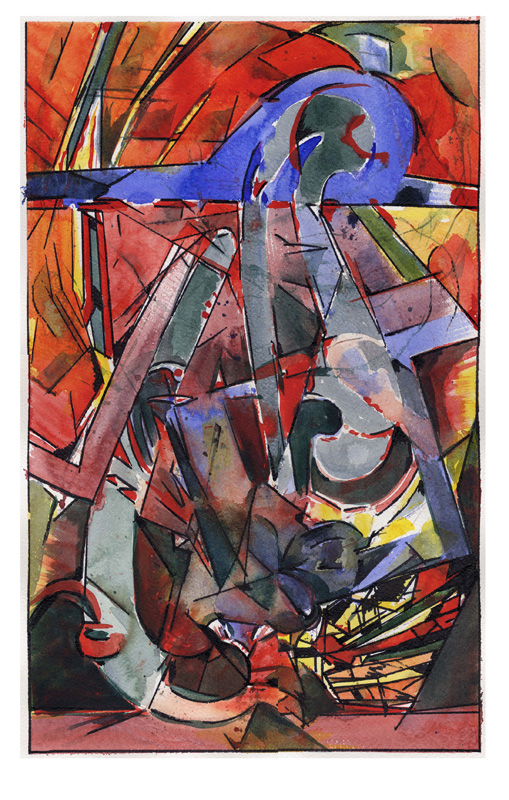
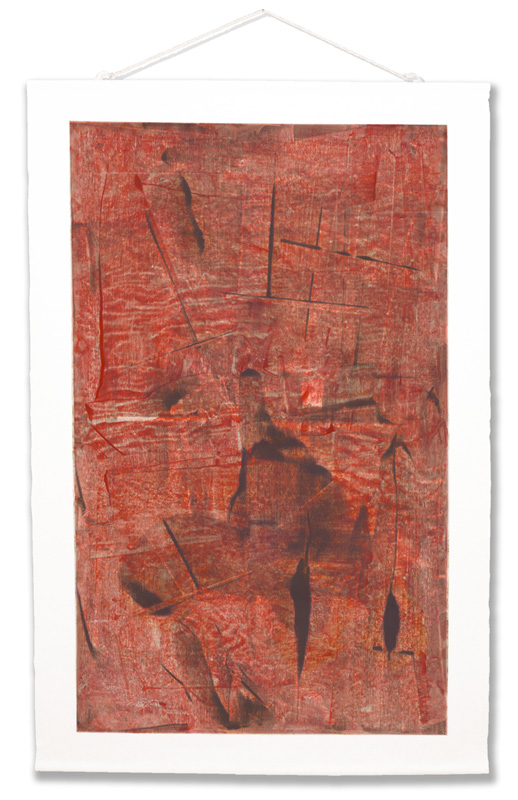
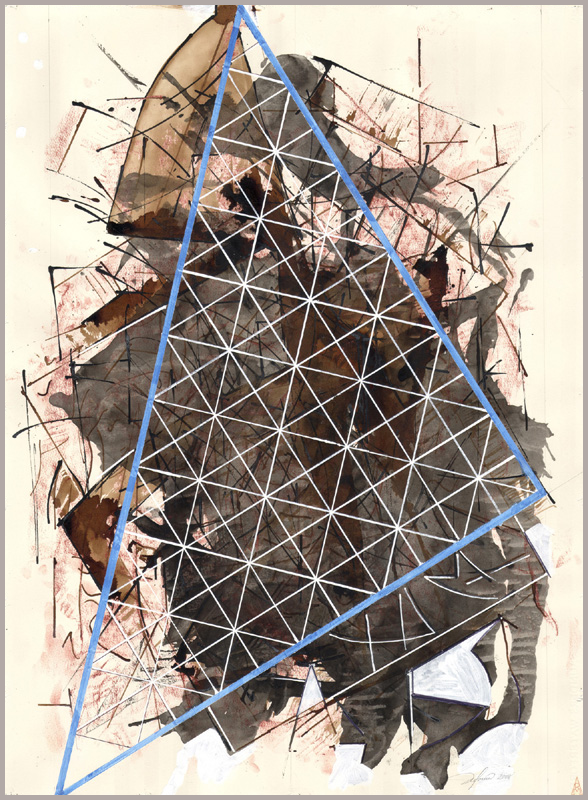
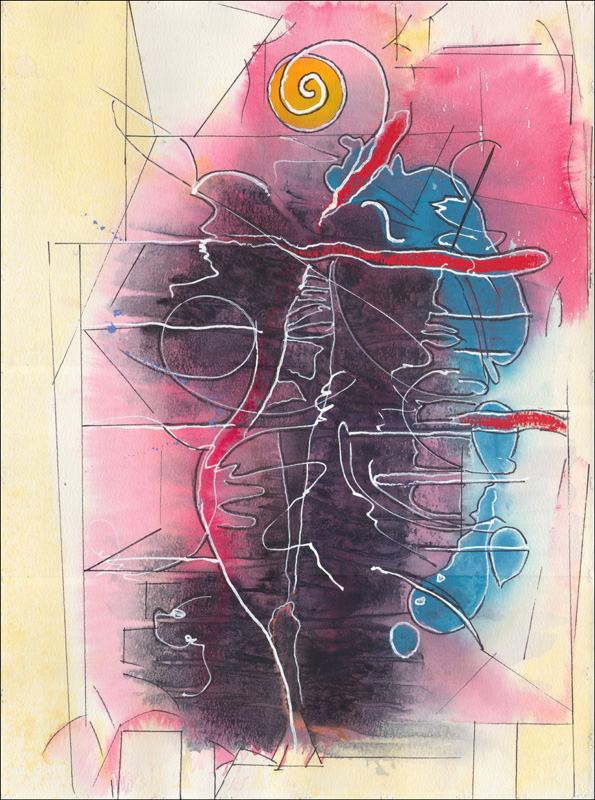

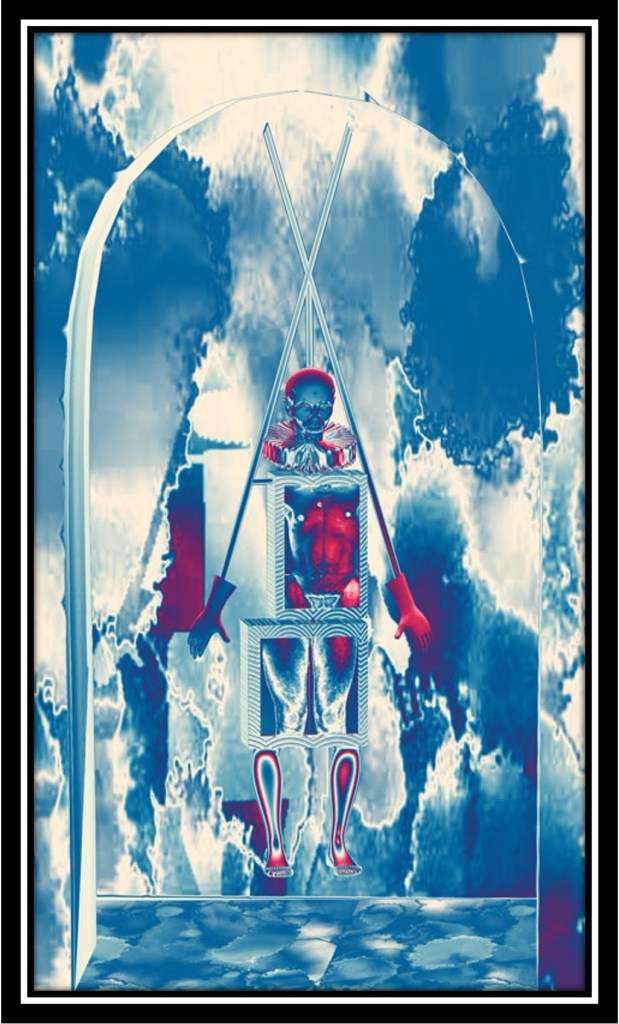




 Observations On Perception