Ricardo F. Morín
The Clown That Will Make You Cry
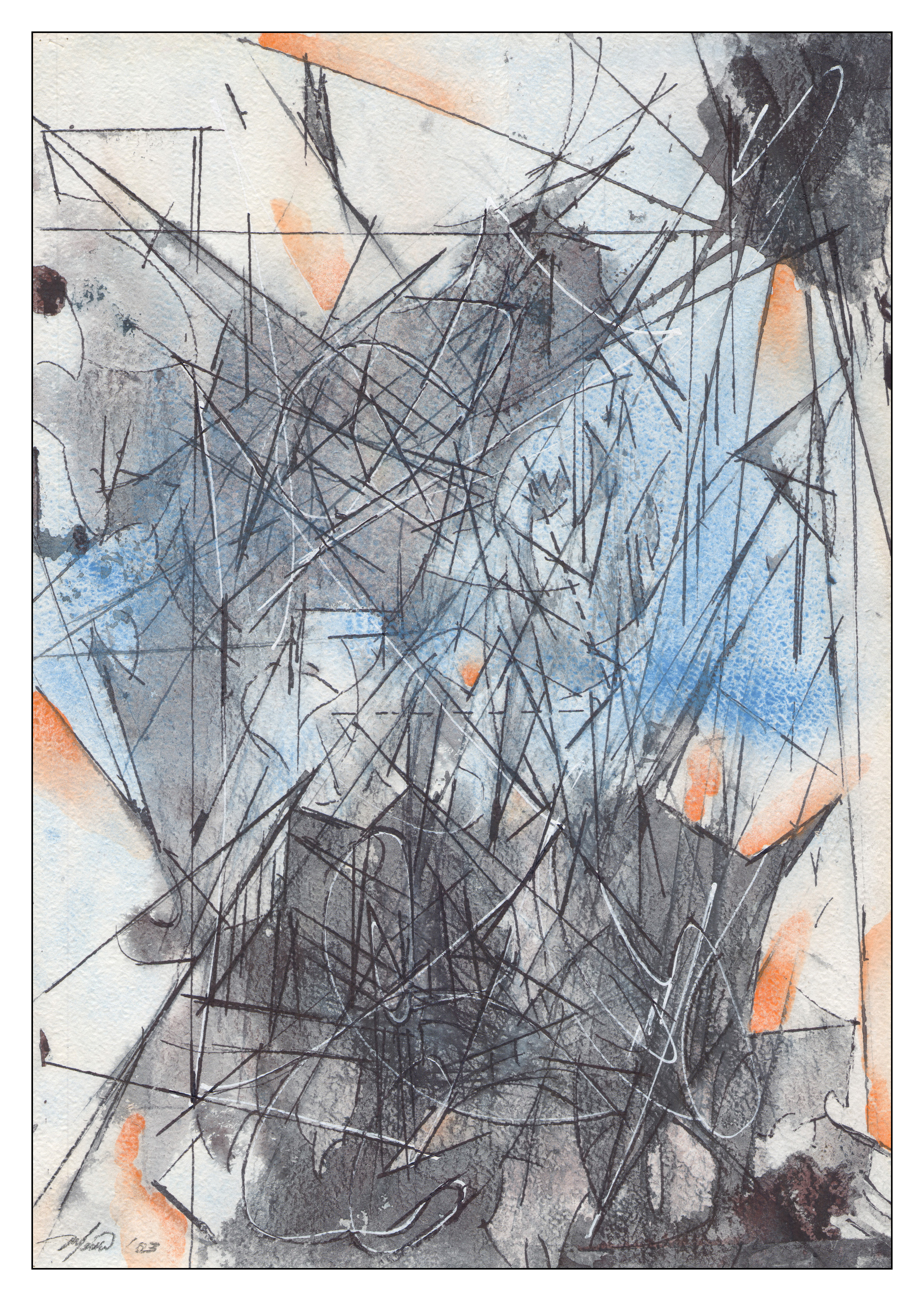
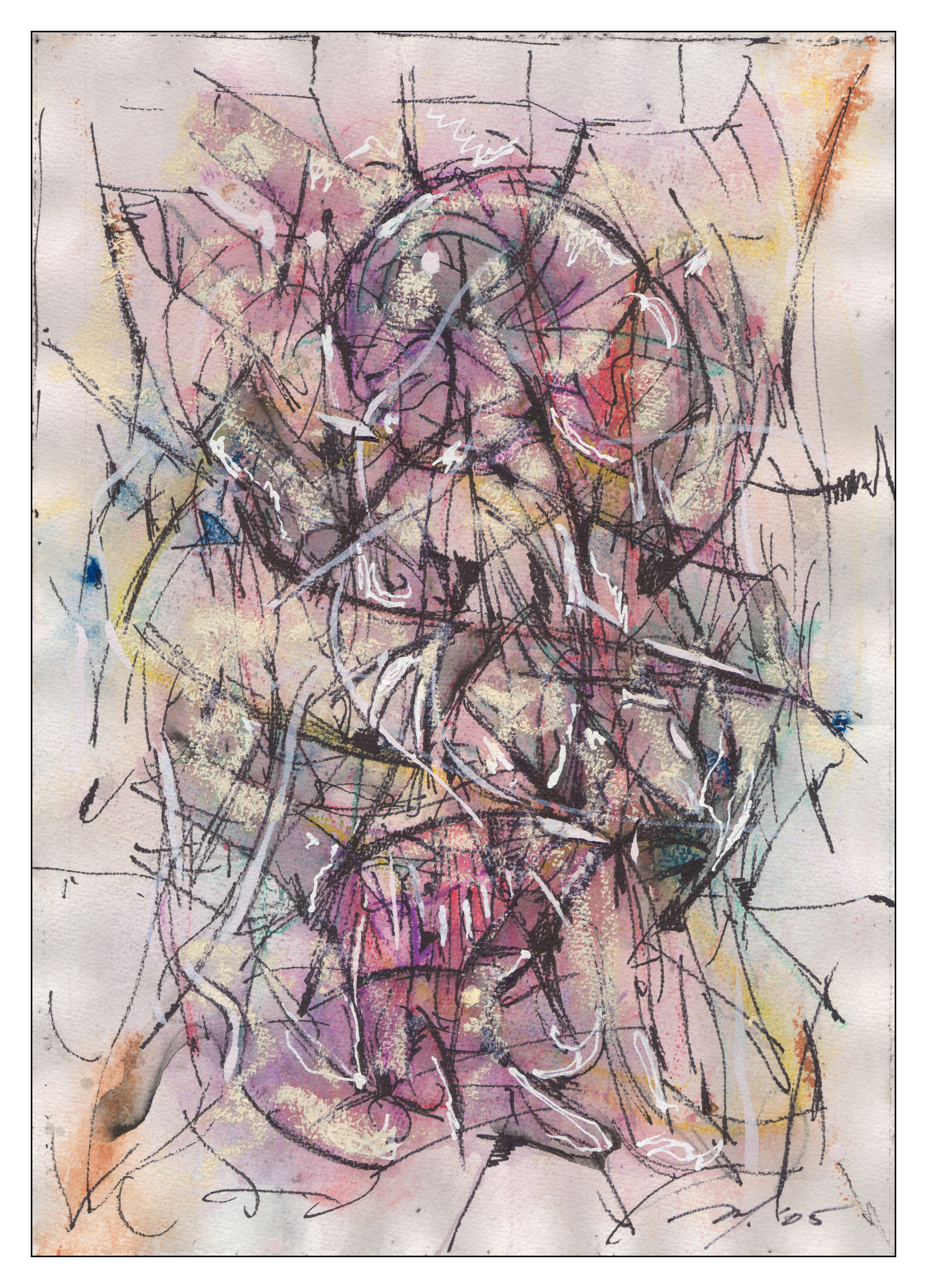
Unfired clay bust in three colors
18 × 18 inches overall
1975
The pale hair has been arranged for permanence. Beneath it, the face has acquired the colour of annatto; the hands remain another color.
He entered a business his father had built. The father provided the enterprise; the son enlarged the signature. His name went onto buildings, products, and promises. Some of the companies subsequently entered bankruptcy. The name continued to advertise success. Creditors were left to appreciate the difference between the reputation that survived and the money that did not.
Television supplied a boardroom in which the competence of everyone except the host was under examination. Contestants competed for his approval and departed at his command. The programme could accommodate an unsuccessful applicant every week without disturbing the premise that the man behind the desk knew what he was doing. The audience could change the channel; nobody inside the programme could vote the host out.
In 2020, the electorate declined to renew his employment. He answered with the claim that the election had been stolen. An unfavourable verdict had reached a man accustomed to delivering them. The voters’ decision became, in his telling, subject to the approval of the candidate whose conduct they had been asked to judge.
The claim becomes useful as a requirement of loyalty. A person who repeats a plausible error may merely be mistaken. An official who repeats a disproved assertion gives the president a more exacting assurance of obedience. Correction would spoil the test. Government can acquire employees whose principal qualification is their willingness to help the employer remain wrong.
The barker brings forward the Cabinet’s financial marvels. His choice for Commerce was a billionaire financier. A sufficiently large fortune can do the work of a qualification before a question has been asked. The audience is invited to inspect private wealth and take public judgment on trust.
The efficiency attraction was entrusted to Elon Musk, who promised a trillion dollars in spending cuts. A wall of savings followed. Federal auditors later found that DOGE had claimed $1.7 billion from a military health IT contract that had neither been terminated nor reduced. The contract continued. The saving had nevertheless enjoyed a successful public career.
Officials with professional obligations can be less entertaining. An auditor may produce a figure that spoils an announcement; a civil servant may explain that the president’s preference has encountered a law. The president has ordered several federal bodies reduced to the minimum required by law and independent agencies brought under closer presidential supervision. An institution depleted of staff has fewer people available to explain the limits of an instruction. A vacant chair offers no competing account of the government’s obligations. The vacancy is an agreeable public servant.
The president’s departure would not retire the example. Vacancies, precedents, and enlarged claims of executive power would be available to a successor whose promises sounded entirely different. The next president might even promise to save the country from the present one. The restraints would be no easier to rebuild because the new occupant had better manners.
For the government of artificial intelligence, the president offers his intelligence. His administration’s March 2026 proposal still found employment for Congress and existing regulators, allowing ordinary state enforcement while seeking to displace some state AI rules. On September 14, he identified the only necessary safeguard as a “STRONG AND SMART (High IQ!) PRESIDENT” and assured the country that the position was filled. He also invoked existing criminal and regulatory powers. The public assurance nevertheless rested on the overseer’s testimonial to himself.
His family, meanwhile, has business before the government. Its cryptocurrency venture has obtained conditional preliminary approval for a federal trust-bank charter. The regulator says the review followed the rules. Senators have sought scrutiny of foreign investment and questioned the independence of the review. The family can pursue the opportunity while the public awaits the answers. The charter remains conditional; the family’s commercial interest and the president’s power to appoint the regulator’s chief are already established.
For more general guidance, the president has put his doctrine in writing: “He who saves his Country does not violate any Law.”
He has found a further use for the separation of powers: the branches need not arrive at the same time. The executive issues an order, legislators request the documents, and judges consider the challenge. By the time authority has been examined, the country may already be living under the decision. Restoring a limit can then be made to look like disturbing an established order. The executive has acquired the advantage of making obedience immediate and correction expensive.
In the tariff case, the Supreme Court found no tariff power in the emergency statute he had invoked. The duties had reached commerce before the claimed authority completed its journey through the courts. Businesses had to respond to an executive decision whose legal foundation the executive had overstated. The government could collect first while the governed financed the question of whether the government had been entitled to collect.
The spectators outside the country have no ballot with which to interrupt the performance. A threat delivered to an applauding audience can become another country’s emergency. People who never asked to attend the spectacle must conduct their affairs around its next announcement.
Ukraine discovered how readily an ally could be reduced to a petitioner. In the Oval Office, the American president told Zelenskyy, “You don’t have the cards right now.” His administration subsequently suspended military aid and intelligence sharing, then restored both in March 2025 after Kyiv agreed to a proposed thirty-day ceasefire that still required Russia’s assent. The supplier had demonstrated his importance by interrupting the supply.
A different dependence emerged in March 2026, when Zelenskyy said Washington had requested Ukrainian help against Iranian drones. The president later said America did not need Ukraine’s help. By July, Zelenskyy was describing an initial agreement for joint drone production, with a factory using Ukrainian technology planned for the United States and terms still under negotiation. Ukrainian engineers had brought something to the table that a lecture on their country’s weakness could not supply. Negotiation required the American government to reckon with the value of expertise its president had pronounced unnecessary.
Geography offers a cheaper form of expansion. The Gulf of Mexico and Lake Ontario have been furnished with the name America for federal use. An official map can display the achievement without moving the opposite shore. Greenland requires more elaborate paperwork. The president has described expanded American military access as permanent control over security; Denmark maintains its sovereignty and Greenland its right to self-determination. The agreement must accommodate an announcement of possession without a transfer of ownership.
The distance between an announcement and an accomplished fact narrows when troops are dispatched. In Venezuela, the military operation that seized Nicolás Maduro was defended as action against alleged drug criminals. In Iran, the House has voted repeatedly to end military operations conducted without congressional authorization. The president who acts first also supplies the circumstances in which refusal will be judged. Congress must consider what it means to stop a conflict before it has been allowed to decide whether to begin one. The legislature inherits responsibility for the consequences of a decision it did not make. A successor would inherit the convenience of proceeding without asking.
At home, the audience must be kept suitably informed. Reporters from CNN, MS NOW, and Politico have been turned away from the White House over their organizations’ coverage. The man under scrutiny has taken charge of admitting the witnesses. An audience prepared for greatness should not have to choose between the barker and a reporter who has looked behind the curtain. The exclusion also instructs the reporters still admitted, before they have asked a question.
The president’s appointment has received a further endorsement from the president. “I was saved by God to make America great again,” he announced at his inauguration. For the supporter who regards Christian identity as a warrant to rule other citizens, the declaration offers a useful promotion. A political preference can become a sacred obligation. The neighbour retains a vote; the neighbour’s right to prevail becomes negotiable.
Congress knows a quieter way of distinguishing the governors from the governed. The law recognizes illness as an exception to salary deductions in the House. A member who opposes comparable security for workers can recover without the financial lesson prescribed for constituents. Nor need the compliant legislator surrender the advantages of office when surrendering its independence. A salary, a title, and a staff survive the discovery that the president has already done the thinking. Constituents can still write. Congressional stationery remains available for explaining an executive decision.
A loyal supporter may eventually need a rule that obliges the president to listen. An order may touch the supporter’s property, livelihood, or family. The citizen will then discover the difference between having a right and being on good terms with the man who can disregard it. The petition must establish the writer’s loyalty before approaching the inconvenience of the writer’s injury. Even a complaint must contribute to the assurance that the president has done nothing wrong.
The electorate is now invited to consider a dividend. He has promised five thousand dollars to adult citizens if Republicans retain both houses of Congress. Congress would still have to authorize the payment, so the majority must be delivered before the appropriation has been secured. Musk’s 2024 million-dollar daily offer to registered voters in seven battleground states who signed his PAC’s petition had already made private generosity a campaign attraction. What had been advertised as chance became, in his lawyers’ account, a selection of paid PAC spokespeople.
The ballot may remain secret while the campaign teaches the citizen to expect a benefactor. A person entitled to examine the conduct of a public servant is encouraged to consider the advantages of being a grateful recipient. The president can receive the public’s thanks for a payment the public would have to finance.
The midterms will provide an opportunity to inspect the supporting cast. A candidate for Congress who promises obedience to the president should explain why obedience requires an independent office. The nation already pays for a White House staff. A legislature capable of refusal would preserve a restraint for the next president as well as the present one.
The people may have their country back, provided they make no further claim to govern it.