*
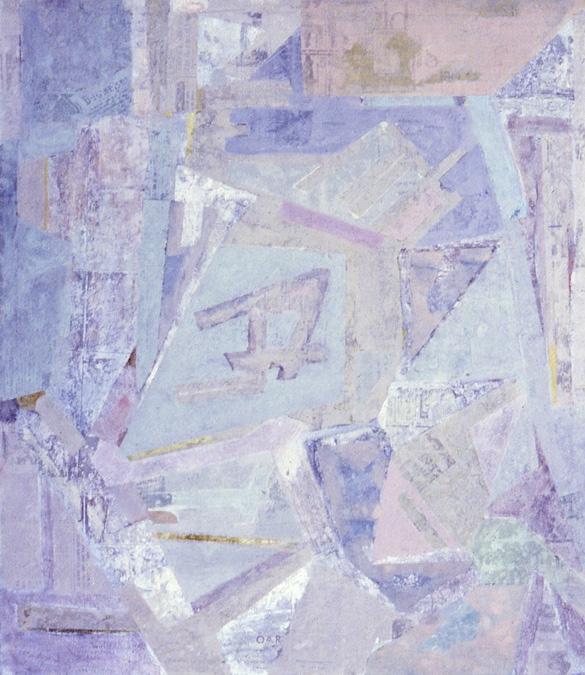
Buffalo Series, Nº 5
49¼ × 55⅛ inches.
Oil on canvas
1979
On the Practice of Visual Art, Attention, and the Conditions of Perception
My distance from the commercial circuits of art arose not from unfamiliarity, but from decades of sustained participation. For nearly four decades after completing my formal studies in painting, I engaged directly with galleries, museums, art advisers, collectors, and private buyers. Those encounters formed part of my education, acquainting me with the language of placement, negotiation, institutional framing, and representation. They also enabled me to perceive how readily the life of an image may be subordinated to expectation, promotional identity, or calculation.
None of those experiences was singular or dramatic. What emerged, rather, was a gradual dissonance. Discussions occasioned by the work frequently departed from the conditions that had governed its genesis. What had required sustained attention in the studio could be rendered into categories extrinsic to the experience of vision, whether as market appraisal, curatorial interpretation, or institutional inscription. The imbalance was seldom articulated, but it persisted.
In time, a more pronounced distance became necessary. It arose not from rejection, but from clarification. The difficulty resided neither in commerce nor in institutions as such, but in the almost imperceptible redirection of attention they could induce. When attention gravitated toward reception or positioning, the image risked losing the quiet domain in which it had first disclosed itself. That recognition altered the conditions under which I continued to work.
The decision to permit the work to circulate without presuming to govern its destination, or simply to give it away, followed naturally. It represented less a renunciation of the work than a preservation of my relation to it. The practice had already conferred what mattered: a form of joy independent of valuation, constancy during periods of vulnerability, and companionship with images whose significance unfolded gradually and imposed no demand.
The material fate of a substantial portion of my work would eventually confer an unforeseen gravity upon those convictions. In 2009, my younger brother placed 149 of my paintings in storage at Almacenadora El Recreo, a warehousing and logistics company situated in the industrial district of Valencia, Venezuela. The ensemble encompassed twenty-five years of my artistic practice, from 1971 through 1996, and included a considerable number of canvases exceeding six feet. When the company ceased operations, my brother lost his shareholding without compensation, and I lost all knowledge of the paintings’ whereabouts. For years, I did not know whether they remained there in storage, had been moved elsewhere, or even continued to exist.
Only after the company’s bankruptcy had received judicial confirmation did the proprietor of the premises contact my brother in July 2026. The paintings were still there, but termites and mold had compromised them. Their removal required an expert technical assessment to determine which works, if any, remained salvageable, followed by conservation measures, transportation, a formal arrangement for new storage, and a security deposit equivalent to six months of storage fees. I was unable to supervise the process from abroad. My brother was likewise in no position to manage it. Under such circumstances, even donation was not a practicable alternative.
I therefore authorized the proprietor to dispose of the ensemble in whatever manner he considered necessary. He advised me that anything affected by termites would have to be burned. I consented without ever seeing the paintings again.
Their physical disappearance did not, however, remove that period entirely from view. Digitized photographic records of almost eighty percent of the paintings documented between 1977 and 1991 survive and remain accessible in the digital archive on my website. The archive preserves neither their scale, surface, material density, nor the encounter demanded by their physical presence. It nevertheless permits a substantial portion of the images to remain visible. It constitutes neither a surrogate collection nor an answer to the loss, but a record that preserves visual access while confirming the distance between those images and the material works from which they derive.
That act was not equivalent to giving the work away, nor did it transform its destruction into an aesthetic gesture. The decision was conditioned by distance, material deterioration, institutional collapse, and the impossibility of responsible intervention. Yet the necessity of making that decision revealed, with a severity I had not previously known, an intuition already implicit in my relation to the work: authorship confers neither perpetual custody nor dominion over the fate of what has been created.
The destruction of the paintings brought their existence as material objects to an end. The survival of a substantial portion of the body of work as photographic images does not annul the loss. Yet the loss did not efface the attention from which the paintings arose, the years through which they had accompanied me, or the life of which they had already become a part. Distance is not indifference, and relinquishing possession does not extinguish grief. Such relinquishment merely recognizes that the existence of a work is not exhausted by its possession.
From this perspective, authorship assumes a provisional character. The work neither originates in the market nor belongs wholly to its maker. It comes into being through a convergence of forces not fully governed by the will and thereafter remains exposed to contingencies the will cannot avert. The image inhabits a distance that neither ownership nor exchange can abolish, and that even the disappearance of its material support cannot entirely extinguish.
Ricardo F. Morín
August 22, 2026
Bala Cynwyd, Pennsylvania

