Archive for December, 2025

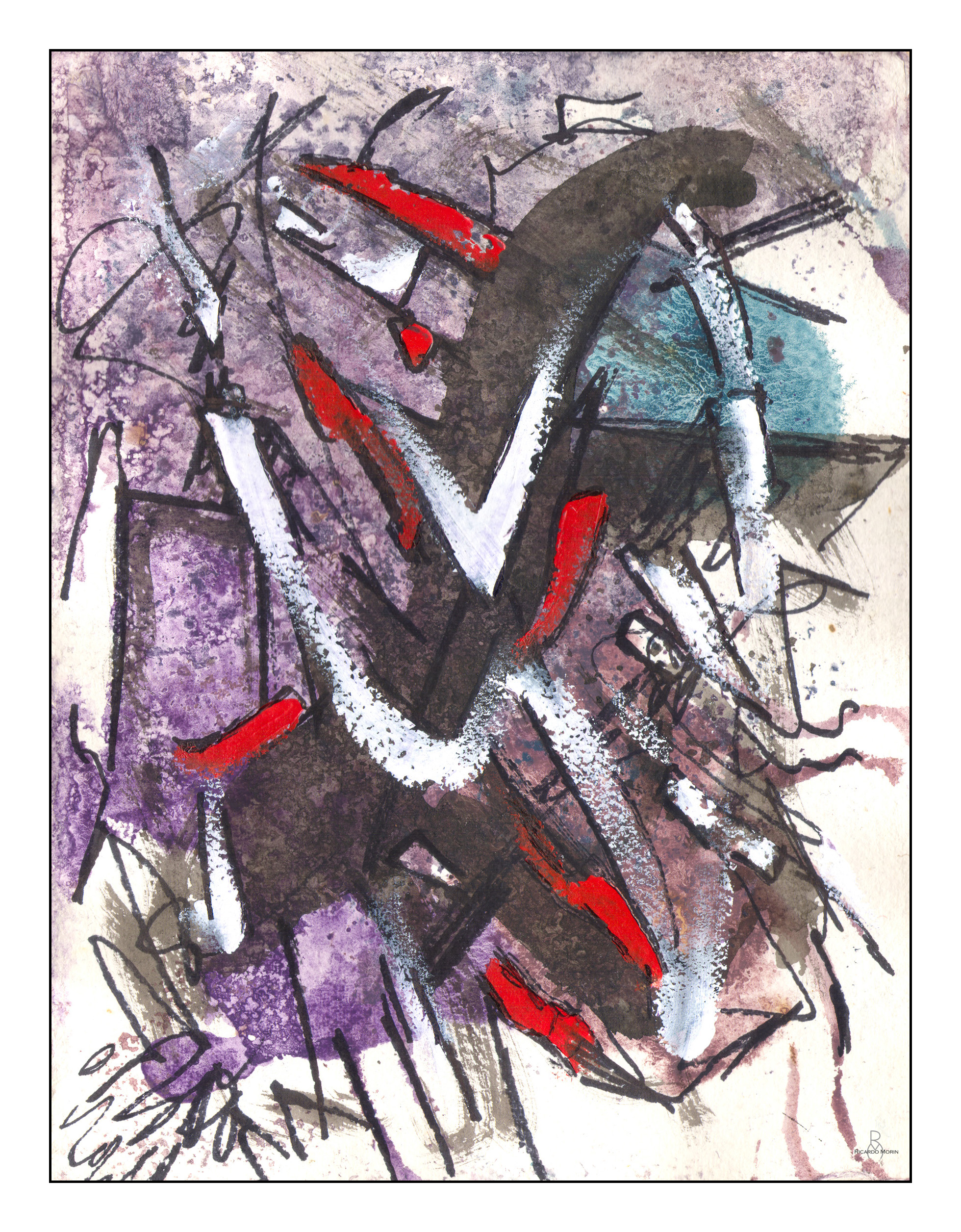
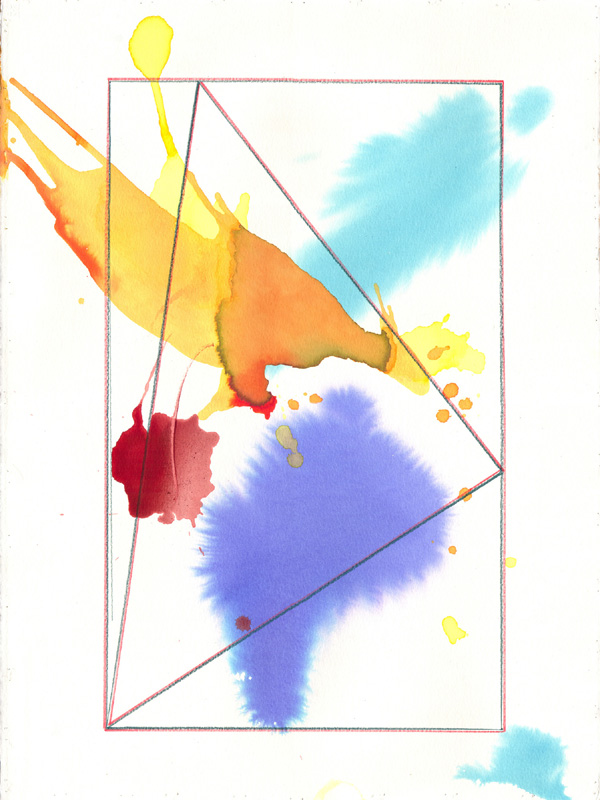
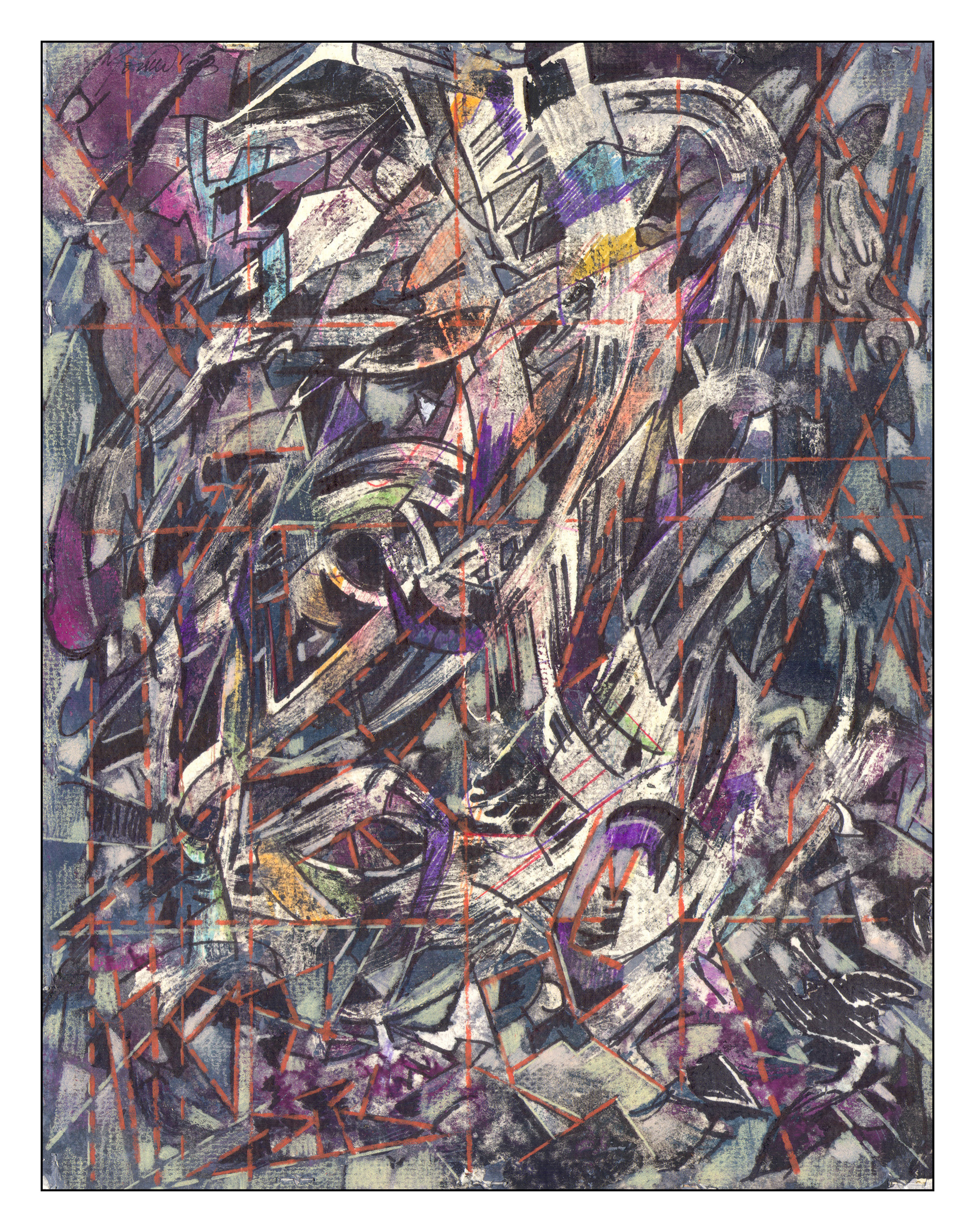
“Portrait of a President: Series II”

December 31, 2025

Ricardo Morín
Portrait of a President
14 x 20 inches
Watercolor, sumi ink, crayon on paper
2003

Ricardo F. Morín

November 2025

Oakland Park, Florida

This essay continues an inquiry begun in “Portrait of a President:    A Diagnostic Essay on Power, Posture, and Historical Pattern,” where patterns of executive behavior were examined through observable action rather than declared intent.   The present text shifts that inquiry from description to procedure and takes a recent executive order on artificial intelligence as a case through which decisions are advanced, reviewed, and sustained.

It follows The Arithmetic of Progress, which considers how contemporary narratives of advancement often detach calculation from consequence.    Read in sequence, that essay establishes the broader conditions under which claims of inevitability and efficiency gain force; the present text examines how such claims operate within the executive process itself.

The essay also builds upon Governing by Exception:    The American Executive, published earlier this year, which examined how exceptional measures become normalized within the modern presidency.    Where that essay focused on the expansion of executive discretion, the present text examines the procedural consequences that follow when exception becomes routine.

This essay further stands in relation to Convergence by Design or Consequence? On Trump, Putin, and the Veiled Axis from Kyiv to Caracas, which addressed alignment among contemporary autocracies at the geopolitical level.    Here, the focus moves inward, toward domestic executive procedure, to consider how similar methods of authority can emerge without explicit coordination or ideological declaration.

Taken together, these essays form a sequence of inquiry rather than a unified argument.    Each approaches the same problem from a different register—exception, calculation, procedure, and alignment—without requiring continuity of title or theme.

This essay occupies the center of that sequence.    Throughout the analysis, action designates executive action exercised by the American Executive branch.    It begins from an observation about executive ordering under conditions of urgency and traces how constitutional constraint may be displaced in practice without being formally abolished.


Procedural Dislocation and the Rhetoric of Dominance

I

The recent executive order framing artificial intelligence as a matter of “global dominance” offers a useful example.    Agreement with its stated aims is not required for the executive order to warrant examination.    Its relevance lies in how it advances decision-making rather than in what it promises to achieve.

Artificial intelligence enters this discussion not as a technical subject, but as a context in which executive action is presented as urgent.    The order proceeds on the assumption that speed and centralized direction are necessary for success.    As a result, decisions advance before existing forms of review, coordination, and regulatory formation have had an opportunity to shape their terms.

This ordering is significant.    When presidential authority is asserted first, deliberation is relegated to constrained conditions.    Institutional review—understood here as the pre-action criteria, thresholds, and sequencing through which decisions are ordinarily authorized—ceases to determine whether executive action should proceed and instead adjusts to action already underway.    Once this sequence is fixed, subsequent forms of participation—whether arising from agencies, advisory bodies, or constitutional restraints—may temper implementation without necessarily altering the direction of presidential decrees.

This essay treats the order as an instance of that ordering.    It examines what follows when urgency governs the timing of decisions and broad assertions of purpose begin to do work normally performed by review, coordination, and rulemaking.    The concern is not technological leadership itself, but what happens when decisions advance before the means of evaluating, revising, or restraining them are in place.

II

When decisions are taken prior to sustained review, the order of evaluation is reversed.    Procedural review (as a condition of pre-authorization) no longer governs whether executive action is authorized, but instead becomes a step anticipated after executive action has already been set in motion.   This inversion of review and authorization alters how responsibility is distributed within the executive process.

In this sequence, articulated criteria are deferred rather than established.   Judicial review exists, but typically occurs after implementation, once policies have already taken effect.   Congressional checks exist, but depend on coordination, timing, and political alignment that narratives of urgency actively compress, displace, and bypass.   Constitutional remedies exist, but operate on temporal horizons incompatible with accelerated executive action.   Standards by which a decision might be assessed—scope, limits, benchmarks, or conditions for revision—remain undefined at the moment of execution.   The absence of articulated criteria is presented as provisional, even as executive action proceeds as though those criteria were already settled.

The effect of this deferral is procedural rather than theoretical.    This analysis does not proceed from the assumption that constitutional checks are absent.   Without articulated criteria, no stable reference exists against which a decision can be evaluated, adjusted, or halted.    Review becomes reactive, tasked with accommodating decisions rather than testing their premises.

This sequence also alters the role of institutional participation.   Agencies and advisory bodies are positioned to respond within post-implementation review rather than to contribute to the formation of the decision itself.   Their involvement shifts from deliberation to implementation, narrowing the space for substantive input.

What emerges is not the elimination of review.     Constraints remain formally intact, but no longer determine whether executive action proceeds; they intervene only after its action has already begun.

The result is not the elimination of constraint, but its displacement:     mechanisms—designed to govern whether executive action should proceed—are repositioned to manage action already set in motion.   Constitutional checks remain operative, but they now function downstream of execution rather than as conditions governing authorization.

III

Federal preemption is asserted before a substitute structure exists.    In this case, state-level regulatory activity is set aside even though no comprehensive federal framework has yet been established to take its place.    Rule by decree is asserted in advance of the mechanisms that would ordinarily support, coordinate, or limit executive action.

This is not a question of constitutional supremacy.    Federal authority over state law is well established.    The issue is one of sequence.    Preemption typically displaces existing regulation by replacing it with a defined alternative through which responsibility, oversight, and accountability are reassigned.    When that replacement is absent, displacement produces a gap rather than a transition.

That gap has practical consequences.   Without a settled federal framework, there is no clear site for rulemaking, review, or appeal.    Responsibility appears centralized in principle, but remains dispersed in practice.    Executive decisions move forward, yet the means of evaluating or correcting them remain uncertain.

This reorders the role of the states.   Rather than serving as sites of coordination, experimentation, or interim governance, they are treated primarily as sources of friction.    Their regulatory efforts are characterized as interference even though no structure has been offered to absorb the regulatory functions being displaced.

What results is a form of authority exercised in advance of the institutional support required to sustain it.    Preemption operates as assertion rather than as arrangement.    The question that follows is not whether authority exists, but how the executive authority is expected to function once exercised without the structures that normally sustain it.

IV

The executive order invokes a global “race” for dominance as a justification for urgency.    This reference is introduced without specification of its participants, scope, or criteria.    The reference is presented as a condition rather than as a claim requiring articulation or examination.

Because the race is not defined, it cannot be procedurally evaluated.   No benchmarks are offered by which advancement or delay might be measured, and no temporal horizon is established against which executive actions might be paced.    Yet the invocation is treated as decisive.

Once invoked, this global framing reshapes the timing and sequence of domestic review and coordination.   Internal processes of review, coordination, and federal balance are measured against an externally asserted tempo.   Procedural safeguards begin to appear as liabilities, not because they have failed, but because they operate at a pace deemed incompatible with the asserted race.

In this way, the invocation of a global ‘race’ does not specify what is at stake; instead, the invocation of global competition relocates the timing of decision-making to an externally asserted pace.    The absence of detail does not weaken the effect of this justificatory framing).    The absence of specification enables acceleration.

The significance of this procedural reordering lies not in whether global competition exists, but in how its invocation alters internal sequence within the American executive.    An external reference is imported as a procedural rationale and allows executive decisions to advance ahead of sustained review and articulated structure.

V

Alongside external competitive framing, internal pressure also alters when and how executive decisions move forward.    This pressure arises from private actors with concentrated financial exposure to the development and deployment of artificial intelligence technologies.    Their investments depend on acceleration, scale, and limited regulatory constraint.

These actors do not require coordination to exert influence.   Their interests converge structurally, independent of formal coordination.    Delays associated with sustained review, layered oversight, or decentralized regulation introduce uncertainty into investment horizons.    Acceleration, by contrast, stabilizes expectations and preserves potential revenue.

Such pressure operates prior to public deliberation.    It is expressed through advisory roles, policy consultations, and formal lobbying mechanisms that exist outside the sequence of open review.   The influence is not illicit; it is institutionalized.    What distinguishes this influence is its timing and asymmetry.

Because these interests are not fully disclosed within the formal record of decision-making and review, their effects appear indirect.    Yet they shape the conditions under which urgency is framed as necessity and executive preemption as inevitability.   The absence of articulated criteria does not impede this process; it facilitates it by keeping outcomes flexible while direction remains fixed.

External competition supplies a rationale for acceleration, while the pressure of internal investment sustains it.   In this way, procedural dislocation is reinforced from within the executive sequence itself.   Together, they create an executive environment in which acceleration is continuously justified even as institutional review and the structures of substitution remain deferred.

VI

What follows marks a shift not in policy substance, but in how executive action is oriented once procedural guidance no longer governs its timing.

When decisions continue to advance without articulated criteria or substitution structures, language begins to assume functions ordinarily carried by procedural guidance.   By procedural guidance, this analysis refers to the articulated criteria, review thresholds, institutional sequencing, and substitution structures through which decisions are ordinarily evaluated, revised, or withheld before executive action proceeds.   Instead, executive orders are used to frame executive action and to supply orientation where procedural guidance is missing.

In this context, words such as “dominance,” “necessity,” or “leadership” do not operate primarily as descriptions.    Such terms establish direction without specification.    The function of such terms is to move decisions forward while leaving objectives, limits, and measures unresolved.

This enlargement of language alters how executive action is understood.    Rather than clarifying what is being done and under what conditions, language organizes attention around procedural momentum.    Movement itself becomes the priority, even as the grounds for evaluation remain unsettled.

The effect is cumulative over time.    As reliance on rhetorical framing increases, fewer procedural markers remain available to slow, revise, or redirect executive action.    Language begins to carry responsibilities normally handled by review and specification.

At this stage, language has not displaced explanation entirely, but it has begun to exceed it.    This language continues to refer to policy, yet it now performs additional work by sustaining executive action in the absence of settled procedural support.

VII

Requests for specification no longer lead to articulated criteria or review mechanisms, but to restatement of the original framing.    Explanation gives way to emphasis, and emphasis to repetition, without resolving the underlying procedural gaps.

As language begins to carry responsibilities normally handled by review and specification, its relationship to explanation changes.    Statements initially intended to orient understanding become reference points that are repeated rather than examined.

Over time, this pattern reduces the capacity to pause, reconsider, or revise decisions already underway.    When language is relied upon to sustain action, revisiting its premises becomes more difficult.    Adjustment appears as retreat, and reconsideration as delay, even though no settled standards have been articulated.

The effect of this rhetorical substitution is not overt resistance to review, but a narrowing of the scope of review.   Review persists formally, yet review is increasingly tasked with accommodating decisions already advanced.    The space for questioning sequence, authority, or criteria contracts without being explicitly closed.

At this point, language no longer merely advances executive action; it begins to shield it.   Decisions remain explainable in broad terms, but they become less accessible to sustained examination.    What has changed is not transparency, but the conditions under which clarification can still occur.

VIII

This section traces the consequences of earlier procedural substitutions by showing how evaluative reference points disappear even as executive action continues.

Outcomes are projected but not specified.   Means are deployed but not measured against stable standards.    A shared point of reference by which both means and outcomes might be assessed is absent.    When decisions are taken prior to sustained review and sustained by rhetorical framing rather than articulated criteria, the available bases for judging decisions narrow.

In such conditions, projected outcomes can no longer function as checks on present executive action.    Projected benefits remain abstract, deferred, or contingent on future clarification.   Without defined benchmarks or review mechanisms, outcomes function more as justification than as objects of evaluation.

This places increased weight on the process.    When ends remain indeterminate, procedural sequence becomes the only available measure of legitimacy.    If that sequence is dislocated, no basis remains for distinguishing provisional executive action from settled direction.

Appeals to necessity gain prominence under these conditions.   These appeals bridge the gap between uncertain means and unspecified ends by asserting inevitability.    Yet inevitability does not supply measure; it advances executive action while deferring assessment.

What results is the suspension of evaluation, as judgment is deferred to outcomes that have not yet been defined.   Executive means proceed without reference to ends that can be examined and leave evaluation suspended rather than resolved.

IX

The significance of what follows lies not in escalation or collapse, but in the capacity of this governing pattern to persist without triggering a formal breakdown.

Viewed through the preceding sequence, the executive order appears less as a response to a technological challenge than as an expression of how presidential authority now operates.    In this sequence, constitutional constraint persists formally while losing its capacity to govern presidential timing.    What defines this mode of operation is not declared ambition, but the exercise of executive authority in advance of settled structure, review, and measure.

Despite the suspension of procedural evaluation, executive action continues to advance and stabilize as a governing pattern.    Executive action advances without stable criteria, and evaluation follows rather than guides it.    Rhetorical framing sustains continuity once authorization, specification, and review no longer govern the initiation of action, and inevitability substitutes for articulation.

Under these conditions, governance retains motion but loses procedural reference.     Decisions remain intelligible in broad terms, yet increasingly difficult to assess, revise, or halt.   What endures is direction rather than deliberation, continuity rather than clarification.

Rather than resolving into crisis, the condition persists through executive assertion rather than procedural sequence.    Executive authority continues to function, but it does so with fewer internal points of correction.

The significance of this condition lies not in its novelty, but in its durability.    When procedural dislocation becomes a stable feature of executive action, it reshapes how legitimacy is understood and how accountability can be exercised.    What is produced is not exception, but a normalized way of proceeding.

X

A constitutional order presumes cooperation without being able to compel it in advance.    Law establishes procedures, thresholds, and divisions of authority, but it cannot secure the disposition of the actors who must inhabit those roles.    The responsibility for cooperation is therefore placed precisely at the point where predictability can no longer be secured—human judgment, ambition, fear, calculation, fatigue, pride.    This is not a failure of law as text; it is a condition of law as lived structure.

Seen this way, instability is not an aberration introduced by bad actors alone.    It is an ever-present possibility generated by the fact that constitutional systems rely on restraint exercised voluntarily, sequentially, and often against immediate interest.    Where cooperation falters, procedures remain formally intact yet lose operational force in practice.    Law persists on paper while its coordinating capacity weakens over time.

This is why the problem traced throughout this essay is ultimately ethical rather than moralistic.    It does not ask who is right or wrong, but what can reasonably be expected of human agents operating under pressure, asymmetry, and incomplete trust.    Constitutional governance assumes a minimum ethic of reciprocity—an agreement to wait, to contest, to defer, to revise.    When that ethic fails to be sustained, the system does not collapse at once; it persists in a condition where coordination no longer governs action.    The authority of the Executive fills the gap left by cooperation, often in the name of continuity.

This explains why displacement proves durable, why restraint remains fragile, and why systems can continue to function even as their ethical foundations lose sustaining force.    The irony sustained here is not pessimistic; it is lucid as an end to the inquiry.

Cooperative frameworks are always provisional.    They exist in tension with mistrust, strategic defection, and shifting circumstance.    They are never resolved, only renegotiated.    The ethical fact is not that mistrust appears, but that governance must function despite it.


Epilogue

Political responsibility begins before governance does.    It precedes programs, slogans, and institutional choreography.    Long before authority is exercised, it is entrusted, and in that act a judgment is already made—not about policy detail, but about temperament, restraint, and capacity for self-limitation.

The ethical center of leadership is not revealed through ambition or rhetorical promise, but through signs that are immediately legible:    flexibility without opportunism, firmness without domination, caution without paralysis.    These qualities are not abstract.    They are visible almost at once, often within moments of exposure.    To miss them is not a failure of intelligence, but of attention.

This responsibility cannot be displaced onto institutions after the fact.    Nor can it be excused by urgency, fatigue, or personal grievance.    Once authority is conferred, law is required to manage what has already been authorized, even when correction becomes costly or delayed.    No procedural safeguard can fully compensate for ethical indifference at the moment of selection.

Political systems do not deteriorate solely because of those who govern.    They also reflect the standards—explicit or tacit—by which leaders are chosen.    Collective well-being depends less on promised outcomes than on the character permitted to command.    In this sense, leadership is not imposed upon a society.    It is recognized, accepted, and sustained by it.
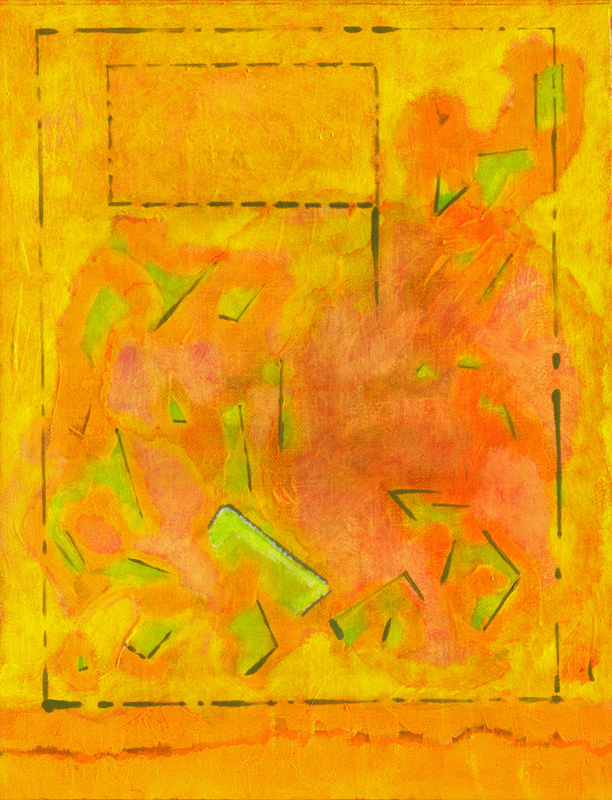

“The Arithmetic of Progress”

December 25, 2025

*

Ricardo Morín
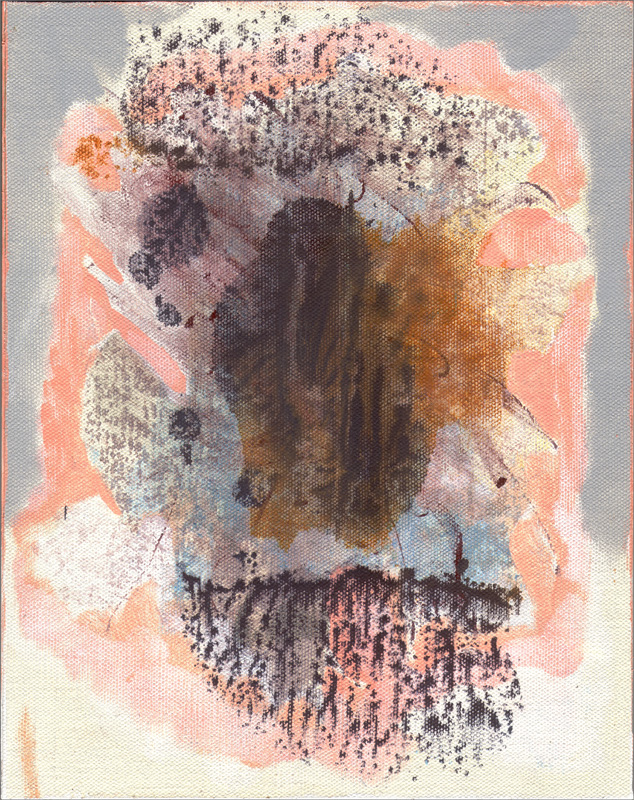
Still Six: The Arithmetic of Progress
Oil On Linen
14 by 18 by 3/4 inches
2010

Ricardo F. Morín

November 2025

Oakland Park, Florida

Billy Bussell Thompson, Editor

This essay examines the assumption that technological and scientific advances have produced a universal improvement in human life.   While contemporary discourse often equates innovation with progress, the distribution of benefits remains deeply asymmetrical.   Technological growth increases capacity but does not correct the structural inequities embedded in modern economic systems.   What appears as collective advancement frequently reflects the consolidation of advantage among those already positioned to receive it.   By distinguishing capability from justice, and aggregate trends from lived conditions, the essay argues that the notion of historical progress is less a measure of shared dignity than a narrative that obscures persistent hierarchies.


1

The modern argument for progress (understood as improvement) rests on a familiar premise:   technological and scientific advances have made life better today than at any other point in human history.   Thinkers such as Harvard’s Steven Pinker defend this view with empirical confidence—he points to increased life expectancy, reduced mortality, improved medical interventions, and the steady rise of global literacy.   In this framing, innovation and macroeconomic expansion constitute not only evidence of historical progress but the very engines that produce it.

2

Yet the structure of this reasoning is fragile.   It equates technical capacity with civic advancement and treats expanded tools as synonymous with expanded dignity.   It assumes that the benefits of innovation distribute themselves naturally and uniformly across societies.   It suggests that progress is a shared inheritance rather than a selective outcome.   These assumptions flatten the complexities of economic life into a narrative that conceals the asymmetries on which contemporary systems depend.

3

The historical record offers a different picture.  Technological growth has consistently increased the efficiency of extraction, the speed of accumulation, and the reach of centralized power.   Growth has amplified productivity without altering the basic hierarchy of distribution.   Knowledge expands, but the architecture of inequity persists.   What appears as collective advancement is often a redistribution of advantage toward those already positioned to capture its rewards.  This is not a failure of technology; it is the continuity of a primitive logic embedded within modern economic structures.

4

The Enlightenment promise—that reason and innovation would lift the condition of all—has, in practice, produced a dual economy.   One part benefits from scientific capacity, medical improvement, and informational access.   The other part experiences precarity, dispossession, and structural vulnerability despite living under the same technological horizon.   Progress, in this sense, is not a universal fact but a statistical abstraction. It describes averages, not lived realities. It treats the mean as the measure of the moral.

5

Some defend the concentration of authority on the grounds that a virtuous ruler could achieve what plural institutions cannot.   This argument, however substitutes character for structure.   If justice depends on the accident of benevolence, it ceases to be a principle and becomes a contingency.

6

Macroeconomic narratives reinforce this illusion.   Rising GDP is interpreted as evidence of collective ascent, even as wealth concentrates in increasingly narrow fractions of the population.   Globalized production expands, but the gains consolidate among those with access to capital, infrastructure, and insulating privilege.   The appearance of aggregate improvement obscures the internal asymmetry: growth for some, stagnation or decline for many.   The arithmetic of progress becomes a rhetoric of reassurance rather than a diagnosis of social reality.

7

To question this framing is not to deny the achievements of science or the value of technological discovery.   It is to refuse the conflation of capability with justice.   It is to observe that our tools have advanced while our institutions have remained elementary—often primitive—in their allocation of power and opportunity.   Inequity is no less entrenched today than in earlier eras; it has simply been rationalized under the banner of innovation.

8

If echoes of Thomas Paine emerge in this argument, they are not intentional.   They arise from a shared intuition:   that systems calling themselves enlightened can reproduce the conditions they claim to transcend.  Paine confronted monarchy; we confront the monarchy of capital, which presents itself as progressive while it operates through concentration, asymmetry, and manufactured narratives of improvement.

9

The challenge is not to reject technological advancement but to assess its civic consequences without accepting its mythology.  Progress exists, but its distribution is neither natural nor inevitable.   Until the structures that allocate benefit are reexamined rather than presumed, the claim of historical improvement functions less as an account of justice than as a story societies tell themselves to avoid reckoning with its absence.


“The Grammar of Punishment”

December 16, 2025

Ricardo Morin
The Grammar of Punishment
10″x12″
Watercolor
2003

Ricardo F. Morín

November 2025

Bala Cynwyd, Pa

Billy Bussell Thompson, Editor

Author’s Note:

Societies respond to harm in two fundamentally distinct modes of action.    One unfolds through the slow, cumulative patterns of behavior and belief that shape collective life; the other through the deliberate, codified interventions undertaken by institutions in the name of order.    The Grammar of Conflict and The Grammar of Punishment are companion essays, each devoted to one of these modes of action.   The Grammar of Conflict traces how hatred, victimhood, hypocrisy, tribalism, and violence intertwine into a self-perpetuating system—one that is sustained through repeated explanation at every turn and is endured not through necessity, but through the stories societies choose to tell.    The Grammar of Punishment concerns the authority of the State, viz. a formal, structured exercise of power that imposes consequences within boundaries defined by lawful interpretation.   The Grammar of Conflict traces how civic and political antagonism becomes habitual and self-justifying.   The Grammar of Punishment addresses cases in which the State that exceeds its limits can turn injustice into a system of unreasoned laws.    Taken together, the two essays offer complementary perspectives on the forces that perpetuate harm and on the deliberate choices that may interrupt its recurrence.

Abstract:

The Grammar of Punishment addresses the consequences a society imposes for wrongdoing and how the consequences shape the political order and the moral landscape.    The essay treats punishment as a limited civic instrument and punishment as an entrenched practice.    It describes conditions under which the same punitive act can either uphold shared rules or weaken these rules when the scope and purpose of the punishment exceed the original moral and civic justification for imposing them.   The drift beyond that justification often occurs because punishment extends beyond accountability:   when punishment becomes a vehicle for revenge, a demonstration of power, and a means of perpetuating the authority or moral narratives that allow it to continue long after the original violation has been addressed.   This essay does not oppose punishment; it addresses conditions under which punishment displaces justice.    At a time when punitive measures increasingly shape political discourse and public policy, understanding the internal logic of punishment is essential to preserving the boundary between justice and power.

The essay will trace how punishment evolves from a measured response to a specific wrongdoing into a self-perpetuating system of governing.    It will show how institutions originally created to restore justice will come to assert authority, to sustain narratives of legitimacy, and to conceal the principles they were established to defend.    The analysis will identify the conditions under which punishment remains credible (when the exercise of punitive authority is bounded by reason, procedure, scope, proportionality, time, and review) and the points at which punishment ceases to protect social order and begins instead to perpetuate harm.    The essay, however, will neither dictate specific policies nor condemn the use of policies.    Its purpose will be to clarify the roles attributed to punishment, the points at which those roles break down, and how continued reliance on punitive measures discloses deeper social choices about authority, responsibility, and the impulse to respond to injury—choices that reveal as much about a society’s values as about its fears.

1
Punishment is a public act that imposes a cost in response to a breach of law or shared norm.    Punishment marks a boundary, declares a rule, and demonstrates its enforcement.    This definition distinguishes punishment from prevention, restraint, accountability, and repair.    Prevention concerns events that have not yet occurred.    Restraint limits the capacity of an individual or group to cause harm.    Accountability establishes facts and assigns responsibility.    Repair addresses loss and attempts to restore what has been taken away.    Punishment differs from these responses because punishment addresses a specific violation after the fact and imposes a consequence.

2
Any serious assessment of punishment must answer three questions:    What is the purpose of punishment?    To whom is punishment directed?    And, what is the outcome of punishment?   The first question concerns a reasoned intent as opposed to a vague one.    The second question concerns the target and scope of the punitive act.    The third question concerns its manifestation as opposed to the original intention of punishment.    A punishment that claims deterrence yet produces recurrence, or resists compliance, errs not in degree but in comprehension of punishment as a tool.    By ignoring cause, the application of punishment can mistake reaction for resolution and enact justice without insight—a cycle that corrects nothing because it understands nothing.

3
Four primary purposes of punishment are commonly recognized:    boundary-setting, deterrence, incapacitation, and recognition.    Boundary-setting defines the limits of acceptable behavior and affirms that rules retain meaning only when their violation entails consequence; those limits must be defined with clarity.    Deterrence seeks to prevent future harm by making the cost of wrongdoing visible and measurable.    Incapacitation protects society by restricting the offender’s ability to inflict further injury.    Recognition satisfies the moral need to acknowledge that a wrong has occurred and that the community has responded to it.    These aims are conceptually clear, yet their success depends on interpretation and application—each revealing whether the pursuit of order remains faithful to the idea of justice
.

4

A penalty first intended to correct a specific wrongdoing can, over time, be turned by institutions into an instrument of government.  This transformation begins when authorities broaden the reach of the penalty, apply it repeatedly as a mechanical demonstration, and treat its continuation as proof of the authority of the institutions and the legitimacy of the system.  What begins as a targeted reaction applied to a specific violation is repeated, extended, and maintained beyond its original scope.  Over time, the expectation of punitive action acquires a life of its own, and support for punishment becomes a marker of allegiance to the prevailing order.  Actions that once aimed to correct behavior evolve into assertions of dominance, and dissent is recast as disloyalty.  As this process deepens, penalties grow harsher, the circle of responsibility expands, and temporal limits dissolve.  Punishment, once applied to resolve conflict, is continued under conditions that reproduce the same conflict.  When a punitive measure must be repeated indefinitely merely to prove that a rule still holds, the measure is no longer reinforcing the rule; the measure itself becomes the rule.   When punishment is applied habitually, its function changes—no longer of law but of power.   Habit grants power a moral vocabulary that disguises its interest as principle.
When law borrows the tone of justice itself, punishment is presented as restoration.

5

Once power begins to speak in the place of law, the line between what is and is not permitted may remain obscure, but the penalty for transgression is certain.   Such obscurity transforms the law from a boundary of understanding into a field of intimidation.   Power gains elasticity by refusing clarity; it rewards those who conform and isolates those who interpret too freely.   In this inversion, the rule of law survives only in form but its grammar—definition, proportion, and foreseeability—has been erased.

6
Legitimacy is the foundation on which punishment stands. Without legitimacy, punishment no longer functions as justice and becomes an imposition of unchecked power—an exercise of power without lawful foundation. Legitimacy demands definition; tyranny thrives on ambiguity. For punishment to be legitimate, the rules it enforces must be established in advance, written in language that the public can understand, and open to examination and review through lawful procedures. To write rules in advance is to bind power to reason; it makes punishment a civic act—foreseeable, accountable, and shared—rather than the decision of whoever holds command. When these conditions are met, punishment serves a civic purpose, reinforces the rule of law, and secures its own legitimacy instead of weakening it.

7
Time limits are essential safeguards that prevent punishment from becoming a permanent condition.  A consequence without a defined endpoint ceases to address a specific violation and becomes a permanent structure of power.  When the duration of punishment is not limited by purpose, punishment no longer serves the law, but replaces it.  This principle applies both within societies and among them:   a sanction imposed on an individual, a community, or a State follows the same moral and structural logic.  In foreign relations, punitive measures such as sanctions or embargoes function as instruments of discipline between States, and they risk the same transformation—from response to domination—when no path toward resolution is defined.  The possibility of restoration—whether through legal standing, political recognition, or the end of hostilities—is not an act of leniency but a precondition for stability.  Without a defined point of closure, the punished party has no reason to change course, and opposition becomes the only rational response.  Durable orders, civic or international, therefore require an exit from punishment if they are to secure lasting peace.

8
Deterrence is often described as the most rational purpose of punishment, yet its logic frequently is invoked under conditions that include other motives.  Under vague statutes, however, deterrence no longer warns; it confuses.  Political authorities often invoke deterrence to justify harsher measures and claim that fear of consequence will prevent future harm.  But fear imposes compliance without addressing underlying conditions that give rise to transgression.  A punitive policy designed to frighten rather than to understand or correct those conditions becomes less an instrument of prevention and more a mechanism for asserting control.  It teaches not respect for the rule of law but submission to power.  When deterrence functions in this way, it ceases to serve justice and instead sustains the very instability it claims to prevent.

9

Uncertainty is an inherent condition of every system of punishment.  Facts are often incomplete, motives are mixed, and consequences can rarely be predicted with precision.  When the absence of reason is institutionalized under the pretext of uncertainty, the temptation arises to punish not for actions already committed but for those merely expected.  Measures such as preventive detention or deportation are imposed not on verified conduct but on assumptions about future behavior.  These actions, though defended as safeguards against possible harm, risk turning suspicion into verdict.  This form of preemptive punishment blurs the distinction between justice and prevention, replacing evidence with prediction.  As the reach of punishment extends beyond proven acts into the realm of conjecture, the obligation to justify its use must grow correspondingly heavier.

10
There are cases in which punishment is not only justified but necessary.  Certain violations—treason, systemic corruption, sustained violence—break the foundation of shared order.  Ignoring violations signals that common rules no longer carry consequence; this breakdown in enforcement creates the conditions for further harm.  In such circumstances, punishment functions as an act of preservation:   it re-establishes lawful boundaries and affirms that no person or group stands above the rules that govern collective life.   Yet the legitimacy of this response depends on proportion and restraint.   When punishment becomes the automatic answer to every offense, it ceases to serve justice and instead entrenches a culture of retribution.  Punishment fulfills its purpose only when it is applied after reasoned explanation, fair procedure, and tangible repair have failed to resolve the violation; under those conditions, punishment restores the boundaries of order without extending harm beyond necessity.

11

Mercy functions as a limiting condition within systems of punishment rather than as a negation of justice.  Where legal systems retain mechanisms for clemency, review, or proportional adjustment, punishment remains bounded by its original civic purpose.   Systems that apply punishment without the possibility of mitigation or termination treat duration as authority and convert consequence into permanence.  Under such conditions, punishment ceases to respond to a specific violation and instead establishes an enduring relation of domination.

The availability of mercy alters the operation of punishment by introducing temporal and proportional limits.  These limits prevent punitive authority from extending beyond the circumstances that justified its initial application.  When legal procedure excludes such limits, enforcement persists independently of the conduct that prompted it, and legality is reduced to repetition rather than judgment.  Under such circumstance, punishment is administered as a continuous practice rather than as a reasoned response.

Systems that incorporate mercy preserve a distinction between law and command by allowing punishment to conclude once its stated purpose has been met.   Where that distinction is maintained, punishment remains an instrument within the law rather than a substitute for it.  Where it is not maintained, punishment operates without reference to restoration, and civic membership is replaced by continued exposure to sanction.

12

These principles are not abstractions but safeguards that keep the exercise of power subject to the law. When institutions apply punishment within those limits, the law retains its credibility because the consequences remain connected to reason. When institutions exceed those limits, punishment replaces the law as the source of authority, and conflict grows within the space that reason has abandoned.   Under such circumstance, punishment no longer resolves the doing of wrong; it reproduces it.   Justice survives only when the law speaks with a clarity that power cannot rewrite.


“A Planetary Proposal”

December 15, 2025

*

Ricardo Morín
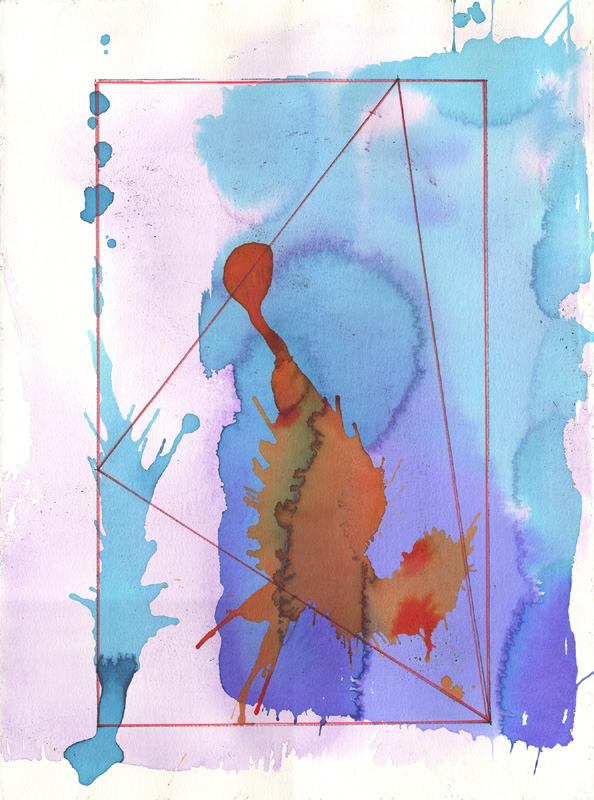
Triangulation 10: A Planetary Proposal
22″ x 30″
Watercolor and wax pencil on paper
2007

Ricardo F. Morín

November 2025

Oakland Park, Florida

Billy Bussell Thompson, Editor

This essay proceeds from a simple recognition:    the political structures inherited by humanity no longer correspond to the forces that now shape its survival.    Climate volatility, digital acceleration, economic interdependence, and cross-border vulnerability operate at a planetary scale.    They pass through air, water, data, and supply chains without regard for territorial boundaries.    Yet the world remains organized as a collection of discrete sovereignties, each responsible for risks it can neither contain nor resolve alone.

What follows does not issue from optimism, inevitability, or visions of harmony.    It begins instead from insufficiency.    The institutions that once stabilized political life were not designed for conditions in which disruption propagates globally and instantaneously.    The proposal set out here—a layered system of planetary coordination, universal provisioning, and protections for cultural autonomy—does not attempt to predict what political forms will emerge.    It offers, rather, a conceptual architecture for what has become thinkable if human continuity is to remain plausible under conditions of deep interdependence.

The essay unfolds in three movements.   First, it outlines a framework proportionate to the scale of contemporary risk.   Second, it confronts the strongest objections—psychological, cultural, geopolitical, economic, and historical—that constrain any such reorganization.    The analysis turns to transitional forms through which local identity may persist and coordination may emerge under conditions where fragmentation has already introduced risk.   The work does not prescribe a future; it remains within the horizon in which political imagination operates.

FRAMING WITHIN CONTEMPORARY POLITICAL THEORY

i

This essay draws on a growing body of political theory concerned with the widening gap between global pressures and the limited reach of the nation-State.    Thinkers such as Ulrich Beck (World Risk Society, 1999), David Held (Democracy and the Global Order, 1995), Jürgen Habermas (The Postnational Constellation, 2001), and Saskia Sassen (Territory, Authority, Rights, 2006) have traced how climate change, digital systems, and economic interdependence now exceed the capacities of territorial governance.    Beck identifies risk itself as global; Held and Habermas explore multilevel governance; Sassen traces how authority migrates across networks that bypass borders.    This essay remains aligned with these insights and grounds its argument in material conditions already in force, rather than in the likelihood that existing States will unify.

ii

World-risk theorists—particularly Beck and Anthony Giddens (Runaway World, 1999)—describe a world bound by shared vulnerability:    climate instability, pandemics, financial contagion, and digital exposure.    No State can contain these alone.    This essay takes that diagnosis as given by treating shared risk as the central justification for institutional redesign.    Research on overlapping sovereignty, including the work of Anne-Marie Slaughter (A New World Order, 2004) and Neil Walker (Intimations of Global Law, 2015), demonstrates that authority is already dispersed across levels.    What follows is an observation:    dispersion without structure produces fragility; shared authority depends on deliberate design rather than on processes that accumulate without coordination.

iii

Philosophers of global justice such as Martha Nussbaum (Frontiers of Justice, 2006), Amartya Sen (Development as Freedom, 1999), and Thomas Pogge (World Poverty and Human Rights, 2002) argue that basic human capabilities can no longer be secured solely within national borders.    Welfare and opportunity have become transnational facts.   Environmental political theorists such as Bruno Latour (Facing Gaia, 2017) and Robyn Eckersley (The Green State, 2004) further show that ecological systems impose demands no single government can meet.   This essay treats as consequential these claims by proposing institutions scaled to ecological and technological interdependence rather than inherited jurisdiction.

iv

Debates on digital power reinforce this necessity. Scholars such as Shoshana Zuboff (The Age of Surveillance Capitalism, 2019), Kate Crawford (Atlas of AI, 2021), and Helen Nissenbaum (Privacy in Context, 2010) document how artificial intelligence, data infrastructures, and algorithmic systems operate across borders while they evade national oversight.    Technological power now moves independently of the frameworks intended to regulate it.    The proposal places technological governance at the core of planetary coordination, not as an auxiliary concern.

v

Taken together, these strands suggest that neither nationalist retrenchment nor abstract universalism is adequate to present conditions.    This essay proceeds from contemporary theory to articulate a political horizon grounded in necessity:    viz. governance scaled to the forces that now shape human survival.    It is not oriented toward abstraction, but toward a readable and coherent proposal calibrated to the realities already unfolding.

1

Humanity now occupies a threshold at which inherited political forms can no longer absorb the pressures shaping collective life.   Climate instability, digital acceleration, migratory displacement, and economic interdependence operate at planetary scale.    They traverse borders with a velocity that state-based systems were never designed to manage.   Under such conditions, the question of survival converges with the question of institutional redesign.

2

The proposal proceeds from the recognition that sovereign States fragment responsibility at the very moment when coherence becomes necessary.    Risks propagate globally; accountability remains local.    A planetary framework emerges not as aspiration, but as a proportionate response to vulnerabilities that exceed national capacity.

3

Such a framework is limited to exercising authority only where fragmentation produces systemic exposure:   viz. public health, climate stabilization, migration, resource governance, and global technologies.    Cultural, legal, and administrative autonomy would remain firmly vested in regional and local institutions.

4

Universal welfare forms the structural foundation of this arrangement.    It functions not as charity, but as stabilization.    In an interconnected world, deprivation in one region generates instability across many.    Access to healthcare, essential resources, and meaningful education defines the minimum threshold for participation in collective life.

5

A reconfiguration of value follows.    Markets continue to operate, but certain goods—health, education, environmental security, and digital access—are guaranteed as rights.    Universal income gives way to universal provisioning:    a commitment to the material and intellectual conditions required for dignity and resilience.

6

As these changes take shape, borders assume a different role.    They persist as administrative markers, but their capacity to regulate risk diminishes.   Climate systems ignore boundaries; pathogens cross unchecked; digital infrastructures dissolve territorial limits.    A planetary architecture emerges not as an endpoint, but as an adjustment to conditions already in motion.

7

Articulating such a world is not an act of idealism, but of proportional reasoning.   Contemporary pressures demand political imagination commensurate with their scale.   This proposal does not predict the future; it remains within the horizon.

8

The first objection concerns identity.    Sovereignty functions not only as law, but as a vessel of memory, history, and emotional continuity.    A planetary framework introduces an additional layer of identification without historical precedent.

9

Geopolitical resistance follows.    States—particularly powerful ones—have little incentive to dilute strategic advantage.    Any global authority risks being perceived as erosion rather than coordination.

10

A third objection concerns scale.    Institutions operating at planetary scope risk opacity, inertia, or capture.    Coordination at such magnitude may introduce new forms of fragility.

11

Economic critiques question feasibility.    Universal provisioning demands distributive mechanisms of unprecedented complexity.    Markets, despite distortion, remain adaptive; alternatives risk inefficiency or coercion.

12

Cultural arguments register homogenization.    Even with formal protections, global systems may exert subtle pressures toward uniformity, diluting linguistic and cultural specificity.

13

Psychological objections emphasize limits of restraint.    Planetary cooperation presumes capacities for empathy and self-limitation that may not persist without enforcement.

14

Historical memory sharpens skepticism.    Integrative projects have often provoked fragmentation.    A planetary framework could generate resistance precisely because of its scale.

15

Taken together, these objections outline a dense field of constraint—psychological, cultural, geopolitical, organizational, and historical—that complicates any transition toward planetary organization.

16

A credible resolution requires incorporation of these objections rather than dismiss them.    Planetary coherence must be built where resistance is strongest, not where agreement is easiest.

17

The first element takes the form of architecture.    Governance must be layered, not monolithic.    Global authority is limited to narrow domains of shared vulnerability; States retain internal autonomy.    Legal boundaries, transparency, and distributed representation constrain concentration of power.

18

The second element concerns welfare.    Universal provisioning establishes a structural baseline financed through global levies and coordinated national systems.    Markets operate above this floor; essential goods are insulated from volatility.

19

The third element addresses identity.    Planetary citizenship functions as a complementary affiliation rather than a replacement.    Education and the media cultivate awareness of shared ecological and technological systems without erasing cultural distinction.

20

The fourth element concerns power.    Institutions are distributed across functions, protected by rotating leadership, independent oversight, and digital transparency.    Authority remains limited, visible, and divisible.

21

The fifth element concerns tempo.    Transition unfolds through intermediary arrangements:    enforceable climate compacts, standardized digital governance, pandemic protocols, and regional unions experimenting with cross-border welfare.

22

Across these arrangements sovereignty becomes layered, welfare foundational, identity dual, and governance proportionate to vulnerability.

23

What emerges is not a utopian design, but a navigable movement from fragmentation toward coherence—one by which organization becomes possible.


*

EPILOGUE

This essay was written from within a condition of recognition rather than from a position of outcome.    It observed the emergence of planetary interdependence as a factual state—environmental, technological, and economic—without assuming that recognition itself would compel coordination, restraint, or shared action.   The proposal rested on the visibility of scale, not on the expectation of response.

What has since become clearer is not that the planetary condition was misread, but that its implications were overestimated.   Interdependence does not suspend political habit.   Global exposure does not dissolve national calculation.    The existence of shared risk does not neutralize mistrust, nor does it override the logic by which States preserve autonomy through delay, insulation, or selective engagement.

The absence that now stands out is not empirical but structural.   A planetary condition can be acknowledged while responsibility remains local, fragmented, or deferred.   Systems adapt to crisis without reorienting their priorities.   Cooperation becomes conditional, provisional, or transactional, rather than binding.   What persists is adjustment, not alignment.

This does not negate the planetary frame.    It clarifies its limits.   The world does not move toward coherence by recognition alone.    It moves through negotiation, withdrawal, recalibration, and self-protection—often simultaneously.    Balance, when it appears, is not designed; it is reached unevenly, through constraint rather than consensus.

Seen from this angle, A Planetary Proposal records a moment of clarity rather than a program.    It marks the point at which global exposure became unmistakable, without presuming that such exposure would produce a corresponding form of action.   What follows in later essays does not extend that proposal.    It narrows the lens, attending instead to the conditions under which recognition stalls, agency fragments, and adjustment replaces resolution.


“Portrait of a President”

December 12, 2025

Ricardo F. Morín

Dec. 2025

Oakland Park, Florida

Billy Bussell Thompson, Editor

This text is not an argument for or against a political figure, nor an exercise in moral adjudication.    It is a diagnostic portrait grounded in publicly documented actions, observable conduct, and historically verifiable record.    Where legal distinctions matter, they are observed; where perception diverges from motive, that divergence is examined rather than dismissed.

The purpose of the portrait is not to negate the experiences of those who perceive sincerity or warmth in the subject, but to place such perceptions within a broader structure of behavior over time.    Momentary affect (Affeck), private demeanor, and selective encounters are not treated here as evidence of character continuity, but as elements that coexist—sometimes uneasily—with patterns that have had public consequence.

This approach also governs how claims about exceptional capacity are handled.    Assertions that substitute myth for evidence—such as declarations of near-superhuman intelligence—are not taken at face value.    Whatever one makes of erratic reasoning, procedural confusion, or repeated misapprehension of legal and institutional constraints, such claims require the suspension of observable reality.    In this sense, they function less as description than as compensation:    they are attempts to reconcile dissonance with an image of mastery.    When coherence falters, recourse shifts elsewhere.    Validation through untruth does not illuminate capacity; it neutralizes contradiction.

No medical, psychological, or pathological claims are advanced.    The analysis remains strictly within the realm of conduct, posture, and recurrence.    Interpretation is offered where warranted; restraint is exercised where fact alone must suffice.

Readers inclined toward affirmation or rejection are invited to suspend both impulses.    The text asks only that actions be considered in sequence, and that patterns be examined without haste.    Agreement is not presumed; careful reading is.

Ricardo F. Morín

Oakland Park, F.

December 12, 2025


A Diagnostic Essay on Power, Posture, and Historical Pattern

What follows does not treat the body as evidence of interior disposition, but as a public surface upon which habits of power, repetition, and assertion have settled over time.

At the threshold of his ninth decade, the president’s physiognomy does not merely register the natural course of aging, but a progressive separation between impulse and restraint, between reflex and those mechanisms that once might have moderated it.    What appears is not absence, but misalignment:    capacities that persist without coordination, reactions that proceed without mediation.

The depletion of mental reserves is visible in the face as sustained tension.    Within it coexist—without reconciliation—ambition and denial, assertion and fragility.    The friction between lived reality and unyielding aspiration registers as hardened pride, resistant to revision.

This disjunction was already visible decades ago.    In 1989, during the Central Park gang-rape case in New York City, he acted publicly with a full-page newspaper advertisement that asserted guilt and called for severe punishment of five young men who had not yet been tried.    That impulsive certainty contributed to the hardening of public condemnation and accompanied years of wrongful incarceration before their eventual exoneration.    That judgment was not revisited.    The episode did not merely reveal error; it revealed an instinctive structure:   certainty displacing deliberation, accusation preceding process.

The same insistence on continuity over correction appears elsewhere, not only in conduct but in presentation.    The carefully maintained architecture of the public image—down to the elaborate construction of the hair, preserved with remarkable consistency across decades—signals a preference for stabilization without altering course.    Change is absorbed at the surface; the form is retained.

It is worth noting, however, that many among his followers—and even some who do not align with him politically but refrain from opposing him for reasons of self-preservation—describe him not as sycophants, but out of a genuine belief that there exists a side of him that is sincere, even warm.    This perception should not be dismissed outright.    It reflects an experienced reality for those who encounter him in limited or controlled contexts.    Yet it merits examination, precisely because such impressions can collapse momentary demeanor with durable motive.    Warmth, when unmoored from consistency or restraint, does not necessarily temper impulse; it may instead coexist with it, selectively deployed, while underlying patterns remain unchanged.

That same reflex remains latent now, seemingly undiminished by time.    It reappears not as argument, but as posture.

The mouth, shaped by a retracted upper lip, indicates containment rather than speech.    Impulse appears held in suspension rather than moderated.    The eyes, asymmetrical and vigilant, remain oriented outward rather than inward, and register the surrounding environment less as a field of exchange than as a space to be assessed.    The raised brows no longer convey conviction; they recur as a habitual assertion, repeatedly reaffirmed.    The skin, excessively oxygenated and cast in a plated golden hue, emphasizes surface continuity over variation; it renders vitality as appearance rather than integration.

Breathing registers as effortful rather than relaxed, marked by insistence rather than ease.    The slight forward inclination of the head does not solicit response; it precedes it and positions the surrounding world as something to be met rather than encountered.

Across these gestures, continuity replaces adjustment.    The body sustains assertion even as conditions shift and preserves posture where recalibration might otherwise occur.

Subsequent years reinforce the structure already visible in earlier conduct.    Civil findings, publicly documented associations, and recurring allegations—distinct in legal status yet convergent in pattern—consistently exhibit the same sequence:    impulse preceding judgment, dominance supplanting restraint, consequence treated as incidental rather than corrective.

Taken as a whole, the portrait does not depict the disappearance of better instincts, but their displacement.    They persist as non-operative remnants—present, yet sidelined—while more primitive reflexes increasingly shape gesture and response.    What once might have moderated action now stands apart, as the figure continues to operate through inertia rather than integration.


The term “derangement” entered public discourse not as a diagnosis, but as an accusation.    It was used to explain opposition, dissent, and even tragedy.    When a murdered individual was described as a victim of so-called “Trump Derangement Syndrome,” the phrase did not seek to describe belief.    It functioned as displacement.    Attention shifted away from the violent act and toward loyalty.    The action was not examined; the critic was pathologized.

That inversion raises a broader question:    whether the conduct it shields has precedents in American presidential history.

The United States has had impulsive, vindictive, and reckless presidents.    Andrew Jackson governed through personal animus and disregarded judicial authority.    Richard Nixon cultivated enemies and acted in secrecy against constitutional limits.    Woodrow Wilson suppressed dissent and imposed ideological conformity during wartime.    Each violated the ethical expectations of his time.    Each altered the standards of the office.

In every case, however, an external measure remained.    Jackson knew which law he defied.    Nixon concealed his actions because concealment still mattered.    Wilson justified repression by appealing to national unity and moral necessity.    Their excesses were legible because the norms they breached were still recognized.

What distinguishes the present case is not the presence of ethical failure, but the absence of ethical reference altogether.

Disagreement is no longer treated as opposition, but as pathology.    Responsibility is not debated; it is transferred.    Facts are not rebutted; they are dismissed as hostile fabrications.    Tragedy is neither examined nor mourned; it is absorbed as grievance.    The categories that once structured judgment—truth, responsibility, proportion—are not merely violated.    They are stripped of standing.

This is not only authoritarian behavior.    It is governance by assertion.    Repetition replaces justification.    Loyalty replaces evaluation.    The self becomes the measure through which reality is ordered.

Historical comparisons are tempting.    Caligula.    Genghis Khan.    Other names surface by instinct.    Not because the scale is comparable, but because the logic feels familiar.

Even so, tyrants governed within recognizable frameworks:    divine right, conquest, destiny, lineage.    Their cruelty operated within an order that produced meaning, however brutal.

No such framework is invoked here.    Authority rests neither on the law nor tradition. It appeals to neither theology nor ideology.    It rests solely on personal identification.    Those who align are affirmed.    Those who dissent are declared defective.

The danger does not lie in the breaking of norms—American history offers many such examples—but in the removal of the criteria by which a norm is recognized.    When opposition is defined as illness, there is nothing left to debate.    When tragedy is explained by belief rather than by action, there is nothing left to examine.    The public is not asked to judge.    It is asked to align.

This condition requires no diagnosis to be understood.    It requires attention.

What is observable is sufficient:    the language used, the repeated reversals, the ease with which responsibility dissolves into accusation.    The portrait that emerges is neither one of exceptional intelligence nor of singular malice.    It is that of a presidency exercised without measure, where contradiction no longer registers as contradiction and power asserts itself without external reference.

Such a presidency tests more than institutions.    It tests whether citizens can still distinguish between disagreement and deviance, between explanation and excuse, between loyalty and judgment.

The portrait does not need to close with a warning.    Observation is enough.    What remains is a scene in which authority is sustained not by what is done, but by who aligns—and in which the office, stripped of measure, comes to reflect only the person who occupies it.


“The Space Thought Finds”

December 11, 2025

*

Ricardo Morín
Still Eight: The Space Thought Finds
Oil on linen mounted on wood panel
12 by 15 by 3/4inches
2010

Ricardo F. Morín

Dec. 2025

Oakland Park, Fl

*

AUTHOR’S NOTE

This essay examines a phenomenon that emerges in societies where civic limits and intellectual appetite coexist.   It does not describe a psychological condition or a sociological trend, nor does it judge any nation.   Its purpose is simpler:   to observe how thought adapts when the public space in which it moves is narrower than the private space in which it develops.

ABSTRACT

This essay investigates how intellectual life often persists—even thrives—in environments where civic participation is restricted.   It describes the structural conditions that make this coexistence possible, the historical habits that render it familiar, and the tensions it produces.   Rather than seeking causes or proposing remedies, the essay observes how thought finds room to act when civic space contracts, and how this adaptation shapes cultural life.


1

Every society creates conditions in which thought must find its footing.   In some places, civic life offers wide avenues for debate, dissent, and organized participation.   In others, the avenues narrow:   institutions limit expression, political continuity restricts competition, or public life becomes regulated by boundaries that citizens did not choose.   Yet even within these limits, thought does not disappear.   It looks for other spaces—quieter, more internal, less visible—where reflection can continue.

2

This coexistence is not contradictory.   A population may cultivate disciplined study, meticulous reading habits, and a strong appetite for ideas while navigating restrictions on political voice.   Intellectual inquiry can flourish in classrooms, libraries, private circles, or artistic practice even when formal participation in public life is constrained.   The two conditions do not cancel one another; they unfold in parallel.

3

Part of this coexistence is historical.   Societies inherit habits shaped over decades or generations.   When public limits remain stable, they become part of the environment rather than an interruption.   People learn to navigate around those limits, allocating some questions to public conversation and others to private reflection.   Over time, this arrangement no longer feels provisional; it becomes a familiar pattern of life.

4

Another part of the coexistence is structural.   Not every form of thinking requires the same degree of civic freedom.   Institutional critique demands a wide public space, but philosophical examination, ethical reflection, and conceptual inquiry can develop in quieter settings.   These forms of thought do not depend on protest or political leverage.   They depend on attention, which can remain active even when public expression is not.

5

Yet this adaptation introduces a tension.   Thought that flourishes privately may find no path into shared life.   Insight lives in the individual but cannot circulate through institutions.   The result is not silence but separation:   intellectual depth on one side, civic restriction on the other.   Each remains intact, but the bridge between them is narrow.

6

This tension is not a paradox but a structure.   Intellectual inquiry survives by adjusting its location.   It moves inward, turning the private sphere into a workshop for ideas.   It becomes a form of endurance rather than resistance.   This endurance is neither passive nor resigned; it is a way of continuing to think when public avenues are limited.

7

The phenomenon is neither exclusive to one region nor confined to a single political model.   It appears wherever civic limits coincide with cultural ambition—whether shaped by history, institutions, or circumstance.   What differs from one society to another is not the existence of this tension but how it is lived:   as normalcy, as compromise, or as a quiet imbalance accepted as part of daily life.

8

The deeper question is not why this coexistence happens, nor whether it should be otherwise.   The question is what this coexistence reveals:   that thought seeks space even when civic space contracts; that reflection persists even when public expression narrows; and that the need to understand does not vanish under limits.   It simply relocates, finding equilibrium—uneasy, stable, and always in motion.


“CIVIC AGENCY”

December 9, 2025

*

Ricardo Morín
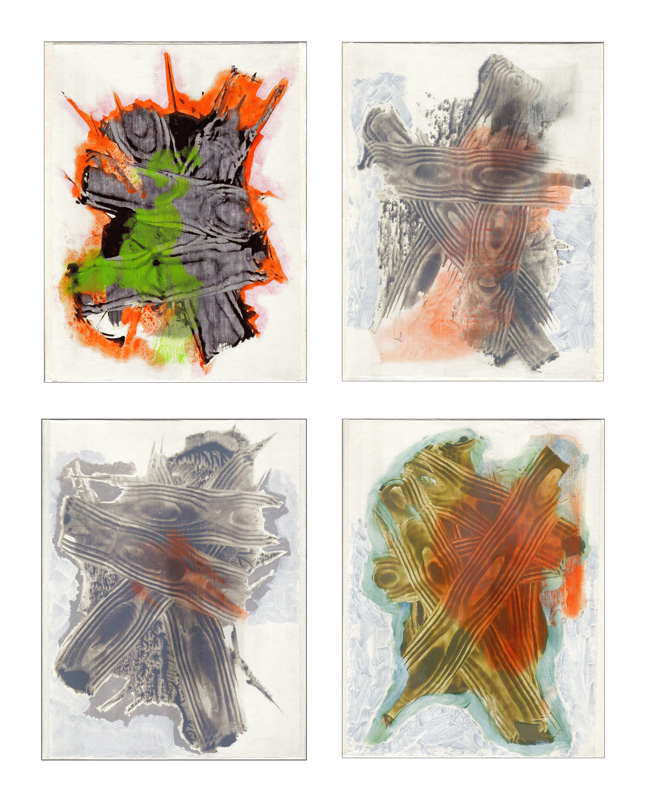
Teratological Topographies Series One: CIVIC AGENCY
Oil On Linen
Quadtych: Each panel: 14 by 18 by 3/4 inches
2009

Ricardo F. Morín

November, 2025

Oakland Park, Florida

Billy Bussell Thompson, Editor, NY, NY

This essay examines conditions frequently distorted by ideology, moral inheritance, or historical narrative.   Questions of sovereignty, occupation, revolution, exile, and national identity are often debated through claims that appeal to absolutes—religious entitlement, historical grievance, or revolutionary legitimacy.   These claims differ in language but share the same structure:   they place a single idea over civic realities of people whose lives are structured by such narratives.

To address what is obscured by these narratives, the essay turns to a structural factor that cuts across these differences:   civic agency, understood as the capacity of people to shape the conditions of civic life through their participation, representation, and lawful processes.   When civic agency is removed—whether through external control, internal authoritarianism, or deterrence directed at displaced populations; the form of the constraint may change, but the civic effect remains constant.

This essay does not compare political histories.   It examines how State power, in its various configurations, regulates civic life.   It considers how ideology obscures this regulation and how populations experience the consequences of decisions in which they have little or no role.   The goal is not to reduce political conflict but to call attention to the structures that determine whether freedom is possible or remains beyond reach.

This essay will argue that the most reliable way to understand situations that appear politically incompatible—such as Palestinian statelessness and Cuban authoritarian sovereignty—is to examine the structural absence of the civic agency that defines both.   Although the forms of constraint differ, the civic condition comes together:   the State, whether external or internal, restricts the capacity of the population to shape its own civic life.   By analyzing how State regulation limits participation, suppresses representation, or fragments jurisdiction, this essay will show how civic agency becomes the central measure of freedom.   It will further examine how ideological narratives, policies of deterrence, and migratory pressures hide this structural reality.   The aim is not to adjudicate political claims but to bring to light the conditions under which civic life can be formed, protected, or denied.


1

Every attempt to understand political life must begin with the recognition that populations do not experience freedom as an abstraction; they experience it through the structures regulating their civic existence.   These structures determine how decisions are made, how authority is exercised, and whether or not people can participate in shaping the conditions for their own lives.   Civic agency is therefore not an ideal but a condition that either exists or not.   When it is absent, freedom appears as a formal claim rather than a lived condition.

2

Civic agency consists of three components:   participation, representation, and lawful process.   Participation allows individuals and communities to influence public decisions.   Representation provides continuity between the governed and the governing body.   Lawful processes ensure that authority is exercised within defined limits.   When any of these components is removed, the people lose their capacity to shape the civic environment they inhabit.   This loss may occur by external regulation, internal authoritarianism, or policies reducing civic life to a set of restrictions that diminishes a shared domain.

3

The absence of civic agency can take different forms.   A population may be governed by institutions that do not recognize the communities’ sovereignty and thus leave civic agency subject to regulations that the people have no significant role in its shaping.   Alternatively, a people may inhabit a sovereign State that suppresses political pluralism, restricts lawful dissent, and monopolizes institutional authority.   In both cases, the civic condition is suppressed:   the people are without the ability to influence the rules that govern them.

4

The Palestinian case illustrates the first form.   Multiple authorities regulate movement, territory, and public life without providing unified jurisdiction or sovereign protection.   Decisions made by external States define daily existence and leave the population without consistent civic rights or a stable institutional framework.   The absence of sovereignty is not only territorial but civic; this absence takes away the mechanisms by which participation and representation are possible.

5

The situation with Cuba represents the second form.   Although the State possesses sovereignty, it concentrates political authority within a single institutional apparatus and restricts lawful avenues for dissent, competition, or structural reform.   Citizens live under a system that maintains political continuity by restricting avenues for participation.   Sovereignty prevails; civic agency is limited.

6

Palestine and Cuba differ, of course, in history, structure, and origin; yet they align in one respect:   the State, whether external or internal, restricts participation in ways that make civic agency unattainable.   The absence of agency is the common element that marks the civic condition beneath political narratives.   This absence also provides a framework through which populations that experience different forms of constraint are to be understood without conflation.

7

Ideological narratives frequently align with existing distributions of power.   Religious entitlement asserts that land is secured by divine mandate rather than civic protection.   Revolutionary rhetoric proclaims that political authority is justified by historical struggle rather than accountability.   Both forms of narrative elevate an absolute over the civic realities of the population.   They replace agency with allegiance, and they interpret restriction as necessity, and not as a failure of representation.

8

Migration provides a third lens through which the limits of civic agency become visible.  People leave their countries when the structures regulating their lives collapse or become uninhabitable.  They seek stability, protection, and the ability to rebuild civic participation in new surroundings.   Yet policies of deterrence in host States often mirror the pressures that displaced them.   The new States restrict the migrants’ movements, their access to social institutions, and narrow the possibilities of belonging to a civic order.   These policies do not reproduce the original dilemma, but host States reintroduce the experience of living under rules that they cannot influence.

9

For many asylum seekers, these restrictive measures narrow the distance between the pressures that forced their departure and the pressures they encounter upon their arrival, a shift that makes stability hard to distinguish from exclusion.  European examples such as Denmark and the United Kingdom reveal how deterrence is used to discourage asylum without acknowledging the civic vacancy it creates.  The United States employs similar policies at its borders and presents deterrence as an instrument of order, which leaves migrants suspended between exclusion and unresolved civic status.

10

The structural argument is not that these situations are equivalent, but that the absence of civic agency creates a civic condition transcending political differences.   Populations ruled without participation, governed without representation, or confined within systems that restrict lawful processes experience freedom as external to their civic environment.   This condition cannot be explained by ideology because ideology addresses identity, justification, or legitimacy—not agency.

11

Understanding civic agency clarifies the difference between political claims and civic realities.   Sovereignty does not guarantee freedom; revolution does not guarantee participation; religious entitlement does not guarantee protection.   Civic agency exists only when people can shape the conditions that guide them.   When this becomes impossible, the people do not inhabit a civic order but a regulated space.

12

When civic agency becomes the measure through which political life is understood, ideological narratives lose their authority, and the structure of constraint becomes visible.  This visibility does not resolve conflict but reveals the conditions under which freedom can either emerge or remain unapproachable.   Civic agency is where the possibility of civic life begins and where its absence becomes structurally apparent.


“River Grass”

December 7, 2025

~

Ricardo Morin
Landscape II: River Grass
18” x 24”
Sepia on newsprint 
2003

Ricardo F Morin

Dec. 6, 2025

Naples. Florida

*

This diptych, “River Grass” and “Naples in the Morning,” brings together a reflection on continuity and a brief observation of everyday life.  Two scenes—one sustained, the other fleeting—register how experience, silence, and attention shape presence.  The first part, “River Grass,” does not present an argument, a confession, or a theory.  It offers an observation shaped over time by proximity rather than distance.   The focus is not on individual psychology or relational conflict, but on patterns that take form across generations and persist quietly within everyday life.

What follows avoids moral explanation and narrative resolution.   It attends instead to continuity—how restraint, generosity, and presence may be transmitted not through instruction or memory, but through posture, habit, and orientation.   The intention is to describe without adjudicating, and to clarify without assigning cause where cause cannot be cleanly isolated.   What is traced here represents one possible orientation among many, shaped by inheritance but not exhaustive of its effects—an invitation not to mistake the channel for the ocean.


Orientation of “River Grass”

What follows attends to what persists when lives are shaped by continuity rather than interruption.

Not all inheritance arrives as memory.   Some is conveyed without story, without date, without language.   It enters through atmosphere rather than narrative—through cadence, restraint, posture, and a preference for continuity over display.   In such cases, history is not recalled; it is carried.

This form of inheritance does not announce itself as trauma.   It leaves no single scene to revisit, no episode that can be isolated and explained.   Instead, it appears as a way of moving through the world:   measured, attentive, resistant to excess.   The past exerts influence not by instruction but by shaping what feels permissible, sustainable, or necessary.

Under these conditions, restraint is not experienced as loss.  It functions as orientation.  Accommodation does not signal submission but competence.   Stability reflects not the absence of desire but the quiet placement of desire among other priorities.   What is transmitted is not fear but caution—an ethic of endurance refined over time.

Because no event is foregrounded, little invites interpretation.   The absence of visible distress encourages the assumption of ease.   Life appears ordered, generous, and intact.   Yet the inheritance remains active and structures conduct without requiring acknowledgment.   It persists not as memory but as form.

Such inheritance often resists recognition precisely because it has succeeded.   The past has not repeated itself.   Continuity has been preserved.   What remains is a posture oriented toward sustaining that continuity—a vigilance so normalized that it passes as temperament rather than history.

Restraint, in this context, does not operate as inhibition or denial.   It functions as a stabilizing orientation—an internal calibration shaped over time.   Action is guided less by expression than by proportion and durability.   What governs choice is not moral judgment but coherence.

Such restraint often coexists with clarity and decisiveness.   Boundaries are maintained without conflict; decisions are made without excess emphasis.   What is avoided is not agency but surplus.   Expression is moderated not through fear of consequence, but through an internal sense of sufficiency.

Accommodation here is frequently misread.   It does not arise from compliance or uncertainty, but from an assessment of impact.   Space yielded to others reflects confidence in structure rather than retreat from position.   Presence remains intact even when it is not foregrounded.

This orientation produces a stability that can appear effortless.   Friction is minimized.   Demands are rare.   The absence of insistence is readily mistaken for ease or contentment.   Yet the restraint at work is active, not passive—and continuously shapes what is articulated, deferred, or left unspoken.

Over time, restraint becomes difficult to distinguish from identity.   It ceases to register as a choice among alternatives and hardens into posture.   The question of expression recedes, replaced by an emphasis on responsibility, proportion, and non-disruption.

Generosity shaped by inherited restraint rarely announces itself.   It does not seek recognition or reciprocation, nor does it depend on visibility for validation.   It appears instead as availability, as the quiet removal of obstacles, as the willingness to yield space without narrative or sacrifice.

In this form, giving is non-transactional.   No balance is tracked; no return anticipated.   What is offered is steadiness rather than favor.   Support unfolds without appeal, often unnoticed, absorbed into ordinary conduct.   The absence of demand is integral rather than incidental.

Because it imposes no weight, such generosity leaves little trace.   Others encounter freedom without sensing its source.   Autonomy is enabled without attribution.   The one who gives remains present yet unmarked.

Over time, the habit of making room for others becomes more practiced than the habit of entering it.   Attention turns outward and refines responsiveness while narrowing self-directed articulation.   What persists is not loss, but redirection.

This configuration resists conventional readings of imbalance.   No grievance emerges; no conflict announces asymmetry.   Generosity remains intact, even exemplary.   What shifts subtly is internal emphasis: presence exercised through allowance rather than assertion.

Desire, within this orientation, is neither denied nor suppressed.   It is repositioned.   Its legitimacy is not questioned, but its urgency is diminished.   What is set aside is not longing itself, but the expectation that longing must organize life.

Desire is acknowledged yet rarely centered.   Expression is permitted elsewhere more readily than inwardly claimed.   Attention gravitates toward what preserves stability rather than what intensifies experience.   Satisfaction arises from coherence rather than culmination.

This produces no vacancy.   Life remains engaged and responsive.   What diminishes is insistence.   Continuity comes to matter more than appetite; durability more than immediacy.

Because this arrangement is not framed as renunciation, it escapes notice.   No moral language surrounds it.   Nothing is named as sacrifice.   Desire persists at a distance—observed, managed, deferred without struggle.

Over time, identity becomes shaped less by pursuit than by maintenance.   Expression gives way to stewardship.   Meaning accrues not through arrival, but through the avoidance of rupture.

Patterns organized around restraint and continuity are often mistaken for moral attainment.   Composure is read as wisdom; accommodation as maturity; silence as depth.   Because no disturbance arises, the orientation escapes examination.   What functions smoothly is presumed complete.

This misreading is reinforced by social frameworks that reward stability over inquiry.   Absence of conflict is taken as evidence of balance.   Generosity without demand is praised rather than interrogated.   Its costs remain obscured precisely because they impose nothing on others.

Virtue, in this setting, becomes indistinguishable from habit.   Adaptive orientation solidifies into character, and character into expectation.   Reliability is affirmed repeatedly, deepening its hold.

The result is not deception but omission.   The steadiness is genuine.   What goes unrecognized is how fully such an arrangement organizes life around preservation rather than presence.   The question of displacement remains unasked, not refused.

Misreading occurs through success.   Relations endure.   Structures hold.   No obvious harm appears.   And so the deeper configuration—quiet, durable, historically shaped—continues beneath the language of virtue.

At a certain threshold, continuity shifts from supporting means to governing end.   Life becomes organized not around fulfillment, but around preservation.   What matters most is that nothing essential is exposed to rupture, whether through excess demand or through untested assertion.

Fulfillment is not rejected, but subordinated.   Satisfaction arises from duration rather than intensity.   Time is oriented toward extension, not culmination.   What is valued is the capacity to carry forward intact.

This proves effective.   The past does not recur.   Stability holds.   Loss is contained rather than amplified.   Inherited imperatives are honored not through recollection, but through conduct.

Yet when continuity occupies this position, the range of permissible movement narrows.   Change must justify itself in advance.   Desire must demonstrate durability before enactment.   Expression yields to maintenance.

The future is approached as responsibility rather than as open terrain.   Meaning accumulates through safeguarding what is essential rather than through the exploration of possibilities.   Success becomes synonymous with the preservation of continuity.

Presence, in its final form here, does not organize itself around position or priority.   It functions laterally and sustains structure without becoming its focus.   Life is held together through attentiveness rather than through claims to authority or justification.   The course of life proceeds without pressure to arrive at an explanation that secures its coherence.

This mode of presence resists visibility.  It does not seek recognition or assert precedence.   Its efficacy lies in what remains intact rather than in what is achieved.  Others move freely, often unaware of the support permitting such freedom.

To remain outside the center is not withdrawal.   Engagement continues—measured, responsive, intact.   What is avoided is domination, not participation.  Influence is exercised through stability rather than direction.

The image implied by the title takes form.   A river that advances without force, reshaping terrain through the sustained persistence of its course.  Motion without spectacle.  Endurance without inscription.  The course is maintained by flowing around obstruction rather than confronting it.

What remains is continuity itself—quietly sustained, seldom noticed, and difficult to name.


*

“Naples in the Morning”

I sat across from my husband at a breakfast place in Naples, Florida.  Diagonally behind him sat a young couple.  The woman was small—almost childlike in scale—next to her husband, who stood well over six feet.

None of us had ordered yet.  She carefully arranged her silverware and napkin, aligning them with deliberate precision, almost ritualistic.   Her hair fell forward, parted to either side of her face like curtains drawn closed.  When she lifted her chin, her facial features—Asian in appearance—came briefly into view.  Despite her slightness, her posture suggested control rather than fragility.

When our glances crossed, she held my gaze longer than expected, nearly staring.  She then lowered her head, hiding again behind her hair.   Moments later, she lifted it once more and made the sign of the cross—forehead, chest, shoulder to shoulder—before turning fully back toward her husband.   No words were exchanged.

When the food arrived, she resumed the same careful demeanor.   She sliced her omelet into small, uniform squares, placed the knife down, and paused.  Each piece was lifted individually, slowly, with unbroken repetition, as if rehearsed.  The sequence carried the quality of performance.   Though she remained oriented toward her husband, her torso shifted intermittently, angling slightly in my direction.

When they finished and moved toward the register, she rose first and walked ahead, chin lowered, hair once again masking her surroundings.  He followed—tall, broad, moving through the room with visible ease.  His stride was expansive, unguarded.

They left without speaking.


“Geographies of Survival”

December 2, 2025

*

Ricardo Morín
Still Thirty-seven: Geographies of Survival
Oil on linen & board
15″ x 12″ x 1/2″
2012

Ricardo F. Morín

November 2025

Oakland Park, Florida

This essay examines how human groups respond to instability when the conditions that once sustained them begin to fail.  Its focus is not on specific crises, events, or regions, but on the structural pressures that compel populations either to relocate or to defend their ground.   I approach the subject without moral interpretation and without attributing virtue or fault to the choices communities make under duress.  The aim is simply to describe the grammars of behavior that arise when survival becomes uncertain and to trace how identity, claims to legitimacy, and patterns of continuity reorganize themselves under those pressures.  The essay does not propose solutions or anticipate outcomes; it observes the patterns that emerge when stability dissolves and the land itself ceases to offer guarantees.

Geographies of Survival explores two fundamental responses to instability: migration and entrenchment.   When climate disruption, scarcity, or civic breakdown exceed a community’s capacity to endure, populations seek stability either through movement or through defending their position.   Migration reorganizes identity through adaptation to new conditions; entrenchment intensifies identity to preserve continuity in place.   These responses arise from the same pressures and function as parallel strategies for survival rather than opposing moral positions.   The essay examines how claims to legitimacy, patterns of identification, and the search for continuity are reshaped by these pressures, and how the friction between movement and resistance reflects structural forces rather than cultural incompatibility.   Its purpose is to illuminate the conditions under which these survival grammars emerge and the ways they transform the meaning of land, stability, and collective life.


1

Migration is often described as the movement of people from one place to another, but this description obscures the deeper forces at work.   Migration is not merely geography in motion; it is also the expression of a survival grammar that becomes visible whenever a community faces conditions it can no longer absorb.  Climate shifts, failing economies, collapsing states, and persisting insecurities create pressures that exceed the capacity of existing structures.   Under these pressures, a population confronts a choice so fundamental that it precedes ideology:  to move or to entrench.

2

These are not parallel options.   They are opposing responses built from the same materials—fear, instability, and the search for continuity.   Migration seeks stability by relocating; entrenchment seeks stability by confronting the agents of instability directly.   Neither response is superior.   Neither is voluntary.   Both emerge from conditions that compress judgment, narrow possibility, and force communities to defend themselves against forces too large to negotiate.

3

Migration begins when a group concludes that the geography that sustained it can no longer guarantee survival.   The land fails, or institutions collapse, or the future narrows.   Movement becomes the only remaining form of protection.   Yet movement does not dissolve identity—it reorganizes it.   A migrating population must redefine its internal coherence in relation to unfamiliar surroundings.   Identity becomes adaptive not by preference but by necessity.   Adaptation is not reinvention; it is survival.

4

Entrenchment moves in the opposite direction.   When a group chooses to remain in place, it must defend what movement would surrender:   territory, memory, continuity, and the stability that comes from rootedness.   Entrenchment therefore intensifies identification rather than loosening it.   Boundaries become rigid.   Narratives harden.   Conflict becomes a strategy rather than an interruption.   A community that fights to remain where it is must believe that displacement would erase it.   Confrontation becomes a method of preservation.

5

Cultural confrontation arises most sharply when a migrating population settles on land that another group interprets as an extension of its own continuity.   To the migrant community, the land represents safety, possibility, or relief from pressures that made departure unavoidable.   To the entrenched community, the same land represents memory, inheritance, and the boundary that protects its historical coherence.   Each group sees the other as the agent of potential erasure:   migrants perceive exclusion and hostility; entrenched populations perceive encroachment and loss.   Conflict escalates not because either group seeks domination, but because each interprets survival through a different grammar—adaptation for one, preservation for the other.

6

Policies adopted in countries such as Denmark and the United Kingdom illustrate how entrenched societies respond when migration is perceived as a threat. For many asylum seekers, these deterrent measures narrow the distance between the pressures that forced them to leave and the pressures they encounter upon arrival, a condition that makes stability difficult to distinguish from exclusion.   Governments frequently defend entrenched policies by arguing that the resources needed to support asylum seekers are limited, and that extending those resources further would risk weakening existing systems of welfare, housing, and public order.

7

These responses of movement and entrenchment seem incompatible, yet they describe a single reality:   populations under pressure behave according to the survival strategies available to them, not according to idealized accounts of culture or volition.   When migrants and entrenched populations come into contact, each sees the other through the lens of its own pressures.   Migrants see protection; the entrenched see threat.   Migrants carry adaptation; the entrenched carry defense.   Each posture misreads the other because each is responding to different forms of danger.

8

Climate change intensifies these divergent responses, not by determining them but by tightening the conditions under which communities must choose.   Climate does not produce conflict by itself; it alters the margins within which stability is possible.   Regions once predictable become irregular; resources once continuous become intermittent.   As these margins narrow, some populations interpret movement as the only viable safeguard, while others interpret remaining in place as the only defensible continuity.   The same pressure exposes different vulnerabilities, and each community responds according to its own history, capacity, and thresholds of endurance—rather than to climate alone.

9

The friction between these grammars—movement and entrenchment—should not be mistaken for a clash of civilizations.   It is a collision between two interpretations of threat.   One group treats survival as relocation; the other treats survival as resistance.   Both postures emerge from instability; both use identity as a tool shaped by circumstance rather than as a fixed inheritance.   Identity becomes an instrument of continuity, shaped by conditions that leave little room for negotiation or reflection.

10

The world often interprets these collisions through moral, ideological, or geopolitical frames, but such interpretations obscure the deeper movement:   instability reorganizes identity faster than identity reorganizes the world.   When geography shifts, populations adapt.   When populations adapt, meanings shift.   Collective life becomes contested not because cultures are inherently antagonistic, but because survival pressures force groups into patterns they would not otherwise choose.

11

If there is a universal character to the present century, it is this: the pressures that produce migration are the same pressures that produce conflict among those who refuse to migrate.   To understand one without the other is to misunderstand both.   Movement and entrenchment are not opposites but consequences—expressions of the structural instability that now shapes every region, every culture, every claim to continuity.

12

The question that follows is neither predictive nor ideological.   It is simply the next step in the logic of this analysis:   What forms of stability become possible when migration and entrenchment are understood not as opposing moral positions but as parallel responses to the same changing world?   The answer is not yet visible, but the conditions that will shape it already are.


“The Rhetoric of Threat”

December 1, 2025

*

Ricardo Morín
Triangulación 9: The Rhetoric of Threat
56 x 76 cm
Watercolor and wax crayon on paper
2007

Ricardo Morín

November 2025

Oakland Park, Florida

Authoritarian language does not arise as excess or accident; it emerges as a deliberate strategy designed to reorganize public perception until difference appears suspect and complexity becomes intolerable.   Within this framework, the phrase attributed to the Argentine president Javier Milei—“if an immigrant does not adapt to your culture, then it is not immigration but an invasion” (or https://youtube.com/shorts/EJ9RRC3pyTQ?si=xehJCUD8fIIpaqsw )—functions as a mechanism of extreme reduction.   It replaces the historical reality of migration with a binary schema meant to provoke alarm.  The leader is not describing a fact; he is manufacturing an enemy.

This formulation shifts the migratory experience into a warlike imaginary in which any form of difference is construed as aggression.   Culture—treated as a static and homogeneous block—is framed as a besieged territory requiring defense, and plurality as a threat that can only be resolved through submission.   Under this logic, the migrant ceases to be a person and becomes an abstraction crafted to justify coercive impulse.

The paradox is unmistakable:   what is proclaimed as the defense of identity is, in truth, an effort to standardize it; what is presented as caution operates as an instrument of fear.  Rather than analyze, the language disciplines.   And in doing so, it exposes its deeper function:     it shapes an emotional climate ready to accept measures that, under any other light, would be incompatible with democratic life.

This is the dimension that most clearly reveals the nature of the statement:   it is not a commentary on immigration but a mechanism of affective control.   By turning coexistence into compulsory assimilation, it introduces a dehumanized conception of the social world, one in which diversity ceases to be constitutive and becomes an obstacle to be neutralized.   Ultimately, this discourse seeks not to understand reality but to govern it.