Pip: When a nation turns two hundred and fifty, the question isn't whether to celebrate — it's whether the celebration is doing something else entirely.
Mara: Ricardo F. Morín's recent work on Observations On Perception takes that question seriously, moving through commemoration, spectacle, and what happens when the form of public memory starts shaping the memory itself. Let's start with the spectacle of the semiquincentennial.
The Spectacle of Commemoration
Pip: The setup here is specific: a high-speed race, a wrestling exhibition, a triumphal arch, and corporate sponsors whose logos become part of the event. The question the post is asking is what it means when a nation chooses these forms to remember itself.
Mara: The post frames it directly: "When remembrance is organized around competition, exhibition, and the public demonstration of force, the form of commemoration begins to influence how the memory of the nation is understood."
Pip: So the medium isn't neutral. A wrestling exhibition and a monument aren't just entertainment and architecture — they're arguments about what the nation values, made in a register that bypasses debate entirely.
Mara: That's the through line the post develops carefully. Speed, staged confrontation, monumental construction — each one places strength before an audience and lets visibility do the work that argument would otherwise have to do. The post calls this "performance itself to establish recognition without argument."
Pip: Which is a polite way of saying the arch doesn't ask for your vote.
Mara: The post goes further than the event schedule. It traces how exceptionalism shifts — from confidence in democratic possibility toward the claim that one identity alone represents the nation's character. When that happens, disagreement stops being negotiation among citizens and becomes a contest over who speaks for the country at all.
Mara: The post connects this to immigration framing, where legal processes, undocumented status, and criminal accusation get merged into a single narrative. Distinctions that once guided policy give way to simplified frames built around exclusion.
Pip: And economic pressure feeds the same dynamic — unionized workers facing cheaper labor competition, real concerns that then get converted, through uneven enforcement and political framing, into cultural confrontation rather than policy debate.
Mara: The post then extends the logic outward: election administration, trade policy, alliance relations. Each arena shows the same pattern — authority concentrating, distributed structures weakening, speed outrunning legislative review. The post is precise about this: "Governance may continue in form, yet the structure that once restrained power may no longer operate in the same way."
Pip: Gradual, ordinary-looking, and visible only in retrospect — which is exactly what makes the commemorative framing so pointed. The celebration and the institutional shift unfold together and both appear unremarkable to the people inside them.
Mara: The painting that anchors the series, "The Spectacle of Commemoration," dates to 2012 — which means the observation predates the specific occasion by over a decade. The concern isn't new; the occasion just made it legible.
Pip: That's the part worth sitting with as the anniversary approaches.
Mara: The post leaves the question open: when the form of commemoration shapes the memory, what kind of memory are we building?
Pip: Something to keep watching — both the arch going up and what it's quietly arguing while it stands there.
The constitutional attribution of authority presupposes not only the institutional safeguards governing those entrusted with restoring constitutional conditions, but also constitutional conditions sufficient to preserve the Nation’s own capacity to exercise sovereign judgment. The sovereign will of the Nation cannot be reduced to the mere numerical aggregation of individual preferences. Constitutional attribution requires that the collective act through which public authority is conferred remain publicly ascertainable as the juridical act of the Nation itself.
That constitutional capacity cannot exist where the constitutional formation of public judgment has been systematically impaired. Coercion, institutional capture, systematic deception, personality cults, or the subordination of constitutional allegiance to partisan allegiance do not merely distort political competition. They impair the constitutional conditions under which public authority may become demonstrably attributable to the Nation. The Nation, from which public authority derives, must therefore retain the capacity to form and manifest its sovereign judgment under conditions that preserve its independence from every influence capable of converting public assent into constitutional indeterminacy.
Constitutional government therefore presupposes institutions capable of preserving the Nation’s constitutional independence in forming and manifesting its sovereign will. Freedom of political judgment is not merely a democratic value. It constitutes a constitutional condition precedent to the lawful attribution of authority. The constitutional inquiry consequently does not concern the personal virtues of individual candidates. Constitutions do not certify character. They establish the constitutional conditions under which the Nation may judge for itself. The constitutional question never consists in determining whether a candidate is morally worthy, but in establishing whether the constitutional order permits the Nation to form its judgment under conditions compatible with the lawful attribution of authority.
The ultimate guarantor of constitutional title is therefore neither the government, nor the judiciary, nor the legislature, nor the authority of the National Electoral Council. It is the constitutional capacity of the people constituting the Nation to manifest their sovereign will under conditions that render the resulting attribution of authority publicly ascertainable, juridically attributable, and susceptible of constitutional demonstration.
If the constitutional capacity of the Nation ultimately determines the very possibility of constitutional title, a further constitutional question necessarily arises. How is that constitutional capacity preserved through time? That question bears directly upon one of the oldest problems of constitutional history.
Why does constitutional instability recur even after the adoption of successive constitutions? If constitutional title depends upon the Nation’s capacity to attribute authority, constitutional instability need not originate in the constitutional text itself. It may instead originate in the deterioration of the constitutional conditions that make the attribution of authority possible. The repeated replacement of constitutions does not therefore entail an equally repeated act of constitutional creation. It may instead reveal the persistence of an antecedent constitutional defect that remains unresolved throughout successive constitutional orders.
Constitutional continuity consequently does not depend exclusively upon textual continuity. A constitutional text may remain formally unchanged while the constitutional title from which governmental authority derives progressively deteriorates. Conversely, constitutional continuity may survive textual amendment where the constitutional conditions governing the attribution of authority remain substantially intact. The constitutional identity of a political community therefore resides not exclusively in its constitutional text, but also in the constitutional conditions under which public authority continues to be demonstrably attributable to the Nation.
Constitutional instability must therefore be understood as symptomatic rather than causal. The repeated replacement of constitutions does not itself explain constitutional instability. It constitutes, rather, evidence that the constitutional conditions necessary for the stable attribution of authority have failed to endure. The constitutional inquiry consequently shifts its attention away from the repeated drafting of new constitutional texts and toward the preservation of the constitutional conditions that permit constitutional title to endure across generations.
Certain constitutional conditions therefore possess juridical significance extending beyond institutional design itself. Freedom of political judgment, the public ascertainability of truth, institutional independence, and resistance to coercion acquire constitutional significance because they preserve the Nation’s capacity to attribute authority under conditions compatible with constitutional title. Their constitutional importance derives not from moral preference but from constitutional necessity.
The principal constitutional question therefore does not consist solely in determining how constitutions are adopted, amended, or replaced. It consists in establishing how the constitutional capacity of the Nation to attribute authority may be preserved across generations. Only where that capacity endures can constitutional title remain publicly ascertainable, juridically attributable, and susceptible of constitutional demonstration despite the inevitable succession of constitutional texts. Constitutions endure, therefore, not because they are continually rewritten, but because the constitutional capacity of the Nation to attribute authority survives the passage of generations.
How may the Nation’s constitutional title be preserved and rendered effective once again when the constitutional order has ceased to function in accordance with the Constitution itself?
The answer requires abandoning every hypothetical construction and turning directly to the constitutional text. The question is not how a rupture of the constitutional order ought to be resolved, but whether the Constitution of the Bolivarian Republic of Venezuela, enacted in 1999, provides the juridical mechanism through which the Nation may restore the effective exercise of its constitutional title once the constitutional order established by that Constitution has ceased to operate in conformity with its own provisions.
The first observation is immediately significant. The Constitution distinguishes between original constituent power and the constituted powers. The latter receive defined powers and temporally limited mandates. The former constitutes the very foundation from which all organs of the State derive their constitutional legitimacy.
That distinction is expressly formulated in Article 347. ”The people of Venezuela are the repository of the original constituent power.” The provision does not attribute that status to the President of the Republic, the National Assembly, the Supreme Tribunal of Justice, the Electoral Power, or any of the remaining constitutional organs. All of them belong to the constituted order. None receives permanent custody of the Nation’s constitutional title.
The Constitution further confirms that distinction by subjecting every constituted power to constitutional mandates expressly limited in time.
The President of the Republic exercises office for the term established by Article 230. Members of the National Assembly serve for the period prescribed by Article 192. Justices of the Supreme Tribunal of Justice are appointed for a fixed term under Article 264. The same temporal limitation governs the Ombudsperson, the Attorney General of the Republic, the Comptroller General of the Republic, and the members of the National Electoral Council.
The Constitution establishes no exception to that temporal limitation. No provision transforms a constituted organ into the permanent repository of constitutional title merely because it was originally elected or appointed in accordance with the Constitution. Legitimacy of origin does not eliminate the temporal limits that the Constitution itself imposes upon the exercise of the powers it confers.
That observation carries immediate juridical consequences. If every constituted power receives a constitutional mandate subject to expiration, the continuity of the Nation’s constitutional title cannot rest upon the indefinite extension of the mandate of any one of them. It must necessarily rest upon a constitutional foundation distinct from the constituted organs themselves.
The Constitution expressly contemplates the possibility that its own juridical order may cease to be observed. Article 333 provides that the Constitution shall not lose its force through an act of force or by any means other than those prescribed by the Constitution itself. The normative continuity of the constitutional text is thus affirmed even when the constitutional order has been broken.
The same article, however, introduces an observation of extraordinary importance. It does not assign the duty of restoring constitutional effectiveness to any of the constituted powers. Nor does it extend the mandate of any constitutional organ for the duration of the constitutional rupture. Instead, it provides that “every citizen, whether or not invested with authority, has the duty to cooperate in restoring the Constitution to its effective force.” The constitutional subject once again becomes the citizenry as a whole rather than any organ of the State.
Article 350 develops the same constitutional logic from a complementary perspective. It likewise does not confer upon any constituted organ the authority to repudiate a regime contrary to the Constitution. That authority belongs expressly to the people of Venezuela whenever a regime, legislation, or public authority contravenes democratic values, principles, and guarantees or undermines human rights.
There, however, the decisive constitutional problem emerges. Articles 333 and 350 impose a duty and recognize a constitutional prerogative. They do not establish the juridical procedure through which the people may effectively exercise that duty and that prerogative once the constitutional order as a whole has ceased to function in accordance with the Constitution itself. The Constitution preserves the continuity of constitutional title. It remains silent concerning the mechanism required to render that title effective once again.
That constitutional omission necessarily alters the object of the inquiry. Whereas the Constitution regulates the ordinary exercise of constituted power, the breakdown of the constitutional order shifts the inquiry to a different problem. The continuity of the Republic no longer depends upon an expressly prescribed procedure. It depends instead upon the existence of constitutional principles sufficiently fundamental to permit the constitutional order to be restored without ceasing to remain constitutional.
This gives rise to a different question. When a constitution expressly identifies the permanent holder of constitutional title yet omits the procedure through which that title may again be exercised following the breakdown of the constitutional order, can the constitutional order itself contain principles sufficient to supply that omission without replacing the Constitution with a different source of authority?
If constitutional title belongs permanently to the Nation rather than to the constituted powers, the procedure of constitutional restoration does not necessarily consist in reinstating the previously existing institutions. It consists in reconstructing the conditions that enable the Nation once again to manifest its sovereign will through an authentic attribution of public authority.
Accordingly, an electoral authority whose composition cannot constitutionally demonstrate its own legitimacy cannot constitute the foundation of renewed constitutional title. Constitutional restoration therefore requires the prior constitutional reconstitution of the electoral authority or, should that prove juridically impossible because the constitutional conditions prescribed by the Constitution itself have ceased to exist, the adoption of an exceptional mechanism enabling the Nation directly to manifest its sovereign will under equivalent guarantees of publicity, public ascertainability, and institutional independence.
That deduction does not arise from an institutional preference. It arises from a logical requirement inherent in constitutional title itself. If public authority derives from the Nation, the first act of constitutional restoration must necessarily consist in restoring to the Nation the effective capacity to attribute that authority once again.
The Venezuelan constitutional controversy is not fundamentally a dispute over the exercise of governmental power. It is a dispute over the constitutional attribution of authority. By constitutional attribution of authority is meant the constitutional act through which public authority becomes publicly ascertainable and therefore juridically attributable to the sovereign Nation. Until that antecedent question has been constitutionally resolved, proposals concerning transitional governments, constitutional amendment, constitutional reform, constituent power, or any other institutional arrangement remain incapable of establishing the constitutional title from which governmental authority itself derives.
The present analysis therefore proposes neither a governing junta, an interim presidency, a constitutional amendment, a constitutional reform, nor the convocation of a constituent assembly. Each of those proposals may ultimately prove constitutionally sufficient or insufficient. That question cannot be answered in the abstract. Their constitutional validity depends upon antecedent conditions more fundamental than the institutional arrangements themselves. The object of the present analysis is to identify the constitutional conditions by which every proposal intended to restore the constitutional attribution of governmental authority must ultimately be judged.
The constitutional attribution of governmental authority is no longer publicly ascertainable. It has not been demonstrated that the existing constitutional organs retain the constitutional capacity to restore the constitutional conditions under which constitutional title may once again arise. Nor has it been demonstrated that a transitional authority may itself acquire constitutional title before the restoration of those constitutional conditions constitutes the very purpose of its existence. Equally unresolved is whether constituent power may be invoked while simultaneously claiming juridical continuity with the constitutional order established by the Constitution of 1999. More fundamentally, constitutional theory has yet to demonstrate that any extra-constitutional arrangement can avoid reproducing the very constitutional defect it purports to remedy. Under those circumstances, it necessarily remains unresolved whether the constitutional procedures governing amendment, reform, or any other mechanism established by the Constitution may validly be invoked by authorities whose own constitutional title forms part of the very controversy those procedures are expected to resolve. From that constitutional uncertainty arises what may be described as the burden of constitutional demonstration. By that expression is meant the obligation resting upon every claimant to constitutional authority to demonstrate that the constitutional conditions under which public authority may lawfully become publicly ascertainable and therefore juridically attributable to the Nation have in fact been satisfied. That burden necessarily rests upon those who claim the authority to prescribe the constitutional means by which those conditions are to be restored. Until it has been discharged, no institutional proposal may presume the constitutional legitimacy it seeks to establish.
Precisely because those antecedent questions remain unresolved, any proposal intended to restore the constitutional attribution of governmental authority must satisfy conditions arising from the nature of constitutional authority itself. It cannot derive its legitimacy solely from political agreement, military success, diplomatic recognition, or practical necessity. It cannot presume the constitutional title whose constitutional attribution remains unresolved. It cannot exercise powers that presuppose the very authority whose constitutional attribution remains unresolved. Nor can it substitute institutional convenience for the publicly verifiable manifestation of the Nation’s sovereign will.
Those constitutional conditions necessarily govern not only the constitutional sufficiency of every proposal for restoration but also the constitutional position of those entrusted with restoring them. It is the constitutional recognition that the constitutional attribution of public authority, from which constitutional title alone may arise, is too fundamental to depend upon assumptions concerning the good faith of those temporarily exercising public authority. The preservation of the integrity of constitutional title therefore requires objective constitutional safeguards. Those entrusted with restoring the constitutional conditions under which constitutional title may once again arise cannot be permitted to exercise temporary authority under conditions that allow its continued possession to become indistinguishable from the constitutional title whose restoration constitutes the sole justification for its existence. For that reason, the temporary exercise of public authority must remain confined to those acts strictly necessary to restore the constitutional conditions under which the sovereign will of the Nation may once again become publicly ascertainable. Because temporary authority derives its constitutional justification exclusively from the restoration of constitutional conditions, its existence cannot extend beyond the fulfillment of that constitutional purpose. Because constitutional title can arise only through a constitutional act that is publicly ascertainable, the process through which that act is made possible must itself remain transparent, publicly ascertainable, and independently verifiable. Those entrusted with administering that process must therefore remain constitutionally incapable of deriving personal or political advantage from the constitutional title whose restoration they are charged with making possible. Only under such conditions does the burden of constitutional demonstration remain objectively capable of being discharged.
The restoration of the constitutional attribution of governmental authority does not require the impossible expectation of politically neutral actors. Constitutional government presupposes political plurality, and plurality necessarily entails competing interests among those entrusted with the exercise of public authority. Conflict of interest is therefore not an accidental defect of democratic government but an inherent consequence of representative institutions. The constitutional difficulty arises, not because public officials possess political commitments, but because those whose own constitutional title forms part of the controversy cannot alone furnish the constitutional demonstration by which that controversy is to be resolved.
The first objective is therefore neither the replacement of one government by another nor the immediate exercise of governmental power. It is the re-establishment of the constitutional conditions under which the sovereign will of the Nation once again becomes publicly ascertainable through a transparent constitutional process capable of attributing public authority in a manner that is independently verifiable and binding upon all. Only after those antecedent conditions have been restored may governmental authority once again become constitutionally attributable to the Nation.
The present analysis therefore advances no institutional blueprint. It establishes the constitutional conditions by which every institutional proposal must be judged. Whether the eventual solution assumes the form of a constitutional amendment, a constitutional reform, a constituent assembly, a transitional authority, or another institutional arrangement altogether, none may claim constitutional legitimacy until it satisfies those antecedent conditions under which constitutional title may once again arise.
Bala Cynwyd, Pensylvannia July 11, 2026
Endnote:
The Constitution of 1999 does not contemplate a “constitutional emergency” as an autonomous juridical institution or as a specific mechanism for the substitution or reorganization of public authority. If the concept is employed in a strictly juridical sense, it requires an independent constitutional foundation. If, on the contrary, it is used merely as a doctrinal description of a constitutional crisis, it cannot by itself produce the normative consequences later attributed to it.
Infinite Immanence Ricardo Morín: Watercolor, charcoal, dyes, oil, and correction fluid on paper 14″ × 20″ 2005
In memoriam
Andreina Teresa Morín Tortolero
(Nov. 10, 1955-Feb. 2, 2025)
During the final years of her life, our beloved sister Andreina’s health declined steadily, imposing limitations that gradually narrowed the ordinary sphere of her existence. Yet she faced each successive stage with a serenity that never excluded hope or affection for those around her. Her suffering never belonged to her alone. It was shared by her family, by her friends, and by all those who accompanied her with love throughout the course of her illness. Her final years revealed a condition that, in the last analysis, belongs to every human life.
I. The Burden of Awareness
At some point, sometimes suddenly and at other times almost imperceptibly through the passage of years, mortality ceases to be an abstraction. It no longer remains a distant possibility, sheltered by the routines of ordinary life or softened by the expectation that time still lies ahead. It becomes immediate, undeniable, and inseparable from the consciousness through which we experience the world.
For some, this awakening begins with the quiet transformations of the body. A stiffness that no longer disappears with rest, a memory that hesitates before responding, a step taken with unexpected caution become discreet reminders that permanence was never more than an illusion. For others, it begins with loss. The death of a mother or father, a spouse, a friend, or a member of one’s family reveals that what once appeared to belong only to others will, inevitably, come to belong to us as well.
This awareness alters the measure of time. The future no longer appears without limit, and the past ceases to be merely the record of what has been lived. Each assumes a different proportion. Without intending it, we begin to measure life less by what has been accomplished than by what still remains within the reach of possibility.
The mind resists this recognition almost instinctively. It seeks refuge in plans, obligations, and the reassuring continuity of ordinary life, as though attention itself could postpone what reason already understands. Mortality becomes a reality acknowledged intellectually while still being held at an emotional distance.
This awakening constitutes neither an achievement nor a failure. It is simply one of the conditions inherent in human existence. From the moment mortality ceases to be imagined and becomes an experience personally recognized, every subsequent reflection upon decline, suffering, endurance, and acceptance acquires a significance it did not previously possess.
II. The Decline: Mind and Body
The body does not surrender all at once. Its decline unfolds gradually, measured by changes so subtle that they are often mistaken at first for passing inconveniences. Movements once performed without thought begin to require deliberate attention. Strength diminishes, endurance shortens, and the senses, almost imperceptibly, begin to relinquish the clarity with which they once disclosed the world.
The mind follows a similar course. Memory hesitates where it once responded without effort. Thought arrives more slowly or dissolves before reaching completion. Attention becomes increasingly fragile, interrupted by moments of uncertainty that had previously been unknown. Yet awareness frequently remains sufficiently intact to perceive these changes with unsettling precision. There is a singular solitude in witnessing the gradual alteration of one’s own faculties while still retaining the lucidity to understand what is being lost.
Medicine rightly seeks to preserve function, relieve suffering, and extend the years during which life may continue with purpose. Its achievements have transformed the experience of illness and aging beyond what earlier generations could have imagined. Yet no intervention alters the fundamental condition from which every human life begins. The body remains finite, and every effort directed toward its preservation ultimately encounters limits beyond which restoration is no longer possible.
The most profound transformation, however, is neither physical nor intellectual. It resides in the gradual recognition that decline is not an interruption of life but one of its final expressions. What first appeared to be an exceptional circumstance slowly reveals itself as belonging to the same natural order through which every living being must pass.
III. The Distractions That Delay Acceptance
To recognize mortality is not the same as to accept it. Awareness may arise suddenly, whereas acceptance often remains distant, deferred by the mind’s persistent inclination to continue living as though time were still without measure. We do not avert our gaze because we are incapable of understanding death. We avert it because we remain profoundly attached to life.
That attachment manifests itself in innumerable ways. We make plans, pursue aspirations, strengthen the body, cultivate the mind, and seek new means of alleviating the illnesses that accompany the passing of the years. We continue to build, repair, organize, and anticipate tomorrow, not merely because these activities possess an intrinsic value, but because they reaffirm our place within a future whose continuation we almost always take for granted.
The difficulty of relinquishing life arises from something deeper than fear. Responsibilities remain, conversations are left unfinished, promises await their fulfillment, and there are those whose lives continue to be interwoven with our own. Even after a long and fruitful life, there often persists the quiet conviction that something essential still awaits completion. What binds us to life is frequently less the fear of dying than the reluctance to abandon that which we continue to regard as entrusted to our care.
None of this constitutes a weakness or an illusion to be dismissed. They are manifestations of affection, responsibility, curiosity, and hope, the very qualities through which existence acquires its meaning. They are also the ties that prolong the journey toward that inward stillness from which acceptance may begin to emerge. Before the end can be received with serenity, the mind must gradually relinquish not only its fear of death, but also its expectation that life ought to continue indefinitely.
IV. The Weight of Suffering and Endurance
Suffering ranks among the few certainties shared by every sentient being. It is neither rare nor exceptional. It forms part of existence from the first breath to the last. Yet, notwithstanding its universality, it remains profoundly individual. No two lives experience it in the same manner, nor can its weight ever be fully understood by those who do not bear it.
Pain assumes many forms. It may manifest itself through illness, injury, or the gradual weakening of the body. It may also arise from quieter losses: the diminishment of memory, the loss of autonomy, the solitude of watching the world continue on its course, or the sorrow that accompanies every relationship of genuine significance. Some forms of suffering are visible and receive immediate recognition. Others remain concealed, borne in silence and known only to the one who experiences them.
Suffering, however, should not be confused with endurance. Suffering is that which life imposes. Endurance is the human response to what has been imposed. It is the capacity to persevere despite pain, uncertainty, or loss. Through that capacity, lives that appear outwardly ordinary sustain extraordinary burdens without relinquishing their bond with the world.
The measure of endurance cannot be established from without. What one person bears with apparent serenity may prove altogether overwhelming to another. A burden once thought intolerable may gradually become incorporated into the ordinary course of life, while an affliction seemingly less severe may exhaust strengths that have long been quietly diminishing. Endurance conforms to no universal scale, for it reflects not only the magnitude of suffering, but also the history, temperament, relationships, and inward resources that belong to each individual.
For that reason, suffering should never be mistaken for weakness, nor endurance for invulnerability. To endure is not to deny pain, but to continue living in its presence. It constitutes one of the quietest expressions of human dignity, requiring neither recognition nor admiration to possess its full significance.
Every life eventually encounters the limits of its endurance, although those limits can neither be foreseen nor judged by others. They reveal themselves only through the experience of the one who traverses them. Before acceptance can become possible, it is necessary to understand not only the reality of suffering, but also the human capacity to endure it.
V. The Unseen Threshold
Life does not depart suddenly. At first, it seems to withdraw almost imperceptibly. Breathing becomes more measured, not in gasps, but through a gradual easing of effort, as though the body were beginning to require less from the world. Weight diminishes, not only in substance, but also in presence. The self appears to loosen the bond that once held it fast to the ordinary demands of existence. A mind once restless wanders with greater freedom, its thoughts becoming progressively less attached to the past, the future, or even the urgency of the present.
These changes need not be understood as signs of failure or defeat. More often, they resemble a gradual lessening of exertion. The body begins to relinquish tasks it once performed without conscious awareness. Rest increasingly displaces activity. Silence becomes more welcome than conversation. Even the determination to remain gradually yields to intervals of stillness that appear neither imposed nor resisted. The body often recognizes this transition before the mind fully comprehends it.
There also comes a moment of recognition that seldom announces itself in any extraordinary manner. It is rarely defined by a diagnosis or marked by a particular date. Rather, it arises from lived experience. Some continue to resist its approach and devote their remaining strength to extending each successive day. Others appear gradually to accommodate its presence, much as one finally surrenders to sleep after a prolonged vigil.
Within this process, control itself begins to assume a different meaning. The effort to govern each remaining moment gradually gives way to a willingness to accompany the course the body itself appears to indicate. What once demanded resistance begins, little by little, to invite relinquishment. The end of life no longer appears as an interruption of its order, but reveals itself as one of its final expressions.
Death remains neither something to be conquered nor something that can be postponed indefinitely. It constitutes the final threshold of every existence, unseen until we draw near to it, and fully known only to the one who ultimately crosses it.
VI. The Quiet Acceptance
To contemplate death without fear, to behold it without defenses and allow it to be what it is, may constitute one of the final transformations of consciousness. Throughout much of life, the mind recoils from its certainty, surrounding it with distractions, explanations, ambitions, and obligations that remain unfulfilled. Yet there often comes a time when these gradually lose their urgency, and death ceases to present itself as an interruption, appearing instead simply as the natural conclusion of a life that has followed its own course.
As this transformation unfolds, fear itself may begin to assume a different meaning. The body has already entered the slow work of relinquishment. The mind, more gradually, also begins to release unfinished meanings, unanswered questions, and the expectation that one additional day might alter what life has already brought to completion. Acceptance does not arise from certainty. It emerges, little by little, when resistance itself no longer appears necessary.
No single course belongs equally to every life. Some encounter mortality with serenity, others with fear, uncertainty, or resistance. Illness, circumstance, or even the limits of consciousness itself may leave little room for reflection. The experience of dying admits no universal progression. Where acceptance does manifest itself, it does not constitute a victory over death, but one of the possible ways of inhabiting its certainty.
Stillness is not synonymous with resignation. Resignation implies defeat before that which one rejects. Stillness, by contrast, expresses an increasing harmony between the condition of the body and the understanding of the mind. The effort to negotiate with what can no longer be altered gradually begins to disappear. What remains is neither triumph nor surrender, but an ever-deepening reconciliation with the course life has taken.
From within that reconciliation, life may be contemplated differently. Its value no longer depends upon indefinite prolongation, but rests instead upon the simple fact of having been lived. The silence that once appeared empty gradually acquires a sufficiency of its own. Less and less remains to be defended. Less and less remains to be explained. What has been received gradually reveals itself to be complete.
VII. The Living Memory
No life is lived in solitude, nor is any journey toward acceptance undertaken entirely alone. Throughout the course of existence, we are formed, guided, and sustained by those who become inseparable from our own history. Even after their departure, they remain present in memory, in affection, and in the innumerable traces they have left upon the lives of those who shared their companionship.
Andreina’s life embodied such a presence. Those who knew her witnessed not only the limitations that illness gradually imposed upon her over the years, but also the serenity with which she continued to inhabit each passing day. Her life, no less than her death, reminds us that mortality never belongs exclusively to the one who experiences it. It is a reality shared by families, by friends, and by all those who accompany another human being through the final chapters of life.
Death gradually strips away much that for so long appeared essential. Yet there are realities that endure. Affection does not disappear. Gratitude does not perish. Memory continues its quiet work long after physical presence has departed.
To those who have journeyed through life beside us, we owe more than remembrance. We owe the recognition that a part of all we have become was shaped by their companionship, their patience, and their love. Their absence does not diminish that legacy. More often, it renders it more clearly visible.
They are no longer present among us as they once were. Yet what they entrusted to those who loved them continues to live beyond the span of their own lives, quietly sustained through memory and affection. Within that silent continuity, gratitude finds one of its most enduring expressions.
Triangulation Series Nº 49 9“ x 13” Oil on linen 2009
The decision to authorize the destruction of a collection of 145 paintings completed over many years is neither sudden nor simple. The paintings have remained in Venezuela for more than two decades under conditions favorable to the growth of mold and the spread of termites. Their recovery would require technical evaluation, laboratory analysis, conservation studies, specialized storage, transportation, and an eventual destination. None of those steps can proceed independently. Each depends upon the successful completion of the preceding one.
The paintings were created without any of those concerns. They appeared under ordinary conditions of artistic work. Time gradually altered those conditions until preservation itself became the principal question.
The physical condition of the paintings, however, does not by itself determine the decision. Even if technical studies concluded that recovery remained possible, every subsequent stage would continue to involve uncertainty. Technical reports cannot determine future deterioration. Restoration cannot guarantee permanence. Storage cannot ensure an eventual destination. Each solution introduces another condition whose fulfillment depends upon circumstances that remain beyond the creator’s control.
The cost of such an undertaking also extends beyond financial resources. No decision concerning the collection can be separated from the responsibilities it would place upon those expected to carry it out. A work created by one person cannot indefinitely become the burden of another. Under those circumstances, the question gradually changes. It no longer concerns only the condition of the paintings. It also concerns the responsibilities assumed in attempting to preserve them.
Those responsibilities do not remain abstract. Under particular circumstances, they acquire an identifiable human dimension. In the present case, they would rest upon members of my own family whose personal circumstances no longer permit burdens of that magnitude. The condition of the paintings therefore cannot be separated from the condition of those expected to preserve them.
The present circumstances recall an earlier period under conditions altogether different. In 1995, the possibility of destroying the work arose from the expectation that my life itself might be approaching its end. The paintings then appeared inseparable from the prospect of my own disappearance. Their destruction seemed a final act over which I alone retained authority.
More than three decades have elapsed since that time. The external possibility has returned. The internal circumstances have not. The present decision proceeds from no expectation of imminent death. It arises while health remains stable and life continues its ordinary course. The resemblance therefore exists only in appearance. The same decision arises from different circumstances.
The difference lies not in the paintings but in the conditions surrounding them. In 1995 the question concerned the relation between the work and its creator. The present question concerns the relation between the work and the circumstances required for its preservation.
The paintings in Venezuela present a different situation, but they raise the same question. A work may remain physically intact while its future depends increasingly upon circumstances outside the creator’s immediate care. Physical deterioration, financial resources, institutions, heirs, markets, and time each become part of that process. Their influence cannot be excluded by artistic intention alone.
During those intervening years another experience introduced a different consideration. In 2017, two hundred later paintings entered public auction in the United States. The opening bid of one dollar established neither their artistic merit nor their significance. It established only the conditions under which the market would receive them. Some were acquired for considerably more than the opening bid and continue to circulate through online auctions. From that moment forward, decisions concerning those works no longer belonged exclusively to their creator.
The question therefore extends beyond painting. The same responsibilities accompany paintings, manuscripts, digital archives, institutional collections, libraries, and executors, although each assumes a different practical form. Every body of work eventually reaches a point at which its continued existence depends less upon the act that produced it than upon conditions arising afterward. Responsibility gradually passes from the act of creation to the circumstances governing preservation.
That observation neither diminishes the work nor determines its eventual fate. Some works survive for centuries. Others disappear within a generation. Neither outcome alters the fact that they were created. What changes is the responsibility for their continued existence.
The present decision concerning the paintings belongs to those circumstances. It does not establish a general rule regarding preservation, nor does it diminish the importance of conservation where conservation remains reasonable. It defines only the limits imposed by a particular set of circumstances. Beyond those limits, preserving the work would require responsibilities no longer justified by the conditions under which the decision must be made.
The same consideration applies to a literary corpus. Libraries, executors, institutional deposits, and digital repositories may extend the life of a body of work. They cannot remove it from the ordinary conditions that govern every human undertaking. Responsibility does not consist in exhausting every conceivable means of preservation. It consists in recognizing the point at which preservation itself no longer remains a responsible undertaking.
The work begins under the care of its creator. It does not remain there indefinitely. Circumstances gradually assume a greater role than intention, until the future of the work depends upon decisions made by others and under conditions the creator neither established nor controls. Recognizing that transition acknowledges the point at which responsibility for the continued existence of the work no longer rests with the person who created it.
The question therefore does not consist in quieting the emotions naturally accompanying such a decision. It consists in accepting what circumstances no longer make possible. The two are not the same. One concerns the inner life of the individual. The other concerns the conditions under which responsibility can still be honestly exercised.
Every constitution presupposes a constitutional subject more fundamental than the government it establishes. Before there can be presidents, legislatures, courts, or public officials, there must already exist the Nation from which public authority derives. Governments do not constitute the Nation. The Nation constitutes government through the lawful means prescribed by the constitutional order.
For that reason, constitutions concern themselves with more than the organization of power. They identify the source from which public authority may arise in law and prescribe the constitutional act through which that authority becomes publicly ascertainable, a function that preserves the Nation’s exclusive constitutional authority to constitute public authority. Authority is not created by those who exercise it. It is temporarily entrusted to them by the Nation acting under constitutional forms. Government therefore possesses neither an autonomous existence nor an independent title. Every public office derives from a constitutional act antecedent to itself.
The constitutional significance of an election resides precisely in that antecedent act. Elections do not merely record political preferences, produce governing majorities, or permit the peaceful succession of governments. Their constitutional purpose is to render the sovereign will of the Nation publicly ascertainable through a process whose transparency permits the lawful attribution of public authority. Transparency is therefore neither an administrative virtue nor a procedural safeguard. It is the constitutional condition through which the title to govern becomes publicly distinguishable from the mere possession of power.
Whenever that condition ceases to exist, the object of constitutional inquiry changes with it. The question no longer concerns the constitutional act through which authority became attributable to the Nation, but the government by which authority is presently exercised. Public offices may remain occupied. Legislatures may continue to enact laws. Courts may continue to pronounce judgment. Taxes may continue to be collected. International relations may proceed without interruption. Each describes the continued exercise of public authority. None identifies the constitutional act from which that authority became publicly attributable to the sovereign will of the Nation.
The displacement is easily overlooked because governments are visible whereas constitutional title is not. Political discussion therefore turns almost instinctively toward the recognition of governments, negotiated settlements, transitional authorities, constitutional reforms, sanctions, diplomatic initiatives, and international agreements. Each concerns the exercise, distribution, or succession of political power. None identifies the constitutional act through which the Nation confers title upon those who govern in its name. Without noticing it, the inquiry abandons the constitutional origin of authority and begins instead to examine the political administration of authority already being exercised.
The Venezuelan constitutional controversy illustrates that displacement with unusual clarity. International discussion has largely proceeded by asking which government should replace the existing one and under what political arrangements that transition should occur. Yet every proposal presupposes a condition that remains antecedent to them all. If the constitutional process through which the Nation makes its sovereign will publicly ascertainable has ceased to provide a transparent and verifiable attribution of public authority, no subsequent political arrangement identifies the constitutional source from which the proposed government derives its title.
The participation of foreign States introduces no exception to that condition. Diplomatic recognition, mediation, economic sanctions, military guarantees, political commitments, or negotiated agreements may influence the circumstances within which constitutional decisions are made. They may alter political outcomes, strengthen institutions, or hasten transitions. They remain external to the constitutional order through which the Nation alone confers public authority. A foreign State may recognize a government, encourage a constitutional settlement, or seek to influence political events. It does not participate in the constitutional act through which another Nation lawfully constitutes its own government, nor can it prescribe the juridical process by which that act acquires constitutional effect.
Every proposal for constitutional restoration therefore returns to the same antecedent condition from which it first departed. Before governments may be recognized, replaced, negotiated, or reconstituted, the Nation must first have made its sovereign will publicly ascertainable through the transparent constitutional process from which public authority derives its title.
Figure 1. USGS ShakeMap depicting the distribution of ground-shaking intensity produced by the magnitude 7.5 earthquake of Wednesday, June 24, 2026, in north-central Venezuela. The map illustrates the geographical extent and relative intensity of the seismic event rather than structural damage. Courtesy of the U.S. Geological Survey (USGS). [1]
Ricardo F. Morín
July 3, 2026
Toronto, Canada
*
Scientific inquiry does not begin with certainty. It begins by identifying the boundaries of what is known, what remains unknown, and why the distinction matters. The absence of sufficient evidence neither confirms nor disproves a hypothesis; it defines the limits of present knowledge and establishes the necessity for further investigation. Nowhere is this principle more consequential than in environmental policy, where decisions made under conditions of uncertainty may shape the integrity of entire ecosystems for generations.
The first obligation of responsible governance is therefore not to defend a predetermined conclusion, but to ensure that the scientific conditions necessary to reach one exist. Where those conditions are absent, the appropriate response is neither affirmation nor dismissal, but verification.
Venezuela presents a circumstance that calls for independent scientific inquiry. The earthquakes of Wednesday, June 24, 2026, brought renewed attention to a question whose importance reaches far beyond those seismic events. They underscore the need to determine whether the scientific knowledge presently available is adequate to evaluate any interaction that may exist between intensive subsurface carbon extraction and the geological dynamics of one of the most tectonically complex regions in the Western Hemisphere. The country contains some of the world’s largest hydrocarbon reserves while also being traversed by active fault systems whose behavior demands continuous observation, precise measurement, and independent scientific verification.
Whether recent seismic activity bears any relationship to large-scale subsurface carbon extraction cannot presently be determined without transparent access to operational records, geological mapping, high-resolution seismic observations, and independent scientific analysis. The necessary evidence must first be established, verified, and subjected to rigorous scrutiny before any responsible conclusion—affirmative or negative—can be sustained.
This absence of verified knowledge is not a procedural inconvenience. It is itself an environmental concern. Carbon extraction necessarily alters the subsurface environment through drilling, reservoir depletion, fluid movement, pressure redistribution, and other engineering interventions. The degree to which those alterations interact with naturally stressed geological systems cannot be assumed. It must be measured. Where extensive extraction occurs within tectonically active regions, uncertainty becomes the principal reason for scientific investigation rather than an excuse to postpone it.
The question therefore extends well beyond the explanation of any individual seismic event. It concerns whether present scientific understanding adequately characterizes the cumulative interaction between industrial intervention and the geological systems upon which entire populations depend. Resolving that question requires continuous seismic monitoring, comprehensive geological characterization, transparent operational reporting, independent verification, and the willingness to revise conclusions as new evidence emerges.
The implications are not confined to Venezuela. They concern the broader governance of carbon extraction throughout the world. Every nation possessing significant hydrocarbon resources situated within geologically sensitive environments confronts the same responsibility: to ensure that economic activity proceeds within the limits established by demonstrable scientific understanding rather than by commercial urgency or geopolitical expediency.
Under conditions of institutional weakness, diminished regulatory independence, or limited transparency, this responsibility becomes even more critical. Scientific uncertainty should never become a refuge for either complacency or speculation. Instead, it imposes a higher standard of public accountability. The legitimacy of environmental regulation depends not upon confidence in predetermined outcomes, but upon confidence in the integrity of the investigative process itself.
This principle transcends the identity of any particular government, corporation, or foreign investor. Whether extraction is undertaken by domestic enterprises, multinational corporations, or state-owned entities, the obligation remains identical. Every operator should be subject to the same independent scientific oversight, the same environmental scrutiny, and the same public disclosure of information necessary to evaluate geological and ecological consequences. Responsible stewardship cannot depend upon the nationality of capital. It depends upon the universality of scientific standards.
When those standards are weakened or subordinated to political or economic priorities, the consequences extend far beyond the extraction site. The risks are borne by landscapes, watersheds, ecosystems, infrastructure, and communities whose stability depends upon geological conditions that cannot be negotiated once altered. Economic benefit may be immediate; environmental consequences may endure for generations.
The responsible extraction of carbon resources therefore demands more than technological capability or financial investment. It requires institutions capable of recognizing that uncertainty is not the absence of responsibility but its beginning. Scientific knowledge is not merely one consideration among many in environmental governance. It is the foundation upon which every legitimate regulatory decision must rest.
The Earth records every intervention with complete fidelity. Whether humanity possesses the wisdom to understand those records before they become irreversible consequences remains one of the defining environmental questions of our time.
This essay examines the political conditions surrounding the final months of the presidency of Hugo Chávez. Rather than revisiting the episode as a matter of historical controversy, the analysis focuses on the structural dynamics that became visible during that transition. The objective is diagnostic. The essay proposes that when political authority becomes inseparable from a single leader, succession may cease to appear as an institutional process and instead emerge through the management of information surrounding the leader’s condition.
Ricardo F. Morín
March 4, 2026
Oakland Park, F
The death of Hugo Chávez did not simply mark the end of a presidency. It exposed the fragility of a political order that had come to depend heavily on the authority of a single figure whose influence extended far beyond the borders of his own country. The ambiguity surrounding the final phase of Chávez’s life revealed how closely the stability of that system had become tied to the fate of one leader. To understand why that moment produced such uncertainty, it is necessary to place it within the longer evolution of revolutionary politics in Latin America during the twentieth century.
During the early decades after the Cuban Revolution, the government led by Fidel Castro promoted a strategy aimed at transforming Latin America through insurgent movements. Across the region guerrilla organizations and clandestine networks attempted to replicate the revolutionary experience of Cuba and to challenge existing political systems.
Venezuela itself became one of the early arenas where these tensions appeared. During the presidency of Rómulo Betancourt, the young democratic government faced a series of military uprisings and insurgent movements that sought to destabilize the constitutional order. Episodes such as the Barcelonazo in 1961, the Carupanazo in 1962, and the Porteñazo in 1962 formed part of that turbulent decade. Although these attempts failed to overturn the Venezuelan State, they revealed the extent to which revolutionary movements inspired by the Cuban example had begun to influence political struggles throughout Latin America.
Over the following decades the strategy of those movements changed. Guerrilla campaigns rarely succeeded in seizing power. Many organizations therefore abandoned armed struggle and entered electoral politics. Former militants reorganized as political parties and pursued their objectives through institutions rather than insurgency.
Leaders such as Gustavo Petro in Colombia and José Mujica in Uruguay illustrate how figures once associated with insurgent movements later obtained power through elections. The ideological ambitions of these movements remained, but their methods adapted to new political conditions.
Hugo Chávez represented another variation of this transformation. Chávez emerged from the Venezuelan military rather than from a guerrilla organization, yet he adopted many of the revolutionary narratives that had circulated in Latin America since the Cold War. After winning the presidency in 1998, he reorganized the Venezuelan State and established close cooperation with the Cuban government.
During the early twenty first century that cooperation expanded into regional frameworks such as the Bolivarian Alliance for the Peoples of Our America, the Union of South American Nations, and the Community of Latin American and Caribbean States. These organizations coordinated diplomatic initiatives among participating governments and promoted the idea that Latin America could operate independently of the United States. Commentators such as Noam Chomsky described this aspiration as part of a broader movement toward a multipolar world.
The Venezuelan State financed much of this cooperation. Revenue from petroleum exports allowed the government in Caracas to provide subsidized energy agreements and financial assistance to partner States. These resources strengthened the regional network associated with the Bolivarian project.
Within this political structure the health of Chávez acquired strategic importance. Chávez was diagnosed with cancer in 2011 and traveled repeatedly to Cuba for treatment. In December 2012 he underwent another surgery in Havana and then disappeared from public view.
After that moment Venezuelan authorities released only intermittent statements about his condition. No verified images of the president appeared for extended periods. Officials asked citizens to assume that the president continued to govern even though the public could no longer observe him performing the duties of the office.
When a population cannot observe its head of State, public reality becomes difficult to verify. Statements replace appearances, and narratives replace observable authority. Under those conditions uncertainty expands because citizens cannot distinguish between political communication and factual information.
Questions about the chronology of Chávez’s death emerged from that uncertainty. The Venezuelan government announced in March 2013 that the president had died from complications related to cancer. Critics questioned whether that announcement corresponded to the actual moment of death. They pointed to the long absence of the president from public life and the limited information that officials released about his medical condition.
Events that followed the announcement reinforced suspicion. Authorities initially declared that Chávez’s body would be embalmed and displayed permanently. Shortly afterward officials abandoned that plan. The government also released no autopsy report or detailed medical record that could clarify the exact circumstances of the president’s death.
Whether the official chronology reflects the full sequence of events remains disputed. What can be observed with certainty is the political environment that surrounded the transition.
When a governing coalition depends heavily on the authority of a single leader, succession threatens the stability of the entire system. In that situation the leader’s illness becomes a political problem rather than a purely medical one. Those who control the State therefore face an incentive to regulate how information about the leader’s condition reaches the public.
The Venezuelan transition of 2013 illustrates the phenomenon described here as concealed succession. The disappearance of Chávez from public life, the limited disclosure about his illness, and the uncertainty surrounding the announcement of his death together produced a political situation in which the transfer of authority could not occur openly.
Seen across several decades, the end of the Chávez presidency also clarifies the evolution of revolutionary movements in Latin America. Armed insurgencies of the 1960s gradually transformed into political parties that competed in elections. Some of those parties later formed governments and created regional frameworks through which they coordinated policy. In the twenty first century those networks increasingly interact with a wider geopolitical environment in which emerging powers encourage alternative centers of influence.
This development forms a continuous trajectory rather than a rupture. Guerrilla organizations became political parties, political parties formed governments, and those governments created regional frameworks that extended their influence. The illness and death of Hugo Chávez exposed how strongly that architecture depended on the authority of a single leader whose position linked several of these layers at once.
When political authority becomes inseparable from the physical presence of a single leader, succession cannot occur transparently. The continuity of the system becomes tied to the management of information surrounding that leader’s condition. In such circumstances the transfer of power no longer appears as an institutional process. It emerges instead through the regulation of visibility and the control of public knowledge. What appeared in Venezuela during the final months of Chávez’s presidency therefore reveals a structural principle of personalized political systems: when the survival of a regime depends on one figure, succession must first be concealed before it can be resolved.
War, division, distrust, and uncertainty do not merely unsettle a society. Under sustained exposure to threat, whether external or internal, a society can gradually orient itself around protection as its primary civic posture. What begins as prudence may harden into habit. What begins as defense may become entitlement.
Threat is sometimes real. People are assaulted. Homes are invaded. No system of governmental vigilance can cover every private moment. In extreme cases, any citizen may act proportionately to preserve life. Such moments are tragic and immediate, but emergencies cannot define the structure of a society, because civic order must be built on general conditions rather than exceptional events.
Arms, in this context, are not only instruments of defense. They are also adopted in response to insecurity. A weapon promises capacity for defense when institutions appear distant or delayed. Yet no instrument can abolish vulnerability. Risk cannot be eliminated. When weapons of defense are used not only in emergencies but also as a habitual source of reassurance, expectation exceeds reality because no instrument can eliminate risk. When risk persists, the demand for reassurance grows rather than recedes.
In the United States, the Second Amendment to the United States Constitution, ratified in 1791, inscribed the right to bear arms within constitutional language. That inscription altered the character of the debate. A measure framed within a specific historical setting became a continuing constitutional claim. The right is now defended within civic identity and political standing even where the original historical rationale is no longer accepted as controlling. When constitutional language is treated as permission without proportion, protection displaces limitation and mediation weakens.
A recursive pattern follows. Perceived threat justifies defensive expansion. Defensive expansion heightens vigilance. Heightened vigilance sustains the perception of threat. The instrument intended for extremity becomes part of ordinary expectation. What was meant for emergency becomes routine. The tool does not create insecurity; it sustains the illusion that insecurity can be permanently mastered. The logic resembles that of rival states engaged in arms accumulation, where possession is defended as protection while the underlying condition of vulnerability remains unchanged.
The distribution of lethal capacity and normalized readiness develop together. Even when no weapon is wielded, the normalization of lethal capacity alters civic disagreement, because the standing possibility of force becomes part of ordinary interaction. Suspicion becomes habit. Habit alters how citizens meet one another in public and shapes the conditions under which disagreement unfolds.
At the level of nations, the nuclear age produced a parallel logic of reassurance through destructive capacity. The strategic doctrine of Mutually Assured Destruction sought stability through reciprocal vulnerability, assuming that the certainty of catastrophic retaliation would prevent escalation. Yet even such systems ultimately depend upon uninterrupted judgment within complex command structures. During the Cuban Missile Crisis of 1962, the launch of a nuclear torpedo from the Soviet submarine B-59 was prevented only when the officer Vasily Arkhipov refused authorization. The episode illustrates that systems built upon catastrophic capacity may appear stable while depending upon moments of individual restraint that no doctrine can guarantee. In these moments the mechanical logic of force can be interrupted by a single act of recognition: one person acknowledging a shared human condition that no system of power can override.
Proportionality remains decisive because scale alters consequence. An implement suitable to repel immediate assault differs categorically from weaponry capable of rapid and indiscriminate lethality. The greater the destructive capacity, the greater the need for regulation. Rights operate within structures that set limits; they do not suspend them. When lethal capacity is widely normalized, large scale misuse becomes structurally possible rather than exceptional. If weapons are treated as a habitual source of reassurance, recurring episodes of mass violence expose the limits of that reassurance rather than resolve insecurity.
The deeper issue concerns collective power and instrumental force. Collective power arises when citizens act together within a shared framework that presumes conflict will be resolved without violence. Instrumental force operates through the use of defensive mechanisms that require no agreement beyond their use. When reliance on such mechanisms increases, shared political action diminishes because reassurance shifts from institutions toward individual capacity.
Defense responds to threat in particular moments. Freedom requires durable trust that such moments will remain exceptional rather than permanent. A polity organized primarily around permanent anticipation of threat alters its character because precaution begins to replace confidence in mediation. Sovereignty shifts from shared institutions toward individual possession. Assurance becomes individualized. The presumption that conflicts will be managed through common processes weakens.
The argument does not deny the reality of threat or the tragedy of immediate self defense. It establishes that arming oneself with weapons of defense cannot serve as a stable foundation of civic assurance, because civic order depends upon mediation, shared limits, and acceptance that vulnerability cannot be abolished. Emergency thinking cannot become normal thinking. The task is not to abolish defense but to prevent defense from defining the grammar of coexistence.
“Geometric Allegory” digital painting 2023 by Ricardo Morin (American visual artist born in Venezuela–1954)
Scope and Use
This entry forms part of a referential corpus in the Appendix, comprising the twenty-five constitutions of Venezuela, organized for consultation rather than sequential reading. Each rubric carries a permanent code in the form FAMILY-MEMBER (FND foundations, CIV civic status, POW public powers, ECO fiscal and economic, RTS rights, REG special regimes, CON constitutional self-regulation)—for example POW-LEG or REG-SLA. The codes denote identity, not order: each constitution lists only the rubrics that pertain to it, an absent rubric signifies silence rather than oversight, and a retired rubric is marked with its span and never reassigned (thus REG-SLA, 1811–1854). Comparison proceeds by matching codes across the twenty-five constitutions, not by position. Citations are anchored first on the article number, with the charter’s own division as secondary locator (Capítulo/Sección in 1811; Título/Sección in 1821), following the CIDEP recension linked at each entry’s close. The full corpus definition, methodology, and citation convention appear in the Scope and Use note heading the 19th-Century Constitutions, https://observationsonthenatureofperception.com/2026/06/15/unmasking-disappointment-series-xi/
Translation Convention
Institutional and technical names are given first in italicized Latinate Castilian and followed by their contemporary Latinate English equivalents in brackets. All constitutional quotations appear in italic type between quotation marks and are rendered in contemporary Latinate English, faithfully preserving the substance and distinctions of the original charters. Comparative references are restricted to 1830 against 1821 and 1857 against 1830. The apparatus retains the classifications cont., cf., and new.
Ricardo F. Morín
June 11, 2026
Bala Cynwyd, Pennsylvania
*
* *
3). The 1830 Constitution
The 1830 Constitution (Constitución del Estado de Venezuela) was adopted by the Constituent Congress in Valencia on 22 September 1830 and was promulgated two days later on 24 September (Tit. I, Arts. 1–2). This Constitution declared the Venezuelan nation forever and irrevocably free and independent of every foreign power or domination and established that it neither was nor would ever be the patrimony of any family or person (Tit. I, Art. 2; cf. 1821, Tit. I, Art. 1: “The Colombian nation is forever and irrevocably free and independent of the Spanish Monarchy and of every foreign power or domination, nor is it or shall it ever be the patrimony of any family or person.”).
DOC-PRE—Preamble
(translated by the author in a contemporary register):
“Formed by the deputies of the Provinces of Cumaná, Barcelona, Margarita, Caracas, Carabobo, Coro, Mérida, Barinas, Apure, and Guayana.
“IN THE NAME OF GOD ALMIGHTY, AUTHOR AND SUPREME LEGISLATOR OF THE UNIVERSE
“We, the representatives of the people of Venezuela, assembled in Congress, in order to form the most perfect union, establish justice, secure domestic tranquility, provide for the common defense, promote the general welfare, and secure the precious gift of liberty for ourselves and our descendants, do order and establish the present CONSTITUTION.”
FND-TER—Territory
The 1830 Constitution divided the national territory into provincias [provinces], cantones [cantons], and parroquias [parishes], with their limits to be determined by law (Tit. I, Art. 5; cf. 1821, Tit. II, Arts. 6, 8: “the territory of Colombia was divided into departments, provinces, cantons, and parishes.”). The national territory was defined as all that which before the political transformation of 1810 had been denominated the Capitanía General de Venezuela (Art. 5; cf. 1821, Art. 6: “The territory of Colombia is that comprehended within the former Viceroyalty of New Granada and Captaincy General of Venezuela.”). The Constitution did not enumerate the provinces. The Ley de División Territorial [Law of Territorial Division] enacted in 1830 established thirteen provinces and provided for their division into cantones [cantons] and parroquias [parishes] (Ley de División Territorial, 1830: “The territory of Venezuela comprises all that which before the political transformation of 1810 was denominated the Captaincy General of Venezuela. For its better administration it shall be divided into provinces, cantons, and parishes, whose limits shall be fixed by law.”).
POW-LEG—Congress
The 1830 Constitution retained a bicameral Congreso [Congress] composed of a Senado [Senate] and a Cámara de Representantes [Chamber of Representatives] (Tits. X–XV; cont. 1821, Tit. IV, Arts. 40–41: The Colombian Congress shall be divided into two Chambers, the Senate and the Chamber of Representatives. Laws may originate in either chamber, and each may respectively propose to the other objections, alterations, or additions for its examination, or refuse its consent to the proposed law by an absolute negative). Senators, two per province, were elected by the colegios electorales [provincial electoral colleges] to staggered four-year terms (Tit. XII, Arts. 60–61; cf. 1821, Tit. IV, § 7, Art. 93: The term of office of senators shall be eight years. However, the senators of each department shall be divided into two classes: those of the first shall become vacant at the end of the fourth year, and those of the second, at the end of the eighth; so that, every four years, half of them shall be elected. At this time, the Chamber, in its first meeting, shall draw by lot the two senators from each department whose terms shall expire at the end of the first term). Representatives served four-year terms, renewed by halves (Tit. XI, Art. 56; Tit. XIII, Art. 79; cont. and new; cf. 1821, Tit. IV, § 6, Art. 91: “Representatives shall remain four years in the exercise of their functions”; Tit. IV, § 7, Art. 93: “every four years one half of the Senators shall be elected.”). Among the powers of Congress were the enactment of laws, the establishment of taxes and contributions, the decree of public expenditures, the declaration of war, and the approval of treaties (Tit. XIV, Art. 87; cont. 1821, Tit. IV, § 2, Art. 55). Legislative initiatives could originate in either chamber, except for tax laws, which were restricted to the Cámara de Representantes [Chamber of Representatives] (Tit. XV, Art. 88; cont. 1821, Tit. IV, Art. 42: Laws on contributions or taxes are excepted, as they may originate only in the Chamber of Representatives; however, the Senate retains the ordinary right to add to, alter, or reject them). Bills were to receive three readings in the chamber of origin on separate days before being transmitted to the other chamber, where they underwent the same procedure (Tit. XV, Arts. 89, 92; cont. 1821, Tit. IV, § 1, Arts. 41, 43: bills accepted under the rules of debate undergo three discussions in separate sessions, with an interval of at least one day between each, without which they cannot be decided).
ECO-TES—Treasury
The 1830 Constitution empowered the Congreso [Congress] to impose taxes, oversee their investment, and decree public expenditures on the budgets presented by the Executive (Tit. XIV, Art. 87, §§ 2, 12; cont. 1821, Tit. IV, § 2, Art. 55). A Secretario de Hacienda [Secretary of the Treasury] was assigned to the Presidente de la República [President of the Republic] for the administration of finances (Tit. XVIII, Art. 134; cont. 1821, Tit. V, § 4, Art. 136).
POW-EXE—Executive
The 1830 Constitution vested executive power in a Presidente de la República [President of the Republic] (Tit. XVI, Art. 103; cont. 1821, Tit. V, § Primera, Art. 105: “The Executive Power of the Republic shall be vested in a President”). Provision was made for presidential succession. In the event of simultaneous vacancy of the presidency and vice presidency, the Vicepresidente del Consejo de Gobierno [Vice President of the Council of Government] exercised executive authority until new elections (Arts. 113–114; cont.; cf. 1821, Art. 110: “In the temporary absences of the President and Vice President of the Republic, the President of the Senate shall exercise the Executive Power”; “If both offices become absolutely vacant, they shall be filled immediately in the manner prescribed by the Constitution”).
If both the presidency and vice presidency were vacant, the Vicepresidente del Consejo de Gobierno [Vice President of the Council of Government] exercised executive authority until new elections (Art. 114; cont.; cf. 1821, Art. 110: “The President of the Senate shall exercise the Executive Power in temporary absences of the President and Vice President”; “If both offices become absolutely vacant, they shall be filled immediately in the manner prescribed by the Constitution”).
The President served a four-year term and was elected according to the electoral procedures established in Titles VI–IX (Tits. VI–IX; cont. 1821, Tit. III, §§ Primera y Segunda, Arts. 12–39). The President was required to be a native-born Venezuelan and to possess the qualifications required of a Senator (Art. 104; cf. 1821, Art. 106: “the President had to be a Colombian citizen by birth”.). If no candidate received the required two-thirds majority, Congress completed the election (Arts. 105–107; cont. 1821, Arts. 72–74).
Among the powers of the President were the execution of laws, decrees, and acts of Congress; command of the armed forces; preservation of internal order and external security; convocation of Congress in ordinary and extraordinary sessions; declaration of war after congressional decree; direction of diplomatic negotiations; conclusion of treaties subject to congressional approval; appointment and removal of Secretarios del Despacho [Cabinet Secretaries]; appointment of diplomatic ministers, commercial agents, and public officials; granting of military retirements and licenses; issuance of navigation patents; issuance of patentes de corso y represalias [letters of marque and reprisal] when authorized by Congress; and appointment of provincial governors from lists submitted by the diputaciones provinciales [provincial deputations] (Art. 117, §§ 1–21; cf. 1821, Tit. V, Arts. 113–117: “To cause the laws, decrees, and acts of Congress to be executed”; “to command the armed forces of the Republic”; ”To direct diplomatic negotiations and conclude treaties, subject to the approval and ratification of Congress”; “To appoint and remove freely the Secretaries of the Despacho”;“To convene Congress extraordinarily when grave circumstances require it.”). Treaties of peace, truce, friendship, offensive and defensive alliance, neutrality, and commerce could be concluded by the President, but required congressional approval before ratification (Art. 117, § 7; cont. 1821, Tit. V, Art. 120).
The President could not leave the territory while exercising executive power, nor during the year following the expiration of that authority; could not command the armed forces in person without the prior agreement and consent of Congress; could not expel or imprison a Venezuelan except in the case established by Article 118; could not interfere with judicial proceedings; and could neither dissolve the Chambers nor suspend their sessions (Art. 121; cf. 1821, Art. 126: “The President may not leave the territory of Colombia during the exercise of his functions, nor for one year thereafter”; Art. 132: “He may not deprive any individual of personal liberty; and should the welfare and security of the Republic require the arrest of a person, he may order it, provided that the detainee is placed within forty-eight hours before the competent court or judge”).
The President appointed the Secretarios del Despacho [Cabinet Secretaries]. The offices of Interior and Justice, Treasury, and War and Navy were established, with Foreign Relations assigned by the Executive to one of those secretariats (Arts. 117, § 8, and 134; cf. 1821, Tit. V, § 4, Art. 136: the earlier text established Secretaries of State for Foreign Affairs, Interior, Treasury, Navy, and War). Secretaries were required to possess the qualifications of a Representative (Art. 135; cont.; cf. 1821, Tít. V, § 4, Art. 136: “They must possess the same qualifications required for a Representative”). Executive decrees, orders, and provisions required the countersignature of the corresponding Secretary (Art. 136; cont.; cf. 1821, Tít. V, § 4, Art. 138: “No decree, order, or provision of the Executive Power shall be carried into effect without the signature of the Secretary of the department to which it pertains”). Secretaries could be summoned by either chamber of Congress and were required to report on matters within their departments (Art. 137; cont.; cf. 1821, Tít. V, § 4, Art. 139: “The Secretaries of the Despacho shall report to each Chamber, at the beginning of its sessions, on the condition of the business of their respective departments, and shall furnish whatever reports they may be required to present”).
POW-GOV—Council of Government
The 1830 Constitution established a Consejo de Gobierno [Council of Government] composed of the Vice President of the Republic, who presided over it, five miembros del Consejo [councillors], and the Secretarios del Despacho [Cabinet Secretaries] (Tit. XVII, Art. 123; cf. 1821, Tit. V, § 4, Arts. 133–134: “The Council of Government shall be composed of the Vice President of the Republic, a minister of the High Court of Justice, and the Secretaries of the Despacho.”).
One of the five miembros del Consejo [councillors] was to be a member of the Corte Suprema de Justicia [Supreme Court], appointed by that tribunal every two years, while the remaining four were elected by the two chambers of Congress meeting jointly for four-year terms with biennial partial renewal (Art. 124; cf. 1821, Arts. 133–134: “a member of the High Court of Justice appointed by it”; Art. 134: “one-half being renewed every two years”).
The Council chose a Vice President from among the members not appointed by the Executive (Art. 125; new; cf. 1821: no corresponding provision). Councillors were required to possess the qualifications established for Senators, and any miembro del Consejo [councillor] designated to replace the Vice President of the Republic had to be Venezuelan by birth (Art. 126; new; cf. 1821, Art. 133: “The Council of Government shall be composed of the Vice President of the Republic, a minister of the High Court of Justice, and the Secretaries of the Despacho”).
The Council gave its consultative vote in the cases specified by the Constitution and in other grave matters submitted by the Executive, granted or withheld its consent in the matters expressly assigned to it by the Constitution, and during the recess of Congress, exercised the functions assigned by Article 118 (Art. 127, §§ 1–3; cf. 1821, Art. 134: “Its opinion shall be heard in all grave matters whose resolution the Executive may deem advisable to submit to it”; “It shall perform the functions assigned to it by the Constitution during the recess of Congress”).
The Council could not meet without the attendance of an absolute majority of its members (Art. 128; new; cf. 1821: no quorum provision). Provision was made for the replacement of absent Secretaries, the judicial councillor, and congressionally elected councillors (Art. 129; new; cf. 1821: no corresponding provision).
The Council met in three ordinary sessions each week and in extraordinary sessions when convened by the President of the Republic (Art. 130; new; cf. 1821: no schedule of sessions prescribed). Decisions were adopted by absolute majority vote; however, matters governed by Article 118 required the concurrence of at least two-thirds of all members of the Council (Art. 131; new; cf. 1821: no voting rules prescribed).
The Council kept a register of its opinions, transmitted an authenticated annual copy to Congress, and excepted reserved matters (Art. 132; cont.; cf. 1821, Art. 135: “The Council shall keep a register of all its opinions and shall transmit each year to the Senate an exact copy thereof, excepting only matters that remain reserved”). Members of the Council were responsible for their opinions and for the performance of their duties (Art. 133; new; cf. 1821: no corresponding provision).
POW-JUD—Judiciary
The 1830 Constitution vested judicial power in a Corte Suprema de Justicia, Cortes Superiores, juzgados de primera instancia, and such other tribunals as might be established by law (Tit. XIX, Art. 141; cont. 1821, Tit. VI, Arts. 140, 147, 149). The Corte Suprema de Justicia consisted of a Presidente, three jueces, and a fiscal [public prosecutor] (Tit. XX, Art. 144; cf. 1821, Tít. VI, Art. 140: the Alta Corte de Justicia was to consist of at least five members).
Members of the Court were required to be Venezuelan, at least forty years of age, and to have served as magistrates of a Corte Superior or, until such courts were established, to have practiced law with credit for ten years (Art. 145; cf. 1821, Art. 141: members of the Alta Corte were required to enjoy the rights of an elector, be lawyers in good standing, and be at least thirty years of age).
The President of the Republic presented a triple list of candidates to the Cámara de Representantes; the Cámara reduced the list to two candidates; and the Senado appointed the members of the Court (Art. 146; cont. 1821, Art. 142). The Corte Suprema de Justicia, together with the Senado, heard the cases specified in Article 122 against the Presidente and Vicepresidente de la República and heard the cases specified in Article 147 concerning members of the Consejo de Gobierno, the Secretariosdel Despacho, and its own members (Art. 147, §§ 1–2; cont.; cf. 1821, Arts. 97, 102–104: “To hear accusations brought against the President of the Republic, the Vice President, and members of Congress”; Art. 102: “To hear cases concerning ministers, diplomatic agents, governors of departments, and members of the High Court of Justice”).
The Court exercised the powers and jurisdictions assigned by Article 147, §§ 3–10, including disputes involving public officers, diplomatic agents, ecclesiastical jurisdictions, admiralty matters, and questions arising under treaties, together with the authorities assigned by Articles 148–149 (Arts. 147–149; cont.; cf. 1821, Tít. VI, Art. 103: “To hear and determine disputes arising from contracts, negotiations, or agreements made by the Executive Power”; Art. 104: “To hear controversies concerning diplomatic agents and other public officials in the cases established by law”).
The Cámara de Representantes accused members of the Court and the Senado judged them (Art. 149; cont. 1821). At least three Cortes Superiores were established, and the law determined their powers (Tít. XXI, Art. 150; cf. 1821, Tít. VI, Art. 147: “For the more prompt and convenient administration of justice, Congress shall establish throughout the Republic such Superior Courts as it deems necessary, assigning to each the territory of its jurisdiction and the place of its seat”).
Members of the Corte Suprema de Justicia and the Cortes Superiores served four-year terms, renewed by halves every two years (Tít. XXII, Art. 154; new; cf. 1821, Arts. 145, 148: “The ministers of the High Court of Justice shall hold office during good behavior”; “The ministers of the Superior Courts shall be appointed by the Executive Power upon nomination by the High Court of Justice. Their tenure shall be that established in Article 145”). All courts and tribunals were required to justify and substantiate their decisions (Art. 155; cont.; cf. 1821, Art. 171: “Every judge and tribunal shall pronounce its judgments with reference to the law or legal ground applicable to the case”).
POW-SUB—Municipal Power and Provincial Governors
The 1830 Constitution established in each province a diputación provincial [provincial deputation] composed of one deputy for each cantón [canton], with provinces containing fewer than seven cantons nevertheless electing seven deputies distributed according to population (Tít. XXIII, Art. 156; new; cf. 1821, Tít. VII, Sec. I, Art. 151: “There shall be an Intendant in each department of the Republic”; Sec. II, Art. 159: “There shall be a Governor in each province”).
Deputies were required to possess the qualifications of a Representative, served four-year terms, and were renewed by halves every two years (Arts. 157–158; cf. 1821, Art. 136: “They must possess the same qualifications required for a Representative”; Art. 134: “one-half being renewed every two years”).
The deputations met annually in the provincial capital beginning on 1 November for thirty days, extendable by ten days (Arts. 159–160; new; cf. 1821: no corresponding provision). Article 161 enumerated twenty-one functions of the diputaciones provinciales [provincial deputations], including reporting infractions of the Constitution and laws; presenting candidates for judicial, provincial, and cantonal offices; apportioning contributions and recruitment quotas; supervising compliance with the ley de manumisión [law of manumission]; establishing provincial and municipal taxes; contracting loans; founding banks; approving municipal budgets; issuing police regulations; and promoting public works, education, navigation, agriculture, commerce, immigration, and settlements (Art. 161).
Members of the diputaciones provinciales enjoyed protection in their persons and property during sessions and while traveling to and from them, except in the cases specified by law, and were not responsible before any authority for opinions expressed in session (Art. 165; cf. 1821, Tit. IV, § 3, Art. 66: “Members of Congress enjoy immunity in their persons and property during sessions and while going to them or returning to their homes, except in cases of treason or another grave offense against the social order, and are not responsible before any authority or at any time for the speeches and opinions they have expressed in the Chambers.”).
Each diputación provincial elected its own president, appointed its secretary, and conducted its proceedings according to the rules established in Articles 166–169 (Arts. 166–169; new). Each province had a gobernador [governor] appointed by the Executive from a list submitted by the respective diputación provincial (Tit. XXIV, Arts. 170–175; cf. 1821, Tít. VII, Sec. 2, Art. 159: “In each province there shall be a governor who shall have its immediate administration in subordination to the Intendant of the department, with the powers detailed by law.”). Each cantón had the official designated by law, while each parroquia [parish] had jueces de paz [justices of the peace] and concejos municipales [municipal councils] exercising the functions assigned by law (Arts. 176–179; cont. and new; cf. 1821, Tít. VII, Sec. 2, Art. 155: “The cabildos or municipalities of the cantons shall continue to exist; Congress shall regulate their number, limits, powers, and whatever conduces to their better administration.”).
CON-AMD—Amending the Constitution
The 1830 Constitution authorized either chamber of Congress to propose amendments supported by one-fifth of the members present (Tit. XXVIII, Art. 225; new). Such proposals were to be debated according to the procedure established for legislative acts and, if approved by two-thirds of the members present in each chamber, were to be printed and reserved until the meeting of the next Congress after the complete renewal of both chambers (Art. 225; new; cf. 1821, Art. 190: “When two-thirds of the members of each chamber deem it necessary to reform certain articles of the Constitution, the proposal may be made in writing and supported and discussed as a law; but deliberation shall be deferred until the following legislature, after the renewal prescribed for the Senate and Chamber of Representatives.”).
If again approved by two-thirds of the members present in each chamber, the amendment became part of the Constitution and was transmitted to the Executive for publication and observance (Art. 226; cf. 1821, Art. 190: “If the proposal is then ratified by two-thirds of each chamber, it shall have the force of a constitutional law and shall be incorporated into the Constitution.”). Congress was authorized to adopt provisions concerning federative pacts among the States that had formerly constituted Colombia when the conditions specified in Article 227 existed and in conformity with the principles there expressed (Art. 227; new; cf. 1821: no corresponding provision).
The Constitution declared that the form of government would remain republicano [republican], popular [popular], representativo [representative], responsable [responsible], and alternativo [alternative], and excluded that form from amendment (Art. 228; new; cf. 1821, Art. 190: “The constitutional bases contained in Title I, Section 1, and Title II, Section 2, “… never may the constitutional bases contained in Title I, Section 1, and Title II, Section 2 be altered.”).
CIV-SUF—Suffrage
The Constitution of 1830 provided that the people would exercise by themselves no attribute of sovereignty other than primary elections and would not deposit its exercise in a single person (Tít. II, Art. 7; cf. 1821, Tít. II, Art. 10: “The people shall not exercise by themselves any other attributes of sovereignty than primary elections; nor shall they deposit its exercise in a single set of hands.”). It retained the indirect electoral system composed of asambleas parroquiales [parish assemblies] and colegios electorales [electoral colleges], convened every two years, with electores [electors] serving two-year terms (Títs. VI–IX; cont. and new; cf. 1821, Tít. III, Art. 12: “there shall be a parish assembly on the last Sunday of July every four years”; Art. 33: “The office of elector shall last four years”).
Parish assemblies elected the electors of each canton, while the electoral colleges elected the President, Vice President, Senators, Representatives, and members of the diputaciones provinciales [provincial deputations] (Arts. 23, 36; cont. and new; cf. 1821, Art. 18: “The object of the parish assemblies is to vote for the elector or electors corresponding to the canton”; Art. 34: “The functions of the electoral assemblies are to vote”).
Parish voters were required to possess and exercise the rights of citizenship, while separate qualifications were established for electors (Arts. 21, 27; cont. and new; cf. 1821, Art. 15: “To be a parish voter it is required …”; Art. 21: “To be an elector it is required …”).
Elections were conducted in assemblies that remained in session for eight continuous days, after which they were dissolved, and any act performed outside the prescribed term was declared null and contrary to public security (Tít. IX, Art. 45; cont. and new; cf. 1821, Art. 25: “Elections shall remain open for the term of eight days” ; Art. 32: “Articles 24 and 25 are common to the electoral assemblies”).
When a person was elected by two provinces to Congress, the seat corresponded to the province of residence and the alternate representative filled the other vacancy (Art. 42; cf. 1821, Tít. IV, § 5, Art. 81: “If one person shall be elected simultaneously by the province of his birth and by that of his residence, the election by reason of birth shall prevail.”).
The president of each electoral college was required to notify those elected without delay so that Senators and Representatives could attend the next meeting of Congress and members of the diputaciones provinciales could appear in the provincial capital on the day assigned to them (Art. 43; cont. and new; cf. 1821, Art. 38: “shall notify those elected without delay so that they may attend the next meeting.”).
Any person who sold, purchased, or solicited votes lost the right to vote and to be elected for four years, in addition to any penalties established by law (Art. 46; cont. and new; cf. 1821, Art. 16, no. 3: “For having sold his vote or purchased that of another”). Doubts and disputes concerning qualifications, electoral forms, nullities, and allegations of bribery were decided by the parish assemblies or electoral colleges, and when obscurity or lack of explanation was observed in any point relating to these matters, a consultation could be elevated to Congress so that its clarification might serve as a rule in future cases (Art. 47; cont. and new; cf. 1821, Art. 23: “Doubts or controversies concerning qualifications or electoral forms…”).
CIV-CIT—Citizenship
The 1830 Constitution defined venezolanos [Venezuelans] as either native-born or naturalized (Tit. III, Art. 9; cont. 1821, Tit. I, § 2, Art. 4). Native-born Venezuelans included free men born in the territory of Venezuela; those born of a Venezuelan father or mother anywhere within the territory that had formed the Republic of Colombia; and those born abroad to Venezuelan parents absent in public service, on public business, or with authorization from competent authority (Art. 10, cont. and new; cf. 1821, Tit. I, § 2, Art. 4: “All free men born in the territory of Colombia are Colombians by birth”).
Naturalized Venezuelans included persons not born in Venezuela who had been domiciled there on 19 April 1810 and had remained faithful to the cause of independence; children of Venezuelan parents born abroad whose parents had not been absent in public service or on public business, provided that they came to Venezuela and declared, in the manner prescribed by law, their intention to establish domicile there; foreigners who had received a carta de naturaleza [letter of naturalization] according to law; persons born in the other two sections of the former Republic of Colombia who were or became domiciled in Venezuela; and foreigners who had rendered important services to the cause of independence upon the corresponding declaration (Art. 11, §§ 1–5; cont. and new; cf. 1821, Art. 4: “Those who were domiciled in Colombia at the time of its political transformation, provided they remain faithful to the cause of independence”; “Those not born in Colombia who obtain letters of naturalization”; and Art. 184: “Foreigners who during the war of independence rendered one or more campaigns with honor or other very important services in favor of the Republic.”).
RTS-GAR—Rights (and Civic Duties)
The 1830 Constitution regulated political rights through provisions governing citizenship, suffrage, eligibility for office, and the loss or suspension of citizen rights (Tit. IV–V; cont. 1821, Tít. III). It enumerated civic duties, including submission to the Constitution and laws, respect and obedience to the authorities constituted by them, contribution to public expenses, and readiness at all times to serve and defend the patria [homeland], even at the sacrifice of property and life if necessary (Tit. IV, Art. 12; cont. and new; cf. 1821, Tit. I, § 2, Art. 5: “Every Colombian is bound to live subject to the Constitution and the laws, to respect and obey the authorities constituted by them, to contribute to public expenses, and at all times to be ready to serve and defend the homeland.”).
All Venezuelans enjoying the rights of citizenship and possessing the qualifications required by the Constitution and laws could vote and hold public office (Tít. V, Art. 13; cont.; cf. 1821, Tít. III, Art. 15: “To be a parish voter it is required: First, to be a Colombian; Second, to be married or over twenty-one years of age; Third, to know how to read and write …”; Art. 21: “To be an elector it is required: First, to be a parish voter whose rights are not suspended.”).
To enjoy the rights of citizenship a person had to be Venezuelan, married or over twenty-one years of age, able to read and write when required by law, and possess either qualifying property, occupation, profession, industry, or salary as prescribed by Article 14 (Art. 14; cont.; cf. 1821, Tít. III, Art. 15: “To be a parish voter it is required to be a Colombian in the exercise of the rights of citizenship”; Art. 21: “To be an elector it is required to be a citizen in the exercise of his rights”).
Citizen rights were lost by naturalization in a foreign country, acceptance of employment under another government without congressional authorization while holding an office of honor or trust in the Republic, service against Venezuela, or conviction to corporal or infamous punishment until rehabilitation (Art. 15; cont. and new; cf. 1821, Art. 16: “The status of parish voter is lost by accepting employment under another government without permission”; “By sentence imposing afflictive or infamous punishment”; “By having sold one’s vote or purchased that of another.”).
Citizen rights were suspended by mental incapacity, domestic service, bankruptcy, indebtedness to public funds after maturity, declared vagrancy, habitual intoxication, pending criminal prosecution, or judicial interdiction (Art. 16; cont. and new; cf. 1821, Art. 17: “The exercise of parish suffrage is suspended in the insane”; “In bankrupt debtors and declared vagrants”; “In those under criminal prosecution”; “In debtors to public funds whose term has expired.”).
REG-MIL—The Military
The 1830 Constitution provided that the Fuerza Armada [Armed Force] consisted of the Ejército Permanente [Permanent Army], the Milicia Nacional [National Militia], and the Marina [Navy] (Tit. XXV, Art. 180; new; cf. 1821, Tit. IV, Art. 55, §§ 13–15: “It belongs exclusively to Congress to decree the conscription and organization of the armies, determine their strength in peace and war, decree the construction and equipment of the navy, and form the ordinances governing the land and sea forces.”).
The Permanent Army was charged with guarding the salient points of the Republic and remained under military command, while the National Militia was placed under the orders of the provincial governors, its service being regulated by law (Arts. 181, 184; new; cf. 1821: no corresponding constitutional classification of the armed force).
Members of the armed force in active service remained subject to leyes militares [military laws], and officers of the army and navy could be removed only by judicial sentence (Arts. 182–183; cont. and new; cf. 1821, Art. 174: “No Colombian shall be subject to military laws or suffer punishments prescribed by them, except those employed in the Navy or in the militias who are in actual service.”).
REG-REL—Religion
The 1830 Constitution invoked Dios Todo Poderoso, Autor y Supremo Legislador del Universo [God Almighty, Author and Supreme Legislator of the Universe] in its preamble (Preamble; cont. and new; cf. 1821, Preamble: “In the name of God, Author and Legislator of the Universe.”).
REG-SLA—Slavery
The 1830 Constitution assigned to the diputaciones provinciales [provincial deputations] responsibility for overseeing compliance with the ley de manumisión [law of manumission] (Tit. XXIII, Art. 161).
ECO-INF—Infrastructure
The 1830 Constitution empowered Congress to promote public education, the progress of science and the arts, and establishments of general utility, and to grant temporary exclusive privileges for their encouragement and development (Tit. XIV, Art. 87, no. 17; cont. 1821, Tit. IV, Art. 55, no. 19: “Congress shall promote by laws public education, the progress of the sciences and arts, and establishments of public utility, granting for a limited time exclusive privileges for their encouragement.”).
Congress was also authorized to contract with citizens or companies, whether national or foreign, for river navigation, the opening of roads, and other works of general utility (Art. 87, no. 16; new; cf. 1821: no corresponding provision). The Constitution further provided that no branch of labor, cultivation, industry, or commerce would be prohibited to Venezuelans except those then necessary for the subsistence of the Republic, which Congress might liberalize when it deemed the time opportune and convenient; activities contrary to morality or public health were excepted from this guarantee (Art. 209; cont. and new; cf. 1821, Tit. VIII, Art. 178: “No branch of labor, cultivation, industry, or commerce shall be prohibited to Colombians, except those which are now necessary for the subsistence of the Republic; Congress shall liberalize them when it deems it opportune and convenient.”).
CON-FIN—Final Provisions
The 1830 Constitution authorized the Congreso [Congress] to amend the Constitution, except regarding the form of government, which was to remain republicano [republican], popular [popular], representativo [representative], responsable [responsible], and alternativo [alternative] (Art. 228; cont. and new; cf. 1821, Art. 190: “The bases contained in Section I of Title I and in Section II of Title II may never be altered.”).
The Constitution concluded with a clause entrusting observance of the constitutional order to the Head of State, future legislatures, magistrates and ministers of religion, the patriots who proclaimed independence, the warriors who secured it by arms, the care of families, and ultimately the love of liberty of all Venezuelans (Closing Clause; new; cf. 1821: no corresponding constitutional entrustment clause). The text was sanctioned and signed in Valencia on 22 September 1830 and promulgated on 24 September 1830 (Closing Clause; Promulgation Clause, Valencia, 24 Sept. 1830).
*
Notes
Contemporary sources from 1831 record congressional deliberations concerning constitutional questions and the implementation of governmental institutions established under the Constitution of 1830. A review of the materials consulted has not produced an authenticated text of a constitutional revision enacted that year suitable for inclusion in this corpus. Accordingly, no constitutional-revision rubric is presented. This omission does not imply that no constitutional measures, interpretive acts, or implementing statutes were adopted during 1831. Rather, it reflects the methodological criterion governing this series: constitutional provisions are included only when their legal text has been identified and verified in a form permitting precise citation and comparison.
The 1857 Constitution (Constitución de los Estados Unidos de Venezuela) was adopted by the Congreso Nacional [National Congress] on 16 April 1857 and promulgated by President José Tadeo Monagas on 18 April 1857. It remained in force until the establishment of the constitutional order of 1858. (Promulgation Clause, 18 Apr. 1857; cf. Constitution of 1858, 31 Dec. 1858).
DOC-PRE—Preamble
(modern Latinate English translation by the author from the CIDEP recension)
“In the name of God Almighty, Author and Supreme Legislator of the Universe, we, the Representatives of the People of Venezuela, acting pursuant to Article 228 of the Constitution of 1830 and by the Legislative Decree of March 10, 1856 (which empowered Congress to undertake a general constitutional reform upon approval by two-thirds of each chamber), hereby reform said Constitution, and to this end ordain and establish the following:”
FND-TER—Territory
The 1857 Constitution stated that Venezuela’s territory was that of the former Capitanía General de Venezuela [Captaincy General of Venezuela] and preserved its division into provincias [provinces], cantones [cantons], and parroquias [parishes] (Tít. I, Art. 3; cont. 1830, Tít. I, Art. 5: “The territory of Venezuela comprises all that was denominated the Captaincy General of Venezuela before the political transformation of 1810; for its better administration it shall be divided into provinces, cantons, and parishes.”). Although Article 3 did not indicate the number of provinces, a legislative act dated 18 April 1856 increased their number from thirteen to twenty-one (Ley de División Territorial, Gaceta Oficial, 18 Apr. 1856; sesiones del Congreso Nacional, 1856). The Constitution assigned provincial administration to gobernadores [governors] appointed by and subordinate to the Executive (Tít. XVII, Art. 88, §§ 1–2; cont. and new; cf. 1830, Tít. XXIV, Art. 170: “The superior political regime of the provinces shall be entrusted to a governor dependent upon the Executive Power, of whom he is the natural and immediate agent.”).
POW-LEG—Congress
The 1857 Constitution preserved a bicameral Congreso Nacional [National Congress] vested with legislative authority (Art. 16; cont. 1830, Tít. X, Art. 48: “The Legislative Power is exercised by the Congress composed of two Chambers, one of Representatives and the other of Senators.”). Diputados [Representatives] were elected at a ratio of one per 25,000 inhabitants, with an additional member for any remainder exceeding 15,000; each province was guaranteed at least one representative (Art. 21 & §único; new; cf. 1830, Tít. XI, Art. 51: “Each province shall elect one deputy for every twenty thousand inhabitants, and one more for any excess of twelve thousand; and every province, even if it does not reach twenty thousand, shall elect one deputy.”). Their term lasted six years, with renewal by halves every three years, determined by lottery when elected in the same cycle (Art. 23; new; cf. 1830, Tít. XI, Art. 56: “Representatives shall serve for four years,” and Tít. XIII, Art. 79: “At their first meeting … lots shall be drawn … so that half shall cease at the end of the first two years … the other half … at the end of the fourth year.”).
Senadores [Senators] were elected two per province and served six-year terms under the same renewal scheme (Arts. 25, 27; new and cont.; cf. 1830, Tít. XII, Art. 60: “The Senate … shall be composed of two Senators for each of the provinces,” and Art. 61: “The duration of the Senators shall be four years, renewed by halves every two years.”). Both chambers were elected indirectly by Asambleas provinciales [provincial assemblies] composed of electores cantonales [cantonal electors] at a ratio of one elector for every 4,000 inhabitants (Art. 35, § único; new; cf. 1830: no corresponding provision).
Legislative initiative belonged to either chamber or the Poder Ejecutivo [Executive Power], except for revenue bills, which had to originate in the Cámara de Diputados [Chamber of Representatives] (Art. 40; cont. 1830, Tít. XV, Art. 88: “Laws and decrees may originate in either Chamber … except those that establish taxes, which must necessarily originate in the Chamber of Representatives.”). Each bill required three readings on separate days in its chamber of origin before being transmitted to the other for the same process; disagreement led either to reiteration of approval or archival of the bill (Arts. 40–42; cont. 1830, Tít. XV, Arts. 89, 92–93: “Any bill … shall be read and debated in three distinct sessions …”; “The Chamber of origin may insist … but if this cannot be achieved, the bill shall be without effect.”).
The Executive could approve or return bills with objections within ten days—or fifteen if Congress had adjourned—and both chambers could override objections by a two-thirds vote (Arts. 44–46; cont. 1830, Tít. XV, Arts. 94–97: “Even if approved by both Chambers … it shall not have force of law until ordered executed by the Executive … [who] shall return it with objections within ten days …; if two-thirds in both Chambers persist, it shall be returned to the Executive to be executed as law.”). Laws followed the formula “El Congreso de Venezuela decreta” [The Congress of Venezuela hereby decrees]; amendments had to reproduce the entire revised article (Arts. 48–49; cont. 1830, Tít. XV, Arts. 99–100: “A law that amends another must be drafted in full … declaring the amended law repealed.”; “Congress in the laws and decrees it issues shall use this formula: ‘The Senate and the Chamber of Representatives … decree.’”). Congress retained authority to enact, interpret, amend, and repeal laws; to contract public debt; to levy taxes; to approve expenditures; to divide the territory; to approve treaties and declarations of war; to promote education and establishments of public utility; and to grant amnesties and honors (Tít. IX, Art. 38, nos. 1–15; cont.; cf. 1830, Tít. XIV, Art. 87).
Congress was additionally authorized to establish a national bank and permit private banks, and the Constitution prohibited Congress from delegating its constitutional powers (Art. 38, no. 16; Art. 39; new). Additional provisions regulated quorum requirements, qualifications, legislative immunities, internal procedure, and joint sessions (Arts. 29–37; cont. 1830, Tít. XIII, Arts. 72–78, 80–86: e.g., Art. 72: “No Chamber may open its sessions without two-thirds of its members …”; Art. 83: “Members shall not be arrested or detained during sessions …”; Art. 78: “Sessions of both Chambers shall be public ….”).
Fiscal control and oversight of the Consejo de Gobierno [Council of Government] remained the prerogative of the Cámara de Diputados [Chamber of Representatives] (Art. 24, nos. 2–3; cont. 1830, Tít. XI, Art. 57, nos. 2–4: “To oversee the expenditure of national revenues and examine the annual account …”; “To hear accusations against the President, Vice-President, Ministers of the Supreme Court, Councillors and Secretaries of the Executive … and also against other public employees for maladministration.”).
ECO-TES—Treasury
The 1857 Constitution continued the constitutional recognition of treasury administration within the Executive Power. Appointments to civil, military, and treasury offices required consultation with the Consejo de Gobierno (1857, Tít. XI, Art. 53 §10; cont. 1830, Tít. XVI, Art. 117 §16: “The President of the Republic shall appoint to all civil, military, and treasury posts whose appointment is not reserved to another authority, under the terms prescribed by law.”). Congress retained authority to establish taxes and contributions, oversee the expenditure of public revenues, examine national accounts, and decree public expenditures through the budgetary process (1857, Tít. IX, Art. 38 §§ 3, 9; cont. 1830, Tít. XIV, Art. 87 §§ 2–4). The 1857 charter further constitutionalized budgetary control by providing that no public funds could be disbursed except pursuant to appropriations authorized in the national budget approved by Congress, and that expenditures could not exceed anticipated revenues (Tít. XVI, Art. 114; new; cf. 1830: no equivalent budgetary prohibition clause).
POW-EXE—Executive:
The 1857 Constitution vested executive authority in a Presidente de la República [President of the Republic], with provisional succession assigned to the Vicepresidente de la República in cases defined by the Constitution (1857, Art. 52; cont. 1830, Art. 101: “The Executive Power is vested in a Magistrate under the title of President of the Republic; in cases of vacancy, it shall be exercised provisionally by the Vice President of the Republic”).
The President retained the administrative, military, and diplomatic functions set forth in 1830, now distributed across multiple provisions (1857, Arts. 53–57; cf. 1830, Arts. 108, 121–123, 128: “The President of the Republic shall execute and cause the laws and decrees of Congress to be executed”; “shall direct diplomatic negotiations and conclude treaties, conventions, and public agreements”; “shall appoint all civil, military, and treasury offices whose appointment is not reserved to another authority”; and “is the constitutional chief of the armed force”).
The presidential term was extended from four to six years, aligning it with the new six-year terms established for both chambers of Congress (1857, Art. 60; new; cf. 1830, Art. 104: “The President of the Republic shall remain in office for four years, and may not be reelected without an interval of one constitutional term.”).
The electoral procedure was modified to rely on provincial assemblies of electors, with congressional selection in successive voting rounds if no candidate attained a two-thirds majority (1857, Art. 59; new; cf. 1830, Arts. 105–106: “The election of President shall be made by the electoral colleges of the provinces”; and “Congress shall perfect the election in the cases determined by this Constitution”).
Succession provisions were expanded to cover expiration of term, death, resignation, or incapacity, with interim authority vested in the Vicepresidente del Consejo de Gobierno [Vice President of the Council of Government] when both executive offices were vacant (1857, Arts. 61, 63–64; cont. 1830, Arts. 111, 114–115: “If the President of the Republic becomes unable to continue in office by death, resignation, or any other cause, the Vice President shall assume the exercise of the Executive Power provisionally”; and “The temporary absences of the President and Vice President of the Republic shall be supplied by the person appointed Vice President of the Council of Government by its own members.”).
The President was authorized to appoint and to remove four Secretarios del Despacho [Cabinet Members], who were required to be native-born Venezuelans with the same qualifications as Diputados [Representatives] (Arts. 62, 65–66; cont. and new; cf. 1830, Arts. 119–120: “There shall be Secretaries of the Executive, appointed by the President of the Republic, whose offices shall be regulated by law” [no fixed number, no explicit qualification requirements]).
No executive act could be carried out without the countersignature of the corresponding Cabinet Member, who bore full responsibility for departmental measures (Art. 67; new; cf. 1830, Art. 136: “The decrees, orders, and provisions of the President of the Republic shall not be executed unless they are countersigned by the corresponding Secretary of the Executive” [without assigning exclusive liability]).
Cabinet Members were also required to report annually to Congress and could attend its sessions with voice but without a vote (Arts. 68–70; new). The Consejo de Gobierno [Council of Government] was transformed into a permanent consultative institution composed of the Vice President of the Republic, a rotating member of the Corte Suprema de Justicia [Supreme Court], the Cabinet Members, and four citizens elected by Congress; it was entrusted with issuing legal interpretations, advising the Executive, and preparing legislative proposals and national codes (Arts. 71–77; cont. 1830, Arts. 124–133).
POW-JUD—Judiciary
The 1857 Constitution vested judicial authority in the Corte Suprema de Justicia [Supreme Court of Justice], the Cortes Superiores [Superior Courts], and other courts and tribunals established by law (1857, Tít. XV, Art. 78; cont. 1830, Tít. XIX, Art. 141: “The administration of justice shall be entrusted to a Supreme Court, superior courts, courts of first instance, and other tribunals created by law.”).
The Supreme Court was composed of a Presidente [Chief Justice], four MinistrosJueces [Associate Justices] whose functions were defined by law, and a Ministro Fiscal [Public Prosecutor], all appointed for six-year terms and eligible for reelection (1857, Art. 79; new; cf. 1830, Tít. XX, Art. 144: “The first judicial magistracy of the State shall reside in the Supreme Court of Justice, which shall be composed of a President, three members, and a fiscal.”).
Eligibility required being a native-born Venezuelan, at least forty years of age, and having served as a Superior Court magistrate or practiced law for at least ten years. Naturalized citizens with ten years’ standing were also eligible if they met the same qualifications (1857, Art. 80; cont. and new; cf. 1830, Tít. XX, Art. 145: “To be a minister of the Supreme Court one must be Venezuelan; be forty years of age; have been a magistrate in some superior court, or, until such courts are established, be a lawyer who has practiced with credit for ten years.”).
Congress in joint session prepared a triple list from which the Executive made the appointment (1857, Art. 81; new; cf. 1830, Tít. XX, Art. 146: “The ministers of the Supreme Court shall be proposed by the President of the Republic to the Chamber of Representatives in a triple list. The Chamber shall reduce this number to two and present it to the Senate, which shall name those who are to compose it.”). The Judiciary retained jurisdiction over civil and criminal matters, and the Supreme Court was authorized to resolve legal questions submitted by the Executive or other authorities, with a report to be submitted to Congress at its next session (1857, Art. 82; cont. 1830, Tít. XIX, Art. 141: “Justice shall be administered by a Supreme Court … and other tribunals created by law”; and cf. 1830, Tít. XX, Art. 147 §10: “The Supreme Court of Justice shall hear the doubts of other tribunals concerning the meaning of some law, and shall consult Congress through the Executive Power … for the proper declaration.”).
The organization, jurisdiction, qualifications, and procedures of lower courts were left to ordinary legislation (1857, Tít. XV, Art. 82: “The law shall also organize and determine the powers of the Superior Courts and of the other courts and tribunals, and shall designate the qualifications of their officers and the manner in which all shall exercise their functions”; cont. 1830, Tít. XXI, Art. 152: “The law shall organize the courts of first instance, and shall designate their duration, their powers, and the manner of exercising them”; cf. 1830, Tít. XXI, Art. 150: “There shall be at least three judicial districts and in each one a superior court, whose powers shall be designated by law”).
Judicial officers were personally liable for violations of law in the exercise of their functions, and removal could occur only by final judgment or by suspension through Executive decree upon the initiation of formal charges (1857, Arts. 83–84; cont. and new; cf. 1830, Tít. XXII, Art. 153: “Magistrates and judges may not be suspended from office except by legally admitted accusation, nor deposed except for proven cause and sentence.”).
POW-SUB—Municipal Power and Provincial Governors
The 1857 Constitution vested municipal power in consejos municipales de las cabeceras de cantón [municipal councils of cantonal capitals] and in other funcionarios cantonales y parroquiales [cantonal and parish officials] and corporaciones [corporations] designated by law, with election procedures, qualifications, and terms to be defined by separate legislation (1857, Tít. XVI, Arts. 85–86; cont. and new; cf. 1830, Tít. XXIII, Arts. 161 §§11–15, 179: “The provincial deputations shall establish provincial or municipal taxes …; they shall fix and approve annually the budget of ordinary and extraordinary municipal expenditures …; and municipal councils shall be established in the cantonal capitals, whose powers, duration, and election shall be determined by law.”).
These municipal bodies were institutionally distinct from provincial political administration and were assigned responsibility over local economic and administrative matters (Art. 86; cont. and new). Their functions included the approval of annual municipal budgets, the regulation and oversight of local police según la ley [according to the law], the authority to petition ecclesiastical authorities for the removal of parish priests, the appointment of municipal revenue administrators, the establishment and management of municipal taxes, and the proportional distribution of national contributions among parishes (1857, Art. 87; cont. and new; cf. 1830, Tít. XXIII, Art. 161 §§11–12, 179: “The provincial deputations shall establish provincial or municipal taxes in their respective provinces to provide for expenses, and shall fix and approve annually the budget of ordinary and extraordinary expenditures required for municipal service; and municipal councils shall be established in the cantonal capitals, whose powers, duration, and election shall be determined by law.”).
Political authority at the provincial level remained vested in gobernadores [governors] selected by the Poder Ejecutivo [Executive branch] (1857, Tít. XVII, Arts. 88–89; cont. 1830, Tít. XXIV, Arts. 170–171: “The superior political administration of the provinces shall be entrusted to governors, agents of the Executive Power, through whom the orders relative to administration shall be communicated and circulated in the provinces … and in all matters concerning order and security, public officials shall be subordinated to the governor.”).
CON-AMD—Amending the Constitution
The 1857 Constitution established reform procedures under Tít. XXII (Arts. 128–130; new). Either Chamber of the Congreso [Congress] could initiate constitutional reform, but the necessity of reform had to be declared by a two-thirds vote of the members present in each Chamber (Art. 128; cont. 1830, Tít. XXVIII, Art. 225:“Either Cámara of the Congreso [either Chamber of Congress] may propose the reform of an article of this Constitution … if two-thirds of the members present declare it useful or necessary … it shall pass to the other Cámara …”).
Once declared, the initiating Chamber was tasked with drafting the reform bill, which would then be discussed and adopted as ordinary legislation by the next legislative session (Art. 129; cont. 1830, Tít. XXVIII, Art. 226:“At that meeting, the Cámaras shall again consider the draft reform; if two-thirds of the members present in each Cámara approve it, the reform shall be held as part of the Constitution …”). The draft was to be published in the press during the intervening period (1857, Art. 129; cont.). The Constitution also prohibited any reform of the form of government, which it defined as “republican, democratic, representative, with responsibility and alternation of all public officials” (1857, Arts. 5, 130; cont. 1830, Tít. XXVIII, Art. 228: “The authority that Congress has to reform the Constitution does not extend to the form of government, which shall always be republican, popular, representative, responsible, and alternative.”).
CIV-SUF—Suffrage
The 1857 Constitution upheld the principle that all venezolanos [Venezuelans] “in the exercise of the rights of citizenship” could vote and be elected, subject to the qualifications established by the Constitution and the laws (Art. 11; cf. 1830, Tít. V, Art. 13: “All Venezuelans may vote and be elected for public offices if they are in the enjoyment of the rights of citizenship, possess the necessary aptitude, and meet the other requirements prescribed by the Constitution and the laws.”). To exercise these rights, individuals had to be Venezuelan, either married or over eighteen years of age, and able to read and write; although enforcement of the literacy requirement was deferred until 1880 (Arts. 11–12; cf. 1830, Tít. V, Art. 14: “To enjoy the rights of citizenship it is required: to be Venezuelan; to be married or over twenty-one years of age; to know how to read and write, though this condition shall not be obligatory until the time designated by law; and to possess the property, occupational, or income qualifications established therein.”),
Electoral rights could be suspended for naturalization in a foreign country, conviction for specified crimes, indebtedness to the treasury, or unauthorized service abroad, with reinstatement governed by law (Arts. 13–14; cf. 1830, Tít. V, Arts. 15–16: “The rights of citizens are lost…” and “The rights of citizens are suspended…”). The constitution continued to distinguish between citizenship and the higher qualification required of electors (Art. 15; cf. 1830, Art. 27: “To be an elector it is required… to have attained the age of twenty-five years; to know how to read and write [1]; to be the owner of real property of an annual income of two hundred pesos… or to enjoy a salary of four hundred pesos.”)
[1] The literacy requirement for participation in the exercise of the rights of citizenship was formalized under the Ley de Instrucción Pública of 27 June 1870, whose Art. 19 mandated it for voting, candidacy, and jury service, effective 1 January 1880.
CIV-CIT—Citizenship
The 1857 Constitution defined Venezuelan nationality as acquired either by birth or by naturalization, confirming continuity for those already entitled under the 1830 charter (Tit. III, Arts. 7–10; cont.). Political citizenship remained distinct from nationality and entailed the entitlement of political rights subject to the Constitution and the laws (Tit. IV, Arts. 11–12; cont.). The causes of suspension were enumerated, including foreign naturalization, conviction for common crimes, unauthorized acceptance of foreign office, fraudulent bankruptcy, and delinquency in public funds, with reinstatement governed by law (1857, Arts. 13–14; cont. and new; cf. 1830, Arts. 15–16: “The rights of citizens are lost… by naturalizing in a foreign country… by accepting employment from another government… by condemnation to corporal or infamous punishment…”; “The rights of citizens are suspended… by mental derangement… by the condition of domestic servant… by being a bankrupt debtor… by being a debtor with term expired to public funds… by judicial interdiction.”).
RTS-GAR—Rights
The 1857 Constitution continued the guarantees of civil liberty, individual security, property, freedom of industry, and equality before the law (Tit. XX, Arts. 97–124; cont.). It abolished capital punishment for political crimes (Art. 98; new). Freedoms of arbitration, domicile, movement, expression, petition, and presumption of liberty were upheld (Arts. 100–101, 115–116; cont.). Legal protections encompassed due process, public trials, inviolability of the home and correspondence, protection against self-incrimination, and the right to natural judges (Arts. 102–107, 112, 118; cont.). Property was declared inviolable, with expropriation allowed only for public necessity and with indemnity (Art. 108; cont.). The charter barred torture, confiscation, and cruel punishments (Art. 109; cont.).
It also prohibited entails and other legal ties on property, alongside noble titles and hereditary privileges (Arts. 110–111; cont. and new; cf. 1830, Tit. XXVI, Art. 213: “No titles of nobility shall be granted in Venezuela, nor hereditary distinctions.”). It guaranteed equal protection to foreigners (Art. 113; cont.). It reinforced fiscal safeguards with proportional taxation and prohibitions on unauthorized withdrawals (Arts. 114, 122; cf. 1830, Tit. XXII, Art. 161 §§ 11–12: “No sum shall be taken from the treasury that is not decreed by law… Taxes shall be proportional”). It recognized petition rights, accountability of public officials, and liability for unlawful orders (Arts. 115–121; cont.). It confirmed inventor privileges (Art. 123; cont.).
REG-MIL—The Military
The 1857 Constitution declared that the armed force was “essentially obedient and cannot deliberate” and that military authority could never be united with civil authority (Arts. 92–93; cont.). The Cámaras [Chambers] were required annually, at the proposal of the Executive, to determine the size of the permanent land and sea forces (Art. 90; cf. 1830, Art. 87 §7: “Congress shall decree each year the sea and land force and determine what force shall exist in time of peace.”).
The Constitution retained the Milicia Nacional [National Militia] as a distinct institution under the command of provincial governors, to be mobilized upon Executive order with congressional authorization, with the approval of the Consejo de Gobierno [Council of Government] during legislative recess, or in cases of sudden unrest as prescribed by organic law (Art. 95; cont.). Officers of the Ejército Permanente y Armada [Permanent Army and Navy] could not be removed except by final judicial sentence (Art. 94; cont.). Finally, the charter limited the scope of military jurisdiction by stipulating that “no Venezuelan shall be subject to military laws, except those in actual service, whether in the permanent force or the national militia, quartered and paid by the State” (Art. 124; cont.).
REG-REL—Religion
The 1857 Constitution provided that the State would protect the religión católica, apostólica y romana [Catholic, Apostolic and Roman religion] and that the government would always support its worship and clergy in accordance with the law (Art. 4; new; cf. 1830, Preamble: “In the name of Almighty God, Author and Supreme Legislator of the Universe”).
REG-SLA—Slavery
The 1857 Constitution declared that slavery could never be reestablished in Venezuela (Tít. XX, Art. 99; new; cf. 1830: no corresponding provision).
ECO-INF—Infrastructure
The 1857 Constitution authorized Congress to promote by law public education, the advancement of the sciences and arts, and establishments of general utility, and to grant exclusive privileges for a limited time for their encouragement and promotion (Tít. IX, Art. 38 § 11; cont. 1830, Tít. XIV, Art. 87 § 17).
CON-FIN—Final Provisions
The 1857 Constitution concluded its numbered titles with Tít. XXIII, De la Confederación Colombiana [Of the Colombian Confederation], which consisted of a single article. It authorized the Congreso [Congress] to issue the measures conducive to the Confederation of the States of Colombia and, for that purpose, to make whatever constitutional reforms might be necessary. Congress could discuss those reforms during the sessions of the same year in which they were proposed, subject to the other requirements established in the preceding Title.
The sovereignty of the State was to be preserved in all matters pertaining to its internal regime (Art. 131; cont. 1830, Tít. XXVIII, Art. 227). Three transitional provisions followed Article 131. The Constitution was given and signed in Caracas on 16 April 1857 by the 118 legislators listed as present and was ordered to be complied with, published, and circulated on 18 April 1857 by President José Tadeo Monagas and his Secretaries of State.



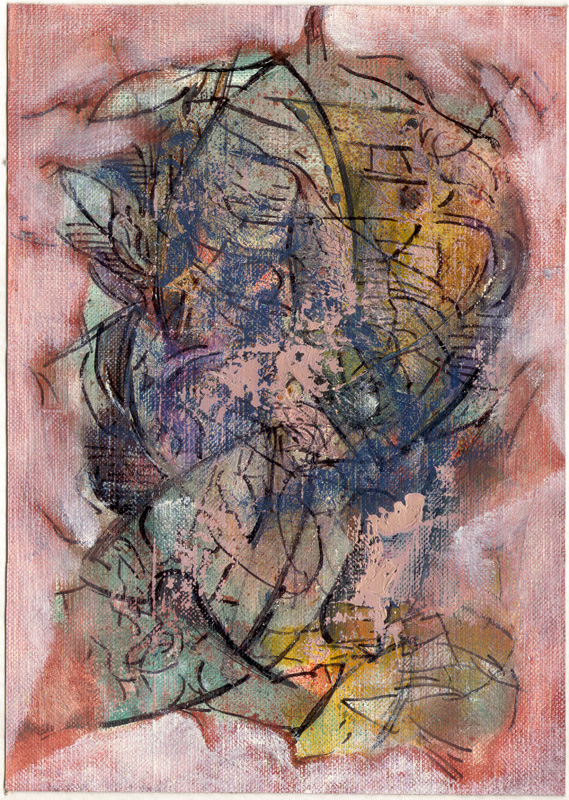

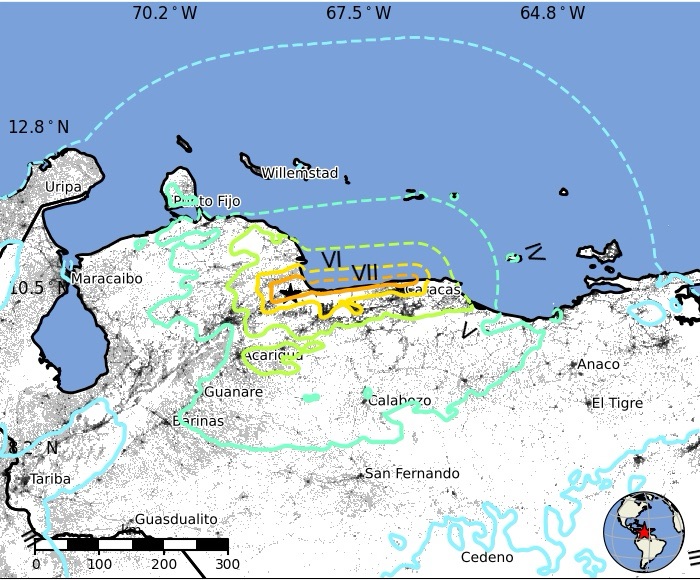

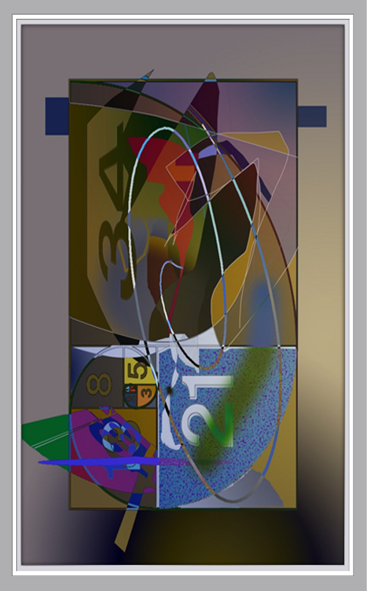
 Observations On Perception